11 Digital Health Certificate Programs to Boost Your Resume
 Akinpedia
14 min read
Akinpedia
14 min readThe rapid rise of digital health is fundamentally transforming the ways in which medical care is delivered, documented, and managed across various healthcare settings. Driven by the widespread adoption of telemedicine applications, AI-enhanced diagnostic tools, and sophisticated health informatics systems, the ongoing digitization of healthcare is opening up a wide array of exciting and highly sought-after career pathways.
This ongoing evolution not only significantly improves patient outcomes but also opens up a wide range of exciting and diverse opportunities for professionals who are eager and passionate about working at the dynamic intersection of technology and medicine.
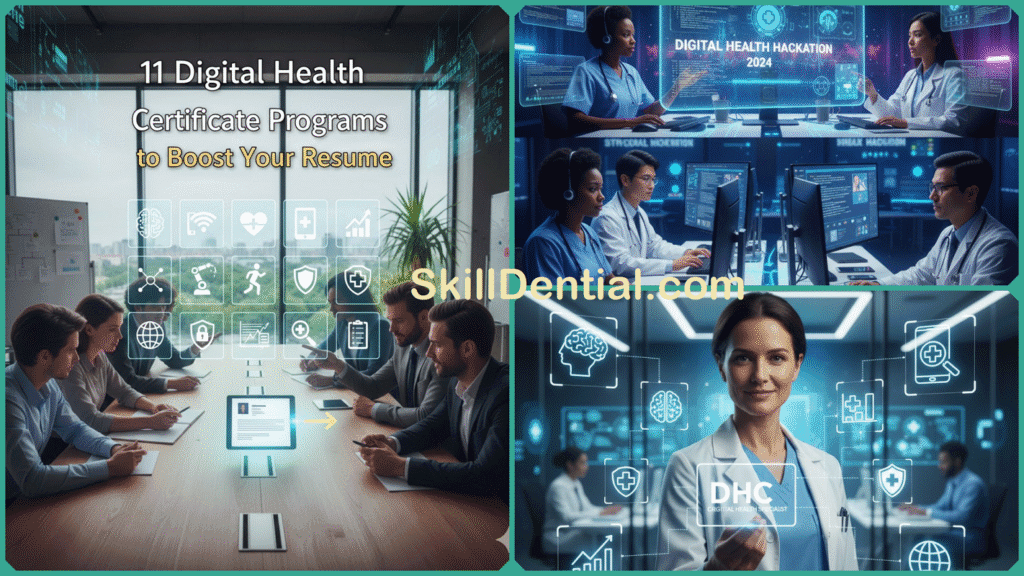
If you are eager and motivated to stand out prominently in competitive fields such as healthcare, information technology, or data analysis roles, earning a highly recognized and respected digital health certificate is one of the smartest and most effective ways to future-proof your resume. This credential will significantly enhance your professional profile and attract employers who are actively seeking skilled and knowledgeable talent in these rapidly evolving industries.
Why Digital Health Certificate Programs Matter
The digital health sector is experiencing rapid and sustained growth globally, supported by considerable investment and initiatives from major organizations such as the World Health Organization (WHO), the U.S. Centers for Disease Control and Prevention (CDC), and regional bodies like the WHO African Region.
These organizations are championing the adoption of digital platforms to streamline preventive, diagnostic, and administrative healthcare services. The global market reflects this momentum: digital health is projected to grow from around $427 billion in 2025 to as high as $1.5 trillion by 2032, with an average annual growth rate (CAGR) of 20%.
HIMSS reports and industry analyses indicate that the majority of health systems—nearly three-quarters—plan to expand digital health hiring by 2026. This surge is driven by the integration of technologies such as telemedicine, mobile health applications, wearables, electronic health records, and advanced analytics solutions.
As these advanced digital platforms continue to become more deeply embedded and integrated within the overall framework of health service delivery, there is a rapidly growing demand for professionals who possess specialized expertise in several key areas.
These areas include telemedicine, health information technology, cybersecurity measures, and the complex field of medical data analytics. The need for skilled individuals in these disciplines is increasing at a significant rate due to the expanding reliance on digital health solutions.
Overall, the digital health sector is experiencing remarkable growth and is fundamentally reshaping the landscape of global healthcare. This transformation is making digital expertise an exceptionally valuable asset for anyone seeking significant career advancement. Skilled professionals with knowledge in this area are increasingly positioned at the very center of industry innovation and transformation, playing a crucial role in driving the future of healthcare worldwide.
Key Concepts in Digital Health
Key concepts in digital health form the foundation for both career success and effective healthcare transformation. Health informatics, which encompasses the collection, management, and analysis of health data via digital platforms, is central to modern care delivery—enabling more efficient workflows and actionable insights for clinicians and administrators.
- Telemedicine refers to the delivery of remote clinical healthcare services that are conducted through advanced digital communication systems. These systems include video consultations, remote patient monitoring, and other telehealth technologies. Over time, telemedicine has evolved and become an integral and standard part of medical practice across a wide range of healthcare specialties and disciplines.
- Artificial intelligence (AI) in healthcare applies machine learning algorithms and advanced analytics to patient data, facilitating faster diagnostics, treatment optimization, and workflow automation; nearly every major health-tech company now embeds AI in its processes, revolutionizing both operations and patient engagement.
- Cybersecurity is crucial for protecting sensitive personal health information in increasingly interconnected environments, requiring robust legal and technical safeguards to defend against malicious cyber activities, privacy breaches, and regulatory threats.
Professionals who possess expertise and advanced skills in these specialized domains play a crucial role in optimizing the delivery of care, enhancing support for interoperability across various healthcare systems, and driving ongoing innovation and improvement.
Their significant contributions make them exceptionally valuable and indispensable assets within the fast-changing, digitally powered healthcare environment, an industry that continues to evolve and transform at a remarkably rapid and unprecedented pace.
Digital Health Career Trends and Innovations
Digital health career trends and innovations are shaping a transformative workforce for healthcare. AI and machine learning are revolutionizing the sector by enhancing diagnostics, automating administrative workflows, and enabling precision medicine.
The global AI in healthcare market, for example, is projected to grow rapidly, with clinical informatics roles and certifications like the IBM Applied AI Professional Certificate becoming recognized credentials for data-driven clinical and EHR analytics careers.
- Telemedicine, strengthened by lessons from COVID-19, is now entrenched in routine care: as of 2025, virtual and hybrid care models account for 20-30% of outpatient consultations in the U.S., with 83% of providers endorsing such flexible approaches. This shift is fueling demand for telehealth coordinators, practitioners, and specialized support roles.
- Data security has become paramount as the healthcare sector experienced a surge in ransomware and data breach incidents in 2024—almost half of all large-scale breaches (affecting over 5,000 individuals) targeted healthcare. Certified professionals in IT security and privacy are thus urgently needed for compliance and patient trust.
Finally, healthcare interoperability—enabled by adopting HL7 and FHIR protocols—is a critical technical skill. These standards allow organizations to share and integrate health data securely across platforms, supporting better outcomes, research, and patient empowerment. HL7 FHIR skills now appear in top job postings and training initiatives for digital health professionals.
Together, these emerging trends clearly indicate that there will be a significant expansion in career opportunities for individuals who possess expertise and skills in areas such as artificial intelligence, telemedicine, cybersecurity, and data interoperability. This growth is happening within the rapidly evolving and increasingly complex digital health ecosystem.
Top Digital Health Certificate Programs
The integration of technology into patient care—encompassing everything from AI-driven diagnostics and telemedicine to electronic health records (EHRs) and wearables—has created a massive demand for professionals who can bridge the gap between healthcare and IT.
These specialized Digital Health Certificate Programs offer focused training in high-demand skills like data analytics, health informatics, and project management, giving you the career-boosting credentials necessary to lead the digital transformation in any clinical or administrative setting.
Here are concise details for each of the 11 Digital Health Certificate Programs, with verified highlights for credibility, curriculum, and global relevance:
Digital Health Specialization – Coursera & Imperial College London
- Format: Entirely online and completely self-paced, allowing you to study at your own convenience without any fixed schedules
- This content extensively covers a wide range of topics, including digital health technologies, health informatics, artificial intelligence (AI), telemedicine, mobile health applications, as well as the various regulatory and ethical issues associated with these rapidly evolving fields. It delves into the latest advancements and innovations that are transforming healthcare delivery and management. The discussion also highlights how these technologies are integrated into clinical practice and the challenges faced in ensuring compliance with legal standards and ethical considerations.
- Projects: Industry-relevant, carefully peer-reviewed practical tasks designed to enhance real-world skills and knowledge application
- Recognition: Exceptionally well-suited for individuals aspiring to become leaders in health informatics as well as those seeking to advance their careers within this dynamic and rapidly evolving field. This program offers valuable knowledge and skills that are essential for professional growth and leadership development in health informatics.
Global Digital Health Certificate – Johns Hopkins University
- Format: Comprehensive and intensive online modules designed for in-depth learning and flexible study schedules
- Focus: The comprehensive implementation of digital health technologies and strategies across diverse global contexts, emphasizing the critical roles of policy development, effective leadership, and innovative intervention design. This includes understanding how digital health solutions can be adapted and scaled to meet the unique needs of various populations worldwide, while navigating complex regulatory environments and fostering collaboration among stakeholders to drive sustainable health improvements on a global scale.
- Ideal for: Professionals who are seeking to advance their careers on a global scale or who aspire to work in policy-oriented roles within the digital health sector. This program is designed specifically for individuals aiming to make a significant impact in the international digital health landscape or influence policy development and implementation related to digital health innovations.
Certified Telehealth Coordinator (CTC)
- Provider: A diverse range of organizations, including various academic institutions and continuing education providers, contribute to a comprehensive learning experience
- Curriculum: Comprehensive telehealth technology training, including the latest advancements and practical applications; in-depth legal and ethical compliance education to ensure adherence to regulations and best practices; enhanced patient communication skills development focused on effective virtual interactions; and extensive platform and tool training to proficiently navigate and utilize various telehealth systems and software.
- Best for: Clinical and IT staff who are actively supporting or coordinating telehealth services and initiatives within their organizations or healthcare facilities. This includes professionals involved in managing, implementing, and optimizing telehealth technology and workflows to ensure efficient and effective patient care delivery remotely.
Digital Health Essentials – FutureLearn
- Format: Intensive short online course designed to be completed in approximately two weeks
- Topics covered include digital health applications and their growing impact on modern medicine, the fundamental principles and components of electronic health records (EHR), the development and use of mobile and web-based health technologies, key issues surrounding privacy in digital health, and the role of cognitive science in enhancing health technology design and patient care.
- Suited to: Beginners who are just starting, students currently enrolled in relevant courses, and entry-level professionals looking to build foundational skills and gain practical experience.
Certified Digital Health Professional (CDHP/CHIME CDH-P)
- Provider: IADH (International Association for Dental Hygiene) or CHIME (College of Healthcare Information Management Executives)
- Focus: Enhancing digital patient engagement strategies, optimizing clinical workflows, and establishing comprehensive regulatory groundwork; includes a flexible, self-paced exam program designed for convenience and effective learning.
- Eligibility: This opportunity is available to individuals working in management, technology, or healthcare sectors, as well as graduate students pursuing advanced degrees.
AI in Healthcare – Coursera & Stanford University
- Topics covered include Clinical Artificial Intelligence (AI), the field of radiology, advanced predictive analytics, machine learning techniques, neural network architectures, and the ethical considerations surrounding their applications. These subjects explore how AI technologies are transforming healthcare by improving diagnostic accuracy and treatment planning. In particular, the intersection of machine learning and radiology is enabling more precise image analysis and earlier disease detection. Predictive analytics plays a crucial role in forecasting patient outcomes and optimizing clinical workflows. Neural networks, as a subset of machine learning, offer powerful tools for pattern recognition and decision-making processes within medical contexts. Additionally, the ethical application of these technologies is critical to ensure patient privacy, fairness, and accountability in clinical settings. Overall, these topics represent the forefront of innovation in healthcare technology and its responsible implementation.
- Format: Fully online format featuring project-based and case study-driven learning, with a comprehensive capstone project included to demonstrate mastery and practical application of skills learned throughout the course.
- Well-regarded for its strong emphasis on real-world applications, this program excels in practical skill-building specifically tailored to clinical AI, ensuring that learners acquire hands-on experience and applicable knowledge that can be directly utilized in healthcare settings.
Health Informatics Certificate – Coursera
- Focus areas include Electronic Health Record (EHR) systems such as HL7 and FHIR standards, advanced analytics, workflow optimization, data science applications, and comprehensive project work. These elements are critical in improving healthcare technology infrastructure and enhancing the efficiency and effectiveness of medical data management and utilization.
- Mode: Online learning with flexible, self-paced study options designed to fit your schedule
- For: Dedicated tech and clinical professionals who are expertly bridging the vital gap between healthcare and information technology, driving innovation and improving patient outcomes.
IBM Applied AI Professional Certificate – Coursera
- Highlights: Extensive hands-on experience with AI and machine learning techniques, advanced Python programming skills, practical development of chatbots and innovative AI applications, and proficient use of IBM Watson technologies for intelligent solutions.
- Recognition: Earn a digital badge that showcases your achievements, along with dedicated career assistance to support your professional growth. This program offers a fast and efficient pathway to secure roles in the rapidly evolving field of healthcare AI, helping you stand out in a competitive job market.
Certified Telemedicine Practitioner (CTP)
- Provider: Telemedicine Associations and Certification Boards that offer comprehensive resources and official credentials
- Scope: This includes the comprehensive aspects of remote delivery services, ensuring robust virtual care security measures, continuous patient monitoring systems, and the implementation of best practices across all related healthcare processes.
- Who: Physicians, nurses, allied health professionals, and IT managers from various healthcare settings and specialties.
Digital Health Leadership Program
- Provided by leading top-tier universities and prominent digital health organizations with extensive expertise and experience
- Coverage includes leadership skills, effective team management practices, digital strategy development and implementation, as well as understanding and adhering to relevant legal requirements. These areas are frequently addressed within the context of project-led initiatives.
- Best for: Aspiring directors and those aiming to become future leaders and executives within the rapidly evolving field of digital health.
Healthcare Information Security and Privacy Practitioner (HCISPP)
- Accreditor: The International Information System Security Certification Consortium, widely known as (ISC)², is a globally recognized nonprofit organization dedicated to training and certifying cybersecurity professionals.
- Security measures, regulatory compliance, including HIPAA and GDPR, data privacy protocols, comprehensive risk management strategies, and adherence to industry best practices
- Relevant to professionals working in Healthcare IT, security, and compliance fields who are responsible for safeguarding sensitive patient information and ensuring regulatory adherence.
These programs are designed to support a diverse array of digital health career aspirations, encompassing everything from highly technical, hands-on positions to strategic executive leadership roles. They offer well-recognized and respected credentials that are valued by employers worldwide, helping candidates stand out in the increasingly competitive global job market.
Comparison of Digital Health Certificate Programs
The rapid proliferation and widespread adoption of digital health technologies have resulted in the emergence of a diverse and expanding range of certificate programs. These programs are specifically designed to equip healthcare professionals and other individuals with highly specialized skills that are crucial in today’s technologically advanced medical landscape.
Selecting the right certificate program is a vital and strategic decision that demands a comprehensive and careful evaluation of several key factors. Important considerations include accreditation, curriculum focus, overall cost, program flexibility, and the availability of career support services.
Paying close attention to these elements will help ensure that the chosen program aligns perfectly with your unique personal aspirations and professional development goals within this rapidly evolving and dynamic field.
| Program Name | Provider | Key Focus | Duration | Industry Recognition |
|---|---|---|---|---|
| Digital Health Specialization | Imperial College (Coursera) | Informatics, AI | 4-6 weeks | High |
| Global Digital Health Certificate | Certificate Johns Hopkins University | Global strategy | 6 weeks | High |
| Certified Telehealth Coordinator | Multiple | Telemedicine, privacy | 2-4 weeks | Medium-High |
| Digital Health Essentials | FutureLearn | Basics, mobile health | 2-3 weeks | Medium |
| CDHP | IADH | Digital frameworks | 4-8 weeks | High |
| AI in Healthcare | Stanford (Coursera) | Clinical AI | 4 weeks | High |
| Health Informatics Certificate | Coursera | EHR, analytics | 4 weeks | High |
| IBM Applied AI Certificate | IBM (Coursera) | Applied AI, chatbots | 6 weeks | High |
| Certified Telemedicine Practitioner | Telemedicine Association | Virtual care practice | 3-6 weeks | High |
| Digital Health Leadership | Multiple universities | Leadership, strategy | 6-12 weeks | High |
| HCISPP | (ISC)² | Privacy, cybersecurity | 4-8 weeks | Very High |
This table provides a convenient and easy-to-use quick reference guide detailing the specific program content, the associated provider, the expected time commitment required, and an evaluation of how widely recognized and valued each credential is among healthcare and health IT employers across the industry.
Real-World Impact & Career Outcomes
Digital health certificate programs are unlocking career advancement and enabling professionals to pivot across a wide spectrum of roles in hospitals, insurance, health tech startups, and public agencies. Completing specialized programs like the Digital Health Specialization on Coursera or the Certified Digital Health Professional (CDHP) credential is consistently associated with increased employability, salary growth, and expanded job responsibilities.
For example, after earning a digital health certificate, healthcare workers such as pharmacy assistants have successfully transitioned into analyst positions at telemedicine companies, often increasing their salary and professional impact within a year—especially in rapidly digitizing regions like Lagos.
Likewise, clinical professionals with CDHP credentials are frequently chosen for leadership and cross-functional innovation roles at major device manufacturers, helping to design digital patient tracking or remote monitoring systems.
Employers routinely report that job candidates who hold digital health certifications stand out for their project readiness and mastery of emerging technologies vital for modern care delivery—such as telemedicine, AI healthcare analytics, and patient data security.
Many organizations, from hospitals to tech startups, now prioritize certified candidates for digital transformation roles, citing their ability to navigate new platforms, regulatory frameworks, and workflow changes with confidence.
Overall, obtaining a recognized digital health certificate not only clearly demonstrates subject matter expertise but also strongly signals determination, adaptability, and a proactive attitude. This combination of skills and qualities makes job seekers significantly more attractive and competitive in the fast-evolving, dynamic medical and health technology environments where innovation and continuous learning are critical for success.
FAQs
Are digital health certificates suitable for beginners?
Most digital health certificate programs have entry-level modules and do not require prior experience in health IT or clinical technology. For advanced leadership tracks, such as those focused on digital health management or informatics, at least one year of professional experience in healthcare or tech roles may be preferred.
Will these programs help me pivot from traditional healthcare jobs?
Many educational programs are specifically designed to bridge traditional, conventional roles with emerging digital and analytics-driven career pathways. These programs provide comprehensive training and support, helping learners transition smoothly into fields such as health informatics, telemedicine, data analytics, or positions focused on artificial intelligence, even if they have no prior technical background or experience.
This approach opens up new opportunities for professionals to expand their skill sets and adapt to the rapidly evolving technological landscape in healthcare and related industries.
Are digital health certificates globally recognized?
Top certifications offered by prestigious institutions such as Imperial College London, Stanford University, Johns Hopkins University, and the renowned (ISC)² organization are highly respected and valued by employers around the world. These certifications are often prominently mentioned in job listings and are considered essential criteria in hiring processes across various global health systems, reflecting their significant importance and recognition in the industry.
How long does it take to get certified?
Most certificate programs are designed to be completed within a flexible time frame that typically ranges from 2 to 8 weeks, making them highly suitable for a diverse group of individuals. This flexibility allows working professionals to efficiently balance their career responsibilities while pursuing further education. At the same time, full-time students can also take advantage of these programs to enhance their skills without disrupting their regular academic schedules.
What are the typical costs?
Fees can vary significantly depending on the provider and the length or depth of the program; for example, platforms such as FutureLearn may allow students to audit courses for free or offer certificates at a lower price point, typically around $100.
In contrast, more comprehensive and prestigious programs offered by institutions like Harvard Online or Johns Hopkins University often come with a higher price tag, frequently costing $800 or more, reflecting the advanced content and recognized certification they provide.
In Conclusion
Digital transformation within the healthcare industry is progressing at an exceptionally rapid pace, fundamentally reshaping how care is delivered and managed. Obtaining specialized digital health certificates represents one of the most strategic and effective ways for professionals to showcase their adaptability, technological proficiency, and readiness to lead in a future-focused environment.
These qualities are becoming increasingly sought after and are highly valued by forward-thinking employers who place a strong emphasis on innovation and digital competence within their teams. Companies that prioritize these attributes recognize their critical importance in driving progress and maintaining a competitive edge in today’s rapidly evolving technological landscape.
Key Takeaways
- Select certificates from leading academic or industry providers for maximum credibility and recognition in the digital health job market.
- Match certificate content to individual career goals—whether that’s telemedicine, AI, cybersecurity, or leadership—ensuring the credential supports your preferred professional path.
- Prioritize hands-on and project-based programs, as employers increasingly seek candidates who have demonstrated practical expertise with case studies and real-world digital health tools.
- Most digital health certificate programs are designed to be brief, flexible, and budget-friendly, making them ideal for advancing busy professionals, lifelong learners, and motivated job seekers alike.
For anyone looking to enter or expand their career within the rapidly evolving health technology sector, enrolling in one of these 11 digital health certificate programs can represent a truly transformative and pivotal step forward.
These specialized credentials do much more than simply enhance your CV; they significantly broaden your professional network and skill set, positioning you strategically among the global community of digital health innovators who are actively driving meaningful and impactful change in healthcare worldwide.

His mission is to provide clear, actionable advice that helps readers navigate the complexities of the modern workplace, advance their careers, and unlock their full potential. You can find his expert guides on technology, entrepreneurship, and professional development.
Discover more from SkillDential
Subscribe to get the latest posts sent to your email.