11 In-Demand Job Skills for the Modern Day Workplace Success
 Akinpedia
11 min read
Akinpedia
11 min readIf you’re a mid-career professional feeling stuck, overwhelmed, or anxious in today’s rapidly evolving and constantly changing workplace—or if you’re a savvy job seeker who is tired of repeatedly hearing the same advice to “be a good communicator”—you are definitely not alone in this experience.
The current job market is inundated with numerous lists of “top skills” that everyone seems to be discussing, all echoing very similar advice. But what if the true difference-makers, the skills that really set you apart and propel your career forward, are actually flying under the radar and not getting the attention they deserve?
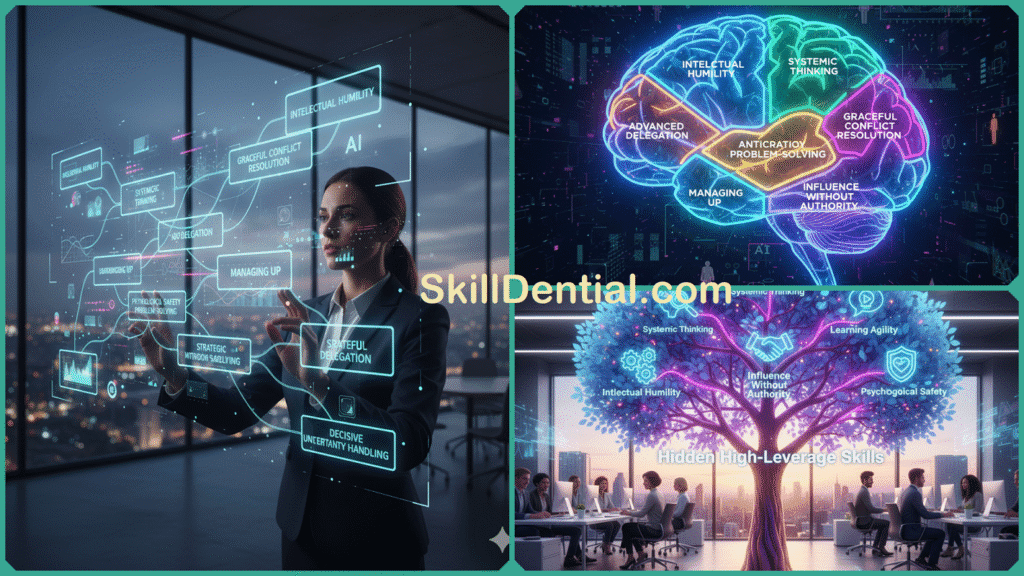
This post reveals 11 highly in-demand job skills that nobody is really talking about, yet insiders and high-impact leaders consistently swear by these essential abilities. These skills are foundational and often overlooked by many professionals. Still, they play a crucial role in ensuring not just survival, but truly standout success in today’s rapidly evolving age of AI, automation, and fierce competition. These hidden gems of expertise help individuals navigate complexities and excel where others struggle.
Understanding In-Demand Job Skills Nobody Is Really Talking About
The traditional list of “in-demand skills” frequently centers too narrowly on the newest programming languages or the latest digital tools that are trending in the tech industry. However, genuine and lasting career success in today’s fast-paced modern era—characterized by rapid change, constant technological disruption, and increasingly complex team dynamics—depends largely on a very different set of high-leverage, human-centric abilities.
These essential and critical skills empower professionals to confidently and effectively navigate through uncertainty and ambiguity, inspire and lead others even without holding a formal or official title, and skillfully transform conflict into meaningful opportunities for progress, development, and growth.
Here’s a detailed guide on how to effectively cultivate and confidently apply the 11 highly in-demand job skills that consistently set top performers apart from the rest—not just the usual standard buzzwords you hear everywhere, but truly actionable and practical capabilities that are actively shaping and transforming today’s dynamic and evolving workplaces.
Intellectual Humility 🧠
Intellectual humility involves understanding and acknowledging that your own beliefs, knowledge, and expertise are inherently limited and incomplete. It requires being open to admitting when you are wrong or when you have made mistakes, and continuously seeking out and valuing diverse perspectives and viewpoints.
This quality is not a sign of insecurity or weakness; rather, it reflects a strong confidence and willingness to learn, grow, adapt, and embrace constructive criticism. Intellectual humility is especially important today, as rapid and ongoing changes—particularly driven by advancements in AI and technology—can quickly render even the most experienced professionals outdated if they remain rigid and unwilling to evolve.
Organizations that cultivate a culture of intellectual humility tend to promote greater innovation, resilience, and a commitment to continuous learning. You can demonstrate intellectual humility in your own work by regularly asking questions like “What am I missing?” during meetings, actively inviting feedback from colleagues at all levels, and openly acknowledging your mistakes before making necessary adjustments to your strategies and approaches.
Systemic Thinking 🕸️
Systemic thinking is the valuable skill of recognizing and understanding big-picture connections rather than focusing solely on isolated events or individual problems. Instead of merely fixing what’s immediately in front of you, it involves looking deeper to identify root causes and anticipating the ripple effects that decisions and actions might have across different departments, technologies, and groups of people.
When applied effectively and thoughtfully, systemic thinking helps prevent quick, short-term fixes from inadvertently creating unintended and potentially more serious long-term problems. It also fosters greater trust and encourages collaboration within cross-functional teams, promoting a more cohesive and productive working environment.
You can demonstrate systemic thinking by visually mapping out complex processes, thoroughly digging into the underlying causes during troubleshooting, and actively coordinating with others to address hidden consequences that might otherwise be overlooked.
Advanced Delegation 🎯
Advanced delegation goes far beyond simply assigning chores or basic tasks—it involves strategically aligning responsibilities with the unique strengths and capabilities of each team member to foster trust, promote personal and professional growth, and enhance overall efficiency.
Effective leaders who master the art of delegation empower their teams by entrusting them with meaningful work, which in turn allows these leaders to concentrate on higher-value, strategic priorities. Essential approaches to advanced delegation include;
- Offering stretch assignments that challenge and develop skills
- Establishing clear outcome-based objectives to provide direction and purpose
- Thoroughly explaining the underlying “why” behind each delegated task
This powerful combination not only cultivates a deeply rooted and strong sense of ownership among every team member but also plays a crucial role in significantly driving positive outcomes and ensuring sustained long-term success for the entire organization.
Graceful Conflict Resolution 🤝
Graceful conflict resolution plays a crucial role in transforming disagreements into opportunities for progress by emphasizing empathy, clear directness, and a focus on mutual benefit as central principles. Teams that develop strong skills in this area tend to innovate at a faster pace, avoid becoming stagnant, and are more successful at retaining valuable talent over time.
Some of the best practices for effective conflict resolution include using “I” statements to express personal feelings without assigning blame, establishing respectful ground rules for discussions, and working collaboratively to co-create solutions that satisfy all parties involved.
Research consistently shows that individuals who demonstrate intellectual humility are better equipped to handle workplace conflicts in a constructive manner, which not only reduces unnecessary drama but also significantly enhances overall collaboration within teams.
Managing Up ⬆️
Managing up involves effectively guiding and nurturing your relationship with senior leaders by proactively tailoring your communication style to meet their preferences, anticipating their needs before they arise, and presenting well-thought-out solutions even before being asked for them. Individuals who excel at managing up not only gain the trust and respect of their leaders but also increase their visibility within the organization, opening doors to valuable advancement opportunities.
Additionally, this skill helps organizations avoid costly misalignments and inefficiencies by ensuring everyone is aligned and informed. To demonstrate your ability to manage up successfully, focus on providing concise and relevant updates, come prepared with data and decisions ready for discussion, and engage in respectful mentorship by seeking guidance while also offering thoughtful feedback.
Anticipatory Problem-Solving 🔮
Anticipatory problem-solving involves identifying and addressing potential issues well before they escalate into urgent crises, particularly in environments that are uncertain and rapidly evolving. This approach distinguishes individuals and organizations that merely react to problems from those who take a proactive stance in shaping and influencing future outcomes.
To effectively practice anticipatory problem-solving, it is essential to monitor and track emerging risks closely, conduct “premortems” — which means anticipating and analyzing possible failures before a project or product launch — and thoroughly document lessons learned after each project.
This ongoing process of continuous reflection and thoughtful adjustment plays a crucial role in helping to refine strategies and significantly improve decision-making effectiveness over an extended period of time.
Learning Agility 🌱
Learning agility is the strong drive and natural ability to rapidly acquire new skills, effectively adapt to feedback, and consistently succeed in ambiguous or uncertain situations. It is increasingly valued more highly than static expertise in today’s modern workplace environment, where change is constant and rapid.
You can significantly enhance your learning agility by intentionally and thoughtfully shifting between different roles, seeking out and pursuing challenging stretch assignments that push you beyond your comfort zone, and consistently engaging in active reflection on the key lessons and insights gained after every new experience or difficult challenge you encounter along your journey.
Psychological Safety Engineering 🛡️
Psychological safety engineering involves the intentional creation and cultivation of environments where individuals feel genuinely safe to express their honest thoughts, openly admit their mistakes without fear of judgment, and confidently challenge the existing status quo without risk of negative repercussions.
In high-performing organizations, leaders and team members deliberately model vulnerability by sharing their own uncertainties and imperfections, actively welcome all forms of feedback—including anonymous input—and proactively intervene whenever talented individuals or diverse perspectives are excluded or marginalized.
These carefully nurtured environments not only foster a culture of continuous innovation but also build strong, adaptable teams that demonstrate remarkable resilience and agility in the face of ongoing change and uncertainty.
Strategic Storytelling 📣
Strategic storytelling refers to the deliberate use of narrative techniques to create strong emotional and logical connections with audiences. This approach is especially powerful for leaders and project managers who are tasked with motivating their teams or convincing stakeholders to support their initiatives.
Effective practical tactics for strategic storytelling involve framing proposals through relatable real-world stories, employing well-known narrative structures to make messages more engaging, and skillfully combining solid data with compelling personal anecdotes to enhance credibility and impact.
Influence Without Authority ✨
This valuable skill empowers professionals to effectively drive meaningful change and coordinate efforts across diverse teams, even when they do not hold a formal title or official authority. In today’s complex, matrixed, and increasingly remote work environments, the ability to influence others stems primarily from building credibility, fostering authentic relationships, and deeply understanding what motivates each stakeholder.
To succeed, it is essential to cultivate genuine alliances, consistently acknowledge and give credit to collaborators for their contributions, and tailor your communication to address the unique drivers and interests of different partners involved in the process.
Decisive Uncertainty Handling ⚖️
Decisive uncertainty handling means confidently making well-informed choices even when the available data is incomplete or unclear—a key characteristic that distinguishes future-ready leaders from the rest. Rather than waiting passively for perfect clarity or complete information, these forward-thinking professionals actively employ structured decision frameworks to guide their actions.
They also make it a point to thoroughly document evolving assumptions as new information emerges, ensuring transparency and adaptability. Additionally, they openly share valuable lessons learned and necessary course corrections with their teams, fostering a culture of continuous learning and collective growth.
In Summary
The actionable steps and examples provided above aren’t merely resume boosters—they represent fundamental behaviors that are essential in future-focused organizations. By actively developing these often overlooked skills and consistently integrating them into your daily work routine, you can significantly strengthen your leadership abilities, drive meaningful innovation, and ensure your long-term career relevance in an ever-evolving professional landscape.
Embracing and consistently practicing these essential core behaviors will firmly position you as a highly valuable contributor within your team and organization. Moreover, it will establish you as a forward-thinking professional who is deeply committed to ongoing personal development, continuous growth, and long-term success in your career.
Current Trends & Developments
Current trends and developments in the modern workplace reveal a notable shift in what makes professionals truly valuable. As automation and AI transform industries, jobs that rely solely on technical know-how are vulnerable to obsolescence.
Employers are prioritizing candidates with high-leverage soft skills—like intellectual humility and learning agility—because these traits enable rapid adaptation to new technologies and processes. Those who can continuously learn and question their assumptions are proving far more resilient amid waves of change.
- Remote and hybrid work models now dominate across sectors, making collaboration more complex but also more essential. In these settings, influence without authority and psychological safety engineering have become crucial. Teams scattered across locations must rely on trust, open communication, and informal leadership to avoid miscommunication and functional “silos.” The most effective distributed teams intentionally foster environments where ideas and feedback flow freely.
- The rise of cross-functional project teams places a premium on skills such as advanced delegation and managing up. Professionals who can delegate strategically and anticipate the needs of different stakeholders help keep projects aligned and momentum high, even in complicated matrix structures. This approach limits burnout and ensures progress even when resources or reporting lines are ambiguous.
- Finally, leadership pipelines are undergoing significant evolution and transformation. Progressive and forward-thinking organizations today deliberately and explicitly incorporate what are often referred to as “hidden” skills—such as systemic thinking, the ability to resolve conflicts gracefully, and fostering psychological safety—into their formal promotion criteria and leadership development frameworks. This shift reflects a deeper understanding of the complex competencies required for effective leadership in the modern workplace.
This recognition highlights a significant shift in the professional landscape: while technical skills remain the essential foundation, it is now the ability to effectively navigate complex situations, inspire and empower others, and adapt quickly to changing circumstances that truly drives the success of leaders in today’s rapidly evolving era.
Quick Comparison Table: Standard vs. High-Leverage Skills
Here is a detailed comparison table that clearly highlights the key differences between the commonly cited “top skills” and the insider high-leverage skills, along with a thorough explanation of their unique impacts and benefits:
| Standard “Top Skills” | Insider High-Leverage Skills | Example Impact |
|---|---|---|
| Communication | Strategic Storytelling | Win stakeholder buy-in |
| Problem-Solving | Anticipatory Problem-Solving | Prevent fires before they start |
| Teamwork | Psychological Safety Engineering | Retain and inspire innovators |
| Leadership | Managing Up | Accelerate promotions |
| Adaptability | Decisive Uncertainty Handling | Thrive in ambiguity |
This detailed comparative table clearly illustrates how high-leverage skills effectively transform traditional competencies into distinct, career-differentiating behaviors that create a tangible and lasting impact in the workplace.
For example, strategic storytelling significantly amplifies one’s influence far beyond the scope of basic communication techniques, while anticipatory problem-solving goes well beyond merely addressing immediate issues by proactively identifying challenges and securing long-term success and stability.
By adopting and mastering these advanced skills, professionals enhance their leadership capabilities, sustain continuous innovation, and remain highly competitive in rapidly evolving and dynamic industries.
FAQs
Which skills are best for future-proofing a career?
Skills that boost adaptability—such as intellectual humility (recognizing what you don’t know and leveraging diverse perspectives), learning agility (quickly acquiring new competencies), and systemic thinking (understanding how changes ripple through systems)—are consistently vital for career longevity, especially with the rise of AI and automation. These skills enable professionals to pivot, stay relevant, and succeed amid rapid industry shifts.
How can I show these skills on my resume?
Demonstrate these strengths with specific, action-oriented examples. Statements like “Led a safety initiative boosting open feedback across teams,” or “Managed cross-department projects by mapping and communicating systemic impacts,” illustrate practical use and achievement, rather than vague claims.
Are these skills just for managers or leaders?
Although senior professionals scale these skills to lead organizations, everyone—regardless of career stage—can accelerate growth. Contribute in innovative ways by collaborating widely, volunteering for cross-functional assignments, or leading improvements in team processes.
What’s the fastest way to build these skills?
- Enroll in online courses focused on systems thinking or emotional intelligence.
- Actively seek feedback after each project and use it constructively.
- Volunteer for stretch assignments, new roles, and cross-functional task forces.
- Practice storytelling skills in meetings and communications to amplify influence.
How do I measure improvement in these “hidden” skills?
Track progress by monitoring feedback received, positive outcomes in team culture (such as psychological safety metrics), success rates of projects led, and tangible career milestones like promotions. Regularly journal specific real-world examples to build a portfolio of growth and impact.
In Conclusion
Mastering these 11 high-leverage job skills provides a significant and powerful advantage that goes far beyond the typical career advice you often hear. These skills are seldom included in common lists or standard recommendations, yet they are incredibly valuable because they offer genuine career security, significantly speed up your leadership growth, and enable you to stand out and shine in any industry, position, or role you pursue.
It is absolutely crucial to take intentional, deliberate, and proactive steps to develop these important abilities fully and to leverage them effectively for maximum benefit:
- Audit strengths and gaps: Review which skills you already practice, and identify areas needing growth.
- Advance now: Start building your portfolio—sign up for a targeted course, download a skill assessment template, or share insights with a peer for mutual accountability.
- Lead by example: Embed these capabilities in everyday work, integrating these skills into your actions and decisions—not just into your resume.
The advantage clearly belongs to those individuals who can recognize and understand the non-obvious insights and patterns that others often overlook. By effectively acting on this deeper knowledge and insight, you open the door to unlocking significant growth opportunities and building strong resilience that will support you well into the ever-evolving future of work.
By adopting this proactive approach, you guarantee that you become genuinely indispensable, significantly influential, and consistently positioned well ahead of any emerging workplace trends, shifts, and changes that may arise in the future.

His mission is to provide clear, actionable advice that helps readers navigate the complexities of the modern workplace, advance their careers, and unlock their full potential. You can find his expert guides on technology, entrepreneurship, and professional development.
Discover more from SkillDential
Subscribe to get the latest posts sent to your email.