11 Real-Life Skills Every Student Needs Before Graduation
 Akinpedia
10 min read
Akinpedia
10 min readGraduating from high school or college marks a significant and memorable milestone in a young person’s life, symbolizing years of hard work and academic achievement. However, thriving and succeeding after graduation demands much more than just academic knowledge alone.
To confidently navigate the complexities of the real world—whether that means entering the workforce, managing personal finances effectively, or living independently for the first time—students require a strong foundation of essential practical skills.
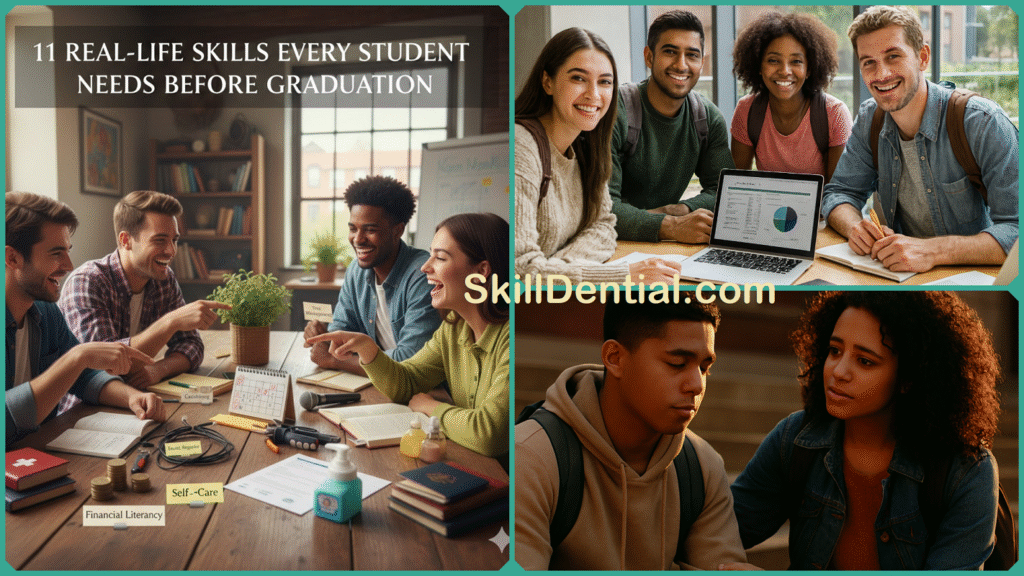
These critical real-life skills not only prepare students to handle adult responsibilities with greater ease but also help to significantly reduce the anxiety and uncertainty that often accompany the transition from student life to adulthood, ultimately contributing to improved long-term success and well-being.
Why Real-Life Skills Matter for Students
Real-life skills hold immense importance for students as they transition from structured academic environments to independent adulthood and enter the workforce. Achieving good grades and academic success alone does not provide students with the crucial abilities they need, such as budgeting wisely, communicating effectively, thinking critically, or developing emotional resilience.
These skills are absolutely essential for confidently and successfully navigating the many complexities and challenges of modern life. They serve as a vital bridge between theoretical knowledge gained in the classroom and its practical application in everyday situations, enabling students to manage their finances responsibly, express themselves clearly, solve real-world problems efficiently, and adapt smoothly to constantly changing environments and circumstances.
Research and educational experts emphasize that life skills education fosters not only personal independence but also career readiness. For example, mastering financial literacy can prevent debt accumulation and help in long-term planning, while strong communication and networking skills enhance employability and workplace collaboration.
Emotional intelligence and resilience encourage students to manage stress and setbacks constructively, which is crucial for well-being and professional growth. Additionally, competencies like time management, digital literacy, and basic home maintenance build self-sufficiency, reducing reliance on others and increasing confidence in real-world situations.
Schools and educators increasingly recognize the importance of integrating life skills into curricula, helping students develop transferable skills that employers highly value. These skills prepare students to make informed decisions, handle interpersonal relationships effectively, and maintain a healthy balance between work and personal life. Furthermore, life skills empower students to explore career options, engage in community life, and contribute meaningfully to society.
In Summary
Real life skills provide students with essential tools and knowledge that enable them to thrive not only socially but also financially and professionally after they graduate. These skills ensure that young adults are well-prepared to face the diverse challenges and exciting opportunities that come with adult life, allowing them to approach these situations with greater resilience, confidence, and adaptability.
By offering this comprehensive and holistic preparation, students experience a significant reduction in anxiety and uncertainty about their future, which in turn enhances their overall success and fulfillment in both their personal relationships and career pursuits. This well-rounded readiness equips them to navigate life’s complexities with greater ease and assurance.
The Essential Real-Life Skills
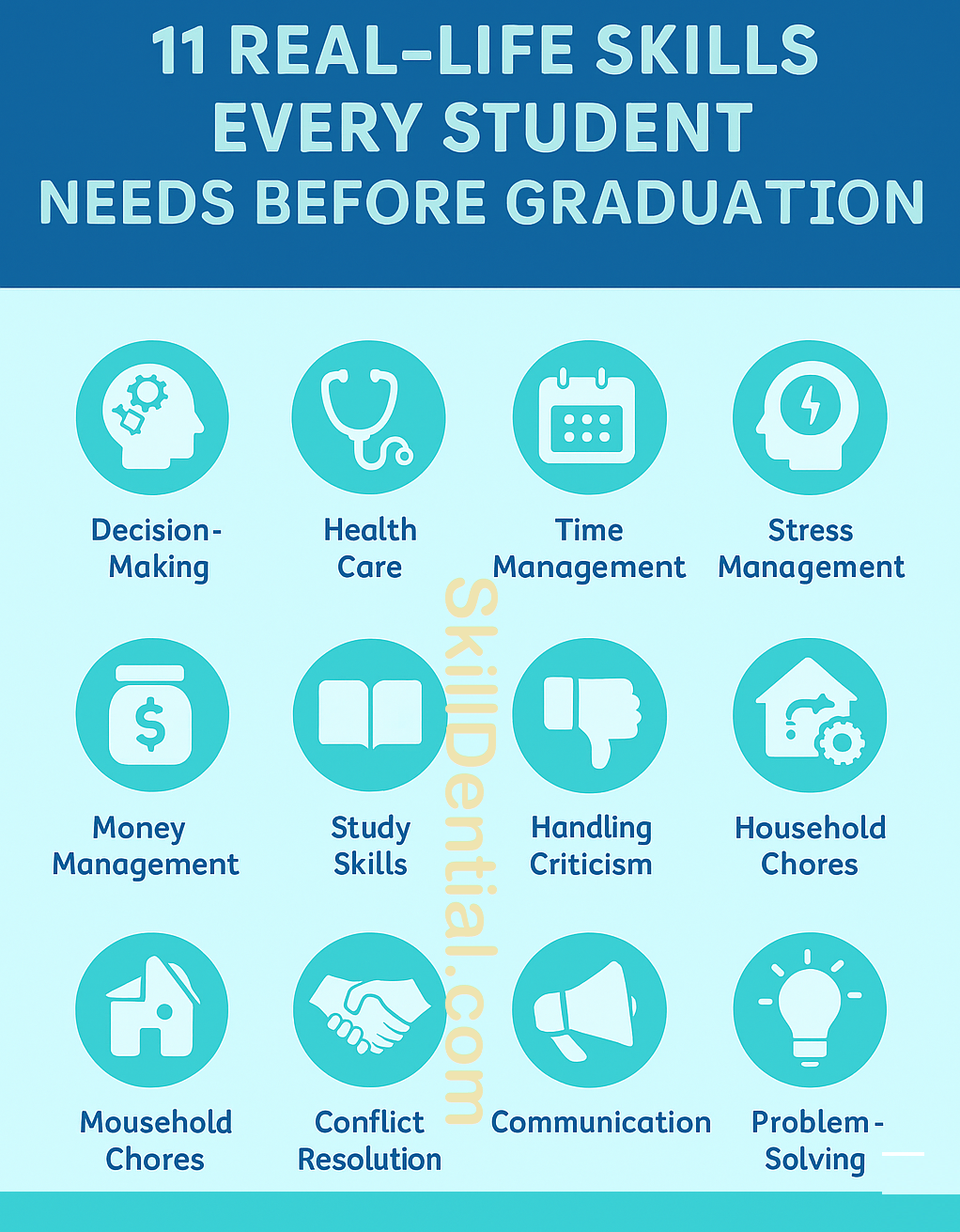
The 11 essential real-life skills every student needs before graduation encompass a wide and diverse range of crucial competencies that are designed to thoroughly prepare students for independence, career readiness, and overall personal success in various aspects of their lives.
These skills provide students with practical, hands-on tools and knowledge that enable them to navigate life’s numerous challenges and obstacles smoothly, effectively, and with a strong sense of confidence and self-assurance:
Financial Literacy
Mastering essential skills such as budgeting, saving, understanding various types of expenses, and accurately interpreting pay stubs equips students with the knowledge they need to make well-informed financial decisions throughout their lives.
Developing these competencies early on helps build a strong foundation for long-term financial independence and stability. By practicing money management from a young age, students are better prepared to avoid common pitfalls like accumulating debt and are empowered to spend their money responsibly and wisely.
Effective Communication
Strong verbal and written communication skills play an absolutely crucial role not only in enhancing and deepening personal relationships but also in significantly expanding and broadening professional networking opportunities.
By consistently practicing clear and precise articulation, actively engaging in attentive listening, and thoughtfully tailoring messages to suit and resonate with different audiences, individuals can greatly support and foster effective teamwork, clearly demonstrate strong leadership abilities, and ultimately achieve much greater success and fulfillment in their careers and various job roles.
Time Management and Organization
Effectively balancing academics, social life, and work commitments demands careful planning and thoughtful prioritization. By creating detailed schedules, setting clear and achievable goals, and actively avoiding procrastination, individuals can significantly enhance their productivity levels while simultaneously reducing stress.
Additionally, developing strong organizational skills, such as consistently using a calendar to track important dates and systematically filing documents, plays a crucial role in streamlining the management of various responsibilities and ensuring nothing is overlooked.
Critical Thinking and Problem-Solving
Having the ability to analyze problems objectively and develop effective solutions is essential as it supports sound decision-making and fosters greater resilience in various situations. By actively questioning assumptions and carefully evaluating multiple choices, students become better equipped to handle unexpected challenges and obstacles that arise in both their personal lives and professional careers.
This particular skill set not only significantly enhances one’s ability to solve problems more effectively but also fosters greater adaptability and encourages critical reflection when navigating through complex and challenging environments.
Digital Literacy
Understanding the principles of online safety, effectively evaluating credible sources of information, and using technology in a responsible and ethical manner are essential digital competencies that everyone should develop. Students need to be able to manage their digital footprint carefully, being aware of how their online actions can impact their personal and professional lives.
Additionally, it is important for them to learn how to effectively leverage technology not only as a tool for educational purposes but also as a powerful means for enhancing communication skills and creating valuable networking opportunities.
This applies to a variety of environments, including both academic settings such as schools and universities, as well as professional contexts like workplaces and industry events. Mastering these technological skills can significantly contribute to their overall success and growth in multiple areas of life.
Cooking and Nutrition Basics
Developing basic cooking skills is essential for promoting health and fostering self-sufficiency, as it empowers students to confidently prepare simple, nutritious meals at home. By learning these foundational skills, individuals can significantly reduce their dependence on costly, unhealthy convenience foods that often lack essential nutrients.
This approach not only aids significantly in managing food budgets more effectively but also plays a crucial role in contributing positively to overall well-being, supporting healthier lifestyle choices, and promoting improved long-term health outcomes for individuals and families alike.
Self-Advocacy and Networking
Knowing how to seek help, negotiate opportunities, and build professional relationships supports career development. Attending events and connecting with mentors open doors for internships, scholarships, and job placement.
Emotional Intelligence and Resilience
Effectively managing emotions, demonstrating genuine empathy towards others, and being able to adapt smoothly to various changes significantly strengthen interpersonal relationships as well as support personal mental health and well-being.
Developing emotional intelligence plays a crucial role in resolving conflicts peacefully and enhancing teamwork by fostering understanding and cooperation among individuals. Meanwhile, resilience equips students with the ability to bounce back from setbacks, overcome obstacles, and maintain a strong sense of motivation and determination even during challenging times.
Basic Home and Personal Maintenance
Essential skills such as doing laundry, thorough cleaning, performing minor repairs around the house, and managing personal healthcare play a crucial role in enabling individuals to live independently. Developing proficiency and mastery in these everyday tasks not only fosters a sense of confidence and self-reliance but also significantly reduces the need to depend on others for assistance.
These essential abilities act as the crucial and fundamental foundation for consistently maintaining a well-organized, clean, and healthy living environment that effectively promotes comfort, well-being, and overall quality of life. By developing and applying these skills regularly, individuals can create a harmonious space that supports both physical and mental health in a sustainable and enjoyable manner.
Interview and Job Search Skills
Preparing well-crafted resumes and tailored cover letters, along with consistently practicing and refining your interview techniques over time, significantly improve your chances of successfully securing employment opportunities.
Additionally, becoming thoroughly familiar with a variety of job search platforms and actively cultivating a polished, professional, and engaging online profile are essential proactive steps that greatly contribute to achieving long-term job search success and career advancement.
Cultural Competence and Global Awareness
Developing a deep and comprehensive understanding along with genuine respect for the wide variety of diverse cultures significantly enhances the ability to collaborate effectively in multicultural and international settings.
Being conscious and well-informed about global issues not only encourages responsible and ethical citizenship but also equips individuals with the necessary skills and mindset to thrive, adapt, and succeed in diverse, dynamic, and ever-changing work environments across the globe.
In Summary
Educational resources and experts consistently emphasize that these essential skills significantly foster independence, adaptability, and long-term employability, making them absolutely imperative for students as they transition into adult life.
Increasingly, schools are integrating comprehensive life skills programs into their curricula, fully recognizing the profound positive impact these competencies have on both personal growth and professional success over the course of a lifetime.
By actively developing these vital skills, students experience a notable reduction in anxiety related to life after graduation and are better equipped with practical tools and strategies to confidently thrive not only in the workforce but also in various other aspects of life beyond their academic years.
For students, actively cultivating these essential skills through practical experience, engaging workshops, and participation in real-world challenges can significantly transform their academic achievements into enduring, long-term success that extends beyond the classroom.
Parents and educators play a crucial role in reinforcing this development by consistently encouraging hands-on learning opportunities, offering thoughtful mentoring, and providing valuable resources that emphasize the importance of life readiness and practical application in everyday situations.
Current Trends in Student Life Skills
Current trends in student life skills reflect the evolving demands of education, work, and society. Digital literacy and remote communication have taken center stage as technology increasingly influences how students learn and professionals collaborate.
Mastering digital tools, understanding online safety protocols, effectively collaborating in virtual teams, and critically evaluating the credibility of information have all become absolutely essential skills for achieving academic success and securing future employment opportunities in today’s increasingly digital world.
Emotional intelligence is increasingly gaining widespread recognition as an essential skill that is considered just as important as traditional cognitive abilities like logical reasoning and problem-solving. Both educational institutions and employers are placing greater emphasis on developing and valuing emotional competencies such as self-awareness, empathy, and effective stress management.
These skills play a crucial role in significantly enhancing interpersonal relationships by fostering clearer communication and deeper understanding between individuals. They also promote much better teamwork by encouraging collaboration, trust, and mutual respect among team members. Additionally, these skills contribute greatly to improved mental well-being, helping individuals manage stress and build resilience in both personal and professional settings.
Financial literacy education is becoming more common in school curricula, driven by students’ growing awareness of the importance of managing personal finances. The inclusion of budgeting, saving, and credit management programs helps prepare students to navigate financial challenges responsibly as they transition to independence.
Networking behaviors are also shifting, with students proactively building professional connections early through platforms like LinkedIn. This trend enables early career exploration, internship opportunities, and mentorship access, underscoring the importance of career readiness during college years.
Together, these emerging trends clearly indicate a more holistic and integrated approach to life skills education, effectively blending a diverse range of essential competencies—digital, emotional, financial, and professional.
This comprehensive educational strategy aims to thoroughly prepare students for the wide array of challenges and demands they will face in modern adult life as well as in the ever-evolving workforce. By addressing multiple skill areas simultaneously, it ensures students are equipped with the versatile knowledge and abilities required to succeed in today’s complex and dynamic environment.
FAQs
What are the most important real life skills for students?
The top-ranked skills are financial literacy, communication, time management, and critical thinking. These skills have broad applications in academics, career, and daily living, making them foundational for success in various contexts.
How can students develop these skills before graduation?
Students can build competence through participation in extracurricular activities, internships, workshops, and practical exercises like budgeting or cooking. Hands-on experience is vital for mastering these skills effectively.
Are these skills taught in school?
Some schools offer dedicated courses or workshops focused on life skills, but many students acquire them informally or through real-world experiences. Increasingly, schools are integrating skills like financial literacy and emotional intelligence into curricula to better prepare students.
Why is emotional intelligence important?
Emotional intelligence helps students navigate social challenges, collaborate well, and manage stress. It is critical for building healthy relationships, resolving conflicts, maintaining mental well-being, and succeeding in team environments.
How can parents and educators support students?
Parents and educators can support readiness by encouraging real-world experiences, providing access to resources, modeling life skills at home or in classrooms, and fostering environments where students can practice these skills confidently.
In Conclusion
Mastering real life skills is essential for students to confidently transition from academics to independent living and professional environments. These 11 skills—from financial literacy and communication to emotional intelligence and cultural competence—form a practical foundation for lifelong success.
By actively developing these skills through education, experience, and support from mentors, students equip themselves to navigate challenges, seize opportunities, and thrive in a complex, rapidly changing world. Embracing this holistic approach to learning helps students not only survive but flourish after graduation, turning uncertainty into empowerment.
Taking proactive and deliberate steps today to actively cultivate, nurture, and develop these essential skills ensures a much smoother, more fulfilling, and ultimately rewarding journey into adulthood. It prepares you to navigate all the challenges and opportunities that life may bring with greater confidence and resilience.
For further growth, students, parents, and educators can engage with targeted resources, workshops, and real-world practice to embed these skills deeply. Preparing in this way transforms graduation from an endpoint into a confident new beginning filled with promise and potential.

His mission is to provide clear, actionable advice that helps readers navigate the complexities of the modern workplace, advance their careers, and unlock their full potential. You can find his expert guides on technology, entrepreneurship, and professional development.
Discover more from SkillDential
Subscribe to get the latest posts sent to your email.