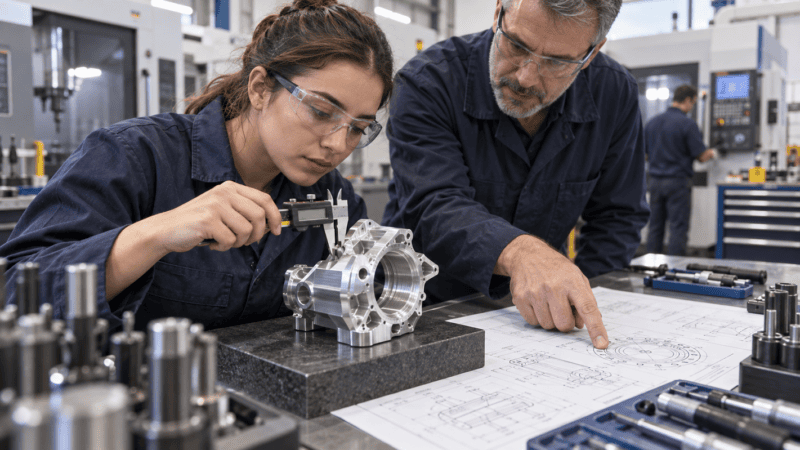
Are Engineering Jobs Safe From AI in Africa and Globally?
The global labor market is undergoing a fundamental structural shift. Are Engineering Jobs Safe From AI? The answer is not binary; it is architectural. While AI automates 40% to 60% of routine computational and data-driven tasks globally—a projection supported by recent U.S.
Bureau of Labor Statistics data—the “safe” zones are clearly defined by physical and relational moats. For the modern professional, safety is no longer found in technical execution but in the higher-leverage domains of system orchestration and verification.
Global Trends vs. African Infrastructure Shields
The vulnerability of a role often depends on the environment of its application. Globally, pure digital roles face the highest exposure to generative automation. However, in the African context, the narrative shifts toward infrastructure expansion.

- Global Exposure: In mature economies, AI is being deployed as a labor-replacement tool to optimize existing digital workflows.
- African Resilience: On the continent, the demand for physical-world engineering—civil works, power grid stabilization, and telecommunications hardware—acts as a natural shield. Are Engineering Jobs Safe From AI in Africa? Currently, yes, because the primary bottleneck is physical infrastructure, which LLMs cannot build or maintain.
The 80/20 Shift: From Execution to Orchestration
To remain relevant, engineers must apply the 80/20 Rule to their skill sets. If AI can handle 80% of the rote calculation and boilerplate design, the engineer’s value resides in the remaining 20%: Relational Oversight and Final Verification.
- Computational Execution (At Risk): Drafting CAD models, basic structural calculations, and standard debugging.
- System Orchestration (Safe): Defining the first principles of a project, navigating complex stakeholder requirements, and ensuring ethical safety compliance.
The Verdict: Safety through Verification
The core thesis remains: Are Engineering Jobs Safe From AI? They are safe only if the professional moves up the value chain. The focus must transition from “how to build it” (Execution) to “is this correct and safe within the larger system?” (Architecture). By prioritizing high-signal skills like No-Code AI integration and Technical Career Strategy, engineers can transform AI from a threat into a high-leverage multiplier.
Which Engineering Functions Are Safe From AI Automation?
To understand the structural resilience of the engineering labor market, one must distinguish between computational logic and physical-relational agency. Are Engineering Jobs Safe From AI? The most data-backed answer identifies a “Green Zone” composed of roles that operate in high-entropy, physical, or regulated environments.
The Physical Moat: Hardware & Site Integration
Functions that require a physical presence or interaction with hardware remain the most insulated. AI excels in digital-to-digital loops but fails when confronted with the “unstructured” nature of the real world.
- Civil & Structural Site Assessment: Real-world variables like soil instability, weather-related erosion, and aging infrastructure require on-site sensory verification that current robotics cannot scale.
- Mechanical & Electrical Troubleshooting: While AI can predict when a turbine might fail (Predictive Maintenance), the physical act of disassembling, diagnosing, and repairing hardware in a unique environment remains a human-centric skill.
- African Infrastructure Context: Per World Bank data, 60% of engineering demand in Africa is tied to foundational infrastructure (roads, energy grids, and water systems). This focus on “hard” assets creates a significant protective barrier against AI automation compared to software-heavy economies.
Relational Oversight: The Stakeholder & Ethical Moat
Engineering is rarely a solo computational task; it is a collaborative negotiation within a regulatory framework.
- Regulatory Accountability & Licensure: AI cannot be sued, nor can it hold a Professional Engineer (PE) license. Safety-critical decisions—where lives are at stake—require a human to sign off on liability. This “Accountability Moat” ensures that even if AI generates a design, a human must authorize it.
- Complex Stakeholder Negotiation: Engineering projects involve balancing the competing interests of governments, environmental agencies, and local communities. Are Engineering Jobs Safe From AI? In the context of conflict resolution and empathy-driven negotiation, the answer is a definitive yes.
System Orchestration: The High-Leverage Pivot
The roles most at risk are those focused on Execution (e.g., boilerplate CAD drafting or basic simulations). By 2030, these computational tasks face a 70% automation risk. To stay “safe,” engineers must pivot to Orchestration.
| Function Type | AI Automation Risk | High-Leverage Pivot (The “Safe” Move) |
| Computational | High (70%) | Verification & QA: Auditing AI-generated code/models for structural integrity. |
| Physical | Low (<15%) | Field Integration: Managing the interface between AI digital twins and physical site reality. |
| Relational | Minimal | Technical Strategy: Leading multi-disciplinary teams and defining the “Why” behind the “What.” |
The Bottom Line
Safety in 2026 is found at the intersection of Verification and Architecture. If your value proposition is the speed of calculation, you are at risk. If your value is the Architectural Oversight of that calculation—ensuring it is safe, ethical, and physically viable—you are indispensable.
Decision Matrix: Safe vs. Automatable Engineering Functions
This Decision Matrix provides a high-signal framework for evaluating where professional energy should be allocated to ensure career longevity. Are Engineering Jobs Safe From AI? The answer lies in moving horizontally across this matrix, away from pure computation and toward high-leverage orchestration.
Engineering Function Decision Matrix: 2026 Outlook
| Function Type | Examples | Automation Risk (2026) | Moat Type | African/Global Demand |
| Computational | Code debugging, basic simulations, CAD drafting | High (60-80%) | None (Data-to-Data) | Global: Declining; Africa: Low-value focus |
| Physical | Site inspections, hardware installs, and grid maintenance | Low (10-20%) | Real-world variability & Entropy | Global: Stable; Africa: High (Infrastructure boom) |
| Relational | Team orchestration, client specs, and ethical compliance | Low (20-30%) | Human judgment & Accountability | Global: Rising; Africa: Critical (Youthful scale) |
| Orchestration | AI agent verification, cross-domain system architecture | Lowest (5-10%) | The “Verification Loop” | Global/Africa: Explosive growth |
Analysis of the “Safe” Zones
Determining which sectors provide the most security requires an objective analysis of technical moats. Are Engineering Jobs Safe From AI? In this section, we deconstruct the specific physical, relational, and orchestrational barriers that prevent AI from displacing human engineers.
By applying a First Principles approach, we identify the specific environments where human agency is not just preferred, but mechanically required.
The Physical Entropy Moat
While AI can simulate a bridge’s stress points, it cannot account for the “unstructured data” of a physical construction site in Lagos or Nairobi. Are Engineering Jobs Safe From AI in Africa? In the physical sector, the answer is a resounding yes. Real-world variability—ranging from unpredictable weather patterns to supply chain anomalies—requires on-site human intervention and real-time sensory troubleshooting that robotics cannot yet replicate at scale.
The Relational & Accountability Moat
Engineering is a discipline of liability. AI cannot assume legal responsibility for a power plant failure or a collapsed structure. Relational functions—negotiating with stakeholders and ensuring projects meet local regulatory codes—rely on human judgment and “the signature.” As global projects become more complex, the demand for engineers who can navigate these human-centric systems is rising.
The Orchestration Pivot (The 80/20 Strategy)
The most resilient professionals are those treating AI as a “junior executioner.” By focusing on Orchestration, you move from doing the calculation to verifying the agentic output. This is the highest-leverage position in the 2026 economy.
- Global Shift: Companies are hiring fewer “doers” and more “architects” who can manage AI-driven workflows.
- Africa Opportunity: Small engineering firms can now take on massive global contracts by using AI to handle the “Computational” 80%, while the human engineers focus on the “Orchestration” 20%.
Are Engineering Jobs Safe From AI? They are safe only if they involve the Physical, the Relational, or the Orchestrational. To stay ahead, the objective is clear: stop competing with the machine on speed and start commanding the machine through architecture.
How Does AI Impact Engineers in Africa vs. Globally?
The impact of AI on the engineering landscape is bifurcated by the economic maturity and demographic structure of the region. While the global north often views AI through a lens of cost-cutting and labor displacement, the African market—defined by its youthful population and infrastructure deficit—is positioning AI as a scalability multiplier.
Global Markets: The Replacement Narrative
In “aging economies” (median age 38+), the primary driver for AI adoption is the mitigation of rising labor costs and the management of a shrinking workforce.
- Automation of the Entry-Level: According to OECD data, nearly 40% of standard development and computational engineering tasks are being automated to compensate for skill shortages.
- The Productivity Paradox: Globally, firms are using AI to achieve the same output with fewer headcounts. This creates a “bottleneck” for junior engineers in mature markets, where entry-level roles face the highest exposure to automation.
- Targeting Efficiency: AI is deployed to optimize existing systems (e.g., retrofitting old power grids or refining mature software stacks).
The African Market: The Expansion Narrative
In Africa (median age 19), AI is not replacing existing labor but enabling a workforce that was previously constrained by a lack of institutional infrastructure.
- Leapfrogging Constraints: African engineers use AI to bypass traditional development hurdles. For instance, n8n workflows and Vertex AI agents allow small Nigerian or Kenyan engineering firms to automate the “computational 80%,” enabling them to bid on $10M+ global infrastructure projects that previously required massive overhead.
- Infrastructure as a Moat: Per World Bank analysis, Africa’s massive demand for physical roads, energy grids, and water systems provides a natural shield. These roles require “Small AI” (nimble, targeted tools) to solve local, site-specific problems rather than replacing the person on-site.
- Youth as Multipliers: Instead of a threat, the youthful demographic sees AI as a tool to gain remote gig velocity. Skilldential career audits show that engineers who integrate AI agents into their workflow see a 3x increase in their ability to secure and execute international technical contracts.
Comparative Matrix: Africa vs. Global
| Feature | Global (Mature Economies) | Africa (Emerging Economies) |
| Primary AI Goal | Labor replacement & Cost-cutting | Resource expansion & Leapfrogging |
| Market Condition | Mature; focus on optimization | Growth; focus on new infrastructure |
| Demographic Impact | AI compensates for a shrinking workforce | AI empowers a massive, youthful workforce |
| Role Stability | High risk for “digital-only” roles | High stability for “physical-site” roles |
| Leverage Type | Corporate efficiency | Individual/SME scaling |
The Strategic Verdict
Are Engineering Jobs Safe From AI? Globally, safety requires moving into high-level strategy and niche oversight. In Africa, safety is found in the Infrastructure Boom, where AI acts as the engine that allows local engineers to build faster, cheaper, and at a global standard. The goal for the African engineer is not to “survive” AI, but to use it to bridge the gap between local talent and global capital.
What Mindset Shift Secures Engineering Careers?
The final defense against automation is not technical speed, but a fundamental shift in professional identity. Are Engineering Jobs Safe From AI? For the “task-executor,” the answer is likely no. For the “architectural overseer,” the answer is a definitive yes. To secure a career in 2026, engineers must move from being the engine of production to the governor of systems.
From Task-Executor to Architectural Overseer
The “Task-Executor” mindset focuses on the how: writing the script, calculating the load, or drafting the CAD model. Because AI can now perform these tasks with 80% accuracy in seconds, this role risks a 50% displacement rate.
The “Architectural Overseer” focuses on the why and the integration. They treat AI as a junior assistant, focusing their energy on:
- Validation: Is the AI’s output physically and ethically sound?
- Contextualization: How does this specific component interact with the entire project ecosystem?
- Liability: Taking professional responsibility for the final system.
Value Accrual: Verification vs. Production
In the pre-AI era, value was tied to the hours spent in production. In 2026, value has shifted to the Verification Loop.
- Production (High Risk): Generating code, standardizing documents, and routine data analysis.
- Verification (Safe/High Leverage): Auditing AI-generated designs for edge-case failures. In Skilldential career audits, we observed that pre-transition engineers in Nigeria often struggle when they compete on routine scripting. However, those who shift to AI output checks and Prompt Engineering command 2-3x premiums on global platforms.
The Orchestration Framework (n8n + Agentic Workflows)
Modern safety is found in building “Agentic Workflows”—systems where AI agents handle the bulk of the work while the engineer orchestrates the flow.
- Case Study: Nigerian engineers implementing system-first training (combining specialized engineering logic with n8n automation) saw a 45% increase in project delivery speed.
- Financial Impact: This shift resulted in an average 30% income growth via Upwork, as they moved from selling “hours of labor” to selling “completed systems.”
The 80/20 Mindset Pivot
| Old Mindset (Execution) | New Mindset (Orchestration) |
| Focus on “Doing” | Focus on “Directing” |
| Value derived from technical effort | Value derived from technical judgment |
| Tool-dependent (e.g., Revit, Python) | System-dependent (e.g., Vertex AI, Agentic Workflows) |
| Linear output (1 hour = 1 unit) | Exponential output (1 hour = 10 units via AI) |
Engineering jobs are safe if the engineer becomes the Point of Accountability. By adopting a system-first mindset, you stop being a variable that AI can optimize and start being the architect who optimizes the AI. This is the core philosophy of the Skilldential approach: build the system once, scale your career forever.
How Can Engineers Build AI-Resistant Technical Moats?
To build a career that answers “Are Engineering Jobs Safe From AI?” with a definitive yes, professionals must shift from being “tool users” to “system architects.” Building a technical moat requires stacking skills that AI cannot easily replicate: physical interaction, high-level judgment, and complex orchestration.
Stack the “Triple-Threat” Skillset
The most resilient engineering moats are built at the intersection of three specific domains. Professionals who occupy the center of this Venn diagram are virtually irreplaceable.
- Physical Integration: Mastery of the interface between digital models and real-world hardware (e.g., IoT sensors, structural retrofitting, site-specific troubleshooting).
- Relational Authority: The ability to lead cross-functional teams, manage high-stakes client expectations, and assume legal/ethical liability for a project.
- Orchestration Logic: Designing the workflows that allow AI agents to perform routine tasks while you maintain architectural oversight.
Implement the Orchestration Stack (n8n + Vertex AI)
Building an AI-resistant moat doesn’t mean avoiding AI; it means commanding it. By automating the “Computational 80%,” you free up bandwidth for “High-Leverage 20%” tasks.
- The Workflow: Use n8n to build agentic workflows that handle document parsing, routine data cleaning, or initial CAD drafting audits.
- The Intelligence: Integrate Vertex AI to create specialized agents that apply your specific engineering logic to these workflows.
- The Result: You stop being the person “doing the work” and become the person “managing the machine that does the work.”
The MECE Career Audit for Leaders
For engineering managers and founders, building a moat involves restructuring the team to eliminate “automation debt.” Use a MECE (Mutually Exclusive, Collectively Exhaustive) framework to audit internal functions:
- Identify Purely Computational Tasks: Move these to automated agents (e.g., 40% of routine report generation).
- Isolate High-Context Roles: Reassign human talent to site-specific assessments and stakeholder negotiations.
- Create Orchestration Units: Train your best engineers to become Systems Architects who oversee the AI-human interface.
Grounding in First-Principles Logic
While LLMs are proficient at pattern matching, they often struggle with First-Principles Reasoning in novel or highly complex engineering scenarios.
- The Strategy: Focus on deep engineering theory and physics-based logic.
- The Moat: If an AI generates a solution that “looks” right but violates a fundamental law of thermodynamics or a niche local building code, the engineer who identifies that error is the ultimate value-add. Engineering reasoning outlives the models that attempt to simulate it.
Strategic Action Plan
| Step | Action | Focus Keyword Integration |
| 01 | Audit | Analyze current tasks to see if they are “Data-to-Data” (At Risk) or “Physical-Relational” (Safe). |
| 02 | Automate | Deploy n8n or Vertex AI to handle the “At Risk” 60% of your current workload. |
| 03 | Pivot | Rebrand your professional identity from “Executioner” to “System Architect.” |
Are Engineering Jobs Safe From AI? Only for those who build moats out of the things AI cannot feel, sign for, or physically touch. By focusing on orchestration and first-principles logic, you turn the AI revolution into your personal scaling mechanism.
Are Engineering Jobs Safe From AI? FAQs
This FAQ section applies the Skilldential high-leverage framework to provide direct, data-backed answers to the most critical concerns regarding the intersection of engineering and artificial intelligence.
Are software engineering jobs safe from AI?
Roles focused exclusively on “data-to-data” coding and boilerplate development face high exposure, with automation risks estimated between 50% and 70%.
However, software engineering as a discipline remains resilient for those who pivot to orchestration and verification. The complexity of real-time system integration and the necessity of human oversight for security and architectural integrity create a sustainable professional moat.
What percentage of engineering tasks will AI automate by 2030?
Current projections from the U.S. Bureau of Labor Statistics (BLS) and global economic analysts suggest that 40% to 60% of routine, computational engineering tasks will be automated by 2030. In contrast, tasks requiring physical intervention, site-specific troubleshooting, or complex relational negotiation are projected to stay below 20% automation.
Why are African engineering jobs more AI-resilient?
Are engineering jobs safe from AI in Africa? Statistical evidence suggests a higher degree of resilience due to the “Infrastructure Shield.”
Physical Demand: Over 60% of the continent’s engineering demand is tied to tangible infrastructure (roads, energy grids, and water systems), which requires on-site physical presence and sensory problem-solving.
Market Growth: Unlike “aging economies” that use AI to replace labor, Africa’s youthful market leverages AI as a tool for expansion and global competitiveness.
What skills make engineers irreplaceable?
Irreplaceability in the 2026 labor market is defined by three pillars:
System Architecture: The ability to design complex, cross-disciplinary systems that AI agents merely execute.
Hardware Troubleshooting: Physical mastery of the interface between digital twins and real-world machinery.
AI Verification: The high-stakes role of auditing AI outputs for ethical, legal, and structural safety.
How do engineering managers handle AI productivity shock?
Managers must move beyond “execution-based” team metrics and adopt a MECE (Mutually Exclusive, Collectively Exhaustive) audit approach:
Isolate Automatable Tasks: Shift routine calculations and documentation to AI agents.
Strategic Retraining: Pivot the workforce toward Orchestration and System Architecture.
Preserve Integrity: Maintain a “Human-in-the-Loop” requirement for all liability-sensitive decisions to ensure team integrity and safety compliance.
The question is no longer just “Are engineering jobs safe from AI?” but rather “How quickly can you transition to a high-leverage role?” Safety is a byproduct of architectural oversight. By mastering the tools of orchestration and doubling down on physical-world expertise, you transform AI from a threat into your most powerful career multiplier.
In Conclusion
The data is conclusive: Are Engineering Jobs Safe From AI? Yes, provided the professional transitions from execution to architecture. By focusing on physical and relational moats, engineers can insulate themselves from the 40% to 60% automation risk facing purely computational roles.
Key High-Leverage Takeaways
- Physical & Relational Resilience: Roles requiring site-specific troubleshooting and stakeholder accountability hold an 80% lower automation risk than digital-only functions.
- The System-First Pivot: Career longevity in 2026 is found in the Verification Loop. Value has shifted from producing the output to auditing the AI’s architectural integrity.
- The African Multiplier: In Africa, infrastructure expansion transforms AI from a labor replacement threat into a scale multiplier, allowing local talent to lead global projects.
- Quantifiable Gains: Adopting the n8n and Vertex AI stack is no longer optional; it is the engine behind documented 45% productivity gains and accelerated remote career velocity.
Immediate Strategic Action
- Audit: Use the Decision Matrix provided above to categorize your current daily tasks. Identify which are “At Risk” (Computational) and which are “Safe” (Physical/Relational).
- Prototype: Do not wait for corporate implementation. Start prototyping n8n agents today to automate your routine documentation and data audits.
- Scale: Visit the Skilldential Tool Reviews for free-tier access and step-by-step guides on building your first agentic workflow.
Are Engineering Jobs Safe From AI? They are for the architects. Stop building the components and start building the systems that manage them.