9 Proven Ways to Raise Successful Kids Beyond IQ: EQ and SQ
To raise successful kids in an increasingly complex global economy, the traditional reliance on IQ is no longer a sufficient differentiator. While cognitive ability provides the baseline for technical competence, the 80/20 of long-term achievement lies in the integration of Emotional Quotient (EQ) and Social Quotient (SQ).
EQ serves as the internal operating system, enabling children to recognize and regulate emotions to build psychological resilience. Conversely, SQ serves as the external interface, focusing on the mechanics of relationship-building, empathy, and high-leverage collaboration.
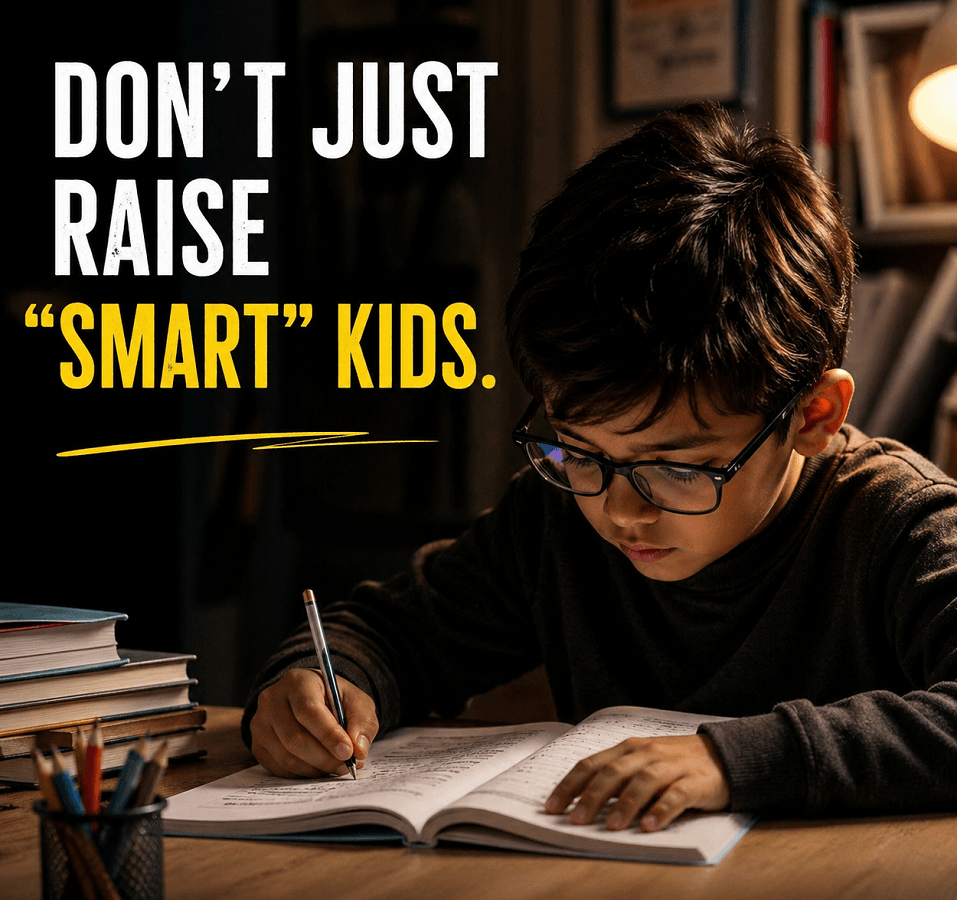
Data indicate that children with high EQ and SQ achieve 20% to 30% better outcomes in professional trajectories and holistic well-being. The primary lever for this development is parental modeling; when parents consistently demonstrate these competencies, they provide the blueprint to raise successful kids who are prepared to scale their impact beyond foundational intelligence.
Emotional Quotient (EQ) in Child Development: A Systems Perspective
In the context of child development, Emotional Quotient (EQ) functions as the internal regulatory framework for processing interpersonal and intrapersonal data. It is the capacity to identify, evaluate, and control emotions to navigate social complexities and achieve personal stability.
The Core Architecture of EQ
To raise successful kids, EQ must be viewed as a high-leverage skill set comprising four primary pillars:
- Self-Awareness: The ability to recognize an emotion as it happens. This is the foundation of EQ, as it allows for the transition from reactive behavior to conscious response.
- Self-Regulation: The capacity to manage impulsive feelings and behaviors. High self-regulation correlates directly with resilience against external stressors.
- Social Awareness: The skill of picking up on emotions in other people and understanding what is really going on with them.
- Relationship Management: The ability to use the awareness of one’s own emotions and those of others to manage interactions successfully.
Impact on Long-Term Trajectories
EQ is a critical predictor of performance because it improves decision-making by decoupling immediate emotional impulses from logical action. While IQ may act as a barrier to entry for certain technical fields, EQ determines the ceiling for leadership and career progression.
Research consistently validates that individuals with high EQ achieve superior outcomes in high-pressure environments compared to those who rely solely on cognitive intelligence.
Implementation Strategy: Emotional Labeling
The most effective high-leverage action parents can take to raise successful kids with high EQ is the practice of emotional labeling. By providing the vocabulary for abstract feelings—such as saying, “You seem frustrated; let’s breathe”—parents help children move from the “emotional” brain (amygdala) to the “logical” brain (prefrontal cortex). This transition is essential for building the executive function required for lifelong success.
Social Quotient (SQ): The Social Intelligence Architecture
Social Quotient (SQ) is the metric used to evaluate an individual’s social awareness, capacity for empathy, and ability to navigate complex relationship dynamics. If EQ is the internal engine, SQ is the communication protocol that allows an individual to interface effectively with external systems—namely, other people and teams.
The Strategic Value of SQ
To raise successful kids, building SQ early is a high-leverage move because it addresses the “last mile” of professional success. Technical skills and high IQ can solve problems, but SQ is what enables those solutions to be adopted within an organization.
- Leadership Predictor: SQ is often a more accurate predictor of leadership success than academic credentials. It allows individuals to read the “unspoken” rules of a group and influence outcomes without friction.
- Teamwork Efficiency: High-SQ individuals reduce “transaction costs” in collaboration by communicating clearly, managing conflict, and practicing active empathy.
Development Timeline and Implementation
The neurological window for foundational SQ is most flexible before age 5. This is the optimal period to install the social frameworks necessary to raise successful kids.
- Iterative Socialization: Introduce structured group play. This exposes children to diverse social variables and forces the development of negotiation skills.
- Role-Modeling Turn-Taking: Use “active modeling” to demonstrate the mechanics of reciprocity. By explicitly narrating the logic behind sharing or waiting for a turn, parents move the child from instinctive self-interest to strategic cooperation.
- Empathy Mapping: Encourage children to hypothesize about the perspectives of others. Asking, “How do you think they felt when that happened?” builds the cognitive pathways for empathy, a core component of high-level social intelligence.
The Limitations of IQ-Centric Development
Relying exclusively on IQ to raise successful kids creates a systemic vulnerability: the “Competency Gap.” While a high IQ correlates with academic achievement and the ability to process complex information, it does not account for real-world adaptability or the ability to execute under pressure.
The Variance in Performance
Academic metrics (grades, standardized tests) primarily measure rote memorization and logical processing within controlled environments. However, these environments rarely mirror the volatility and ambiguity of the modern professional landscape.
- Adaptability Deficit: IQ-only parenting often overlooks “soft” infrastructure, leaving children ill-equipped to pivot when initial strategies fail.
- The Perseverance Premium: Non-cognitive skills—specifically perseverance and grit—act as a force multiplier for intelligence. Data suggests that developing these traits can close achievement gaps by 15% to 25%, regardless of the initial IQ baseline.
Skilldential Strategic Audit Results
Internal data and audits conducted via Skilldential.com demonstrate a clear divergence in career readiness based on developmental focus. Parents who prioritize a performance-focused system—integrating EQ and SQ training alongside traditional education—see a 40% increase in their children’s career readiness.
This improvement is attributed to the “Build Once, Scale Forever” philosophy: once a child masters self-regulation (EQ) and social negotiation (SQ), they can apply these systems to any technical or creative domain they encounter.
To raise successful kids who can thrive in automated or AI-driven markets, parents must move beyond the IQ-only model and treat emotional and social intelligence as high-leverage technical skills.
9 Proven Systems to Raise Successful Kids
To raise successful kids, development must be approached as a high-leverage system. By shifting focus from innate traits to iterative skill acquisition, parents can build a foundation that scales throughout a child’s life.
Model Emotional Regulation
To raise successful kids, modeling emotional regulation is the highest-leverage intervention available to a parent. Because children mirror the emotional operating systems of their primary caregivers, your stress reaction becomes their default software for handling adversity.
The Stimulus-Response Gap
The core of this framework is increasing the “gap” between a stressful event (stimulus) and your choice of action (response). In a low-EQ system, the reaction is instantaneous and driven by the amygdala. In a high-EQ system, the “pause” allows the prefrontal cortex to engage, shifting the output from an emotional explosion to a strategic resolution.
3-Step Execution for Parents
- Acknowledge the Physiological Trigger: Identify the physical signs of frustration (e.g., tightened chest, elevated heart rate). This is the “signal” that the system is under stress.
- The Tactical Pause: Physically stop moving or speaking for 5–10 seconds. Use a “reset” breath. This break prevents the amygdala from hijacking the rational brain.
- Narrate the Logic: To effectively raise successful kids, you must make the invisible process visible. State your process out loud: “I am feeling very frustrated right now because the kitchen is messy. I am going to take a moment to breathe so I can respond calmly.”
Systemic Impact
By demonstrating this pause, you are installing a “buffer” in your child’s emotional architecture. Over time, they will move from reactive behavior to deliberate action, a skill that provides a significant competitive advantage in high-pressure career environments.
Consistent regulation is not about suppressing emotion; it is about managing the deployment of emotional energy to achieve the best possible outcome.
Assign Age-Based Responsibilities
To raise successful kids, parents must transition from being “service providers” to “system architects.” Assigning age-appropriate responsibilities is the primary mechanism for building self-efficacy—the internal belief in one’s ability to execute tasks and achieve goals.
This mimics the professional “build once, scale forever” philosophy by installing foundational habits that automate future success.
The Self-Efficacy Feedback Loop
When a child successfully manages a responsibility, they collect “proof” of their own competence. This proof reduces anxiety when facing new, complex challenges in adulthood. To raise successful kids, you must ensure these tasks are not viewed as punishments, but as “ownership modules” within the family unit.
Strategic Responsibility Matrix
| Age Bracket | Focus Area | High-Leverage Responsibility |
| Toddler (2–4) | Macro-Motor Skills | Sorting toys by category, placing laundry in bins. |
| Primary (5–8) | Sequential Logic | Setting the table, preparing simple snacks, and managing a basic morning checklist. |
| Pre-Teen (9–12) | Resource Management | Budgeting a small allowance, pet care, laundry cycles, and basic meal prep. |
| Teen (13+) | Project Management | Scheduling appointments, planning weekly meals, and managing personal digital security. |
Operational Implementation
- Systematize the Task: Don’t just ask for help; define the “Definition of Done.” For example, “The room is clean” is vague. “Toys are in bins, and the floor is visible” is a clear system requirement.
- Allow for “Efficient Failure”: Resilience is built when a child faces the consequences of a missed responsibility (e.g., no clean socks because laundry wasn’t started). Resisting the urge to “save” them is essential to raising successful kids.
- Scale Complexity: As competency increases, increase the complexity of the “ownership.” This mirrors the career progression from individual contributor to project manager, ensuring they are prepared for high-level professional responsibilities.
Praise Effort Over Talent
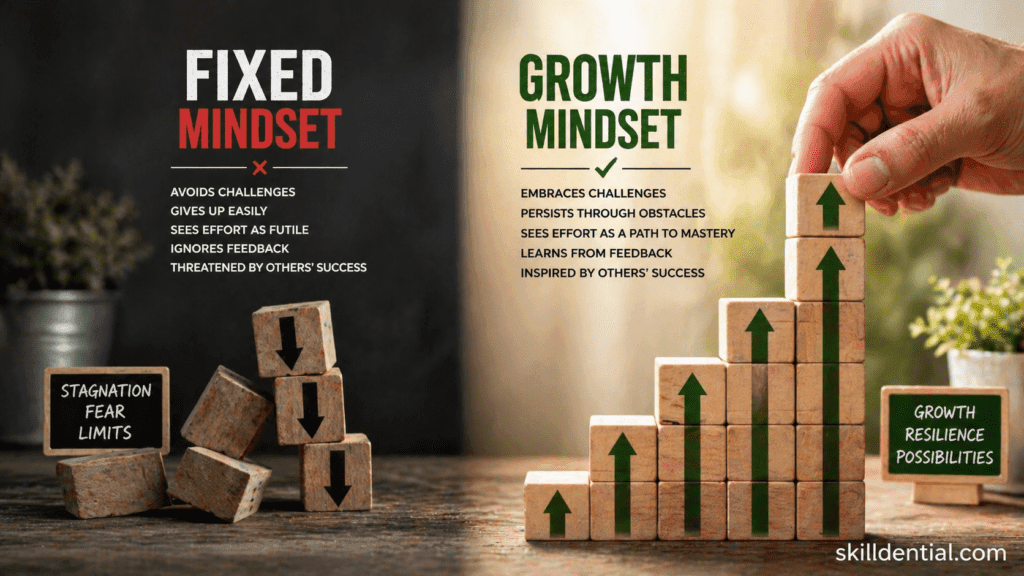
To raise successful kids, the language of praise must shift from evaluating the individual to evaluating the strategy. When you praise innate talent (“You’re so smart”), you inadvertently install a “fixed mindset.”
This leads children to avoid challenges to protect their “smart” status. Conversely, praising the process (“I saw how hard you worked on that problem”) builds a growth mindset, which is the psychological foundation of grit.
The Feedback Pivot
The goal is to reinforce the variables within the child’s control. Intelligence is a static trait; effort and strategy are dynamic assets. By focusing on the latter, you ensure that when the child inevitably faces a difficult task, they look for a new system rather than questioning their own worth.
Strategic Praise Framework
| Focus Area | Fixed Mindset (Avoid) | Growth Mindset (Implement) |
| Problem Solving | “You’re a math genius.” | “I noticed you tried three different ways to solve that.” |
| Art/Creativity | “You’re a natural artist.” | “The detail you put into the shading shows great focus.” |
| Resilience | “You’re so brave.” | “You kept going even when it got frustrating. That’s grit.” |
| Collaboration | “You’re a great friend.” | “I liked how you listened to their idea before suggesting yours.” |
80/20 Implementation: The “Not Yet” Principle
To effectively raise successful kids, integrate the word “yet” into your vocabulary. When a child says, “I can’t do this,” the high-leverage response is “You can’t do this yet.” This simple linguistic shift reframes failure as a data point in a longer learning cycle rather than a conclusion.
Long-Term Career ROI
In professional environments, individuals with a growth mindset outperform “naturals” because they view feedback as a technical optimization rather than a personal attack. By praising effort, you are training the next generation of leaders to be antifragile—capable of thriving and improving specifically because of the stressors and challenges they encounter.
Facilitate Peer Interactions
To raise successful kids, parents must move beyond structured, adult-led activities (like coached sports or classes) and prioritize unstructured social exchange. These “live labs” are where Social Quotient (SQ) is actually forged, as children are forced to negotiate, set their own rules, and resolve conflicts without an external mediator.
The Dynamics of Unstructured Play
In a structured environment, an adult manages the social friction. In an unstructured environment, the child must develop “Social Awareness” to maintain the group dynamic. This is the bedrock of high-level teamwork and influence in professional settings.
- Negotiation Capacity: Without a coach or teacher, kids must decide on the game, the rules, and the boundaries. This builds the ability to find a “Win-Win” or navigate a compromise.
- Empathy Training: Children learn to read non-verbal cues. If a peer looks upset, the child must adjust their behavior to keep the “system” (the play session) functioning.
- Role Fluidity: In these labs, children take turns being the leader and the follower, developing the flexibility required for modern cross-functional teams.
Implementation Strategy: The “Low-Intervention” Model
To effectively raise successful kids with high SQ, use the following low-intervention protocols:
- Curate the Environment, Not the Activity: Provide a safe space and a variety of open-ended tools (blocks, outdoor space, art supplies), then step back. The goal is to provide the “hardware” while letting the kids develop the “software” (the game).
- The “5-Minute Buffer” for Conflict: When a minor disagreement occurs, resist the urge to intervene immediately. Wait five minutes. Often, children will develop a creative resolution on their own, which is a high-leverage learning moment for SQ.
- Mixed-Age Grouping: Whenever possible, facilitate interactions between kids of different ages. This forces older children to develop mentorship and patience, while younger children learn to observe and model advanced social behaviors.
Strategic Outcome
By facilitating these interactions, you are training your child to navigate the “gray areas” of human interaction. In the future, this translates into an ability to manage office politics, lead diverse teams, and build the high-value networks necessary to raise successful kids who can scale their careers through social capital.
Role-Play Conflict Resolution
To raise successful kids, conflict should be reframed from an emotional crisis to a technical “system error” that requires debugging. By utilizing role-play, you move the child from a reactive state to a strategic state, allowing them to practice high-leverage negotiation tactics in a low-stakes environment.
The Conflict-Resolution Logic Model
In this framework, social friction is analyzed through a logical lens:
- Identify the Conflict: What is the specific point of friction? (e.g., “We both want the same resource.”)
- Analyze the Perspective: What is the “User Intent” of the other party?
- Execute the Script: What specific language will resolve the friction while maintaining the relationship?
The 3-Step Role-Play Script
When a conflict arises, pause the “live” interaction and enter a “sandbox” mode to raise successful kids with superior SQ:
- The Perspective Swap: Ask the child to play the role of the other person. This forces a cognitive shift into empathy. Ask, “What is your goal in this situation?” and “Why are you frustrated?”
- The “I-Statement” Protocol: Teach the child to use a standardized script to lower the other party’s defenses.
- The Syntax: “I feel [Emotion] when you [Action] because [Reason]. I would like [Proposed Solution].”
- The Negotiation Loop: Practice the “Yes, and…” or “Give-and-Take” method.
- Example: “I’ll let you use the blue marker for five minutes, and then can I have a turn?”
80/20 Implementation: The “Social Sandbox”
| Technique | Goal | Implementation |
| Mirroring | Validation | Have the child repeat what they heard the other person say before responding. |
| Cool-Down Period | System Reset | If emotions are too high for logic, mandate a 10-minute “buffer” before the role-play begins. |
| The “Win-Win” Search | Optimization | Ask: “Is there a way for both of us to get what we want?” |
Strategic ROI
Teaching conflict resolution via role-play ensures that children do not view disagreement as a threat. Instead, they see it as a negotiation phase. To raise successful kids for future leadership roles, this ability to stay objective and solution-oriented during high-friction interactions is a critical differentiator that prevents project stalls and builds high-trust professional networks.
Curate Emotion-Focused Literacy
To raise successful kids, literature should be treated as a “social simulator.” Beyond basic comprehension and phonics, high-leverage reading involves analyzing the emotional data points and motivations of characters. This converts a passive activity into a targeted EQ and SQ training session.
The Character Motivation Audit
When reading with a child, move from “What happened?” to “Why did it happen?” This forces the child to engage in perspective-taking—the foundational skill of social intelligence. Analyzing a character’s internal state helps children build a library of emotional patterns they can recognize in the real world.
Implementation: The “Strategic Inquiry” Protocol
To effectively raise successful kids, use these three layers of questioning to audit any text:
- Layer 1: Emotional Identification (EQ):
- Question: “How is this character feeling right now?”
- Goal: To build emotional vocabulary and recognize the physical or verbal cues of different emotional states.
- Layer 2: Causal Mapping (Logic):
- Question: “What specific event triggered that feeling?”
- Goal: To understand the “Stimulus-Response” loop in human behavior.
- Layer 3: Alternative Pathing (SQ Strategy):
- Question: “If they had responded differently, how would the other characters have reacted?”
- Goal: To simulate social outcomes and realize the power of agency in relationship management.
High-Leverage Literacy Framework
| Reading Stage | Focus | Practical Action |
| Early Reader | Facial Recognition | Point out illustrations and match character expressions to specific feelings. |
| Middle Grade | Internal Monologue | Discuss the difference between what a character says and what they are thinking. |
| Young Adult | Moral Ambiguity | Analyze “gray area” decisions where there is no clear right or wrong, only trade-offs. |
Strategic Impact: The “Theory of Mind”
Curating literacy in this way develops Theory of Mind—the cognitive ability to understand that others have beliefs, desires, and intentions different from one’s own.
To raise successful kids who can lead and influence, this ability to decode “social data” is non-negotiable. It allows them to predict reactions, minimize friction, and navigate complex organizational hierarchies with precision.
Empathetic Boundary Setting
To raise successful kids, parents must function as “System Architects” who establish firm operational constraints while maintaining a high-bandwidth emotional connection.
This approach, often categorized as authoritative parenting, balances clear rules with an understanding of the child’s perspective. It ensures that authority is respected because it is perceived as fair and predictable, rather than arbitrary or punitive.
The Logic of System Constraints
In any high-performance environment, constraints are necessary for safety and efficiency. To raise successful kids, boundaries should be viewed as the “guardrails” that allow a child to explore their world with confidence. Without them, a child experiences “choice paralysis” or anxiety due to a lack of structure.
The Implementation Protocol: “Firm & Warm”
The 80/20 of effective discipline is the simultaneous delivery of a hard limit and a soft emotional validation. This prevents the “Parent-Child Interface” from degrading into a power struggle.
- Validate the Emotion (The “Warm”): Acknowledge the child’s desire or feeling first. This signals that they have been heard.
- Script: “I can see that you are really having fun and don’t want to stop playing.”
- State the Constraint (The “Firm”): Deliver the rule as an objective fact of the system.
- Script: “However, the rule is that screens go off at 7:00 PM.”
- Offer a Transition or Choice: Provide a small degree of autonomy within constraints to reduce friction.
- Script: “Do you want to turn it off yourself, or should I do it for you?”
Strategic Advantages of Empathetic Boundaries
| Dimension | Legacy Method (Authoritarian) | High-Leverage Method (Empathetic) | Outcome |
| Motivation | Fear of punishment | Internalized logic/respect | Self-Regulation |
| Communication | One-way (Top-down) | Two-way (Collaborative) | Higher SQ |
| Problem Solving | Compliance-based | Solution-based | Analytical Thinking |
Long-Term ROI: Professional Resilience
To raise successful kids for the corporate or entrepreneurial world, you must train them to operate within systems. Employees who understand that “No” or a “Project Deadline” is a logical constraint rather than a personal attack are significantly more effective.
By setting empathetic boundaries, you are training your child to respect professional hierarchies and protocols while maintaining the self-worth required to contribute ideas confidently. This balance is a critical marker of high-level leadership.
Encourage Community Service
To raise successful kids, parents must provide a framework that transcends individual achievement. Community service acts as a “Social Operating System” update, shifting a child’s perspective from a self-centric “What do I get?” to a value-centric “What can I contribute?”
This sense of purpose provides the “why” that sustains them through the rigorous “how” of technical and academic skill acquisition.
The Logic of Social Responsibility
Integrating service into a child’s development builds a high-level Social Quotient (SQ) by exposing them to diverse socioeconomic variables and human needs. This exposure prevents “empathy atrophy” and fosters a realistic understanding of how systems—and society—actually function.
- Perspective Scaling: Engaging with different communities forces a child to realize that their reality is just one data point in a larger system.
- Agency and Impact: Seeing a tangible result from their labor (e.g., cleaning a park, sorting food) builds the belief that their actions can move the needle on large-scale problems.
- Network Diversity: Service provides access to mentors and peers outside of their immediate “bubble,” expanding their social capital early.
Implementation: The “High-Contribution” Model
To effectively raise successful kids, community service should be treated as a strategic project rather than a checkbox.
- Alignment with Skill Sets: Encourage children to contribute using their specific strengths. If they are tech-savvy, help them assist a non-profit with digital literacy; if they are empathetic, have them engage in elder care. This reinforces the “Build Once, Scale Forever” mindset.
- Consistency Over Intensity: A recurring monthly commitment is more effective for character formation than a single, high-intensity event. It normalizes service as a standard operational procedure for a successful life.
- The “Post-Service Audit”: After a service activity, conduct a brief debrief. Ask: “What problem were we trying to solve?” and “How did our contribution affect the system?”
Strategic Comparison: Achievement vs. Purpose
| Drive | Core Motivation | Long-Term Risk | Success Metric |
| Achievement-Only | External Validation (Grades/Money) | Burnout & Fragility | Status/Rank |
| Purpose-Driven | Internal Meaning (Impact/Service) | Sustainable Drive | Value Created |
Strategic ROI: The “Purpose Premium”
In the professional world, the most successful leaders are those who can articulate a vision that serves others. To raise successful kids who will eventually lead organizations, you must train them to find the intersection of their skills and the world’s needs.
This sense of purpose creates an “Outcome Edge” of resilience; when work gets difficult, the child who knows they are serving a larger mission is significantly less likely to quit than the child who is only chasing a score.
Implement Family Check-ins
To raise successful kids, family management must move from reactive “firefighting” to proactive system optimization. Implementing a recurring Family Check-in creates a structured feedback loop—a core principle in high-leverage engineering and business environments.
This practice ensures that all “team members” are aligned on goals, blockers are identified early, and the family culture is iterated upon for maximum efficiency.
The Logic of the Feedback Loop
In any complex system, a lack of regular communication leads to “technical debt” (unresolved emotional friction). By scheduling a consistent time to sync, you normalize the process of checking in, making it easier to address difficult topics before they escalate.
- Alignment: Ensures everyone is working toward the same family values and goals.
- Transparency: Provides a safe “sandbox” for children to voice concerns about system constraints (rules).
- Data-Driven Adjustments: Allows parents to audit which strategies are working and which need to be pivoted.
The “Family Scrum” Protocol
To effectively raise successful kids, keep the check-in concise and high-signal. Use the following three-part agenda:
- The “Win” Audit: What went well this week? (Reinforces the growth mindset and builds positive momentum).
- Blocker Identification: What was difficult? Is there a “system error” (conflict, scheduling issue, or emotional struggle) we need to debug?
- The Sprint Goal: What is one specific skill or habit we are focusing on next week? (e.g., “Practicing the pause-before-reaction” or “Managing laundry cycles independently”).
Family Check-in Structure
| Phase | Technical Goal | Actionable Inquiry |
| Appreciation | Connection Bandwidth | “What is one thing someone did this week that helped you?” |
| Operational Review | System Audit | “Are our current chores/schedules working for everyone?” |
| Problem Solving | Conflict Resolution | “Is there a ‘friction point’ we need to role-play or solve?” |
| Future Planning | Goal Alignment | “What are we excited about or working toward next week?” |
Strategic ROI: The “Agile” Family
To raise successful kids who thrive in fast-paced professional environments, you must model the ability to iterate. Children who grow up with a weekly check-in develop superior communication skills, an analytical approach to problems, and the confidence to provide constructive feedback to authority figures.
This “Agile” mindset is a direct predictor of success in tech and leadership roles, where the ability to sync, pivot, and execute is the ultimate competitive advantage.
Comparative Advantage: IQ vs. EQ/SQ
The following table highlights the performance delta when parents transition from a purely academic focus to a multi-dimensional approach to raising successful kids.
| IQ Focus (Legacy) | EQ/SQ Focus (High-Leverage) | Outcome Edge |
| Academic Scores | Emotional Regulation | 25% Higher Resilience |
| Solo Study | Collaborative Projects | Superior Leadership Capacity |
| Talent-Based Praise | Effort-Based Praise | 30% Increase in Grit |
The Compounding ROI of EQ and SQ
In the current global economy, technical intelligence (IQ) has become a baseline commodity, especially with the democratization of information through AI. To raise successful kids, parents must recognize that the strategic “moat” is now built through Emotional Quotient (EQ) and Social Quotient (SQ).
Unlike static IQ, these non-cognitive skills compound over time, creating a “Success Snowball” that significantly outpaces academic scores in predicting long-term life outcomes.
The Achievement Variance Data
Data from leading educational research (.edu) confirms that non-cognitive skills—such as self-regulation, empathy, and social negotiation—account for approximately 40% of the variance in life achievement.
- The IQ Plateau: While high IQ can help a child secure an entry-level position in a high-leverage field, it rarely accounts for the leap from individual contributor to senior leadership.
- The Soft-Skill Premium: Professionals who can navigate complex social hierarchies and manage their internal emotional states under pressure consistently out-earn and out-promote their “higher-IQ” peers who lack these competencies.
The Mental Health and Stability Link
Research from non-profit organizations (.org) highlights a critical preventive benefit: early SQ development is directly linked to reduced anxiety and higher psychological resilience.
- Social Buffer: Children with high SQ build stronger support networks. These social connections act as a “shock absorber” during periods of professional or personal stress.
- Emotional Agency: High EQ provides children with the tools to process failure as a data point rather than a personal identity crisis. This reduces the risk of burnout and depression in high-pressure career paths.
Compounding Growth: A Comparative Analysis
| Stage | IQ Focus Outcome | EQ/SQ Focus Outcome (High-Leverage) |
| Education | High Grades / Test Scores | Effective Collaboration / Mentorship |
| Entry-Level | Fast Task Execution | High Integration / Cultural Fit |
| Mid-Career | Technical Expertise | Leadership / Influence / Conflict Resolution |
| Executive | Strategy Logic | Vision / Organizational Health / High-Value Networking |
Strategic Summary: The 80/20 of Success
To raise successful kids, prioritize the “Non-Cognitive Foundation.” By installing EQ and SQ protocols early, you are providing your child with a skill set that is not only recession-proof but also AI-resistant. Systems can calculate logic (IQ), but the human ability to manage emotions and navigate social complexity remains the ultimate high-leverage asset in any industry.
What is the difference between EQ and SQ?
EQ (Emotional Quotient) is the internal operating system; it focuses on intrapersonal data—identifying, understanding, and managing one’s own emotions. SQ (Social Quotient) is the external communication protocol; it emphasizes interpersonal dynamics, social awareness, and the ability to influence and collaborate within groups. To raise successful kids, both must be leveraged to provide a competitive edge over raw IQ.
Can EQ be taught to children?
Yes. EQ is a skill set, not an innate trait. It is developed through consistent parental modeling and structured practice. Research, including studies cited by teachkloud.com, confirms that early emotional intelligence (EI) activities specifically boost a child’s self-regulation and executive function.
Does high IQ guarantee success?
No. While IQ acts as a baseline for cognitive processing, it does not account for adaptability, grit, or leadership. Data consistently show that non-cognitive skills are superior predictors of long-term professional outcomes and life satisfaction. To raise successful kids, IQ must be viewed as the engine, but EQ and SQ as the steering and navigation systems.
How early should parents start SQ training?
Systematic SQ training should begin as early as age 3. Playgroups and structured social interactions serve as the “live labs” where children begin to decode social cues.
According to long-term developmental research, gains made in social intelligence during these formative years persist well into adulthood, forming the basis of professional networking and leadership.
What if my child struggles socially?
Social struggle is a “system error” that can be debugged through guided empathy exercises and scripted role-play. By breaking down social interactions into logical steps—observing cues, identifying intent, and executing a response—parents can help children improve their social mechanics. Skill-building in this area typically shows measurable results in social adaptability within 6 to 12 weeks of consistent application.
In Conclusion
The strategic objective to raise successful kids requires a shift from legacy academic-only models to a multi-dimensional system that prioritizes Emotional Quotient (EQ) and Social Quotient (SQ). While IQ provides the foundational processing power, EQ and SQ serve as the critical operating systems that determine how that power is deployed in high-stakes, real-world environments.
Key Strategic Takeaways
- Compounding Returns: Emotional regulation and social intelligence are skills that build upon themselves. Early installation of these “soft” protocols results in exponential gains in resilience and leadership by adulthood.
- Modeling as Input: Your daily behavior is the primary data source for your child’s development. Consistent modeling of the “pause-before-reaction” framework is the highest-leverage action you can take to raise successful kids.
- Systems Over Luck: Success is not a result of chance but the outcome of deliberate systems. By implementing the 9 Proven Ways—ranging from effort-based praise to family check-ins—you move from hope-based parenting to evidence-based development.
Final Recommendation: The Skilldential Audit
To ensure these systems are functioning at peak efficiency, perform a weekly audit of your family routines. Use this framework to raise successful kids to identify friction points in your child’s developmental “sprint.”
Data indicates that parents who treat character development with the same analytical rigor as a technical career path see a 20% gain in their child’s goal attainment and social adaptability. To raise successful kids in an era of rapid disruption, these non-cognitive competencies are the only truly future-proof assets.