What Is an Agentic AI Platform? Examples and How It Works
An agentic AI platform is software that lets you build, run, and manage autonomous systems capable of executing multi-step goals with minimal human supervision. Unlike traditional models that wait for prompt-by-prompt instructions, an agentic AI platform coordinates perception, reasoning, memory, and tool execution to move from a high-level objective to a finished outcome.
This guide breaks down what an agentic AI platform is, how its architecture functions, and how it differs from standard chatbots and automation scripts.
This resource is engineered for:
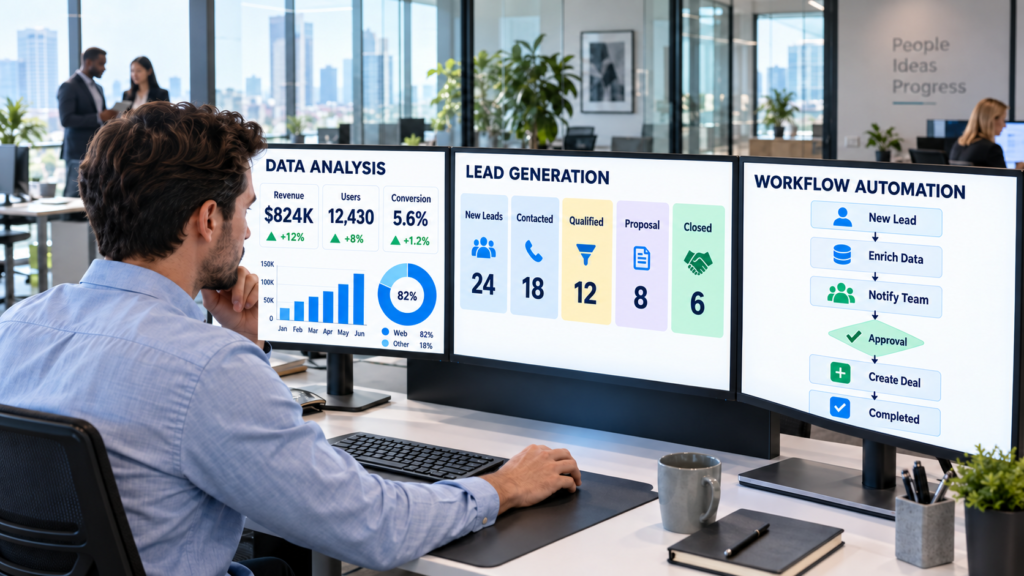
- Founders and Business Leaders: Evaluating how an agentic AI platform can automate complex workflows and scale operational capacity.
- Professionals and Creators: Looking to leverage an advanced agentic AI platform for deep research, execution, and productivity gains.
- Technology Decision-Makers: Assessing the security, architecture, and integration readiness of an enterprise agentic AI platform.
What is an Agentic AI Platform?
An agentic AI platform is a specialized system or toolkit designed to build, orchestrate, and operate autonomous AI agents capable of executing complex, multi-step workflows.
Unlike passive language models that require prompt-by-prompt instructions, an agentic AI platform empowers AI systems to:
- Interpret Objectives: Translate high-level natural language goals into actionable intent.
- Autonomous Planning: Break down complex objectives into a logical, sequential series of steps.
- External Tool Integration: Seamlessly interface with APIs, databases, CRMs, code repositories, and productivity suites.
- Dynamic Execution & Correction: Perform actions, analyze the output, and self-correct or adjust the plan if errors occur.
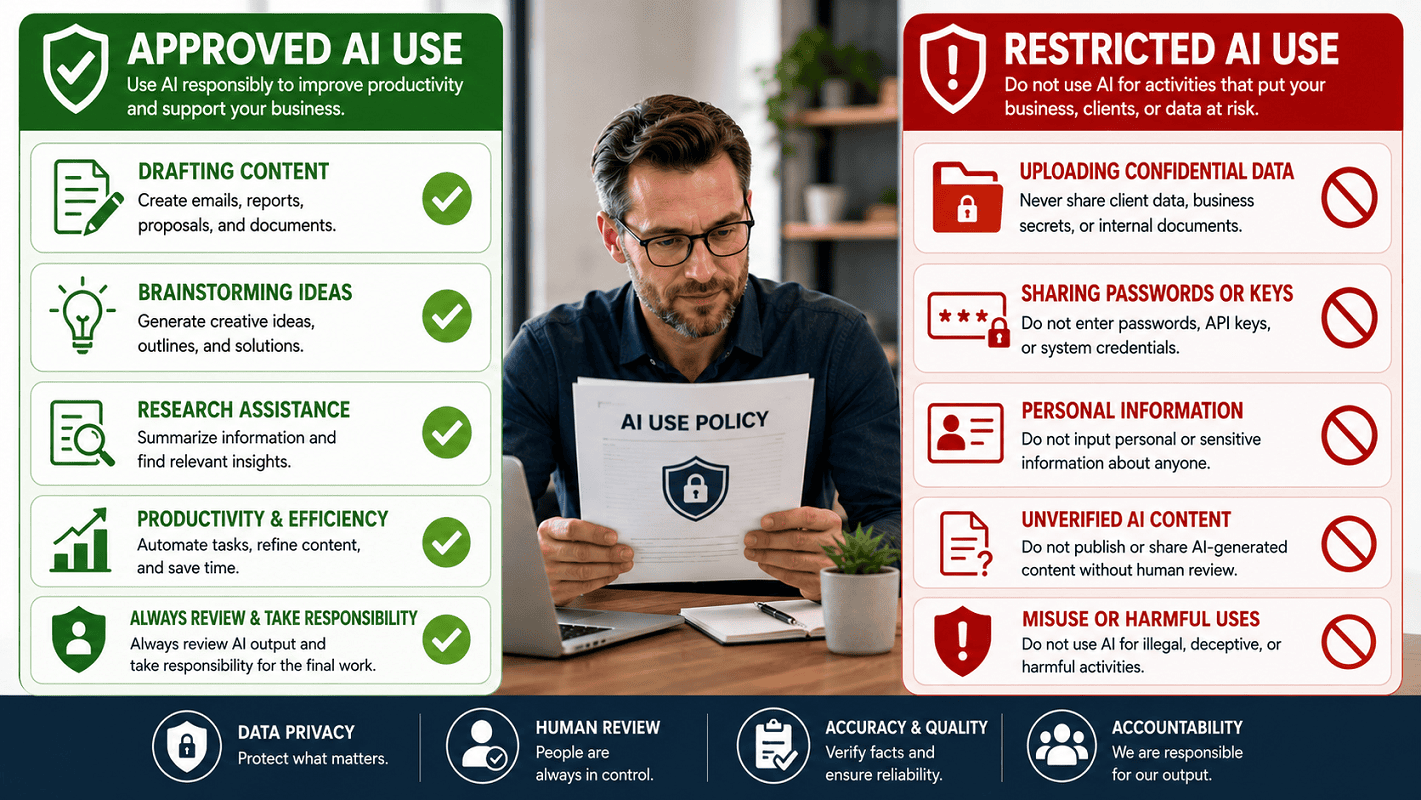
- Human-in-the-Loop Governance: Execute tasks continuously until the objective is achieved or pause when a predefined human approval gate is triggered.
The Bottom Line: Generative AI answers; an agentic AI platform acts.
How Agentic AI Works: From Goal to Action
An agentic AI platform operates through a continuous cognitive loop that transitions an AI from a passive responder to an active executor. Rather than generating a single response and stopping, the system runs an iterative loop: perceive, plan, act, and evaluate.
Throughout this cycle, the agentic AI platform leverages integrated memory to track context across steps and enforces human checkpoints to ensure safety and alignment before final execution.
Goal Interpretation
The workflow on an agentic AI platform begins when you input a high-level, multi-step natural language instruction, such as:
“Find the top 10 leads from last month’s webinar, enrich their company data, and draft personalized outreach emails for review.”
Upon receiving this instruction, the agentic AI platform interprets the underlying intent, breaks down the requirements, and—if any part of the objective is ambiguous—actively prompts the user with clarifying questions before initiating execution.
Planning and Task Breakdown
Once the objective is established, an agentic AI platform converts the high-level goal into a structured, sequential execution plan. For example, the system automatically outlines the following workflow:
- Pull the webinar attendee list directly from the marketing platform.
- Enrich each lead using external company data from a CRM or data provider.
- Score the leads based on fit criteria and engagement metrics.
- Draft personalized emails utilizing a designated template and stored brand voice guidelines.
- Save the finalized drafts to the email tool and trigger a notification for human approval.
This structural planning phase is where an agentic AI platform fundamentally diverges from a basic chatbot. Instead of predicting only the next token or sentence, the platform determines the logical sequence, operational conditions, and branching conditional logic required to finish the entire workflow.
Reasoning and Tool Use
During execution, an agentic AI platform dynamically manages individual steps through three core mechanisms:
- Tool Selection: The agent determines which specialized tool or API to invoke (e.g., calling a webinar platform API, querying a CRM, or accessing an enrichment service).
- Request Handling: The platform constructs valid API requests, manages authentication protocols securely, and parses unstructured or structured responses.
- Contextual Reasoning: Powered by advanced language models, the agentic AI platform interprets incoming data dynamically to decide the immediate next action.
Action and Execution
Once a decision is made, an agentic AI platform carries out tangible operations across your digital infrastructure. These execution capabilities include:
- Creating or updating records directly within a CRM.
- Sending or scheduling outreach emails.
- Running code inside a secure sandbox environment to clean or transform data.
- Posting notifications or status updates to collaboration channels like Slack or Microsoft Teams.
Crucially, an agentic AI platform executes real changes in your connected systems rather than just outputting passive text inside a chat window.
Evaluation, Memory, and Adaptation
Following each action, an agentic AI platform executes a feedback and optimization loop:
- Result Verification: The system assesses whether the output matches the expected outcome (e.g., verifying whether all 10 leads were successfully enriched).
- Memory Integration: Context is maintained across short-term working memory and long-term storage, allowing the agent to reference previous steps or historical data.
- Dynamic Adjustment: If an error occurs, the agentic AI platform adapts by retrying the operation, routing to an alternative tool or data source, or escalating the issue to a human.
To maintain operational safety, an agentic AI platform can be configured with strict human approval gates before executing high-risk actions, such as dispatching mass outreach campaigns or modifying critical financial records.
Agentic AI Platform vs AI Agent vs Generative AI vs Chatbot vs Automation
These terms are often used interchangeably, but they represent entirely different architectural layers in modern software.
Comparative Breakdown
| Concept | What It Does | Typical Output | Autonomy | Example |
| Generative AI | Creates content from prompts | Text, images, code, audio | Low: Waits for each prompt | ChatGPT writing a blog outline |
| AI Agent | Pursues a specific task using tools | Actions + content | Medium: Can take multiple steps for one task | An agent that books a meeting by checking calendars and sending invites |
| Agentic AI Platform | Coordinates multiple agents and steps to achieve a high-level goal | End-to-end workflow completion | High: Plans, decides, and adapts across steps | “Run our monthly lead nurturing campaign” from raw attendee list to scheduled emails and reports |
| Chatbot | Converses and answers questions | Messages | Low to Medium: Mostly reactive | Website support bot answering FAQs |
| Traditional Automation | Executes fixed, pre-defined rules | Deterministic actions | None: No reasoning or adaptation | A script that moves files from folder A to B every night |
Key Operational Differences
- Generative AI vs. Agentic AI: Generative AI creates text and media; an agentic AI platform creates, plans, decides, and executes real-world actions.
- Chatbots vs. AI Agents vs. Platforms: Chatbots talk; standalone AI agents talk and do; an agentic AI platform orchestrates multiple agents and multi-step workflows to finish a broad business objective.
- Automation vs. Agentic AI: Traditional automation follows rigid, brittle rules; an agentic AI platform leverages reasoning to handle exceptions and adapt dynamically when conditions change.
Real-World Examples of Agentic AI Platforms in Action
The following scenarios demonstrate how an agentic AI platform transforms daily business operations when integrated with your existing software stack (such as CRMs, code repositories, data warehouses, and communication tools).
Customer Service and Support
- Workflow: An agentic AI platform monitors incoming support tickets, classifies intent, pulls historical order data, and drafts tailored responses. For complex issues, it builds a multi-step troubleshooting plan, executes diagnostic queries, and escalates to a human agent only when confidence drops or the customer requests it.
- Business Outcome: Faster first-response times, uniform answer quality, and reduced burnout for human support teams.
Research and Market Intelligence
- Workflow: You instruct the system: “Summarize the top five competitors’ pricing pages and highlight any new features launched in the last 30 days.” The agentic AI platform navigates designated websites, extracts pricing matrices, compares service tiers, and compiles a comprehensive brief with citations. It can automate this check weekly and update a centralized team dashboard.
- Business Outcome: Continuous competitive intelligence without manual web scraping or report compilation.
Marketing and Sales Operations
- Workflow: Using the core prompt, the agentic AI platform extracts webinar attendee lists, enriches contact details via external providers, scores lead viability, and drafts segmented outreach sequences stored in your CRM for human sign-off. It can also track initial response metrics and suggest cadence adjustments.
- Business Outcome: Accelerated lead qualification and hyper-personalized outreach at scale.
Software Development and DevOps
- Workflow: An engineer requests: “Create a new microservice template, set up CI/CD pipelines, and open a pull request with initial unit tests.” The agentic AI platform generates code scaffolding, configures deployment pipelines, validates builds in a secure sandbox, and opens a structured PR. Human developers review the code, while the agent can handle minor syntax fixes or comment resolutions automatically.
- Business Outcome: Reduced boilerplate setup time and faster development lifecycles.
Data Analysis and Reporting
- Workflow: A user prompts: “Prepare last month’s revenue report by product and region, highlight anomalies, and email it to the leadership team.” The agentic AI platform queries the data warehouse, executes statistical analysis, flags unusual variances, builds visualizations, and stages the report for executive approval.
- Business Outcome: Automated financial and operational reporting with zero manual spreadsheet wrangling.
Internal Operations (HR, Finance, and IT)
- HR: The system screens incoming candidate CVs against job descriptions, shortlists the top 10 profiles, and coordinates interview scheduling.
- Finance: The platform reconciles weekly transactions, matches outstanding invoices, and flags exceptions for accountant review.
- IT: The system monitors live error logs, clusters related incidents, and automatically generates support tickets complete with proposed root-cause analyses.
Across every use case, the agentic AI platform coordinates the multi-step execution loop while human operators retain strict control over final approvals and high-stakes decisions.
Essential Features of an Agentic AI Platform
When evaluating solutions, a production-grade agentic AI platform must incorporate six core capability layers to ensure reliability, scalability, and security:
Workflow Orchestration
- Flexible Builders: Visual drag-and-drop or code-based interfaces to define complex, multi-step execution paths, conditional loops, and branching logic.
- Stateful Execution: Support for persisting state so long-running tasks can pause, resume, and survive system restarts without losing context.
- Resilience Patterns: Built-in architectural patterns for automated retries, fallback routines, error handling, and mandatory approval gates.
Memory and Context Management
- Working Memory: Short-term memory structures to track immediate context during active tasks or conversations.
- Long-Term Retrieval: Integration with vector databases and document stores, enabling agents to recall historical interactions, enterprise knowledge bases, and user preferences.
- Governance Controls: Granular settings to define data retention periods, memory pruning, and access permissions.
Integrations and Tool Access
- Pre-Built Connectors: Native integrations for standard enterprise stacks (CRMs, helpdesks, email suites, calendar platforms, code repositories, and databases).
- Extensibility: The ability to connect custom APIs and execute code within secure, isolated sandboxes.
- Credential Isolation: Secure secrets management providing distinct identities for individual agents and enforcing least-privilege access principles.
Monitoring, Observability, and AgentOps
- Execution Dashboards: Real-time visibility into agent actions, tool invocation history, execution duration, and failure points.
- Audit Trails: Immutable logging mechanisms designed for rigorous debugging and compliance auditing.
- Performance Metrics: Tracking for task success rates, token and model costs, and tool consumption over time.
Security Controls and Governance
- Access Governance: Role-based access control (RBAC) with clean environmental separation between development and production agents.
- Risk Mitigation: Strict tool allowlists, rate-limiting frameworks, and execution sandboxing to limit the blast radius of errors or malicious inputs.
- Data Protection: End-to-end encryption, compliant data residency options, and relevant industry certifications.
Human Approval and Override
- Configurable Checkpoints: Mandatory gates that pause execution until an authorized human operator grants explicit sign-off.
- Inspection and Editing: Intuitive interfaces allowing humans to review, modify, or reject an agent’s proposed actions before execution.
- Accountability Tracking: Comprehensive audit records capturing who approved specific actions, along with exact timestamps.
How to Choose an Agentic AI Platform: A Practical Checklist
Use this six-step framework to evaluate solutions against your technical and operational requirements:
Clarify Your Primary Use Cases
- Identify the top 2 to 3 workflows you want to automate first (e.g., lead nurturing, support triage, or operational reporting).
- Determine whether these workflows are internal, customer-facing, or a hybrid of both.
- Assess the risk profile: evaluate how strictly speed, absolute accuracy, and compliance matter for each use case. Keep in mind that platforms often specialize—some excel at sales and marketing automation, while others are built specifically for developer workflows or customer support.
Match Technical Ability and Builder Type
- Non-Technical / No-Code Teams: Prioritize platforms offering intuitive drag-and-drop builders, pre-built templates, and guided setup flows.
- Developer Teams: Look for robust SDKs, version control integrations, comprehensive testing frameworks, and infrastructure-as-code support.
- Verify whether the platform natively supports your organization’s preferred programming languages and frameworks (e.g., Python, JavaScript, .NET).
Evaluate Integrations and Ecosystem
- Audit whether the platform natively connects to your core tech stack (CRM, email suite, helpdesk, code repositories, data warehouse).
- Test how easily you can plug in custom internal APIs or proprietary microservices.
- Review the platform’s public marketplace or partner ecosystem for extended functionality.
Review Security, Privacy, and Governance
- Inspect the identity and access management (IAM) model the platform uses to provision and restrict agents.
- Verify the presence of protective guardrails, such as tool allowlists, runtime sandboxing, and strict rate limits to minimize blast radius.
- Confirm support for mandatory human approval gates, immutable audit logs, and data retention policies that meet your internal compliance mandates.
- Check data residency options to ensure compliance with regional data privacy laws.
Understand Pricing and Total Cost of Ownership (TCO)
- Analyze the pricing model: determine whether costs scale per user, per active agent, per completed task, per LLM token, or through a blended structure.
- Project your operational volume (estimated daily tasks, API calls, and message counts) to model cost projections.
- Factor in hidden TCO drivers, including custom integration overhead, premium model tier fees, enterprise support plans, and internal engineering hours required for ongoing maintenance.
Test with a Pilot Workflow
- Select one concrete, bounded workflow (e.g., a weekly lead report or tier-one support ticket triage).
- Implement the workflow end-to-end on your top two shortlisted platforms.
- Measure core performance indicators: time-to-build, execution success rate, frequency of human interventions required, operational cost, and end-user satisfaction.
- Base your final vendor selection on empirical pilot results rather than marketing claims.
What specific use case or workflow are you planning to target for your first agentic implementation pilot?
Risks and Limitations to Understand Before Adopting
While an agentic AI platform offers unprecedented operational leverage, it also introduces unique risks that require careful mitigation. Understanding these challenges prevents costly failures and operational drift.
Inaccurate or Overconfident Decisions
- The Risk: Agents can misinterpret vague instructions, ingest stale data, or hallucinate plausible-sounding yet fundamentally incorrect logic—especially in complex or ambiguous environments.
- Mitigation: Define unambiguous natural language objectives, restrict tool access strictly to necessary endpoints, mandate human sign-off for critical milestones, and continuously monitor execution outputs.
Excessive Autonomy and Loss of Control
- The Risk: Unconstrained workflows can lead to cascading automated actions running without oversight, compounding minor errors into major operational, financial, or reputational crises.
- Mitigation: Enforce mandatory approval gates, implement strict rate limits, program explicit “stop” conditions, and retain active human-in-the-loop governance for sensitive workflows.
Privacy and Data Protection Concerns
- The Risk: Because an agentic AI platform interfaces directly with enterprise apps, agents may inadvertently read, process, or transmit sensitive data across external APIs or vector stores, expanding your data leakage surface.
- Mitigation: Enforce strict least-privilege identity access principles, mandate end-to-end encryption for data in transit and at rest, and establish clear data retention and deletion pipelines.
Advanced Security Vulnerabilities
- The Risk: Connecting autonomous systems to live tools opens new attack surfaces, including prompt injection, credential theft, memory poisoning vulnerabilities, and compromised agent-to-agent communication.
- Mitigation: Deploy secure tool allowlists, isolate agent execution environments, automate credential rotation, maintain comprehensive audit logs, and conduct rigorous security red-teaming.
Unpredictable Operating Costs and Maintenance Complexity
- The Risk: Multi-step agentic workflows consume significantly more LLM tokens and API calls than standard prompts, turning operational costs into a moving target. Furthermore, complex logic paths can become difficult to debug without strong observability tools.
- Mitigation: Implement granular cost tracking per workflow, establish strict financial threshold alerts, and pilot simple, high-value automations before scaling complex orchestration systems enterprise-wide.
Common Misconceptions About Agentic AI Platforms
As adoption accelerates, several persistent myths surround what an agentic AI platform can and cannot do. Separating marketing hype from technical reality ensures more successful deployments.
“It will fully replace my team.”
- The Myth: Autonomous agents will eliminate the need for human personnel entirely, running entire departments independently.
- The Reality: An agentic AI platform automates specific tasks, multi-step workflows, and repetitive execution loops—not entire professional roles. Human oversight remains vital for defining strategic goals, establishing governance policies, and managing high-ambiguity exceptions.
“It’s just a smarter chatbot.”
- The Myth: Agentic systems are simply advanced conversational models with better memory or slightly improved reasoning.
- The Reality: Chatbots are fundamentally reactive and conversation-bound. Conversely, an agentic AI platform coordinates complex workflows, executes real-world changes across enterprise software, and orchestrates multi-step problem-solving.
“Once I set it up, I can forget about it.”
- The Myth: Agentic automation is a “set-and-forget” utility that operates indefinitely without maintenance.
- The Reality: Autonomous systems require active monitoring, periodic prompt tuning, and continuous governance—particularly as underlying APIs, business tools, and operational requirements evolve.
“No-code means no skills needed.”
- The Myth: Drag-and-drop interfaces mean anyone can build enterprise-grade agents without prior technical or operational knowledge.
- The Reality: While no-code builders lower the barrier to entry, successfully deploying an agentic AI platform demands rigorous process design, strong data discipline, and foundational automation literacy to avoid compounding operational errors.
Getting Started: A Simple Adoption Path
If your organization is new to autonomous workflows, follow this pragmatic, step-by-step roadmap to implement an agentic AI platform safely and effectively:
Pick One High-Value, Low-Risk Workflow
- Action: Select a single, bounded process to automate first. Ideal starting points include weekly operational reporting, initial support ticket triage, or basic lead enrichment.
- Objective: Target a task that consumes measurable human hours but carries a low blast radius if an error occurs.
Map the Current Process
- Action: Document the manual workflow end-to-end. Detail each sequential step, the specific software tools used, internal decision points, and who currently authorizes or reviews milestones.
- Objective: Establish a baseline process map so you can clearly define what the agentic AI platform needs to replicate and improve.
Choose a Platform That Fits Your Skills and Tech Stack
- Action: Use the evaluation checklist to narrow down your options to one or two candidate platforms.
- Objective: Select a tool that matches your team’s technical proficiency (whether no-code/low-code or developer-heavy) and integrates smoothly with your existing software ecosystem.
Implement with Guardrails from Day One
- Action: Deploy your pilot workflow with maximum oversight. Configure the platform to require human approval for all external actions (such as sending emails or updating records).
- Objective: Gradually relax approval rules only as the system proves its reliability and your team builds confidence in its outputs.
Measure, Learn, and Expand
- Action: Track core performance metrics over a 30-to-60-day pilot window, including hours saved, execution error rates, cost per task, and end-user satisfaction.
- Objective: Use empirical performance data to justify scaling the agentic AI platform to more complex, mission-critical workflows across your organization.
What is an agentic AI platform?
An agentic AI platform is a specialized software system or toolkit designed to build, orchestrate, and operate autonomous AI agents capable of executing complex, multi-step workflows.
Unlike traditional generative AI models that require prompt-by-prompt instructions, an agentic AI platform can interpret high-level natural language goals, break them down into sequential steps, utilize external tools and APIs, and adapt dynamically based on execution results.
How does an agentic AI platform differ from a standard chatbot?
While chatbots are fundamentally reactive and conversation-bound, an agentic AI platform coordinates multi-step problem-solving and executes real-world changes across enterprise software.
Chatbots primarily respond with text messages, whereas agentic platforms manage complex logic, integrate with external APIs, and run autonomous workflows to achieve broader business objectives.
What are the core components of how agentic AI works?
Most systems on an agentic AI platform operate through a continuous cognitive loop:
Perceive & Interpret: Translating natural language instructions into actionable intent.
Plan: Breaking a goal down into a structured sequence of operational steps.
Act: Executing tasks via connected tools, databases, or APIs.
Evaluate & Adapt: Monitoring results, maintaining short- and long-term memory, and self-correcting or escalating to a human when errors occur.
What types of business use cases are best suited for an agentic AI platform?
An agentic AI platform excels at repetitive, multi-step workflows that require both reasoning and tool execution. Common high-value use cases include customer support triage, competitive market research and web scraping, sales lead enrichment and outreach sequencing, software development DevOps tasks (like generating code and opening PRs), financial reporting, and internal HR/IT operations.
What security and governance features should I look for in an agentic AI platform?
Production-grade security for an agentic AI platform requires robust guardrails, including role-based access control (RBAC), environment separation, tool allowlists, rate-limiting, secure credential management, immutable audit trails, and strict human-in-the-loop approval gates for high-risk operations.
How do I choose the right agentic AI platform for my organization?
Selecting the best agentic AI platform involves mapping your top 2 to 3 target workflows, matching the software to your team’s technical capabilities (no-code builders vs. developer SDKs), auditing native tool integrations, evaluating pricing models and total cost of ownership (TCO), and running a controlled pilot test on a low-risk workflow.
In Conclusion
An agentic AI platform enables AI systems that plan, decide, and act across your tools to complete multi-step goals, not just answer questions. It works through a loop of goal interpretation, planning, reasoning, tool use, action, and evaluation, often with memory and human approval checkpoints.
It is distinct from generative AI, chatbots, and traditional automation by its ability to coordinate complex workflows and adapt when conditions change. Real-world use cases span customer service, research, marketing, software development, data analysis, and internal operations.
Essential platform features include workflow orchestration, memory, integrations, monitoring, security controls, and human approval. Risks such as inaccurate decisions, excessive autonomy, privacy issues, and security vulnerabilities must be managed with guardrails, governance, and ongoing oversight.
Your Next Step: Pilot Action Plan
- Identify and Sketch: Pinpoint one repetitive, well-defined workflow in your operations (e.g., weekly lead enrichment, Tier-1 support ticket categorization, or operational report generation). Map out how an agentic AI platform can handle the ingestion, execution, and output steps end-to-end, while inserting explicit human approval gates before any external data is changed or sent.
- Launch a Controlled Pilot: Use your process sketch to test 1–2 shortlisted platforms on a micro-scale. Measure build time, task success rate, error frequency, and human intervention overhead before rolling the technology out broadly across your organization.