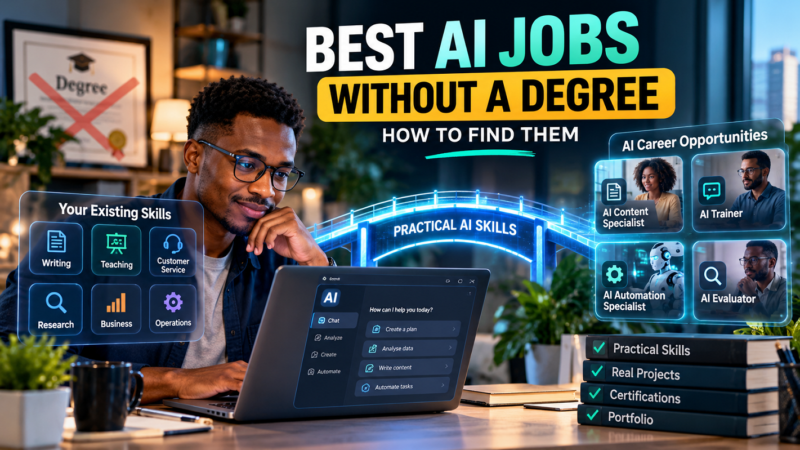
Top 9 Remote Medical AI Trainer Jobs for Healthcare Students
Healthcare is currently one of the fastest-growing sectors for AI adoption, and this rapid evolution is creating a specialized category of professional opportunity: Remote Medical AI Trainer jobs. These positions allow healthcare students and professionals to directly shape the future of medicine by teaching, evaluating, and refining AI models using their clinical expertise.
For many, these contract and freelance roles serve as the perfect bridge between clinical practice and technology, offering flexible, remote work environments—often paying between $20 and $120 per hour. Whether you are navigating clinical rotations or have recently graduated, Remote Medical AI Trainer jobs provide a unique way to build high-leverage digital health skills while maintaining a flexible schedule.
This guide is for:

- Medical, nursing, pharmacy, dentistry, and allied health students.
- Final-year students and recent graduates seeking flexible, high-income remote opportunities.
- Clinicians interested in leveraging their medical knowledge to influence health-tech innovation.
What you will learn:
- The core responsibilities of a Medical AI Trainer.
- Nine specific job types and platforms currently hiring for these roles.
- Essential skills, qualifications, and real-world pay expectations.
- Actionable strategies to position yourself competitively for your first AI-focused contract.
- How to pivot from these roles into long-term careers in health technology.
To help you navigate this space, this guide is structured with question-based analysis, a comparison table of roles, a decision framework for choosing the right platform, and FAQs optimized for the latest AI-driven search trends.
What Is a Remote Medical AI Trainer?
A Remote Medical AI Trainer is a healthcare-literate professional—ranging from students in clinical years to licensed practitioners—who plays a critical role in the development of health-tech by reviewing, labeling, evaluating, and refining AI models.
These roles are in high demand because healthcare AI companies require domain experts to minimize “hallucinations” (confident but incorrect information), eliminate biases, and ensure that AI outputs strictly adhere to clinical guidelines and safety standards.
Key Responsibilities
- Annotating Medical Data: Processing clinical text, pathology reports, imaging (DICOM), or structured patient records to create high-quality training datasets.
- Evaluating Model Accuracy: Testing AI-generated medical answers for clinical soundness, scientific rigor, and safety.
- Prompt Engineering & Scenario Creation: Designing complex, graduate-level clinical case scenarios to test and train an AI’s diagnostic reasoning.
- Fact-Checking & Quality Assurance: Reviewing treatment recommendations and medical advice against established medical literature to ensure consistency and prevent harmful errors.
- Alignment & Reasoning: Correcting an AI’s “chain of thought” to ensure its logical process mirrors that of a competent healthcare professional.
Why Healthcare Expertise Matters
Unlike general data annotation, Remote Medical AI Trainer jobs require judgment that only someone with medical education can provide. You are not practicing medicine online; you are applying clinical reasoning to a technological framework. By identifying where an AI fails to understand a diagnosis or misinterprets a patient’s symptoms, you are directly shaping tools that will eventually assist in patient care, administrative automation, and clinical research.
Are you currently specializing in a specific clinical area, such as cardiology, radiology, or pharmacology, or are you looking for roles that utilize broad medical knowledge? Identifying your niche will significantly impact which platforms will prioritize your application.
Why Are These Jobs Ideal for Healthcare Students?
These roles are uniquely suited to the constraints and professional ambitions of current healthcare students, offering a high-leverage entry point into the future of medicine.
- Flexible, Project-Based Work: Most Remote Medical AI Trainer positions are contract-based, allowing you to manage 5–20 hours per week around demanding clinical rotations, lectures, or exam schedules.
- Fully Remote Infrastructure: Eliminate commuting time. Whether you are at home or studying on campus, you only need a secure internet connection to contribute.
- Skill Acquisition Beyond the Classroom: You will gain firsthand experience in prompt engineering, data annotation, and model evaluation—skills that are becoming as vital as clinical proficiency.
- Income with Clinical Relevance: Unlike generic part-time jobs, these roles utilize your existing medical knowledge, providing competitive hourly pay while reinforcing your clinical reasoning and terminology.
- Strategic Career Leverage: Positioning yourself at the intersection of medicine and technology creates a differentiated profile. Experience in training AI models makes you a prime candidate for future roles in clinical informatics, health-tech product management, and AI implementation leadership.
For students in their clinical years, these roles are particularly valuable; you possess the current, evidence-based medical knowledge that AI companies are desperate to encode into their models. You aren’t just earning income—you are actively participating in the development of the tools that will define your future practice.
9 High-Growth Remote Medical AI Trainer Job Types for Students
The landscape for AI training is shifting from generalist data entry to specialized domain expertise. For students, the “Remote Medical AI Trainer” title represents a broad ecosystem of roles. Below are nine distinct job categories, categorized by their primary focus, to help you map your skills to current market demand.
Note: Opportunities in this space fluctuate rapidly based on model release cycles. Use this list as a strategic map to identify where your specific clinical niche is most valued.
AI Medicine Expert / Model Trainer (General)
This is the foundational role for healthcare-literate professionals. You are responsible for training Large Language Models (LLMs) on general medical knowledge, clinical reasoning, and professional patient communication. Unlike data entry, this work involves “teaching” the AI how to think like a clinician.
Typical Platforms
- Outlier AI: Frequently hires for medical-specific “Expert” roles for major frontier models.
- DataAnnotation Tech: Offers recurring project-based roles for medical students and professionals.
- Micro1: Often lists specialized AI training tasks that require medical domain expertise.
What You Do
- Clinical Reasoning Audits: Review and rank AI-generated responses to ensure the “Chain of Thought” logic is medically sound.
- Prompt Engineering: Design complex clinical case scenarios that test the limits of an AI’s diagnostic capabilities.
- Fact-Checking: Verify medical accuracy, drug dosages, and contraindications in model outputs against evidence-based literature.
- Safety Alignment: Identify and flag hallucinations or potentially harmful advice to keep AI safe for public health applications.
Requirements
- Educational Status: Currently enrolled in a medical, nursing, or pharmacy degree program (especially in clinical years) or hold a degree (MBBS, MD, DO, RN, PharmD).
- Analytical Rigor: The ability to explain why a diagnostic pathway is correct or incorrect.
- Communication: Exceptional written English, with the precision expected in clinical documentation.
- Tech Literacy: While no coding is required, comfort with browser-based tools and an aptitude for pattern recognition are essential.
Pay Range
- $20–$150/hr: Rates vary based on the complexity of the project, your specific sub-specialty (e.g., Cardiology or Radiology often pays more), and your performance rating on the platform.
Best For
Medical, nursing, and pharmacy students who want to bridge the gap between their clinical training and the future of health technology. This role is ideal if you enjoy critical analysis, writing, and contributing to high-stakes scientific development.
Radiology AI Trainer / Imaging Annotation Specialist
This specialized role focuses on the “vision” component of healthcare AI. You will work with diagnostic imaging—CT, MRI, X-rays, and pathology slides—to teach models how to identify pathologies, segment anatomical structures, and draft preliminary radiological findings. As hospitals increase their reliance on AI-based case prioritization, the demand for experts who can verify these outputs is surging.
Typical Platforms
- Outlier AI: Frequently hosts high-tier radiology projects for domain experts.
- medDARE: A specialized firm focused on medical data curation and annotation services for AI development.
- OpenTrain AI: A dedicated hub where you can map your specific modality experience (e.g., ultrasound, MRI) to active AI training projects.
What You Do
- Image Annotation: Manually segment or label findings in DICOM files to create “Ground Truth” datasets that train AI to detect anomalies.
- Report Validation: Evaluate AI-generated impressions against the raw images to check for accuracy, clarity, and adherence to standardized reporting (e.g., BI-RADS or LI-RADS).
- Complex Case Synthesis: Develop nuanced imaging scenarios that test an AI’s ability to distinguish between benign findings and critical pathologies.
Requirements
- Clinical Background: Radiology residents, radiographers, medical students with a focus on imaging, or board-certified radiologists for advanced projects.
- Technical Literacy: Familiarity with PACS (Picture Archiving and Communication Systems) and clinical reporting workflows is a significant advantage.
- Meticulous Detail: The ability to maintain consistency across thousands of similar images, ensuring your annotations remain “Gold Standard.”
Pay Range
- $25–$200/hr: Radiology remains one of the most lucrative niches in the AI training ecosystem due to the high barrier to entry and the specialized nature of the work.
Best For
Radiology residents, radiography students, and medical students aiming for an imaging-heavy career path. If you have an eye for diagnostic detail and want to see how your clinical observations translate into automated diagnostic tools, this is your optimal sector.
The video above is relevant because it explores how AI integration is changing daily reporting and case-prioritization workflows in radiology departments, providing context for why your annotation work is critical.
Medical Data Annotation Specialist
Medical Data Annotation is the foundational “infrastructure” layer of health AI. In this role, you transform raw, unstructured healthcare data—such as cluttered EHR notes, medical audio, or clinical logs—into structured, machine-readable datasets. This process is the essential “pre-work” that allows AI models to recognize patterns, categorize symptoms, and ultimately learn to assist in clinical decision-making.
Typical Platforms
- medDARE: A specialized data curation firm that frequently sources healthcare students for clinical annotation projects.
- Macgence: Offers various AI training projects that often require domain-specific annotation expertise.
- Data Annotation Aggregators: Platforms like OpenTrain AI or specialized listings on LinkedIn and Indeed that aggregate high-volume data labeling contracts.
What You Do
- Entity Extraction: Identifying and tagging key clinical information within raw text, such as specific diagnoses, medications, dosages, and procedural codes.
- Data Structuring: Converting narrative clinical notes into standardized formats that AI systems can ingest for pattern recognition.
- Transcription Quality Assurance: Reviewing automated transcriptions of medical audio (e.g., doctor-patient interactions or dictations) to ensure clinical terminology and acronyms are accurately captured.
- Anonymization: Identifying and removing Protected Health Information (PHI) to ensure datasets comply with HIPAA and other safety/privacy standards.
Requirements
- Healthcare Foundations: A baseline understanding of medical terminology, anatomy, and clinical workflows from any health discipline.
- Attention to Detail: The work is iterative and requires high precision to ensure consistent labeling across large datasets.
- Technical Compliance: An understanding of data privacy and the importance of handling sensitive medical information securely.
Pay Range
- $15–$35/hr: While entry-level data labeling can start at the lower end, projects that require specific clinical knowledge (like extracting rare disease indicators or oncology-specific data) command significantly higher rates.
Best For
Students who prefer structured, methodical work and want to gain their first “in-the-trenches” experience with AI model development. This role is an excellent low-stakes entry point to understand how raw clinical data becomes the “fuel” for advanced medical AI.
Clinical Content Reviewer / Medical AI Content Liaison
This role sits at the intersection of medical journalism, technical writing, and AI quality assurance. Instead of raw data entry, you are acting as a “subject matter expert” editor. You review AI-generated articles, clinical summaries, and patient education materials to ensure they are scientifically sound, free of hallucinations, and written in a tone appropriate for the intended audience (e.g., patient-facing vs. peer-reviewed).
Typical Platforms
- Alignerr: Currently the most prominent platform for this specific niche, frequently hiring Medical Science Liaisons (MSLs) and informatics specialists for high-level content validation.
- Health-Tech Startups: Many early-stage companies building “AI Doctor” or patient-triage assistants hire contract content reviewers directly via LinkedIn or specialized medical job boards.
What You Do
- Scientific Validation: Audit AI-generated responses against peer-reviewed literature and evidence-based clinical guidelines.
- Tone & Readability Calibration: Edit AI output to match specific reading-level requirements, ensuring complex medical jargon is accurately translated for non-clinician users without losing technical precision.
- Safety Flagging: Identify “dangerous” content—such as incorrect dosage recommendations or misaligned triage advice—before the model’s output reaches an end user.
- Scenario Optimization: Provide structured, written feedback to engineering teams on why a model failed a specific clinical case, helping them improve the model’s future performance.
Requirements
- Educational Depth: Typically requires a degree or final-year student status in medicine, nursing, pharmacy, or public health.
- Writing Excellence: Strong command of English and the ability to articulate complex clinical reasoning in clear, concise language.
- Evidence-Based Mindset: A reflexive habit of checking information against authoritative sources rather than relying on common knowledge.
Pay Range
- $25–$150/hr: Highly dependent on the complexity of the content. Projects involving specialized medical affairs or clinical research typically command the higher end of this spectrum.
Best For
Students with a flair for writing, communications, or public health. If you find yourself enjoying the “explanation” side of clinical work—teaching patients or summarizing complex cases—this role is the best way to monetize those soft skills while sharpening your ability to critically evaluate medical literature.
Nursing & Allied Health AI Trainer
While physicians often handle diagnostic logic, nursing, pharmacy, physiotherapy, and other allied health professionals manage the critical execution of patient care. In this role, you train AI models on domain-specific workflows, medication administration, physical therapy protocols, and patient-centered communication.
Typical Platforms
- Outlier AI: Frequently expanding its tracks specifically for nursing and pharmacy experts.
- OpenTrain AI & Mercor: Both platforms regularly list high-paying evaluation and benchmark roles specifically targeting pharmacy and nursing workflows.
- DataAnnotation: Consistently hires nursing and pharmacy students for medication guidance and care plan review tasks.
What You Do
- Workflow Simulation: Create and evaluate clinical scenarios specific to your discipline, such as nursing triage or physical therapy progression plans.
- Protocol Review: Audit AI-generated care plans, medication schedules, and therapy protocols to ensure they are clinically safe and practical.
- Scope of Practice Verification: Ensure AI recommendations accurately reflect the legal and clinical boundaries of non-physician providers.
- Empathy & Communication Scoring: Evaluate how effectively an AI communicates complex care instructions to a simulated patient.
Requirements
- Educational Focus: Currently enrolled in (or graduated from) a nursing, pharmacy, physical therapy, occupational therapy, or other allied health program.
- Practical Knowledge: A clear, working understanding of role-specific workflows, charting systems, and healthcare regulations.
Pay Range
- $20–$75/hr: Rates generally align with general medical trainer roles. However, highly specialized tasks—such as advanced pharmacology evaluation or intricate nursing workflow reviews—frequently command rates at the upper end of this spectrum.
Best For
Non-physician healthcare students who want to leverage their specific domain expertise. If you want to ensure that future healthcare AI understands the realities of bedside care, medication interactions, and rehabilitative therapy, this is the optimal path within the broader landscape of Remote Medical AI Trainer jobs.
Medical Coding & EHR Data Trainer
Medical coding and Electronic Health Record (EHR) systems are the backbone of modern healthcare operations. As hospitals increasingly rely on AI to automate revenue cycle management, chart summarization, and clinical documentation, they need trainers who understand the structural “language” of medical data—specifically ICD-10, CPT, and SNOMED codes.
Typical Platforms
- DataAnnotation Tech: Frequently posts roles specifically for Inpatient/Outpatient Coders to help models learn how to accurately interpret clinical documentation.
- Specialized Health Informatics Firms: Companies like DeliverHealth often hire for roles that bridge the gap between clinical documentation and AI-driven efficiency.
- Meridial: A platform that sources specialized freelance AI trainers, often listing coding-specific projects for those with revenue cycle or HIM (Health Information Management) expertise.
What You Do
- Code Mapping: Review clinical narratives and “map” them to the correct diagnosis or procedure codes, teaching the AI to perform complex medical billing and documentation tasks.
- Pattern Recognition: Annotate EHR snippets to help models identify relevant clinical milestones, such as patient history, treatment plans, and diagnostic outcomes.
- AI Output Audits: Critique AI-generated coding suggestions to identify where the model struggles with complex documentation or conflicting clinical data.
Requirements
- Technical Foundation: Knowledge of medical coding (ICD-10, CPT) is highly valued. If you don’t have a certification, a strong grasp of medical terminology and clinical documentation workflows is the essential starting point.
- Analytical Rigor: The ability to spot inconsistencies in how AI translates natural language (like doctor’s notes) into structured clinical data.
Pay Range
- $20–$50/hr: This niche often offers steady, volume-based work. Rates scale based on your mastery of specific coding specialties (e.g., HCC coding or inpatient specialty coding).
Best For
Students in health informatics, medical records management, or health administration. If you are naturally methodical and want to understand how “big data” works behind the scenes in healthcare, this role offers a high-leverage way to apply your knowledge of healthcare systems.
Telehealth & Virtual Care AI Trainer
Telehealth is rapidly integrating AI to handle patient intake, symptom assessment, and virtual triage. In this role, you train the “conversational agents” that patients interact with before they ever see a human provider. You are essentially teaching the AI how to conduct a safe, empathetic, and clinically accurate “first contact.”
Typical Platforms
- Digital Health Startups: Many early-stage telehealth platforms hire freelance clinical reviewers to build their symptom-checker logic.
- DataAnnotation & Mercor: These platforms frequently host projects related to “Agent Evaluation” and “Conversational UI,” where medical knowledge is required to score how a chatbot handles patient dialogue.
- Specialized Health-AI Platforms: Firms focused on “AI Triage” solutions often hire clinicians to define the decision trees and escalation protocols for their digital intake assistants.
What You Do
- Patient Interaction Simulation: “Roleplay” as a patient with a specific set of symptoms to test the AI’s triage capabilities, ensuring it asks the right follow-up questions.
- Flow Design: Help design the logic gates for symptom checkers—such as deciding when an AI should recommend home care versus immediate emergency department (ED) escalation.
- Communication Audits: Evaluate AI transcripts for “bedside manner.” Does the AI show appropriate empathy? Is the tone reassuring but firm when safety is at risk?
- Red Flag Verification: Systematically test whether the AI successfully identifies “red flag” symptoms (e.g., chest pain, sudden vision loss) and follows mandated safety escalation protocols.
Requirements
- Clinical Exposure: Even student-level clinical rotation experience is highly valuable here. You understand what a real patient looks like vs. the textbook version.
- Triage Intuition: A solid grasp of urgency—knowing when to escalate and when to provide reassurance—is the most critical skill for this role.
- UI/UX Awareness: Ability to navigate and provide feedback on chat-based interfaces.
Pay Range
- $25–$60/hr: The pay reflects the high-stakes nature of triage. Errors in this domain have direct safety implications, so companies prioritize trainers who can demonstrate a deep, nuanced understanding of clinical urgency.
Best For
Students interested in digital health, primary care, emergency medicine, or any specialty where patient communication and rapid assessment are paramount. If you enjoy the challenge of “clinical logic” and want to build tools that expand access to care, this is a highly impactful area to work in.
Medical Research & Literature AI Trainer
This role focuses on the high-level cognitive functions of AI—specifically its ability to synthesize, summarize, and reason over vast bodies of biomedical literature. You are not just checking for factual accuracy; you are evaluating the AI’s ability to interpret study designs, identify bias, and maintain scientific rigor.
Typical Platforms
- Specialized AI Research Platforms: Companies building “Research Assistant” tools (like PubMed.ai or Insight AI) often source subject matter experts to curate the datasets their models use to cite and summarize peer-reviewed journals.
- Life Sciences Tech Firms: Companies like IQVIA utilize high-level clinical expertise to ensure their AI solutions—ranging from drug discovery to clinical trial optimization—are grounded in trustworthy, high-precision data.
- Academic Partnerships: University-affiliated AI labs occasionally hire research-focused students to validate “Ground Truth” datasets for systematic reviews or meta-analyses.
What You Do
- Literature Synthesis Validation: Evaluate AI-generated summaries of complex research papers to ensure they accurately reflect the study’s original findings, limitations, and statistical significance.
- Citation Audit: Verify that the AI provides relevant, peer-reviewed citations and that those citations actually support the conclusions drawn.
- Critical Appraisal: Teach the model to differentiate between high-quality evidence (e.g., meta-analyses, RCTs) and weaker evidence (e.g., case reports, pilot studies).
- Bias Detection: Flag instances where the AI misinterprets experimental data or fails to account for confounding variables in study designs.
Requirements
- Academic Acumen: Familiarity with databases like PubMed, Cochrane, and Google Scholar is essential.
- Critical Thinking: The ability to move beyond “fact-checking” to “critical appraisal”—understanding study design, sample size issues, and statistical bias.
- Background: Typically requires students or graduates in medicine, biomedical sciences, public health, or pharmacy who have significant experience with formal research.
Pay Range
- $30–$80/hr: This is a premium niche. Because this work requires advanced degrees of clinical or scientific interpretation, the compensation is generally higher than standard data annotation roles.
Best For
Students already involved in research, those pursuing an MD/PhD path, or anyone with a deep interest in public health and academic medicine. If you enjoy the intellectual rigors of evidence-based medicine and want to influence how AI interprets the future of medical discovery, this is the most intellectually demanding and rewarding path.
IQVIA AI agents are relevant because it demonstrates how major life science firms use expert human validation to create “trustworthy” AI, providing a clear example of the standard required for research-heavy roles.
Healthcare Language & Localization AI Trainer
Medical AI models are often trained on English-heavy datasets, creating a “clinical bias” that fails non-English speaking populations. As global health tech expands, companies need trainers who can adapt AI diagnostic tools, patient interfaces, and health-education content for specific linguistic and cultural markets. You are ensuring that clinical accuracy translates—not just linguistically, but culturally—across borders.
Typical Platforms
- WeLocalize: A global leader in AI training data, specifically seeking linguists and domain experts for complex, regulated fields like life sciences.
- Global Telehealth Startups: Companies expanding into new regions (e.g., LATAM, Southeast Asia, Middle East) often hire native-speaking clinicians to bridge the localization gap.
- DataAnnotation & OneForma: Occasionally host specialized multilingual projects requiring native fluency in specific language pairs (e.g., Spanish/English, Arabic/English, Mandarin/English).
What You Do
- Clinical Translation & Adaptation: Translate medical terminology and patient instructions while ensuring the underlying clinical meaning remains precise and compliant with local healthcare standards.
- Cultural Nuance Audits: Evaluate whether AI-generated advice is culturally appropriate. (e.g., Does the AI understand how to frame a conversation about palliative care, mental health, or dietary recommendations in a specific cultural context?)
- Multilingual Evaluation: Review AI-generated responses in your target language to ensure they are as accurate, professional, and empathetic as the original English models.
Requirements
- Bilingual or Multilingual Fluency: Near-native or native proficiency in at least two languages (one being English).
- Medical Vocabulary: You must be able to navigate complex medical terminology in both languages, not just conversational ones.
- Cross-Cultural Competency: A deep understanding of how health systems, patient-provider communication, and cultural attitudes toward medicine differ between your target regions.
Pay Range
- $25–$60/hr: Compensation often sits at the higher end of the spectrum for “rare” language pairs or those requiring high-level medical certification in both jurisdictions.
Best For
Bilingual or multilingual healthcare students who want to scale their impact globally. This role is a perfect fit if you are passionate about health equity and want to ensure that AI doesn’t leave non-English-speaking communities behind in the health-tech revolution.
Decision Framework: Which AI Trainer Role Is Right For You?
Choosing the right role depends on your current stage of study and what you want to gain from the experience. Use this quick map to align your skills with the nine roles above:
| If you enjoy… | Your Best Fit Roles |
| Logic & Problem Solving | Clinical Reasoning Evaluator (#1), Telehealth AI Trainer (#7) |
| Technical & Visual Work | Radiology AI Trainer (#2), Medical Data Annotation (#3) |
| Writing & Communication | Medical Content Reviewer (#4), Research AI Trainer (#8) |
| Specific Clinical Niches | Nursing/Allied Health Trainer (#5), Medical Coding (#6) |
| Linguistic & Cultural Work | Healthcare Localization (#9) |
Strategic Advice for Application
- Verify Your Credentials: On platforms like Mercor or OpenTrain AI, ensure your profile includes your verified clinical status (e.g., student ID, graduation year). This is the “gatekeeper” that allows you to access the high-paying expert roles ($80+/hr) instead of the generalist pools.
- Build a “Clinical Portfolio”: If you’re applying for high-level content review or red-teaming roles, keep a record of your successful clinical case evaluations or research reviews. When you get a test project, treat it with the same rigor you would a patient clinical note.
- Focus on Utility: Companies aren’t just hiring “students”—they are hiring “de-riskers.” Your goal is to show them that you are the expert who will stop their AI from giving dangerous medical advice.
Comparison: Remote Medical AI Trainer Job Types
This table provides a high-level overview of the nine career paths discussed. Use this to quickly identify which roles align with your current clinical background and professional goals.
| Job Category | Best For | Typical Pay (USD/hr) | Primary Skill Set |
| 1. AI Medicine Expert | Med students & MDs | $20–$120 | Clinical Reasoning & Writing |
| 2. Radiology AI Trainer | Imaging-focused students | $25–$100+ | Imaging & Diagnostic Logic |
| 3. Medical Data Annotator | All students (Entry) | $12–$25 | Data Accuracy & Pattern Matching |
| 4. Clinical Content Reviewer | Med writers & communicators | $20–$50 | Editing & Evidence-Based Practice |
| 5. Nursing/Allied Health Trainer | Nursing, Pharmacy, PT/OT | $20–$60 | Workflow & Guideline Fidelity |
| 6. Medical Coding/EHR Trainer | Informatics & Admin students | $18–$40 | Coding Systems & EHR Data |
| 7. Telehealth/Triage Trainer | Digital health & Primary care | $20–$50 | Triage Logic & Chatbot Design |
| 8. Research/Lit AI Trainer | Research & Public Health | $25–$60 | Literature Appraisal & Bias Detection |
| 9. Healthcare Localization | Bilingual/Multilingual students | $18–$45 | Translation & Cultural Nuance |
Note: Pay ranges are approximate and fluctuate based on project complexity, platform demand, and individual performance. For the most lucrative opportunities, prioritize roles that leverage your specific clinical niche rather than generalist annotation.
How to Apply and Position Yourself
To secure these roles, you must move beyond the “student” label and present yourself as a clinical domain expert.
- Audit Your Profile: On platforms like Mercor or Outlier, ensure your profile highlights specific clinical rotations, technical certifications, or research experience.
- The “Evidence-Based” Test: When taking assessment tests, always lean on official clinical guidelines rather than general “common sense.” AI companies are looking for “de-riskers”—professionals who can spot a model’s deviation from established medical standards.
- Build a “Clinical Evidence” Portfolio: Keep track of complex clinical scenarios or research appraisals you have authored. If a platform asks for a portfolio or test sample, choose a case that demonstrates your ability to identify and correct high-level logical errors in an AI’s “Chain of Thought.”
Active Hiring Platforms for Medical AI Trainers
| Platform | Best For | Typical Focus |
| Outlier AI | MDs, Residents, & Specialists | Elite-level diagnostic evaluation, imaging synthesis, and “Red Teaming.” |
| OpenTrain AI | Specialized Clinical Experts | High-value, project-specific roles (e.g., Pathology, Radiology, OBGYN). |
| DataAnnotation Tech | Healthcare Students (RN/LPN/MA) | General AI training, chatbot accuracy, and clinical logic assessment. |
| Alignerr | Public Health & Policy Experts | Health policy, epidemiology, and evidence-based medicine evaluation. |
| medDARE | Imaging & Pathology Specialists | Technical data annotation (DICOM), pathology slides, and high-fidelity QA. |
| Mindrift | Broad Clinical Backgrounds | Safety projects, reasoning assessments, and real-world scenario testing. |
Strategic Tips for Your “Where to Apply” Section
When drafting this for Skilldential, use these “high-signal” insights to help your readers stand out:
- Platform Specialization: Emphasize that Outlier AI and OpenTrain AI are currently the “gold standard” for high-paying expert roles ($80–$200/hr) because they require verified medical credentials. Conversely, DataAnnotation is often more accessible for students seeking consistent, high-volume part-time work.
- The “De-Risking” Value Prop: Remind your readers that they are being hired not just to “write,” but to de-risk the AI. When applying, advise them to frame their experience around patient safety, guideline adherence, and minimizing clinical bias.
- Location/Certification Nuance: Note that some platforms (like medDARE or specific OpenTrain imaging projects) prioritize regional certifications (e.g., EU-certified, US board-certified) due to local data compliance laws (GDPR/HIPAA).
Strategic Framework: The Tiered Application Strategy
Don’t waste time “spraying and praying” your resume across every job board. The AI training market is an internal marketplace where your value is determined by your verified credentials. Use this three-tier strategy to prioritize your efforts for maximum ROI.
Tier 1: The Expert Tier (High-Leverage)
- Best For: MDs, residents, specialized graduate students, and clinicians with board-level credentials.
- The Strategy: Focus on Outlier AI and OpenTrain AI. These platforms command the highest rates ($80–$200+/hr) but have the highest barrier to entry.
- Winning Move: Treat these applications like a residency match. Emphasize specific sub-specialty rotations, technical certifications (e.g., DICOM proficiency, board certifications), and experience with evidence-based research. Your goal is to position yourself as a clinical de-risker—the expert who ensures the AI won’t hallucinate a diagnosis or offer unsafe medical advice.
Tier 2: The Growth Tier (Skill-Building)
- Best For: Public health, nursing, and pharmacy students building their “AI-literacy.”
- The Strategy: Focus on Alignerr and Mindrift. These platforms value the intersection of clinical knowledge and technical evaluation.
- Winning Move: Don’t just list your degree; highlight your ability to critically appraise data. If you have research experience or have published (or contributed to) papers, lead with your ability to perform systematic reviews. Companies here are hiring you for your analytical rigor—prove you can identify bias and logical inconsistencies in an AI’s “Chain of Thought.”
Tier 3: The Foundation Tier (Accessibility)
- Best For: Students at any level wanting to build a consistent “AI-training resume.”
- The Strategy: Focus on DataAnnotation Tech and Macgence. These platforms are the most accessible entry points into the ecosystem.
- Winning Move: Use these to build a track record of reliability. The algorithm tracks your annotation consistency, accuracy, and adherence to complex guidelines. Treat these “lower-level” tasks with the same precision as a patient chart; high performance here often triggers invitations to specialized, higher-paying project “silos” within the platform.
Pro-Tip for 2026 Applicants
The most successful students view these tiers as a ladder: start in Tier 3 to build your “platform reputation” and technical comfort, then pivot to Tier 1 once you have verified project experience to showcase. Always cross-reference your findings on LinkedIn or professional job boards to catch “early-bird” openings before they are saturated.
What Skills Do You Need to Become a Medical AI Trainer?
To succeed in this role, you don’t need to be a software engineer. Instead, you need to be a “Clinical De-risker.” Your value lies in your ability to bridge the gap between complex medical reality and the rigid, probabilistic nature of AI models.
Below are the core competencies required to thrive in 2026:
Foundational Medical Expertise
- Domain Mastery: A solid understanding of your discipline (medicine, nursing, pharmacy, etc.) is the baseline.
- Guideline Literacy: You must be able to interpret and apply clinical practice guidelines, safety protocols, and standard-of-care workflows. AI models often struggle with “gray areas”—your ability to explain the why behind a standard is your most valuable asset.
- Evidence-Based Practice: The ability to reference peer-reviewed literature to justify why a specific AI output is accurate or biased.
AI & Data Literacy (The “De-risking” Skills)
- Understanding Model Mechanics: You should grasp the difference between probabilistic outputs (LLMs) and deterministic facts. Understand concepts like “hallucinations” (when AI invents facts), “data drift” (when a model’s performance degrades over time), and the importance of “Ground Truth” (the accurate, verified data used to train the model).
- Annotation Proficiency: Comfort with specialized platforms (e.g., Labelbox, proprietary project dashboards) and the ability to follow evolving, high-precision annotation guidelines.
- Structured Thinking: The ability to break down a clinical narrative into machine-readable tags, entities, or decision nodes.
Soft Skills for the “Human-in-the-Loop”
- Meticulous Attention to Detail: In AI training, a single mislabeled image or inaccurate fact in a dataset can propagate errors across millions of future model responses.
- Analytical Communication: You must clearly articulate why a model’s logic is flawed. Instead of saying “this is wrong,” you should be able to provide a structured explanation: “The model failed here because it ignored [X] contraindication, leading to an unsafe recommendation.”
- Self-Directed Discipline: These are remote, contract-based roles. You must be able to manage your own time, hit strict project deadlines, and adapt quickly when guidelines change mid-project.
Why You’re More Than Just a “Trainer”
The market is shifting. Companies aren’t just looking for people to label data; they are looking for Domain Experts who can:
- Red-Team the Model: Actively try to “break” the AI by feeding it complex, contradictory, or high-stakes clinical cases to see how it handles pressure.
- Audit for Bias: Ensure the AI provides equitable care across different demographics, patient backgrounds, and clinical settings.
- Bridge the Technical Gap: Act as a translator between the engineering team (who understand code) and the medical reality (which you understand).
How to Apply and Get Accepted
To ensure your application is successful, you must shift your mindset: You are not being hired as a clinician; you are being hired as a clinical safety reviewer. AI companies are not looking for someone to practice medicine; they are looking for a “de-risker” who can make clinical reasoning explicit, bounded, and scalable.
Use this “Application & Assessment Framework” for your guide:
Optimize Your Résumé for “De-Risking”
Do not just list your medical credentials. Use your experience to highlight your ability to handle risk.
- The “De-Risking” Headline: Use a summary like: Clinical Student & AI Safety Reviewer | Experienced in Evidence-Based Clinical Audit.
- Action-Oriented Bullets: Instead of “Participated in rounds,” use “Audited clinical documentation for safety and guideline compliance” or “Assessed diagnostic reasoning accuracy in case-based peer reviews.”
- Highlight Systems Knowledge: Showcase any experience with EHR software, data entry, research audits, or coding—this proves you can handle the “back-end” of healthcare.
The “Portfolio of Logic”
Since you cannot share patient data, create a “logic portfolio” (in a Notion or PDF format) that demonstrates your ability to audit AI-style outputs.
- Case Studies: Include an “AI Audit” sample. Take a generic medical query (e.g., “How to manage mild hypertension?”), generate an AI response, and then show your “Correction/Evaluation.”
- Show Your Work: Clearly label where you identified hallucinations, safety risks, or over-reassurance. This demonstrates that you understand the AI’s “Chain of Thought” flaws.
Strategic Assessment Prep (The “Lawyer” Mindset)
Most applicants fail assessments because they skim. Follow these three rules:
- Read Like a Lawyer: If the instructions say “Do not assume context,” do not assume context. These tests are designed to punish those who bring their own external assumptions into a constrained task.
- Explain the “Why”: Vague feedback is a fail. If you flag an answer as “unsafe,” explicitly state: “This is unsafe because it suggests [X] without [Y] qualification, which risks patient harm by delaying [Z] intervention.”
- Be Consistent: If you have to rank multiple AI responses, your criteria must be identical for every single question. A platform’s AI algorithm will detect if your reasoning shifts mid-test.
LinkedIn Positioning
- Headline: “Medical Student | Health-Tech AI Evaluator | Clinical Logic & Safety.”
- Engage, Don’t Just Lurk: Follow the “AI for Healthcare” niche. Comment on posts about LLM hallucinations or clinical safety. Recruiters for Outlier and similar platforms often source candidates who demonstrate a public, professional interest in AI safety.
Apply Early & Tiered
- The Pipeline Strategy: Do not wait to be “ready.” Apply to Tier 3 (Foundation) platforms immediately to start getting used to the UI and annotation guidelines. Use that experience to sharpen your performance for your Tier 1 (Expert) applications.
- The “Cooldown” Reality: Many platforms only allow one or two attempts at assessments. If you fail, wait for the cooldown period (30–90 days) and use that time to study the specific reasoning flaws you showed in your failed attempt.
Pro-Tip for 2026 Applicants
The most common mistake clinicians make is relying on “clinical intuition.” AI assessors don’t value your 10 years of “gut feeling.” They value explicit reasoning. Every time you write a critique of an AI response, frame it as a policy document for a system that needs to operate at scale. If the AI read your critique, would it know exactly how to change its logic next time? If the answer is yes, you will likely pass the assessment.
How Much Can Healthcare Students Earn?
Earnings for Remote Medical AI Trainer jobs are significantly higher than traditional student side-hustles because companies are paying for your specialized clinical judgment, not just your time.
Because this is contract-based work, your income is driven by three primary variables: your clinical level, the platform’s budget, and your performance ranking (how consistently your evaluations match the “gold standard” set by the AI labs).
Typical Earning Brackets (2026 Estimates)
| Experience Level | Hourly Rate Range | Monthly Projection (10–15 hrs/week) |
| Entry-Level (Annotation) | $12–$25/hr | $480 – $1,500 |
| General AI Training | $20–$60/hr | $800 – $3,600 |
| Expert Specialist | $60–$150+/hr | $2,400 – $9,000+ |
Key Factors Influencing Your Pay
- The “Specialist Premium”: Roles requiring specific domain expertise—such as Radiology imaging segmentation, oncology data labeling, or rare disease pharmacology—consistently pay at the top of the range. Generalist text-based tasks occupy the lower tier.
- Performance Tiers: Most platforms use an internal “ranking” algorithm. If you consistently provide high-quality reasoning and follow complex instructions to the letter, you will be “tier-boosted” into higher-paying projects and exclusive expert queues.
- Project Urgency: Short-term, high-stakes projects (e.g., “red-teaming” a model right before a major product launch) often come with temporary pay premiums.
Strategic Income Tip for Students
Don’t view these roles as a static paycheck. Treat them as a scalable skill-ladder:
- Start: Build your reputation on Foundation-tier platforms (e.g., DataAnnotation, Macgence) to gain “platform seniority.”
- Scale: Use that verified track record to apply for Expert-tier roles on platforms like Outlier or OpenTrain, where your MD, RN, or specialized student status becomes a force multiplier for your hourly rate.
- Optimize: Aim for 5–15 hours per week. This volume is sufficient to meaningfully supplement student income and build a resume-worthy portfolio of “AI-safety” work without interfering with your primary clinical studies.
What Are the Career Paths After Medical AI Training?
Treating this work as a “gig” is a missed opportunity. Every annotation task, evaluation project, and “red-teaming” exercise you complete is a building block for a high-leverage career in the health-tech ecosystem. You are essentially completing a “field apprenticeship” in AI development.
Here is how you can pivot from contract training into a full-time, future-proof career:
Clinical Informatics & Health IT
- The Path: Bridge the gap between clinical workflows and software.
- Why it works: You’ve spent months training models on how to interpret EHR data, ICD-10 codes, and clinical notes. You already understand the “data friction” that clinicians face daily.
- Next Steps: Look for roles like Clinical Informatics Specialist or EHR Optimization Analyst. Your experience training AI models makes you a prime candidate for helping hospitals implement AI-driven documentation tools or clinical decision support systems.
AI Product Management (Health-Tech)
- The Path: Oversee the development of AI products from ideation to deployment.
- Why it works: As an AI trainer, you’ve learned how to “speak engineering.” You understand what makes a model fail and how to write clear, actionable instructions for developers.
- Next Steps: Transition into Associate Product Manager (APM) or Product Operations roles within health-tech startups. You’ll be the “translator” who ensures that the developers are building tools that actually solve clinical problems rather than just chasing technical “cool factor.”
Medical AI Safety & Governance
- The Path: Ensure AI tools are safe, unbiased, and compliant with regulatory standards.
- Why it works: You have direct experience in “Red Teaming”—finding the ways AI fails. Companies are desperate for people who can build testing rubrics to prevent patient harm.
- Next Steps: Target AI Safety Specialist or Clinical Quality Assurance roles. Your portfolio of “AI audit samples” becomes your strongest proof of concept for these high-stakes positions.
Specialized Medical Communications
- The Path: Create expert-level content for health-tech or pharmaceutical companies.
- Why it works: You’ve been evaluating AI-generated medical content for accuracy and safety. You understand how to synthesize complex clinical data for different audiences.
- Next Steps: Shift toward Medical Science Liaison (MSL) or Technical Content Strategist roles where your ability to evaluate scientific rigor is the core deliverable.
Strategic Up-Skilling (The “Hybrid Professional”)
- The Path: Integrate AI literacy into your traditional clinical practice.
- Why it works: Even if you choose to remain in bedside medicine, being the “AI Lead” in your department or clinic makes you an invaluable asset.
- Next Steps: Pursue formal certifications in Health Informatics or Applied AI. You will be the clinician who directs AI implementation committees, optimizing patient outcomes by weeding out inefficient or biased algorithms.
Pro-Tip: Building Your “Transition Portfolio”
If you want to move into a full-time role, start documenting your wins now. Don’t just list “AI Trainer” on your CV.
- Quantify your impact: “Evaluated 500+ clinical prompts, identifying a 15% increase in model accuracy after implementing new safety guidelines.”
- Build a “Logic Audit” library: Create a collection of your best critiques of AI model reasoning. This is your “codebase” for future interviews.
- Network with your Leads: If you are performing well on a platform, reach out to the project leads or “super-trainers.” Many full-time roles in health-tech are filled through these internal connections before they ever hit a public job board.
Decision Framework: Selecting Your Ideal AI Training Path
The AI training landscape is broad, but your success depends on alignment. Use this four-step diagnostic to map your specific profile—goals, current clinical stage, and availability—to the right track.
Define Your Strategic Objective
What is the “why” behind your interest in AI training?
- Maximize Income: Prioritize Specialized Tracks (Radiology, Expert Medicine, Pharmacology). These roles command the highest hourly rates because they require certified domain expertise.
- Accelerate AI Literacy: Prioritize Generalist/Data Annotation roles. Your goal is to understand the “AI feedback loop” firsthand. This is your “apprenticeship” for future roles in health-tech.
- Build a Content/Research Portfolio: Prioritize Clinical Content Review and Research Trainer roles. These allow you to produce high-level analysis that can be showcased in your professional portfolio.
Audit Your Current Professional Stage
Your level of clinical training dictates your competitive advantage:
- Early-Stage Student: Focus on Foundation-Tier roles (Data Annotation, Localization). These build your reputation and platform “seniority” without requiring full clinical licensure.
- Clinical Rotations/Final Year: Focus on Expert-Tier roles (Reasoning Evaluation, Telehealth Triage). You have the “fresh” clinical knowledge that models currently lack; leverage this to get into high-paying, expert-validated silos.
- Graduate/Resident: Focus exclusively on Specialized Specialist Tracks. You are a “domain authority.” Do not settle for entry-level data entry when your credentials qualify you for high-stakes, “de-risking” projects.
Align with Your Intellectual Interest
Choose work that feels like a “stretch” rather than a “chore”:
- The Logic-Driven: If you enjoy “solving” patient cases, choose Clinical Reasoning Evaluation. You are the auditor for the model’s “Chain of Thought.”
- The Structurally-Driven: If you enjoy systems and workflows, choose EHR/Coding Training. You are mapping the architecture of healthcare data.
- The Communication-Driven: If you enjoy patient education or writing, choose Content Review/Research Training. You are shaping the “voice” and accuracy of medical AI.
The Time-Commitment Calibration
Be realistic about your study-life balance:
- <10 Hours/Week: Focus on Micro-Tasks (Data Annotation, Language Localization). These projects are modular and easy to “pick up and put down” between lectures.
- 10–20 Hours/Week: You are in the “Sweet Spot.” You can commit to Project-Based Evaluations or Scenario Writing, which require deeper focus but pay higher rates.
- 20+ Hours/Week (Breaks): Pursue “Sprint” Projects or Red-Teaming initiatives. These are intensive, short-term assignments that often require significant time but offer high-impact learning and earnings.
The “Primary/Secondary” Rule
Pick one Primary Track and one Secondary Option.
- Example: If you are a Pharmacy student, your Primary is Pharmacy/Allied Health Trainer (High ROI). Your Secondary is Clinical Content Reviewer (High Portfolio Utility).
This strategy prevents “analysis paralysis.” By keeping your focus narrow, you ensure that every hour spent on an application is moving you toward a specific professional outcome.
Common Mistakes to Avoid (The “Operator’s Guide”)
In the high-stakes world of medical AI training, small technical oversights can have major consequences. As a student, your goal is to be a professional “de-risker.” Avoid these common pitfalls to maintain your platform reputation and protect your future career.
The “Intuition” Trap (Overstepping Guidelines)
- The Mistake: Relying on your own clinical “gut feeling” rather than the project’s specific, often rigid, annotation guidelines.
- The Fix: Read instructions like a lawyer. If a guideline says “label X as Y,” do it, even if your textbook suggests otherwise. These projects often test for strict adherence to a specific “model-world” logic, not just general clinical knowledge.
Rushing the QA Phase
- The Mistake: Treating quality control as an afterthought or a “cleanup” step at the end.
- The Fix: Build quality into every single annotation. If you find yourself rushing, you are creating “label noise”—inconsistent data that forces AI developers to spend hours cleaning up your work. A reputation for slow, high-accuracy work is worth far more than fast, error-prone volume.
Compromising Data Integrity (The “Compliance” Rule)
- The Mistake: Accidentally including or failing to properly de-identify sensitive data (PHI).
- The Fix: Treat all data as if it were a real patient. Never share screenshots or “funny cases” on social media. Understand your local privacy laws (HIPAA/GDPR) and assume every file you handle is subject to them. A single leak is a career-ending event in healthcare.
The “Passive Income” Mindset
- The Mistake: Viewing these roles as mindless “gig” work.
- The Fix: You are building an AI-literacy portfolio. If you don’t track your performance metrics, the complexity of tasks you’ve mastered, and the specific “red-teaming” scenarios you’ve authored, you are losing the long-term career ROI of the role.
Failing to Ask “Why?”
- The Mistake: Silently struggling with ambiguous labels or confusing instructions.
- The Fix: If you are unsure, ask. Platforms value annotators who proactively clarify instructions over those who “guess and hope.” Using the platform’s feedback loops (comments, tags, or support tickets) shows you have the professional communication skills expected of a future clinician.
Ignoring “Edge Cases”
- The Mistake: Only annotating the “textbook” examples and ignoring the messy, real-world data.
- The Fix: AI is often already good at the easy stuff. Its biggest weakness is edge cases—the rare, complex, or contradictory patient presentations. By leaning into these difficult cases, you provide the highest value to the AI model’s training, which will inevitably lead to higher-tier project invites.
Pro-Tip for Long-Term Success
Monitor your “Annotation Drift.” Over time, it’s natural to develop personal habits or shortcuts that deviate from the original project rules. Once a month, re-read the original project documentation to calibrate your work back to the baseline. This simple habit keeps your accuracy score in the top 1% of the platform.
Remote Medical AI Trainer Jobs FAQs
Below are the most common questions regarding the Remote Medical AI Trainer Jobs, refined to provide direct, high-signal answers for your readers.
Do I need to be a doctor to become a Medical AI Trainer?
No. While high-level diagnostic evaluation roles often require an MD, DO, or specialized nursing/pharmacy degree, there is a wide range of opportunities for students. Many entry-level annotation, content review, and medical data-structuring roles accept students with strong foundational clinical knowledge (nursing, allied health, or biomedical sciences).
Can I work as a Medical AI Trainer while studying full-time?
Yes. These positions are almost exclusively remote, contract-based, and highly flexible. Most projects allow you to choose your own hours, making it feasible to contribute 5–15 hours per week around clinical rotations, lectures, and exams.
Is prior AI or programming experience required?
No. You are hired for your clinical domain expertise, not your technical coding skills. Most platforms provide onboarding and training on their proprietary annotation tools. You only need basic technical comfort (web browsers, spreadsheets, and file management) to get started.
How do I know if a Medical AI Trainer job is legitimate?
Stick to established platforms and verified hiring channels. Legitimate companies like Outlier AI, OpenTrain AI, DataAnnotation Tech, medDARE, and Alignerr have official career pages and standard, transparent contracts.
Red Flags: Avoid any “job” that asks you to pay for training, requests sensitive financial info upfront, or communicates solely through insecure channels like Telegram or WhatsApp.
Will this experience help my clinical career?
Yes, significantly. In a tech-forward healthcare landscape, AI literacy is a force multiplier. This experience proves you can navigate digital health systems, audit clinical data for safety, and communicate complex medical logic—all of which are highly valued in Clinical Informatics, Medical Communications, and Health-Tech Strategy. It positions you as a “bridge” between clinical practice and the systems of the future.
What should I do if my application is rejected?
Don’t quit—recalibrate. Most platforms have a cooldown period (typically 30–90 days). Use this time to refine your understanding of AI safety rubrics and logical reasoning. Treat the rejection as feedback: analyze where your application or assessment test might have lacked the “de-risking” rigor these companies look for, and use that insight to improve your performance on the next attempt.
In Conclusion
The rise of AI in medicine has created a new, high-leverage career category: the Remote Medical AI Trainer. These roles are not just side hustles; they are legitimate, flexible opportunities to bridge the gap between clinical knowledge and digital innovation.
By contributing to the development of AI, you are not only earning competitive rates—ranging from $12 to $150+ per hour—but you are also acquiring the technical literacy and “AI-safety” mindset that will define the next generation of healthcare leaders. Whether you are specializing as an expert in radiology, acting as a clinical reasoning auditor, or building infrastructure through data annotation, you are directly shaping the tools that will eventually augment patient care.
Your Strategic Roadmap
To transform this opportunity into a career-defining asset, follow these steps:
- Launch Your Application: Register for one Foundation Tier platform (e.g., DataAnnotation Tech) to gain immediate technical familiarity, and simultaneously target one Expert Tier platform (e.g., Outlier AI or OpenTrain) that aligns with your specific clinical niche.
- Build Your “Logic Portfolio”: Use your early projects to track your impact—specifically how your clinical oversight improved model accuracy or safety. This record is your strongest leverage for high-paying, specialized tracks.
- Align with Your Career North Star:
- Aiming for Tech-Heavy Clinical Practice? Prioritize roles in Clinical Reasoning Evaluation and Telehealth Triage to sharpen the communication and diagnostic skills required in modern, tech-enabled clinical environments.
- Eyeing Health-Tech Product or Informatics? Lean into EHR/Coding Training, Operations Analysis, and Data Annotation. Understanding the “back-end” of healthcare data is the most direct path to roles in medical software strategy and systems optimization.
The healthcare industry is currently undergoing a massive transformation. By positioning yourself as a “Clinical De-risker” today, you are securing a competitive edge that will pay dividends throughout your career. Don’t just observe the change—help build it.