Remote Cardiac Monitor Tech Jobs: Skills and How to Apply
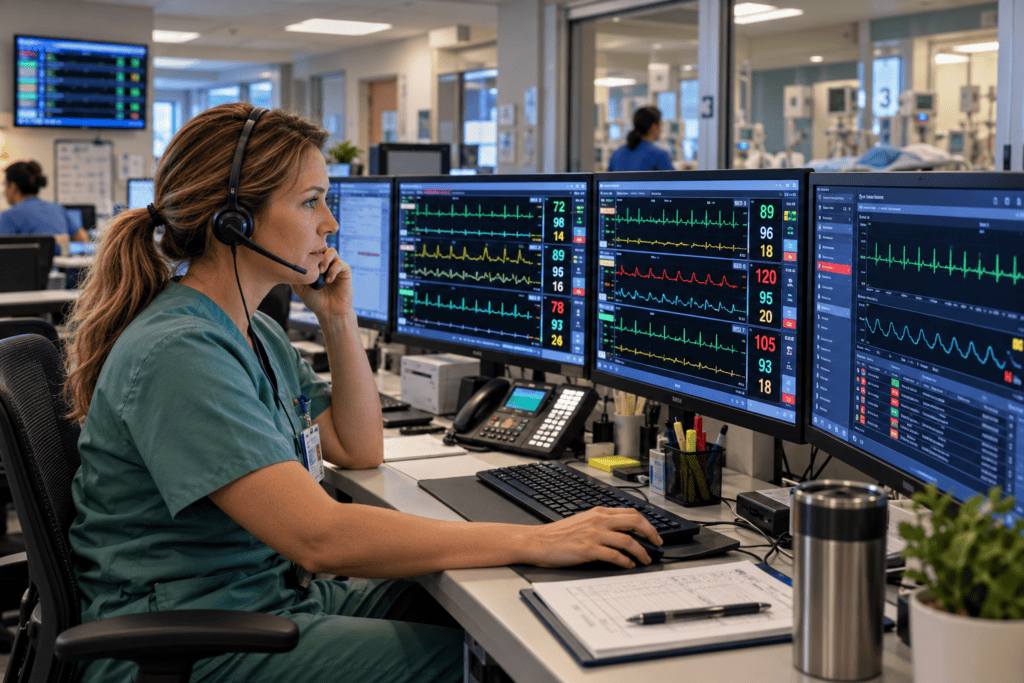
Remote cardiac monitor tech jobs allow trained healthcare professionals to monitor and analyze real-time patient heart rhythms from centralized hubs or secure remote workstations. These roles demand strong ECG rhythm interpretation, meticulous attention to detail, accurate clinical documentation, and rapid communication with care teams.
While a high school diploma may suffice for select entry-level positions, top employers typically prioritize candidates with specialized training, recognized certifications, and practical healthcare experience.
Whether you are an experienced healthcare worker transitioning into cardiac monitoring or an entry-level applicant exploring a non-nursing medical path, remote cardiac monitor tech jobs offer a flexible, high-demand career track. This guide covers the essential technical skills, key credentials, and step-by-step strategies to land your next role.
What Are Remote Cardiac Monitor Tech Jobs?
Remote cardiac monitor tech jobs involve observing, analyzing, and reporting patients’ cardiac rhythms from a designated monitoring center or secure remote location, not at the patient’s bedside.
Also known as telemetry technicians, cardiac monitor technicians, or ECG technicians, these specialists utilize continuous telemetry and electronic monitoring systems to track heart rates and rhythm patterns. Their primary responsibility is to detect life-threatening arrhythmias, accurately log cardiac events, and immediately initiate escalation protocols to notify attending clinical staff.
Defining “Remote” in Cardiac Telemetry
In the healthcare industry, the term “remote” can refer to physical distance from the patient or fully off-site work. Employers typically categorize remote cardiac monitor tech jobs into four distinct work models:
| Work Arrangement | Operating Structure & Requirements |
| Centralized Telemetry | You monitor patients from a dedicated, centralized monitoring hub within a hospital or health system. |
| Virtual Monitoring | You observe patient telemetry through a multi-facility network, supporting multiple units or hospitals simultaneously. |
| Work-from-Home (WFH) | You perform authorized monitoring duties entirely from home using secure, employer-provided hardware and encrypted networks. |
| Hybrid Monitoring | You divide working hours between a home office and an approved hospital or clinical facility. |
Critical Application Tip
Centralized monitoring is not synonymous with work-from-home employment. Many remote cardiac monitor tech jobs require initial on-site training, state-specific residency for licensure compliance, or regular facility reporting. Always verify location requirements in the job posting prior to submitting your application.
What Does a Cardiac Monitor Technician Do?
In remote cardiac monitor tech jobs, core responsibilities focus on continuous surveillance, real-time rhythm analysis, rapid communication, and precise clinical documentation.
Using telemetry systems that transmit live electrocardiogram (ECG/EKG) data, technicians monitor heart rates and electrical waveforms without requiring direct bedside placement.
Key Daily Responsibilities
- Continuous Rhythm Surveillance: Continuously observe real-time ECG waveforms, heart rates, and automated diagnostic metrics across multiple patient streams.
- Arrhythmia Recognition: Differentiate normal sinus rhythms from malignant or lethal abnormalities (e.g., ventricular fibrillation, atrial flutter, heart blocks).
- Alarm Triage & Escalation: Evaluate telemetry equipment alarms, filter out artifact/false positives, and execute immediate escalation protocols for true cardiac events.
- Rapid Clinical Communication: Instantly notify assigned primary care nurses, rapid response teams, or attending clinicians when actionable rhythm changes occur.
- Rhythm Strip Documentation: Print, measure, interpret, and archive baseline and interval rhythm strips into electronic health record (EHR) systems.
- Equipment & Signal Management: Monitor battery status, lead integrity, and telemetry signal strength, troubleshooting hardware or transmission issues within scope.
- Data Security & HIPAA Compliance: Maintain strict compliance with patient confidentiality laws and information-security protocols, particularly when handling telemetry data off-site.
Scope of Practice vs. Clinical Authority
Important Boundary: A cardiac monitor technician provides surveillance and analytical support—they do not replace registered nurses or physicians.
| What Techs Do | What Techs Do NOT Do |
| Identify and report rhythm abnormalities | Independently diagnose clinical conditions |
| Document telemetry events and measures | Prescribe medications or clinical interventions |
| Escalate alerts per facility protocols | Modify patient care plans without physician orders |
Note: Specific duties and authority boundaries vary by health system. Professionals in remote cardiac monitor tech jobs must always strictly adhere to employer-approved scope-of-practice guidelines.
What Skills Do You Need for Remote Cardiac Monitor Tech Jobs?
Succeeding in remote cardiac monitor tech jobs requires a high-signal balance of technical precision, analytical judgment, and reliable communication protocols. While you do not need to master every advanced electrophysiology concept before beginning training, candidate evaluation centers on your ability to recognize critical rhythm changes and execute escalation procedures without delay.
Below are the six core competencies required for remote cardiac monitor tech jobs.
Advanced Cardiac Rhythm Interpretation
Rhythm recognition is the foundation of telemetry monitoring. Technicians must move beyond memorizing static waveform images to evaluating real-time, dynamic rate and rhythm changes.
Key Patterns You Must Master:
- Normal Baseline: Normal Sinus Rhythm (NSR).
- Sinus Node Variations: Sinus Bradycardia, Sinus Tachycardia, and Sinus Arrhythmia.
- Atrial & Supraventricular Arrhythmias: Atrial Fibrillation (A-Fib), Atrial Flutter, and Paroxysmal Supraventricular Tachycardia (PSVT).
- Ventricular Abnormalities: Premature Ventricular Contractions (PVCs), Monomorphic/Polymorphic Ventricular Tachycardia (V-Tach), and Ventricular Fibrillation (V-Fib).
- Conduction Blocks & Lethal States: First-, Second-, and Third-Degree AV Blocks, Asystole, and Pulseless Electrical Activity (PEA).
Practical Training Strategy
Practice using anonymized, instructor-reviewed ECG strip databases. Analyze the waveform, document your interpretation, compare it against verified answer keys, and systematically review any misidentified patterns.
Core ECG Fundamentals & Waveform Analysis
Understanding the underlying physiological mechanisms behind ECG readings ensures faster, more accurate decision-making when analyzing noisy telemetry feeds.
- Waveform Components: Master the clinical significance of the P wave (atrial depolarization), QRS complex (ventricular depolarization), and T wave (ventricular repolarization).
- Interval & Segment Measurements: Accurately measure PR intervals, QRS duration, and QT/QTc intervals to spot underlying conduction delays.
- Signal Quality & Artifact Recognition: Distinguish true pathological rhythm changes from electrical interference, muscle tremors, or displaced lead wires.
- Lead Configuration: Understand basic 3-lead, 5-lead, and 12-lead monitoring mechanics to evaluate vector directions and signal clarity.
Alarm Triage & Escalation Protocol Execution
Telemetry systems continuously generate alerts ranging from harmless technical noise to life-threatening emergencies. Technicians in remote cardiac monitor tech jobs must prevent “alarm fatigue” while ensuring zero missed critical events.
Core Escalation Workflow:
- Identify Priority: Differentiate actionable crisis alarms from non-critical parameter shifts or lead-off notifications.
- Verify Signal Integrity: Rapidly check signal quality and secondary lead channels to rule out artifact.
- Initiate Contact: Instantly alert the designated primary nurse, charge nurse, or rapid response clinician via secure communication channels.
- Log & Follow Up: Record the exact timing, waveform characteristics, and clinician confirmation. Escalate up the chain of command immediately if the primary contact fails to respond within protocol timeframes.
Technical Documentation & EHR Systems
Accurate telemetry documentation provides the official medical and legal record of a patient’s cardiac status throughout a shift.
- Objective Clinical Logging: Write clear, concise, and non-speculative notes documenting rhythm changes, baseline shifts, alarm events, and clinician notification timestamps.
- EHR Integration: Maintain proficiency in navigating leading Electronic Health Record platforms (e.g., Epic, Cerner) to archive rhythm strips and update patient telemetry logs.
- Avoid Diagnostic Overreach: Document observed waveform metrics and facts rather than recording unsupported medical diagnoses.
Telemetry Software & Hardware Troubleshooting
Because remote cardiac monitor tech jobs depend heavily on secure digital networks, technicians must comfortably operate and troubleshoot telemetry platforms.
- Enterprise Telemetry Platforms: Gain familiarity with monitoring software ecosystems such as GE CARESCAPE, Philips IntelliVue, or Mindray HyperVisor.
- First-Line Technical Troubleshooting: Recognize common technical failure points, including loose telemetry electrodes, low transmitter batteries, signal dropouts, and network disconnects.
- Protocol Adherence: Resolve technical issues within approved scope-of-practice limits without attempting unauthorized firmware, hardware, or software parameter modifications.
Communication, Focus & Off-Site Workspace Requirements
Operating in remote or centralized monitoring hubs requires exceptional mental stamina and multi-patient vigilance—often during 12-hour or overnight shifts.
- Focused Multi-Patient Surveillance: Maintain close attention to detail while monitoring dozens of live telemetry streams simultaneously.
- Crisis Communication: Deliver concise, calm, and structured patient updates (e.g., using SBAR formatting) to nursing teams during urgent rhythm events.
- Work-from-Home (WFH) Compliance: For off-site roles, maintain a quiet, dedicated home office with reliable high-speed internet, power redundancy, and full compliance with HIPAA data privacy standards.
What Qualifications and Certifications Do You Need?
There is no universal credential required for every cardiac monitor technician position. Hiring standards vary based on employer policies, state regulations, and whether the role operates in a direct clinical setting or through a remote monitoring network.
According to data from the U.S. Bureau of Labor Statistics (BLS), select entry-level EKG technician roles are accessible with a high school diploma combined with specialized employer training. However, broader cardiovascular technology positions and competitive remote cardiac monitor tech jobs generally prioritize candidates with formal postsecondary coursework, clinical experience, or industry-recognized certifications.
A Practical 5-Step Pathway to Get Qualified
[1. Basic Education] ➔ [2. Specialized ECG Training] ➔ [3. BLS Certification] ➔ [4. Professional Credentials] ➔ [5. Clinical Experience]
Code language: CSS (css)
Meet the Foundational Education Requirements
- Obtain a high school diploma, GED, or equivalent.
- Review job descriptions carefully, as some health systems require prior healthcare experience (such as CNA, EMT, or medical assisting) or completed college coursework in human anatomy and physiology.
Complete Dedicated ECG & Arrhythmia Training
- Enroll in a structured telemetry or electrocardiology program covering ECG fundamentals, rhythm interpretation, and alarm management protocols.
- Prioritize accredited training programs that offer supervised, instructor-led rhythm evaluation rather than purely self-paced theory.
Secure Basic Life Support (BLS) Certification
- Obtain an active Basic Life Support (BLS) for Healthcare Providers certification.
- Most hospital systems and remote monitoring employers require BLS certification from recognized organizations like the American Heart Association (AHA) or the American Red Cross. Always confirm the employer’s preferred provider and hands-on skills verification requirements before enrolling.
Earn a Recognized Professional Credential
While not strictly required by every employer, holding a nationally recognized certification significantly increases your competitive edge for remote cardiac monitor tech jobs:
| Certification | Issuing Body | Primary Focus & Target Audience |
| Certified Cardiographic Technician (CCT) | Cardiovascular Credentialing International (CCI) | Evaluates competence in non-invasive cardiac testing, including ECG, Holter monitoring, continuous telemetry, and stress testing. Requires meeting an approved CCI eligibility pathway. |
| Certified Rhythm Analysis Technician (CRAT) | Cardiovascular Credentialing International (CCI) | Specifically assesses advanced cardiac rhythm recognition, electrophysiology concepts, and telemetry monitoring precision. Highly valued for specialized monitoring roles. |
| Certified EKG Technician (CET) | National Healthcareer Association (NHA) | Validates core skills in operating EKG equipment, lead placement, artifact reduction, and basic rhythm interpretation. |
Build Relevant Clinical Experience
- Begin with entry-level telemetry, EKG, or monitor technician roles in local hospitals or outpatient clinics.
- Supervised, hands-on hospital experience provides the foundational clinical judgment needed to qualify for specialized virtual monitoring or work-from-home telemetry contracts.
Is CCT Certification Compulsory?
No, a Certified Cardiographic Technician (CCT) credential is not compulsory for every job.
While the CCT certification—issued by Cardiovascular Credentialing International (CCI)—demonstrates validated expertise in ECG interpretation, Holter monitoring, and stress testing, individual healthcare employers ultimately determine their own hiring criteria. Some health systems list CCT certification as a strict job requirement, others consider it a preferred qualification, and many hire candidates with alternative credentials or relevant clinical experience.
Certification Eligibility vs. Employment Eligibility
It is important to distinguish between passing an exam and securing a job offer:
- Certification Eligibility: Proves you have met CCI’s educational or experiential prerequisites and passed the computer-based exam.
- Employment Eligibility: Depends on a broader combination of background checks, hands-on clinical competency, local telemetry needs, soft skills, and employer budget.
Bottom Line: Earning a CCT certification proves theoretical competence, but it does not guarantee immediate job placement.
Alternative Credential Options
Depending on your target employer and local job market, other industry-recognized credentials may fulfill the requirements for remote cardiac monitor tech jobs:
- CRAT (Certified Rhythm Analysis Technician): Issued by CCI; focuses specifically on electrophysiology, telemetry surveillance, and advanced rhythm analysis.
- CET (Certified EKG Technician): Issued by the National Healthcareer Association (NHA); widely recognized for entry-level ECG recording and telemetry roles.
- Employer-Specific Competency Tests: Many hospital systems require applicants to pass an internal, proctored telemetry interpretation exam during the interview process regardless of third-party certifications.
Strategic Recommendation Before Enrolling
Before investing time and tuition into a CCT prep course or examination fee:
- Audit Local & Remote Vacancies: Search current job boards (e.g., Indeed, LinkedIn, hospital career pages) for remote cardiac monitor tech jobs in your state or target region.
- Analyze Requirement Patterns: Note whether employers consistently specify CCT, CRAT, CET, or simply require a Basic Life Support (BLS) card alongside an internal telemetry assessment.
- Align Your Training Budget: Tailor your financial investment directly to the credentials most frequently requested by the health systems you plan to apply to.
Can You Get Remote Cardiac Monitor Tech Jobs Without Experience?
Yes, but with an important distinction: while entry-level, on-site telemetry positions in hospitals frequently hire candidates without prior clinical experience, fully remote cardiac monitor tech jobs (work-from-home or decentralized hub roles) generally require proven rhythm interpretation skills or previous hospital surveillance experience.
Employers managing off-site monitoring networks rely on remote technicians to work autonomously, filter out complex artifacts, and execute critical escalation protocols without direct, physical supervision.
Understanding the Hiring Spectrum
[On-Site Hospital Role] ➔ [Centralized Unit Role] ➔ [Fully Remote / WFH Role]
(Lowest barrier to entry;    (Intermediate level;         (Highest autonomy;
paid on-the-job training) supervised monitoring hub) requires proven competence)Code language: CSS (css)| Job Type | Barrier to Entry | Typical Experience Requirement |
| On-Site Hospital Monitor Tech | Low: Excellent entry point. | High school diploma + employer-provided EKG/telemetry orientation. |
| Centralized Facility Tech | Moderate: Supervised team environment. | 6–12 months of hospital experience or completed EKG certificate course. |
| Remote / WFH Cardiac Tech | High: Requires independent decision-making. | Active certification (CCT/CRAT) OR 1+ years of demonstrated acute telemetry experience. |
Step-by-Step Pathway for Beginners (Zero Healthcare Background)
If you are breaking into the field without prior clinical experience, follow this structured roadmap to position yourself for remote cardiac monitor tech jobs:
- Verify Minimum Prerequisites: Ensure you meet basic educational standards (high school diploma or GED).
- Complete Accredited ECG & Arrhythmia Coursework: Enroll in a recognized telemetry program covering waveform interpretation, lead placement, and basic electrophysiology.
- Master Rhythm Strip Interpretation: Consistently practice interpreting strip databases under instructor supervision to build speed and diagnostic accuracy.
- Target Entry-Level On-Site Roles First: Apply for hospital-based EKG or telemetry technician openings that offer structured, on-the-job clinical orientation.
- Obtain Industry Certification: Once eligible, take the CCT or CRAT exam to validate your hands-on experience.
- Transition to Remote Telemetry Contracts: Leverage 6–12 months of documented hospital surveillance experience to apply for fully remote or virtual monitoring roles.
How Experienced Healthcare Workers Can Leverage Transferable Skills
If you already work as a CNA, Patient Care Technician (PCT), Medical Assistant (MA), EMT, or Phlebotomist, you can qualify for remote cardiac monitor tech jobs faster by highlighting key overlapping competencies:
- Patient Safety Protocols: Prior experience managing patient escalation procedures and rapid-response alerts.
- Vital-Sign & Clinical Documentation: Familiarity with Electronic Health Records (EHR) systems and objective clinical logging.
- Interprofessional Communication: Proven track record of relaying urgent patient status changes directly to RNs and attending physicians.
- Medical Equipment Handling: Hands-on experience placing electrodes, checking lead wire connections, and managing medical telemetry hardware.
Application Compliance Note
Never claim practical experience in cardiac rhythm monitoring on a resume unless you have performed live surveillance or completed a supervised clinical telemetry rotation. Employers routinely evaluate telemetry candidates using proctored, pre-employment strip-reading exams during the hiring process.
How to Apply for Remote Cardiac Monitor Tech Jobs
Landing remote cardiac monitor tech jobs requires a targeted, high-signal strategy: preparing your technical qualifications, tailoring your resume around clinical surveillance keywords, and utilizing specific search operators across reputable job boards.
Follow this 7-step execution framework to navigate the application process effectively.
Step 1: Define Your Target Job Titles
Hiring terminology varies widely across health systems, telehealth providers, and independent diagnostic testing facilities (IDTFs). Search for these exact variations to capture all active postings for remote cardiac monitor tech jobs:
- Remote Cardiac Monitor Technician
- Remote Telemetry Technician
- Virtual Monitor / Surveillance Tech
- Holter & Mobile Cardiac Telemetry (MCT) Scanner
- Centralized Cardiac Monitoring Specialist
Search Tip
Always review job descriptions closely. Confirm the position involves continuous EKG rhythm evaluation and clinical escalation—not administrative scheduling or medical device sales.
Step 2: Conduct an Employer Requirement Audit
Before paying for training courses or exam fees, audit 5 to 10 active postings for remote cardiac monitor tech jobs to identify baseline hiring trends in your region:
| Requirement Category | Variable to Check & Benchmark |
| Education | High school diploma/GED, postsecondary health certificate, or Associate’s degree. |
| Technical Skills | EKG interpretation, lethal arrhythmia recognition, alarm triage, and EHR documentation. |
| Certifications | CCT, CRAT, CET, or BLS requirements. |
| Experience Level | Entry-level with internal orientation vs. 1–2 years of inpatient telemetry experience. |
| Location & Licensure | State-specific residency rules, time-zone constraints, or remote internet/hardware specs. |
| Shift Structure | 12-hour shifts, overnight rotations, weekend coverage, or on-call obligations. |
Step 3: Prepare a Keyword-Optimized Resume
Your resume should immediately highlight your ability to monitor patient rhythms, evaluate alerts, and follow escalation protocols.
Essential Resume Sections:
- Professional Summary: A 3-sentence hook detailing your telemetry training, technical capabilities, and clinical reliability.
- Technical Core Competencies: A structured bulleted list of rhythm recognition skills (e.g., A-Fib, V-Tach, AV blocks) and software tools.
- Certifications & Credentials: CCT, CRAT, CET, or AHA Basic Life Support (BLS) credentials listed prominently near the top.
- Clinical / Monitoring Experience: Documented telemetry roles, health system placements, or relevant healthcare experience (CNA, MA, EMT).
- Education & Formal Coursework: EKG/telemetry coursework and high school or college credentials.
Sample Professional Summary (Entry-Level Candidate):
“Certified telemetry candidate with formal training in ECG analysis, lethal arrhythmia recognition, alarm escalation protocols, and objective EHR documentation. Proficient in maintaining focus during continuous multi-patient surveillance and executing rapid clinical notifications. Seeking a remote cardiac monitor tech position offering structured orientation and opportunities to apply precise diagnostic skills.”
Step 4: Build a Verification Portfolio
Support your resume with tangible evidence of your rhythm interpretation abilities:
- Course Summaries: A list of verified EKG/arrhythmia training modules completed.
- Assessment Metrics: Verified test scores from proctored rhythm-interpretation exams.
- Sample Strip Annotations: De-identified, educational EKG rhythm strips showing your measurement and analysis process (P-PR-QRS-QT metrics).
HIPAA Safety Warning
Never include actual patient records, real names, protected health information (PHI), or proprietary employer data in a personal application portfolio.
Step 5: Search Legitimate Healthcare Job Boards
Focus your job search on high-yield job boards and health system career portals:
- Indeed & ZipRecruiter: Filter using terms like
"remote telemetry technician"OR"remote cardiac monitor tech". - LinkedIn Jobs: Filter by “Remote” and set alerts for major cardiac monitoring employers (e.g., iRhythm Technologies, BioTelemetry/Philips, Boston Scientific, Preventice Solutions).
- Health System & IDTF Career Pages: Check hospital networks and independent diagnostic testing facilities directly for remote monitoring hub vacancies.
Step 6: Tailor Every Application to the Job Description
Mirror the exact clinical vocabulary used in the job posting. If an employer emphasizes “alarm triage, artifact troubleshooting, and rapid SBAR communication,” ensure those precise terms appear organically in your experience bullets and cover letter.
Step 7: Prepare for Technical & Scenario Interviews
Interviews for remote cardiac monitor tech jobs evaluate both your technical rhythm knowledge and your clinical decision-making under pressure.
Standard 5-Step Scenario Response Framework:
When asked how you would handle a sudden arrhythmia, critical alarm, or signal dropout, structure your answer using this logic:
[1. Identify & Verify Signal] ➔ [2. Assess Severity] ➔ [3. Execute Escalation Protocol] ➔ [4. Communicate Findings] ➔ [5. Document Log]
Code language: CSS (css)- Recognize: Identify the waveform pattern, rate, and lead configuration immediately.
- Verify: Differentiate true cardiac events from movement artifact or loose lead alerts.
- Escalate: Contact the primary assigned nurse or emergency response team according to protocol.
- Communicate: Deliver clear, objective SBAR findings without attempting unauthorized diagnoses.
- Document: Log the exact timestamp, waveform characteristics, and clinician confirmation in the EHR system.
Where Can You Find Fully Remote Cardiac Monitoring Jobs?
While remote cardiac monitor tech jobs are available, the term “remote” carries different operational meanings depending on the healthcare organization.
Some health systems centralize cardiac surveillance within a dedicated monitoring hub or hospital command center. Others offer fully work-from-home (WFH) models for technicians equipped with secure home office setups, compliant data networks, and verified clinical competence. Additionally, many postings advertised as “remote” still enforce strict geographic restrictions, state-level residency requirements, or mandatory on-site onboarding.
Key Employer Categories Hiring Remote Cardiac Technicians
When searching for authentic work-from-home or decentralized surveillance positions, focus on three main types of organizations:
- Independent Diagnostic Testing Facilities (IDTFs) & Ambulatory Cardiac Companies: Companies like iRhythm Technologies, Philips (BioTelemetry), PaceMate, SmartCardia, and VitalConnect specialize in continuous ambulatory ECG, Holter, and Mobile Cardiac Telemetry (MCT) scanning.
- Virtual Care & Acute Telehealth Vendors: Health-tech platforms such as Hicuity Health and Equum Medical deploy decentralized virtual monitoring teams to support regional hospital telemetry units off-site.
- Large Enterprise Health Systems: Regional health networks increasingly operate Centralized Monitoring Units (CMUs) that aggregate telemetry feeds across multiple hospital campuses into a single off-site facility or virtual monitoring network.
Essential Recruiter Vetting Checklist
Before investing time in an application, ask the hiring manager or recruiter these eight essential screening questions to confirm the role fits your circumstances:
[Work Location & Schedule]   ➔ [Licensure & Training]   ➔ [Hardware & Tech Specs]
• 100% WFH or Hybrid?         • State Residency Rules?   • Provided Equipment?
• Mandatory On-site Training? • Required Shift Hours? • Required Internet Speed?Code language: CSS (css)- Work Location Details: Can all core daily duties be performed entirely from home, or does the position require a hybrid schedule?
- On-Site Onboarding: Is on-site training or clinical orientation required, and what is the exact duration?
- State Residency Restrictions: Must employees reside within a specific state or region due to healthcare labor laws, corporate taxation, or licensure mandates?
- Relocation Requirements: Is local physical reporting required in the event of hardware or network failures?
- International Applicant Eligibility: Does the employer accept candidates working outside the United States, or must all data handling occur within domestic borders?
- Experience & Credential Benchmarks: Is prior hospital telemetry experience or active certification (CCT/CRAT) required to work off-site without direct physical supervision?
- Shift Expectations: Does the schedule require overnight, weekend, or rotating 12-hour shifts?
- Hardware & IT Infrastructure: Does the employer issue enterprise laptops, dual-monitor displays, and encrypted routers, or is it a Bring-Your-Own-Device (BYOD) model?
What If You Live Outside the United States?
You cannot assume a U.S.-advertised remote job can be performed from Nigeria, India, the Philippines, or another international location.
While remote work models expanded globally across tech and digital sectors, clinical roles—including remote cardiac monitor tech jobs—face strict legal, regulatory, and operational boundaries that limit cross-border employment. A posting labeled “100% Remote” typically implies remote within a specific country or state, rather than unrestricted global availability.
Core Barriers to Cross-Border Telemetry Hiring
[HIPAA & PHI Compliance] ➔ [Labor & Tax Jurisdiction] ➔ [Time-Zone & Network Latency]Code language: CSS (css)Data Privacy & Regulatory Mandates (HIPAA)
In the United States, patient telemetry and rhythm recordings constitute Protected Health Information (PHI) governed by federal HIPAA regulations. Transmitting live telemetry data across international borders requires complex Business Associate Agreements (BAAs), cross-border data transfer protocols, and strict technical encryption safeguards. Many health systems prohibit offshore data transmission entirely to avoid regulatory liability.
Employment Authorization & Tax Jurisdiction
U.S. healthcare organizations are legally restricted to hiring candidates authorized to work in the United States. Employing offshore staff directly requires navigating international labor laws, establishing foreign corporate entities, or utilizing specialized Business Process Outsourcing (BPO) agencies.
Shift Alignment & Network Infrastructure
Continuous ECG monitoring requires immediate, sub-second reaction times to lethal arrhythmias. International remote roles require high-speed, low-latency internet connectivity, power redundancy, and the ability to work non-standard hours (e.g., U.S. Eastern, Central, or Pacific night shifts).
Practical Strategies for International Applicants
If you live outside the U.S. and want to build a career in cardiac monitoring, take these strategic steps:
- Target Offshore Healthcare Outsourcing Vendors (BPOs): Major U.S. health networks frequently contract administrative and clinical support functions through specialized healthcare BPO agencies operating legally in regions like the Philippines, India, or Latin America. Search for local telemetry or medical virtual assistant openings with international agencies.
- Confirm Eligibility Upfront: When contacting recruiters or applying on global platforms, verify cross-border eligibility immediately. Ask: “Does your organization support direct offshore remote employment for this role, or must work be performed within U.S. borders?”
- Build Local Hospital Experience First: Develop clinical rhythm monitoring competence at hospitals, diagnostic centers, or regional health networks in your home country. Local clinical experience provides the foundation required if an offshore or virtual telemetry opportunity opens up later.
- Explore Global Telehealth & RPM Providers: Look into international Remote Patient Monitoring (RPM) firms and digital health startups that operate multi-country patient networks and hire remote telemetry specialists across multiple time zones.
Common Mistakes to Avoid
Pursuing remote cardiac monitor tech jobs requires navigating specific clinical, geographic, and operational standards. Avoid these seven common pitfalls to save time, protect your finances, and accelerate your job search.
Assuming “Remote” Automatically Means Work-From-Home
- The Mistake: Applying to jobs under the assumption that all remote telemetry roles allow you to work from your living room.
- The Reality: Many health systems use “remote” to describe a Centralized Monitoring Unit (CMU) located off-site from the main hospital campus.
- Action: Always review the job posting to confirm whether the position is 100% Work-From-Home (WFH), Hybrid, or Facility-Based Centralized Surveillance.
Paying for Training Programs Without Checking Local Hiring Trends
- The Mistake: Enrolling in expensive online courses or exam packages before auditing actual job market requirements.
- The Reality: Employer preferences vary by region. One health system may mandate a Certified Cardiographic Technician (CCT) credential, while another accepts an internal rhythm assessment paired with Basic Life Support (BLS) certification.
- Action: Audit at least 5 active postings for remote cardiac monitor tech jobs in your target area before investing tuition money in specialized certifications.
Treating an Online Certificate as Unconditional Clinical Competence
- The Mistake: Assuming a digital certificate of completion guarantees immediate employment in high-acuity telemetry.
- The Reality: Online certificates demonstrate foundational classroom theory, but remote employers manage decentralized networks that require proven, independent rhythm-interpretation accuracy.
- Action: Combine coursework with supervised clinical rotations, hospital telemetry experience, or proctored certification exams (CCT/CRAT).
Overstating Practical Monitoring Experience
- The Mistake: Listing hands-on telemetry experience on your resume when you have only completed classroom exercises.
- The Reality: Health systems routinely evaluate candidates using proctored, pre-employment rhythm strip exams during the interview process. Overstating your abilities leads to immediate disqualification.
- Action: Be honest. Clearly distinguish between completed academic training, supervised clinical practice, and paid healthcare experience on your resume.
Overlooking Shift Requirements & Overnight Rotations
- The Mistake: Applying for telemetry roles without preparing for 24/7/365 coverage demands.
- The Reality: Cardiac surveillance is continuous. Entry-level and remote technicians are frequently assigned to night shifts (e.g., 7:00 PM – 7:00 AM), weekends, or rotating holiday schedules.
- Action: Confirm shift availability and time-zone alignment upfront before progressing through the interview process.
Ignoring Geographic & State Residency Restrictions
- The Mistake: Assuming a U.S. work-from-home position can be performed from any state or international location.
- The Reality: Due to state labor laws, corporate taxation rules, and strict HIPAA data privacy compliance, employers often restrict remote hiring to specific states or regions.
- Action: Verify geographic eligibility with the hiring manager or recruiter before submitting your application.
Falling Victim to Recruitment Scams
- The Mistake: Engaging with fraudulent recruiters who target remote job seekers.
- The Warning Signs:
- Candidates asked to pay upfront fees for training, “software access,” or onboarding equipment.
- Employers sending fake checks to purchase home office supplies from specific vendors.
- Interviews conducted exclusively via text or messaging apps (e.g., Telegram, WhatsApp) with no video or phone screening.
- Unrealistic hourly pay rates offered for entry-level tasks.
- Action: Apply directly through official hospital portals, verify company email domains (e.g.,
@company.comvs. free webmail accounts), and never send sensitive financial information or money during recruitment.
Candidate Action Checklist
- [ ] Review Five Relevant Job Advertisements: Audit active postings across major job boards (e.g., Indeed, LinkedIn, ZipRecruiter) and specialized ambulatory cardiac companies (e.g., iRhythm Technologies, SmartCardia, VitalConnect). Note key differences between hospital-based Centralized Monitoring Units (CMUs) and work-from-home diagnostic scanning roles.
- [ ] Identify Education and Certification Requirements: Document the baseline hiring patterns for your target location. Determine whether employers specify a high school diploma with internal training, formal postsecondary certificates, or mandatory credentials like CCT (CCI), CRAT (CCI), or CET (NHA).
- [ ] Complete Appropriate ECG and Arrhythmia Training: Enroll in a recognized telemetry or electrocardiology course. Focus on waveform mechanics (P-QRS-T), interval measurements (PR, QRS, QT/QTc), lethal arrhythmia recognition (V-Tach, V-Fib, Asystole), and conduction blocks.
- [ ] Practise Rhythm Recognition and Review Mistakes: Work through anonymized ECG strip databases and instructor-evaluated practice sets. Log misidentified rhythms, review underlying vector mechanisms, and systematically re-test until you achieve consistently high interpretation accuracy.
- [ ] Check CCT Eligibility If Pursuing Certification: Review Cardiovascular Credentialing International (CCI) prerequisites to confirm whether you meet the education, training, or clinical hours needed to sit for the Certified Cardiographic Technician (CCT) or Certified Rhythm Analysis Technician (CRAT) exam.
- [ ] Obtain BLS Certification If Required by Target Employers: Secure an active Basic Life Support (BLS) for Healthcare Providers card through an approved organization (e.g., American Heart Association or American Red Cross) featuring hands-on skills verification.
- [ ] Prepare a Tailored, Accurate Résumé: Build an executive, keyword-optimized résumé. Highlight technical competencies (rhythm analysis, alarm triage, EHR documentation, SBAR communication), verified certifications, and relevant healthcare experience without overstating unsupervised monitoring capabilities.
- [ ] Confirm Remote-Work and Location Eligibility: Verify operational requirements with recruiters before applying: confirm state residency restrictions, WFH vs. hybrid models, mandatory on-site onboarding periods, dual-monitor hardware specs, and HIPAA data-security compliance.
- [ ] Submit Targeted Applications and Track Responses: Tailor your resume and cover letter using exact terminology from each job description. Maintain a tracking spreadsheet detailing employer names, submission dates, required software platforms, and follow-up timelines.
Can I work from home as a cardiac monitor technician?
Potentially, yes. Some healthcare organizations and Independent Diagnostic Testing Facilities (IDTFs) offer 100% work-from-home positions for experienced telemetry technicians equipped with secure home office infrastructure. However, many “remote” roles actually operate out of centralized monitoring hubs on or near hospital campuses. Always verify the specific work location, state residency requirements, and mandatory on-site onboarding periods before applying.
Do I need a nursing degree to become a cardiac monitor technician?
No. A nursing degree (RN or LPN) is not required for standard cardiac monitor tech or telemetry technician positions. The role focuses primarily on continuous rhythm surveillance, alarm triage, and clinical escalation rather than direct nursing care or prescribing interventions. However, candidates must complete dedicated coursework in ECG fundamentals and arrhythmia recognition.
Can I become a cardiac monitor technician with a high school diploma?
Yes. According to data from the U.S. Bureau of Labor Statistics (BLS), many entry-level EKG and monitor technician roles require a high school diploma or GED as the minimum educational foundation, provided the candidate completes employer-sponsored orientation or specialized telemetry training. Broader cardiovascular technology roles, however, may favor candidates with postsecondary certificates or Associate degrees.
Is CCT certification worth pursuing?
Yes, if your target employers request or prefer it. Issued by Cardiovascular Credentialing International (CCI), the Certified Cardiographic Technician (CCT) credential validates knowledge in ECG interpretation, Holter monitoring, and stress testing. While not universally mandatory, holding a CCT or CRAT (Certified Rhythm Analysis Technician) certification significantly enhances your resume when competing for autonomous, work-from-home telemetry positions.
What is the difference between an EKG technician and a cardiac monitor technician?
EKG Technician: Primarily conducts short-duration, point-in-time 12-lead electrocardiograms, places physical electrodes on patients, and operates diagnostic recording equipment.
Cardiac Monitor Technician: Continuously monitors live, multi-patient telemetry feeds over long periods (e.g., 8–12 hour shifts), analyzes real-time waveform changes, triages equipment alarms, and immediately notifies clinical teams of lethal arrhythmias.
Are remote cardiac monitor tech jobs available to beginners?
Entry-level opportunities exist, but fully remote (WFH) positions are competitive. Employers managing off-site monitoring networks prefer candidates with demonstrated clinical experience because the work requires autonomous decision-making without physical supervision.
Beginners can increase their chances by completing accredited ECG training, earning a recognized certification (such as CCT, CRAT, or CET), or building 6–12 months of experience in a hospital-based telemetry unit first.
Can I apply for U.S.-based remote cardiac monitor tech jobs from Nigeria?
Generally, no. U.S. healthcare employers are subject to strict federal regulations under HIPAA, which govern the cross-border transmission of Protected Health Information (PHI). Furthermore, companies must comply with U.S. labor laws, state tax jurisdictions, and work authorization rules.
International applicants living in Nigeria or elsewhere should target local clinical telemetry positions, global Remote Patient Monitoring (RPM) startups, or international healthcare Business Process Outsourcing (BPO) agencies operating within their region.
How long does it take to qualify for a cardiac monitor tech role?
Timelines typically range from 2 to 6 months, depending on your chosen path:
Short-Term Training Programs: Specialized online or hybrid ECG/telemetry certificate courses can be completed in 4 to 12 weeks.
Certification Exam Preparation: Preparing for and passing the CCT or CRAT exam adds 1 to 2 months of structured study.
On-the-Job Orientation: Once hired, hospital or facility onboarding typically includes 2 to 4 weeks of supervised live monitoring before you are cleared to work independently.
In Conclusion
Remote cardiac monitor tech jobs provide an accessible pathway into specialized healthcare and clinical technology without requiring a nursing degree. However, the ideal transition strategy depends on your current experience, your technical rhythm mastery, and the specific operational requirements of your target employers.
Summary of Strategic Priorities
- Build Core Technical Precision: Master ECG fundamentals, rhythm analysis, and alarm escalation protocols.
- Audit Real Employer Standards: Confirm required credentials (CCT, CRAT, CET, or BLS) by analyzing active job listings before investing in training.
- Align Target Roles with Location Rules: Distinguish between hospital-based Centralized Monitoring Units (CMUs) and true work-from-home (WFH) telemetry positions while verifying state and regional residency restrictions.
Your Immediate Next Steps
- Step 1: Compare 5 active job advertisements for remote cardiac monitor tech jobs on healthcare career portals.
- Step 2: Fill out the Employer Requirement Audit Matrix to map out your education, certification, and training roadmap.
- Step 3: Use the Candidate Action Checklist to track your progress from skills training to tailored application submission.