21 Best Digital Skills Certifications Without a Degree
Digital skills certifications are structured credentials that validate job-relevant abilities without requiring a university degree. They can help learners build proof of skill, improve employability, and move into entry-level or mid-level digital roles.
Many reputable options are available online from major providers such as Google, Microsoft, AWS, CompTIA, and HubSpot. Availability, pricing, and exam formats vary by provider and region, so always confirm the latest details before enrolling.
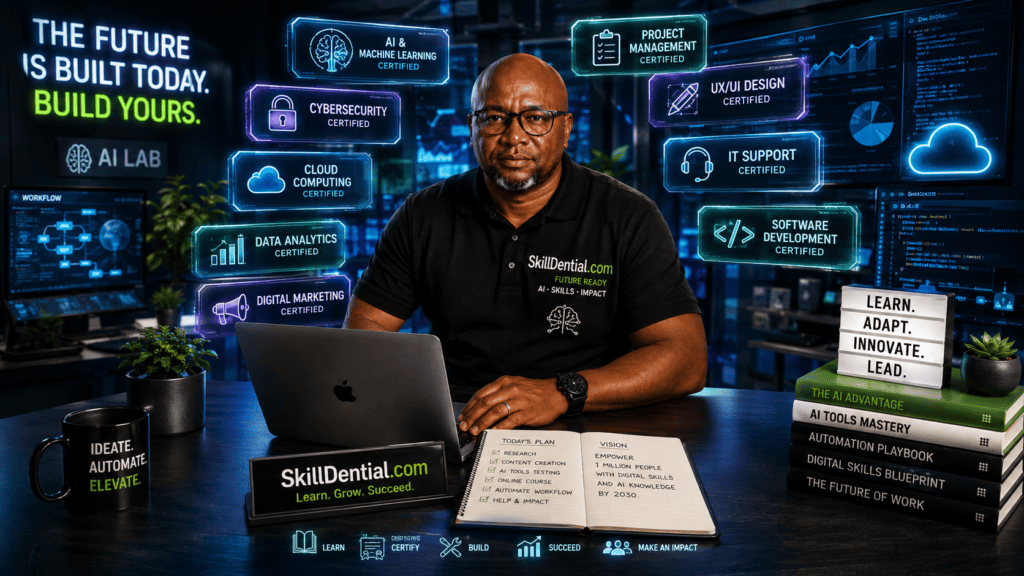
Pursuing digital skills certifications without a degree has become one of the most direct, high-leverage routes into the modern tech economy. As employers increasingly pivot toward skill-based hiring, verifiable credentials are fast replacing traditional four-year degree requirements across IT, cloud architecture, data analytics, digital marketing, and design.
Whether you are a career switcher, freelancer, or self-taught practitioner, selecting the right credential allows you to build a portfolio of proof, signal competence to recruiters, and secure entry- to mid-level roles faster.
This guide breaks down the 21 best digital skills certifications without a degree, evaluating each option by market demand, curriculum depth, cost, and career impact—so you can choose the right learning path for your specific goals and budget.
What Are Digital Skills Certifications Without a Degree?
Digital skills certifications without a degree are industry-recognized credentials earned through online training platforms, tech vendor academies, or proctored certification exams without requiring a formal college background.
In practice, these targeted programs validate practical competence across high-demand technical domains, including IT support, cloud architecture, cybersecurity, data analytics, digital marketing, project management, UX design, and AI productivity.
Degree vs. Certification: A Strategic Comparison
| Metric | Traditional College Degree | Digital Skills Certification |
| Focus | Broad academic theory and general education | Targeted, practical job-skill execution |
| Time Horizon | 2 to 4 years | 1 to 6 months |
| Cost Barrier | High (tens of thousands of dollars) | Low to Moderate (free to standard exam fees) |
| Market Signal | Educational background & persistence | Immediate proof of applied competency |
For career switchers, self-taught professionals, and non-traditional students, pursuing digital skills certifications without a degree provides a faster, lower-cost pathway into the tech workforce by converting non-accredited learning directly into verifiable résumé proof.
Which certifications are worth it?
Evaluating which digital skills certifications without a degree are actually “worth it” comes down to ROI: direct market recognition, skill alignment with entry-level job roles, and reasonable acquisition cost.
Not all credentials carry the same weight. A general rule of thumb: vendor-backed (e.g., AWS, Microsoft) and industry-standard non-profit certifications (e.g., CompTIA) carry strong weight across corporate ATS screening engines, whereas platform completion badges work best as supplemental proof of interest.
Tiered Breakdown of High-Value Credentials
| Certification Tier | Primary Use Case | Target Candidates | High-ROI Examples |
| Foundational & Vendor-Neutral | Building core technical literacy; passing broad resume screens | Absolute beginners, career changers starting from scratch | CompTIA A+ (IT Infrastructure), CompTIA Security+ |
| Role-Based Cloud & Tech | Validating platform-specific infrastructure, data, or dev execution | Learners targeting specific junior technical roles | AWS Certified Cloud Practitioner, Microsoft Certified: Azure Fundamentals (AZ-900) |
| Applied Career Certificates | Fast-tracking functional role skills with practical portfolio outputs | Candidates building portfolios for non-engineering tech roles | Google Career Certificates (Data Analytics, IT Support, UX, Cybersecurity) |
| Specialized Skill Badges | Proving specific tool execution in marketing, sales, and operations | Freelancers, agency candidates, growth marketers | HubSpot Academy Certifications (Inbound, Marketing Hub), Google Analytics (GA4) |
How to Determine “Worth” Based on Your Experience Level
Zero Experience / Career Switchers
- Focus: Low-barrier entry, structured curriculum, broad topic exposure.
- Top Options: Google IT Support Professional Certificate or AWS Certified Cloud Practitioner.
- Why: These build basic confidence, introduce industry nomenclature, and require no prior coding or systems background.
Intermediate / Self-Taught Practitioners
- Focus: Industry-wide vendor accreditation that opens door-level technical interviews.
- Top Options: CompTIA Security+, AWS Certified Solutions Architect – Associate, or Microsoft Azure Administrator (AZ-104).
- Why: These require targeted preparation and demonstrate applied platform expertise directly requested in job descriptions.
Freelancers & Digital Specialists
- Focus: Client-facing proof of execution, performance marketing, platform fluency.
- Top Options: HubSpot Inbound Marketing, Google Search Ads Certification, Meta Certified Digital Marketing Associate.
- Why: Clients hire for specific tool implementation. Showing active certification in ad manager platforms or CRMs acts as immediate credibility.
Decision Matrix: Is a Certification Worth Your Time?
Before enrolling in any credential, run it through this quick three-point checklist:
[ Job Market Alignment ]  ---> Does the credential appear directly under "Qualifications" in local job postings?
[ Practical Output ]     ---> Does the course require you to build hands-on projects, labs, or portfolio pieces?
[ Issuer Recognition ]   ---> Is it issued by the software owner (e.g., AWS, Google, Microsoft) or an established body?
Code language: CSS (css)
If a program checks all three boxes, pursuing digital skills certifications without a degree will provide a high-return pathway into your targeted industry.
How to Choose the Right Digital Skills Certifications Without a Degree
Selecting the right credential requires aligning your immediate career targets with your available budget and current technical baseline. Instead of collecting certificates arbitrarily, use a targeted framework to maximize your return on effort and resume impact.
[ Step 1: Foundational Literacy ]  --->  Build broad technical competency (e.g., Google IT, AWS Cloud Practitioner)
                    │
                    ▼
[ Step 2: Role-Specific Depth ]    --->  Validate targeted execution skills (e.g., CompTIA Security+, Azure Administrator)
Code language: CSS (css)
Match the Certification to Your Target Domain
Different industries value distinct certification providers. Select an initial learning path directly aligned with the job titles you are targeting:
- IT Support & Systems Administration: Start with the Google IT Support Professional Certificate (foundational) or CompTIA A+ (industry-standard vendor neutrality).
- Cloud Computing: Begin with foundational cloud concepts via AWS Certified Cloud Practitioner or Microsoft Azure Fundamentals (AZ-900) before advancing to role-specific associate levels.
- Digital Marketing & Growth: Focus on practical, platform-specific badges like HubSpot Academy Certifications (Inbound/CRM) or Google Analytics (GA4).
- Data & Analytics: Target applied analytical programs like the Google Data Analytics Certificate or Microsoft Certified: Power BI Data Analyst Associate (PL-300).
Evaluate Budget and Total Acquisition Cost
When planning your learning path, factor in both training subscription fees and official proctored exam costs:
| Provider / Certification Tier | Typical Training Cost | Official Exam Fee | Best Budget Strategy |
| Google / Coursera Certificates | ~$49/month subscription | Included in subscription | Speed up completion to lower total cost |
| HubSpot Academy | 100% Free | Free | Ideal for zero-cost resume building |
| AWS / Azure Foundational | Free (AWS Skill Builder / MS Learn) | ~$100 USD per attempt | Use free official material; earn 50% vouchers |
| CompTIA (A+, Network+, Security+) | Free to ~$50 (Self-study) | ~$250–$548 (A+ requires two exams) | Purchase academic bundles or student vouchers |
Apply the “Rule of Two” Strategy
A common mistake when pursuing digital skills certifications without a degree is acquiring dozens of introductory badges that clutter your resume.
To present a sharp, hireable profile to recruiters:
- Earn One Foundational Credential: Proves baseline literacy and adaptability in your general field (e.g., AWS Cloud Practitioner).
- Earn One Specialized Execution Credential: Demonstrates hands-on capability for a specific job description (e.g., AWS Solutions Architect Associate).
Employers prioritize verified competency over high certificate volume. Keeping your credentials tightly aligned with your target job description ensures maximum signaling value.
The 21 Best Digital Skills Certifications
The following section highlights 21 of the most valuable digital skills certifications available today. Each certification is accompanied by a detailed review covering the provider, key skills you’ll learn, estimated completion time, cost, difficulty level, and potential career opportunities.
This comprehensive comparison is designed to help you evaluate your options, identify the certifications that match your interests and experience level, and choose the learning path that best supports your long-term career goals.
Top Foundational Digital Skills Certifications Without a Degree
Starting your path with the right entry-level credential provides maximum resume ROI without requiring a four-year technical degree. The following foundational digital skills certifications without a degree are widely recognized by recruiters, carry clear career outcomes, and build applied technical competency.
Comparison of Foundational Credentials
| Certification | Target Domain | Ideal For | Typical Completion Time | Exam / Platform Cost |
| Google IT Support Professional Certificate | Systems & Networking | Complete beginners to IT | 3–6 months | ~$49/month (Coursera) |
| CompTIA A+ | Hardware & Operations | Entry-level Helpdesk / Technicians | 2–4 months | ~$253 per exam (2 exams required) |
| AWS Certified Cloud Practitioner (CLF-C02) | Cloud Ecosystems | Non-technical switchers entering Cloud | 1–2 months | $100 USD exam fee |
| Microsoft Azure Fundamentals (AZ-900) | Cloud Infrastructure | IT professionals transitioning to Azure | 1–2 months | ~$99 USD exam fee |
| Google Data Analytics Certificate | Data Science & BI | Aspiring Junior Data Analysts | 3–6 months | ~$49/month (Coursera) |
| HubSpot Content Marketing Certification | Growth & Marketing | Content Strategists, Copywriters, SEOs | 1 week | 100% Free |
Core Breakdown: Which Foundational Path Fits You?
IT & Infrastructure
- Google IT Support Professional Certificate: Focuses on troubleshooting, operating systems (Linux/Windows), customer service, and basic networking. It serves as a direct pipeline to entry-level support roles.
- CompTIA A+: The industry-standard credential for enterprise helpdesk positions. Covers hardware, mobile devices, operating systems, and basic security across two rigorous proctored exams.
Cloud Architecture
- AWS Certified Cloud Practitioner: Validates broad familiarity with Amazon Web Services concepts, security compliance, billing models, and core services. Perfect non-coding entry point into the AWS ecosystem.
- Microsoft Azure Fundamentals (AZ-900): Proves baseline understanding of cloud concepts and Microsoft Azure services, identity access, and governance models. Great for organizations running Microsoft-centric tech stacks.
Data & Digital Growth
- Google Data Analytics Certificate: Teaches hands-on data cleaning, visualization, and analysis using SQL, Tableau, R/Python, and spreadsheets. Includes capstone projects for portfolio creation.
- HubSpot Content Marketing Certification: Covers content creation frameworks, storytelling, topic clusters, and content performance tracking. Excellent zero-cost validation for marketing roles.
Strategic Recommendation
If you are unsure where to start:
- Choose Google IT Support or CompTIA A+ for a structured hardware/networking foundation.
- Add AWS Cloud Practitioner or Azure Fundamentals to prove cloud literacy to recruiters.
Combining an IT base with a cloud foundation creates an immediate hiring signal for modern remote technical roles—no college degree required.
The Microsoft Azure Fundamentals Certification Course (AZ-900) video above is relevant as it provides a complete, structured video course to help you prepare for and pass the AZ-900 cloud certification exam.
Career-Growth Digital Skills Certifications Without a Degree
Once foundational technical literacy is established, advancing into specialized, mid-level roles requires targeted expertise. The following digital skills certifications without a degree focus on high-leverage domains—project management, user experience (UX), growth marketing, business intelligence, applied artificial intelligence, and visual communications—enabling non-traditional learners to command higher earning potential without a college requirement.
Comparison of Career-Growth Options
| Certification | Focus Domain | Key Tools & Frameworks | Ideal Career Target | Estimated Cost |
| Google Project Management Certificate | Operational Delivery | Agile, Scrum, Asana, Risk Management | Project Coordinator, Junior Scrum Master | ~$49/month (Coursera) |
| Google UX Design Certificate | Product & Interface Design | Figma, Adobe XD, Wireframing, User Research | Junior UX/UI Designer, Product Designer | ~$49/month (Coursera) |
| Google Digital Marketing & E-commerce Certificate | Growth & E-Commerce | Google Ads, Analytics, Shopify, Email Automation | Digital Marketer, E-Commerce Specialist | ~$49/month (Coursera) |
| Microsoft Power BI Data Analyst Associate (PL-300) | Business Intelligence (BI) | Power BI, DAX, Data Modeling, Power Query | Business Intelligence Analyst, Data Analyst | ~$165 USD exam fee |
| Microsoft Azure AI Fundamentals (AI-900) | Applied Artificial Intelligence | Machine Learning, Computer Vision, Generative AI | AI Operations, Solution Specialist | ~$99 USD exam fee |
| Adobe Certified Professional | Visual & Digital Design | Photoshop, Illustrator, Premiere Pro, InDesign | Graphic Designer, Video Editor, Creative Lead | ~$150 USD per exam |
In-Depth Breakdown of Specialized Career Paths
Operations & Product Execution
- Google Project Management Professional Certificate: Teaches the end-to-end project lifecycle, traditional waterfall methodologies, and modern Agile/Scrum practices. It builds the portfolio documentation needed to qualify for junior project management and operations roles.
- Google UX Design Certificate: Focuses on user-centered design principles, conducting user research, creating wireframes, testing prototypes, and building a multi-case-study portfolio in Figma—giving self-taught designers tangible proof of capability.
Analytics & Artificial Intelligence
- Microsoft Certified: Power BI Data Analyst Associate (PL-300): Validates expertise in cleaning, modeling, and visualizing enterprise data. Earning this associate-level badge proves you can write DAX expressions and transform raw business metrics into actionable dashboards.
- Microsoft Azure AI Fundamentals (AI-900): Demonstrates foundational knowledge of artificial intelligence workloads, machine learning principles, computer vision, and generative AI features within enterprise cloud setups. Ideal for non-engineers looking to manage or implement AI workflows.
Revenue & Creative Design
- Google Digital Marketing & E-commerce Certificate: Covers performance marketing, display advertising, search engine optimization (SEO), email marketing funnels, and store management on platforms like Shopify.
- Adobe Certified Professional: Industry-standard technical validation for creative software mastery (Photoshop, Illustrator, Premiere Pro). Unlike general portfolio reviews, passing an official Adobe proctored exam proves technical execution speed and software fluency directly to design agencies and corporate creative teams.
Advanced and Specialist Digital Skills Certifications Without a Degree
Once you have mastered foundational concepts, pursuing specialized, mid-to-advanced level digital skills certifications without a degree is the most effective way to unlock higher-tier compensation and targeted technical roles. These credentials validate complex execution—ranging from cloud architecture and software engineering to advanced statistical modeling, cloud security, and global digital literacy standards.
Comparison of Advanced & Specialist Credentials
| Certification | Technical Domain | Key Exam / Platform Code | Ideal Target Role | Estimated Cost |
| AWS Certified Solutions Architect – Associate | Cloud Infrastructure Design | SAA-C03 | Cloud Architect, Systems Engineer | $150 USD |
| AWS Certified Developer – Associate | Cloud Application Deployment | DVA-C02 | Cloud Developer, DevOps Specialist | $150 USD |
| Microsoft Azure Administrator Associate | Azure Systems Management | AZ-104 | Cloud Administrator, SysAdmin | ~$165 USD |
| Microsoft Azure Developer Associate | Azure App & API Solutions | AZ-204 | Cloud Engineer, Backend Developer | ~$165 USD |
| Microsoft Azure Security Engineer Associate | Cloud Security & Identity | AZ-500 | Cloud Security Specialist, SOC Analyst | ~$165 USD |
| Microsoft Power Platform Fundamentals | Low-Code / No-Code Apps | PL-900 | Business Analyst, Automation Specialist | ~$99 USD |
| Google Advanced Data Analytics Certificate | Predictive Analytics & ML | Coursera | Senior Data Analyst, Junior Data Scientist | ~$49/month |
| HubSpot Inbound Marketing Certification | Growth & Funnel Strategy | HubSpot Academy | Growth Marketer, Content Strategist | 100% Free |
| ICDL Certification | Essential Digital Literacy | ICDL Modules | Administrative, Office & Ops Roles | Varies by test center |
Deep-Dive Breakdown of Specialist Paths
Cloud Architecture & Engineering (AWS & Azure)
- AWS Certified Solutions Architect – Associate (SAA-C03): The gold standard in cloud architecture certifications. Validates your ability to design resilient, high-performing, secure, and cost-optimized infrastructure solutions on AWS.
- AWS Certified Developer – Associate (DVA-C02): Focuses on building, deploying, and debugging cloud-based applications using AWS core services, serverless architecture (AWS Lambda), and CI/CD pipelines.
- Microsoft Certified: Azure Administrator Associate (AZ-104): Validates expertise in managing Azure identity, governance, storage, compute resources, and virtual networks. It serves as the backbone for operational cloud administration.
- Microsoft Certified: Azure Developer Associate (AZ-204): Validates end-to-end development of Azure security, storage, and serverless app solutions, API management, and event-driven architectures.
- Microsoft Certified: Azure Security Engineer Associate (AZ-500): Focuses heavily on cloud security controls, identity management (Microsoft Entra ID), platform protection, and threat management using tools like Microsoft Defender and Sentinel.
Advanced Analytics & Low-Code Automation
- Google Advanced Data Analytics Certificate: An advanced credential expanding past spreadsheet work into Python programming, exploratory data analysis, statistical regression, and machine learning models using Jupyter Notebooks and Tableau.
- Microsoft Power Platform Fundamentals (PL-900): Validates how to build low-code custom business applications using Power Apps, automate processes with Power Automate, and generate analytics using Power BI.
Strategic Marketing & Core Digital Capability
- HubSpot Inbound Marketing Certification: Covers modern inbound methodologies, buyer persona creation, lead nurturing, content optimization, and automated conversion funnels.
- ICDL Certification (International Computer Driving Licence): An internationally recognized credential that validates practical competence in essential computer operating systems, office applications, and online safety standards—ideal for administrative professionals building a verified skill foundation.
Why Digital Skills Certifications Without a Degree Matter
The modern job market has shifted dramatically toward skills-based hiring. Major technology companies, enterprise organizations, and growing startups routinely remove degree requirements for technical and digital execution roles, prioritizing verified capability, practical problem-solving, and portfolio outputs over formal four-year diplomas.
Pursuing digital skills certifications without a degree provides a direct, high-leverage entry point across six core functional domains:
- IT & Systems Support: Hardware maintenance, system administration, and network troubleshooting.
- Cloud Infrastructure: Architecting, managing, and securing cloud environments on AWS and Microsoft Azure.
- Data Analytics & BI: Data cleaning, SQL querying, data visualization, and predictive modeling.
- Digital Growth & E-Commerce: Performance marketing, SEO, conversion rate optimization, and CRM funnel management.
- Product & UX Design: User research, wireframing, prototyping, and UI design systems.
- Productivity & Business Automation: Low-code/no-code app building, workflow automation, and enterprise project management.
Key Advantages: Velocity, Cost, and Resume Signaling
Accelerated Proof of Skill
A four-year degree requires significant time and broad theoretical coursework. In contrast, targeted certifications allow self-taught learners, career changers, and non-traditional candidates to acquire and demonstrate applied, job-ready skills within 1 to 6 months.
Adaptability to Industry Standards
Tech tools, frameworks, and cloud services evolve far faster than traditional academic curricula. Industry certifications—issued directly by software owners like Microsoft, AWS, Google, and HubSpot—ensure your skill set mirrors current workplace expectations.
Flexible Investment Models
Unlike uniform college tuition, the cost structure of digital skills certifications without a degree adapts to your budget and completion pace:
| Model | Pricing Structure | Recommended Strategy |
| Subscription-Based | ~$49/month (e.g., Coursera / Google Certificates) | Accelerate study hours to complete the course faster and minimize total costs. |
| Flat-Fee Proctored Exams | $99 – $300+ per exam attempt (e.g., AWS, CompTIA) | Utilize free official study guides and practice labs before paying for the exam voucher. |
| 100% Free Vendor Training | $0 (e.g., HubSpot Academy, Microsoft Learn) | Complete these first to build foundational resume credentials at zero financial risk. |
Earning targeted credentials allows non-traditional learners to bypass academic debt, build proof of competence, and secure entry- to mid-level roles directly through demonstrable capability.
Digital Skills Certifications Comparison Table
The following comparison table evaluates 21 high-ROI digital skills certifications without a degree across target utility, technical entry level, investment structure, estimated study timeline, and career outcomes:
| Certification | Best For | Typical Level | Cost Model | Duration | Career Outcome |
| Google IT Support Professional Certificate | Entry-level IT support & help desk | Beginner | Coursera Subscription (~$49/mo) | 3–6 months | Help desk technician, IT support specialist, junior tech support analyst |
| CompTIA A+ | Core IT hardware & network troubleshooting | Beginner | Paid exams (Core 1 220-1201 + Core 2 220-1202; ~$253 each) | 2–4 months | Desktop support technician, field service technician, help desk tier 1/2 |
| AWS Certified Cloud Practitioner | Foundational cloud concepts & AWS ecosystem | Beginner | Paid proctored exam ($100 USD; code CLF-C02) | 4–8 weeks | Cloud sales specialist, junior cloud support, cloud operations associate |
| Microsoft Azure Fundamentals (AZ-900) | Enterprise cloud basics & Azure governance | Beginner | Paid proctored exam (~$99 USD) | 3–6 weeks | Azure cloud support associate, cloud pre-sales specialist, systems analyst |
| Google Data Analytics Certificate | Applied data cleaning, SQL, and business intelligence | Beginner | Coursera Subscription (~$49/mo) | 3–6 months | Junior data analyst, BI reporting specialist, data operations associate |
| Google Project Management Certificate | Operational delivery, Agile, and Scrum frameworks | Beginner | Coursera Subscription (~$49/mo) | 3–6 months | Project coordinator, junior Scrum master, project operations assistant |
| Google UX Design Certificate | User research, wireframing, and Figma prototyping | Beginner | Coursera Subscription (~$49/mo) | 3–6 months | Junior UX/UI designer, visual designer, product design assistant |
| Google Digital Marketing & E-commerce Certificate | Performance ads, SEO, and e-commerce growth | Beginner | Coursera Subscription (~$49/mo) | 3–6 months | Digital marketing coordinator, e-commerce specialist, SEO assistant |
| HubSpot Content Marketing Certification | Content strategy, SEO creation, and distribution | Beginner | 100% Free (HubSpot Academy) | 1–2 weeks | Content strategist, SEO copywriter, digital marketing assistant |
| HubSpot Inbound Marketing Certification | Lead generation, conversion funnels, and CRM strategy | Beginner | 100% Free (HubSpot Academy) | 1–2 weeks | Inbound marketing specialist, lead generation associate, growth marketer |
| Microsoft Applied Skills | Modular validation of specific Microsoft technical scenarios | Beginner to Advanced | 100% Free (Microsoft Learn interactive labs) | 1–7 days | Specialized cloud technician, security associate, AI implementation tech |
| Microsoft Power BI Data Analyst Associate (PL-300) | Enterprise data modeling, DAX, and BI reporting | Intermediate | Paid proctored exam (~$165 USD) | 2–3 months | Power BI developer, business intelligence analyst, reporting analyst |
| Microsoft Azure AI Fundamentals (AI-900) | Machine learning concepts & vision/NLP workloads | Beginner | Paid proctored exam (~$99 USD) | 2–4 weeks | AI implementation analyst, cloud solution sales, entry-level AI specialist |
| Microsoft Power Platform Fundamentals (PL-900) | Low-code app creation and business workflow automation | Beginner | Paid proctored exam (~$99 USD) | 3–6 weeks | Low-code developer, business process analyst, operations specialist |
| Microsoft Azure Administrator Associate (AZ-104) | Hybrid network management, Azure identity, and storage | Intermediate | Paid proctored exam (~$165 USD) | 3–4 months | Azure system administrator, cloud operations engineer, infrastructure analyst |
| Microsoft Azure Developer Associate (AZ-204) | Azure SDK app deployment, serverless, and API integration | Intermediate | Paid proctored exam (~$165 USD) | 3–5 months | Azure cloud developer, backend software engineer, DevOps engineer |
| Microsoft Azure Security Engineer Associate (AZ-500) | Threat management, Microsoft Entra ID, and cloud protection | Intermediate | Paid proctored exam (~$165 USD) | 3–5 months | Cloud security engineer, SOC analyst, identity & access specialist |
| AWS Certified Solutions Architect – Associate | Designing resilient, secure, and cost-optimized cloud solutions | Intermediate | Paid proctored exam ($150 USD; code SAA-C03) | 2–4 months | Cloud solutions architect, cloud infrastructure engineer, systems consultant |
| AWS Certified Developer – Associate | Building, deploying, and debugging serverless AWS applications | Intermediate | Paid proctored exam ($150 USD; code DVA-C02) | 2–4 months | AWS cloud developer, serverless engineer, junior DevOps specialist |
| Adobe Certified Professional | Technical execution speed in Photoshop, Illustrator, or Premiere | Beginner to Intermediate | Paid proctored exam (~$150 USD per exam) | 1–2 months | Junior graphic designer, digital media specialist, video editor |
| ICDL Certification | Global essential digital literacy and core workplace productivity | Beginner | Test center pricing (Varies by location) | 1–3 months | Administrative assistant, data entry officer, office operations coordinator |
Detailed Certification Reviews
Google IT Support Professional Certificate
- Primary Utility: Foundational IT entry point for non-technical candidates.
- Core Competencies: Operating systems (Linux/Windows), network protocols (TCP/IP), system administration, hardware assembly, and IT customer service.
- Resume Impact: Serves as a direct pipeline to junior helpdesk roles. Includes a dual badge with CompTIA A+ upon completion.
CompTIA A+ (220-1201 & 220-1202)
- Primary Utility: The global baseline requirement for corporate desktop support and enterprise IT operations.
- Core Competencies: Hardware diagnostics, mobile device configuration, networking basics, virtualization, operating system installation, and operational security.
- Resume Impact: Essential vendor-neutral credential for passing enterprise Automated Applicant Tracking Systems (ATS) for entry-level IT positions.
AWS Certified Cloud Practitioner (CLF-C02)
- Primary Utility: High-level overview of Amazon Web Services infrastructure, billing, and security models.
- Core Competencies: AWS cloud value proposition, shared responsibility security model, core services (EC2, S3, RDS), and billing tools.
- Resume Impact: Excellent introductory credential for non-engineers (sales, project managers, recruiters) or technical switchers targeting cloud environments.
Microsoft Azure Fundamentals (AZ-900)
- Primary Utility: Introduction to Microsoft’s cloud platform architecture, pricing, and compliance features.
- Core Competencies: Azure architectural components, cloud compute/storage services, Entra ID security, and Azure governance resources.
- Resume Impact: Establishes cloud literacy for organizations operating within Microsoft enterprise stacks.
Google Data Analytics Certificate
- Primary Utility: Applied data manipulation, cleaning, and visualization for aspiring junior analysts.
- Core Competencies: Spreadsheets (Google Sheets/Excel), SQL database querying, R programming language, and Tableau dashboard design.
- Resume Impact: Highly regarded portfolio-focused credential that includes a practical capstone project suitable for GitHub or personal portfolio showcases.
Google Project Management Certificate
- Primary Utility: Operational planning and execution methodology for modern organizational management.
- Core Competencies: Project charter creation, risk mitigation strategies, budget tracking, Asana software execution, and Agile/Scrum framework implementation.
- Resume Impact: Validates knowledge of practical project management artifacts, qualifying candidates for entry-level project coordinator and PM assistant positions.
Google UX Design Certificate
- Primary Utility: End-to-end product design workflow execution for digital interfaces.
- Core Competencies: User research techniques, wireframe creation, low-to-high fidelity prototyping in Figma, and usability testing.
- Resume Impact: Provides the structured roadmap needed to build three complete design case studies, which are mandatory for landing junior UX design interviews.
Google Digital Marketing & E-commerce Certificate
- Primary Utility: Customer acquisition strategy and online store management.
- Core Competencies: Performance advertising (Google Ads), Search Engine Optimization (SEO), email marketing funnels, Google Analytics (GA4), and Shopify store management.
- Resume Impact: Demonstrates cross-channel execution skills for agency roles, in-house marketing teams, and e-commerce operations.
HubSpot Content Marketing Certification
- Primary Utility: Practical content strategy and distribution framework for organic growth.
- Core Competencies: Topic cluster framework, SEO-focused copywriting, content creation workflows, and content performance metrics.
- Resume Impact: Quick-to-complete, high-signal credential for entry-level copywriters, SEO specialists, and inbound marketers.
HubSpot Inbound Marketing Certification
- Primary Utility: Comprehensive lead generation, sales-marketing alignment, and conversion architecture.
- Core Competencies: Buyer persona development, contact management strategies, automated lead nurturing, and CRM funnel design.
- Resume Impact: Free, widely recognized proof of modern performance marketing methodology, ideal for digital specialists and freelancers.
Microsoft Applied Skills
- Primary Utility: Practical, scenario-specific competency verification validated through online interactive labs.
- Core Competencies: Focused micro-tasks (e.g., implementing Azure OpenAI models, configuring secure storage, building automated flows).
- Resume Impact: Excellent supplementary portfolio validation that complements broader certifications by proving real-time execution capability in specific Microsoft environments.
Microsoft Power BI Data Analyst Associate (PL-300)
- Primary Utility: Enterprise business intelligence, advanced reporting, and data modeling.
- Core Competencies: Data transformation with Power Query, Data Analysis Expressions (DAX) calculations, data modeling, and interactive Power BI report design.
- Resume Impact: Mid-level credential that directly qualifies candidates for BI developer and enterprise data analyst roles.
Microsoft Azure AI Fundamentals (AI-900)
- Primary Utility: Foundational overview of machine learning, computer vision, natural language processing (NLP), and generative AI capabilities on Azure.
- Core Competencies: Machine learning principles, cognitive services, natural language generation, and responsible AI implementation standards.
- Resume Impact: Signals forward-thinking AI capabilities for non-engineers looking to implement AI solutions across business functions.
Microsoft Power Platform Fundamentals (PL-900)
- Primary Utility: Low-code/no-code application development and business process automation.
- Core Competencies: Building custom apps with Power Apps, automating routine tasks with Power Automate, and deploying chatbots with Power Virtual Agents.
- Resume Impact: Valuable credential for business analysts and operations specialists looking to automate internal workflows without deep traditional programming expertise.
Microsoft Azure Administrator Associate (AZ-104)
- Primary Utility: Operational management and configuration of enterprise hybrid cloud environments.
- Core Competencies: Managing Azure identities (Microsoft Entra ID), configuring virtual networks, deploying storage accounts, and monitoring virtual machines.
- Resume Impact: Heavyweight associate-level certification required by enterprise IT departments for system administration and cloud ops roles.
Microsoft Azure Developer Associate (AZ-204)
- Primary Utility: Building native cloud applications using Microsoft Azure SDKs and services.
- Core Competencies: Azure App Service development, serverless functions (Azure Functions), Cosmos DB integration, API management, and containerized deployments.
- Resume Impact: Validates backend software development skills built specifically for Microsoft enterprise cloud ecosystems.
Microsoft Azure Security Engineer Associate (AZ-500)
- Primary Utility: Advanced cloud security implementation, identity protection, and threat resolution.
- Core Competencies: Securing cloud networks, enforcing access controls, configuring key vaults, and managing threat protection using Microsoft Sentinel and Defender.
- Resume Impact: High-value specialized credential for candidates aiming to transition directly into cloud security or SOC analyst positions.
AWS Certified Solutions Architect – Associate (SAA-C03)
- Primary Utility: The industry-standard credential for designing scalable, resilient, and cost-effective distributed systems on AWS.
- Core Competencies: Identity and Access Management (IAM), VPC networking, EC2 auto-scaling, S3/EBS storage design, and high-availability architecture.
- Resume Impact: Highly sought-after associate certification in cloud computing, commanding high recruitment visibility for cloud engineer and solutions architect roles.
AWS Certified Developer – Associate (DVA-C02)
- Primary Utility: Application deployment, API integration, and serverless application maintenance on AWS.
- Core Competencies: AWS Lambda serverless computing, DynamoDB databases, Elastic Beanstalk, API Gateway, and automated CI/CD deployment pipelines.
- Resume Impact: Demonstrates hands-on cloud development and DevOps execution capabilities for technical engineering positions.
Adobe Certified Professional
- Primary Utility: Verification of software execution speed and technical mastery in digital design applications.
- Core Competencies: Visual design concepts, asset optimization, photo manipulation (Photoshop), vector graphics (Illustrator), or video editing (Premiere Pro).
- Resume Impact: Replaces subjective platform claims with official vendor validation from Adobe, giving visual design candidates a distinct advantage in agency resume screens.
ICDL Certification (International Computer Driving Licence)
- Primary Utility: Universally recognized validation of core computer literacy and modern office application usage.
- Core Competencies: Computer essentials, web editing, word processing, spreadsheets, presentations, and cyber-safety protocols.
- Resume Impact: Ideal entry credential for non-traditional candidates or international job seekers needing clear proof of foundational digital competence for office administration and operations roles.
The Best Digital Skills Certifications by Career Path
Navigating the landscape of non-degree credentials requires a strategic approach. Instead of randomly accumulating certificates, tailor your progression to specific industry verticals:
[ Entry Stage ]      ---> Select 1 Foundational / Low-Cost Credential
                              │
                              ▼
[ Mid/Specialist ]   ---> Select 1 Role-Based / Vendor-Specific Exam
IT Support & Systems Operations
- Foundational Track: Google IT Support Professional Certificate
- Why: Provides an approachable, highly guided introduction to operating systems, networking, and customer support. It is designed to prepare complete beginners for job hunting.
- Industry Standard Track: CompTIA A+ (Core 1 220-1201 & Core 2 220-1202)
- Why: Acts as a vendor-neutral baseline credential. It is widely recognized by corporate recruiters and automated applicant tracking systems (ATS) for desktop and helpdesk support.
Cloud Architecture & Infrastructure
- Step 1 (Basics): AWS Certified Cloud Practitioner or Microsoft Azure Fundamentals (AZ-900)
- Why: Establishes essential vocabulary, security standards, and platform billing concepts without requiring deep coding skills.
- Step 2 (Specialization): AWS Certified Solutions Architect – Associate or Microsoft Azure Administrator Associate (AZ-104)
- Why: Validates practical, hands-on ability to build and manage production cloud environments. Completing foundational certifications first lowers the learning curve and prevents premature exam retake costs.
Digital Marketing, SEO & Content Strategy
- Low-Cost / Zero-Risk Track: HubSpot Academy Certifications (Inbound, Content Marketing)
- Why: 100% free, practical, and highly regarded for demonstrating immediate capability with content strategy, CRM automation, and lead generation funnels.
- Comprehensive Career Track: Google Digital Marketing & E-Commerce Certificate
- Why: Offers a structured foundation covering performance advertising, search engine optimization (SEO), conversion tracking via Google Analytics (GA4), and e-commerce management on platforms like Shopify.
Concise Certification Reviews
Each certification is briefly reviewed to help you understand what you’ll learn, who it’s best suited for, and how it can support your career goals.
1. Google IT Support Professional Certificate
This is one of the most beginner-friendly digital skills certifications without a degree. It provides a structured, highly guided entry point into help desk, desktop support, and entry-level IT operations.
- Overview: Structured, job-ready training covering hardware, Linux/Windows OS, networking protocols, and system administration.
- Best For: Absolute beginners, career changers, and non-technical candidates.
- Verdict: Strong first choice if you need a guided learning path, hands-on lab practice, and an entry-level brand name.
2. CompTIA A+ (Core 1 220-1201 & Core 2 220-1202)
CompTIA A+ is the industry-standard baseline for entry-level IT credentials. While less hand-holding is provided compared to Google’s certificate, it carries broad vendor-neutral recognition across corporate ATS filters and HR screening engines.
- Overview: Proctored dual-exam series covering physical hardware, remote endpoint management, hybrid networking, security, and OS troubleshooting.
- Best For: Candidates actively applying to corporate help desk, tier-1/2 desktop support, or field technician roles.
- Verdict: Superior option for vendor-neutral credibility and direct alignment with enterprise hiring requirements.
3. AWS Certified Cloud Practitioner (CLF-C02)
An introductory cloud credential that validates foundational knowledge of Amazon Web Services infrastructure, security compliance models, and cloud billing. It acts as an approachable entry point before advancing into architectural or DevOps tracks.
- Overview: High-level overview of AWS cloud economics, core services (EC2, S3, RDS), and shared security responsibilities.
- Best For: Non-technical switchers, IT recruiters, project managers, and junior cloud candidates.
- Verdict: High-value starting point if AWS infrastructure forms part of your multi-year career target.
4. Microsoft Azure Fundamentals (AZ-900)
AZ-900 introduces fundamental cloud concepts, Azure pricing structures, governance resources, and compliance frameworks. It is designed specifically for learners aiming at Microsoft-centric enterprise ecosystems.
- Overview: Entry-level introduction to Azure architectural components, Entra ID identity management, and cloud security features.
- Best For: Candidates targeting roles within corporate, government, or enterprise environments running Microsoft stacks.
- Verdict: A practical, cost-effective cloud foundation with direct corporate relevance.
5. Google Data Analytics Certificate
This portfolio-focused certificate helps non-degree learners build applied competence in spreadsheets, SQL querying, data cleaning, and business intelligence dashboards.
- Overview: Hands-on data preparation and analytical workflows using SQL, Tableau, R programming, and Google Sheets.
- Best For: Analytical thinkers transitioning into junior data analyst, reporting, or business intelligence support roles.
- Verdict: High-signal starter option for building capstone projects to showcase on GitHub or a personal portfolio.
6. Google Project Management Certificate
A practical, non-technical path focused on project delivery, operational coordination, and cross-functional team management.
- Overview: End-to-end coverage of project initiation artifacts, risk mitigation strategies, budget management, Asana workflows, and Agile/Scrum methodologies.
- Best For: Organized candidates, administrative staff, and career switchers pursuing non-coding digital paths.
- Verdict: Excellent springboard for moving into project coordinator, junior Scrum master, or operations assistant roles.
7. Google UX Design Certificate
Introduces the user-centered product design process from initial user research to final interface prototyping.
- Overview: User research frameworks, low-to-high fidelity wireframing, usability testing, and prototype creation within Figma.
- Best For: Creative learners, visual thinkers, and product-minded candidates.
- Verdict: Recommended beginner route to build three complete design case studies required for entry-level UX interviews.
8. Google Digital Marketing & E-commerce Certificate
Covers core performance marketing principles, customer acquisition funnels, and online storefront management.
- Overview: Paid search/display advertising (Google Ads), Search Engine Optimization (SEO), email marketing automation, Google Analytics (GA4), and Shopify operations.
- Best For: Entry-level marketers, freelancers, agency candidates, and e-commerce founders.
- Verdict: Well-rounded digital growth foundation for business-facing marketing roles.
9. HubSpot Content Marketing Certification
A free, low-friction option for learning modern organic content strategy, search engine optimization, and distribution frameworks.
- Overview: Topic cluster frameworks, content optimization, storytelling models, and content performance metrics.
- Best For: Writers, SEO copywriters, content creators, and growth marketers.
- Verdict: Excellent 100% free credential for fast, actionable resume validation.
10. HubSpot Inbound Marketing Certification
Connects content creation directly to lead generation, CRM automation, and revenue conversion funnels.
- Overview: Buyer persona creation, inbound sales funnels, contact management workflows, and conversion architecture.
- Best For: Growth marketers, demand generation specialists, and CRM-focused professionals.
- Verdict: A strategic, funnel-focused credential that complements tactical copywriting skills.
11–20. Microsoft, Adobe, and ICDL Specialized Options
- Microsoft Role-Based & Applied Skills: Best utilized when specializing in enterprise cloud architecture (AZ-104), backend development (AZ-204), cloud security (AZ-500), business intelligence (PL-300), or low-code automation (PL-900).
- Adobe Certified Professional: Industry-standard technical validation for software fluency in Photoshop, Illustrator, or Premiere Pro—ideal for visual designers and video editors seeking agency credibility.
- ICDL Certification: Internationally recognized validation of core computer operations, data security, and office software productivity—suited for administrative and operational support roles.
Buying Guide: How to Select the Right Digital Skills Certification
Selecting digital skills certifications without a degree should be treated as a strategic investment. Avoid buying credentials based purely on platform marketing or brand popularity. Instead, choose certifications that directly map to active job descriptions in your local or remote target market.
[ Step 1: Baseline Verification ]   ---> Check local job boards for required cert names
                    │
                    ▼
[ Step 2: Total Cost Analysis ]     ---> Factor in exam retakes + subscription lengths
                    │
                    ▼
[ Step 3: Lifecycle Management ]    ---> Plan for multi-year recertification requirements
Code language: CSS (css)
Key Evaluation Criteria Before Buying
Vendor-Neutral vs. Vendor-Specific Alignment
- Vendor-Neutral (e.g., CompTIA A+, Security+): Best for broad initial employability. They signal that your foundational understanding isn’t locked to a single provider, making them ideal for passing automated ATS resume screeners across diverse employers.
- Vendor-Specific (e.g., AWS, Microsoft Azure, Google Ads): Best when applying to companies operating on specific tech stacks. If a prospective employer uses Azure and Microsoft 365, an AZ-900 or AZ-104 carries far higher immediate utility than a generic cloud badge.
Total Cost of Acquisition (TCA)
When budgeting, evaluate the complete financial commitment, not just the initial enrollment fee:
| Cost Component | What to Watch For | Optimization Strategy |
| Subscription Timelines | Platforms like Coursera charge monthly recurring fees (~$49/mo). | Dedicate 10–15 hours/week to complete multi-month courses in 30–60 days to cut costs in half. |
| Official Exam Vouchers | Proctored exams (AWS, CompTIA, Microsoft) range from $99 to $350+ per attempt. | Never pay full price out-of-pocket without checking for student discounts, official Microsoft challenge vouchers, or exam retake bundles. |
| Practice Test Costs | Official vendor practice tests often cost an additional $20–$50. | Budget for third-party exam simulators (e.g., Udemy practice tests, Whizlabs) before booking your proctored exam. |
Maintenance and Recertification Requirements
Certifications are not all “set and forget.” Factor maintenance overhead into your long-term plan:
- No Expiration: Google Career Certificates, HubSpot Academy Badges (though HubSpot recommends annual refreshes), and Microsoft Applied Skills do not expire.
- Active Renewal Cycles: High-stakes technical credentials expire periodically to keep up with changing technology:
- AWS Associate Credentials: Valid for 3 years (requires passing the current exam version or recertifying at a higher tier).
- CompTIA (A+, Security+): Valid for 3 years (requires earning Continuing Education Units [CEUs] or passing a higher exam).
- Microsoft Associate/Expert Credentials: Valid for 1 year (requires passing a free, unproctored online renewal assessment on Microsoft Learn before expiration).
Red Flags to Avoid
- ❌ Buying Advanced Credentials Too Early: Enrolling in an associate or expert-level exam (like AWS Solutions Architect Associate) without foundational hands-on lab experience often leads to failed exam attempts and wasted voucher fees.
- ❌ “Cert Collecting” Without Portfolios: Accumulating ten basic badges without building hands-on projects, GitHub repositories, or live case studies signals superficial knowledge to recruiters.
- ❌ Third-Party “Certificate Mills”: Avoid paying for unverified third-party certificates from unknown websites. Stick directly to software owners (Google, AWS, Microsoft, HubSpot, Adobe) or established certification bodies (CompTIA, ICDL).
Strategic Beginner-to-Advanced Roadmap
To maximize resume ROI and avoid wasting money on advanced exams before mastering core principles, non-traditional candidates should structure their learning using a four-phase progressive pathway.
[ Phase 1: Baseline Literacy ] ---> Pick 1 Foundational Certification
                                             │
                                             ▼
[ Phase 2: Role-Track Entry ]  ---> Pick 1 Applied Job-Track Certification
                                             │
                                             ▼
[ Phase 3: Intermediate ]      ---> Earn 1 Associate-Level Credential
                                             │
                                             ▼
[ Phase 4: Portfolio ]         ---> Build 2-3 Verified Projects + SpecializeCode language: CSS (css)
Phase 1: Foundational Technical & Digital Literacy
- Goal: Establish essential computer operating systems, network protocols, hardware literacy, or cloud fundamentals.
- Recommended Entry Credentials:
- ICDL Certification (Office operations & fundamental computer usage)
- Google IT Support Professional Certificate (Beginner helpdesk & OS mechanics)
- CompTIA A+ (Core 1 220-1201 & Core 2 220-1202; enterprise IT hardware baseline)
- Microsoft Azure Fundamentals (AZ-900) (Enterprise cloud concepts)
Phase 2: Applied Job-Track Entry
- Goal: Acquire functional execution skills mapped to entry-level job roles (cloud administration, data analysis, project management, growth marketing).
- Recommended Credentials:
- AWS Certified Cloud Practitioner (CLF-C02) (Cloud infrastructure foundation)
- Google Data Analytics Certificate (Data processing with SQL, Tableau, R, and spreadsheets)
- Google Project Management Certificate (Agile/Scrum principles, operational execution)
- HubSpot Content Marketing Certification (Organic lead generation and SEO strategy)
Phase 3: Intermediate / Associate Specialization
- Goal: Pass proctored, role-based associate examinations to demonstrate hands-on platform capability to corporate recruiters.
- Recommended Credentials:
- Microsoft Certified: Azure Administrator Associate (AZ-104) (Systems administration)
- Microsoft Certified: Power BI Data Analyst Associate (PL-300) (Enterprise business intelligence)
- AWS Certified Solutions Architect – Associate (SAA-C03) (Cloud solution architecture)
- Adobe Certified Professional (Visual design & digital media fluency)
Phase 4: Portfolio Integration & Advanced Specialization
- Goal: Validate expertise by coupling specialized certifications with tangible, publicly accessible proof of work (GitHub repos, Figma design case studies, live dashboard links).
- Target Domains: Cloud Architecture, Cybersecurity, Generative AI Workflows, Data Engineering, Funnel Automation, or Product Design.
Pursuing digital skills certifications without a degree provides non-traditional learners, self-taught specialists, and career changers with a direct, cost-effective route into modern digital roles.
To turn these credentials into job offers:
- Optimize Your Resume: Group your credentials under a dedicated Certifications & Verifiable Credentials section near the top of your resume. Include the full certification title, issuing organization, issue date, and verification code or link.
- Build Proof of Execution: Pair every earned certificate with at least one practical project—such as an automated workflow built with Microsoft Power Platform, an AWS architecture deployment, or a SQL-driven analytics portfolio piece.
- Keep Credentials Active: Set calendar reminders for certifications requiring periodic renewal (e.g., free online annual renewals for Microsoft Learn certificates or 3-year recertification cycles for AWS and CompTIA).
Micro-Level Reviews: Specialized & Role-Based Credentials (11–21)
11. Microsoft Role-Based Certification Ecosystem
Microsoft’s certification matrix is highly structured and role-driven. Rather than offering generic IT completion badges, Microsoft designs paths explicitly for enterprise infrastructure, business analytics, threat detection, and machine learning workloads.
- Best For: Professionals targeting corporate, enterprise, or government environments running Microsoft technology stacks.
- Pros: Deep employer recognition across ATS screeners; clear progression from Fundamentals to Associate/Expert tiers.
- Cons: Requires strict track selection to avoid redundant exam fees; intermediate credentials expire annually and require free online renewal.
12. Microsoft Certified: Power BI Data Analyst Associate (PL-300)
Validates specialized execution in enterprise business intelligence, data modeling, and data visualization.
- Best For: Business intelligence analysts, operations specialists, and data analysts.
- Verdict: A high-value career credential if you want to turn raw relational data into interactive dashboards using DAX and Power Query.
13. Microsoft Azure AI Fundamentals (AI-900)
An entry-level overview of foundational artificial intelligence concepts, computer vision, natural language processing (NLP), and generative AI services on Azure.
- Best For: Beginners, non-engineers, product managers, and cloud salespeople exploring enterprise AI integrations.
- Verdict: Excellent for establishing general AI literacy, though advanced machine learning roles require deeper technical specialization.
14. Microsoft Power Platform Fundamentals (PL-900)
Covers the core principles of low-code software development and internal process automation.
- Best For: Operations coordinators, administrative leads, and business systems analysts looking to automate workflows.
- Verdict: High practical utility for non-coders wanting to build internal business applications using Power Apps and Power Automate.
15. Microsoft Certified: Azure Administrator Associate (AZ-104)
A rigorous, intermediate-level credential focused on implementing, managing, and monitoring identity, governance, storage, compute, and virtual networks in hybrid cloud setups.
- Best For: Systems administrators, cloud support engineers, and infrastructure leads.
- Verdict: The foundational cornerstone for enterprise cloud operations within the Microsoft ecosystem.
16. Microsoft Certified: Azure Developer Associate (AZ-204)
Tests the ability to write, build, test, and deploy native cloud applications, serverless architectures, and security integrations on Microsoft Azure.
- Best For: Software developers, backend engineers, and application support specialists.
- Verdict: Ideal for software engineers transitioning from traditional desktop or web development into cloud-native microservices.
17. Microsoft Certified: Azure Security Engineer Associate (AZ-500)
Focuses on cloud security controls, threat management, identity management (Microsoft Entra ID), and data protection across Azure infrastructure.
- Best For: Cloud security specialists, SOC analysts, and cybersecurity coordinators.
- Verdict: High market demand; serves as a strategic credential for candidates moving into dedicated cloud security positions.
18. AWS Certified Solutions Architect – Associate (SAA-C03)
The industry’s most widely recognized associate-level cloud architecture credential. It evaluates architectural judgment—designing secure, resilient, high-performing, and cost-optimized distributed systems on AWS.
- Best For: Cloud architects, solutions engineers, and systems administrators.
- Verdict: Exceptional ROI; best attempted after acquiring hands-on lab experience or completing the AWS Cloud Practitioner exam.
19. AWS Certified Developer – Associate (DVA-C02)
Focuses on writing code that interacts directly with AWS core services (Lambda, API Gateway, DynamoDB) and deploying serverless applications via CI/CD pipelines.
- Best For: Software developers, serverless engineers, and DevOps-adjacent professionals.
- Verdict: Highly relevant for coders looking to prove hands-on application deployment mastery in an AWS environment.
20. Adobe Certified Professional
Validates technical proficiency, speed, and execution within specific Adobe Creative Cloud tools (Photoshop, Illustrator, Premiere Pro, InDesign).
- Best For: Visual designers, video editors, content creators, and media production specialists.
- Verdict: Replaces subjective platform claims with official vendor validation; highly valuable for agency resume screens.
21. ICDL Certification (International Computer Driving Licence)
An internationally recognized digital literacy standard that validates core operating system skills, internet security practices, and office software usage.
- Best For: Absolute beginners, administrative candidates, and international job seekers needing a verified baseline.
- Verdict: Solid initial stepping stone before advancing into technical or specialized career paths.
Strategic Buying Guide: How to Select the Right Certification

Selecting non-degree credentials should be treated as an investment in career ROI. Rather than enrolling based on platform popularity or marketing claims, choose certifications that directly map to active job descriptions in your local or remote target market.
Who Should Buy vs. Who Should Avoid
Who Should Buy
- Structured Beginners: Learners who need a clear, step-by-step curriculum to transition into technical roles.
- Targeted Job Seekers: Candidates aiming for IT support, cloud operations, data analytics, or growth marketing roles who need resume proof.
- Career Changers & Non-Degree Students: Professionals looking to validate skills quickly without committing to a multi-year academic program.
- Freelancers & Entrepreneurs: Digital specialists looking to demonstrate verified capability on platforms like HubSpot, Google Ads, or AWS to win higher-paying client contracts.
Who Should Avoid
- Undirected “Cert Collectors”: Learners who collect badges without a specific target role or career direction.
- Irregular Learners: Anyone unable to commit 5–10 consistent study hours per week.
- Premature Buyers: Candidates purchasing intermediate or expert-level exams (e.g., AWS Solutions Architect) before mastering foundational principles.
Evaluation Checklist: Essential vs. “Nice-to-Have” Features
| Essential Features (Must-Haves) | Nice-to-Have Features (Value Multipliers) |
| Direct Role Relevance: Explicitly mentioned in job postings for your target role. | Portfolio-Ready Deliverables: Guided capstone projects (e.g., Google Data Analytics SQL/Tableau outputs, Figma UX case studies). |
| Recognized Issuer: Issued directly by the platform owner (Google, AWS, Microsoft, HubSpot) or an established body (CompTIA). | Shareable Digital Badges: Verifiable Credly or LinkedIn digital badges for recruiter discovery. |
| Current Curriculum: Updated regularly to reflect current software versions and industry tools. | Job Search Ecosystem: Direct access to employer networks (e.g., Google Career Certificates Employer Consortium). |
| Hands-On Exam/Labs: Requires practical lab execution or proctored exam testing. | Free or Flexible Maintenance: Cost-effective renewal paths (e.g., free online assessments on Microsoft Learn or AWS Skill Builder maintenance paths). |
Data Privacy, Vendor Ecosystems, and Maintenance Rules
Before committing to a provider, evaluate their account, data, and long-term recertification policies:
Data Privacy & Ecosystem Fit
- Platform Accounts: Registering for vendor credentials (AWS, Microsoft Azure, Google Cloud) requires creating an enterprise platform account. Ensure you maintain personal ownership of your certification profiles (via personal emails) so credentials remain tied to you if you switch employers.
- Proctored Testing Standards: Third-party exam proctors (e.g., Pearson VUE) require government-issued ID verification, biometric room scans, and continuous webcam monitoring during remote exams.
Recertification & Maintenance Overhead
Certifications vary significantly in their ongoing maintenance requirements:
- No Expiration: Google Career Certificates and HubSpot Academy badges carry no mandatory renewal fees.
- Microsoft Associate Certifications: Expire after 1 year but offer 100% free, unproctored online renewal assessments on Microsoft Learn.
- AWS & CompTIA Credentials: Expire every 3 years. They require passing higher-tier exams, completing hands-on labs (e.g., AWS Skill Builder Maintain), or submitting Continuing Education Units (CEUs) along with annual maintenance fees (e.g., CompTIA CE program).
Can I get a job without a degree?
Yes. Modern technical hiring has shifted heavily toward skills-based hiring. Tech leaders, corporate enterprises, and startups routinely eliminate strict four-year degree requirements for technical, analytical, and digital execution roles.
Employers care primarily about demonstrable competence—verified through industry-standard certifications, public code repositories (GitHub), live dashboards (Power BI/Tableau), or structured portfolio case studies (Figma/UX).
Which certification is best for absolute beginners?
The ideal entry point depends on your targeted functional path:
IT & Operations: Google IT Support Professional Certificate (guided, beginner-friendly) or CompTIA A+ (vendor-neutral industry standard).
Cloud Computing: AWS Certified Cloud Practitioner (CLF-C02) or Microsoft Azure Fundamentals (AZ-900).
General Digital Capability: ICDL Certification or Microsoft Power Platform Fundamentals (PL-900).
If you are unsure where to start, choose Google IT Support or AZ-900 to build core technical literacy before specializing.
Are free certifications worth it?
Yes—provided they are issued by reputable software owners.
For example, HubSpot Academy certifications (Inbound, Content Marketing, CRM) and Microsoft Learn Applied Skills are 100% free, highly regarded by agencies, and widely recognized for performance marketing and cloud execution.
Rule of Thumb: Free certificates from software owners (HubSpot, Google Ads, Microsoft Learn) carry significant weight. Avoid paying for certificates from unverified, third-party “certificate mills.”
Do employers actually recognize online certificates?
Yes, especially credentials issued directly by technology owners (AWS, Microsoft, Google, HubSpot, Adobe) or non-profit industry bodies (CompTIA).
For example, Google Career Certificates are explicitly tied to the Google Employer Consortium—a network of over 150 top-tier hiring partners (including Deloitte, Ford, and Target) that actively recruit graduates without degree requirements.
To maximize recruiter recognition:
Include your credential’s unique digital verification link or Credly badge on your resume.
Pair every certification with at least one practical, portfolio-ready project.
How many certifications should I earn?
One foundational credential plus one specialized execution credential is usually optimal to start.
[ Foundational Credential ] + [ Specialized Credential ] + [ 1-2 Applied Portfolio Projects ] (e.g., AWS Cloud Practitioner) (e.g., AWS Solutions Architect) (e.g., Live GitHub Deployment)
Avoid “cert collecting” (accumulating dozens of introductory badges). Employers prioritize depth, relevance, and execution over high certificate volume.
In Conclusion
Earning digital skills certifications without a degree provides a direct, low-friction entry point into tech, cloud, data analytics, performance marketing, product design, and business operations. The credentials highlighted in this guide are current, backed by top-tier software providers, and aligned with active skills-based hiring demands.
- If you are starting from scratch: Build momentum with an approachable foundational credential—such as Google IT Support, CompTIA A+, AWS Cloud Practitioner, Microsoft Azure Fundamentals (AZ-900), HubSpot Academy, or ICDL.
- If you are ready for advanced execution: Transition directly into role-based specializations like AWS Solutions Architect Associate, Microsoft Azure Administrator, Power BI Data Analyst, or Adobe Certified Professional.
Focus on alignment over volume—master one targeted pathway, build proof of capability through hands-on projects, and let your applied skills drive your career growth.