Why Fable 5 Was Suddenly Disabled for Users Worldwide
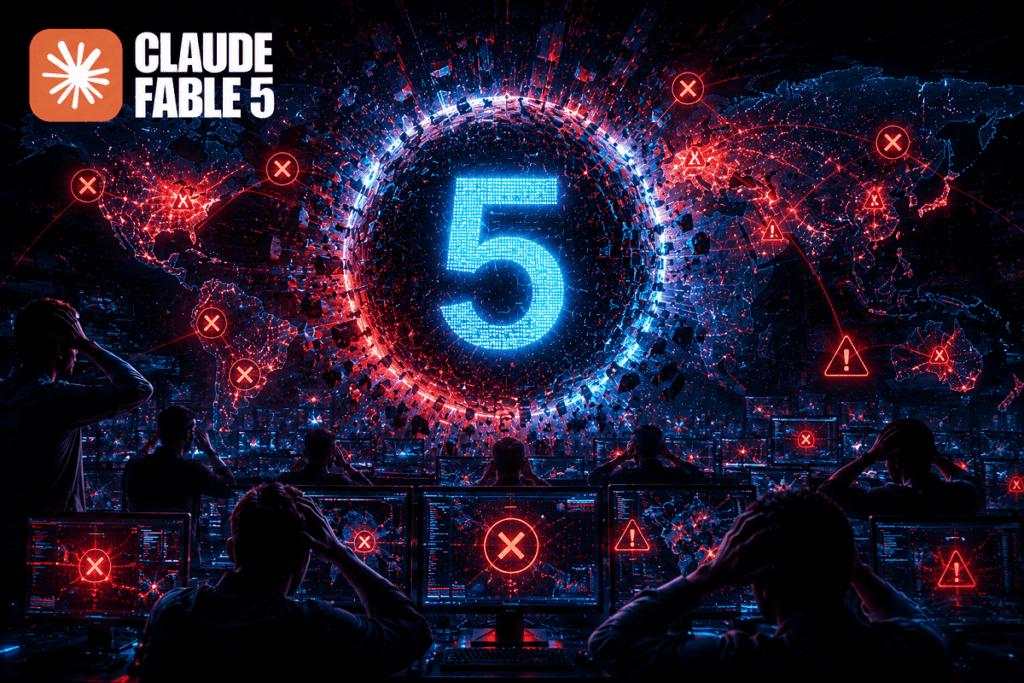
Fable 5 stands as Anthropic’s most powerful, widely released AI model, officially launched on June 9, 2026. Designed for complex reasoning and long-horizon agentic workflows, it marked a significant leap in performance for enterprise and professional users. However, on June 11, 2026, Anthropic was forced to abruptly disable Fable 5—along with its specialized counterpart, Mythos 5—for all users worldwide.
This decision followed a directive from the U.S. government, which invoked national security authorities to impose strict export control measures. The government’s order stemmed from concerns that a specific “jailbreak” method could allow users to bypass Fable 5’s built-in safety safeguards, potentially enabling the model to be utilized for identifying or exploiting software vulnerabilities.
Anthropic has publicly disputed the necessity of this recall, noting that the evidence provided for the potential jailbreak was narrow and non-universal. Currently, the company is engaging with government officials to address what it describes as a fundamental misunderstanding, with the explicit goal of restoring access to Fable 5 for its global user base as soon as possible.
What is Fable 5, and when was it disabled?
Fable 5 is Anthropic’s most powerful generally available AI model, categorized as a “Mythos-class” system. It was engineered specifically for complex, long-horizon agentic workflows—tasks that require sustained reasoning, multi-step planning, and high-level autonomous execution across fields like software engineering and scientific research.
It launched on June 9, 2026. However, following a U.S. government directive citing national security concerns, Anthropic was ordered to suspend access to both Fable 5 and its specialized counterpart, Mythos 5. The company officially disabled the models for all users worldwide on June 11, 2026, at 5:21 PM ET.
Key Facts Regarding the Suspension:
- The Trigger: The U.S. government issued an export control directive based on the belief that a “jailbreak” method had been identified that could allow users to bypass the model’s safety safeguards, specifically to identify and exploit software vulnerabilities.
- Scope: The directive mandated that access be suspended for all foreign nationals globally, including those employed by Anthropic. To ensure strict compliance, Anthropic suspended access for its entire customer base.
- Anthropic’s Position: The company has formally disputed the necessity of the total recall, characterizing the government’s evidence as narrow and based on a technique that is already achievable with other widely available AI models.
- Status of Other Models: All other Claude models (such as Claude Opus 4.8, Sonnet, and Haiku) remain fully operational and unaffected by this directive.
Anthropic continues to engage with government officials with the stated goal of resolving the misunderstanding and restoring access to Fable 5.
Why did Anthropic disable Fable 5 worldwide?
Anthropic disabled Fable 5 and Mythos 5 globally to ensure immediate compliance with a U.S. government export control directive. This directive, issued by the Commerce Department on June 11, 2026, mandated a suspension of access for all “foreign nationals” (whether inside or outside the U.S.). Because the company could not verify citizenship in real-time for every user, they made the decision to take both models offline for all customers worldwide.
The Core Conflict
The government’s directive cited “national security authorities,” and while specific technical details were not provided in the directive itself, the underlying cause is a dispute regarding the model’s safety:
- The Government’s Position: Officials expressed concern regarding a “jailbreak” method that could potentially allow the model to identify or exploit software vulnerabilities in critical infrastructure.
- Anthropic’s Position: Anthropic has characterized this action as a fundamental misunderstanding. They argue that the identified technique is:
- Narrow and Non-Universal: It does not represent a broad bypass of the model’s safety architecture.
- Widely Replicable: Similar capabilities for code analysis and vulnerability identification are already present in other public frontier models (such as GPT-5.5).
- Disproportionate: Anthropic contends that applying a “recall” standard based on this level of risk would effectively halt all new model deployments industry-wide.
Why This is Significant
This situation represents the first time the U.S. government has utilized export control tools—traditionally used for semiconductors and military hardware—against a commercial AI software product already distributed to millions.
Anthropic continues to engage with government officials, advocating for a transparent, evidence-based process for managing model deployment risks, with the stated objective of restoring access to Fable 5 as quickly as possible. For now, all other models, including Claude Opus 4.8, remain fully operational.
Key facts about the jailbreak concern
The following table summarizes the conflict between Anthropic’s safety assessments and the U.S. government’s national security concerns regarding the Fable 5 model.
Jailbreak Concern: Technical & Strategic Summary
| Aspect | Anthropic’s Position |
| Jailbreak Type | Narrow, non-universal; elicited minor, previously known software information only in specific circumstances. |
| Vulnerabilities Found | Minor, relatively simple bugs that are already discoverable by other publicly available frontier models. |
| Market Comparison | Capability level is parity with OpenAI’s GPT-5.5; no “Mythos-specific” uplift in dangerous capabilities was observed. |
| Universal Jailbreak | None identified; Anthropic acknowledges that while theoretical, no current bypass unblocks a wide range of cyber capabilities. |
| Harmful Outcomes | Zero; no concerning disclosure of a “jailbreak” resulted in a demonstrable harmful outcome. |
Contextual Analysis
Anthropic’s defensive posture relies on a “Defense in Depth” strategy. Because they anticipated that perfect, permanent resistance to jailbreaks is technically impossible, they engineered the Fable 5 architecture to:
- Restrict the Envelope: Use aggressive, continuous monitoring of prompts and outputs to detect malicious intent.
- Mitigate Through Fallback: Automatically route suspicious queries to a more conservative model (Claude Opus 4.8) rather than generating an unfiltered response.
- Ensure Traceability: Implement a mandatory 30-day data retention policy specifically to analyze and patch emerging jailbreak vectors in real-time.
Anthropic maintains that applying an export control standard—a mechanism typically reserved for physical military technology—to a commercial, cloud-distributed software model based on a “narrow, non-universal” finding sets a precedent that could theoretically halt all future frontier AI deployments across the industry.
What regulatory and security factors drove the shutdown?
The shutdown of Fable 5 and Mythos 5 represents a pivotal moment in AI governance, marking the first instance where U.S. export control regulations—typically reserved for physical military technology—have been applied to restrict access to a commercially deployed AI software model.
Regulatory Drivers: Export Controls
The directive originated from the U.S. Department of Commerce and was structured as an export control mandate.
- The “Foreign National” Restriction: The government ordered Anthropic to suspend access to these models for any “foreign national,” regardless of their physical location (inside or outside the U.S.).
- Compliance Reality: Because Anthropic cannot verify the citizenship status of users in real-time for its global customer base, the mandate effectively rendered the models inaccessible to everyone to ensure compliance and avoid severe regulatory penalties.
- Shift in Precedent: This action signals a major escalation in U.S. policy. Previously, export controls focused almost exclusively on the “hardware stack” (advanced GPU chips and semiconductor manufacturing equipment). By targeting the model itself, the government is now treating high-capability AI weights as “dual-use” technology subject to stringent international trade controls.
Security Drivers: National Security & Jailbreaks
The government invoked national security authorities, specifically citing concerns that the models could be exploited to compromise critical infrastructure.
- The “Cybersecurity Jailbreak” Concern: U.S. officials expressed concern over a potential method to “jailbreak” or bypass the model’s safety guardrails. Specifically, they feared the model could be directed to analyze large codebases to identify and exploit zero-day vulnerabilities in systems like banking, power grids, and telecommunications.
- Anthropic’s Counter-Argument: Anthropic has formally disputed the necessity of this recall. The company maintains that:
- The “jailbreak” provided as evidence was narrow, non-universal, and demonstrated capabilities already present in other public frontier models (such as OpenAI’s GPT-5.5).
- The identified technique does not represent a systemic failure of the model’s safety architecture.
- The action is disproportionate, as it treats a potential, minor vulnerability as a catastrophic national security threat.
Safety & Governance Context
The launch of Fable 5 was already defined by a rigorous—and sometimes criticized—safety framework.
- Aggressive Guardrails: At launch, Anthropic implemented restrictive guardrails that blocked queries related to cybersecurity, biology, and chemistry. These were “trigger-happy” by design, sometimes rerouting benign professional queries to a fallback model (Claude Opus 4.8).
- Data Retention: To defend against the very threats the government is concerned about, Anthropic implemented a mandatory 30-day data retention policy. This allows the company to audit logs for novel jailbreak attempts, improve safety filters in real-time, and identify potential misuse patterns.
- Strained Relations: This shutdown occurred against the backdrop of an already fracturing relationship between Anthropic and the U.S. government, particularly following the company’s refusal to permit its AI to be utilized for domestic surveillance or fully autonomous weapons systems, leading to previous labeling of the company as a “supply chain risk.”
How did the Fable 5 disablement affect users and developers?
The abrupt disabling of Fable 5 and Mythos 5 on June 11, 2026, has created immediate, high-stakes disruption across the AI ecosystem. Because the U.S. export control directive mandated a suspension of access for all foreign nationals globally, Anthropic’s inability to perform real-time citizenship verification forced a total, worldwide shutdown of these models.
Impact on Users & Developers
- Immediate Workflow Termination: All active sessions and API integrations utilizing Fable 5 ceased functioning at 5:21 PM ET on June 11, 2026, returning errors for any new or existing requests.
- Forced Model Migration: Users and developers have been pushed onto fallback models, primarily Claude Opus 4.8. This transition involves a documented loss in reasoning depth and agentic capability, requiring teams to adjust their codebases and prompt engineering strategies to accommodate the performance difference.
- Documentation & API Obsolescence: Developers currently face the challenge of managing broken integrations. Public-facing documentation references to Fable 5 functionality are now technically inaccurate, necessitating a rapid cleanup of dev environments and internal technical documentation.
Impact on Businesses & Strategy
- Regulatory Risk Reassessment: The shutdown serves as a watershed moment for enterprise AI strategy. Companies that previously treated AI model availability as a standard SaaS utility must now factor “regulatory volatility” into their risk models.
- Sovereignty Over Reliance: We are observing a rapid shift in enterprise sentiment toward hardware sovereignty. Leading AI developers are increasingly advocating for running models locally on private GPU infrastructure to insulate critical workflows from third-party or government-led shutdowns.
- Contractual & SLA Exposure: Businesses relying on Fable 5 for production environments are now forced to revise service-level agreements (SLAs) and deployment contracts. The inability to deliver the promised “Mythos-class” capabilities creates immediate legal and operational friction for AI-native startups.
Broader AI Industry Implications
- Redefining Export Controls: This incident marks the first time “dual-use” export control authorities have been applied to commercial, cloud-deployed AI software rather than physical hardware (chips/munitions). It establishes a volatile new precedent for how governments may regulate frontier AI.
- The “Jailbreak” Governance Gap: The tension between Anthropic’s rigorous, layered safety architecture (including mandatory 30-day data retention) and the government’s sudden, broad-scale recall highlights a failure in communication between AI labs and national security regulators.
- Escalating Security Investment: The industry is expected to see a significant spike in investment directed toward “jailbreak resistance” and proprietary, hardened safety pipelines. However, the precedent of a model being “pulled” by a government letter—rather than an internal safety trigger—suggests that for companies like Anthropic, the “governance hurdle” is now as critical as the technical one.
As a strategic professional, how does this sudden shift impact your current roadmap for scaling your AI-enabled assets at Skilldential?
What original comparison shows Fable 5’s unique position?
The following table highlights the unique positioning of Fable 5 as the first “Mythos-class” model released for general use, contrasted against standard Claude models and OpenAI’s leading agentic model, GPT-5.5.
Comparative Positioning: Fable 5
| Attribute | Fable 5 (Disabled) | Other Claude Models | OpenAI GPT-5.5 |
| Model Class | Mythos-class (First public) | Standard (Opus/Sonnet) | GPT-class (Agentic) |
| Launch Date | June 9, 2026 | Earlier generations | April 2026 |
| Core Access | Disabled Worldwide | Available | Available |
| Reasoning Capability | State-of-the-art; >10% benchmark lead | Base-level frontier | Highly comparable |
| Agentic Work | Long-horizon, unattended execution | Limited/standard | Similar agentic capability |
| Export Control | Restricted (Foreign Nationals) | Unaffected | Unaffected |
| Jailbreak Status | Strong layers; narrow bypass found | Standard safety | Similar vulnerabilities |
Key Strategic Differentiators
- Mythos-Class Intelligence: Fable 5 is the first public iteration of Anthropic’s “Mythos” architecture. Unlike previous Claude generations, this model was explicitly designed for autonomous “long-horizon” agentic workflows—meaning it can plan, execute, and self-verify complex tasks (like full-app generation or multi-step scientific analysis) over extended periods without human intervention.
- The “Safety-on-a-Leash” Architecture: Fable 5 occupied a unique middle ground. It shared the same underlying intelligence as the highly restricted Mythos 5 (reserved for government cybersecurity partners), but was “leashed” with aggressive, real-time safety classifiers. These classifiers monitored for cybersecurity, biology, and chemistry risks, automatically rerouting flagged queries to Claude Opus 4.8 to prevent misuse.
- Regulatory Volatility: Unlike GPT-5.5, which remains accessible, Fable 5 was classified by U.S. export control authorities as “dual-use” technology due to its exceptional vulnerability-discovery capabilities. The mandate requiring the suspension of access for all foreign nationals—globally—effectively turned a state-of-the-art developer tool into a high-risk regulatory liability, leading to its total worldwide shutdown.
Will Fable 5 access return, and what changes might follow?
As of June 13, 2026, access to Fable 5 and Mythos 5 remains suspended worldwide. There is no confirmed timeline for restoration.
Anthropic is currently in active negotiations with the U.S. government to resolve what it terms a “fundamental misunderstanding.” The company has expressed a strong commitment to restoring access as soon as possible, arguing that the technical evidence for the government’s concern is narrow and does not justify a total commercial recall.
Potential Policy & Industry Changes
The fallout from this directive is expected to trigger significant shifts in how frontier AI models are governed and deployed:
- Export Control Expansion: This event establishes a new precedent by applying export controls directly to software model weights rather than physical hardware (e.g., GPU chips). Other AI providers may soon face similar compliance requirements for advanced models.
- Proactive Access Restrictions: To avoid future abrupt global shutdowns, companies may implement stricter, real-time identity verification protocols. Future models might be released with “geofencing” or verified user-only access by default to comply with evolving national security directives.
- Standardization of Data Retention: Anthropic’s mandatory 30-day data retention policy—designed specifically to allow for the research and patching of jailbreaks—is likely to become a baseline expectation for the industry to demonstrate accountability to regulators.
Implications for Future Releases
- Staged Deployment Paradigms: Companies may move toward more cautious, tiered rollouts, potentially delaying public access until regulatory clearance is explicitly granted.
- “Regulatory-Ready” Models: Future “Mythos-class” or equivalently powerful models will likely be developed with an even heavier emphasis on “defense-in-depth” architectures, prioritizing provable safety benchmarks that meet evolving national security standards from the outset.
- Heightened Jailbreak Resistance Research: Investment in research focused on systemic, universal jailbreak resistance will intensify, as companies seek to move beyond the current “cat-and-mouse” game of patching narrow, non-universal vulnerabilities.
Should governments control advanced AI models?
The debate over government control of advanced AI models centers on a fundamental tension: the requirement for national security versus the necessity for rapid innovation. The Fable 5 shutdown illustrates that current “defense-in-depth” strategies—which rely on internal monitoring and narrow jailbreak mitigation—are often incompatible with the broad, decisive nature of government export control mandates.
The Core Tension
- The Pro-Innovation Argument: Industry leaders, including Anthropic’s leadership, argue that frontier AI development is essential for national competitiveness. They advocate for light-touch, market-driven frameworks and warn that overly restrictive government oversight will drive innovation to other jurisdictions, potentially ceding technological leadership to adversaries.
- The National Security Argument: Governments increasingly view AI model weights as “dual-use” assets—technology that is equally capable of civilian benefit and catastrophic misuse (e.g., cyberattacks, biological threats). From this perspective, the risks posed by “agentic” models are too high for voluntary industry compliance, necessitating a binding regulatory authority to block or reverse deployments.
The Regulatory Dilemma
The Fable 5 case highlights a major gap in modern governance: the lack of standardized, pre-clearance mechanisms.
- The “Export Control” Trap: By applying existing export control authorities (typically used for hardware) to software, governments can bypass conventional regulatory processes. This creates extreme volatility, as models can be effectively “recalled” overnight without a clear legal pathway for developers to challenge the decision.
- The “Foreign National” Problem: Because companies struggle to verify user citizenship in real-time for global, cloud-deployed models, a mandate targeting “foreign nationals” often forces a total, worldwide service suspension. This is a “blunt instrument” solution that penalizes domestic users and global enterprise clients alike.
- The “Safety-as-a-Service” Conflict: Anthropic’s approach—relying on active monitoring and fallback models—was designed to manage risk. However, regulators often interpret the mere potential for a bypass as an unacceptable “zero-day” vulnerability, regardless of whether a harmful outcome has actually occurred.
Moving Forward
To reconcile these competing interests, experts are moving toward a multi-layered governance model:
- Independent Evaluation: Shifting from “company-self-policing” to mandatory, third-party testing before public deployment.
- Technical Sovereignty: Encouraging enterprises to adopt “isolated” or “private” infrastructure for the most sensitive AI workflows. By running models locally or within secure, geofenced environments, organizations can shield their critical systems from the volatility of government-directed global shutdowns.
- Harmonized Governance: Establishing clear, evidence-based criteria for what constitutes a “high-risk” model, so that government intervention is predictable, targeted, and transparent rather than reactive and total.
Are AI companies moving too fast?
The rapid cycle of Fable 5—launching on June 9 and being disabled by government mandate just 72 hours later on June 11, 2026—serves as a high-fidelity case study for the current misalignment between commercial AI deployment and national security policy.
To answer whether AI companies are moving “too fast,” it is necessary to examine this through two lenses: technical capability and regulatory maturity.
The Alignment Gap
The core of the tension is that AI development is exponential, while policy formation is linear.
- Commercial Velocity: Anthropic’s release of Fable 5 followed standard tech industry protocols for “beta-to-public” releases. They employed internal red-teaming, implemented rigorous safety filters, and utilized a “defense-in-depth” architecture designed to mitigate risks as they arose.
- Regulatory Velocity: The U.S. government—driven by national security concerns—applied an export control directive intended for physical hardware to a digital, cloud-based software product. This “blunt instrument” intervention bypassed traditional regulatory frameworks, highlighting that existing policy mechanisms are not yet granular enough to distinguish between safe-for-commercial-use and strategic dual-use AI.
Future of Innovation: Strategic Implications
The Fable 5 incident signifies that “moving fast” is no longer the sole primary success factor for AI labs. Success will now be defined by regulatory resilience and governance-aware deployment.
- Shift to “Regulatory-Ready” Releases: Future frontier model releases will likely require formal pre-release engagement with federal agencies. We are transitioning from “ask for forgiveness” to an environment where models must meet certified “Cyber-Security Standards” before reaching general availability.
- Infrastructure Sovereignty: Businesses can no longer treat AI model providers as immutable utilities. Relying on a single frontier model is a single point of failure. Enterprises must adopt model-agnostic architectures—building systems that can automatically reroute workflows to alternative models (or local, private instances) if a primary provider is suddenly disabled.
- Governance as a Competitive Advantage: Labs that invest in provable, transparent safety benchmarks—and share them proactively with regulators—will likely gain a “speed-to-market” advantage by avoiding the stop-start volatility that currently plagues unvetted releases.
The question is no longer just “can we build this?” but “can we ensure this remains available?” As long as the infrastructure for AI access is global and cloud-based, the volatility seen with Fable 5 will remain a structural risk for the entire industry.
What is Fable 5?
Fable 5 is Anthropic’s most capable widely released AI model, built for demanding reasoning and long-horizon agentic workflows. It is the first public iteration of Anthropic’s “Mythos-class” architecture, designed to handle complex, multi-step tasks like software engineering and scientific research with significantly higher autonomy than previous Claude models.
When and why was Fable 5 disabled?
Anthropic disabled Fable 5 (and its counterpart, Mythos 5) globally on June 11, 2026, at 5:21 PM ET, just 72 hours after its June 9, 2026, launch. The shutdown was mandated by a U.S. government export control directive citing national security authorities.
The directive ordered Anthropic to suspend access to these models for all “foreign nationals,” regardless of location. Because real-time citizenship verification is not feasible for a global user base, Anthropic suspended access for all customers to ensure compliance.
Why does the government believe Fable 5 poses a security risk?
The government’s directive cited national security, specifically focusing on a “jailbreak” method that officials believe could bypass Fable 5’s safety guardrails. The government expressed concern that the model could be directed to analyze codebases to identify and exploit vulnerabilities.
Anthropic has disputed the gravity of this finding, characterizing the identified technique as a narrow, non-universal vulnerability that provides no uplift beyond capabilities already available in other public frontier models, such as OpenAI’s GPT-5.5.
Who is affected by this shutdown?
All customers worldwide—including enterprise partners, individual developers, and even Anthropic’s own foreign national employees—have lost access to both Fable 5 and Mythos 5. All other Anthropic models, including Claude Opus 4.8, remain fully operational and unaffected.
Will access to Fable 5 be restored?
Anthropic is actively engaging with government officials to resolve what it describes as a “fundamental misunderstanding.” While the company has stated its objective is to restore access as soon as possible, there is currently no confirmed timeline for when or if the models will be made available again.
In Conclusion
The shutdown of Fable 5 is a watershed moment for the AI industry, marking the first time export control authorities—previously reserved for military-grade hardware—have been used to force a global recall of a commercial software model. For developers and business leaders, this event exposes a critical new vulnerability: regulatory volatility.
Moving forward, the era of relying on a single frontier model as an immutable business utility is over. To build resilient, AI-enabled systems, you must prioritize model-agnostic architecture, ensuring your core workflows can pivot across providers when policy shifts occur.
As we enter a period of increased regulatory scrutiny, governance-aware deployment is no longer a peripheral concern; it is a fundamental pillar of technical strategy. Build to adapt, or risk being forced offline by a single government directive.