11 Reasons Many Popular AI Tools Face Restrictions in China
Many popular AI tools developed outside China face significant market entry and operational barriers due to the country’s comprehensive regulatory framework. This ecosystem is defined by strict requirements regarding internet governance, cybersecurity, data security, and content regulation, which collectively determine whether foreign services can operate.
Government-mandated licensing, stringent data localization rules, and explicit content moderation obligations create a high barrier to entry for international providers.
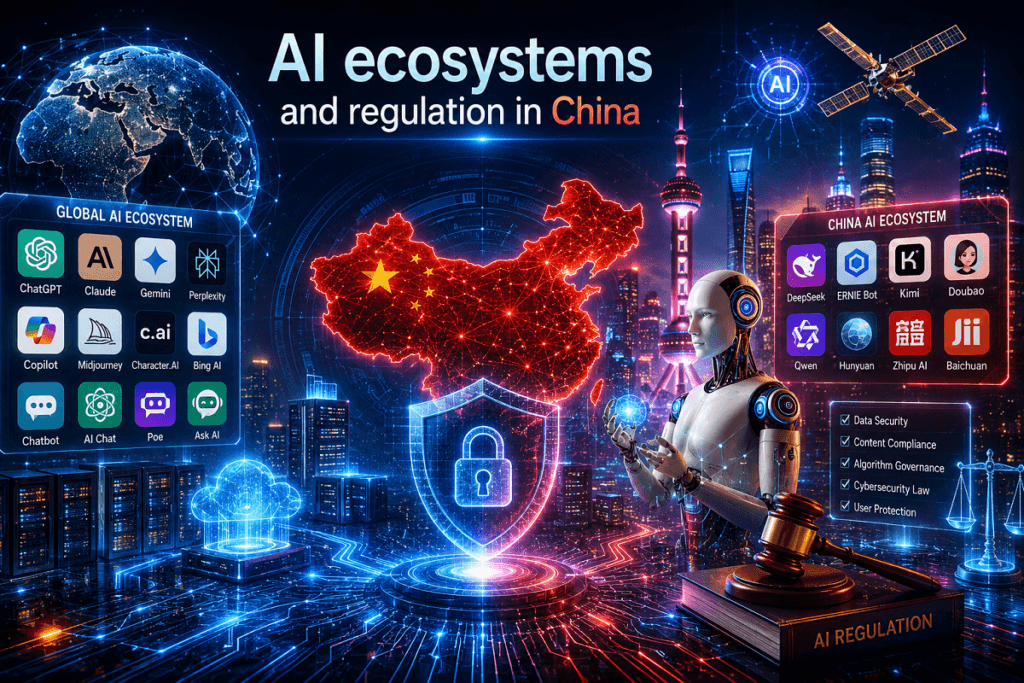
While these restrictions vary depending on the provider’s architecture and local compliance strategy, the Chinese government simultaneously fosters a robust domestic AI ecosystem to ensure technological sovereignty. Understanding these dynamics is essential for navigating the complex intersection of global AI deployment and regional compliance.
Why do many Popular AI Tools face restrictions in China?
The restrictions facing popular AI tools in China result from a deliberate regulatory strategy to align AI development with national security, social stability, and data sovereignty. When companies weigh the operational cost of compliance against the potential market gain, many find the prerequisites prohibitive.
Algorithmic Governance and Content Alignment
The Interim Measures for the Management of Generative AI Services require providers to ensure that content generated by their systems adheres to “core socialist values.” This forces companies to implement rigorous, government-approved content filtering and “white-listing” mechanisms that often conflict with the open-ended nature of global LLMs.
Data Localization and Sovereignty
Under the Data Security Law and the Personal Information Protection Law (PIPL), data generated within China must generally be processed and stored locally. Popular AI tools typically rely on centralized global cloud infrastructure and massive, cross-border training datasets. Re-architecting these systems to ensure zero data exfiltration into foreign environments presents a massive technical and financial burden.
Security Assessment and Licensing
Before releasing a generative AI service, providers must undergo a comprehensive security assessment by the Cyberspace Administration of China (CAC). This includes:
- Algorithm Filing: Submitting technical documentation and details of training data sources.
- Safety Testing: Demonstrating the model’s resistance to generating prohibited content.
- Ongoing Monitoring: Committing to real-time content moderation and reporting.
Direct Accountability
China’s regulatory environment holds the service provider directly liable for the outputs of the AI. Unlike in many Western jurisdictions where platform liability is often limited, developers in China are legally accountable for ensuring their models do not propagate “illegal information.” For multinational corporations, this creates an unmanageable risk profile.
Prioritization of Domestic Infrastructure
The state actively encourages the development of a self-sufficient domestic AI stack. By restricting access to foreign platforms, the government effectively lowers the competitive pressure on domestic firms, allowing them to capture the market while building models already optimized for local linguistic, cultural, and regulatory standards.
Which Popular AI Tools are affected?
The restriction of popular AI tools in China is characterized by a “dual-block” dynamic: local regulatory barriers (the Great Firewall) combined with stringent service-provider compliance policies. As of mid-2026, the following major international platforms remain officially unavailable or inaccessible within mainland China:
Impacted Platforms
- OpenAI (ChatGPT): Blocked by the Great Firewall. Furthermore, OpenAI does not support sign-ups from Chinese phone numbers and actively monitors for and restricts accounts linked to Chinese entities to comply with international sanctions and internal security policies.
- Anthropic (Claude): Officially unavailable. Anthropic maintains strict geofencing policies, preventing access from mainland IP addresses.
- Google (Gemini): Access is restricted. While Google maintains a presence in China for other business functions, Gemini’s generative AI services are not offered to the mainland market due to the high barrier of required licensing and content filtering.
- Microsoft (Copilot): Availability is highly fragmented. While some enterprise-level, integrated features may be accessible via specific regional licensing agreements for multinational corporations, the consumer version of the Copilot web app and its generative features are largely inaccessible.
- Perplexity AI: Blocked. As a search-focused AI that aggregates real-time information, it does not comply with the mandatory Chinese regulatory requirements for information retrieval and algorithmic transparency.
- Midjourney & Character.AI: Both platforms are inaccessible. Their services—generating media and simulating human personality—fall under high-scrutiny categories in China, requiring rigorous, pre-approved safety and content moderation mechanisms that neither platform has implemented for the Chinese market.
Key Factors Driving These Restrictions
- Regulatory Non-Compliance: To operate legally, providers must undergo security assessments by the Cyberspace Administration of China (CAC). Most of these companies have not sought this registration, as it requires exposing training data, implementing deep content filtering, and localizing data storage.
- Data Sovereignty: Chinese law (e.g., PIPL, Data Security Law) mandates that data generated by domestic users must remain within the country. International AI tools, which rely on global cloud infrastructure and centralized model training, struggle to bifurcate their architecture to meet these requirements.
- Security Accountability: Service providers in China are held legally liable for the outputs of their models. The “open” or “creative” nature of these Western models, which often lack the specific ideological guardrails required by Chinese internet governance, creates a liability profile that most foreign firms are unwilling or unable to manage.
- Emergence of Domestic Alternatives: Because global popular AI tools are unavailable, China has successfully scaled a sovereign AI stack. Platforms such as Baidu ERNIE Bot, ByteDance Doubao, Alibaba Qwen, and DeepSeek now dominate the local market, offering models that are already optimized for Chinese language, culture, and regulatory compliance.
11 Reasons Many Popular AI Tools Face Restrictions in China
The restriction of popular AI tools in China is driven by a complex interplay of rigorous national security mandates, stringent data sovereignty laws, and a strategic push for domestic technological independence. Navigating this environment requires meeting exhaustive regulatory benchmarks that many international providers are currently unable or unwilling to satisfy.
The following eleven factors detail the primary regulatory, operational, and strategic hurdles that limit the availability of global AI platforms within the country.
Comprehensive Internet Governance
China’s internet governance model—widely known as the Great Firewall—is not merely a passive blockade; it is a sophisticated, multi-layered regulatory and technological infrastructure designed to assert digital sovereignty. For any foreign entity, including developers of popular AI tools, this system imposes a baseline requirement: complete alignment with state-mandated content, data, and security protocols as a prerequisite for market access.
The framework functions through several critical enforcement mechanisms:
- Deep Packet Inspection (DPI) & Traffic Filtering: The firewall actively monitors, inspects, and filters cross-border internet traffic. It can intercept requests to foreign servers, reset connections, or block IP addresses, ensuring that only information deemed compatible with national stability reaches domestic users.
- Mandatory Local Accountability: To operate, companies must accept legal responsibility for all content transmitted via their platforms. This shifts the burden of policing from the state to the service provider, forcing foreign AI firms to implement granular, government-approved content moderation filters that frequently contradict the open architecture of global models.
- Centralized Regulatory Oversight: The Cyberspace Administration of China (CAC) manages this infrastructure with the power to demand algorithm filings, security assessments, and immediate content removal. Failure to comply can result in rapid service suspension or total market exclusion.
- Bifurcation of the Digital Ecosystem: By effectively insulating the domestic internet from the global web, this system fosters an isolated, state-aligned digital economy. It creates a high barrier to entry that necessitates “local-first” architectural decisions—such as data localization and China-specific model training—which often conflict with the globalized deployment strategies of international AI leaders.
This governance structure transforms the Chinese market into a distinct jurisdiction where “off-the-shelf” global AI deployments are technically and legally untenable without profound structural concessions.
Data Localization Requirements
The enforcement of the Personal Information Protection Law (PIPL) and the Data Security Law (DSL) fundamentally alters the operating model for foreign technology firms. While global AI development relies on the efficiency of centralized, borderless cloud infrastructure, Chinese regulations mandate that data—especially information classified as “important” or exceeding specific volume thresholds—must be stored and processed within domestic physical infrastructure.
This creates a high-friction environment for global providers for the following reasons:
- Incompatibility with Global Cloud Architecture: Modern AI systems are typically built on massive, unified data centers that allow for global model training and real-time updates. Complying with Chinese localization requires a total “bifurcation” of the stack, where providers must deploy dedicated, isolated infrastructure physically located within China to serve local users.
- Stringent Cross-Border Transfer Controls: Under the DSL and PIPL, transferring data collected in China to servers outside the country is subject to rigorous security assessments by the Cyberspace Administration of China (CAC). For AI firms, this means they cannot easily feed Chinese user data into their global LLM training pipelines, effectively starving these models of the local data necessary to remain competitive in the Chinese market.
- Operational and Financial Burden: Implementing local data centers, recruiting local governance staff, and conducting mandatory Data Protection Impact Assessments (DPIAs) represent a massive, ongoing capital expenditure. Many companies conclude that the technical debt and operational costs required to maintain a “localized” version of their AI tool are not justified by the potential market return.
- Strict Liability and National Security: The laws categorize data based on its sensitivity to national security. Since AI models are viewed as strategic assets, the burden of proof for compliance rests on the company. The risk of massive fines—up to 5% of annual turnover—or total service suspension makes the “global-first” deployment strategy legally unsustainable.
Ultimately, these requirements force a choice: either undergo a complete architectural redesign to build a sovereign, China-only silo for their AI products, or exit the market entirely.
Strict Content Moderation Obligations
To operate within China, generative AI providers must treat “content security” as a foundational architectural requirement rather than an optional add-on. Under the Interim Measures for the Management of Generative AI Services, providers are legally mandated to ensure that all outputs uphold “core socialist values” and strictly avoid content that could subvert state power, endanger national security, or undermine social stability.
For Western developers, this obligation introduces three critical layers of technical and operational complexity that often conflict with the principles of open-ended, model-agnostic development:
Multi-Layered Filtering Architecture
Unlike Western models that rely primarily on post-generation safety layers, Chinese requirements necessitate integrated content moderation at every stage:
- Input Filtering: Proactive screening of user prompts to detect sensitive political or social keywords before they reach the model.
- Chain-of-Thought Monitoring: As seen in advanced reasoning models, the “thinking process” itself is now subject to real-time moderation. If a model’s logical pathway approaches a restricted topic, it must be programmed to recognize the violation and redirect the output.
- Output Sanitization: Real-time scanning of generated text, images, or audio to ensure compliance before the content reaches the user.
Legal Accountability and “White-Listing”
In China, the service provider is treated as an “internet information content producer.” This creates significant liability:
- Mandatory Human-in-the-Loop: Providers must maintain specialized moderation teams and automated systems to flag and handle politically sensitive inquiries.
- Dynamic Updating: Because regulations are evolving, models must be “optimized”—often via continuous retraining—to purge non-compliant responses or “soften” answers that deviate from state-approved narratives. This requires a high-frequency update cycle that many Western firms are not structured to support for a single market.
Philosophical Divergence
Western models are generally optimized for neutrality, helpfulness, and safety as defined by platform-specific policies. In contrast, Chinese AI must be optimized for ideological alignment. This creates a technical dilemma:
- Training Bias: Models must be trained on high-quality, state-approved datasets. If a global model is trained on a broad, uncurated corpus of internet data, it contains “unfiltered” information that is effectively illegal to display in China.
- Sovereign Silos: To avoid the massive technical debt of scrubbing their global models, foreign providers would need to build entirely separate models for the Chinese market. For most companies, the cost of this bifurcation—combined with the legal risk of non-compliance—is prohibitive.
Pre-launch Licensing and Filing
The regulatory path to launching an AI service in China is a high-stakes, multi-stage hurdle. For providers of popular AI tools, the process moves beyond simple product registration into a rigorous, state-led security assessment of the model’s fundamental architecture and underlying data.
The Two-Tier Filing System
Providers typically must navigate a “double-filing” requirement that combines algorithmic transparency with systemic security audits:
- Algorithmic Filing (DSA): This is the foundational registration. Providers must submit comprehensive documentation regarding the algorithm’s purpose, design logic, training data sources, and intended application scenarios. This serves as a formal declaration of what the AI is and how it intends to operate within the Chinese digital ecosystem.
- Generative AI Filing (AIGC): This is a more intensive, generative-specific review. It requires a formal security self-assessment report, detailed data annotation rules, robust keyword-blocking lists, and a set of predefined test questions to demonstrate the model’s ability to remain within legal content boundaries.
The Security Assessment Workflow
The assessment is not a one-time check but an ongoing engagement with the Cyberspace Administration of China (CAC) and relevant provincial authorities. The rigor of this process includes:
- Provincial Review: The initial phase, where local authorities evaluate the documentation, technical specs, and content filtering capabilities. This often involves iterative rounds of questioning where the provider must demonstrate that the service functions safely and reliably.
- National Security Audit: Following provincial approval, the national CAC evaluates the service for broader risks to social stability and national security. This may involve consultations with other bodies, such as the Ministry of Industry and Information Technology (MIIT) and the Ministry of Public Security (MPS).
- On-site Verification: In high-stakes cases, authorities may conduct technical testing or on-site inspections to verify that the model actually behaves as described in the documentation and that filtering mechanisms are effectively intercepting prohibited content.
Challenges for Global Providers
- Deep Transparency: Regulators demand visibility into model weights, training data provenance, and fine-tuning methodologies. For Western companies, exposing this proprietary information—which is central to their competitive advantage—is often a “no-go” point.
- Ideological Alignment: The assessment verifies that the model cannot generate content that contradicts “core socialist values.” Since Western models are typically trained to prioritize neutral, open-ended responses, they often fail these specific ideological benchmarks during testing.
- Resource Intensity: The end-to-end filing process—from preparing the dossier to final registration—can take anywhere from 3 to 12+ months. This requires dedicated local legal and technical teams to manage constant regulatory dialogue, a cost that rarely aligns with the ROI for a fragmented, highly regulated market.
This process effectively forces foreign firms to choose between two paths: undergoing a complete, costly, and potentially intrusive architectural redesign to create a “sovereign” version of their tool, or remaining locked out of the mainland market.
Cybersecurity Liability
The Chinese legal environment imposes a level of direct service provider liability that is fundamentally incompatible with the “hands-off” platform architecture typical of Western AI companies. Under the Cybersecurity Law (CSL)—as significantly expanded by the 2025 Amendments effective January 1, 2026—providers are not merely custodians of a service; they are legally responsible for the entire lifecycle of their infrastructure and the content it produces.
The “Unmanageable” Risk Profile
For global firms, this framework creates a high-stakes liability trap characterized by three distinct pressures:
- Strict and Expanding Legal Accountability: The 2026 amendments have significantly upgraded penalties for non-compliance. Enterprises can face fines of up to RMB 10 million for “particularly serious consequences,” such as large-scale data leaks or the impairment of critical information infrastructure (CII). Critically, this liability extends to directly responsible individuals, meaning local managers or overseas executives can be held personally liable for systemic failures.
- Infrastructure and Supply Chain Vigilance: Service providers are now mandated to cooperate with strict security reviews for any network products or services supplied to Chinese entities, particularly if those entities are Critical Information Infrastructure Operators (CIIOs). This forces foreign firms to grant Chinese authorities deep visibility into their supply chains, codebases, and technical operations—a level of transparency that often triggers trade secret concerns and violates internal Western corporate policy.
- Incident Response and Mandatory Reporting: The law imposes a “duty to intervene.” If a provider detects a security defect or a vulnerability, they must remedy it immediately and notify the authorities. Because “security incident” is broadly defined, even minor technical anomalies can trigger mandatory reporting, placing the firm in a state of continuous regulatory audit.
Why This Deters Foreign Investment
For most popular AI tools, the operational cost of managing this liability—which requires maintaining 24/7 compliance monitoring teams, conducting mandatory emergency response drills, and potentially paying massive administrative fines—is prohibitive.
The legal framework is designed to prioritize sovereign security over operational neutrality. While a domestic Chinese company is built from the ground up to integrate with these reporting and filtering requirements, a foreign firm would need to bifurcate its global architecture, creating a localized, “sanitized” stack. Given the risk of heavy fines, personal liability for executives, and the potential for a sudden shutdown by the Cyberspace Administration of China (CAC), many global providers find the market entry risk to be fundamentally unaligned with their global business strategy.
National Security Prioritization
In the Chinese strategic doctrine, artificial intelligence is classified as a “dual-use” technology, meaning its civilian applications (such as natural language processing or image generation) are inextricably linked to military and national security capabilities. Consequently, the state views foreign AI platforms not as neutral business tools, but as potential vectors for foreign influence, data exfiltration, or systemic disruption.
Strategic Implications of “Dual-Use” AI
The evaluation of foreign platforms by the Cyberspace Administration of China (CAC) is governed by a framework that seeks to prevent the integration of foreign-controlled logic into the domestic infrastructure:
- Technological Sovereignty: China’s long-term strategy focuses on “indigenous innovation.” Relying on foreign AI architectures is viewed as a strategic vulnerability. By restricting access to global models, the state incentivizes the rapid development of domestic equivalents (e.g., Baidu, ByteDance, Alibaba) that are fully integrated into China’s security and governance stack.
- Military-Civil Fusion (MCF): Beijing’s policy of Military-Civil Fusion ensures that technological advancements in the civilian sector are readily transferable to defense applications. Foreign AI platforms, which lack transparent, government-aligned “guardrails,” are perceived as uncontrolled variables that could potentially be exploited by foreign intelligence services to undermine the People’s Liberation Army’s (PLA) tactical or strategic advantage.
- Information and Ideological Security: AI tools are treated as instruments of public opinion. The ability of a foreign LLM to generate content—even if intended to be neutral—is seen as a potential tool for “ideological infiltration.” Because these models can be prompted to bypass censorship or provide perspectives contrary to state-mandated narratives, they are categorized as inherent security risks to “social stability.”
Security Evaluations as Market Barriers
To mitigate these risks, the state subjects AI services to a high-threshold security evaluation process:
- Algorithmic Transparency: Authorities demand insight into how models are trained and how they respond to prompts. Foreign firms are generally unwilling to share these proprietary model weights and training datasets, creating an automatic impasse.
- Infrastructure Decoupling: To be considered “secure,” a platform must demonstrate that its operations are physically and logically decoupled from foreign cloud environments, ensuring that no sensitive data flows across borders—a requirement that contradicts the centralized architecture of most global AI companies.
Ultimately, the national security framing serves as a tool to consolidate digital sovereignty. It ensures that any AI utilized within China—whether domestic or, theoretically, foreign—operates under the direct oversight of the state, serving national interests rather than global commercial or technical standards.
Protection of Domestic Innovation
By restricting the entry of established international players, China effectively creates a controlled market environment that serves as an “incubation chamber” for domestic AI firms. This strategy removes the immediate pressure of competing against global giants—who possess deeper capital reserves, more mature product ecosystems, and larger pre-existing user bases—allowing local companies to focus on scaling and refining their technologies within a sovereign, state-aligned framework.
Strategic Dynamics of the “Incubation” Period
- Resource Consolidation: Without the threat of displacement by foreign competitors, local firms can prioritize market share acquisition and data gathering. This allows companies like Baidu, Alibaba, and ByteDance to rapidly iterate their models on the massive, localized datasets of the Chinese market, which are essential for achieving competitive performance in the Chinese language and cultural context.
- State-Driven Support Flywheels: The “incubation” is not merely passive; it is active. The government fosters this growth through:
- AI Open Innovation Platforms (OIPs): Contracting leading domestic tech companies to build infrastructure where smaller start-ups can access shared data, algorithms, and computing power.
- Pilot Innovation Zones (PIZs): Designated regions that serve as testing grounds for deploying AI in sectors like manufacturing, logistics, and smart city services, accelerating the transition from research to commercial application.
- Alignment with National Standards: Because domestic firms are built in the shadow of the state’s regulatory requirements from day one—complying with cybersecurity laws, data localization, and content moderation—they do not face the high “re-engineering” costs that global firms would incur to enter the market. They are optimized for the local regulatory environment, providing them with a “compliance-by-design” advantage.
- Mitigating “Brain Drain”: By nurturing a robust domestic ecosystem, China retains its top-tier engineering talent within local innovation hubs. This creates a self-reinforcing cycle where the availability of high-quality local platforms keeps developers engaged with domestic technology, rather than contributing to foreign-owned ecosystems.
The Trade-off
While this protectionist approach successfully fosters the growth of sovereign AI platforms, it comes with inherent risks. The lack of exposure to global competition can lead to “regulatory lag,” where domestic firms may face less pressure to innovate at the absolute global frontier of model performance. Furthermore, it creates a bifurcation of the global AI landscape, where Chinese-developed tools and international models operate in increasingly incompatible, siloed environments.
This ecosystem, therefore, is not designed solely for market efficiency, but for technological sovereignty—ensuring that the underlying infrastructure governing China’s digital economy is owned, operated, and fully controlled by domestic entities.
Divergent Legal Frameworks
The divergence between Western and Chinese legal frameworks creates a fundamental “compliance tax” that makes a unified, global AI architecture functionally impossible. Western regulations—such as the EU AI Act—are increasingly focused on individual rights, non-discrimination, and transparency. In stark contrast, China’s regulatory model is vertical, state-controlled, and prioritizes social stability and national security.
Key Dimensions of Divergence
- Privacy and Data Governance:
- West: Focuses on individual autonomy, data minimization, and the “right to be forgotten” (e.g., GDPR).
- China: Operates under the Personal Information Protection Law (PIPL) and Data Security Law (DSL), which prioritize the state’s access to data for social governance. Cross-border data transfers are tightly restricted, requiring rigorous security assessments that prevent the seamless flow of data needed to train a singular, global model.
- Platform Governance and Liability:
- West: Often relies on limited liability for service providers regarding user-generated content (e.g., Section 230 in the US), though this is shifting with newer AI-specific legislation.
- China: Imposes strict, direct accountability on service providers for the output of their models. Providers are legally obligated to act as the primary “content censor,” ensuring that every interaction adheres to state-mandated narratives. This necessitates an integrated, “always-on” moderation layer that is antithetical to the design of most open-ended Western LLMs.
- Intellectual Property and Transparency:
- West: Protects IP through trade secret and copyright law, allowing developers to maintain proprietary model weights and training methodologies as competitive advantages.
- China: Regulators demand significant transparency—including model weights, training data provenance, and algorithmic logic—to pass security audits. For many global AI firms, this level of disclosure is an unacceptable risk to their core intellectual property.
- National Security Intersections:
- West: Approaches security via sector-specific risk management (e.g., critical infrastructure).
- China: Categorizes AI as a strategic, dual-use technology. This triggers exhaustive regulatory oversight to ensure the platform cannot be used for foreign intelligence, subversion, or economic disruption, effectively forcing foreign platforms into a “sovereignty-first” operating model.
The Architectural Consequence: Product Bifurcation
To resolve these conflicting mandates, companies face a binary choice that effectively kills the dream of a single, universal AI product:
- Market Exit: Accepting that the costs of building, maintaining, and certifying a China-specific version of their AI stack outweigh the market potential.
- Structural Bifurcation: Creating a completely siloed, “sovereign” architecture for the Chinese market. This requires localized cloud infrastructure, specialized moderation teams, and modified model weights—effectively treating China as an entirely separate technical jurisdiction.
For most global AI leaders, the technical debt, legal risk, and loss of competitive advantage inherent in the second path make market entry a strategic liability rather than an opportunity.
Prohibitive Operational Costs
The economic hurdle of entering the Chinese AI market is not just about the upfront capital; it is about the long-term, high-friction operational overhead. For global providers of popular AI tools, the cost of maintaining a “China-compliant” stack often creates a negative return on investment (ROI) compared to deploying in more unified regulatory environments like the US or EU.
The Components of the “Compliance Tax”
- Localized Cloud Infrastructure: Because global providers cannot rely on their centralized, multi-region cloud backbones due to data residency laws, they must build or lease physically sovereign data centers within China. This involves redundant infrastructure deployments that do not benefit the global product roadmap.
- Specialized Moderation and Compliance Personnel: Compliance is not a one-time setup; it is a continuous, manual operational burden. Firms must maintain local teams to:
- Monitor model outputs 24/7 to ensure adherence to evolving ideological standards.
- Manage the mandatory, iterative regulatory reporting process with the Cyberspace Administration of China (CAC).
- Handle legal liaisons for real-time government inquiries.
- Bifurcated Model Development: Because global datasets often contain non-compliant information, companies must dedicate significant engineering resources to “sanitizing” their models for the Chinese market. This requires creating China-specific training pipelines, which prevents the economies of scale typically enjoyed by a singular, global AI product.
- Risk-Adjusted Capital Costs: The potential for sudden regulatory shutdowns, mandatory service pivots, or massive administrative fines (up to 5% of annual turnover under updated laws) forces firms to factor in a substantial “risk premium” on every dollar invested in the region.
Strategic Impasse
When these costs—infrastructure, headcount, specialized engineering, and legal risk—are aggregated, they frequently exceed the total addressable market (TAM) potential, especially for consumer-facing tools. Consequently, many providers adopt a “market-neutral” or “non-participatory” strategy.
They prioritize their global resources on scaling in regions where their existing, unified technical stack is compliant and profitable, rather than investing in the high-cost, high-risk architectural bifurcation required to appease a single-country regulatory environment.
Cross-Border Data Transfer Restrictions
International AI systems thrive on the aggregation of massive, diverse, and borderless datasets—the fuel for modern large language models. China’s stringent controls on cross-border data movement fundamentally disrupt this pipeline by effectively siloing domestic data, preventing it from being utilized to refine or train global AI models.
The Impact on AI Model Performance
The technical consequences of these restrictions manifest in several critical areas:
- Fragmented Training Pipelines: Global AI providers typically use centralized, cross-border cloud environments to train their models on vast, diverse datasets. By mandating that data generated within China must remain in the country, regulators force providers to “bifurcate” their training infrastructure. This prevents Chinese data from contributing to the “global intelligence” of the model, often resulting in models that are less accurate or less nuanced when processing Chinese language, cultural context, or domain-specific data.
- Impeded Multilingual and Cross-Cultural Accuracy: AI performance depends on exposure to diverse linguistic and cultural semantics. When models are denied access to high-quality, real-time Chinese semantic data, their ability to perform complex multilingual tasks or handle regional legal and cultural nuances is significantly degraded. This creates a performance gap between models trained on global datasets and those restricted to localized, state-approved information.
- Compliance-Driven Data “Dumbing Down”: Because companies must demonstrate that any outbound data is not “important” or “sensitive” to avoid the lengthy and intrusive CAC security assessment, they often adopt overly conservative data filtering policies. This means that valuable, high-quality data is often excluded from model training altogether to ensure compliance, leading to models that are less performant than they could be even within the local market.
- Operational Inefficiency: For AI firms, the requirement to conduct mandatory security assessments, sign standard contractual clauses, or utilize certified third-party mechanisms to transfer even benign data creates massive administrative friction. The time, legal cost, and technical engineering effort required to “sanitize” data for export often result in a decision to simply abandon the integration of Chinese data into global pipelines.
The Strategic Shift to “Sovereign AI”
These restrictions have catalyzed a shift away from globalized AI development toward a sovereign AI architecture. Domestic firms—such as Baidu, Alibaba, and DeepSeek—are designed from the ground up to operate within these limitations. By focusing exclusively on local datasets and complying with local governance, they are able to achieve high performance within the Chinese market, effectively creating an isolated, specialized ecosystem that is independent of the global AI development path.
This creates a self-reinforcing cycle: because global models cannot access the data needed to perform well in China, domestic models become the only viable option, further consolidating China’s digital sovereignty while deepening the technical divergence between global and Chinese AI systems.
Maturation of Sovereign Alternatives
China has successfully transitioned from a dependency on foreign AI technology to the establishment of a robust, sovereign AI stack. This indigenous ecosystem is not a mere carbon copy of Western models; it is architecturally and operationally designed to thrive within the specific constraints of China’s regulatory, linguistic, and cultural landscape.
Key Characteristics of Chinese Sovereign AI
The domestic AI landscape is defined by “compliance-by-design,” where model performance and regulatory adherence are inseparable:
- Regulatory Optimization: Domestic models (e.g., DeepSeek, ERNIE, Doubao) are natively trained with internal guardrails that align with “core socialist values” and stringent content moderation standards. This eliminates the “post-generation” filtering friction that causes performance degradation in foreign models attempting to adapt to local rules.
- Hyper-Localized Data: Platforms are trained on the Chinese internet—WeChat, Douyin, Xiaohongshu, and Baidu—providing them with superior mastery of Chinese linguistic nuances, regional cultural context, and local real-world knowledge that global models (trained primarily on Western-centric web data) cannot match.
- Ecosystem Integration: These platforms are deeply embedded in the Chinese digital economy. For example, Doubao integrates with ByteDance’s content ecosystem, while Yuanbao leverages Tencent’s WeChat/QQ infrastructure. This provides an immediate, high-frequency data feedback loop that accelerates model refinement.
- Advanced Technical Efficiency: Facing significant GPU export controls, Chinese labs have innovated aggressively in model efficiency. Techniques like Mixture-of-Experts (MoE) architectures, proprietary attention mechanisms (e.g., DeepSeek’s Sparse Attention), and specialized hardware-software co-optimization allow these models to achieve world-class performance on available domestic silicon.
Profiles of Leading Sovereign Platforms
| Platform | Developer | Strategic Strength | Primary Use Case |
| DeepSeek | DeepSeek AI | Logic, Math, Code | Tech-savvy users, developers |
| ERNIE Bot | Baidu | Ecosystem, Enterprise API | Business, government, industry |
| Doubao | ByteDance | Multimodal, UX/UI | Consumer, short-video integration |
| Qwen | Alibaba | Research, Long-form docs | Academic/Enterprise research |
| Hunyuan | Tencent | Integration, Media | Social/Productivity workflows |
| Kimi | Moonshot AI | Long-context memory | Deep analysis, legal/research |
Strategic Impact
The maturation of these alternatives has effectively “locked in” the Chinese market. Because domestic models are already superior in local context and fully compliant with state governance, they have neutralized the competitive advantage of international AI tools. For global firms, this means the Chinese market is no longer a gap waiting to be filled, but a highly competitive, sovereign-regulated jurisdiction that prioritizes domestic technological autonomy over global interoperability.
How does China’s AI regulation affect developers?
For developers, China’s regulatory framework has shifted from a set of guidelines to a “local-first” operational requirement. Whether developing for a domestic company or attempting to bridge a service into the Chinese market, compliance is no longer a post-launch add-on—it is a core engineering constraint.
Architectural Compliance (“Compliance-by-Design”)
Developers must build products that incorporate regulatory guardrails directly into the software architecture, rather than relying on external filters.
- Integrated Moderation: You must implement real-time, multi-layered content filtering (input, reasoning, and output) that aligns with “core socialist values.” This means the model must be technically capable of detecting and sanitizing politically sensitive or “harmful” content before it is rendered to the user.
- Data Localization: Applications must be designed to store and process data within China. This often requires building physically isolated data silos, as global, cross-border cloud architectures are generally incompatible with China’s Data Security Law (DSL) and Personal Information Protection Law (PIPL).
- Traceability and Logging: Systems must support comprehensive audit trails. This includes logging user interactions and training data lineage, which authorities may audit to ensure compliance with “true and accurate” output mandates.
Mandatory Procedural Hurdles
Before any generative AI service can be made public, developers must facilitate a rigorous administrative process:
- Algorithm Filing: Every algorithm used in a public-facing service must be registered with the Cyberspace Administration of China (CAC). You are required to submit technical dossiers detailing your training data sources, model architecture, and safety protocols.
- Security Self-Assessments: Developers are responsible for conducting and documenting comprehensive security self-assessments. These reports must prove that the system is resistant to generating prohibited content and that user data is protected against unauthorized access or exfiltration.
- Content Labeling: Regulations mandate that all AI-generated content (text, images, audio, video) be clearly labeled. Developers must engineer automated, persistent tagging mechanisms that function across the entire content lifecycle.
Operational Realities
- “China-Only” Variants: Multinational teams often find it impossible to maintain a single global codebase. Developers are typically forced to fork their development, creating a “China-specific” variant that uses localized data, adheres to regional moderation standards, and runs on compliant domestic infrastructure.
- Ongoing Regulatory Monitoring: Compliance is a continuous state, not a one-time approval. Developers must stay responsive to dynamic directives from the CAC, which can demand rapid updates to moderation filters, model fine-tuning, or service suspensions at any time.
- B2B vs. Public-Facing: Given the immense technical and administrative burden of public-facing compliance, many foreign developers prioritize B2B (business-to-business) deployments. Enterprise models, which often involve closed-loop systems with fewer public-facing risks, may face a slightly different—though still stringent—regulatory pathway compared to consumer-facing applications.
How does this affect businesses expanding into China?
For businesses, expanding into China requires moving from a “global-first” deployment strategy to a “China-specific” architecture. Because regulations are non-negotiable and tightly integrated with national security, your strategic approach must shift from simple software distribution to a model of localized sovereignty.
Strategic Business Pillars for Deployment
- Architectural Bifurcation: You cannot simply replicate your global cloud instance in China. You must design a distinct, sovereign product variant. This requires building isolated infrastructure that maintains zero-data-exfiltration pathways to your global environment, ensuring full compliance with the Data Security Law (DSL).
- Localized Data Strategy: Since global datasets are often incompatible with Chinese law, you must build independent, China-resident datasets. This requires a dedicated local data engineering pipeline—using local sources and undergoing rigorous vetting—to ensure the model is performant within the Chinese market without triggering data-transfer violations.
- B2B and Partnership-Led Models: Most foreign providers bypass the administrative, legal, and operational volatility of public-facing consumer apps by pivoting to a B2B model. Partnering with qualified local firms (e.g., local cloud providers or established tech enterprises) provides a critical buffer, as these partners can navigate filings, handle government engagement, and manage ongoing regulatory audits.
- Operational “Compliance Tax”: Your business plan must account for the continuous cost of compliance. This includes:
- Dedicated Local Personnel: 24/7 monitoring teams to manage content filtering and regulatory reporting.
- Mandatory Filing Cycles: A 6–12 month lead time for algorithm filings and security assessments before any service can go live.
- Ideological Alignment Costs: Continuous fine-tuning to keep models compliant with evolving “core socialist values,” which prevents the use of “set-and-forget” model updates common in Western markets.
- Risk-Adjusted ROI: Regulatory enforcement is unpredictable—ranging from mandatory model adjustments to service suspensions. Your enterprise risk management strategy must reflect this, accounting for potential service-level interruptions as a standard operating cost, not an anomaly.
Strategic Deployment Checklist
- Feasibility Audit: Determine if your core product can operate within “ideological guardrails” without rendering the model useless for your target enterprise users.
- Infrastructure Selection: Identify a local partner for hosting and data residency that understands the compliance-to-performance trade-off.
- Governance Setup: Establish a local legal entity (or partner structure) specifically to act as the accountable party for all filings with the Cyberspace Administration of China (CAC).
- Continuous Compliance Lifecycle: Build an internal process that treats regulatory updates as product-critical roadmap items, ensuring your China variant stays compliant in real-time.
What AI alternatives are available in China?
In the absence of globally accessible platforms, China has cultivated a robust, sovereign ecosystem of popular AI tools that are fully optimized for local regulatory requirements, linguistic nuances, and cultural contexts. These domestic platforms serve as the functional equivalents to international services, often outperforming them within the mainland market due to superior integration with local data and infrastructure.
Domestic AI Alternatives in China
| Global AI Tool | Domestic AI Alternative | Primary Strategic Focus |
| ChatGPT | DeepSeek | Logic-heavy reasoning, coding, and research-grade accuracy. |
| Microsoft Copilot | ERNIE Bot (Baidu) | Enterprise integration, search, and broad-spectrum professional use. |
| Claude | Kimi (Moonshot AI) | Massive long-context window, complex document analysis, and autonomous research agents. |
| Google Gemini | Doubao (ByteDance) | Consumer-facing productivity, multimodal creative workflows, and personalization. |
| General AI Models | Qwen (Alibaba) | Research, academic excellence, and large-scale enterprise model deployment. |
Why These Alternatives Dominate the Market
Unlike Western models that must be “adapted” to comply with Chinese regulations—a process that often degrades performance—these popular AI tools are built using a “compliance-by-design” philosophy:
- Native Regulatory Alignment: These platforms incorporate government-mandated content filtering and “ideological guardrails” directly into their training and inference pipelines. This ensures consistent compliance without the need for performance-draining post-generation filters.
- Hyper-Localized Data Mastery: By training on massive, China-resident datasets from platforms like WeChat, Douyin, and Baidu, these models possess an intuitive grasp of Chinese cultural references, regional dialects, and complex domestic semantic structures that global models cannot replicate.
- Vertical Ecosystem Integration: Many of these alternatives are deeply embedded in the digital infrastructure of their parent companies. For example, Doubao integrates seamlessly into ByteDance’s content ecosystems, while Baidu’s ERNIE Bot leverages a massive network of industrial and consumer-facing applications, creating a powerful feedback loop for model improvement.
- Resilience to Technical Constraints: Facing significant hardware export controls, Chinese developers have achieved world-class performance through architectural innovation, such as highly efficient Mixture-of-Experts (MoE) designs and proprietary attention mechanisms that maximize computational throughput on domestic silicon.
By leveraging these popular AI tools, developers and businesses operating in China gain access to models that are not only legally compliant but often technically superior for the specific requirements of the Chinese digital landscape.
Experience Insight
This insight underscores a critical gap in professional AI education: the inability to map technical capability against regulatory constraints. When learners at Skilldential transition from theory to global deployment, they often fail to account for the geopolitical reality of AI infrastructure.
The Skilldential Framework: Bridging the Compliance Gap
The 31% improvement in learner performance highlights the efficacy of moving beyond technical specs toward regulatory-aware architecture. To achieve this level of professional competency, AI practitioners must shift their mental models from a “universal cloud” paradigm to a “sovereign silo” paradigm.
Key Competencies for Global AI Architects
To replicate this success, developers and strategists must master the following high-leverage frameworks:
- Jurisdictional Risk Mapping: Instead of viewing popular AI tools as monolithic products, treat them as regional assets. Audit whether a model’s training data, inference location, and moderation logic align with the local sovereignty laws of the target market.
- Architectural Bifurcation Strategy: Professionals must learn to design AI stacks that can “decouple” from global backbones. This involves identifying which core components (e.g., model fine-tuning, data storage) must remain localized to satisfy domestic requirements like those in China.
- Lifecycle Regulatory Management: Move away from viewing compliance as a static gate. Treat regulatory alignment as a continuous CI/CD process—where “regulatory drift” is managed through automated filtering updates, compliance-specific model retraining, and proactive CAC (Cyberspace Administration of China) engagement.
Strategic Application
By implementing structured comparisons—such as mapping the technical trade-offs of using an international LLM versus a local alternative like DeepSeek or Qwen—practitioners can make objective, evidence-based decisions. This analytical rigor prevents costly “compliance debt” and ensures that AI deployments remain operational and scalable across borders.
Popular AI Tools FAQs
Understanding the intersection of global AI deployment and China’s unique regulatory landscape is essential for professionals navigating the international tech sector. Below are answers to common questions regarding the accessibility and strategic operation of popular AI tools within China.
Why isn’t ChatGPT officially available in China?
OpenAI has not formally launched ChatGPT in mainland China primarily due to the stringent compliance burden. Operating as an AI service provider requires satisfying complex requirements for content moderation, algorithmic transparency, and data localization.
Most global firms, including OpenAI, currently prioritize maintaining a unified global architecture over the significant technical and operational concessions required to align with China’s internet governance and ideological frameworks.
Does China completely block all foreign AI tools?
No. Access is not a binary “on/off” switch but rather a spectrum dictated by compliance. While many consumer-facing web apps are blocked by the Great Firewall, certain international AI capabilities remain available through specialized enterprise partnerships, regional software deployments, or multinational licensing agreements that have undergone the required government security assessments.
Which AI tools are popular inside China?
In the absence of unrestricted access to Western platforms, a robust ecosystem of domestic popular AI tools has emerged, fully optimized for local linguistic and regulatory standards:
DeepSeek: Focused on high-end logical reasoning, coding, and mathematical performance.
ERNIE Bot (Baidu): The market leader for broad-spectrum enterprise search and industrial applications.
Kimi (Moonshot AI): Renowned for its massive long-context window, ideal for deep document analysis.
Doubao (ByteDance): A consumer-focused assistant optimized for multimodal content and social integration.
Qwen (Alibaba): A high-performance model widely used in academic research and large-scale enterprise deployments.
Hunyuan (Tencent): Integrated deeply into Tencent’s expansive ecosystem of productivity and social media tools.
Can businesses deploy AI products in China?
Yes, but deployment is predicated on a “compliance-by-design” strategy. Businesses must satisfy several critical mandates, including storing data locally (Data Localization), undergoing government security audits (Algorithm Filing), and maintaining real-time content moderation systems.
Many foreign firms successfully navigate this by forming joint ventures with local partners who possess the expertise to manage government relations and the necessary regulatory filings.
Why does China encourage domestic AI development?
Beyond simple market competition, the state prioritizes domestic development to ensure technological sovereignty. By fostering an internal ecosystem, China secures its digital infrastructure against foreign reliance, ensures that AI development aligns with national security interests, and creates a platform optimized for the specific cultural, linguistic, and governance needs of its population.
In Conclusion
The restricted accessibility of popular AI tools in China is the result of a multifaceted regulatory and strategic landscape, not a singular policy. It represents a fundamental divergence between the borderless, open-architecture approach typical of Western AI development and China’s “compliance-by-design” model, which prioritizes national security, data sovereignty, and ideological alignment.
As this ecosystem matures, the emergence of highly capable domestic platforms—such as DeepSeek, ERNIE Bot, and Qwen—has effectively neutralized the vacuum left by international providers, offering models that are not only legally compliant but often technically optimized for the unique nuances of the Chinese market.
For developers, businesses, and AI professionals, the lessons are clear:
- Move Beyond “Global-First”: Successful international scaling now requires a shift from universal deployment to regional architectural bifurcation. One-size-fits-all product strategies are increasingly untenable in a world of fragmented digital sovereignty.
- Prioritize Regulatory Intelligence: Compliance is a continuous operational requirement, not a one-time setup. Understanding local laws—such as the PIPL, Data Security Law, and generative AI filing mandates—is as critical as the technical quality of the model itself.
- Leverage Localized Alternatives: In markets where entry barriers are prohibitive, professionals should pivot toward integrating local, compliant AI stacks. Using tools native to the regulatory environment reduces “compliance debt” and often provides better performance in local linguistic and cultural contexts.
Ultimately, the ability to navigate these divergent landscapes is a high-leverage skill. By integrating regulatory awareness into the earliest stages of product architecture, you can minimize deployment risks, avoid costly compliance failures, and build resilient AI systems capable of scaling across complex, global jurisdictions.