How 80% of Nigerians are Using AI to Redefine Their Careers
Using AI means applying artificial intelligence tools and systems to automate tasks, analyze data, and support decision‑making in work, learning, and business. In Nigeria, 88% of adults have already used AI chatbots—well above the global average—and 80% report using AI to explore new business ideas or career changes.
Adoption is strongest in learning and daily work, where over 90% of users say AI helps them understand complex topics and perform tasks more efficiently. However, turning this broad usage into a real career pivot requires focused skill development, not just casual tool use.
Key Differentiators: The User vs. The Professional

The “Big Pivot” isn’t about knowing how to chat with a bot; it’s about understanding the mechanics that drive it.
| Feature | The Casual User (88%) | The High-Level Professional |
| Primary Tool | Public Chatbots (ChatGPT, Gemini) | Custom Models & APIs (Python, PyTorch) |
| Main Activity | Content Generation / FAQs | Data Engineering & Model Deployment |
| Outcome | Personal Productivity | Scalable Business Solutions |
| Market Value | Replaceable | High Demand / Wage Premium |
How are Nigerians really using AI to pivot careers?
Most Nigerians currently use AI for learning, work productivity, and exploring new income streams rather than fully switching careers. Reports show that about 80% use AI to test new business ideas or potential career changes, but only a smaller share builds the technical or strategic skills that global employers are actively hiring for.
For Ambitious Pivoters, Stuck Power Users, and final‑year students, the real differentiator is not whether they use AI, but whether they can design workflows, automate processes, and interpret AI outputs in ways that directly improve business outcomes. In Skilldential career audits, it is common to see professionals who use AI daily for drafting emails or reports but lack portfolio‑grade projects that prove value to hiring managers.
The Mastery Gap: Casual vs. Professional
To move from the 80% who are “exploring” to the top tier who are “earning,” you must shift your focus from content generation to system integration.
High-Level Skills vs. Everyday Use
| Feature | Everyday Usage (The 88%) | High-Level AI Career Skills |
| Common Task | Generating a generic email or image. | Building an automated customer support pipeline. |
| Primary Tool | Web interface (ChatGPT/Gemini). | Python, APIs, and Cloud Infrastructure (AWS/Azure). |
| Data Handling | Copy-pasting text into a prompt. | Engineering ETL pipelines to feed clean data to models. |
| Market Value | High competition, lower entry barrier. | Specialized talent, premium global salaries. |
Building a “Portfolio-Grade” Pivot
If you want to be part of the successful career pivoters in 2026, your “Using AI” story needs to move into practical applications. Instead of saying “I use AI for research,” a high-level candidate says:
- “I developed a custom AI agent that reduced my department’s research time by 40% using Retrieval-Augmented Generation (RAG).”
- “I built a sales forecasting model that uses historical data to predict monthly trends with 85% accuracy.”
What makes Nigeria’s AI moment a career advantage?
Nigeria is currently among the most AI‑forward countries globally. With 88% of adults using AI chatbots and 93% using them to master complex topics, the nation has skipped the “skepticism” phase seen in other regions. This rapid adoption is driven by a unique mix of economic pressure and massive opportunity: around 80% of Nigerians use AI to explore new business ideas or support a career transition—nearly double the global average.
This environment creates a “Nigerian Advantage” in three specific ways:
- AI as the New Baseline: Employers and clients in Nigeria are beginning to expect AI‑literate talent. In 2026, being able to say you are “Using AI” is quickly becoming a baseline requirement rather than a “nice-to-have” bonus.
- The Optimism Premium: While other global markets are stalled by fear of job loss, 80% of Nigerians are more excited than concerned. This rises to 90% among frequent users. This positive mindset fuels faster experimentation, allowing Nigerian professionals to fail fast and learn faster than their global counterparts.
- The “Side-Hustle” Laboratory: Because AI is already deeply embedded in local learning and entrepreneurial ventures, Nigerian professionals have a “live lab” to test skills. It is easier to convert everyday use into evidence‑based portfolios when the culture around you is already supportive of the tech.
From “User” to “Expert”: Building Your Evidence
To turn this national advantage into a personal paycheck, you must move from consuming AI to documenting your impact. If you are part of the 80% pivoting, your portfolio should move beyond “chatting” and into system-thinking.
High-Level Pivot Tip: Don’t just list “ChatGPT” on your CV. Showcase a project where you used an AI API to automate a specific business process, such as a custom RAG (Retrieval-Augmented Generation) system for a local firm’s internal documents.
How do you move from “using AI” to a high‑level AI career path?
To move from being a casual participant in Nigeria’s 88% to a high-earning professional, you must specialize. The report highlights that Nigerians are already using AI for “business ideas and career changes,” but the gap lies in technical execution.
For most Nigerians, the pivot starts by choosing one of three high‑leverage paths that align with existing strengths: Data & Analytics, MLOps & Automation, or AI Strategy & Product. Rather than trying to learn “everything AI,” the most successful pivoters build depth in one path while keeping a working knowledge of the others.
The Three High-Leverage Paths for 2026
- Data & Analytics: Focus on cleaning, interpreting, and visualizing data to drive business decisions. This is the natural next step for accountants, researchers, and marketers.
- MLOps & Automation: Focus on building systems that allow AI to work “on its own.” This is where the 91% of Nigerians using AI for work productivity can excel by designing autonomous workflows.
- AI Strategy & Product: Focus on the “Big Picture.” This role bridges the gap between technical teams and business goals—perfect for managers and entrepreneurs in that 80% pivot group.
The Skilldential Success Formula
In Skilldential career audits, it is common to observe that mid‑career professionals stay stuck because they only use AI as an assistant (for writing or summarizing) instead of owning end‑to‑end workflows.
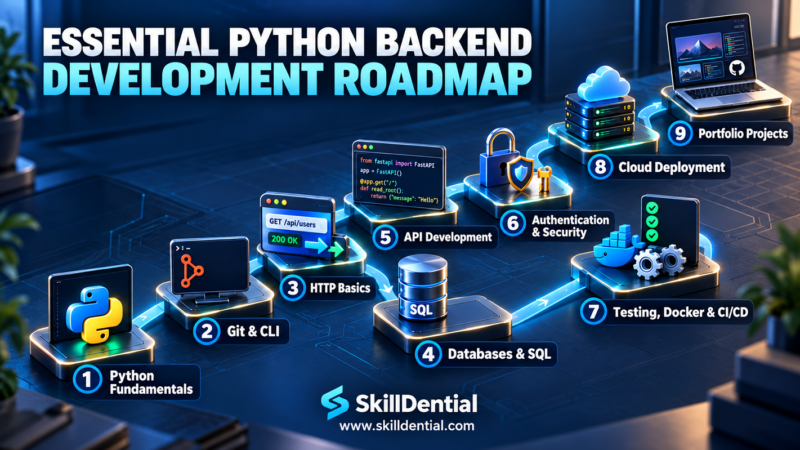
Implementing a focused roadmap—Foundations → One Stack → One Portfolio Project → Targeted Applications—has led to up to a 35–40% increase in interview callbacks within 6–9 months for those who complete all stages.
| Stage | Action | Outcome |
| Foundations | Master Python, SQL, and AI Ethics. | Literacy & Logic. |
| One Stack | Pick a toolset (e.g., PyTorch, AWS, or Power BI). | Technical Depth. |
| Portfolio | Solve a local problem (e.g., an AI bot for SME inventory). | Proof of Value. |
| Application | Target global remote roles or local tech leaders. | High-Level Pivot. |
Which AI path fits different Nigerian profiles?
Choosing a path is about matching your existing professional “DNA” with the technical demands of the future. Below is a decision‑style comparison tailored to the three main segments of the Nigerian market.
| Path / Dimension | Product Management suites, Low-code builders, and AI Audit frameworks. | Core Daily Work | Typical Tools & Stack | Time to Project (Focused Study) | Example Job Titles |
| Data & AI Analytics | Deploying AI models, automating cross-app workflows, and integrating APIs. | Cleaning data, building dashboards, using AI to generate and explain insights. | SQL, Python, Power BI, Tableau, AI Copilots. | 120–200 hours for a business-impact project. | Data Analyst, BI Analyst, Marketing Analyst. |
| MLOps & Automation | Technical power users, STEM grads, or freelancers comfortable with backend systems. | Mapping business problems to AI solutions, scoping products, and managing implementation. | Python, Cloud (AWS/Azure), Docker, Zapier/Make. | 200–300 hours for an end-to-end deployed AI service. | MLOps Engineer, AI Automation Engineer. |
| AI Strategy & Product | Managers, agency owners, or ops leads with deep industry knowledge. | Product Management suites, Low-code builders, and AI Audit frameworks. | Product Management suites, Low-code builders, AI Audit frameworks. | 100–180 hours for 2–3 case studies or strategy decks. | AI Product Manager, AI Strategist, Innovation Lead. |
Identifying the “Ease of Entry” vs. “Income Potential”
In the 2026 labor market, Data and AI Analytics roles are currently the most accessible entry point for the average Nigerian professional due to the heavy reliance on data in our fintech and banking sectors. While MLOps and AI Engineering roles require more technical depth, they command the highest salaries—often reaching ₦1.5M to ₦3M+ monthly for senior local roles or $5,000+ for international remote positions.
The “Strategist” Sweet Spot
For those in the 80% using AI to explore business ideas, the Strategy & Product path is a significant asset. Understanding local market nuances—like navigating Nigeria’s unique logistics or consumer behavior—is something a global AI model cannot do alone. High-level strategists who can bridge that gap are becoming the most sought-after consultants in Lagos and Abuja.
Don’t let the technicality of “MLOps” or “Data Science” intimidate you. Remember that 93% of your peers are already using AI to learn. If they can use it to understand a complex topic, you can use it to master a career-defining skill.
How can Ambitious Pivoters in “traditional” jobs use AI to escape stagnation?
Ambitious Pivoters in banking, admin, marketing, or civil service already work with structured processes, reports, and repetitive tasks that are ideal for AI‑driven improvement. The key is to turn day‑to‑day using AI into measurable business results that can be proven with data and then packaged into a portfolio.
By 2026, simply “knowing” AI isn’t enough; you must prove you can use it to create System Thinking within your organization.
A practical 3‑step path to stand out
- Redesign one process with AI, and identify a bottleneck.
- Example: Use AI to automate parts of customer reporting, compliance documentation, or weekly marketing analysis. Instead of just “using a chatbot,” build a structured workflow that handles the heavy lifting.
- Measure and document outcomes. Quantify your impact using hard metrics.
- Metrics to track: Time saved (e.g., “reduced reporting time by 40%”), error reduction, or ROI (e.g., “increased campaign ROI by 15%”). Keep “Before vs. After” evidence.
- Translate into a pivot‑ready story. Present this as a mini‑case study on your CV, LinkedIn, and in interviews. This proves that using AI is a professional skill you apply to deliver business value, not just a casual habit.
The Skilldential Perspective:
Our career audits show that once mid‑career professionals ship just 2–3 such AI‑backed case studies, they unlock interviews for roles like Data Analyst, Growth Analyst, or AI‑enhanced Operations. You don’t need a computer science degree—you need the ability to explain the business problem, the workflow, and the measured impact clearly.
The 2026 Reality: “Prompt Engineering” is a feature, but System Automation is the career.
How can “Stuck Power Users” go from prompting to building?
Stuck Power Users already use AI chatbots “a lot.” Typically, they belong to the optimist segment mentioned in the Google/Ipsos report, where 90% of frequent users are excited about AI’s future impact. Their main bottleneck isn’t motivation—it’s the lack of a technical roadmap that connects simple prompting to automation, APIs, and production‑grade workflows.
To move beyond the ceiling of copy-and-paste prompts, three specific skill clusters matter:
- Workflow Design: This involves mapping business processes into repeatable steps that AI can support or automate. It is the shift from “asking a question” to “designing a system.”
- API and Integration Basics: This means learning how to connect AI models (like Gemini or OpenAI) to websites, CRMs, or back‑office tools using simple Python scripts or high-level no‑code platforms.
- Measurement and Iteration: High-level professionals track performance, cost, and time savings. This ensures that clients or employers see the clear financial value of the AI implementation.
The “Solution-Based” Income Shift
In practice, freelancers and small business owners who focus on building one reusable AI solution—for example, a lead‑qualifying assistant, a contract summarizer, or a customer‑support triage bot—can transition from “hourly work” to “solution‑based retainers.”
By deploying a single high-level solution to multiple clients, these users effectively increase their income per project while decreasing their manual labor.
The Power User Mantra for 2026: Stop asking the bot for answers; start building bots that provide answers for your clients.
How can final‑year students and grads choose a future‑proof AI path?
With 95% of Nigerians in recent surveys believing that students and educators will benefit from AI, university‑level adoption is already strong. For final‑year students and recent graduates, this is the best moment to convert general familiarity into a focused, future‑proof career path.
In a market where 82% of Gen Z Nigerians are already using AI, having a degree is no longer enough; you need to demonstrate “AI + Domain Expertise.”
A structured approach for 2026
- Pick Your Niche Early: Align your degree with one of the three paths. If you studied Economics, lean into Data & AI Analytics. If you studied Engineering, look at MLOps. If you studied Business, target AI Strategy.
- Use AI as your “Super-Tutor”: 93% of your peers are already using AI to understand complex topics. Go further by using it to simulate technical interview questions, debug your code, or practice “Roleplay” scenarios for client meetings.
- Build a Public Portfolio of “Nigerian Problems”: Don’t just copy global tutorials. Build projects that solve real local challenges, such as:
- An AI tool for SME credit scoring using alternative data.
- A logistics optimizer for Lagos delivery routes.
- A WhatsApp-based AI tutor for students in low-bandwidth areas.
Winning the Global Remote Game
Graduates who combine a clear niche with demonstrated AI projects are better positioned to compete not just locally but for remote-friendly roles. Global employers are increasingly looking for “Emerging Market Experts” who can implement AI in high-growth regions like Nigeria.
| Role Type | Entry Level Salary (Est. 2026) | Global Remote Potential |
| AI Content/Prompt Specialist | ₦200k – ₦400k / mo | High (Freelance) |
| Junior Data Analyst | ₦350k – ₦600k / mo | Medium |
| Junior MLOps Engineer | ₦500k – ₦800k / mo | Very High |
🏁 Stop Using AI, Start Mastering It
The Our Life with AI 2026 report makes one thing clear: Nigeria is an AI nation. With 88% of us already on board and 90% of us excited, the “early adopter” advantage is gone. Today, the advantage belongs to those who move from the 80% who are exploring to the 1% who are executing.
Your pivot doesn’t happen by accident; it happens by design.
Are you ready to move beyond the chatbot?
Step 1: Choose your path (Analytics, MLOps, or Strategy).
Step 2: Build your first “Problem-Solving” project.
Step 3: Book a Skilldential Career Audit to map your high-level roadmap.
What evidence shows AI is already reshaping Nigerian work and learning?
Multiple independent reports from January 2026 highlight that Nigerians are using AI at rates that don’t just exceed the global average—they redefine it. The data suggests that for Nigerians, AI is less of a futuristic luxury and more of a “digital engine” for survival and growth.
The numbers from the Our Life with AI 2026 report paint a clear picture:
- Chatbot Adoption: 88% of Nigerian adults have used an AI chatbot, compared with about 62% globally. This 18-point jump from last year signals that AI has officially hit the “mainstream” in Nigeria.
- Learning Acceleration: 93% of Nigerians use AI to understand complex topics, compared with 74% globally. This makes Nigeria the world leader in using AI as a personal tutor.
- Economic Strategy: 80% use AI to explore new business ideas or career changes. This is nearly double the global figure of 42%, showing that Nigerians are the most proactive at using AI for career pivots.
Why the “Optimism Gap” Matters
While other global regions are stalled by debates over AI ethics and job loss, Nigeria is moving at full speed. Local media coverage emphasizes that AI here is seen as a tool for career resilience. Among heavy AI users, a staggering 90% say they are excited about its potential. This highlights a massive appetite for advanced skill‑building. When 9 out of 10 people around you are excited to learn, the environment is primed for you to move from using AI casually to mastering it professionally.
The Competitive Reality: In a market where 91% of your peers are already using AI to assist with their work, “basic AI knowledge” is no longer a differentiator. To stand out, you must be the one who can build the tools the 91% are using.
🚀 Don’t Just Join the 88%—Lead Them
The 2026 data proves that the “Big Pivot” is already happening. You are living in the most AI-optimistic nation on earth. The path from a traditional job to a high-level AI career is wider in Nigeria than anywhere else, but it requires moving past the “chatbot” stage.
Your Next Steps:
- Audit Your Current Usage: Are you just chatting, or are you building?
- Pick Your Path: Data, MLOps, or Strategy?
- Start Your High-Level Journey: [Link to your Skilldential Career Audit or Course]
80% of Nigerians are Using AI: FAQs
What does “using AI” in your career actually mean?
Using AI in a career means applying artificial intelligence tools and systems to carry out or improve work tasks such as research, data analysis, content generation, customer support, or decision‑making. It goes beyond casual experimentation; it involves integrating AI into regular workflows to save time, reduce errors, and unlock new service offerings.
What percentage of Nigerians are using AI for career change or business ideas?
According to the Our Life with AI 2026 report by Google and Ipsos, 80% of Nigerians use AI tools to explore new business ideas or support a career transition. This is nearly double the global average of 42%, signaling that AI is now the primary engine for professional “pivoting” in Nigeria.
Is basic AI chatbot use enough to land an AI‑related job?
Basic chatbot use is rarely sufficient for high-level roles. Employers hiring for professional AI positions look for demonstrable skills like workflow automation, API integration, and data engineering. Candidates who have a portfolio of real-world projects—rather than just a list of “prompts”—have a much stronger chance of securing high-paying interviews.
Which AI career paths are most accessible for non‑technical professionals?
Data & AI Analytics and AI Strategy & Product are the most accessible paths. These roles allow you to leverage your existing domain knowledge (e.g., in banking, marketing, or law) while using AI to automate the analytical and strategic parts of the job. You don’t need to be a software engineer to lead an AI strategy.
How long does it typically take to pivot into an AI‑related role?
For motivated learners in Nigeria who already have a “power user” foundation, a focused period of 6–12 months of structured study and project building is typically enough to become job-ready. While the 2026 report shows 88% of Nigerians are already using AI, the most successful pivoters are those who commit to a clear, evidence-based roadmap during this timeframe.
🚀 Take Your First Step Toward Mastery
Nigeria is leading the world in AI adoption, and the “Big Pivot” is happening right now. Don’t just be part of the 88% who use it—be part of the 1% who lead it.
In Conclusion
The data from the Our Life with AI 2026 report suggests that Nigeria is not just participating in the AI revolution—it is setting the global pace. For you as a professional, this means the environment is primed for your success.
Key Takeaways for Your Career
- The Global Leader: Around 88% of Nigerian adults now use AI chatbots, and roughly 80% use AI to explore new business ideas or career pivots.
- Purpose-Driven Use: Nigerians lead globally in using AI for learning and work, with over 90% reporting benefits in understanding complex topics and supporting daily tasks.
- The Mastery Edge: The real career advantage lies in turning everyday AI use into focused skills and portfolios in Analytics, MLOps, or AI Strategy—the specific roles that global employers recognize and reward.
- Momentum of Optimism: Heavy AI users in Nigeria are the most optimistic in the world, with up to 90% expressing excitement. This cultural buy-in provides the perfect momentum for your upskilling journey.
Your Strategic Roadmap
To move from a casual user to a high-level professional, a practical recommendation is to complete a structured “Career Pivot Audit.” This audit maps your current role or studies to one of the three high-level AI paths.
From there, commit to a 6–12 month technical roadmap that includes at least two portfolio-ready projects. By solving local market needs—such as automating SME logistics or creating AI-driven financial insights—you prove to hiring managers that you are ready to lead in the new economy.