Top 15 AI-Powered Precision Livestock Farming Tools Reviewed
Modern livestock production is transitioning from reactive, labor-intensive husbandry to continuous, data-driven decision-making. At the core of this evolution is the precision livestock farming tool—a sophisticated integration of hardware (sensors, cameras, IoT, wearables) and software (predictive analytics, machine learning) designed to monitor animal health, behavior, and productivity in real time.
By utilizing these systems, producers can shift from manual observation to automated, early-detection workflows. However, the market is saturated with options, and performance—as well as ROI—varies significantly based on species, farm scale, and existing infrastructure. Selecting the right precision livestock farming tool requires a shift in mindset: moving away from feature-hunting and toward matching specific technological capabilities to your unique operational goals and constraints.
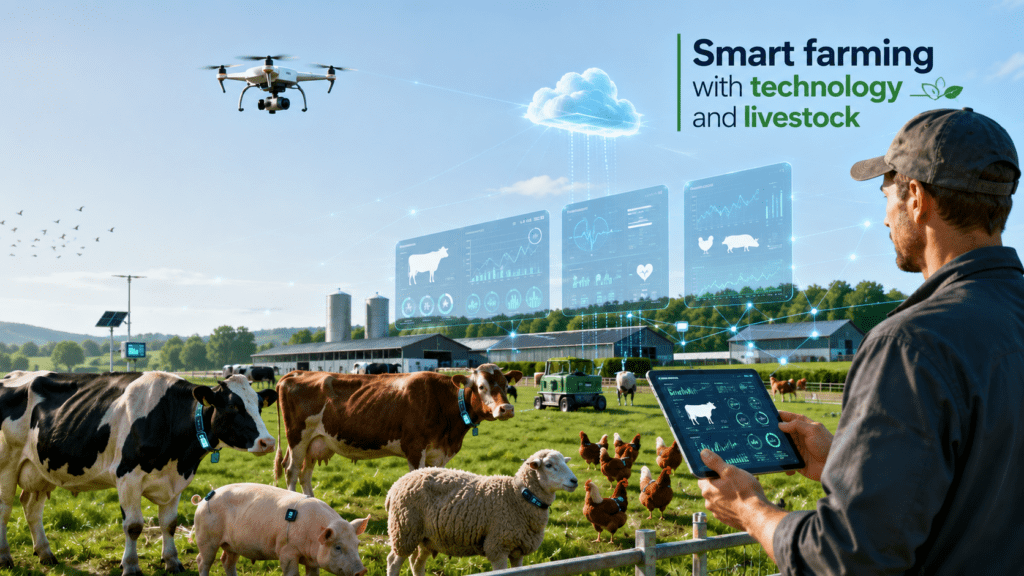
This guide is engineered for farm managers, animal scientists, veterinary professionals, AgTech developers, and investors who require a pragmatic, high-signal evaluation of current solutions. We move past the marketing hype to analyze how these tools actually function within real-world operations, the specific inefficiencies they solve, and the critical trade-offs between different architectures.
To ensure actionable utility, this article is structured into four distinct modules:
- The Foundation: A first-principles look at the role of a precision livestock farming tool in modern agriculture.
- The 15 Evaluated Tools: An analytical review of leading AI-powered platforms, categorized by their primary operational impact.
- The Buying Framework: A decision matrix to help you vet and select a solution that makes economic and practical sense for your specific farm environment.
- Implementation & Maintenance: FAQs and guidance on integrating these technologies to ensure your investment scales with your operation.
What is Precision Livestock Farming and How Does AI Fit In?
Precision Livestock Farming (PLF) is the transition from periodic, manual oversight to a model of continuous, individual-level monitoring. By deploying an integrated precision livestock farming tool, producers can track the health, behavior, productivity, and environmental impact of specific animals or pens in real time. The primary objective is to replace “average” herd management with targeted, data-backed interventions that optimize animal welfare and operational efficiency.
The Role of AI in PLF
While sensors provide the data, AI provides the intelligence. A precision livestock farming tool remains a passive asset until it is paired with machine learning algorithms capable of processing high-velocity, high-volume data streams. AI fits into the PLF stack in three critical ways:
- Pattern Recognition & Anomaly Detection: Using architectures like Convolutional Neural Networks (CNNs), these systems analyze visual or auditory data to identify subtle deviations in posture, gait (lameness detection), or respiratory sounds. These are often indicators of disease or stress that remain invisible to the human eye until clinical symptoms appear.
- Predictive Modeling: By employing recurrent neural networks and time-series analysis, AI evaluates historical and live data to forecast outcomes—such as optimal market weight, estrus cycles, or potential disease outbreaks—days before they occur.
- Automated Decision Support: AI transforms raw inputs into actionable directives. Instead of merely alerting a manager to a temperature spike, a sophisticated precision livestock farming tool can trigger automated responses, such as adjusting environmental controls (ventilation, lighting) or modifying nutritional delivery, minimizing the need for manual interference.
In essence, AI acts as the connective tissue between raw sensor telemetry and tangible farm-level ROI. It shifts the burden of monitoring from human observation—which is inherently variable and labor-intensive—to a consistent, scalable, and automated analytical framework.
How does an AI-powered precision livestock farming tool work?
An AI-powered precision livestock farming tool functions as an end-to-end data pipeline. It is not merely a sensor; it is a system designed to convert biological signals into operational capital. The workflow follows a standardized architectural path:
Data Acquisition (The Input Layer)
The process begins with edge-based hardware that captures high-fidelity biological or environmental data. Depending on the species and objective, this layer utilizes:
- Biometric Wearables: Collars or ear tags tracking activity, rumination, and heat cycles.
- Internal Boluses: Providing precise core body temperature and pH levels.
- Computer Vision (RGB/Thermal Cameras): Monitoring posture, gait, and body condition scoring (BCS) without physically stressing the animal.
- Acoustic Sensors: Microphones capturing respiratory sounds (e.g., coughing) or distress vocalizations.
Transmission & Pre-processing (The Connectivity Layer)
Raw data is rarely useful in isolation. The system streams this information to an edge gateway or cloud-based platform. At this stage, the platform performs critical data hygiene: noise reduction (filtering out environmental interference), time-stamping, and aggregation to ensure that fragmented data points from multiple sensors are synchronized into a cohesive profile for each animal.
Intelligence & Inference (The Logic Layer)
This is where the “AI” component differentiates a standard monitoring device from a true precision livestock farming tool. The platform runs pre-trained machine learning models against the incoming stream.
- Baseline Calibration: The system establishes a “normal” behavior signature for each animal based on its age, breed, and historical performance.
- Deviation Analysis: Models identify anomalies by comparing real-time data against these personalized baselines. For example, a slight dip in rumination time combined with an elevated temperature trigger, when processed through an anomaly detection model, signals a high probability of early-stage mastitis or respiratory infection.
Action & Optimization (The Output Layer)
The final stage transforms raw insights into decision-grade information:
- Alerting: Sending actionable push notifications to mobile devices or management dashboards, specifying which animal requires attention and why.
- Automated Control: Advanced integrations can trigger mechanical responses—such as adjusting barn ventilation to mitigate heat stress or modifying automated feeding rates based on real-time intake data.
Summary of Component Utility
| Component | Function | Primary Value |
| Sensors | Data capture | Transparency into individual animal state. |
| Edge/Cloud | Data processing | Transforming noise into structured information. |
| ML Models | Pattern recognition | Shifting from reactive manual checks to predictive alerts. |
| Dashboard | Decision support | Enabling faster, targeted interventions. |
By automating this cycle, the precision livestock farming tool creates a continuous feedback loop. This reduces the latency between a health event occurring and the farmer’s response—the critical factor in preventing clinical disease progression and optimizing farm-wide profitability.
The 15 Leading AI-Powered Precision Livestock Farming Tools (2026 Landscape)
Navigating the current market of AI-powered agricultural technology requires a focus on integration, data reliability, and scalability. Below, we evaluate 15 top-tier precision livestock farming tool solutions, categorized by their primary operational impact. This overview serves as your baseline for vetting technologies that align with your specific farm infrastructure and productivity goals.
| Category | Tool / Platform | Primary Focus |
| Wearable Biometrics | CowManager | Dairy: Real-time fertility, health, and nutrition tracking via ear tags. |
| Wearable Biometrics | Nedap CowControl | Dairy: Heat detection and health monitoring via collar/leg sensors. |
| In-Ruminal Tech | smaXtec | Dairy/Beef: Internal bolus for core temp and rumination/calving alerts. |
| Edge AI Sensing | SoundTalks | Swine: Acoustic monitoring for early respiratory disease detection. |
| Computer Vision | Cainthus (via Ever.Ag) | Dairy: Passive monitoring of feeding, behavior, and occupancy. |
| Management SaaS | Ida (by Datamars) | Dairy: AI-assistant platform aggregating sensor and herd data. |
| Grazing/Movement | Vence (by Merck/MSD) | Beef: Virtual fencing and automated grazing movement control. |
| Beef/Cow-Calf | Ori Cattle | Beef: AI-based ear tags for baseline behavior and individual health. |
| Growth/Weight | Fancom (Vision) | Swine: 3D camera-based growth and weight estimation. |
| Environment AI | C-Lock (GreenFeed) | Emissions/Feed: Precision methane and feed intake measurement. |
| Enterprise Data | Ever.Ag Platform | Enterprise: Integrated dashboards for multi-source herd data. |
| Welfare/Gait | Connecterra (Enterprise) | Dairy: Holistic AI-driven herd insights for consultants/advisors. |
| Poultry Sensing | Fancom/Munters AI | Poultry: Acoustic/visual welfare monitoring and climate control. |
| Regional/Affordable | SmartCow/Local variants | Scalability: Lower-cost AI tools for regional market penetration. |
| Research/Prototyping | Open-Source AI Models | R&D: Deep learning frameworks for posture/pose estimation. |
Key Market Transitions to Note
- Consolidation: The market is maturing. Major players like Datamars (acquiring Connecterra/Ida) and Ever.Ag (acquiring Cainthus) is moving toward “unified dashboard” models. Your content should reflect that a single precision livestock farming tool is rarely standalone anymore; they are part of a broader “connected farm” ecosystem.
- Cainthus Integration: Since its acquisition by Ever.Ag (June 2026), Cainthus technology is no longer just a “camera tool”—it is now a key component of the Ever.Ag operational suite. Emphasize this “integrated value” to your readers.
- From “Niche” to “Enterprise”: As noted in recent 2026 industry summits, AI in livestock is hitting a 27.9% CAGR. You can frame these reviews by emphasizing that these are no longer “pilot projects” but essential tools for operational scalability.
AI Precision Livestock Farming Tools: Decision-Support Matrix
Not all AI tools are built for every environment. Use this matrix to stress-test your shortlist against the operational realities of your farm. By weighing your specific infrastructure, budget, and scalability goals, you can move from ‘evaluating features’ to ‘selecting systems’ that deliver measurable ROI.
| Deployment Mode | Category | Core AI Modality | Ideal Operational Scale |
| Wearable Biometrics | Ear Tags / Collars | Behavior/Activity Models | Individual to Herd (Mid-to-Large) |
| In-Situ Sensing | Boluses | Time-Series Anomaly Detection | Individual Health (High Precision) |
| Computer Vision | Fixed/3D Cameras | Pose/Gait/Pattern Recognition | Barn-Level (High Density) |
| Acoustic Monitoring | Audio Sensors | Audio Classification (CNNs) | Environment-Wide (Pigs/Poultry) |
| Enterprise Integration | Dashboards/SaaS | Multi-Source ML Aggregation | Enterprise/Consultancy (Scale) |
Strategic Breakdown by Tool Type
| Tool / Platform | Primary Focus | Best For | Integration Effort |
| CowManager / Nedap | Dairy Biometrics | Fertility & Heat Tracking | Moderate (Wearable management) |
| smaXtec | In-Ruminal Health | Early Disease/Calving | Low (Passive bolus insertion) |
| SoundTalks | Swine Respiratory | Early Cough/Distress | Moderate (Requires acoustic setup) |
| Cainthus / Vision Systems | Feeding/Behavior | Intake/Welfare Analytics | High (Requires barn infrastructure) |
| Ida (Datamars) | Herd Benchmarking | Consultant-Driven Insights | Moderate (Cloud integration) |
| Vence | Virtual Fencing | Managed Grazing | High (Requires field infrastructure) |
| Ori Cattle | Beef/Cow-Calf | Baseline Behavior Analysis | Low (Tag-and-go) |
Key Principles for Interpretation
- Integration Effort: We define this as the “barrier to entry.” Low-effort tools (like boluses) are “deploy-and-forget,” whereas high-effort tools (vision/virtual fencing) require “AI-ready” barn or land redesigns.
- The “Retrofit” Trap: As per 2026 industry insights, avoid “layering” AI onto traditional structures. Use this table to determine if your current infrastructure supports the tool’s data modality (e.g., do you have the connectivity for vision streaming?).
- Actionable Verdict: If you are managing smallholder or extensive systems, prioritize Wearable Biometrics for their ease of deployment. If you operate intensive indoor systems, Computer Vision and Acoustic Monitoring provide the highest ROI for welfare and disease prevention.
Expert Guidance on Table Usage
This table is your first-pass filter. When evaluating vendors:
- Verify Data Interoperability: Ensure the system pushes data to your existing farm management software; avoid “walled garden” platforms that create new data silos.
- Assess Connectivity Requirements: Edge-based AI (processing on-site) is generally more robust for rural farms than cloud-dependent systems that require constant, high-bandwidth internet.
CowManager: AI ear-tag health and fertility monitoring
CowManager has established itself as a market-leading precision livestock farming tool by focusing on a high-signal, modular approach to dairy herd management. By leveraging ear-mounted accelerometer and temperature sensors, the system provides continuous, individual-level oversight that bypasses the limitations of traditional, manual observation.
Core Functionality & AI Integration
Unlike passive monitoring systems, CowManager uses sophisticated machine learning models to classify raw motion and temperature data into meaningful behavioral signatures.
- Behavioral Classification: The system identifies critical indicators—such as eating time, rumination duration, and activity levels—validated against direct, real-world observation.
- Predictive Alerting: The AI engine processes these behavioral patterns against individual baselines to generate real-time alerts for fertility (heat detection), metabolic health (early disease detection), and nutritional status.
System Specifications
- Hardware Architecture: Utilizes compact smart ear-tag sensors that transmit data to a farm-level receiver network, which then syncs with a cloud-based analytics platform.
- Deployment: The modular software allows managers to toggle specific dashboards (Health, Fertility, Nutrition, Transition) based on their current operational priorities.
- Compatibility: Designed for high-performance dairy operations across both grazing and indoor housing environments. Integration with existing Herd Management Software (HMS) is supported, though farmers should verify specific compatibility based on their region and current software stack.
Strategic Assessment
| Feature | Analysis |
| Best For | Medium-to-large dairy operations seeking to improve reproductive KPIs and early illness detection. |
| Ease of Deployment | High ear tags offer a lower physical barrier to entry compared to neck collars or bolus insertion. |
| Data Utility | Strong; provides clear, actionable alerts rather than raw data streams, minimizing “alert fatigue.” |
| Infrastructure | Requires on-farm receiver hardware and reliable internet for full cloud-sync functionality. |
Pros & Considerations
- Pros: Validated performance in diverse dairy environments; unified ecosystem covering the three pillars of dairy profitability (health, fertility, nutrition); reduced reliance on manual labor.
- Considerations: As with any high-end precision livestock farming tool, the initial capital expenditure (CAPEX) for tags and infrastructure, coupled with ongoing software subscriptions, necessitates a clear ROI strategy. Ear tag retention and durability should also be evaluated against the specific physical constraints of your facility.
Final Verdict
CowManager is a mature, reliable solution that excels in high-density behavior monitoring. It is an ideal choice for farm managers who require a “deploy-and-monitor” system that integrates seamlessly into daily decision-making. While it does not offer the broader enterprise-level environmental control found in some AgTech suites, its laser focus on individual cow health and fertility makes it a cornerstone technology for modern, performance-driven dairy operations.
Strategic Note: When evaluating this tool, focus your ROI calculation on the cost of missed heat events and labor savings from early-detection alerts. If your operation currently struggles with manual heat detection or late-stage illness identification, the economic impact of this precision livestock farming tool is typically realized within the first 18–24 months of deployment.
Connecterra / IDA (Datamars-powered): AI assistant for dairy herds
As of 2026, Connecterra operates as a sophisticated, cloud-based AI platform that has fundamentally shifted from a “sensor-first” business model to an enterprise-grade “decision-support” architecture. Following its 2023 acquisition, Connecterra now functions as the primary digital intelligence layer within the Datamars Livestock ecosystem, integrating data from across the farm to provide high-level management insights.
Core Functionality & AI Integration
Connecterra distinguishes itself by acting as a “digital assistant” rather than a simple alert engine. It utilizes an advanced AI platform—Connecterra Copilot—to synthesize fragmented data streams into operational logic.
- Data Aggregation: The platform centralizes information from disparate sources, including automated milking systems (AMS), existing herd management software, feed management platforms, and sensor data from the wider Datamars ecosystem.
- Predictive Decision Support: Rather than just flagging an animal in heat, the AI models analyze historical outcomes and management decisions to provide “impact tracking.” It models different scenarios and quantifies the economic ROI of potential interventions, such as changes in ration or breeding protocols.
- Natural Language Interaction: Leveraging 2026 industry shifts toward conversational AI, Connecterra’s platform allows managers to query herd data through intuitive interfaces, reducing the need for complex menu-driven navigation.
System Specifications
- Hardware Architecture: Software-as-a-Service (SaaS) platform that integrates with existing hardware (Datamars sensors, third-party tags, and robotics).
- Deployment: Cloud-native and designed for scalability, ranging from individual farm dashboards to multi-site enterprise oversight.
- Compatibility: Highly interoperable; it currently integrates with over 40 industry systems, making it a “hub” for farms that have accumulated multiple, disconnected technological assets.
Strategic Assessment
| Feature | Analysis |
| Best For | Large-scale dairy enterprises and farm advisors who require holistic performance benchmarking. |
| Ease of Deployment | Moderate to High; requires an existing digital infrastructure to fully realize its value. |
| Data Utility | Exceptional; focuses on business-level KPIs (e.g., IOFC—Income Over Feed Cost) rather than just raw sensor outputs. |
| Infrastructure | Cloud-dependent; requires robust on-farm connectivity to maintain real-time data sync. |
Pros & Considerations
- Pros: Eliminates data silos; proven ability to quantify the financial impact of management changes; provides enterprise-level oversight suitable for multi-farm groups.
- Considerations: Significant learning curve for teams not accustomed to data-driven decision frameworks; dependent on the quality of data input from your secondary hardware.
Final Verdict
Connecterra is the definitive choice for the “data-mature” dairy farm. If you already have hardware (sensors, robotic milkers, or automated feeders) but find that you are drowning in disconnected data, this precision livestock farming tool is the integration layer that will unlock that data’s true value. It is less a “tool” and more an operating system for the modern dairy enterprise.
Strategic Note: Unlike entry-level monitoring solutions, Connecterra should be evaluated on its ability to reduce management labor and optimize operational margin. When presenting this to a board or farm partners, frame it not as a “tracking device,” but as an “enterprise efficiency platform” that turns operational data into consistent, bottom-line financial gains.
smaXtec: In-rumen bolus for early health detection
smaXtec occupies a unique niche in the 2026 precision livestock market by utilizing intraruminal bolus technology. Shifting the monitoring point from the animal’s exterior (collars/tags) to the interior (reticulum), it provides physiological data—most notably core body temperature—that external sensors simply cannot replicate with the same level of accuracy.
Core Functionality & AI Integration
The system relies on “TruAdvice®,” an AI-driven engine that processes high-frequency internal data to move beyond simple thresholds toward predictive health management.
- Gold Standard Health Metrics: By measuring temperature directly in the reticulum (± 0.01°C accuracy), the system identifies feverish conditions often up to 4 days before clinical symptoms appear, providing a critical window for prophylactic intervention.
- Predictive Analytics: The TruAdvice® model goes beyond static alerts. It analyzes the interplay between multiple parameters—core temperature, rumination contractions, and drinking frequency—to identify metabolic instabilities like subclinical milk fever or ketosis during the high-risk transition period.
- Calving Prediction: The system is widely recognized for its high-accuracy calving alerts, typically triggering notifications approximately 15 hours before delivery, allowing for targeted intervention and improved calf survival rates.
System Specifications
- Hardware Architecture: Permanent intraruminal bolus that is administered once and remains in the reticulum for the animal’s lifetime. It transmits data to a plug-and-play base station network.
- Data Points: Internal body temperature, water intake/drinking cycles, rumination (via reticular contractions), activity, and optional pH monitoring.
- Compatibility: Designed for dairy operations, with specialized bolus variants (e.g., pH bolus) for intensive feeding management and rumen health oversight.
Strategic Assessment
| Feature | Analysis |
| Best For | High-performance dairy herds where transition cow health and early disease detection drive the primary ROI. |
| Ease of Deployment | Low-Maintenance: While administration is more involved than a tag, it is a one-time process with no ongoing device handling or risk of loss. |
| Data Utility | Exceptional for clinical/subclinical health; less focused on movement-based heat detection compared to ear-tag systems. |
| Infrastructure | Requires on-farm power/internet for the base station, but the bolus itself is passive and independent of external conditions. |
Pros & Considerations
- Pros: Access to “gold standard” internal physiological data; eliminates hardware loss/damage common with external sensors; significantly reduces antibiotic usage through early intervention.
- Considerations: Higher initial capital investment; requires veterinary oversight or training for bolus administration; permanent nature means boluses cannot be transferred between animals.
Final Verdict
smaXtec is the premier choice for managers who view herd health as a foundation of profitability. It is less a “monitoring tool” and more of a clinical diagnostic partner. For farms struggling with the high costs of transition-period diseases or those aiming to drastically reduce medication reliance, the ROI of early, internal detection is often superior to the behavioral insights provided by external sensor suites.
Strategic Note: Because smaXtec provides such high-fidelity data, it is best utilized in conjunction with Consulting/Veterinary services. The value of this precision livestock farming tool is maximized when the “TruAdvice” alerts are integrated into your standard veterinary protocol, turning the system from an “alarm” into an “actionable health strategy.”
Nedap CowControl: Activity-based heat and health monitoring
Nedap CowControl remains one of the most mature, high-signal platforms in the 2026 agricultural technology market. As a cornerstone of the “Powered by Nedap” ecosystem, it has transitioned from a standalone monitoring tool to a fully integrated digital infrastructure that connects individual cow behavior to farm-wide automation.
Core Functionality & AI Integration
Nedap CowControl uses a “behavioral fingerprinting” approach to herd management. By deploying high-accuracy smart tags (neck collars or leg tags), the system continuously logs activity, rumination, eating, and resting behaviors.
- AI-Driven Reproduction: The system’s primary strength lies in its heat detection accuracy. It identifies subtle estrus behaviors—such as chin resting, sniffing, and mounting—and calculates the optimal insemination window, directly impacting conception rates and calving intervals.
- Health & Lameness Monitoring: Beyond reproduction, the platform utilizes pattern recognition to identify deviations in activity consistency. A significant 2026 development is the integration of “SmartSight”—an AI-driven vision technology that monitors cow locomotion to catch lameness before it becomes visible to the human eye, bridging the gap between wearable sensors and automated visual health checks.
- Operational Automation: Unlike many “alert-only” tools, Nedap CowControl connects directly to sorting gates and routing equipment, enabling “automated cherry-picking.” This allows the system to physically draft cows needing attention without human manual labor.
System Specifications
- Hardware Architecture: Modular SmartTags (neck/leg) paired with on-farm antenna arrays and the Velos management software.
- Integration: Designed as an “open” platform, it integrates with major global milking and feeding systems, ensuring that behavioral insights trigger automated responses across the entire barn.
- Connectivity: The system utilizes a hybrid model: local on-premise reliability (for critical, real-time sorting/drafting) paired with the Nedap Now cloud platform for global performance benchmarking and multi-user access via PC, tablet, or smartphone.
Strategic Assessment
| Feature | Analysis |
| Best For | Mid-to-large-scale commercial dairies that prioritize labor efficiency and automated workflows. |
| Ease of Deployment | High infrastructure requirement; requires professional installation of antennas and gates. |
| Data Utility | Exceptional for tactical management; provides direct control over sorting and routing. |
| Connectivity | Hybrid local-offline mode ensures reliability even if cloud/internet access is interrupted. |
Pros & Considerations
- Pros: “All-in-one” ecosystem—integrates monitoring, identification, sorting, and reporting; proven track record with over 8 million connected cows globally; strong “future-proof” vision strategy (SmartSight).
- Considerations: High capital expenditure due to the requirement for physical gate/reader infrastructure; requires consistent maintenance of the local IT network (Velos software).
Final Verdict
Nedap CowControl is the “Industrial-Grade” standard for dairy automation. While it requires a higher initial investment than simple wearable sensors, it provides a much higher ROI for farms where labor cost is a primary constraint. By automating the physical separation of cows based on AI insights, this precision livestock farming tool doesn’t just “tell” you what to do—it helps you “do” it.
Strategic Note: If you are comparing this to other tools, look at your current physical infrastructure. If you lack automated sorting gates or centralized management software, Nedap CowControl may be a larger project than intended. However, if your goal is a lights-out, data-driven dairy operation, this system is currently the industry benchmark for integration.
Ori Cattle Smart Ear Tag: Affordable AI for herd health
Ori Cattle represents the “New Wave” of AgTech—focused on rugged, subscription-free, and practical utility specifically for the beef and extensive grazing sector. By leveraging “Emotional AI”—a proprietary pattern-recognition engine originally developed for human biometrics—the company aims to provide high-level health and behavior monitoring without the premium price tags or “walled garden” subscription models typical of legacy dairy systems.
Core Functionality & AI Integration
Unlike traditional systems that rely on simple thresholds (e.g., “if temperature > X, trigger alert”), Ori Cattle uses longitudinal baseline learning.
- Behavioral Baseline Learning: The AI constructs a unique “behavioral signature” for every individual animal. It tracks subtle metrics—activity frequency, movement intensity, and location patterns—to detect deviations that precede clinical health issues.
- Predictive Calving: A core value proposition is its ability to identify behavioral anomalies associated with pre-calving stages, often providing a ~48-hour window for producers to intervene, which directly correlates to reduced calf mortality.
- Ruggedized Deployment: Designed by fourth-generation ranchers in Saskatchewan, the hardware is built for extreme environments (tested down to -40°C), prioritizing durability and ease of application with standard tagging tools.
System Specifications
- Hardware Architecture: Lightweight, reusable smart ear tag with onboard processing. It is engineered with a pressure-release clip and a locking back that resists the snagging and rubbing common in brush or feedlot environments.
- Connectivity: Currently utilizes a hybrid approach: LTE-M/NB-IoT for direct transmission, with future-facing “mesh networking” capabilities that allow tags to communicate with each other in remote areas, effectively extending range in dead zones.
- Management Platform: A streamlined, “Find-My-Phone” style interface designed for mobile-first ranch management.
Strategic Assessment
| Feature | Analysis |
| Best For | Beef and cow-calf ranchers operating in extensive or remote environments who want a “buy-once” model. |
| Ease of Deployment | Excellent; it installs exactly like a standard visual ear tag. |
| Data Utility | High for health/calving; utilizes an “onboard AI” model, meaning the tag does the heavy lifting, not just the cloud. |
| Connectivity | Hybrid; designed for rural reliability with planned LoRaWAN/Mesh support to minimize reliance on cellular coverage. |
Pros & Considerations
- Pros: No recurring subscription fees (a significant industry outlier); high durability for harsh ranch conditions; reusable hardware; proactive calving alerts.
- Considerations: Currently an emerging platform (scaling from pilot to commercial); availability may be localized; as the technology is “learning-based,” it requires a “burn-in” period for the AI to fully understand the specific behavioral norms of your herd.
Final Verdict
Ori Cattle is a high-leverage choice for the modern beef producer. It effectively strips away the “subscription bloat” of enterprise dairy tools and provides a simplified, rugged, and intelligent monitoring solution. If you are a producer who values autonomy over your data and is looking to reduce mortality rates in extensive pasture settings, this precision livestock farming tool is arguably the best “early-stage” bet in the current market.
Strategic Note: Because the system is currently maturing, reach out to their team directly for their onboarding queue. Given their focus on “Rancher First” development, they are highly responsive to pilot participants, which allows you to influence the feature roadmap in exchange for early access to their behavioral analytics.
Computer-vision pig weighing systems: Non-contact growth monitoring
As of 2026, computer-vision (CV) based weighing systems have transitioned from experimental lab setups to validated, industrial-grade tools for grower-finisher swine operations. By replacing manual scales with overhead 3D camera arrays, these systems enable continuous, stress-free growth monitoring, directly impacting feed efficiency and marketing accuracy.
Core Functionality & AI Integration
These systems function by converting visual data into live weight metrics without physical contact.
- 3D Point-Cloud Reconstruction: The core technology relies on cameras (e.g., Time-of-Flight or structured light) that capture depth maps of the pen. The AI software filters out the environment (floors, gates) and focuses on the pig’s body, using geometric algorithms and regression models to calculate dimensions like back length, width, and volume.
- Growth Curve Modeling: By recording these measurements daily, the AI creates highly accurate growth curves for individual pens or cohorts. Producers can predict the exact date a group will reach target slaughter weight, enabling “just-in-time” marketing.
- Predictive Anomaly Detection: Modern iterations (such as the Fancom eYeGrow) don’t just track weight; they detect “growth dips.” A sudden stagnation in a group’s weight gain triggers an alert, allowing managers to investigate feed access, water quality, or subclinical health issues before a production cycle is compromised.
System Specifications
- Hardware Architecture: Typically consists of a ruggedized, IP-rated 3D camera mounted in the ridge of the section, positioned over a high-traffic area (e.g., a feeder or waterer).
- Deployment: Requires a controlled environment. While systems are improving at handling “messy” data, they perform best where lighting is stable and cameras are free from excessive dust or condensation.
- Connectivity: These are “always-on” systems. Data is processed locally (edge computing) to extract weight estimates and then synced to a cloud platform for 24/7 dashboard accessibility.
Strategic Assessment
| Feature | Analysis |
| Best For | Large-scale finisher operations where feed costs and marketing precision drive profitability. |
| Ease of Deployment | Moderate; simple to install but requires strategic camera placement to avoid “occlusion” (pigs blocking each other). |
| Data Utility | High provides actionable intelligence for feed formulation and slaughter scheduling. |
| Infrastructure | Requires barn electrical access and reliable connectivity; avoids the need for manual handling facilities. |
Pros & Considerations
- Pros: Eliminates the “growth dip” caused by handling stress; significantly lowers labor costs; allows for daily performance tracking rather than periodic “snapshot” weighing.
- Considerations: Accuracy can be affected by extreme environmental conditions (dust/humidity). Proper calibration is essential—the system must be installed where pigs are stationary (e.g., at a feed station) to achieve maximum precision.
Final Verdict
For the modern swine enterprise, computer-vision weighing is an essential upgrade for precision nutrition. By moving from manual “guesswork” to daily “data-driven” growth monitoring, producers can save significantly on feed wastage and ensure cohorts reach market specifications with high uniformity. This is a high-ROI investment, provided the barn infrastructure allows for stable camera positioning.
Strategic Note: When vetting these systems, prioritize vendors that offer Multi-View or 3D-Hybrid filtering (like the systems described in recent 2026 research, such as 3D Gaussian Splatting techniques). These are significantly more robust against the common “real-world” challenges of pig farming, such as variable posture or crowded pens, compared to older 2D or single-view systems.
Audiovisual AI tools for poultry welfare
In 2026, the poultry industry is shifting toward “Multimodal Intelligence,” where audio and visual data streams are no longer analyzed in isolation. Audiovisual AI tools are becoming the gold standard for non-invasive, continuous welfare monitoring, allowing managers to observe flock behavior at a scale and granularity impossible through manual inspection.
Core Functionality & AI Integration
These systems function as an “electronic ear and eye” for the poultry house, translating complex barn environments into actionable welfare indices.
- Bioacoustic Monitoring: Utilizing sophisticated microphone arrays, AI models (often based on Convolutional Neural Networks) perform real-time audio classification. By identifying specific vocalizations—such as the frequency and intensity of coughing or distress chirps—these systems can pinpoint early-stage respiratory challenges or acute stress events days before clinical mortality spikes occur.
- Computer Vision (CV) Analytics: Integrated camera systems (e.g., Fancom EyeNamic or similar 3D-vision frameworks) monitor flock distribution and activity indices. They detect “clustering” behavior, which often signals poor climate control, and track locomotion patterns to identify lameness or injury in real-time.
- Multimodal Synthesis: The “high-signal” leap in 2026 is the integration of these audio/visual inputs with existing environmental telemetry (ammonia levels, temperature, CO2). By correlating a rise in “stress vocalizations” with a specific spike in house temperature, the system can automatically adjust climate controllers to mitigate welfare risks without human intervention.
System Specifications
- Hardware Architecture: Distributed microphone arrays and high-resolution optical cameras installed in the house ridge.
- Deployment: Requires robust “Edge Computing”—on-site processing units—to analyze high-bandwidth video/audio feeds in real-time, reducing the latency and cost of cloud-based transmission.
- Connectivity: Designed to bridge the gap between “dumb” environmental controllers and “smart” management software. They typically feed directly into the central farm management dashboard.
Strategic Assessment
| Feature | Analysis |
| Best For | Large-scale integrators and commercial producers where labor scarcity and welfare compliance (e.g., antibiotic-free labels) drive ROI. |
| Ease of Deployment | Moderate to High; requires specific environmental conditions (lighting/acoustic insulation) and professional setup. |
| Data Utility | Exceptional for welfare-led marketing and proactive health management; provides an objective “welfare audit” trail. |
| Infrastructure | Requires barn electrical access and high-speed local networking (Ethernet/fiber) to support high-fidelity sensor data. |
Pros & Considerations
- Pros: Objective, 24/7 compliance monitoring; significant reduction in “hidden” mortality through early stress detection; enables precision climate management.
- Considerations: Privacy and biosecurity regulations regarding internal barn recording; technical complexity in managing high-volume data streams; requires “clean” audio environments (noise filtering for fans/machinery).
Final Verdict
Audiovisual AI tools represent the “next-gen” of poultry precision farming. While these systems are more complex to implement than simple temperature or humidity sensors, they offer the highest level of welfare assurance. For operations looking to prove high animal welfare standards to retailers or regulatory bodies, these tools are no longer just “nice-to-have” experimental assets—they are becoming a foundational requirement for risk-mitigated poultry production.
Strategic Note: When evaluating vendors, prioritize those that offer Edge-based processing (TinyML). This ensures that sensitive visual/audio data is processed on-farm, which addresses privacy concerns and significantly reduces the bandwidth costs associated with sending raw footage to the cloud.
Decision Matrix: How to Choose the Right Precision Livestock Farming Tool
This decision-support matrix is engineered to filter out the marketing noise and align your capital investment with your farm’s operational reality. Do not view these categories as mutually exclusive; the highest-ROI operations often utilize a “layered” approach, combining wearable biometrics with specialized vision or acoustic sensing to create a holistic digital architecture.
The PLF Tool Selection Matrix
| Factor | Wearables (Tags/Collars) | Bolus Systems | Vision Systems | Audio Systems | Virtual Fencing |
| Primary Species | Dairy, Beef, Goats | Dairy Cows | Swine, Dairy | Poultry, Swine | Beef, Sheep, Goats |
| Main Use Case | Heat & Health Alerts | Early Disease/Calving | Growth & Posture | Stress & Respiratory | Grazing & Land Use |
| Invasiveness | External Attachment | Internal Bolus | Non-Contact | Non-Contact | External Collar |
| Data Modality | Behavior & Activity | Core Physiology | Shape/Volume/Gait | Vocalization/Noise | Location/Movement |
| Infrastructure | Receivers & Cloud | Base Station/Cloud | Stable Lighting/Mounts | Acoustic Environment | Cell/RF Coverage |
| CAPEX Profile | Medium (Per Animal) | High (Per Animal) | High (Per Site) | Medium (Per House) | Medium (Per Animal) |
| Skill Requirement | Moderate | Moderate–High | High (IT/Tech Focus) | Moderate–High | Moderate (Planning) |
How to Use This Matrix for Your Operation
To avoid “tech-stack bloat,” apply these three filters when reviewing your shortlist:
- The “Constraint-First” Audit: Before looking at features, assess your physical constraints. If you operate in a region with poor internet connectivity, prioritize systems with robust Edge Processing or local base stations (like smaXtec or Nedap) over purely cloud-dependent vision systems.
- The “Action-Latency” Test: Ask yourself: How fast does this system need to trigger a response?
- High-Urgency (Health/Disease): Prioritize internal Bolus Systems for early internal temperature telemetry.
- Tactical-Urgency (Reproduction/Growth): Prioritize Wearables for behavioral pattern identification.
- Welfare/Efficiency (Environment/Mass): Prioritize Vision/Audio for aggregated data on large cohorts.
- The “Integration Burden” Assessment: The most expensive tool is the one that forces you to manage another siloed database. Prioritize vendors that have existing API or integration partnerships with your current Herd Management Software (e.g., DairyComp, uniform-agri).
Expert Strategic Insight: The “Stacked” Approach
For high-leverage learning systems, the most common “80/20” architecture currently being deployed by enterprise-level farms is:
- The Foundation: Wearables/Boluses for Individual Animal Health (The “Who”).
- The Layering: Vision or Acoustic sensing for Environmental/Welfare Audit (The “Where” & “How”).
This combination covers both individual medical requirements and collective welfare compliance, providing the best protection against both mortality risks and regulatory scrutiny.
Strategic Question: Based on your current farm scale—do you lean more toward individual-animal health monitoring (like boluses/tags) to reduce mortality, or toward group-level growth/welfare monitoring (vision/acoustic) to optimize marketing weight and compliance?
Buying guide: Practical checklist for precision livestock farming tools
To ensure your Precision Livestock Farming (PLF) tool investment is a strategic asset rather than a sunk cost, use this practical buying checklist. This framework is designed to help you quantify ROI and mitigate the technical risks associated with AgTech adoption in 2026.
The Pre-Purchase ROI Calculation
Before engaging a vendor, run a simple Incremental ROI analysis to ensure the tool solves a high-cost business problem (e.g., labor, mortality, or feed waste).
- Define the “Pain-Point” Cost: Calculate your current annual loss from the specific problem (e.g., “We lose $X annually due to late detection of mastitis” or “We spend $Y in labor on manual heat detection”).
- Calculate Net Benefit:$$\text{Annual Net Benefit} = (\text{Cost Savings} + \text{Revenue Increase}) – (\text{Annual Subscription} + \text{Maintenance Costs})$$
- Payback Period:$$\text{Payback Period (Years)} = \frac{\text{Total Initial Investment (Hardware/Setup)}}{\text{Annual Net Benefit}}$$
- Strategic Threshold: For most commercial operations, a payback period of < 2 years is the industry standard for a “must-buy.”
Practical Evaluation Checklist
Use this as a filter when auditing your shortlist of 15 tools.
| Evaluation Area | Key Questions to Ask Vendors |
| Connectivity | Does this tool work in “Offline-First” mode if cloud/internet access drops? |
| Interoperability | Does the vendor have an open API? Can it push data to my existing Herd Management Software (e.g., DairyComp)? |
| Data Ownership | Do I own my farm-level data? Is it being used to train the vendor’s models without my explicit consent? |
| Support Maturity | Does the vendor have a clear roadmap for 2026–2028? Are software updates included in the subscription fee? |
| Workflow Fit | Does the alert trigger an action (e.g., sort gate) or just an observation (e.g., a push notification)? |
The “Implementation Risk” Audit
New technology often fails not because the tool is flawed, but because the deployment environment wasn’t ready.
- The “IT Hygiene” Test: Do you have the local network infrastructure (e.g., stable Wi-Fi, Ethernet, or LoRaWAN) to support high-bandwidth sensors? If not, factor the cost of network upgrades into your initial CAPEX.
- The “Training Gap”: Who is the primary operator? If the dashboard requires “Data Scientist” levels of literacy, your ROI will be zero. Prioritize tools with “manager-first” interfaces.
- The “Burn-In” Phase: Most AI models require 2–4 weeks to learn your herd’s specific “baseline.” Do not expect Day 1 accuracy. Ensure your contract includes professional onboarding support during this calibration period.
Strategic Summary: When to Buy vs. Wait
BUY IF: You have a clear, measurable problem (e.g., 5% drop in conception rate), your infrastructure supports the hardware, and your staff is ready to integrate the alerts into daily management protocols.
WAIT IF: You are still manually managing basic data, lack stable barn connectivity, or haven’t yet defined which specific operational metric (e.g., labor hours vs. mortality) you are trying to improve.
What is the primary business value of a precision livestock farming tool?
The primary value is the transition from reactive, manual oversight to proactive, data-driven management. By deploying sensors and AI, you gain the ability to detect health, welfare, or productivity deviations—such as early-stage illness or estrus—days before they manifest as visible clinical symptoms, significantly reducing mortality and operational waste.
Are these systems cost-effective for smaller farms?
While large-scale operations often achieve faster ROI due to economies of scale, smaller farms can also benefit if they apply a targeted deployment strategy. Instead of herd-wide implementation, focus on your operation’s highest-risk cohort (e.g., transition cows or high-value breeding stock) to maximize the impact of the investment on your primary margins.
Do AI-powered tools replace veterinarians or experienced stockpersons?
No. These tools function as decision-support systems, not replacements for human expertise. They act as an “early warning” layer that filters out operational noise, allowing your skilled staff to focus their time on high-value, complex interventions rather than routine monitoring.
How reliable are the AI models in real-world conditions?
Performance is contingent on the tool’s training data and your farm’s environment. Look for systems that provide peer-reviewed validation studies or transparent performance metrics. In well-calibrated environments, modern sensors and AI models consistently meet or exceed human accuracy in detecting behavioral indicators like rumination, activity spikes, or respiratory sounds.
What are the minimum connectivity requirements for these tools?
Requirements range from edge-capable systems (which function offline and sync periodically) to cloud-native platforms (which require 24/7 high-speed connectivity). Always verify the “offline-first” capability of your specific vendor, especially if your facilities lack stable, high-bandwidth internet.
How should I calculate the ROI of a PLF investment?
Structure your business case by focusing on top-line performance drivers:
Reproduction: Improvement in conception rates and reduced calving intervals.
Health: Reduction in veterinary costs and medication usage (e.g., lower antibiotic reliance).
Efficiency: Savings in labor hours and feed conversion improvements. Compare these quantified gains against your Total Cost of Ownership (TCO), including hardware, subscription fees, and maintenance, over a 3–5-year horizon.
Can these tools assist with animal welfare compliance?
Yes. Continuous, objective monitoring provides a quantifiable audit trail for behavior, health, and environmental conditions. This data is increasingly valuable for third-party certification schemes, sustainability reporting, and regulatory compliance, as it replaces subjective manual assessments with objective, time-stamped telemetry.
What is the risk of early adoption?
The primary risks include vendor lock-in, potential product discontinuation, and technical immaturity. Mitigate these by favoring systems with open APIs and documented data-export policies. Prioritize vendors with clear 2026–2028 roadmaps to ensure your data stays accessible even if the hardware or software ecosystem evolves.
Do these tools function in low-resource or remote environments?
Adoption in low-infrastructure settings is possible but requires a minimalist architecture. Prioritize “deploy-and-forget” hardware like passive boluses or low-power LoRaWAN-enabled sensors, which minimize the need for continuous cloud sync and complex on-farm IT support.
What is the recommended lifecycle for hardware and software upgrades?
Hardware: Plan for a 3–5-year replacement cycle depending on the tag/sensor durability and wear.
Software: Updates are typically continuous and cloud-delivered. Review your system’s performance annually against your original KPI targets to decide if you need a mid-cycle upgrade or a full-system refresh.
In Conclusion
Precision livestock farming is no longer a futuristic concept; it is an operational imperative for any producer competing in the 2026 agricultural market. The transition from manual, reactive husbandry to a continuous, data-driven management model represents a fundamental shift in how livestock operations generate value.
However, technology in isolation is not a strategy. As explored in this guide, the “best” precision livestock farming tool is not necessarily the one with the most sensors, but the one that integrates most seamlessly into your specific workflows, addresses your highest-cost bottlenecks, and provides actionable intelligence rather than raw data noise.
The path forward is threefold:
- Audit Your Constraints: Evaluate your farm’s digital readiness—connectivity, power, and data literacy—before committing to high-bandwidth systems like computer vision.
- Focus on ROI: Prioritize the 20% of technologies that solve 80% of your operational pain, whether that is reproductive efficiency, transition cow health, or labor-intensive monitoring.
- Prioritize Interoperability: Avoid data silos. Ensure that any system you adopt can communicate with your existing herd management software and a future-proof technology stack.
Technology should exist to serve the farmer, not the other way around. By selecting tools that provide clear, objective indicators of animal health and performance, you aren’t just modernizing your equipment—you are building a scalable, resilient, and more profitable livestock operation.





Excellent overview of how AI is transforming precision livestock farming. The detailed comparison of different tools and the focus on practical implementation, ROI, and animal welfare make this a valuable resource for farmers, veterinarians, and AgTech professionals looking to adopt smarter, data-driven farming practices. Great insights!
Thank you! I really appreciate your feedback. Which AI-powered livestock farming tool do you think has the greatest potential to transform the industry? I’d love to hear your perspective.