Navigating Emerging Healthcare Career Paths in the AI Era
Healthcare career paths in the AI era are rapidly evolving, shifting from traditional manual workflows toward roles that prioritize “augmented intelligence”—where technology handles complex data processing, allowing professionals to focus on higher-level clinical decision-making and patient outcomes.
The Landscape of Emerging Healthcare Career Paths
The integration of AI and machine learning is creating specialized niches that require a hybrid skill set. Emerging healthcare career paths now frequently blend medical domain expertise with digital fluency:
- Healthcare AI Trainer: Professionals who curate and label clinical data to ensure AI models interpret patient information, diagnostic imaging, and treatment protocols safely and effectively.
- Health Informatics Specialist: Experts who bridge the gap between clinical needs and technical systems, managing the architecture of electronic health records (EHR) and data interoperability.
- Clinical Data Analyst: Specialists who extract actionable insights from vast datasets—ranging from hospital operational workflows to longitudinal patient outcomes—to guide evidence-based care.
- AI-Assisted Diagnostics Specialist: Clinicians trained to use AI pattern recognition to scan images or genetic data for early detection of anomalies, serving as a powerful force multiplier for traditional diagnostics.
Strategic Outlook: Growth and Requirements
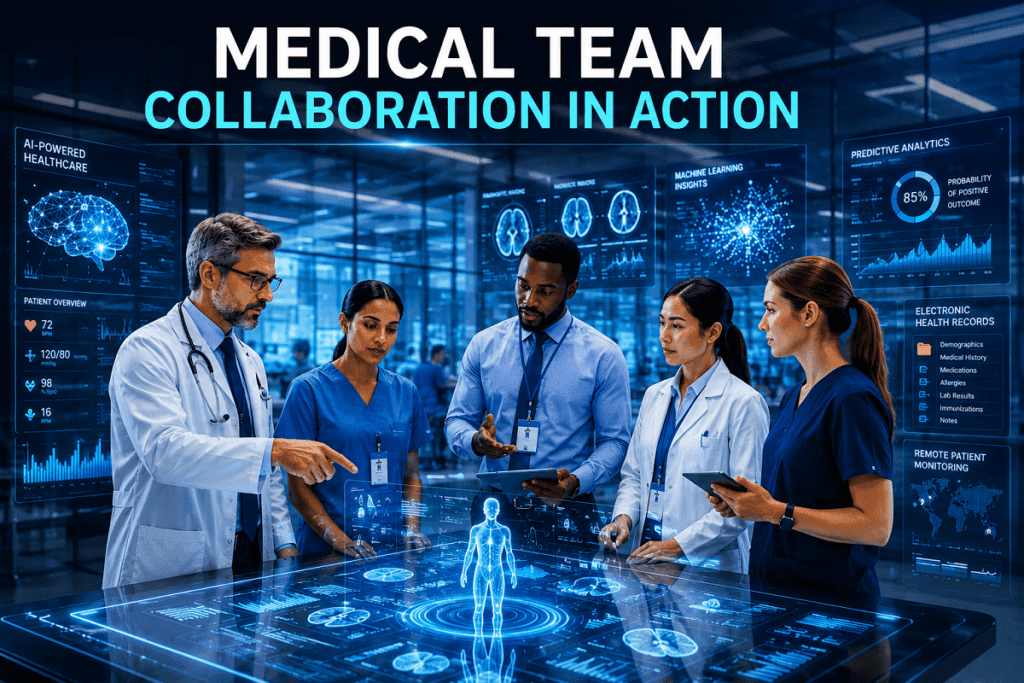
The U.S. healthcare sector is projected to undergo significant expansion through 2033, driven by a confluence of an aging population and the widespread adoption of AI-enabled tools.
- Employment Growth: The industry is expected to add hundreds of thousands of jobs, with healthcare practitioners and technical occupations remaining at the forefront of this surge.
- Evolution of Work: AI is fundamentally reshaping, rather than replacing, these roles. By automating repetitive administrative burdens, technology allows for a transition toward roles that emphasize empathy, critical thinking, and complex problem-solving.
- Barrier to Entry: Qualifying for these emerging healthcare career paths requires a diverse educational approach. While foundational bachelor’s degrees remain the standard for clinical entry, moving into advanced AI-integrated specialties often necessitates specialized certifications in data science, health informatics, or AI ethics.
For those exploring how specialized roles like AI trainers operate in practice, this resource provides valuable insight:
What healthcare career paths exist in the AI era?
The integration of AI into the healthcare sector is shifting the professional landscape toward roles that prioritize technical fluency, data management, and systems architecture. These emerging healthcare career paths focus on the intersection of medical domain expertise and digital innovation, offering significant opportunities for those who may not have traditional clinical degrees.
Key Emerging Healthcare Career Paths
| Role | Core Focus |
| Health Informatics Specialist | Manages the architecture of electronic health records (EHR) and data interoperability systems to ensure clinical data is accessible and secure. |
| Clinical Data Analyst | Interprets complex clinical datasets—such as trial outcomes or patient metrics—to provide actionable insights that guide evidence-based research and care. |
| Healthcare AI Specialist | Bridges the gap between AI development and clinical application; deploys and monitors AI-driven diagnostic or predictive tools within hospital infrastructures. |
| Digital Health Coordinator | Oversees the integration and operational flow of telehealth platforms, patient portals, and remote monitoring devices. |
| Telehealth Professional | Delivers care remotely, utilizing digital tools to maintain continuity of care and extend access to medical services. |
| Healthcare Cybersecurity Analyst | Protects sensitive patient data and medical infrastructure from threats, ensuring compliance with strict privacy regulations (e.g., HIPAA). |
| Bioinformatics Scientist | Applies computational methods and AI to analyze genomic, proteomic, and other biological data, accelerating drug discovery and personalized medicine. |
| Health-Tech Product Manager | Defines the roadmap for healthcare software; translates clinical requirements into technical specifications for development teams to build user-centric medical products. |
Why These Roles Are Different
Unlike traditional clinical pathways, which are rooted in direct bedside care and require licensure, these roles focus on systems, technology, and data.
- Accessibility: Because these positions emphasize technical skills (data analysis, product management, IT security) over clinical practice, they are highly accessible to career switchers coming from technology, engineering, or business backgrounds.
- Skill Synergy: Success in these fields requires a “hybrid” approach: the ability to understand medical workflows combined with the technical literacy to manage the AI or digital tools that optimize those workflows.
- Industry Impact: These professionals act as force multipliers, using AI to automate administrative burdens and refine diagnostic accuracy, thereby allowing the broader healthcare system to function with greater efficiency and patient-centricity.
How does AI change healthcare jobs without replacing professionals?
AI is fundamentally reshaping the healthcare landscape by acting as a force multiplier rather than a replacement for human professionals. By automating data-heavy, repetitive, or administrative tasks, AI allows practitioners to reclaim time for high-value activities that require human judgment, empathy, and ethical oversight.
The Mechanism of Human-AI Collaboration
In this paradigm, AI handles the “how” of data processing, while the human professional remains responsible for the “why” and “what” of clinical decision-making.
- Workflow Automation: AI functions as an intelligent administrative layer, handling tasks such as transcribing clinical notes, scheduling complex staff/patient workflows, and summarizing patient history. This reduces burnout and allows providers to focus on direct patient engagement.
- Decision Support, Not Decision Making: AI tools (e.g., diagnostic imaging assistance or predictive analytics) provide clinicians with data-driven insights, highlight anomalies, or suggest potential treatment paths. The professional retains the role of final arbiter, validating these outputs against clinical context, patient history, and ethical standards.
- Accountability & Governance: Responsibility for patient safety and medical outcomes remains firmly with the human provider. Professionals are now required to serve as “auditors” of AI systems, ensuring they understand the limitations, potential biases, and probabilistic nature of the tools they use.
Why Human-Centered Skills are Irreplaceable
The most AI-resilient career paths rely on capabilities that technology cannot replicate:
- Clinical Judgment & Context: AI operates on data patterns; it lacks an understanding of a patient’s specific life circumstances, values, and nuanced psychological state. Practitioners must synthesize complex social determinants of health with clinical data to create truly personalized care.
- Empathy & Communication: The therapeutic relationship—built on trust, active listening, and emotional resonance—is central to patient compliance and recovery. AI cannot mirror the human connection necessary for delicate conversations, end-of-life care, or complex behavioral health management.
- Complex Problem-Solving: AI excels at pattern recognition within established parameters. When presented with unique, multi-morbidity cases or ambiguous clinical presentations that fall outside training data, human intuition and iterative reasoning remain the gold standard.
Evolving Professional Requirements
To remain competitive, professionals must transition from being purely “users” of medical knowledge to becoming “orchestrators” of technology.
- AI Literacy: This does not require coding expertise. It requires an understanding of how to prompt AI systems effectively, how to critically audit AI outputs for “hallucinations” or bias, and how to maintain an appropriate level of trust in algorithmic recommendations.
- Collaborative Roles: The fastest-growing healthcare roles are those that occupy the intersection of human judgment and AI utility. Professionals who can integrate AI to improve efficiency while maintaining the “human touch” are becoming the most valuable assets in modern health systems.
Strategic takeaway: The goal of AI integration is not to replace the human element, but to liberate it. By delegating the digital drudgery to machines, healthcare professionals can return to the core of their practice: the art of healing through human connection and critical, experienced judgment.
What qualifications do emerging healthcare AI roles require?
To successfully navigate emerging healthcare career paths, professionals must bridge the gap between medical knowledge and technical execution. Because these roles prioritize systems, data, and digital infrastructure over bedside care, qualification requirements vary significantly compared to traditional clinical licensure.
Qualifications for Emerging Healthcare Career Paths
| Role | Education Required | Key Certifications | Entry Experience |
| Health Informatics Specialist | Bachelor’s (Health Info, CS) | RHIA, CAHIMS | 0–2 years |
| Clinical Data Analyst | Bachelor’s (Stats, Biology) | CDMS, Google Data Analytics | 1–3 years |
| Healthcare AI Specialist | Bachelor’s/Master’s (AI, Data) | AWS ML, Google AI Cert | 2–4 years |
| Digital Health Coordinator | Bachelor’s (Health Admin, IT) | CPHIMS | 1–2 years |
| Telehealth Professional | Licensed clinical degree | Telehealth Certification | 2+ years clinical |
| Healthcare Cybersecurity Analyst | Bachelor’s (CS, Security) | CISSP, CISM, CompTIA Sec+ | 2–5 years |
| Bioinformatics Scientist | Master’s/PhD (Bioinformatics) | Specialized Domain Training | 3–5 years |
| Health-Tech Product Manager | Bachelor’s + MBA preferred | PMP, CPM | 3–5 years |
Strategic Qualification Framework
Entry into these roles does not always require a medical degree. Instead, the market rewards a “hybrid” profile:
- Foundational Knowledge: Most emerging healthcare career paths require at least a bachelor’s degree in a technical or administrative field, such as computer science, biostatistics, or healthcare administration.
- Specialized Certification: Certifications act as validation of your ability to handle specific tools (like AWS/GCP for AI) or demonstrate regulatory compliance awareness (like HIPAA or GxP). These are crucial for signaling competence to employers in highly regulated environments.
- Leveraging Experience: For those moving from clinical backgrounds, the transition to non-clinical emerging healthcare career paths is often successful by obtaining a graduate-level certificate in informatics or data science. Conversely, those from pure technology backgrounds benefit from completing coursework in medical terminology and clinical workflow operations.
For a realistic breakdown of how to approach the technical side of these roles, this video provides actionable guidance.
The video above is relevant because it helps distinguish between technical and non-technical certification strategies, which is critical when selecting the right credentials for emerging healthcare career paths.
What are the salary and job market outlooks for healthcare AI careers?
The outlook for healthcare career paths in the AI era is characterized by high demand, premium compensation for specialized technical skills, and robust long-term growth. As the healthcare industry undergoes a digital transformation, the market is aggressively prioritizing professionals who can bridge the gap between clinical operations and advanced technological implementation.
Market Outlook and Compensation Trends
| Role | Median Salary (USD) | Growth Outlook (2023–2033) |
| Healthcare AI Specialist | $115K – $180K+ | Rapid (High AI adoption) |
| Bioinformatics Scientist | $128K – $306K | Strong (Precision medicine) |
| Healthcare Cybersecurity Analyst | $110K – $150K | Critical (Rising cyber threats) |
| Clinical Data Analyst | $76K – $110K | High (Data-driven care) |
| Health Informatics Specialist | $73K – $105K | Steady (EHR/Interoperability) |
| Health-Tech Product Manager | $110K – $190K | High (Market expansion) |
Key Market Drivers
- Aggressive AI Integration: Sectors within professional services that leverage AI report wages averaging 62% higher than those that do not. In healthcare, professionals who possess both domain knowledge and AI fluency (prompting, auditing, and systems implementation) command a significant compensation premium.
- Cybersecurity Imperative: With the healthcare cybersecurity market projected to reach over $37 billion by the end of 2026, analysts specialized in this sector are essential. The rise in ransomware attacks and the integration of internet-connected medical devices have created a permanent, high-demand career path for security professionals.
- Data-Driven Clinical Pathways: Bioinformatics and clinical data analysis are experiencing sustained growth due to the expansion of “omics” data (genomics, proteomics) and the push toward personalized, evidence-based medicine. These roles remain highly resilient because they directly impact drug discovery and patient outcome accuracy.
- Remote Work Flexibility: Many of these non-clinical roles—specifically in analytics, product management, and cybersecurity—offer high rates of remote or hybrid work (ranging from 55% to 80%), providing geographic flexibility that traditional clinical roles often lack.
Strategic Career Positioning
The fastest-growing segment of the market belongs to “Hybrid Professionals.” Employers are actively seeking candidates who do not just use software but who can audit AI outputs for bias, design secure data pipelines, and translate complex technical metrics into actionable clinical strategies.
For professionals aiming to maximize their career longevity, the highest return on investment comes from obtaining certifications that validate these hybrid skills—such as those focused on cloud infrastructure (AWS/GCP), regulatory compliance (HIPAA/GxP), and specialized data security frameworks (CISSP/CISM).
Note: Salaries reflect 2026 industry benchmarks in North America. Regional variance is common, with hubs in California, Massachusetts, and Maryland frequently exceeding median ranges due to the high concentration of biotech and health-tech firms.
Which skills future-proof healthcare careers in the AI era?
Future-proofing healthcare career paths in the AI era requires a strategic shift from pure domain expertise toward a hybrid competency model. Success today depends on your ability to synthesize clinical intuition with data-driven technical output.
The Hybrid Competency Framework
To remain relevant, professionals must master three distinct domains that bridge the gap between clinical practice and digital innovation:
- Technical Fluency (The “How”): * Data Literacy & Analytics: Proficiency in SQL, Excel, and visualization platforms (Tableau/PowerBI) is no longer optional. You must be able to move beyond descriptive statistics to interpret predictive models.
- AI Literacy & Prompt Engineering: Understanding the probabilistic nature of AI. You must be able to “audit” AI outputs—identifying hallucinations, bias, and technical limitations—and craft precise prompts that leverage clinical context.
- Digital Infrastructure: Knowledge of interoperability standards (HL7/FHIR) and electronic health record (EHR) systems is essential for deploying AI tools into live hospital environments.
- Operational Governance (The “Why”):
- Regulatory Compliance: A deep understanding of data privacy frameworks (e.g., HIPAA, GDPR) and cybersecurity fundamentals (e.g., OWASP, NIST) is critical, as AI-enabled healthcare systems are high-value targets for cyber threats.
- AI Ethics: The ability to identify algorithmic bias and ensure that technological implementations promote health equity rather than reinforcing existing disparities.
- Human-Centered Assets (The “Un-automatable”):
- Clinical Decision-Making: AI provides the evidence; the human provides the context. Your ability to integrate nuanced social determinants, patient values, and complex comorbidities into treatment plans remains central to the profession.
- Empathy & Communication: Technology cannot replicate the therapeutic alliance. Professionals who can translate complex AI-driven insights into actionable, empathetic language for patients and interdisciplinary teams are increasingly prioritized for leadership.
Strategic Career Mapping
The shift toward AI-enabled roles can be overwhelming. The most effective approach is to utilize a Role-Mapping Framework—a methodology that systematically matches your existing clinical or operational strengths to emerging career profiles.
- Map Your Base: Identify your core skills (e.g., patient coordination, medical coding, or operational management).
- Identify the Hybrid Pivot: For example, a nurse with high patient empathy and workflow knowledge is perfectly positioned to pivot into a Digital Health Coordinator role, where their ability to manage complex human-system interactions is a significant advantage.
- Close the Gap: Instead of pursuing broad degrees, prioritize high-leverage, micro-credentials in specific areas such as AI auditing, clinical informatics, or healthcare cybersecurity.
By focusing on these specific competencies, you ensure your career trajectory is defined by your ability to manage high-stakes decisions rather than the performance of repetitive tasks.
For practical insight into how professionals are shifting their skill sets to enter the intersection of medicine and artificial intelligence, this resource is highly valuable.
The video above is relevant because it provides a practical breakdown of a specific emerging role, detailing the skills and educational background required to enter the intersection of medicine and artificial intelligence.
How do I transition into healthcare AI roles without a clinical degree?
Transitioning into healthcare career paths in the AI era without a clinical degree is highly achievable because the industry is shifting toward roles that prioritize systems, data, and digital infrastructure over bedside care.
Strategic Pathways for Transition
You do not need a medical license to contribute to the future of healthcare. Instead, you must position yourself as a “hybrid professional” who combines technical mastery with an understanding of clinical workflows.
| Pathway | Target Roles | Recommended Background |
| Data & Analytics | Clinical Data Analyst, Health Informatics Specialist | Statistics, Computer Science, Biology, Data Engineering |
| Tech & Implementation | Healthcare AI Specialist, Health-Tech Product Manager | Software Engineering, IT, Product/Project Management |
| Governance & Security | Healthcare Cybersecurity Analyst, Compliance Officer | Cybersecurity, Network Administration, Legal/Risk Management |
Step-by-Step Transition Strategy
Leverage Your Transferable Assets
- From Finance/Retail: Your experience in fraud detection, risk management, or high-volume project management is directly transferable. Healthcare organizations are desperate for professionals who understand how to apply these frameworks to secure sensitive patient data or optimize hospital supply chains.
- From Tech: Your proficiency in Python, SQL, or cloud infrastructure (AWS/GCP) is your primary currency. Focus on applying these skills to medical datasets, such as Electronic Health Records (EHR) or clinical trial outputs.
Bridge the “Domain Knowledge” Gap
You do not need to be a doctor, but you must speak the language of healthcare.
- Regulatory Literacy: Complete certifications or coursework focused on HIPAA compliance, GxP (Good Practice) standards, and medical data privacy. These are non-negotiable requirements for any professional working with patient data.
- Interoperability Standards: Gain a functional understanding of HL7 and FHIR—the standard languages for how different healthcare software systems share data. This is a primary differentiator between a generic tech professional and a healthcare-tech expert.
Build a “Hybrid” Portfolio
Employers value tangible proof of your ability to solve healthcare-specific problems:
- Project-Based Learning: Create a portfolio that includes a project on medical image classification, natural language processing (NLP) on clinical notes, or a predictive model for hospital patient wait times.
- Micro-Credentials: Rather than pursuing another broad degree, obtain specialized certifications (e.g., AWS Machine Learning, CISSP, or informatics-specific certificates) that demonstrate technical competency in highly regulated environments.
Audit and Optimize
Utilize a role-mapping framework:
- List your current technical skills (e.g., data visualization, project management, coding).
- Identify the emerging healthcare career path that relies on these specific tools.
- Target roles that act as “force multipliers”—where you are not treating the patient, but building the systems that allow clinicians to do so more efficiently.
Strategic Insight: The most sought-after candidates in the market are those who can “audit the AI.” Because AI in healthcare is prone to bias and hallucinations, professionals who understand both the underlying algorithms and the clinical consequences of a wrong answer are being aggressively recruited for leadership roles.
What should academic advisors know about healthcare AI careers?
Academic advisors play a pivotal role in guiding students toward the expanding landscape of healthcare career paths in the AI era. Because the traditional binary of “clinical vs. non-clinical” is dissolving, advisors should frame these careers around hybrid skill sets rather than static degree titles.
Key Knowledge Areas for Academic Advisors
- The Shift to Hybrid Roles: Moving away from the “must have a clinical degree” mindset is critical. Many high-growth roles—such as Clinical Data Analyst, Health Informatics Specialist, or Health-Tech Product Manager—prioritize technical literacy (data handling, systems architecture) alongside domain knowledge, rather than direct patient care licensure.
- Prioritizing Digital Literacy: Advisors should integrate the concept of “AI Literacy” into early counseling. This is not about coding; it is about understanding how to prompt, audit, and troubleshoot AI outputs. Digital hygiene, data privacy awareness, and comfort with complex software ecosystems are now foundational baseline skills.
- Certification as a “Force Multiplier”: Degrees provide the foundation, but targeted certifications provide the career leverage. Advisors should steer students toward credentials that demonstrate technical competence in regulated environments, such as:
- Data/Informatics: Google Data Analytics, CAHIMS (Certified Associate in Health Information and Management Systems).
- Security/Privacy: CompTIA Security+, HIPAA compliance training.
- Cloud/Systems: AWS/Azure foundational certifications, which are increasingly relevant for health-tech infrastructure roles.
Strategic Advisory Framework
Advisors should utilize a Role-Mapping Framework to help students identify where their existing strengths fit into the new ecosystem:
- Audit Student Assets: Is the student more inclined toward structured data and logic (Analytics) or human-system interaction and communication (Coordinator/Product roles)?
- Identify the Gap: If a student has the domain interest but lacks the technical baseline, recommend modular, high-leverage micro-credentials that can be layered onto their existing major.
- Focus on “AI-Proof” Attributes: Reinforce that technical skills are the entry ticket, but human-centered skills—empathy, ethical judgment, and complex communication—are what secure long-term leadership positions.
Advisors should help students understand that technology does not replace the professional; it liberates them to focus on the human complexities of care. By emphasizing this, advisors can reduce student anxiety about displacement and increase confidence in adopting these emerging technologies as powerful tools for career growth.
Strategic takeaway: Encourage students to build “portfolios” rather than just resumes. Whether it is a project involving data visualization, an audit of an AI tool for bias, or an internship involving EHR workflows, tangible evidence of technical-clinical hybridity is the strongest signal to modern employers.
Which healthcare AI career matches my background?
To transition successfully, use this decision matrix to align your existing professional foundation with the high-growth requirements of emerging healthcare AI roles.
Career Transition Matrix: Healthcare AI Roles
| Your Background | Best-Fit Roles | Next Steps (High-Leverage) |
| Nursing / Clinical | Telehealth Professional, Health Informatics Specialist | Earn Telehealth Certification; gain EHR super-user status |
| Computer Science | Healthcare AI Specialist, Cybersecurity Analyst | Obtain AWS/Google ML Certs; complete HIPAA/GxP courses |
| Statistics / Data | Clinical Data Analyst, Bioinformatics Scientist | Advanced SQL/Python training; earn CDMS certification |
| Business / Management | Health-Tech Product Manager, Digital Health Coordinator | Get PMP certification; complete Healthcare IT Strategy course |
| Cybersecurity | Healthcare Cybersecurity Analyst | Earn CISSP or CISM; master NIST/HIPAA frameworks |
| Biology / Genetics | Bioinformatics Scientist | Pursue MS in Bioinformatics; learn genomic data pipelines |
Strategic Transition Framework
Audit Your Transferable Assets
Your value to the healthcare industry is not your specific job title, but the hybrid skill set you bring.
- Data-Focused: If you have an analytics background, you are prepared for roles that prioritize data integrity and predictive modeling.
- Operational-Focused: If you have clinical or management experience, you are best suited for roles involving workflow implementation, EHR management, or product strategy.
Bridge the “Domain Knowledge” Gap
You do not need a medical degree, but you must demonstrate an understanding of the healthcare environment.
- Regulatory Literacy: Familiarize yourself with HIPAA, GDPR, and GxP (Good Practice) standards. These are the foundations of all healthcare data and AI work.
- Interoperability: Understand the languages healthcare systems use to talk to each other, specifically HL7 and FHIR. Knowing how data moves between systems makes you immediately more employable than pure tech candidates.
Build a Hybrid Portfolio
- Project-Based Validation: Don’t just list skills. Create a portfolio that showcases your ability to solve clinical problems. This could include a project on visualizing clinical patient outcomes, building a secure data pipeline, or conducting an “audit” of an AI tool for potential bias.
- Micro-Credentials: Focus on certifications that carry industry weight in a clinical or biotech environment (e.g., AWS Machine Learning for AI roles, or CPHIMS for informatics).
Strategic Insight: The industry is currently favoring “hybrid professionals”—those who can audit AI outputs for bias, secure patient data pipelines, and translate technical metrics into clinical improvements. Focus your transition on these “force multiplier” activities, as they are central to leadership roles in the coming years.
Emerging Healthcare Career Paths FAQs
As the integration of AI accelerates, professionals and students alike are seeking clarity on how these shifts impact long-term career viability. Below are the definitive answers to the most common questions regarding the future of work in this sector.
Will AI reduce healthcare job opportunities?
No. The healthcare sector is projected to add 820,500 jobs by 2033. AI is not a replacement mechanism; it is a transformation tool that will modify approximately 60% of existing tasks. By automating administrative drudgery and data processing, AI allows human professionals to pivot toward higher-value activities that require empathy and clinical judgment.
Do I need to code to work in healthcare AI?
No. While technical roles exist, most emerging healthcare career paths require AI literacy—the ability to effectively prompt AI systems, audit their outputs for bias, and manage their integration into clinical workflows—rather than deep software engineering or coding skills.
Which healthcare roles are most AI-resistant?
Roles that rely on human-centered assets are the most resilient. This includes positions requiring direct patient interaction, nuanced hands-on technical skills, real-time complex decision-making, and emotional intelligence.
Professions such as nursing, paramedics, and specialized clinical therapists remain largely protected because they require a level of physical and psychological presence that technology cannot replicate.
How long does it take to transition into healthcare AI?
For career switchers, the timeline typically ranges from 6 to 18 months. This period is used to acquire targeted, industry-recognized certifications (e.g., HIPAA compliance, data informatics) and to build a portfolio demonstrating the application of these skills to healthcare-specific problems.
What’s the best entry point for students?
The roles of Health Informatics Specialist and Clinical Data Analyst serve as the optimal entry points. These emerging healthcare career paths offer lower barriers to entry, generally requiring only a relevant bachelor’s degree and minimal (0–2 years) initial experience, providing a stable foundation to pivot into more advanced specializations later.
In Conclusion
The integration of artificial intelligence is fundamentally restructuring the healthcare labor market, shifting the focus toward roles that blend domain expertise with technical infrastructure management. With the industry projected to add over 820,000 jobs by 2033, the future of work is not about the replacement of professionals but the augmentation of their capabilities through data-driven precision and workflow automation.
Strategic Roadmap for Healthcare AI Careers
To successfully navigate this transition, professionals should view their career trajectory as a move toward hybridization—combining high-value human skills like empathy and clinical judgment with technical competencies like AI literacy and data governance.
Core Competency Alignment
Future-proof your career by mastering the foundational skills that drive modern health systems:
- Technical Literacy: Proficiency in AI-assisted documentation, data visualization (SQL/PowerBI), and interoperability standards (HL7/FHIR).
- Operational Governance: Understanding cybersecurity frameworks (e.g., NIST, CISSP) and privacy compliance (HIPAA/GDPR).
- Human-Centered Assets: Leveraging empathy, complex ethical decision-making, and communication to oversee AI outputs and maintain patient trust.
Accelerated Entry Strategy
Entry into emerging healthcare career paths requires targeted effort rather than broad academic exploration. Focus your efforts on high-leverage certifications that validate your technical readiness in regulated environments:
| Role | Barrier to Entry | Primary Focus |
| Health Informatics Specialist | Low (Bachelor’s + Certs) | Data architecture & EHR systems |
| Clinical Data Analyst | Low (Bachelor’s + Certs) | Evidence-based insight generation |
| Healthcare AI Specialist | Medium (Advanced Degree/Certs) | AI integration & workflow monitoring |
| Health-Tech Product Manager | Medium (Experience/MBA) | Software roadmap & user experience |
Strategic Execution
To accelerate your entry into these roles:
- Targeted Certification: Within 6 months, complete one core certification (e.g., RHIA for informatics, CDMS for data analytics, or CISSP for cybersecurity).
- Domain Knowledge: Simultaneously build your medical vocabulary by completing courses specifically focused on HIPAA and FHIR.
- Portfolio Development: Prioritize “building over studying.” Create tangible projects—such as auditing an AI model for bias or mapping a patient data pipeline—to demonstrate your ability to solve real-world clinical problems.
By bypassing generic education in favor of these high-leverage, domain-specific pathways, you position yourself at the forefront of the industry’s digital transformation. The most competitive candidates in 2026 are those who act as orchestrators of technology, ensuring that clinical outcomes are achieved with maximum efficiency and ethical integrity.