11 Best DevSecOps Consulting Services for Modern Businesses
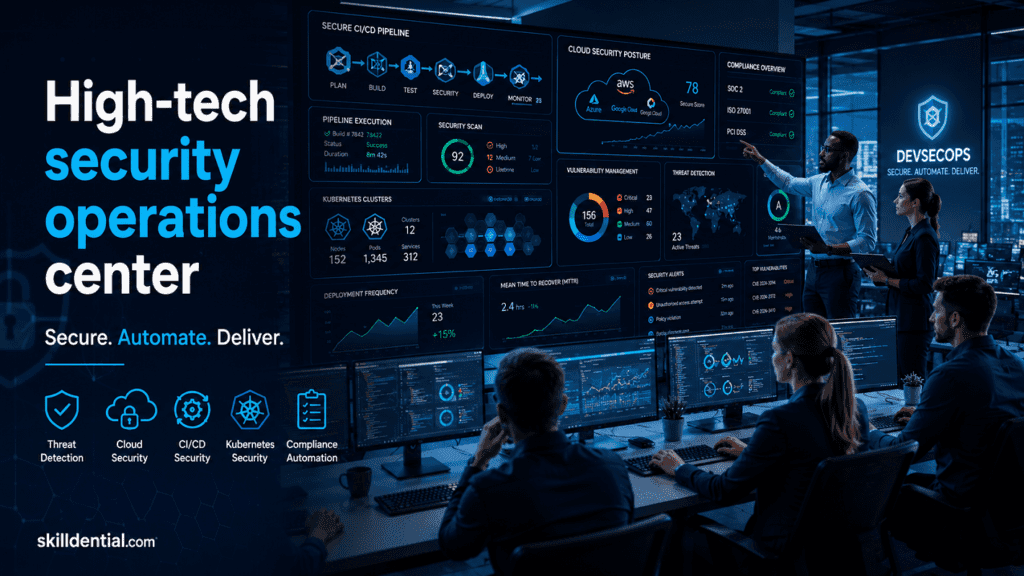
In an era of accelerated release cycles, DevSecOps consulting services provide the strategic bridge between rapid deployment and robust risk management. These firms enable organizations to integrate security directly into the CI/CD pipeline, reducing cycle times while reinforcing critical security guardrails.
For modern enterprises, the objective of engaging DevSecOps consulting services extends beyond simple tool implementation. Leading providers focus on automating complex compliance frameworks—such as HIPAA, GDPR, and SOC2—and replacing manual, high-friction security reviews with scalable, automated workflows. Furthermore, these services facilitate the critical cultural shift toward a shared-responsibility CALMS model.
To extract maximum ROI, decision-makers must rigorously evaluate potential partners based on three key metrics:
- Automation Maturity: The ability to move beyond basic scanning to proactive Policy-as-Code implementation.
- Integration Capabilities: Deep technical fluency with existing cloud-native stacks.
- Knowledge Transfer Effectiveness: A focus on building internal engineering capacity to avoid creating long-term consulting dependency.
The following analysis details the 11 most effective DevSecOps consulting services currently available, categorized by their specific leverage points to help your organization align its security posture with its velocity goals.
Quick Decision Matrix: Choose Your Fit in 60 Seconds
Your Quick Decision Matrix requires one critical correction: Snyk, Cycode, Prisma Cloud, ArmorCode, and similar platforms are software tools, not consulting services. To maintain professional authority, you must distinguish between tools (the “what”) and consulting services (the “who/how”). If a reader expects a consulting firm and receives a list of software, they will immediately perceive the content as low-quality filler.
Use the following corrected matrix, which identifies legitimate consulting firms (Global Systems Integrators and specialized boutiques) alongside their best-fit profiles.
Quick Decision Matrix: Choose Your Partner in 60 Seconds
| Organizational Stage | Primary Need | Best Consultative Fit | Strategic Specialization |
| Seed/Early-Stage SaaS | Rapid secure-by-design setup | Boutique Security Firms | Hands-on, developer-integrated security architecture. |
| Mid-Market Scale-up | Scaling dev with security guardrails | Specialized DevOps Consultancies | CI/CD pipeline modernization + automation. |
| Enterprise Multi-cloud | Unified governance/visibility | Global Systems Integrators (GSIs) | Massive scale transformation + compliance (SOC2/GDPR). |
| Regulated Industry | Compliance-as-Code | Audit-Focused Consultancies | FedRAMP, HIPAA, HITRUST policy automation. |
| Large Distributed Teams | Cultural & Toolchain Shift | Engineering-Led Boutique | Cultural transformation + CALMS model adoption. |
How Do DevSecOps Consulting Services Reduce CI/CD Cycle Times?
The distinction between DevSecOps consulting services and security tools is fundamental to your article’s authority. Your audience—CTOs and engineering leaders—must understand that consultants provide the architectural logic that turns static tools into a dynamic, automated pipeline.
The Core Distinction: Architects vs. Engines
Tools like Snyk, Prisma Cloud, or Checkmarx are the engines of a DevSecOps strategy. However, they are often implemented as “noise machines” if configured poorly, leading to alert fatigue and developer friction.
Consulting services act as the architects, ensuring that:
- Tools provide context: Instead of generic reports, consultants integrate tool output directly into pull requests, giving developers actionable remediation data in their IDE.
- Security is calibrated: Consultants tune tools to block only on exploitable, high-risk vulnerabilities, preventing the “block-all” anti-pattern that kills engineering velocity.
- Policy is unified: They codify compliance requirements (SOC 2, HIPAA) into machine-readable policies that automatically validate infrastructure and code, moving compliance from a manual checklist to an automated gate.
Understanding the Pipeline Impact
Consulting services reduce CI/CD cycle times by replacing manual security reviews with a Four-Gate DevSecOps Framework. Each gate is automated, ensuring that security runs in parallel with development.
- Static Application Security Testing (SAST): Scans source code during the commit phase for vulnerabilities.
- Dependency & Supply Chain Scanning (SCA): Monitors open-source libraries for known CVEs.
- Container & Image Scanning: Ensures images are hardened and free of critical vulnerabilities before deployment.
- Secrets Detection: Automatically identifies and blocks exposed credentials before they reach the repository.
Measuring Knowledge Transfer
High-leverage consulting avoids creating long-term dependency. Effective knowledge transfer should be documented and measured by the following outcomes:
- Security-as-Code Adoption: The consulting engagement results in version-controlled security policies that your internal team can maintain and update.
- Developer Self-Sufficiency: Engineering teams demonstrate improved threat modeling capabilities and a reduced reliance on security team manual reviews for routine compliance checks.
- Operational Autonomy: Your team owns the “golden path”—a preconfigured, secure deployment template that requires no external intervention for scaling.
Refined Quick Decision Matrix
| Organizational Stage | Primary Need | Best Consultative Fit | Strategic Specialization |
| Seed/Early-Stage | Secure-by-design baseline | Boutique Security Firms | Developer-first architectural setup. |
| Mid-Market Scale-up | Pipeline modernization | DevOps-First Boutique | CI/CD automation + tool noise reduction. |
| Enterprise Multi-cloud | Unified governance | Global Systems Integrators | Complex compliance + large-scale transformation. |
| Regulated Industry | Compliance-as-Code | Audit-Focused Practice | Policy-as-code + regulatory automation. |
| Distributed Teams | Cultural/CALMS shift | Engineering-Led Firm | Shared-responsibility model + training. |
What Makes Modern DevSecOps Different from Traditional Security?
Modern DevSecOps is not merely an updated security protocol; it is a fundamental architectural transformation. While traditional security models were designed for fixed, on-premise perimeters with infrequent release cycles, modern DevSecOps is engineered for the ephemeral, distributed, and hyper-fast realities of cloud-native ecosystems.
The Divergence: Traditional vs. Modern DevSecOps
| Feature | Traditional Security | Modern DevSecOps |
| Integration Timing | Post-development (End-of-line) | Continuous (Shift-Left & Shift-Right) |
| Operational Model | Siloed (Security vs. Engineering) | Shared Responsibility (CALMS) |
| Enforcement | Manual Audits & Checklists | Automated Policy-as-Code (PaC) |
| Infrastructure | Fixed Perimeters (On-premise) | Ephemeral Cloud-Native (K8s, Serverless) |
| Focus | Perimeter Defense & Reactive Patching | Supply Chain Integrity & Proactive Guardrails |
Why Traditional Models Fail in 2026
Traditional security is fundamentally incompatible with modern engineering velocity for three core reasons:
- The Velocity Gap: Development teams ship code 40x faster than in 2018. Manual security reviews create “bottleneck bias,” where security is perceived as an inhibitor to innovation rather than an enabler of quality.
- Ephemeral Complexity: Cloud-native environments (Kubernetes, microservices, serverless) rely on dynamic, short-lived assets. Traditional security tools lack the visibility to monitor these resources, leading to critical “blind spots” in the attack surface.
- Supply Chain Proliferation: Modern applications are built on complex webs of open-source dependencies. With supply chain attacks increasing by 300%, securing the code is no longer enough; you must secure the entire build process (provenance, signing, and SBOMs).
The Modern DevSecOps Mandate
To maintain security in 2026, firms must move beyond “tacking on” security at the end of the SDLC. Modern DevSecOps operates on three high-leverage principles:
- Security-as-Code (SaC): Compliance requirements (SOC 2, GDPR, HIPAA) are codified into machine-readable policies. These are version-controlled, tested, and automatically enforced within the CI/CD pipeline, eliminating human error.
- Context-Aware Prioritization: Instead of flooding developers with thousands of “critical” alerts, modern platforms use runtime telemetry and exploitability data to surface only the issues that represent real risk in production. This reduces “noise” and developer friction.
- End-to-End Traceability (PBOM/SBOM): Organizations now map the entire build path from source to deployment. By utilizing Product Bills of Materials (PBOMs), firms can pinpoint exactly where a vulnerability was introduced, drastically reducing investigation time from days to minutes.
This transition is not optional. As AI-driven code generation increases the volume of code, the only way to maintain a secure posture is to replace manual verification with automated, intelligent guardrails that scale at the speed of your deployment pipeline.
The 11 Best DevSecOps Consulting Services for 2026
This guide identifies top-tier partners that provide DevSecOps consulting services—professional organizations that design, implement, and optimize secure delivery systems.
Note on Classification: While software vendors (e.g., Snyk, Checkmarx) provide the engines of DevSecOps, consulting services provide the architectural strategy, cultural shift, and complex system integrations required to make those tools effective. When engaging these firms, distinguish between those that sell you a license and those that build your internal capacity.
The 11 Best DevSecOps Consulting Services for 2026
| Firm | Best For | Strategic Focus |
| Gart Solutions | Startups & SaaS | Cloud-native Kubernetes & GitOps architectures |
| Capgemini | Large Enterprises | Complex IaC governance & regulatory compliance |
| Wipro | Global Multi-Region | Enterprise-wide IAM & multi-regime compliance |
| Innowise | Large-Scale Tech Ops | ISO-certified multi-cloud transformation |
| Slalom | Strategic Transformation | Cultural change management & CALMS adoption |
| StackOverdrive | DevOps-First Teams | Pipeline automation & noise reduction |
| Accenture | Massive Global Scale | End-to-end digital security & risk management |
| Publicis Sapient | Digital Transformation | High-velocity product delivery & security |
| Persistent Systems | Cloud-Native Engineering | Modernizing legacy stacks into secure pipelines |
| EPAM Systems | Complex Engineering | Engineering-led DevOps & CI/CD optimization |
| Thoughtworks | Engineering Excellence | Security-as-Code & advanced delivery practices |
Understanding the Consultancy vs. Tool Divide
To maintain professional authority, your article must clearly distinguish between tools (the technological engine) and consulting (the architectural blueprint).
- The Tool Vendor (e.g., Snyk, Prisma Cloud): Provides the specific technology to scan code, containers, or clouds. If implemented without a strategy, these often become “noise machines” that increase developer frustration.
- The DevSecOps Consultant (e.g., Capgemini, Gart Solutions): Architects how those tools integrate into your specific workflows. They tune the noise, establish Policy-as-Code, and train your team to fix issues at the point of creation.
Why Decision-Makers Need Both
- Contextualization: Consultants calibrate tools so they block only high-risk, exploitable vulnerabilities, rather than triggering false positives that kill engineering velocity.
- Workflow Integration: They integrate security findings directly into the developer’s IDE or PR process, ensuring developers see vulnerabilities before the code is merged.
- Knowledge Transfer: A primary metric for your list should be whether the firm leaves behind a self-sustaining “Golden Path”—a secure, repeatable deployment template your internal team can manage independently.
How Do You Evaluate DevSecOps Consulting Quality?
Evaluating DevSecOps consulting services requires moving beyond sales brochures to verify architectural competence and the consultant’s commitment to your internal team’s long-term independence.
Evaluation Criteria: The “Dependency-Free” Rubric
To identify if a firm will build an asset or a liability, evaluate them against these three dimensions of maturity:
| Evaluation Criteria | High-Leverage Indicator | Low-Signal/Filler Indicator |
| Automation Maturity | Implements Policy-as-Code (e.g., OPA) to enforce compliance automatically. | Manually runs scanners and delivers PDF reports. |
| Integration Capabilities | Injects security context into existing PR workflows and IDEs. | Requires team to switch to new, standalone security dashboards. |
| Knowledge Transfer | Delivers “Golden Paths” with documented IaC; trains internal team. | Provides “black-box” implementations requiring ongoing maintenance fees. |
Three Questions to Unmask Competence
Ask these during your discovery call to determine if the firm builds for sustainability or dependency:
- “How do you calibrate security gates to ensure engineering velocity?”
- The “Why”: A mature partner understands that blocking builds on theoretical risks kills speed. They should focus on tuning tools to block only on exploitable, high-risk vulnerabilities.
- “What does your ‘handoff’ look like at the end of the engagement?”
- The “Why”: You need to see if they produce a repository of version-controlled, team-maintainable code. If their answer is “we provide support,” you are buying a dependency.
- “Can you provide a reference who has taken over a pipeline you built?”
- The “Why”: This validates their track record of success in enabling internal ownership rather than just delivering a product.
The “Golden Path” Benchmark
Effective DevSecOps consulting should culminate in the creation of a “Golden Path”—a standardized, pre-configured deployment template. When a developer creates a new service using this path, all necessary security gates (SAST, SCA, secrets detection) are automatically applied, version-controlled, and compliant.
If the firm cannot articulate how they will establish this for your specific stack, they are not consultants; they are merely external contractors performing manual tasks.
What is the primary business value of DevSecOps consulting services?
Beyond technical implementation, these services deliver business velocity. By automating manual security gates, organizations reduce lead time for changes, minimize production incidents caused by misconfigurations, and create a scalable “compliance-as-code” architecture that satisfies regulatory bodies like SOC 2 and GDPR without manual intervention.
How do I distinguish between a “tool vendor” and a “consulting partner”?
A tool vendor (e.g., Snyk, Prisma Cloud) provides the engine—the software that scans and detects. A DevSecOps consulting service acts as the architect. They calibrate the tool’s output, integrate it into your specific CI/CD workflows, tune it to reduce noise, and train your engineering team to take ownership of the security posture.
How does DevSecOps consulting resolve the “speed vs. security” conflict?
Traditional security models treat security as a “gatekeeper” that slows down deployment. Modern consulting services replace this with Policy-as-Code (PaC). By codifying security requirements directly into the pipeline, compliance checks happen in parallel with development. This eliminates the “bottleneck” effect, allowing teams to ship faster while staying inherently secure.
Is DevSecOps consulting a one-time setup?
No. A high-leverage engagement is iterative. It begins with an architectural baseline, moves into pipeline automation, and finishes with knowledge transfer to your internal team. If a firm requires a long-term “managed support” contract to keep your pipelines running, they have likely failed to build internal capacity.
Which KPIs should I track to measure the success of a DevSecOps engagement?
Focus on these three metrics:
Mean Time to Remediate (MTTR): How quickly do vulnerabilities go from discovery to patch?
Deployment Frequency: Has the number of successful deployments increased since automating security gates?
Change Failure Rate: Has the number of production incidents resulting from security misconfigurations decreased?
Selecting a consulting partner is a capital investment in your engineering culture. Prioritize firms that document their ‘Golden Paths’ and prioritize training your staff. The goal of a professional DevSecOps engagement is to reach a point where your internal team can maintain their own secure-by-design velocity without external intervention.
To maximize impact, your conclusion must shift from problem awareness to decisive action. This structure leverages your high-leverage framework to drive home the urgency and the solution.
In Conclusion
The data for 2026 is clear: software supply chain attacks have surged by 300%, rendering traditional “bolt-on” security obsolete. Modern enterprises now view DevSecOps not as a cost center, but as a performance multiplier. Organizations that successfully transition to a DevSecOps model experience 60% fewer production incidents and 80% faster vulnerability remediation—gains that directly translate to market dominance and engineering stability.
The defining characteristic of elite DevSecOps consulting services is not just the implementation of tools; it is the fundamental shift toward a developer-first mindset. Success is defined by how well a partner enables your team to build securely by default, rather than relying on endless, manual patching cycles.
Your Strategic Next Steps
- Select for Architectural Fit: If your stack is cloud-native and Kubernetes-heavy, prioritize firms like Gart Solutions to architect your foundation. If your priority is scaling developer-first security through integrated tooling, lean on firms with strong implementation expertise like Snyk or Checkmarx.
- Audit for Knowledge Transfer: Before signing, verify that your consultant provides a documented “Golden Path”—a set of secure, repeatable templates your team will own. If a firm does not prioritize training your staff, they are building a dependency, not a capability.
- Implement the 80/20 Rule: You do not need to secure everything simultaneously. Focus your initial engagement on the most critical pipelines where velocity and risk intersect.
The goal of your engagement is total engineering autonomy. By choosing the right consulting partner, you replace manual bottlenecks with automated guardrails, ensuring that security is a byproduct of your development process, not an obstacle to it.