7 Best Chinese ChatGPT Alternatives You Should Try
Chinese ChatGPT alternatives are AI chatbots and large language models developed by Chinese companies that can assist with writing, coding, research, translation, and productivity tasks. Several models now offer competitive reasoning, multilingual capabilities, long-context support, and developer APIs. However, features, pricing, availability, and regional access may vary by provider and location.
Artificial intelligence has become increasingly competitive, with Chinese AI companies rapidly introducing advanced large language models (LLMs) that challenge established tools like ChatGPT.
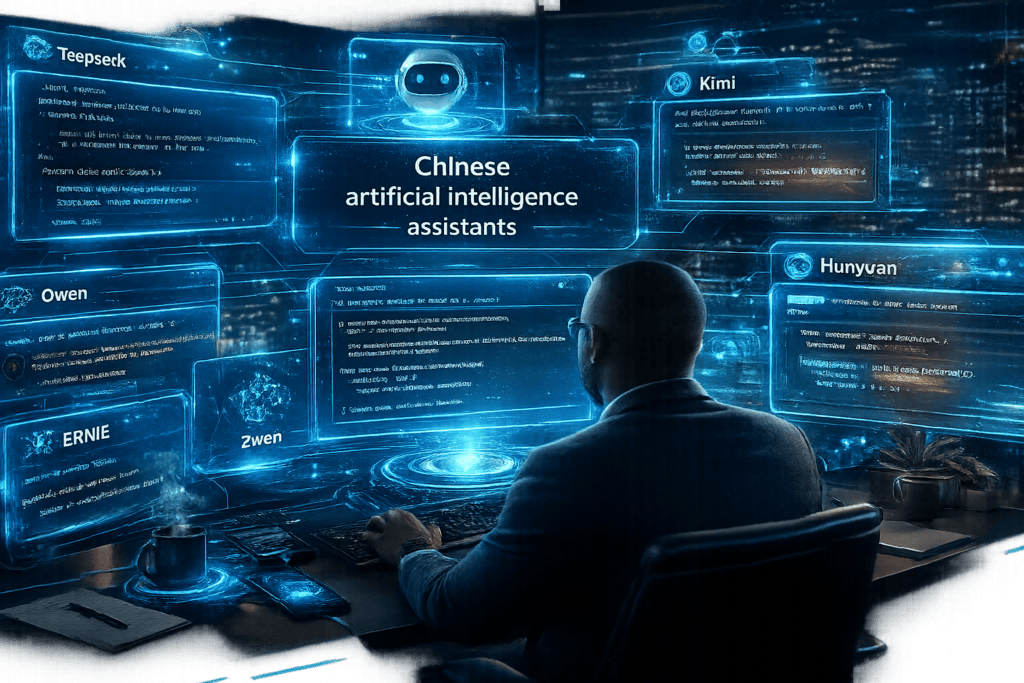
While ChatGPT remains one of the most widely recognized AI assistants, it is no longer the only option. Top Chinese ChatGPT alternatives have released models that excel in coding, reasoning, multilingual conversations, document analysis, and cost-efficient API access. Some are open-source, while others are designed primarily for enterprise or consumer use.
This guide is designed for:
- AI enthusiasts evaluating high-performing alternative models.
- Students looking for reliable, long-context research assistants.
- Developers seeking cost-effective API access and open-source models.
- Content creators interested in multimodal generation and writing tools.
- Business professionals seeking enterprise-grade workflow automation.
- Researchers needing deep document analysis and reasoning.
- Anyone looking for reliable Chinese ChatGPT alternatives to power their daily work.
What this article covers:
Rather than simply listing AI tools, this article explains:
- What makes each Chinese ChatGPT alternative unique.
- Who each chatbot is best suited for.
- Important technical and operational trade-offs.
- Privacy considerations and data residency factors.
- Pricing differences and API token economics.
- How to choose the right Chinese ChatGPT alternative for your specific workflow.
Where relevant, factual statements are supported using official documentation and reputable publications. Because AI products evolve rapidly, pricing, availability, and supported features may change over time.
What Are Chinese ChatGPT Alternatives?
Chinese ChatGPT alternatives are conversational AI assistants and large language models (LLMs) developed by China-based technology companies, research labs, and open-source collectives. Designed to handle tasks similar to OpenAI’s ChatGPT, these tools leverage advanced neural network architectures to process and generate natural language, write software code, and analyze complex information.
Core Capabilities
Modern Chinese ChatGPT alternatives perform across a wide variety of everyday and specialized workflows, including:
- Answering complex queries across academic, technical, and general knowledge domains.
- Summarizing long-form documents, research papers, and legal contracts.
- Drafting and editing content, including articles, scripts, marketing copy, and emails.
- Generating, debugging, and explaining code across dozens of programming languages.
- Translating text between multiple global languages with strong contextual accuracy.
- Brainstorming strategy, creative concepts, and product ideas.
- Analyzing structured data, CSV files, and financial reports.
- Assisting with academic research, literature reviews, and mathematical reasoning.
Deployment & Accessibility Options
Depending on your workflow needs, Chinese ChatGPT alternatives are distributed through two primary models:
- Consumer Web Chatbots & Apps: Direct-to-consumer web interfaces and mobile applications (similar to chatgpt.com) optimized for casual conversation, document uploads, and daily productivity.
- Developer APIs & Open-Weight Models: Cloud API endpoints and open-source releases (under licenses like MIT or Apache 2.0). These allow developers and enterprises to build custom AI agents, fine-tune models on proprietary data, or self-host infrastructure locally to maintain strict data privacy.
Global Reach and Multilingual Shift
Unlike early-generation Chinese AI models that focused predominantly on simplified Chinese, current Chinese ChatGPT alternatives are engineered for global utility. Leading models like DeepSeek, Alibaba’s Qwen, Moonshot’s Kimi, and Zhipu AI’s GLM natively support English and dozens of other languages.
Many routinely match or outperform top Western frontier models on global open benchmarks for math, coding, tool use, and multi-step reasoning—often at a significantly lower API cost per token.
Why Are Chinese AI Models Becoming Popular?
Chinese AI models are gaining global traction because they combine frontier-level performance with disruptive API pricing, massive context windows, and highly capable open-source releases.
Several key drivers explain their rapid growth across the global AI ecosystem:
Disruptive API Token Economics
Cost efficiency is one of the strongest drivers behind the adoption of Chinese ChatGPT alternatives. Many leading providers offer inference pricing at a fraction of Western frontier models, making them exceptionally attractive for startups, developers, and enterprises deploying AI applications at scale.
- High-Volume Savings: Input and output token costs for top-tier reasoning and coding models are often up to 80–90% lower compared to proprietary alternatives like GPT-4o or Claude 3.5 Sonnet.
- Aggressive API Competition: Frequent price cuts among major infrastructure players have created a highly accessible market for token-intensive tasks like batch processing and agentic workflows.
Specialized Strengths in Coding and Reasoning
Recent releases of Chinese ChatGPT alternatives have closed the gap—and in several instances set new standards—on international benchmarks for software engineering, technical problem-solving, and mathematical reasoning.
- Code Generation & Debugging: Models from labs like DeepSeek, Alibaba, and Moonshot AI excel at writing complex code, refactoring legacy software, and multi-file code execution.
- Benchmark Performance: Leading open models regularly match or exceed proprietary counterparts on key evaluations like HumanEval (coding), MATH, and LiveCodeBench.
Open-Source Leadership & Self-Hosting
Unlike the predominantly closed ecosystems of top Western AI providers, many Chinese ChatGPT alternatives are distributed as open-weight models under permissive licenses (such as Apache 2.0 or MIT).
- Flexibility & Control: Developers can inspect, fine-tune, and deploy models on their own private infrastructure or local hardware.
- Data Sovereignty: Self-hosting allows organizations to completely bypass third-party API data collection, mitigating cross-border data transfer risks and ensuring compliance with local regulatory frameworks.
Enterprise-Scale Long Context Windows
Processing vast amounts of information in a single prompt has become a signature feature of top Chinese ChatGPT alternatives.
- Document & Codebase Analysis: Several models feature context lengths ranging from 128,000 to over 2,000,000 tokens in a single request.
- Practical Utility: This allows users to ingest entire technical documentation suites, multi-hundred-page financial reports, legal contracts, or entire books without losing context coherence.
Hyper-Competitive Domestic Ecosystem
The Chinese AI landscape features intense competition among agile AI startups, university labs, and established tech conglomerates. This high-density ecosystem accelerates iteration cycles:
- Key Players Driving Innovation: Key platforms including DeepSeek, Alibaba (Qwen), Moonshot AI (Kimi), Baidu (ERNIE), ByteDance (Doubao), Zhipu AI (GLM), Tencent (Hunyuan), and MiniMax continuously ship architectural improvements.
- Rapid Deployment Cycles: Models are updated continuously, driving down latencies, optimizing mixture-of-experts (MoE) architectures, and pushing the boundary of open-weights performance.
How We Selected These Chinese ChatGPT Alternatives
To ensure fair, objective comparisons, every AI assistant in this guide was evaluated using structured evaluation criteria rather than social media hype or popularity alone. We rigorously tested both proprietary consumer interfaces and open-weight developer models across technical, operational, and economic metrics.
Our Core Evaluation Framework
| Evaluation Factor | Why It Matters |
| AI Capabilities | Performance across long-form writing, logical reasoning, multi-file software engineering, translation fidelity, and literature synthesis. |
| Ease of Use | User interface intuitiveness, prompt responsiveness, onboarding friction, and overall learning curve for non-technical users. |
| Productivity | Everyday utility for real-world academic and professional workflows, including document analysis, file processing, and task automation. |
| Language Support | High-level fluency in English alongside native-level proficiency in Chinese and multilingual reasoning capabilities. |
| API Availability | Developer integration options, including OpenAI/Anthropic API spec compatibility, SDK support, latency, and rate limit flexibility. |
| Pricing & Token Economics | Direct cost comparisons for premium consumer subscriptions and API token rates per million input/output tokens. |
| Privacy & Data Governance | Enterprise data handling policies, opt-out mechanisms for model training, cross-border data routing, and local deployment/self-hosting flexibility. |
| Software Ecosystem | Availability of browser extensions, mobile apps, code editor plugins (e.g., VS Code extensions), and third-party developer tools. |
| Overall Value | The strategic balance between overall feature set, output speed, reliability, and ongoing operating cost. |
Inclusion Criteria: We explicitly excluded discontinued projects, abandoned GitHub repositories, and legacy models. We prioritized actively maintained, production-ready AI ecosystems with strong development momentum, verifiable benchmarks, and documented enterprise adoption.
Comparison Table: Best Chinese ChatGPT Alternatives at a Glance
| AI Assistant | Parent Company | Key Specialty / Primary Use Case | Free Web Tier | API Availability | Open-Weight Model |
| DeepSeek | DeepSeek AI | Complex coding, mathematical reasoning & cost-efficient inference | Yes | Yes | Yes (MIT License) |
| Qwen | Alibaba Cloud | Multilingual translation, agentic workflows & enterprise scale | Yes | Yes | Yes (Selected Series) |
| Kimi | Moonshot AI | Ultra-long document analysis, PDF synthesis & deep research | Yes | Yes | Selected Models |
| ERNIE Bot | Baidu | Search engine integration, enterprise productivity & Chinese NLP | Yes | Yes | Mostly Proprietary |
| Doubao | ByteDance | Everyday assistant, casual conversation & multimodal creation | Yes | Yes | Limited |
| Hunyuan | Tencent | Enterprise app integration, WeChat ecosystem & workflow automation | Limited | Yes | Selected Models |
| MiniMax | MiniMax | Multimodal AI generation, low-latency audio & natural voice agent synthesis | Yes | Yes | Selected Models |
Operational Note: Free tier limits, API token pricing, open-weight licensing terms, and cross-border regional availability change frequently as providers deploy updated model versions. Always verify the latest specifications on each provider’s official documentation platform before committing to enterprise deployment.
Detailed Reviews of the 7 Best Chinese ChatGPT Alternatives
Explore the strengths, features, pricing, and ideal use cases of the top seven Chinese ChatGPT alternatives to help you choose the right AI assistant.
DeepSeek
DeepSeek has emerged as one of the most widely recognized Chinese ChatGPT alternatives thanks to its frontier-level mathematical reasoning, multi-file code synthesis, and highly disruptive API token economics.
Developed by Hangzhou-based DeepSeek AI, the platform provides direct access via a free web assistant, a dedicated mobile app, and fully OpenAI-compatible developer APIs.
A defining feature of DeepSeek is its commitment to open research, offering open-weight models (such as the DeepSeek-V3 and DeepSeek-R1 series) under permissive open-source licenses for local fine-tuning and private self-hosting.
Device & Platform Support
- Web Interface: Direct browser access via desktop and mobile.
- Mobile Applications: Native apps available for iOS and Android.
- Developer APIs: OpenAI and Anthropic SDK-compatible API endpoints.
- Local Self-Hosting: Open-weight parameters deployable on local GPU clusters, Ollama, vLLM, and LM Studio.
Core AI Features
- Chain-of-Thought Reasoning: Explicit step-by-step logic processing (“DeepThink”) for complex problem-solving.
- Advanced Code Generation: Architectural refactoring, bug identification, and script generation across major languages.
- Mathematical & Logical Analysis: Frontier benchmark performance on competition-level math problems.
- Long-Context Document Processing: Ingestion and synthesis of lengthy technical documentation, PDFs, and codebases.
- Agentic Tool Integration: Native support for function calling and multi-step agent workflows.
Key Specifications
| Specification | Details |
| Multilingual Support | Native English and Chinese; optimized for dozens of global languages. |
| API Availability | Yes (Pay-as-you-go with prompt caching discounts). |
| Context Window | Up to 128,000–160,000 tokens depending on the deployment model. |
| Open-Weight Models | Yes (Fully downloadable via Hugging Face under MIT/Apache licenses). |
| Free Access | Yes (Free web/app tier with optional API credits). |
Compatibility
- Operating Systems: Windows, macOS, Linux, Android, iOS.
- Development Environments: VS Code, Cursor, JetBrains IDEs, API integrations, and command-line interfaces (CLI).
Best For
- Software Developers: Looking for an alternative to GitHub Copilot or Claude for code writing and debugging.
- AI Researchers & Engineers: Needing permissive open-weight models to inspect, fine-tune, or host on private cloud infrastructure.
- Startups & Enterprises: Requiring ultra-low-cost, high-throughput API endpoints for agentic software workflows.
Pros & Cons
| Pros (✔) | Cons (✘) |
| ✔ Exceptional software development and math reasoning capabilities. | ✘ Web interface response latency can spike during periods of high global demand. |
| ✔ Industry-leading API cost efficiency compared to proprietary Western models. | ✘ Advanced self-hosting requires high-end hardware/GPU configurations. |
| ✔ Permissive open-weight releases enable full data privacy and self-hosting. | ✘ Lacks integrated native image generation tools compared to consumer-first platforms. |
| ✔ Flexible reasoning modes (toggle between direct answers and deep logic chains). | ✘ Specialized technical features may present a learning curve for casual users. |
Pricing & Token Economics
- Web & Mobile Tier: Free to use for standard consumer queries.
- API Pricing: Extremely competitive token-based billing (typically priced at $0.14–$0.28 per million input tokens with prompt caching, depending on model variant and routing).
Privacy & Data Governance Considerations
Using DeepSeek’s cloud API routes requests through company servers governed by regional privacy rules. However, because DeepSeek distributes full open-weight versions of its models, security-conscious enterprises can completely isolate their data pipeline by self-hosting the models on local, air-gapped infrastructure—eliminating third-party data collection risks.
Alternative Options
If you are evaluating DeepSeek against other leading assistants, direct alternatives include Qwen (for enterprise tool use), Kimi (for longer document contexts), and Western frontier tools like ChatGPT or Claude.
Verdict: DeepSeek is an outstanding Chinese ChatGPT alternative for developers, technical founders, and researchers who want top-tier reasoning and coding performance without paying premium closed-source API prices.
Qwen (Alibaba)
Qwen (short for Tongyi Qianwen) is Alibaba Cloud’s flagship ecosystem of open-weight and enterprise-grade AI models. As one of the most versatile Chinese ChatGPT alternatives, Qwen spans a massive spectrum of deployment targets—from lightweight open models that can run locally on edge hardware to high-throughput MoE (Mixture-of-Experts) models engineered for autonomous coding and complex agentic workflows.
Known for its exceptional multilingual mastery across over 100 languages, Qwen serves as a primary foundation for global businesses, software developers, and researchers seeking an open, enterprise-ready alternative to closed ecosystems.
Device & Platform Support
- Web Interfaces: Direct consumer chat via Qwen Chat web portals and Qwen Studio.
- Cloud & Enterprise Platforms: Hosted directly via Alibaba Cloud Model Studio and third-party AI model gateways.
- Developer APIs: Full compatibility with the OpenAI and Anthropic API specifications for frictionless drop-in replacement.
- Local & Self-Hosted Infrastructure: Downloadable open-weight parameters compatible with Ollama, LM Studio, Unsloth, and vLLM.
Core AI Features
- Hybrid “Dual Thinking” Reasoning: Allows developers to flexibly toggle between explicit step-by-step reasoning (“Thinking Mode”) for technical tasks and rapid execution (“Non-Thinking Mode”) for fast responses.
- Agentic Tool Use & MCP Support: Native, out-of-the-box support for tool calling, external API execution, and the Model Context Protocol (MCP).
- Agentic Coding & Repository Refactoring: High-tier benchmark performance on multi-file software engineering tasks (such as SWE-bench).
- Ultra-Long Context Processing: Context processing reaching up to 1 million tokens natively on flagship models.
- Native Multimodality: End-to-end perception and reasoning across text, document layouts, image inputs, and vision-language tasks.
Key Specifications
| Specification | Details |
| Multilingual Support | Industry-leading coverage across 119+ global languages and regional dialects. |
| API Availability | Yes (Available through Alibaba Cloud Model Studio and global API providers). |
| Context Window | Up to 1,000,000 tokens on cloud API tiers. |
| Open-Weight Models | Yes (Extensive collection published under permissive Apache 2.0 licenses). |
| Free Access | Yes (Free web tier available; free API trial credits on Alibaba Cloud). |
Compatibility
- Operating Systems: Windows, macOS, Linux, iOS, Android, Cloud environments.
- Development Workflows: Native integration with IDEs (e.g., Qwen Code, Cursor, VS Code), CLI scripts, orchestration frameworks (LangChain, LlamaIndex), and local GPU runtimes.
Best For
- Global Enterprises & E-Commerce: Companies requiring multi-language translation, localized customer support, and cross-border agentic workflows.
- Software Engineers & Developers: Teams wanting high-performing coding assistants available as both low-cost APIs and self-hostable open weights.
- System Architects: Engineers designing autonomous AI agents that require native tool execution and function-calling reliability.
Pros & Cons
| Pros (✔) | Cons (✘) |
| ✔ Industry-standard Apache 2.0 open-weight licenses permit total commercial freedom. | ✘ Closed-source flagship models (Max series) must be accessed via hosted cloud APIs. |
| ✔ Superior performance in non-English and cross-lingual translation tasks. | ✘ Massive enterprise product suite can create a learning curve for non-technical users. |
| ✔ Dual reasoning toggles optimize both cost per token and output speed. | ✘ Enterprise cloud setups require navigating Alibaba Cloud console infrastructure. |
| ✔ Highly reliable tool use, JSON-structured outputs, and agentic workflows. | ✘ Performance across open models varies depending on hardware quantization setups. |
Pricing & Token Economics
- Web & Consumer Tier: Free usage across web and mobile app interfaces.
- API Pricing: Tiered cloud pricing based on model scale. Lightweight models offer extreme cost-efficiency, while flagship models remain competitively priced relative to closed Western equivalents, supported by tiered discounts for long-context prompts.
Privacy & Data Governance Considerations
Organizations utilizing Qwen via Alibaba Cloud Model Studio are bound by enterprise cloud data handling agreements, which include data isolation options.
For full data sovereignty and regulatory compliance (such as GDPR or regional data residency laws), enterprises can download Qwen’s open-weight models (e.g., the 27B dense or 35B MoE variants) and deploy them entirely within private, air-gapped Virtual Private Clouds (VPCs).
Alternative Options
Key competitors to Qwen in the enterprise and developer ecosystem include DeepSeek (for raw math and coding efficiency), Zhipu AI / GLM (for enterprise workflows), and Western alternatives like ChatGPT or Claude.
Verdict: Qwen is arguably the most adaptable Chinese ChatGPT alternative on the market today. It offers an unbeatable combination of open-source freedom for self-hosters and enterprise cloud infrastructure for businesses scaling autonomous AI agents.
Kimi (Moonshot AI)
Developed by Beijing-based Moonshot AI, Kimi has established itself as one of the premier Chinese ChatGPT alternatives for long-document processing, deep research, and complex information extraction.
Known for pioneering ultra-large context processing, Kimi excels at digesting massive texts—such as multi-hundred-page research papers, legal contracts, and complete software codebases—without degrading context memory.
Powered by Moonshot AI’s flagship architectures (including the open-weight Kimi K-series), Kimi combines extended memory capacity with advanced chain-of-thought reasoning and autonomous web-research agents.
Device & Platform Support
- Web Interface: Web portal (kimi.com) optimized for long-form file uploads and web research.
- Mobile Applications: Native applications for iOS and Android.
- Developer APIs: OpenAI-compatible API endpoints hosted on Moonshot AI’s developer platform.
- Open-Weight Releases: Selected foundation models (such as Kimi K2 and K3 variants) downloadable via Hugging Face for local or private cloud deployments.
Core AI Features
- Lossless Long-Context Processing: Capable of ingesting 256,000 to over 1,000,000 tokens in a single prompt depending on the model tier.
- Autonomous Web & Literature Research: Native multi-step search agents that compile structured reports backed by web sources.
- Deep Document Analysis: Parses complex PDFs, financial statements, academic papers, and multi-file archives.
- Reinforcement Learning (RL) Reasoning: High-accuracy step-by-step problem-solving across mathematical and logical tasks.
- Multimodal Vision Understanding: Processes images, diagrams, charts, and document layouts alongside text inputs.
Key Specifications
| Specification | Details |
| Multilingual Support | Strong fluency in English and Chinese, with multi-language document translation. |
| API Availability | Yes (Pay-as-you-go developer API with context caching options). |
| Context Window | Standard 256K tokens up to 1,000,000 tokens on flagship model releases. |
| Open-Weight Models | Yes (Select MoE models released under open licenses). |
| Free Access | Yes (Free web tier for consumer usage). |
Compatibility
- Operating Systems: Windows, macOS, Linux, iOS, Android.
- Development Runtimes: API integration via Python/Node.js SDKs, cURL, web browsers, and command-line interfaces.
Best For
- Students & Academics: Summarizing dense textbooks, analyzing academic papers, and conducting literature reviews.
- Legal & Financial Professionals: Reviewing long-form contracts, regulatory filings, and financial reports.
- Researchers & Analysts: Building structured research reports from dozens of uploaded sources or live web searches.
Pros & Cons
| Pros (✔) | Cons (✘) |
| ✔ Exceptional long-context performance without lost information in middle context. | ✘ Server demand surges during major updates can temporarily impact response speeds. |
| ✔ Native deep-research agents simplify complex web and document inquiries. | ✘ Web interface features may vary slightly depending on geographical region. |
| ✔ Strong multimodal parsing for technical charts, tables, and PDF scans. | ✘ API rates for extreme context lengths can become costly without context caching. |
Pricing & Token Economics
- Web & Consumer Tier: Free usage with query limits on standard web and mobile platforms.
- API Pricing: Competitive per-token billing for API developers, with significant cost reductions when leveraging context caching for static or repeated document inputs.
Privacy & Data Governance Considerations
When using Kimi’s hosted web or API endpoints, data processing occurs via Moonshot AI’s cloud infrastructure. Enterprise teams handling sensitive documents should review platform privacy policies or opt for Moonshot’s downloadable open-weight models to maintain complete on-premises data isolation.
Alternative Options
Direct alternatives to Kimi for long-document analysis include Qwen (for enterprise tool integration), DeepSeek (for raw technical/code reasoning), and Western models like Claude or ChatGPT.
Verdict: Kimi is a premier Chinese ChatGPT alternative for users whose daily work centers on reading, analyzing, and synthesizing high volumes of text, complex PDFs, and research data.
ERNIE Bot / Wenxiaoyan (Baidu)
Developed by search giant Baidu, ERNIE Bot (rebranded domestically as Wenxiaoyan and powered by the ERNIE 4.5 and flagship ERNIE 5.0 model families) is one of the most mature Chinese ChatGPT alternatives.
Deeply intertwined with Baidu’s massive search index, autonomous agents, and enterprise cloud infrastructure, ERNIE acts as a unified multimodal assistant.
While earlier releases focused strictly on proprietary enterprise deployments, Baidu has shifted toward an open-weight model strategy, publishing selected ERNIE 4.5 Mixture-of-Experts (MoE) variants under the permissive Apache 2.0 license alongside its hosted enterprise cloud APIs.
Device & Platform Support
- Web Interface: Direct consumer access via desktop browser (ernie.baidu.com) featuring integrated search and multimodal tools.
- Mobile Applications: Dedicated consumer apps available on Android and iOS (integrated into the broader Baidu App ecosystem).
- Enterprise Cloud APIs: Billed through Baidu Intelligent Cloud’s Qianfan platform.
- Open-Weight Runtimes: Selected ERNIE models downloadable via Hugging Face and Baidu AI Studio for local or private cloud hosting.
Core AI Features
- Live Search Retrieval: Native, real-time web search integration powered by Baidu’s search engine index.
- Native Unified Multimodality: End-to-end processing across text, high-resolution document OCR, speech, image generation, and video understanding.
- Qianfan Agent Ecosystem: Support for over 1.3 million custom enterprise agents and automated workflows.
- Advanced Mathematical & Spatial Reasoning: Enhanced visual reasoning (e.g., auto-zooming chart analysis, bounding box spatial mapping).
- Deep Chinese NLP & Localization: Unmatched nuance and contextual accuracy in Chinese linguistic, cultural, and regulatory contexts.
Key Specifications
| Specification | Details |
| Multilingual Support | Excellent in Chinese and English; supports major global languages. |
| API Availability | Yes (Pay-as-you-go via Baidu Cloud Qianfan Platform). |
| Context Window | Up to 128,000+ tokens depending on the deployment model. |
| Open-Weight Models | Yes (Selected ERNIE 4.5 MoE variants published under Apache 2.0). |
| Free Access | Yes (Free consumer web/app tier). |
Compatibility
- Operating Systems: Windows, macOS, Linux, iOS, Android.
- Deployment Frameworks: Deeply integrated with Baidu’s open-source PaddlePaddle deep learning framework, FastDeploy, and OpenAI-compatible API routers.
Best For
- Enterprise Teams & Corporations: Businesses looking for turnkey AI integrations within Baidu’s cloud, search, and marketing infrastructure.
- Researchers & Localization Specialists: Teams requiring deep Chinese-language accuracy and specialized regional market knowledge.
- Productivity Professionals: Casual users who benefit from a connected AI assistant that blends live web search with document synthesis.
Pros & Cons
| Pros (✔) | Cons (✘) |
| ✔ Seamless real-time web search integration for up-to-date facts. | ✘ Web interface features and phone verification can be region-restricted for international users. |
| ✔ Outstanding performance in Chinese natural language processing and cultural context. | ✘ Enterprise API configuration often requires navigating the Baidu Intelligent Cloud console. |
| ✔ Native open-weight MoE releases allow developers to deploy lightweight variants locally. | ✘ Strictly adheres to local content compliance regulations on hosted web tiers. |
| ✔ Massive pre-built agent catalog (Qianfan ecosystem) for rapid app development. | ✘ English-language benchmarks can lag slightly behind pure English-first models. |
Pricing & Token Economics
- Consumer Tier: Free web and mobile usage for conversational tasks, basic document uploads, and web search.
- API Pricing: Tiered token-based pricing on Baidu Qianfan. Lightweight models offer low cost per million tokens, while flagship ERNIE 5.0 models are priced competitively for enterprise workloads.
Privacy & Data Governance Considerations
Using Baidu’s hosted cloud web interface or enterprise API routes data through servers in China subject to regional data handling regulations. Organizations with strict data residency policies can either utilize Baidu’s dedicated enterprise data isolation environments or download open-weight ERNIE releases for local execution on private infrastructure.
Alternative Options
If you are evaluating ERNIE against other Chinese ChatGPT alternatives, direct competitors include Qwen (for broad international enterprise utility), Doubao (for consumer accessibility), and Western models like ChatGPT or Gemini.
Verdict: ERNIE is a powerful Chinese ChatGPT alternative for businesses and researchers heavily focused on the Chinese market, live web search, or Baidu’s extensive cloud ecosystem.
Doubao (ByteDance)
Doubao, developed by TikTok parent company ByteDance, is one of the most widely adopted Chinese ChatGPT alternatives in consumer and high-volume application spaces.
Built on ByteDance’s Seed model ecosystem (spanning flagship models like Doubao Seed 2.0 Pro and Seed 2.1), Doubao delivers ultra-fast response times, strong natural-language understanding, and native multimodal features across text, audio, and visual generation.
Beyond its user-friendly consumer interface, ByteDance provides cloud API access via its Volcano Engine platform, positioning Doubao as an industry leader in low-cost, high-throughput inference for consumer apps and enterprise agents.
Device & Platform Support
- Web Interface: Direct web access via browser (doubao.com).
- Mobile & Desktop Applications: Native consumer apps on iOS, Android, macOS, and Windows.
- Developer & Enterprise APIs: Accessible through ByteDance’s Volcano Engine platform with standard OpenAI-compatible REST endpoints.
- Third-Party Gateways: Supported via global model aggregators for simplified API integration without localized cloud accounts.
Core AI Features
- Multimodal Generation Suite: Native text-to-speech (SeedTTS), image generation (Seedream), short-video creation (Seedance), and real-time duplex voice conversations.
- Long-Context Memory: Standard context support ranging from 256,000 tokens up to 1,000,000 tokens on specialized variants.
- Agentic Task Execution: Optimized for autonomous, multi-step workflows—including web browsing, content planning, and structured document handling.
- Specialized Code Runtimes: Dedicated programming variants (Doubao Seed Code) achieving high benchmark performance on automated software execution (SWE-bench).
- Deep Ecosystem Integration: Seamlessly powers creative and productivity workflows within ByteDance tools like CapCut and Douyin.
Key Specifications
| Specification | Details |
| Multilingual Support | Strong fluency in English and Chinese, optimized for conversational ease. |
| API Availability | Yes (Pay-as-you-go API via Volcano Engine). |
| Context Window | 256,000 to 1,000,000 tokens depending on the deployment model. |
| Open-Weight Models | Mostly Closed/Proprietary (Limited lightweight open releases under Seed-OSS). |
| Free Access | Yes (Free web and mobile app tiers available). |
Compatibility
- Operating Systems: Windows, macOS, iOS, Android, Web Browsers.
- Development Runtimes: API integration via Python/Node.js, cURL, Volcano Engine SDKs, and OpenAI-compatible client libraries.
Best For
- Content Creators & Marketers: Generating scripts, social media copy, audio voiceovers, and marketing materials.
- Students & Casual Users: Seeking a responsive, everyday conversational AI assistant for quick research and study help.
- High-Volume Developers: Enterprise teams seeking the lowest possible API cost per token for customer-facing chatbots and automated agents.
Pros & Cons
| Pros (✔) | Cons (✘) |
| ✔ Industry-leading API cost efficiency for high-volume deployments. | ✘ Closed-source ecosystem; flagship frontier models cannot be downloaded or self-hosted. |
| ✔ Native, low-latency multimodal speech, image, and video generation capabilities. | ✘ Some consumer features and full mobile options are optimized primarily for the Chinese market. |
| ✔ Highly intuitive, polished web and mobile user interfaces for non-technical users. | ✘ Lacks the deep academic/technical customization found in open-weight rivals. |
| ✔ Extended context windows make it easy to process massive documents at scale. | ✘ Hosted API routes data through cloud infrastructure, requiring vendor trust. |
Pricing & Token Economics
- Consumer Tiers: Free standard usage across web and mobile platforms (with premium subscriptions available for advanced productivity tools).
- API Pricing: Aggressively priced token rates on Volcano Engine (often 70–90% lower than closed Western alternatives for standard input/output tokens).
Privacy & Data Governance Considerations
Doubao is an API-first, cloud-hosted platform. Organizations handling sensitive or highly regulated data must rely on Volcano Engine’s enterprise data privacy agreements, as the flagship frontier models cannot be extracted for local, air-gapped on-premises hosting.
Alternative Options
If you are evaluating Doubao against other Chinese ChatGPT alternatives, top options include ERNIE Bot (for search-driven web integration), MiniMax (for voice and multimodal generation), and Western platforms like ChatGPT or Gemini.
Verdict: Doubao is an exceptional Chinese ChatGPT alternative for casual users seeking an intuitive daily productivity assistant, as well as developers looking for ultra-affordable, multimodal API endpoints to power customer-facing apps.
Hunyuan (Tencent)
Developed by tech giant Tencent, Hunyuan is a comprehensive matrix of foundation models deeply embedded within China’s largest social, gaming, and productivity ecosystems.
Built upon an efficient Mixture-of-Experts (MoE) substrate (spanning models such as Hunyuan Hy3 and specialized reasoning engines like Hunyuan-T1), Hunyuan combines long-context text processing with state-of-the-art 3D asset generation, ultra-high-definition video creation, and voice reasoning.
Rather than operating purely as a standalone chatbot, Hunyuan powers native workflow automation across Tencent Docs, WeChat, and enterprise cloud systems.
Device & Platform Support
- Web Interface: Web access via Yuanbao (Yuanbao.tencent.com) and Tencent Docs AI assistants.
- Mobile Applications: Integrated directly into WeChat mini-programs and dedicated Yuanbao native iOS/Android apps.
- Developer APIs: Accessible via Tencent Cloud API gateways with OpenAI-compatible REST endpoints.
- Open-Source Releases: Selected 3D assets, video diffusion models, and open MoE weights (such as Hunyuan3D-2.0 and Hunyuan Hy3) available via GitHub and Hugging Face.
Core AI Features
- Native 3D & Spatial Asset Generation: Advanced text-to-3D mesh and high-resolution texture map generation (Hunyuan3D) used in game design and spatial computing.
- Cinematic Video Generation: High-fidelity video synthesis (HunyuanVideo) supporting dynamic camera controls and spatial character consistency.
- Enterprise Document Automation: Deep, context-aware integration within Tencent Docs to generate editable reports, spreadsheets, and slide presentations.
- Agentic Research Workflows: Specialized research agents (Hyra) capable of autonomous web browsing, clue synthesis, and complex multi-step reasoning.
- Multimodal Vision & Speech: Real-time visual understanding and natural, low-latency speech processing.
Key Specifications
| Specification | Details |
| Multilingual Support | Advanced cross-lingual capabilities across 33+ languages. |
| API Availability | Yes (Pay-as-you-go via Tencent Cloud). |
| Context Window | Up to 256,000+ tokens on flagship MoE variants. |
| Open-Weight Models | Yes (Selected 3D, video, and base LLM models under open licenses). |
| Free Access | Yes (Free consumer web and mini-program tiers). |
Compatibility
- Operating Systems: Windows, macOS, iOS, Android, Web Browsers.
- Development Runtimes: API integration via Tencent Cloud SDKs, Python, Node.js, and open-source 3D pipelines (e.g., Blender/Unity extensions).
Best For
- Game Developers & 3D Artists: Rapidly prototyping 3D assets, textures, and video sequences directly from text or image prompts.
- Enterprise Teams: Automating document creation, research synthesis, and collaborative workflows within office suites.
- WeChat & Ecosystem Businesses: Companies building customer service bots or automated mini-programs inside Tencent’s digital ecosystem.
Pros & Cons
| Pros (✔) | Cons (✘) |
| ✔ Industry-leading open 3D asset and high-definition video generation tools. | ✘ Primary consumer interfaces are tightly tied to WeChat/Chinese account registration. |
| ✔ Deep native integration into popular office tools like Tencent Docs. | ✘ Enterprise cloud setup requires navigating Tencent Cloud infrastructure. |
| ✔ Flexible MoE architecture delivers efficient processing speeds per token. | ✘ Less focused on standalone developer-centric coding IDE extensions than DeepSeek. |
Pricing & Token Economics
- Consumer Tiers: Free usage available through Yuanbao web/mobile apps and WeChat mini-programs.
- API Pricing: Competitive cloud API billing on Tencent Cloud, with separate pricing tiers for text LLMs, 3D mesh generation, and video rendering.
Privacy & Data Governance Considerations
Hunyuan’s cloud API and hosted web services run on Tencent’s cloud infrastructure governed by corporate data privacy policies. For creative production or local research, teams can download Hunyuan’s open-source 3D and video foundation models to run generation pipelines locally on private GPU workstations.
Alternative Options
If you are evaluating Hunyuan against other Chinese ChatGPT alternatives, primary competitors include Qwen (for enterprise tool execution), Doubao (for consumer video/multimodal media), and Western tools like Gemini or ChatGPT.
Verdict: Hunyuan is a standout Chinese ChatGPT alternative for creative professionals, game developers, and enterprises that require cutting-edge 3D generation, video synthesis, and deep office productivity automation.
MiniMax
Founded by former AI research veterans, MiniMax is a premier multimodal foundation model developer recognized for its frontier achievements in natural language, hyper-realistic voice synthesis, and cinematic video generation.
Built on its M-series architecture (including the flagship M3 LLM, Speech 2.8, and Hailuo video generation engines), MiniMax delivers end-to-end intelligence designed to power interactive AI agents, low-latency voice assistants, and digital media production.
It stands as an ideal alternative for developers and creators building high-engagement, voice-first, or visual AI applications.
Device & Platform Support
- Web Interface: Direct web access via Hailuo AI portals (hailuo.ai / minimax.io) for text, voice, and video generation.
- Mobile Applications: Dedicated iOS and Android consumer apps.
- Developer APIs: High-throughput API platform providing OpenAI-compatible endpoints, real-time audio streams, and video rendering APIs.
- Developer Integrations: Supported via global model routing platforms and open-source video/audio wrappers.
Core AI Features
- Hyper-Realistic Speech Synthesis & Voice Cloning: Industry-leading vocal authenticity (Speech 2.8) with native support for natural breathing, colloquial pauses, emotion tags, and instant 10-second voice cloning.
- Cinematic Video Generation (Hailuo): Generates high-definition, physics-consistent 4K video clips with stable character anchors and camera controls.
- Advanced Mathematical & Olympiad Proofs: M3 base models feature test-time scaling frameworks (MaxProof) for competition-level math reasoning.
- Interactive Agent Protocols: Supports real-time, two-way interactive video and voice environments.
- 1-Million Token Long Context: Ingests massive documents, codebases, and audio transcriptions in a single request.
Key Specifications
| Specification | Details |
| Multilingual Support | Exceptional voice and text fluency in English, Chinese, and major global languages. |
| API Availability | Yes (Pay-as-you-go developer APIs for Text, Voice, and Video). |
| Context Window | Up to 1,000,000 tokens on flagship language models. |
| Open-Weight Models | Selected models and open research protocols available. |
| Free Access | Yes (Free web tier available for conversational and creation tools). |
Compatibility
- Operating Systems: Windows, macOS, Linux, iOS, Android.
- Development Runtimes: API SDKs for Python, Node.js, WebSockets (for real-time speech streaming), and REST endpoints.
Best For
- Voice App Developers & Podcasters: Building natural conversational agents, interactive audiobooks, and instant voice clones.
- Filmmakers & Digital Content Creators: Generating realistic video clips, social ads, and cinematic visual assets without expensive camera gear.
- EdTech & STEM Researchers: Utilizing long-context reasoning for complex math, academic proofs, and interactive tutoring.
Pros & Cons
| Pros (✔) | Cons (✘) |
| ✔ Industry-leading, human-like voice synthesis with natural speech nuances. | 2D/Video rendering tasks require higher compute budgets or generation credits. |
| ✔ High spatial stability and physics accuracy in AI video generation. | ✘ Rapidly evolving model matrix can require frequent API integration updates. |
| ✔ Massive 1M-token context window paired with strong math benchmark scores. | ✘ Advanced enterprise audio/video features are primarily API-first. |
Pricing & Token Economics
- Consumer Tiers: Free trial tiers on Hailuo AI web and mobile applications with credit-based top-ups for video rendering.
- API Pricing: Separate, competitive API rates per million text tokens, per minute of audio stream generation, and per video render clip.
Privacy & Data Governance Considerations
MiniMax cloud APIs handle data transfer via encrypted enterprise connections. Developers building voice-cloning applications must ensure user consent and adhere to digital voice data privacy guidelines when deploying voice models via API.
Alternative Options
If you are evaluating MiniMax against other Chinese ChatGPT alternatives, direct competitors include Doubao (for consumer app interaction), Hunyuan (for video and 3D generation), and Western models like ElevenLabs (for voice) or ChatGPT.
Verdict: MiniMax is arguably the top Chinese ChatGPT alternative for audio-visual creators and developers who need realistic voice agents, 1M-token context windows, and cinematic video generation.
Key Takeaways So Far
Across these seven tools, there is no single “best” option for every workflow. Choosing the right Chinese ChatGPT alternative depends entirely on whether your priority is raw coding power, long-document context, cost efficiency, or specialized audio-visual generation:
- DeepSeek stands out for software developers, mathematical reasoning, and ultra-competitive API token economics.
- Qwen (Alibaba) offers one of the most versatile ecosystems on the market, excelling in multi-language translation, agentic tool execution, and permissive open-weight deployments.
- Kimi (Moonshot AI) remains the premier choice for digesting ultra-long documents, complex PDFs, and deep academic research workflows.
- ERNIE Bot, Doubao, Hunyuan, and MiniMax each serve distinct operational niches—ranging from search-backed enterprise productivity and consumer accessibility to 3D asset generation, cinematic video synthesis, and low-latency voice agents.
Which Chinese ChatGPT Alternative Is Best for You?
Selecting the ideal Chinese ChatGPT alternative depends on your core requirements—such as code generation, deep research, cost per token, or enterprise cloud integration. Choosing an AI assistant based on targeted functional capabilities rather than general popularity ensures better alignment with your actual workflow.
Decision Matrix: Matching Use Cases to the Right Model
| Your Primary Need | Recommended AI Assistant | Why It Wins |
| Coding, Software & Math Reasoning | DeepSeek | Exceptional chain-of-thought logic, multi-file code debugging, low API inference costs, and open-weight self-hosting. |
| Long Research Papers, PDFs & Books | Kimi (Moonshot AI) | Industry-leading long-context processing with high accuracy across massive multi-page documents. |
| General-Purpose, Multilingual & Tool Use | Qwen (Alibaba) | Robust multi-language fluency, agentic function calling, and permissive Apache 2.0 open-weight licensing. |
| Enterprise Cloud & Ecosystem Integration | Hunyuan (Tencent) | Turnkey office document automation, cloud scale, and cutting-edge text-to-3D asset pipelines. |
| Everyday Writing, Mobile & Quick Tasks | Doubao (ByteDance) | Highly responsive consumer apps, intuitive user interfaces, and cost-effective multimodal endpoints. |
| Business Productivity & Search Integration | ERNIE Bot (Baidu) | Real-time web search integration backed by Baidu’s index and deep localized Chinese NLP. |
| Voice Agents, Video & Multimodal Media | MiniMax | State-of-the-art realistic speech synthesis, low-latency audio streams, and cinematic AI video generation. |
Step-by-Step Selection Guide
- If you are a Developer or Technical Startup: Choose DeepSeek or Qwen. DeepSeek provides top-tier mathematical and architectural coding performance, while Qwen offers extensive tool-calling capabilities and open-source models ideal for self-hosting.
- If you are a Student, Researcher, or Analyst: Choose Kimi. Its ability to analyze multi-hundred-page research papers, financial filings, and technical documentation makes it the premier Chinese ChatGPT alternative for deep literature reviews.
- If you are a Marketer or Content Creator: Choose Doubao or MiniMax. Doubao excels at rapid brainstorming, social copy, and daily text drafting, while MiniMax gives you access to ultra-realistic voice cloning and video creation.
- If you represent an Enterprise or Large Business: Choose Hunyuan, ERNIE Bot, or Qwen. Their parent infrastructure platforms (Tencent Cloud, Baidu Intelligent Cloud, and Alibaba Cloud) provide enterprise data governance agreements and broad integrations into existing business suites.
How Do Chinese ChatGPT Alternatives Compare With ChatGPT?
Rather than outperforming ChatGPT across every single task, leading Chinese ChatGPT alternatives tend to specialize. Many models match or exceed Western frontier benchmarks in specific functional domains—such as mathematical reasoning, multi-file code synthesis, and long-context document analysis—while offering significant API cost savings.
Feature-by-Feature Comparison
| Capability | ChatGPT (OpenAI) | Top Chinese ChatGPT Alternatives | Key Operational Winner |
| General Reasoning & Flow | Industry Benchmark. Excellent natural language fluency, conversational nuance, and broad world knowledge. | Highly Competitive. DeepSeek-R1 and Qwen lead in step-by-step chain-of-thought logic. | ChatGPT (For conversational flow & general polish) |
| Coding & Software Engineering | Strong. Highly capable for code generation, architectural design, and bug fixing. | Exceptional. DeepSeek and Qwen Coder models score at or above top Western models on HumanEval and SWE-bench. | Tie / DeepSeek & Qwen (For pure logic & value per token) |
| Long-Document Processing | Strong. Supports large context windows across standard consumer and enterprise tiers. | Industry-Leading. Kimi, Qwen, and Doubao offer lossless retrieval across 256K to 1M+ token prompts. | Kimi & Qwen (For deep document synthesis) |
| Open-Source & Self-Hosting | None. Fully proprietary closed ecosystem. | Extensive. DeepSeek, Qwen, and ERNIE release downloadable open-weight models under permissive licenses. | Chinese AI Ecosystem (Unmatched open-weights access) |
| API Cost & Token Economics | Higher. Proprietary pricing models can become costly for high-volume token operations. | Aggressive Discounting. API rates are frequently 70–90% lower per million input/output tokens. | Chinese AI Ecosystem (Unbeatable API value) |
| Multimodal Capabilities | Native Leader. Seamless native voice mode, image understanding (DALL-E), and video tools. | Specialized. MiniMax leads in voice/video; Doubao and Hunyuan offer strong 3D/image tools. | ChatGPT (For all-in-one native consumer multimodality) |
The Multi-Model Workflow Strategy
For most developers, researchers, and technical professionals, the objective is rarely replacing ChatGPT entirely. Instead, modern technical teams deploy a hybrid, multi-model approach to optimize both performance and operating budgets:
- Routine Coding & Automated Scripts: Routed through DeepSeek or Qwen APIs to capture 90%+ API cost savings on repetitive tasks.
- Long PDF & Research Analysis: Processed via Kimi for high-accuracy document ingestion.
- Creative Drafting & Conversational Interfaces: Managed via ChatGPT or Claude for natural human tone and ecosystem integrations.
Key Takeaway: By strategically pairing Chinese ChatGPT alternatives with Western frontier models, organizations can significantly reduce API infrastructure spend while leveraging the specialized strengths of each platform.
Buying Guide: How to Choose the Right Chinese AI Chatbot
With so many Chinese AI chatbots available, choosing the right one depends on your goals, budget, language needs, and preferred features. Before making a decision, consider the factors below to find a chatbot that best fits your personal or professional use.
Who Should Consider One?
These AI tools are a strong operational fit if you:
- Need a performance alternative to Western frontier models: Looking for comparable output quality in coding, math, or translation without closed-ecosystem vendor lock-in.
- Develop software or build agentic AI applications: Require low-latency API access, function calling, tool use, or structural JSON outputs.
- Analyze large documents and codebases regularly: Work with massive context windows (256,000 to 1,000,000+ tokens) to ingest complete PDFs, legal contracts, or software repositories.
- Require open-weight models for self-hosting: Want full parameter access to fine-tune, inspect, or run models locally on private GPU infrastructure for complete data privacy.
- Want to optimize and lower API infrastructure spend: Seek high-throughput inference at up to 70–90% lower token costs compared to closed Western alternatives.
- Work with multilingual and non-English content: Need native fluency across global languages, localized cultural nuances, and precise cross-border translation.
4 Essential Factors to Evaluate Before Choosing
When selecting a Chinese ChatGPT alternative, look beyond benchmark marketing and evaluate these four operational factors:
Deployment Model: Cloud API vs. Open-Weight Self-Hosting
- Cloud APIs (Hosted): Best for rapid integration. Services like DeepSeek, Qwen (Alibaba Cloud), and Doubao (Volcano Engine) provide OpenAI-compatible REST endpoints. You pay purely for token usage, but data passes through external cloud infrastructure.
- Open-Weight Models (Self-Hosted): Best for strict data sovereignty. Downloadable open weights from DeepSeek, Qwen, or ERNIE allow your team to host models locally using toolkits like Ollama, vLLM, or LM Studio. This guarantees zero data transmission to third-party servers.
Context Window & Effective Memory Retention
While many platforms advertise context windows ranging from 128,000 to over 1,000,000 tokens, evaluate “lossless” retrieval performance (the “Needle In A Haystack” test).
- For ultra-long document analysis (PDFs, research papers, legal filings): Prioritize platforms optimized specifically for extended context, such as Kimi or Qwen.
API Pricing Architecture & Prompt Caching
API token billing varies dramatically depending on architectural choices:
- Mixture-of-Experts (MoE) Efficiency: MoE models (like DeepSeek V4 or Qwen MoE variants) activate only a fraction of their parameters per token, delivering frontier-level outputs at mid-tier prices.
- Prompt Caching Discounts: Check if the provider supports automatic context caching. DeepSeek and Moonshot AI offer substantial price cuts (often over 80% off) when repeatedly querying static prompt prefixes or large uploaded documents.
Data Privacy, Compliance & Regional Access
- Consumer Web/App Tiers: Free consumer interfaces require phone verification or account creation bound by regional data regulations.
- Enterprise Cloud Safeguards: Enterprise teams should utilize official cloud developer platforms (such as Alibaba Cloud, Baidu Qianfan, or Volcano Engine) that offer explicit enterprise SLAs and non-training data agreements.
Strategic Checklist: Pick Your Model in 30 Seconds
Plaintext
Do you need full data isolation / offline hardware deployment?
 ├── YES ──> Choose Open-Weight Models: DeepSeek (V4/R1) or Qwen (3.6/3.7 series)
 └── NO  ──> What is your primary workload?
              ├── Multi-file Coding & Math Reasoning ──> DeepSeek or Qwen Coder
              ├── PDF Synthesis & Literature Research ──> Kimi (Moonshot AI)
              ├── Multi-Language Translation & Agent Tools ──> Qwen (Alibaba Cloud)
              ├── Everyday Writing & Fast Consumer UI ──> Doubao (ByteDance)
              ├── Chinese Market Search & Baidu Docs ──> ERNIE Bot (Baidu)
              └── Real-Time Voice Agents & AI Video ──> MiniMax or Hunyuan (Tencent)Code language: JavaScript (javascript)
Who Might Not Benefit?
While Chinese ChatGPT alternatives offer significant advantages in cost, reasoning, and long-context processing, they are not the right fit for every user or organization. You likely do not need to integrate or switch to one if:
Your Existing OpenAI / Western Ecosystem Fully Satisfies Your Needs
If ChatGPT, Claude, or Google Gemini seamlessly handles your daily writing, research, and coding workflows without hitting token limits or budget constraints, there is little reason to add operational complexity. If your current tools are already delivering high-quality results within your budget, staying with your established workflow is usually the most efficient path.
You Face Strict Cross-Border Data Sovereignty & Compliance Mandates
Organizations operating in highly regulated industries (such as healthcare, defense, finance, or government contracting) often face rigid compliance frameworks (e.g., HIPAA, SOC 2 Type II, GDPR, or strict local data residency laws).
- Hosted Cloud APIs: Using hosted consumer portals or cloud APIs based in China may violate corporate policy regarding third-party data transmission or cross-border server routing.
- The Self-Hosting Workaround: While open-weight models from DeepSeek or Qwen can be self-hosted on private, air-gapped local servers to bypass data transmission risks, the infrastructure engineering required to maintain on-premises GPUs may exceed the resources of smaller teams.
You Rely on Ecosystem Integrations Exclusive to Other AI Platforms
Modern workflows often depend on native platform integrations that Chinese models cannot directly replicate out of the box:
- Deep Microsoft 365 / Google Workspace Pipelines: If your team relies heavily on native integrations like Microsoft Copilot (embedded across Word, Excel, and Teams) or Gemini inside Google Docs and Gmail, switching to a standalone Chinese chatbot breaks that seamless user experience.
- Specialized Western Plugin Systems: If your operations depend on closed, proprietary GPT Store plugins, custom Enterprise Canvas environments, or Apple Intelligence system-level triggers, staying within those respective ecosystems yields higher day-to-day efficiency.
Budget Considerations: Optimizing Cost vs. Performance
Evaluating the total cost of ownership (TCO) for an AI assistant requires looking beyond headline pricing. Whether you are an individual user managing personal subscriptions or an enterprise engineering team routing millions of tokens per day, understanding the underlying economics prevents unexpected billing spikes as usage scales.
The 5 Strategic Financial Questions
Is There a Generous Free Tier?
Most major Chinese AI platforms offer 100% free web and mobile tiers (e.g., DeepSeek, Qwen Chat, Kimi, and Doubao) without forcing a monthly $20/month subscription like ChatGPT Plus or Claude Pro.
- Consumer Value: For casual writing, document uploads, and basic web research, these free tiers handle daily tasks with minimal restrictions.
- Developer Testing: Many cloud providers (such as Alibaba Cloud Model Studio and Baidu Qianfan) offer free initial API token credits to test integrations before adding credit card billing.
How Are API Requests Priced?
For businesses, startups, and app developers, API usage is billed per million tokens—split into Input Tokens (what you send in your prompt) and Output Tokens (what the AI generates back). Output tokens are typically 2x to 6x more expensive due to the compute required for sequential generation.
| Model Tier | Average Input Cost / 1M Tokens | Average Output Cost / 1M Tokens | Typical Use Case |
| Lightweight / Flash Tiers (e.g., DeepSeek V4 Flash, Qwen Flash, Doubao Flash) | $0.02 – $0.14 | $0.20 – $0.40 | High-volume classification, basic RAG, extraction, fast chatbots. |
| Mid-Tier Workhorses (e.g., Qwen-Plus, Doubao Seed Lite) | $0.08 – $0.40 | $0.50 – $1.28 | Everyday coding, multi-turn conversations, general agent tasks. |
| Flagship Reasoning / Pro Tiers (e.g., DeepSeek V4 Pro, Qwen 3.7 Max, Seed Pro) | $0.43 – $1.25 | $0.87 – $3.75 | Complex math proofs, multi-file code refactoring, deep research. |
Are There Limits and Costs Tied to Context Size?
While extended context windows (256,000 to 1,000,000+ tokens) allow you to digest entire codebases or dense research reports, processing giant prompts can trigger tiered pricing.
- Prompt Length Surcharges: Certain platforms raise the baseline rate per token when a single prompt exceeds 256K tokens.
- Prompt Caching Savings: Providers like DeepSeek and Moonshot AI automatically apply prompt caching. Re-sending a large static document or system prompt within a conversation can reduce input costs by up to 80–90% (e.g., cached inputs dropped to cents per million tokens).
Does a Subscription Unlock Meaningful Features?
Unlike Western platforms where a $20/month subscription is mandatory for frontier model access, Chinese platforms primarily monetize via cloud infrastructure APIs. Premium subscriptions on consumer web platforms are generally optional, unlocking higher rate limits during peak server load hours or faster media generation credits rather than withholding core intelligence behind a paywall.
How Will Your Usage Scale Over Time?
API costs multiply exponentially as you deploy autonomous multi-agent systems, continuous RAG pipelines, or customer-facing applications.
Financial Rule of Thumb: In a high-volume production setup, using a specialized budget Chinese API tier (like DeepSeek V4 Flash or Qwen Flash) instead of closed Western frontier APIs can reduce annual LLM infrastructure spend from tens of thousands of dollars down to hundreds.
Executive Cost-Optimization Strategy
Plaintext
Evaluating Monthly AI Infrastructure Spend
 ├── Low Volume (< 1M tokens/mo) ──> Utilize free consumer web interfaces & trial API keys.
 ├── Medium Volume (1M - 50M tokens/mo) ──> Direct cloud APIs using Prompt Caching for static contexts.
 └── Enterprise Scale (100M+ tokens/mo)
      ├── Option A: Route 80% of traffic to lightweight "Flash" models & 20% to "Pro" models.
      └── Option B: Self-host open-weight models (DeepSeek/Qwen) on private GPU clusters for zero per-token cost.Code language: PHP (php)
Essential Features to Look For in a Chinese AI Chatbot
When selecting among top Chinese ChatGPT alternatives, evaluating platforms against specific functional standards ensures long-term operational viability, reliability, and ease of integration. Look for these core capabilities:
┌─────────────────────────────────────────────────────────┐
│              CORE EVALUATION CHECKLIST                  │
├─────────────────────────────────────────────────────────┤
│ [✓] Hybrid & Step-by-Step Chain-of-Thought Reasoning    │
│ [✓] Multi-File Coding & High Pass-Rate Benchmarks       │
│ [✓] True Cross-Lingual & Native Multilingual Fluency   │
│ [✓] Lossless Long Context Windows (128K - 1M+ Tokens)   │
│ [✓] OpenAI / Anthropic Spec API Compatibility           │
│ [✓] Open-Weight Models & Permissive Licensing           │
│ [✓] Clear Developer Documentation & Active Upgrades     │
└─────────────────────────────────────────────────────────┘Code language: PHP (php)
Hybrid & Step-by-Step Logic Reasoning
Frontier models now feature dual reasoning modes:
- Explicit Chain-of-Thought (“Thinking Mode”): Generates visible reasoning traces to solve complex math, logical puzzles, and multi-layered engineering problems.
- Fast Execution (“Non-Thinking Mode”): Bypasses reasoning steps to deliver near-instant responses for simple queries, keeping token usage low and latencies short.
- What to verify: Ensure the model allows manual toggling or thinking-budget control via API parameters, so you don’t pay high reasoning token costs on basic prompts.
High-Fidelity Coding Assistance & Code Agent Execution
Coding capabilities go beyond generating single code snippets:
- Multi-File Refactoring & Terminal-Bench Performance: Modern coding assistants must analyze complete repositories, fix bugs across multiple dependencies, and execute terminal commands reliably.
- Function Calling & Tool Execution: High pass-rates on benchmarks like SWE-bench and LiveCodeBench indicate the AI can write structured, production-ready code that passes automated testing suites.
Native Multilingual Support
- Beyond Translation: Top platforms are pre-trained on tens of trillions of tokens across 100+ global languages and regional dialects.
- Cross-Lingual Reasoning: The model should easily process a prompt written in English, synthesize data from a Chinese technical document, and output structured JSON results in Spanish without hallucinating or mixing character sets.
Lossless Long Context Windows
- Massive Token Budgets: Leading platforms offer context windows spanning 128,000 to over 1,000,000 tokens.
- Needle-in-a-Haystack Accuracy: A high token limit is useless if the model forgets facts placed in the middle of a document. Look for models with verified 99%+ context retrieval retention across their entire context window.
Standardized API Availability & OpenAI Compatibility
- Drop-in Replacement: Platforms that adopt the standardized OpenAI/Anthropic REST API specification allow you to swap endpoint base URLs, API keys, and model names without rewriting application code.
- Prompt Caching Support: Ensure the API endpoint automatically caches long, repeated system prompts or static document uploads, which cuts API input costs by up to 80–90%.
Active Open-Weight Releases & Model Momentum
- Self-Hosting Freedom: Providers that regularly release open-weight versions under permissive open-source licenses (like MIT or Apache 2.0) give your organization full data sovereignty and local deployment capability.
- Rapid Release Cadence: Check the platform’s update history. Platforms with frequent model revisions consistently drive down latency, fix edge-case bugs, and improve efficiency.
Comprehensive Developer Documentation & Ecosystem Tooling
- Integration Ecosystem: Comprehensive platforms provide SDKs (Python/Node.js), cURL examples, code-completion endpoints, function-calling tutorials, and native support inside popular coding tools like VS Code, Cursor, and Claude Code.
- Transparent Change Logs: Clear public documentation of model updates, rate limits, pricing changes, and error codes ensures production stability.
Nice-to-Have Features
While baseline capabilities like reasoning, coding, and context size dictate primary performance, secondary features determine how seamlessly an AI assistant integrates into your broader day-to-day workflow.
Plaintext
┌───────────────────────────────────────────────────────────┐
│              ADDITIONAL FEATURE SPECTRUM                  │
├───────────────────────────────────────────────────────────┤
│  [Visual]    Native Vision OCR & Visual Reasoning         │
│  [Audio]     Duplex Voice Streaming & Voice Cloning       │
│  [Agentic]   Tool Execution & Model Context Protocol      │
│  [Real-Time] Dynamic Web Search & Link Crawling           │
│  [Files]     Multi-Format Document Parsing                │
│  [Custom]    System Prompts & Custom Agent Workflows      │
└───────────────────────────────────────────────────────────┘Code language: CSS (css)
Image & Vision Understanding (Multimodal Perception)
- What it does: Allows the AI to read, analyze, and interpret visual inputs alongside text.
- Key capabilities: Optical Character Recognition (OCR) for scanned PDFs, chart-to-data extraction, UI screenshot debugging, and architectural diagram analysis.
- Top models: Qwen (native visual agents), MiniMax, and Doubao.
Low-Latency Voice Interaction
- What it does: Enables natural, continuous, real-time audio conversations without typing.
- Key capabilities: Real-time speech streaming, emotion/tone tagging, natural conversational pauses, and instant voice cloning.
- Top models: MiniMax (Speech series) and Doubao (SeedTTS).
Agentic Workflows & Function Calling
- What it does: Moves the AI beyond simple text responses, allowing it to perform multi-step actions across external software environments.
- Key capabilities: Calling external APIs, executing terminal shell commands, querying databases, and supporting the Model Context Protocol (MCP).
- Top models: DeepSeek (Thinking-in-Tool-Use), Qwen (AgentWorld frameworks), and Hunyuan.
Live Web Browsing & Search Integration
- What it does: Bypasses static model knowledge cutoffs by crawling the live internet for up-to-date facts, current news, and documentation.
- Key capabilities: Auto-querying search engines, URL content scraping, link verification, and multi-source research report generation.
- Top models: ERNIE Bot (native Baidu Search index), Kimi (deep research web agent), and Qwen.
Deep File Upload & Document Parsing
- What it does: Handles complex multi-file uploads directly inside the chat interface.
- Key capabilities: Processing
.pdf,.docx,.csv,.xlsx, and.ziparchives while preserving table structures and mathematical notation. - Top models: Kimi (Moonshot AI), Doubao, and Qwen.
Custom AI Assistants & System Prompts
- What it does: Allows users to build, save, and share specialized AI personalities or domain-specific workflows without writing code.
- Key capabilities: Setting persistent system rules, defining custom tool sets, pre-loading background knowledge bases (RAG), and sharing agent links.
- Top models: Baidu Qianfan Platform, Tencent Yuanbao, and Doubao Studio.
Privacy and Security Considerations
When evaluating any Chinese ChatGPT alternative, analyzing data governance frameworks, server locations, and deployment mechanics is critical—especially for organizations handling proprietary code, customer PII, or regulated data.
The Executive Privacy Audit: 6 Essential Questions
Before pasting code or uploading internal documents to any AI service, evaluate your deployment against this core checklist:
┌─────────────────────────────────────────────────────────────┐
│                 PRIVACY & SECURITY AUDIT                    │
├─────────────────────────────────────────────────────────────┤
│ 1. DATA LOCATION      ──> Where are cloud servers hosted?   │
│ 2. MODEL TRAINING     ──> Are chats opt-out or turned off?  │
│ 3. RETENTION POLICIES ──> How long are logs preserved?      │
│ 4. LOCAL DEPLOYMENT   ──> Can open weights be self-hosted?  │
│ 5. ENTERPRISE SLAs    ──> Are DPAs and SOC 2 reports offered?│
│ 6. REGULATORY SCOPE   ──> Does it meet GDPR/HIPAA standards?│
└─────────────────────────────────────────────────────────────┘Code language: PHP (php)
Where Is User Data Processed?
- Public Cloud Web & Mobile Tiers: Standard consumer platforms (such as public web interfaces for DeepSeek, Doubao, or ERNIE) process and store conversation history on cloud servers located in China, governed by local cybersecurity and data retention laws.
- Enterprise Global API Gateways: Hyperscalers like Alibaba Cloud (Qwen) or Tencent Cloud (Hunyuan) offer international region routing where data processing occurs within isolated corporate cloud regions bound by commercial service agreements.
Can Conversations Be Opted Out of Model Training?
- Public Chat Interfaces: Free consumer portals typically retain chat logs to optimize and train future foundation models by default.
- Developer APIs: Enterprise cloud API tiers generally enforce explicit zero-data-retention or non-training clauses for paid token traffic, ensuring your API inputs/outputs are not ingested into base model pre-training sets.
Is Local Self-Hosting Available? (The Absolute Sovereignty Workaround)
- The Open-Weight Advantage: Downloadable open-weight models from DeepSeek (MIT License) and Qwen (Apache 2.0) can be deployed entirely on-premises or within air-gapped Virtual Private Clouds (VPCs) via tools like Ollama or vLLM.
- Zero External Calls: Self-hosting ensures 100% of your data remains inside your corporate network perimeter—eliminating third-party tracking, cross-border transfers, and external API risks.
Does the Provider Offer Enterprise Security & Compliance Features?
- Consumer Tiers: Public web chatbots lack formal enterprise Service Level Agreements (SLAs), Data Processing Addendums (DPAs), and HIPAA/SOC 2 certifications.
- Enterprise Cloud Platforms: Deploying models through enterprise cloud portals (Alibaba Cloud Model Studio, Baidu Qianfan, or Volcano Engine) provides role-based access control (RBAC), end-to-end transport encryption, and formal enterprise data processing agreements.
Data Governance Decision Matrix
| Workflow Risk Level | Example Tasks | Recommended Deployment Strategy | Target Models |
| Low Risk (Public / Open Data) | General brainstorming, public marketing copy, learning code syntax. | Public Web / App Tiers | Doubao, DeepSeek Web, Kimi, Qwen Studio |
| Medium Risk (Internal Non-Sensitive) | Proprietary script drafting, internal documentation, non-PII data formatting. | Enterprise Cloud APIs (With Non-Training SLAs) | Qwen (Alibaba Cloud), DeepSeek API, Volcano Engine |
| High Risk (Regulated / Core IP) | Healthcare records, legal contracts, proprietary financial code, customer PII. | Air-Gapped Self-Hosting (Zero External Routing) | DeepSeek (Open Weights), Qwen (Apache 2.0 Weights) |
Enterprise Rule of Thumb: If your organization operates under strict regulatory mandates (such as GDPR, HIPAA, or government security protocols), avoid uploading sensitive data to public cloud web portals. Instead, leverage permissively licensed open-weight models deployed on local GPU infrastructure to achieve complete data isolation.
Common Misconceptions
Myth 1: “Chinese AI is only useful for Chinese-language tasks.”
Reality: Modern Chinese frontier models are pre-trained on massive global, multi-terabyte datasets. Models like DeepSeek-R1 and Alibaba’s Qwen 2.5/Qwen 3 regularly rank near or at the top of global, English-first technical benchmarks—including HumanEval (code generation), MATH-500 (advanced reasoning), and LiveCodeBench. Many developers use them exclusively in English for day-to-day coding, research, and API integrations.
Myth 2: “Open-weight models are always inferior to closed proprietary APIs.”
Reality: While closed models like GPT-4o and Claude 3.5 Sonnet set strong industry standards, open-weight releases like DeepSeek-R1 and the Qwen series perform at or near closed-source frontier levels across mathematical reasoning, coding, and structured data execution. This allows developers to access frontier-level intelligence locally on private hardware without paying closed API monthly fees.
Myth 3: “All Chinese AI chatbots automatically send your data to third-party servers.”
Reality: Data handling depends entirely on your chosen deployment path:
- Public Consumer Apps: Using free public web interfaces routes prompts through cloud servers governed by provider terms.
- Self-Hosted Open Weights: Downloading open-weight versions (e.g., DeepSeek or Qwen via Ollama/vLLM) allows you to run models on 100% air-gapped, local infrastructure. Zero bytes of data leave your network, providing complete data sovereignty.
Conclusion & Next Steps
Chinese AI alternatives have evolved from localized experiments into high-performing, cost-efficient, and structurally flexible tools within the global artificial intelligence landscape. Whether you need DeepSeek‘s low-cost coding and math reasoning, Kimi‘s lossless long-document analysis, or Qwen‘s open-source versatility, incorporating these models alongside Western tools gives you a distinct advantage in performance and operating efficiency.
Recommended Next Steps
- Test Free Web Tiers: Experiment with DeepSeek or Kimi using your typical daily prompts to evaluate language, tone, and logic formatting.
- Benchmark API Token Savings: If you build applications, test OpenAI-compatible API endpoints using lightweight tiers (like Qwen Flash or DeepSeek V4) to measure speed and cost per token.
- Explore Local Deployment: If data privacy is a priority, download a distilled open-weight model via Ollama or LM Studio to run high-level AI locally on your desktop or private server.
Common Misconceptions (Continued)
Myth 4: “All Chinese AI models are identical.”
Reality: The Chinese artificial intelligence landscape is highly fragmented and specialized. Far from being monolithic, different research labs, conglomerates, and open-source startups optimize their architectures for completely distinct operational niches:
┌─────────────────────────────────────────────────────────────┐
│              MODEL SPECIALIZATION BREAKDOWN                 │
├─────────────────────────────────────────────────────────────┤
│ • DeepSeek   ──> Mathematical Reasoning & Low-Cost Coding   │
│ • Kimi       ──> Ultra-Long Document & Lossless Context     │
│ • Qwen       ──> Multilingual Fluency & Tool-Calling Agents │
│ • Hunyuan    ──> Enterprise Cloud & Native 3D Asset Pipelines│
│ • MiniMax    ──> Low-Latency Speech & Cinematic AI Video    │
│ • Doubao     ──> High-Throughput Consumer App Endpoints     │
│ • ERNIE Bot  ──> Real-Time Web Search & Baidu Docs RAG      │
└─────────────────────────────────────────────────────────────┘
Rather than offering generic chat clones, these organizations actively compete on specialized architectures—such as Mixture-of-Experts (MoE) routing, test-time reasoning scaling, and native multimodal pipelines—ensuring that developers and businesses can choose a tool built precisely for their technical workload.
Myth 5: “Free AI always means lower quality.”
Reality: Free tier models are no longer stripped-down marketing gimmicks. To drive rapid user adoption, compete globally, and generate massive synthetic datasets, top Chinese labs offer full access to frontier-class reasoning engines entirely for free on their consumer web platforms.
For instance, free web access to DeepSeek-R1 gives users direct access to state-of-the-art chain-of-thought logic that scores on par with top closed-source Western reasoning models on math and coding benchmarks. Similarly, free tiers on Kimi and Qwen Chat grant access to 256K–1M+ token context windows without requiring a paid subscription.
While paid API plans and premium subscriptions unlock critical enterprise advantages—such as higher rate limits during peak demand hours, faster inference speeds, guaranteed uptime SLAs, and programmatic API access—the raw quality of the intelligence on the free tiers remains exceptionally high.
Practical Tips Before Switching AI Platforms
Before migrating from ChatGPT to a Chinese ChatGPT alternative, test platforms thoroughly using your actual workload. A structured approach ensures you choose a model that enhances your productivity without introducing unexpected operational bottlenecks:
Plaintext
┌─────────────────────────────────────────────────────────────┐
│                 MIGRATION TESTING PROCESS                   │
├─────────────────────────────────────────────────────────────┤
│ 1. BENCHMARK   ──> Test exact prompts side-by-side          │
│ 2. LATENCY     ──> Measure response speed & throughput      │
│ 3. API CODE    ──> Verify OpenAI/Anthropic spec endpoints   │
│ 4. ECONOMICS   ──> Calculate cost per 1M tokens with caching│
│ 5. LANGUAGES   ──> Test cross-lingual translation quality   │
└─────────────────────────────────────────────────────────────┘Code language: JavaScript (javascript)- ✔ Test the free web version first: Evaluate conversational tone, reasoning depth, and user interface responsiveness on consumer tiers (like DeepSeek Chat, Qwen Studio, or Kimi) before committing to cloud developer APIs or subscriptions.
- ✔ Compare outputs using identical prompts: Run a standardized prompt matrix (including your hardest code debugging tasks, complex math problems, or long-document summaries) side-by-side across ChatGPT, DeepSeek, Qwen, and Kimi.
- ✔ Evaluate latency and throughput: Test response speeds during peak global operating hours to verify that server load surges do not impact your time-sensitive workflows.
- ✔ Check API documentation & SDK compatibility: If you are an engineer, confirm that the platform supports OpenAI-compatible base URLs and client libraries (
from openai import OpenAI) for drop-in replacement. - ✔ Review token economics based on expected scale: Calculate your estimated monthly usage across input/output tokens, and factor in provider prompt caching discounts for static context or long RAG prompts.
- ✔ Confirm language and workflow support: Ensure the assistant handles your specific domain vocabulary, multi-language translation needs, and output formats (such as clean JSON, Markdown tables, or executable code blocks).
Pro Tip: Using a single, standardized benchmark prompt across 3–4 models reveals nuances in chain-of-thought logic, hallucination rates, and formatting style faster than relying on public leaderboard marketing.
What is the best Chinese ChatGPT alternative?
There is no single “best” option, as top models specialize in different operational domains:
DeepSeek: Best for technical users, software development, complex mathematical reasoning, and ultra-low API costs.
Qwen (Alibaba Cloud): Best for multi-language applications, autonomous tool-calling agents, and open-weight enterprise deployments.
Kimi (Moonshot AI): Best for analyzing ultra-long research documents, complex PDFs, and legal filings.
Are Chinese ChatGPT alternatives free?
Yes. Most leading platforms offer free web and mobile applications for standard conversations, file uploads, and basic research. Paid options primarily apply to developer API access (charged per million tokens) or enterprise cloud SLAs rather than locking basic intelligence behind a mandatory subscription paywall.
Can these AI tools write and debug code?
Yes, exceptionally well. Models like DeepSeek and Qwen Coder regularly match or exceed top Western frontier models on major coding benchmarks (such as HumanEval and SWE-bench). They excel at multi-file refactoring, script generation, automated testing, and code debugging.
Do these AI chatbots support English?
Yes. Modern Chinese AI models are trained on massive multi-terabyte global datasets. Platforms like DeepSeek, Qwen, Kimi, and Doubao offer native, fluent English comprehension and generation alongside native Chinese capabilities.
Are Chinese AI chatbots suitable for business and enterprise use?
Yes, provided you deploy them with proper data governance.
For Cloud Deployments: Use enterprise API platforms (such as Alibaba Cloud, Baidu Qianfan, or Volcano Engine) that offer formal SLAs, data processing addendums, and non-training guarantees.
For Maximum Privacy & Compliance: Deploy permissively licensed open-weight versions (like DeepSeek or Qwen) on private, air-gapped GPU servers to ensure zero corporate data ever leaves your internal network perimeter.
In Conclusion
The rapid acceleration of Chinese AI development has transformed the global technology landscape, providing developers, researchers, and enterprise teams with a far broader range of capable Chinese ChatGPT alternatives than ever before.
Final Summary of Top Options
- DeepSeek: The premier choice for software developers, mathematical reasoning, and ultra-low-cost API inference.
- Qwen (Alibaba Cloud): The most versatile open-weight ecosystem, offering unmatched multilingual fluency, agentic tool execution, and self-hosting freedom.
- Kimi (Moonshot AI): The industry specialist for digesting long-form research papers, dense PDFs, and multi-hundred-page documents.
- ERNIE, Doubao, Hunyuan & MiniMax: Targeted solutions built for specialized workloads—ranging from search-backed enterprise productivity and high-throughput consumer apps to 3D asset generation and real-time voice agents.
The Final Verdict
Rather than defaulting to the most popular platform, the key to maximizing productivity is matching the tool directly to your specific technical workload:
- Developers & Engineers should prioritize coding pass-rates, API compatibility, and open-weight flexibility.
- Researchers & Analysts should value lossless context retention and long-document synthesis.
- Businesses & Enterprises must balance API token economics against data privacy, compliance frameworks, and self-hosting capability.
Because artificial intelligence continues to evolve at a relentless pace, auditing your AI toolstack periodically ensures your team always maintains the optimal balance between output quality, data sovereignty, and operating cost.