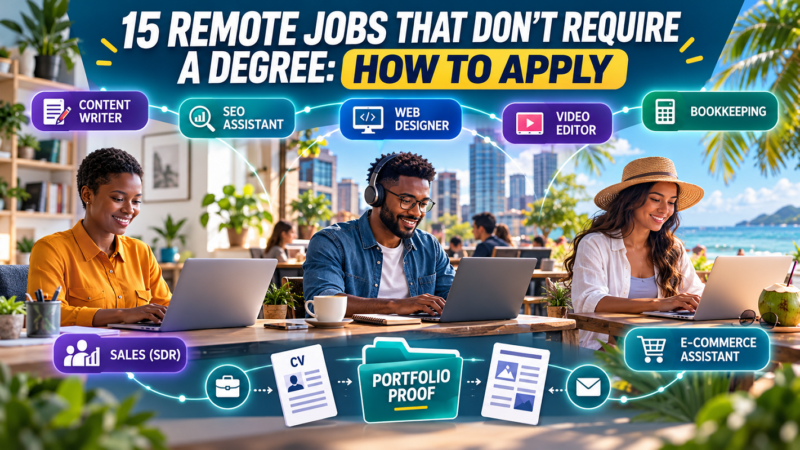
Digital Marketing Jobs for Beginners: Roles and How to Start
Digital marketing jobs for beginners encompass roles like social media specialist, content writer, SEO assistant, email marketing coordinator, and paid ads junior specialist. If you are exploring digital marketing jobs for beginners, you will find that most entry-level positions require practical capabilities in writing, analytics, and platform tools rather than a formal marketing degree.
This guide breaks down each role, outlines the core skills and tools required, highlights free certifications to kickstart your progress, and provides a 90-day action plan to land your first role.
This guide is built for:
- Students and recent graduates exploring digital career options.
- Career changers targeting digital marketing jobs for beginners.
- Complete beginners with little or no marketing experience.
- Job seekers looking for entry-level or remote digital marketing roles.
- Freelancers and side-hustlers looking to master a high-demand skill.
- Small-business owners and operators building out marketing functions.

You do not need a marketing degree to break into this field. Employers hiring for digital marketing jobs for beginners prioritize demonstrable skills, practical portfolio projects, and targeted certifications over traditional academic qualifications.
What Are Digital Marketing Jobs?
Digital marketing jobs involve promoting products, services, or brands through online channels like search engines, social media, email, websites, and mobile apps. Unlike traditional marketing, digital marketing roles focus on strategies that are measurable, scalable, and frequently remote-friendly.
Common entry-level titles include:
- Digital marketing intern or assistant
- Social media specialist
- Content writer or copywriter
- SEO specialist or assistant
- Email marketing coordinator
- Paid ads (PPC) junior specialist
- Digital marketing coordinator
Main Digital Marketing Career Paths for Beginners
Below are some of the most accessible digital marketing roles for beginners, including what each professional does and the skills or qualifications typically required to get started.
Social Media Specialist
- What they do: Create and schedule content, manage community engagement, track performance metrics, and occasionally execute paid social campaigns across platforms like Instagram, TikTok, LinkedIn, and Facebook.
- Beginner fit: High. Startups and small businesses routinely hire junior specialists to manage organic social presence and community building.
- Core skills: Copywriting, basic graphic design (Canva), platform-specific best practices, and analytics interpretation.
- Key tools: Meta Business Suite, Buffer or Later, Canva, and native platform analytics.
Content Writer / Copywriter
- What they do: Produce blog posts, website copy, email newsletters, ad creative, and social captions designed to inform, engage, and convert target audiences.
- Beginner fit: High. Strong foundational writing skills and a dedicated portfolio of sample pieces provide an immediate entry point for freelance or junior roles.
- Core skills: Clear communication, fundamental SEO principles, topic research, and self-editing.
- Key tools: Google Docs, Grammarly, WordPress (or an alternative CMS), and basic keyword research tools.
SEO Specialist (Junior)
- What they do: Optimize website structure and content to improve search engine rankings through targeted keyword research, on-page optimization, and routine technical audits.
- Beginner fit: Moderate. Requires mastering foundational search engine optimization principles, though digital agencies frequently hire juniors to execute on-page optimization tasks.
- Core skills: Keyword intent analysis, on-page SEO best practices, foundational analytics, and close attention to detail.
- Key tools: Google Search Console, Google Analytics, SEMrush or Ubersuggest (free tiers), and basic site auditing tools.
Email Marketing Coordinator
- What they do: Build and deploy email newsletters, configure lifecycle automation sequences (such as welcome series and re-engagement campaigns), and analyze performance metrics like open, click, and conversion rates.
- Beginner fit: Moderate to high. E-commerce brands and SaaS companies actively hire junior coordinators to manage email marketing operations.
- Core skills: Direct-response copywriting, basic layout design, subscriber segmentation, and automation workflow logic.
- Key tools: Mailchimp, HubSpot (Free CRM), Brevo, and Google Sheets.
Paid Ads (PPC) Junior Specialist
- What they do: Configure and manage paid ad campaigns across networks like Google Ads, Meta Ads, and TikTok Ads, monitor ad spend, and optimize targeting to drive conversions.
- Beginner fit: Moderate. Requires comfort with data analysis and experimentation, but official platform certifications and mock campaign builds provide a strong entry path.
- Core skills: Campaign architecture, audience segmentation, budget allocation, and performance analytics.
- Key tools: Google Ads, Meta Ads Manager, Google Analytics, and spreadsheets.
Digital Marketing Coordinator / Generalist
- What they do: Support multi-channel marketing initiatives—spanning social media, email, content, and basic paid campaigns—typically within lean teams, agencies, or startups.
- Beginner fit: High. Ideal for professionals who want broad exposure across multiple disciplines before choosing a specialized track.
- Core skills: Cross-channel execution, project organization, clear communication, and working knowledge of 2 to 3 core marketing channels.
- Key tools: A mix of platform-specific tools, paired with project management platforms like Trello or Notion.
Do You Need a Marketing Degree?
No. Entry-level digital marketing roles prioritize practical skills, recognized certifications, and verifiable portfolio work over formal degrees. When evaluating junior candidates, employers focus on:
Industry-recognized certifications (e.g., Google, Meta, HubSpot)
To validate your skills without spending money, start with these industry-recognized credentials:
- Google Digital Garage / Google Skillshop: Complete Fundamentals of Digital Marketing for a broad overview, followed by specific certifications in Google Analytics and Google Ads Search Certification.
- HubSpot Academy: Take the Inbound Marketing and Content Marketing certifications to master foundational marketing strategies and funnel mechanics.
- Meta Blueprint: Earn the Meta Certified Digital Marketing Associate to prove your baseline proficiency in social media advertising and page management.
Hands-on execution and self-initiated projects that demonstrate real-world capability
Lacking a traditional work history is not a barrier to entry if you can prove your capabilities. Construct a practical portfolio using these self-initiated methods:
- Build a Mock Brand or Blog: Launch a personal website or niche blog focused on a topic you enjoy. Use it to demonstrate content writing, basic on-page SEO execution, and email newsletter deployment using free tools like WordPress and Mailchimp.
- Manage a Pro Bono Account: Offer to run social media or email campaigns for a local business, non-profit, or student organization. Real-world constraints and performance tracking provide the best case studies for interviews.
- Run Simulated Ad Campaigns: Set up mock campaigns within free ad manager test environments or utilize a modest personal budget to test audience targeting and ad copy. Document your hypothesis, setup, and hypothetical or actual results.
- Redesign Existing Assets: Take a local business’s underperforming social media profile, landing page, or email newsletter and build a revamped version. Showcase the “before and after” to highlight your design and copywriting improvements.
Analytical proficiency, including a clear understanding of key performance metrics
Analytical proficiency—including a clear understanding of core performance metrics—is essential for securing digital marketing jobs for beginners. Employers look for candidates who can look beyond creative execution and interpret data to drive decisions. Key competencies include:
- Tracking Key Metrics: Understanding metrics such as Click-Through Rate (CTR), Cost Per Acquisition (CPA), Return on Ad Spend (ROAS), bounce rates, and conversion rates.
- Platform Analytics: Reading native performance dashboards across Google Analytics, Meta Ads Manager, and Google Search Console to identify trends.
- Data-Driven Optimization: Using performance insights to adjust targeting, refine copy, or shift budget allocations to improve campaign ROI.
Agility and speed- specifically the ability to learn and adapt to new tools and platform updates quickly
Agility and speed—specifically the ability to learn and adapt to new tools and platform updates quickly—are critical attributes when pursuing digital marketing jobs for beginners. The digital landscape shifts constantly, with search engine algorithms updating, social media features changing, and new software tools emerging regularly.
Employers hiring for entry-level roles value candidates who can:
- Embrace Continuous Learning: Rapidly adopt new software, AI tools, and platform interfaces without extensive hand-holding.
- Pivot Quickly: Adjust strategies when campaign data indicates a shift in user behavior or platform policy.
- Troubleshoot Independently: Research solutions and master new workflows autonomously when faced with technical hurdles.
While a formal business or marketing degree provides a theoretical foundation, it is not a strict requirement for success in digital marketing jobs for beginners. Modern employers evaluate candidates primarily on execution capability, validated through practical portfolio projects, recognized certifications, and a demonstrated aptitude for data and rapid adaptation. By focusing on high-leverage skills rather than traditional credentials, you can bypass entry barriers and break into the industry on your own terms.
Essential Skills and Tools for Beginners
To land entry-level digital marketing jobs, you need a balance of foundational competencies and platform familiarity.
Core Skills
- Writing and Communication: Crafting clear, concise copy tailored for social media posts, email newsletters, and ad creatives.
- Basic Analytics: Monitoring and interpreting performance metrics such as impressions, clicks, Click-Through Rate (CTR), and conversion rates.
- Platform Literacy: Operating comfortably within social networks, ad management dashboards, and email marketing software.
- Time Management: Balancing competing priorities, multi-channel tasks, and tight campaign deadlines.
- Curiosity and Learning Agility: Adapting quickly to industry shifts, algorithm updates, and emerging tools.
Essential Tools to Learn
- Content & Design: Canva, Google Docs, WordPress.
- Social Media & Email: Meta Business Suite, Buffer, Mailchimp.
- Analytics & SEO: Google Analytics, Google Search Console, SEMrush (Free tier).
Starter Tool Stack (Free or Low-Cost)
To build practical experience for digital marketing jobs for beginners without incurring heavy software costs, master this foundational tool stack. Start with one tool per category to avoid tool fatigue and build baseline competency.
| Category | Tool | Primary Use Case |
| Analytics | Google Analytics, Google Search Console | Track website traffic, user behavior, and organic search performance. |
| Social Media | Meta Business Suite, Buffer (Free plan) | Schedule posts and analyze organic social performance. |
| Design | Canva | Create graphics for social media, ad creatives, and email newsletters. |
| Mailchimp (Free tier), HubSpot CRM | Design, send, and automate email marketing campaigns. | |
| SEO | Google Keyword Planner, Ubersuggest | Conduct keyword research and generate content ideas. |
| Paid Ads | Google Ads, Meta Ads Manager | Set up, monitor, and optimize paid acquisition campaigns. |
| Writing | Google Docs, Grammarly | Draft, review, and refine copy across all marketing channels. |
Beginner-Friendly Certifications and Courses
Earning free or low-cost certifications is one of the most effective ways to signal commitment, bridge experience gaps, and build structured baseline knowledge when targeting digital marketing jobs for beginners.
Recommended Free Certifications
- Google Digital Garage: Fundamentals of Digital Marketing — Provides a comprehensive, high-level overview of digital marketing channels and online strategy.
- Google Analytics 4 (GA4) Certification: Essential for mastering data tracking, user behavior analysis, and performance reporting.
- Google Ads Certifications (Search, Display, Video): Validates technical competency in setting up, managing, and optimizing paid search and display campaigns.
- Meta Blueprint Courses: Free training modules focused on organic management and paid advertising across Facebook and Instagram.
- HubSpot Academy Certifications: Industry-standard courses covering Digital Marketing, Content Marketing, Email Marketing, SEO, and Inbound Marketing.
These certifications are widely recognized by employers hiring for entry-level roles and provide the practical, foundational knowledge needed to execute real-world tasks.
How to Build a Portfolio Without Experience
Lacking a traditional work history should not stop you from pursuing digital marketing jobs for beginners. You can bridge the experience gap and prove your execution capability by building a self-directed portfolio using these four strategies:
Create Mock Projects
Develop high-quality sample assets and campaigns for hypothetical or local brands to demonstrate your tactical skills:
- A 30-day social media content calendar complete with visual mockups, captions, and hashtag strategies.
- A sample email newsletter and welcome automation sequence mapped out in a clean document or email builder.
- An SEO-optimized blog post featuring target keyword research, heading hierarchies, and internal linking structures.
- A mock paid acquisition campaign outlining audience targeting parameters, ad copy variations, and budget allocation strategies.
Offer Free or Low-Cost Help
Real-world constraints provide the best proof of competence. Gain practical experience by:
- Assisting a local business, a founder’s startup, or a nonprofit with a single marketing channel (such as managing their Instagram presence or building an email list).
- Documenting your process, the challenges faced, and the resulting metrics to frame the project as a formal case study.
Document Your Learning Journey
Publicly sharing your skill development builds authority and acts as a passive portfolio:
- Publish breakdowns of successful marketing campaigns, ad teardowns, or platform updates.
- Translate solutions you discover while studying into practical content formats, such as LinkedIn carousels, short-form video scripts, or detailed tutorial threads.
Organize Your Portfolio
Keep your presentation clean, structured, and easy for hiring managers to review. Host your portfolio on a simple website (using Notion, Carrd, or WordPress) or a well-organized Google Drive folder divided into these clear sections:
- Case Studies: Real-world or pro bono projects detailing your strategy, execution, and outcomes.
- Strategy Samples: Content calendars, audience personas, and campaign outlines.
- Content Samples: Written blog posts, website copy, and newsletter designs.
- Ad Copy and Scripts: Paid ad variations, creative briefs, and visual hooks.
- Results and Metrics: Screenshots of traffic growth, engagement increases, or simulated campaign metrics.
Common Mistakes Beginners Make
When targeting digital marketing jobs for beginners, avoiding early strategic missteps can significantly accelerate your learning curve and employability:
- Trying to learn everything at once: Trying to master SEO, paid ads, email marketing, and social media simultaneously leads to burnout. Focus deeply on a single channel to build competence before expanding.
- Chasing certifications without practice: Collecting badges without building projects leaves you unprepared for interviews. Pair every course or certification with hands-on application.
- Ignoring analytics: Relying solely on intuition without tracking data limits your effectiveness. Modern employers prioritize data literacy and expect junior marketers to measure and explain performance metrics.
- Expecting instant results: Expecting campaigns to convert overnight leads to premature pivots. Digital marketing relies on systematic testing, iteration, and optimization over weeks and months.
- Copying strategies without context: Blindly replicating tactics used by major brands rarely works for smaller budgets or different audiences. Always adapt strategies to fit your specific target audience, objectives, and resource constraints.
Salary and Job Market Outlook (2025–2026)
When pursuing digital marketing jobs for beginners, understanding compensation benchmarks helps you set realistic expectations. Entry-level salaries vary by geography:
- United States: $40,000–$65,000 annually for 0–2 years of experience.
- United Kingdom: £24,000–£28,000 for junior roles.
- Remote Global Roles: $40,000–$65,000 USD equivalent, depending on the company and regional cost adjustments.
Compensation also varies by specialization: technical roles like PPC and data analytics tend to trend higher at the entry level, while social media and content roles often start slightly lower but scale rapidly with demonstrated experience. Overall market demand remains robust for junior professionals skilled in SEO, paid media, content creation, and marketing automation.
Practical 90-Day Plan to Land Your First Role
To break into the industry efficiently, execute this structured 90-day roadmap:
Month 1: Learn and Certify
- Complete core certifications: Finish 2 to 3 industry-recognized credentials (such as Google Digital Garage, HubSpot Digital Marketing, and Meta Blueprint).
- Master foundational tools: Pick one primary tool per category—such as Google Analytics for data, Canva for creative assets, Mailchimp for email, and Meta Business Suite for social management.
Month 2: Build Portfolio Projects
- Execute mock projects: Build your portfolio by creating a 30-day social media calendar, a complete email welcome sequence, and an SEO-optimized blog post.
- Secure real-world practice: Offer pro bono help to a local business, friend’s startup, or nonprofit to manage a single channel, then document your process as a case study.
Month 3: Apply and Network
- Optimize your profiles: Update your LinkedIn profile and resume to highlight your new certifications, tool proficiency, and portfolio links.
- Launch an outreach campaign: Apply consistently to 5–10 entry-level listings weekly, targeting internships, junior specialist roles, and marketing coordinator positions.
- Engage with the community: Participate actively in professional digital marketing communities on LinkedIn and Reddit to uncover unlisted opportunities and build industry connections.
Can I start digital marketing with no experience?
Yes. Many professionals enter the field with zero prior background by leveraging free online certifications, self-initiated portfolio projects, and entry-level internships. Employers hiring for digital marketing jobs for beginners prioritize practical execution, technical aptitude, and proof of work over traditional degrees.
Which digital marketing role is best for complete beginners?
Social media specialist and content writer roles are generally the most accessible starting points. They rely heavily on foundational communication skills and basic platform familiarity, allowing you to practice and build a portfolio using free, readily available tools.
How long does it take to get a digital marketing job?
With consistent, focused effort—roughly 10 to 15 hours per week dedicated to learning, certification, and project building—most motivated beginners can successfully land an internship, junior specialist role, or marketing coordinator position within 3 to 6 months.
Is digital marketing a good career?
Yes. Market demand remains exceptionally strong for skilled practitioners, particularly those specializing in technical disciplines like SEO, paid acquisition, content strategy, and marketing automation. Furthermore, the industry offers robust remote work options, flexible career tracks, and clear pathways for rapid upward mobility.
In Conclusion
Digital marketing offers several accessible career paths for beginners, including social media management, content marketing, SEO, email marketing, paid advertising, and digital marketing coordination.
A traditional marketing degree is not always required. Employers often place greater value on relevant skills, recognized certifications, and a portfolio that demonstrates what you can do. You can begin with free or affordable courses from reputable providers such as Google, Meta, and HubSpot, then apply what you learn through mock campaigns, personal projects, or work for a small business or nonprofit organization.
Rather than attempting to master every area at once, choose one career path that matches your interests and strengths. Focus on developing the essential skills and tools for that role before gradually expanding into other areas.
A structured 90-day plan can help you move from learning to practical experience and job applications. Divide your journey into three stages: learning the fundamentals, building portfolio projects, and applying for suitable entry-level opportunities.
Your next step
Choose one digital marketing role that interests you, begin a relevant free certification this week, and plan one practical project you can include in your portfolio.