How to Avoid Fake Remote Tech Jobs and Recruitment Scams
Finding a legitimate remote tech job can open doors to flexible work, international teams, and significant career advancement. However, the rapid rise of distributed hiring has also given rise to sophisticated recruitment scams.
Fraudsters now systematically exploit LinkedIn, job boards, email, WhatsApp, Telegram, and social media to post illegitimate openings. Knowing how to avoid fake remote tech jobs is no longer just a precaution—it is an essential career management skill.
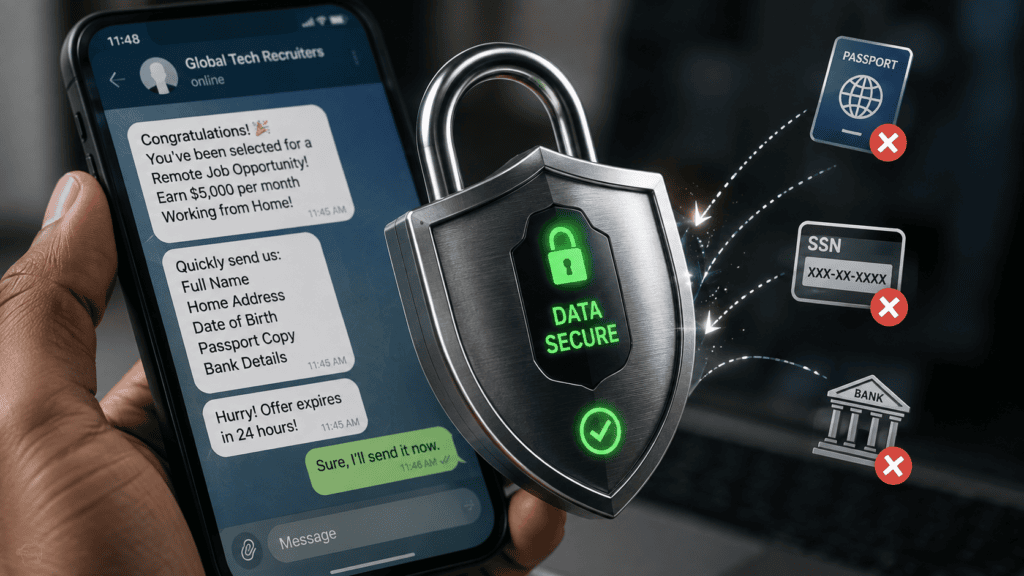
To avoid fake remote tech jobs and safeguard your identity and personal finances, you must never evaluate an opportunity based solely on a polished job description or brand logo. Scammers frequently impersonate reputable organizations or fabricate entire recruitment agencies, using scripted text interviews, counterfeit employment contracts, and an artificial sense of urgency to bypass standard candidate skepticism.
Whether you are an entry-level candidate, a senior developer, a freelancer, or an international applicant, learning to avoid fake remote tech jobs requires an active, system-based verification process.
This guide provides an actionable breakdown of red flags, common scam architectures, and a step-by-step verification protocol to ensure every opportunity you pursue is genuine.
Common Warning Signs
A single warning sign does not necessarily mean a job opportunity is fraudulent. Legitimate employers may occasionally have unusual recruitment processes. However, when several red flags appear together, you should be cautious.
Before sharing personal information, sending money, clicking unfamiliar links, or accepting an offer, take time to independently verify the employer, recruiter, and job opportunity.
The pay is unrealistic
Be cautious when a company offers an unusually high salary for simple work, no experience, or only a few hours per day. Scammers often use attractive compensation to encourage quick decisions and bypass critical thinking. Learning how to spot inflated financial offers is one of the most effective ways to avoid fake remote tech jobs.
Compare the advertised role with similar positions on reputable industry job boards and the company’s official careers page. Consider the full scope of the role—including core responsibilities, required technical experience, location requirements, contract type, and payment method—not just the headline salary figure.
To safely evaluate compensation and avoid fake remote tech jobs, follow these verification standards:
- Benchmark against real market data: Cross-reference salary figures on trusted compensation platforms like Glassdoor, Levels.fyi, or Payscale. If an entry-level data entry or basic support role offers $70/hour without requiring specialized skills or interviews, it is almost certainly a scam.
- Watch for non-standard payment methods: Legitimate tech employers issue payments via direct deposit or verified payroll systems. Be extremely wary of offers promising payment via wire transfer, cryptocurrency (such as USDT or Bitcoin), checks, or gift cards.
- Evaluate effort versus reward: High-paying remote tech positions always demand proven technical competencies, specialized skills, or strategic ownership. Any opening offering executive-level compensation for a couple of hours of generic task completion is a setup to harvest data or solicit upfront fees.
You must pay to get hired
A legitimate employer will never require you to pay a recruitment fee, activation fee, training deposit, or security payment before starting work. Demanding candidate funds is the single most definitive indicator of fraudulent recruitment; recognizing these financial red flags is critical to avoiding fake remote tech jobs.
Be especially careful with requests to pay upfront for:
- Registration or onboarding: Demanding payment to set up an employee profile or access an internal candidate portal.
- Background checks: Forcing you to pay for screening through an unverified, third-party vendor site designed to harvest credit card details.
- Mandatory equipment: Requesting funds for laptops, home office gear, or testing setups—even if they promise a future reimbursement check.
- Software licenses or tools: Requiring candidates to purchase proprietary software, domain access, or account keys to start working.
- Cryptocurrency deposits: Instructions to deposit crypto into a digital wallet or complete blockchain verification steps.
- Compulsory certifications: Forcing you to buy an unaccredited course or certificate to qualify for the position.
The Federal Trade Commission (FTC) maintains a clear rule for job seekers: never pay money to secure employment, purchase work supplies directly from a recruiter, or receive a paycheck. If an opportunity requires any upfront payment, walk away immediately to avoid fake remote tech jobs designed to drain your account.
You receive an unexpected message
Scammers frequently initiate contact directly with generic, high-pressure messages across text, email, or messaging apps. Receiving an unsolicited job offer is one of the most common early signals in recruitment fraud, and learning how to filter these initial contacts is vital to avoid fake remote tech jobs.
A typical outreach scam often looks like this:
“Your resume was reviewed and shortlisted for an urgent, high-paying remote opportunity. Contact our hiring manager on Telegram or WhatsApp immediately to start your interview.”
While cold outreach from legitimate recruiters does happen on platforms like LinkedIn, standard corporate recruiters will never push you to off-platform messaging apps to start a hiring process. The FBI explicitly warns job seekers to exercise extreme caution when contacted out of the blue about lucrative work-from-home positions.
To protect yourself and avoid fake remote tech jobs originating from unsolicited messages:
- Verify the sender’s domain: Inspect the email header. Legitimate internal recruiters send messages from verified company domains (
name@company.com), not free email services (@gmail.com,@outlook.com) or lookalike domains (@company-careers-hr.com). - Cross-reference the recruiter on LinkedIn: Search for the person claiming to reach out. Check if they have an active profile associated with the official company page, real connections, and consistent work history.
- Confirm the job exists independently: Open a separate browser tab, navigate directly to the target organization’s official careers portal, and search for the specific role or requisition ID before responding.
The interview happens only through chat
A messaging-app interview is not absolute proof of fraud. Some small startups use informal messaging for initial outreach, and connectivity or accessibility needs can occasionally shape how an interview is conducted. However, avoiding face-to-face interaction or structured evaluation remains a primary tactic used by fraudsters, making interview format scrutiny a critical step to avoid fake remote tech jobs.
Be exceptionally cautious when:
- There is no video, phone, or structured interview: The process relies entirely on text messages, questionnaires, or automated chat scripts.
- The “interviewer” dodges specific questions: They avoid explaining the core technical architecture, team structure, or daily responsibilities of the role.
- The questions are generic and superficial: Questions focus on basic administrative details rather than testing your actual technical capabilities or problem-solving skills.
- You receive an immediate job offer: You are “hired” within minutes or hours of submitting a text questionnaire without any rigorous screening.
- Communication is restricted to end-to-end messaging apps: The recruiter insists that all official correspondence remain strictly on WhatsApp, Telegram, or Signal instead of corporate channels.
- You are isolated from the rest of the organization: You are explicitly instructed not to reach out to HR, company executives, or potential team members directly.
A genuine hiring process will always provide sufficient transparency regarding the team, reporting hierarchy, work expectations, and compensation structure. Insisting on verified video calls, official email correspondence, and multi-stage technical evaluations is one of the most reliable strategies to avoid fake remote tech jobs.
The email domain looks wrong
Always inspect the complete sender email address, not just the display name shown in your inbox. Scammers routinely configure display names like “Google HR” or “Meta Recruitment” while sending communications from disposable webmail accounts or spoofed lookalike domains. Catching these domain discrepancies is a core skill needed to avoid fake remote tech jobs.
Look closely for subtle domain anomalies, including:
- Typo-squatted domains: Subtle misspellings designed to mimic legitimate brands (e.g.,
@micros0ft.comor@amazn-careers.com). - Extra characters or hyphens: Unofficial additions to an established corporate domain (e.g.,
@stripe-jobs.cominstead of@stripe.com). - Irrelevant country-code domains: Unusual top-level domains used by a company claiming to operate in a different jurisdiction.
- Free email accounts: Requests coming from generic
@gmail.com,@outlook.com, or@yahoo.comaddresses for a supposedly well-funded tech enterprise. - Mismatched reply-to addresses: Headers where the “Reply-To” field directs your response to a completely different email address than the sender.
Legitimate businesses frequently partner with external staffing agencies, so an agency domain is not automatically a red flag. However, to avoid fake remote tech jobs, you should independently confirm that the recruitment agency is listed on the hiring company’s official site or verify the recruiter’s credentials through direct, primary contact channels before sharing personal details.
The recruiter creates pressure
Urgency is a psychological manipulation tactic designed to bypass analytical thinking. Scammers deliberately create artificial high-pressure situations, claiming you must send identity documents, pay money, or sign an offer immediately because “only one position remains.” Recognizing high-pressure tactics is crucial if you want to avoid fake remote tech jobs.
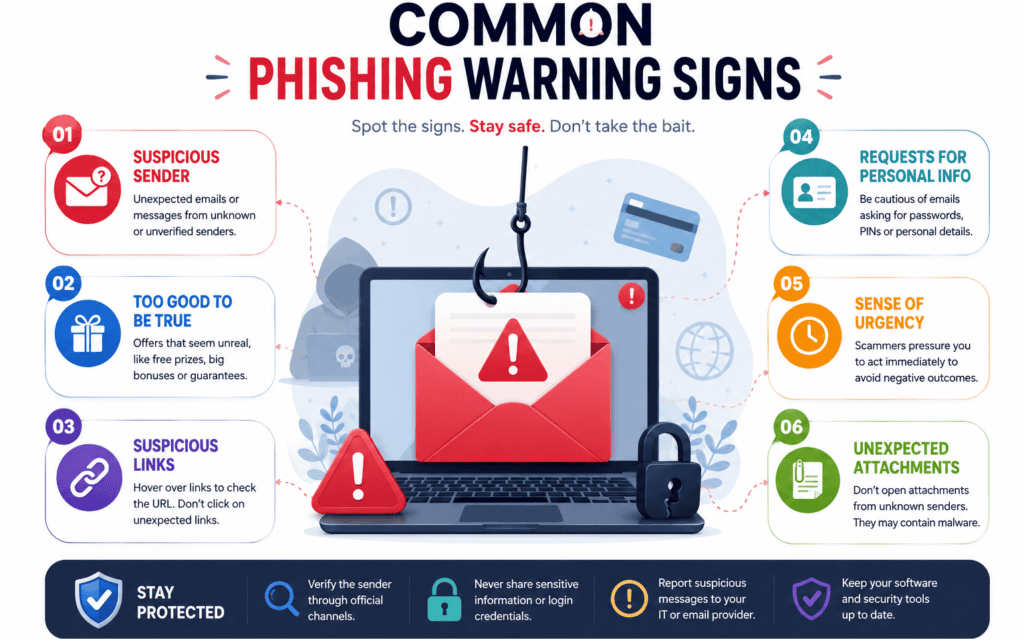
Pause and disengage whenever a recruitment contact uses statements like:
- “Reply within one hour or lose the position.”
- “Do not discuss this offer with anyone else.”
- “Validating this offer through HR will cause it to be revoked.”
- “Pay the onboarding deposit today to secure your equipment allocation.”
- “Send your banking details and tax identity documents before the initial interview.”
The Cybersecurity and Infrastructure Security Agency (CISA) explicitly identifies high-pressure urgency, unsolicited requests for sensitive financial details, and untrusted links as core indicators of social engineering attacks.
Legitimate employers grant candidates adequate time to evaluate employment contracts, consult advisors, and perform due diligence. Halting communication when faced with aggressive timelines is one of the most reliable ways to avoid fake remote tech jobs designed to exploit panicked decision-making.
You are asked for sensitive information too early
Legitimate employers eventually require specific documentation for onboarding, tax setup, immigration clearance, and legal identity verification. However, the timing, rationale, and transfer methods are critical factors.
Sharing sensitive credentials before a formal, verified offer is extended exposes you to identity theft, financial fraud, and unauthorized account access—making strict data privacy standards essential to avoid fake remote tech jobs.
Never transmit sensitive records simply because a recruiter claims you have been “shortlisted” or need an “initial background check.” Exercise extreme caution if you are asked to provide:
- Government identity numbers: Social Security Numbers (SSN), National Insurance numbers, or national ID details prior to contract execution.
- Identity documents: High-resolution passport scans, driver’s licenses, or national ID cards via unencrypted email or chat apps.
- Financial credentials: Credit/debit card numbers, PINs, or online banking access codes.
- Authentication keys: Passwords, password reset links, or One-Time Passwords (OTPs) sent to your phone or email.
- Verification media: Proof-of-address utility bills, biometric data, or “selfies holding your ID card” (commonly used by fraudsters to bypass crypto exchange or financial account security).
Always question early data requests: ask why the information is required at that specific hiring stage, how it will be stored, and what encryption standards protect it.
Never share account passwords or authentication codes with anyone claiming to be a recruiter. Establishing firm boundaries around your personal information is one of the most effective measures to avoid fake remote tech jobs operating as identity-harvesting operations.
Step-by-Step Practical Verification Protocol
To systematically audit opportunities and avoid fake remote tech jobs, run every prospective employer through this four-step verification sequence before engaging or sharing data:
- Cross-Reference the Job Posting: Verify primary listing sources.
Navigate directly to the company’s official careers portal in a separate browser window. Confirm the exact Job Title, Requisition ID, and Location exist on their official domain rather than relying exclusively on third-party job boards or unsolicited messages.
- Validate the Recruiter’s Identity: Confirm sender authenticity.
Locate the individual outreach profile on LinkedIn. Verify that their listed employer matches the hiring company, check their mutual connections, and inspect the sender’s full email address header to ensure the sending domain strictly matches the company’s primary corporate URL (@company.com).
- Audit Company Infrastructure: Inspect domain registration records.
Run the company’s primary domain through a public Whois lookup tool. Be wary of domains registered only a few days or weeks prior, hidden registrant details, or web pages that lack clear physical address information, terms of service, or verifiable team members.
- Enforce Secure Communication Channels: Insist on official evaluation methods.
Require all interviews to take place via structured corporate video tools (e.g., Zoom, Google Meet, Microsoft Teams) or verified corporate email channels. Refuse high-pressure requests to move the entire hiring workflow to end-to-end encrypted messaging platforms like Telegram or WhatsApp.
The job involves receiving or moving money
A legitimate technology position will never require you to use your personal bank account to receive company funds, process client invoices, purchase gift cards, forward wire transfers, or convert digital assets.
Positions framed as “financial processing,” “payment optimization,” or “crypto transfer assistance” are dangerous, illegal operations, and identifying them is critical to avoid fake remote tech jobs.
Engaging in these financial workflows exposes you to severe personal liabilities:
- Unwitting money laundering: Receiving illicit or stolen funds into your personal account and forwarding them makes you a “money mule,” exposing you to criminal prosecution and asset seizure.
- Irreversible fraud losses: Scammers often issue fraudulent checks or fake ACH transfers, instruct you to keep a “commission,” and ask you to forward the rest via crypto or wire transfer. When the initial transfer bounces days later, your bank holds you personally liable for the full deficit.
- Task-based optimization scams: The FBI has explicitly warned candidates about work-from-home schemes that require users to complete repetitive “app rating” or “data optimization” tasks, only to demand cryptocurrency deposits to “unlock” higher pay tiers or withdraw earned commissions.
A legitimate employer manages payroll, vendor payments, and client billing through secure, corporate financial institutions. Any requirement to route company funds through your private accounts is an immediate signal to disengage and avoid fake remote tech jobs designed to exploit job seekers for financial crimes.
Summary Checklist: How to Avoid Fake Remote Tech Jobs
Use this quick-reference checklist to audit any remote tech opportunity before accepting an offer or handing over personal data:
- [ ] Salary matches market rates: Compensation aligns with verified data on Glassdoor or Levels.fyi for the required skill level.
- [ ] Zero upfront payments: No demands for registration fees, training deposits, mandatory background checks, or equipment purchases.
- [ ] Verified corporate email: Messages originate from official company domains (
@company.com), not free webmail or typo-squatted domains. - [ ] Structured evaluation: The hiring process includes live video interviews or multi-stage technical assessments—not just text chat on Telegram or WhatsApp.
- [ ] Data privacy respected: Sensitive identity records (SSN, passport scans, banking details) are requested only after a formal, verified contract is signed.
- [ ] Clean financial boundaries: The role does not involve handling corporate funds, cashing checks, buying gift cards, or processing cryptocurrency transfers.
The job description is vague
A genuine technology role clearly defines core technical competencies, daily responsibilities, tool stacks, reporting lines, and expected deliverables. Broad, non-specific job descriptions that fail to explain what the candidate will actually build or manage are primary red flags used by scammers; identifying these operational gaps is essential to avoid fake remote tech jobs.
Exercise extreme caution if a listing:
- Uses generic titles with ambiguous duties: Advertises positions like “online assistant,” “data package evaluator,” or “digital optimization specialist” without defining technical daily workflows.
- Promises guaranteed income for low-effort tasks: Guarantees fixed daily or hourly compensation for basic activities like clicking links, reviewing apps, or “optimizing” e-commerce products.
- Hides the employer’s true identity: Fails to name the hiring organization or directs applicants to confidential web forms without corporate branding.
- Contains contradictory details or copied prose: Features generic job copy pasted from unrelated templates, conflicting location requirements, or mismatched skill prerequisites.
- Bypasses standard application flows: Lacks a formal ATS application link or HR submission process, routing candidates directly to a single recruiter’s private messaging handle.
- Claims zero skills or experience are required: Assures applicants that no prior technical background, interview process, or professional references are needed for high-paying roles.
While entry-level tech roles may involve straightforward administrative tasks, vague job requirements paired with guaranteed high pay and unconventional payment channels are clear indicators of fraud. Demand transparent role responsibilities and verifiable performance expectations to avoid fake remote tech jobs that operate as fronts for task scams or credential harvesting.
The company exists, but the opportunity does not
Establishing that a corporate entity is real, well-known, or financially solvent is not enough to confirm a job posting is legitimate. Scammers routinely clone public branding—stealing official logos, downloading actual staff profile photos from LinkedIn, mirroring career site copy, and referencing real executive names—to construct convincing fraudulent campaigns.
The Federal Trade Commission (FTC) has explicitly warned candidates that bad actors exploit brand recognition to post fake job openings on major recruitment platforms.
Validating the brand name is only step one; you must independently verify the specific vacancy and recruiter to avoid fake remote tech jobs.
To protect yourself against company impersonation schemes:
- Use primary communication channels: Never accept contact details provided inside an unsolicited message or email. Locate the company’s official corporate switchboard or general HR email from their primary website and reach out directly to confirm if the recruiter actually works for them.
- Audit the ATS job board URL: Ensure the application link directs to a verified applicant tracking system (e.g.,
boards.greenhouse.io/companyname,jobs.lever.co/companyname, or[company.com/careers](https://company.com/careers)). Be suspicious of generic Google Forms, Typeforms, or standalone domain redirect pages. - Confirm the requisition ID: Search the company’s official internal careers portal for the exact job title and reference code. If a recruiter contacts you about a software engineering role that does not exist on the corporate careers page, disengage immediately.
- Verify recruiter employment status: Search for the person on LinkedIn and inspect their activity history. Real internal recruiters consistently post company updates, share official job links, and maintain extensive secondary networks within that organization.
Establishing double-blind verification—contacting the employer through a self-sourced, official channel rather than relying on incoming links—is the single most definitive way to avoid fake remote tech jobs driven by corporate impersonation.
Step-by-Step Practical Framework: How to Verify a Remote Job
The single most effective way to protect yourself is to verify every opportunity through channels that the recruiter did not provide. Using independent, double-blind verification methods ensures you can confidently evaluate opportunities and avoid fake remote tech jobs.
[ Unsolicited Outreach / Job Posting ]
                 │
                 ▼
     [ Step 1: Careers Page Audit ]
        └─► Match Requisition & ATS Domain
                 │
                 ▼
     [ Step 2: Recruiter Identity Check ]
        └─► Verify Domain & LinkedIn History
                 │
                 ▼
     [ Step 3: Domain & URL Inspection ]
        └─► Check Registrant Age & Subdomains
                 │
                 ▼
     [ Step 4: Multi-Source Entity Audit ]
        └─► Cross-reference Legal Registration
                 │
                 ▼
     [ Step 5: Direct Technical Screening ]
        └─► Ask Structural & Operational Questions
                 │
                 ▼
     [ Step 6: Contract & Offer Validation ]
        └─► Confirm via Independent HR ChannelCode language: CSS (css)
Step 1: Find the Official Careers Page
Open a new browser tab and search for the company yourself. Never rely on the link in a recruiter’s message as your sole source of truth.
Navigate to the company’s official website and locate its careers or jobs portal. Audit the following elements:
- Role existence: Confirm the specific vacancy is listed on the site.
- Consistency: Verify that the job title, location, skill prerequisites, and responsibilities match the recruiter’s pitch.
- Domain alignment: Ensure the application process routes through the company’s verified domain or an established Applicant Tracking System (ATS) like Greenhouse, Lever, or Workday.
- Contact legitimacy: Confirm the company provides verifiable HR support channels.
Note: A missing vacancy does not guarantee fraud, as some organizations use private ATS links or close listings quickly upon receiving sufficient applications. However, an unlisted role should immediately prompt further verification to avoid fake remote tech jobs.
Step 2: Verify the Recruiter Independently
Search for the recruiter’s name on the company’s official site and professional networks like LinkedIn. Cross-reference their credentials:
- Official job title: Verify their role matches their claimed authority to hire.
- Employment tenure: Look for consistent employment history and recent organizational activity.
- Email header check: Confirm that outreach comes directly from an official corporate email (
@company.com). - Secondary connections: Check if they share mutual connections with verifiable employees at the organization.
Do not trust a profile merely because it features a corporate logo, thousands of followers, or reshared corporate posts. Always reach out to the organization through an independently sourced contact number or general HR email to confirm the recruiter’s status.
Step 3: Inspect the Website and URL
Examine the domain closely before clicking any link. A secure padlock icon ($HTTPS$) only proves that your connection to the site is encrypted—it does not prove the website itself is legitimate.
Audit links for common phishing mechanics:
- Typo-squatting: Look for misspelled brand names or altered characters (e.g., swapping
mforrn). - Lookalike domains: Watch for added words or hyphens (e.g.,
company-jobs-careers.com). - Shortened URLs: Avoid clicking unverified shortened links (
bit.ly,tinyurl) sent via direct messages. - Unusual redirects: Be alert if a URL immediately redirects to a different domain.
- Software download requests: Immediately exit any site prompting you to install unverified software, executables, or browser extensions to proceed.
The Cybersecurity and Infrastructure Security Agency (CISA) warns that malicious outreach frequently relies on bad links and high-pressure redirects. If you need to evaluate a link, copy the text without opening it and run it through a reputable URL-checking service.
Step 4: Research the Company from Multiple Sources
Gather multi-source intelligence on the hiring entity to verify its operational footprint:
- Legal status: Confirm their legal business registration and corporate filings.
- Corporate location: Verify their physical office address or official registered agent.
- Executive leadership: Confirm their executive team through public regulatory filings and news coverage.
- Domain age: Check WHOIS registration records to see if the domain was created recently.
Treat review platforms with caution. Positive glassdoor or Trustpilot reviews can be manipulated, and small startups may have a limited public footprint. Use third-party research as one variable in a broader audit to help avoid fake remote tech jobs.
Step 5: Ask Specific Operational Questions
Legitimate hiring managers and internal recruiters welcome detailed operational questions. During initial conversations, ask:
- “What is the exact legal name of the employing entity for this contract?”
- “What is the organizational hierarchy and who does this role report to?”
- “Can you walk me through the complete, multi-stage interview schedule?”
- “Which official company web page or ATS platform lists this requisition ID?”
- “Are you an internal recruiter or an external staffing agency partner?”
Scammers routinely become evasive, aggressive, or inconsistent when pressed for specific operational and legal details.
Step 6: Verify the Offer Before Sending Documents
Digital offer letters and contracts can easily be forged. Before signing or returning sensitive tax forms, inspect the document for:
- Exact legal entity name: Ensure the contract references the legally registered corporate name.
- Physical business address: Confirm the company address matches public corporate registries.
- Clear terms: Verify that compensation structures, job expectations, and benefits are explicitly stated without vague conditions.
- Realistic start timelines: Be cautious of contracts demanding an immediate start without standard background or reference checks.
Never accept a PDF, digital signature, or company logo as proof of legitimacy on its own. Validate the contract directly with the company’s central HR department via an independently located communication channel to successfully avoid fake remote tech jobs.
Quick Decision Checklist: How to Avoid Fake Remote Tech Jobs
Run through this checklist before accepting an offer, signing a contract, or sharing personal data:
| Evaluation Area | Safer Sign (Legitimate) | Warning Sign (Potential Scam) |
| Company | Vacancy appears on the official careers page or verified ATS portal. | Company cannot be verified independently via official registries. |
| Recruiter | Identity, tenure, and employment status can be confirmed on LinkedIn. | Profile is brand new, uses stock photos, generic text, or copied details. |
| Email Address | Sender matches a verified corporate domain (@company.com). | Uses a free webmail account (@gmail.com) or lookalike domain (@cornpany.com). |
| Interview Format | Structured evaluation with technical, behavioral, or live video stages. | Instant hiring based solely on text chat, questionnaires, or messaging apps. |
| Payment Terms | Zero cost to apply, interview, onboard, or receive equipment. | Demands fees, deposits, training payments, crypto transfers, or gift cards. |
| Job Duties | Clear technical responsibilities, specific tool stacks, and measurable outcomes. | Vague “optimization,” clicking tasks, or guaranteed pay for low-effort work. |
| Information | Sensitive identity/tax details requested only after a verified offer. | SSN, passport, banking logins, or OTPs requested early in the process. |
| Communication | Open channels; you can contact HR or team members independently. | Recruiter explicitly discourages or forbids independent verification. |
| Timing & Urgency | Professional timelines that allow adequate time to review contracts. | Aggressive pressure to accept, pay, or reply within hours. |
The Golden Rule: If you cannot independently verify the employer through primary channels, disengage immediately. A genuine tech opportunity will always survive reasonable verification and standard candidate due diligence.
Emergency Response: What to Do If You Engage with a Fake Job
If you suspect an offer is fraudulent or a recruiter avoids verification, stop communicating immediately. Do not send funds, click additional links, open email attachments, or share sensitive identity records.
If you have already transmitted funds, downloaded files, or disclosed personal data, execute these security steps immediately:
Secure Your Accounts & Devices
- Lock account access: Change passwords on compromised accounts, prioritizing your primary email and password managers.
- Revoke active sessions: Force a sign-out on all active sessions across web services and terminate unrecognized app permissions.
- Enable Multi-Factor Authentication (MFA): Re-anchor account security using hardware keys or authenticator apps rather than standard SMS codes.
- Audit local devices: If you downloaded files or installed software, disconnect from local Wi-Fi immediately and execute a full endpoint anti-malware scan.
Protect Financial Assets
- Notify payment providers: Contact your bank or credit card company immediately to report unauthorized transactions, request charge reversals, or place security freezes on affected accounts.
- Preserve audit trails: Document all transaction receipts, bank statements, cryptocurrency wallet addresses, and transfer confirmations.
Report the Incident to Regulatory Authorities
File formal reports with local law enforcement, cybercrime units, and consumer protection agencies. Provide complete evidence packages, including full email headers, chat transcripts, phone numbers, domain URLs, and payment records.
- In Nigeria:
- Cybercrime: Submit an incident file to the Economic and Financial Crimes Commission (EFCC) or report directly via the Nigeria Police Force National Cybercrime Centre portal (
nccc.npf.gov.ng/ereport). - Data & Identity Compromise: Report identity theft or privacy breaches to the Nigeria Data Protection Commission via the NDPC breach portal (
services.ndpc.gov.ng/breach).
- Cybercrime: Submit an incident file to the Economic and Financial Crimes Commission (EFCC) or report directly via the Nigeria Police Force National Cybercrime Centre portal (
- In the US & Canada: File reports with the Federal Trade Commission (FTC), the FBI’s Internet Crime Complaint Center (IC3), or the Canadian Anti-Fraud Centre (CAFC).
- In the UK & EU: Report the breach to Action Fraud (UK) or your national Europol-aligned cybercrime authority.
Critical Mistakes to Avoid During Your Search
Job seekers often fall into predictable behavioral traps when evaluating opportunities. Recognizing these false assumptions is essential to maintaining vigilant operational security and avoiding fake remote tech jobs.
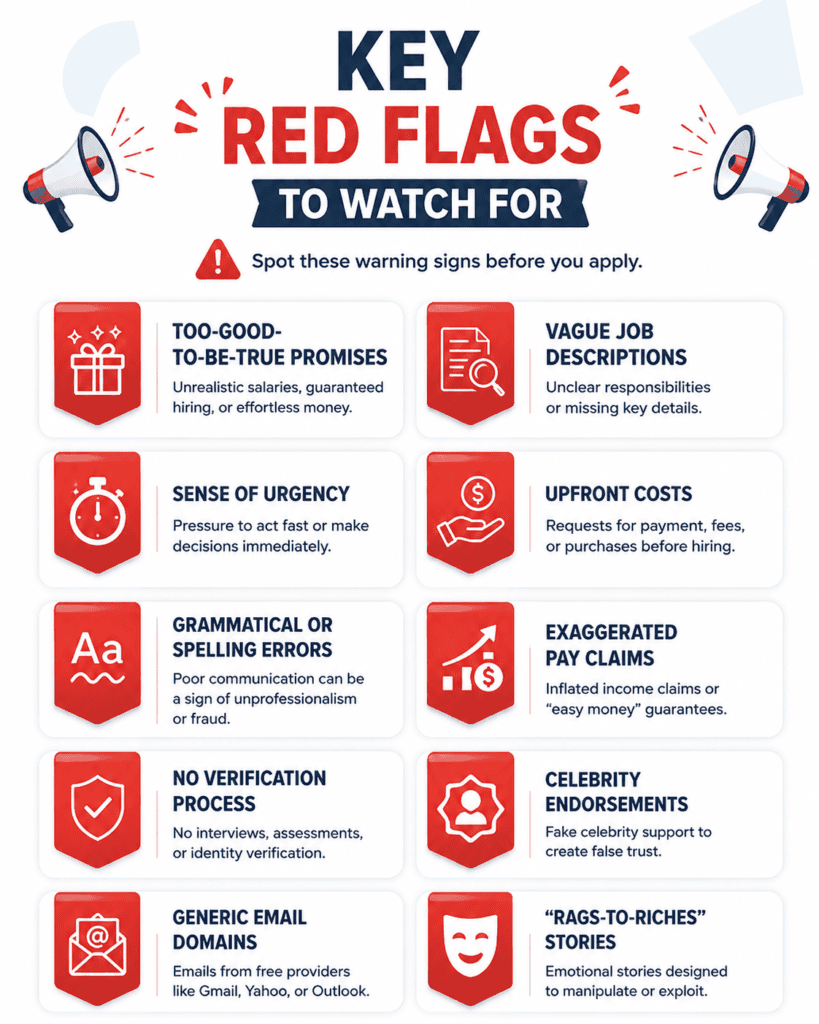
Assuming a real company guarantees a real recruiter: Fraudsters regularly scrape corporate websites to clone official branding. Always confirm the specific requisition ID and recruiter identity through independent channels, not just the brand name.
Treating a polished profile as proof of authenticity: Social media and LinkedIn profiles can easily be fabricated, bought, or compromised. Never accept a high follower count or complete bio as proof of legitimacy without double-blind verification.
Sending a small deposit “just to test”: Transferring even a nominal fee signals to scammers that you are susceptible to psychological manipulation, inevitably leading to escalated financial demands. Never pay any employment-related fee.
Over-sharing sensitive data on your CV: A resume should never contain your Social Security Number, passport details, full physical home address, banking information, or birth date. Strip unnecessary data from your application documents to minimize identity theft exposure.
Believing perfect copy or grammar proves legitimacy: Generative AI tools allow scammers to craft flawless, highly persuasive outreach copy. Conversely, legitimate recruiters occasionally make typos. Focus on the verification process and operational red flags rather than linguistic quality alone.
Rejecting every informal outreach out of hand: Early stage startups or third-party recruiters occasionally reach out via informal channels like WhatsApp or Telegram. Rather than disengaging immediately, steer the conversation to a verified corporate domain (@company.com), confirm the vacancy on the official ATS, and strictly refuse any requests for funds or excessive identity data.
Can a legitimate remote job contact me on WhatsApp or Telegram?
Yes, but the initial outreach should never be your sole proof of legitimacy. Early-stage startups, international talent agencies, or independent recruiters occasionally initiate contact via messaging platforms.
However, to avoid fake remote tech jobs, you must steer the conversation toward an official corporate email (@company.com), confirm the requisition ID on the company’s official careers page, and complete a live video or technical interview before sharing personal data.
Is a high salary always a scam?
No. High compensation is common for specialized technical roles like cloud architects, senior developers, machine learning engineers, and cybersecurity specialists. The primary red flag is an inflated salary paired with low-effort tasks (e.g., clicking links, “optimizing” e-commerce items), zero required experience, instantaneous hiring, or upfront fee demands.
Can a company ask for my passport or national ID?
Yes, but timing and delivery channels matter. Employers legitimately require identity records for tax, immigration, right-to-work compliance, and payroll setup.
However, this documentation should be requested only after you have passed a formal evaluation and received a verified offer letter. Never send passport scans, Social Security Numbers, or national ID details via unencrypted chat apps to unverified accounts.
What if the job is listed on a reputable job board?
Major job platforms continuously monitor for fraud, but scammers still manage to create compromised employer accounts, post illegitimate listings, or clone real hiring posts.
Treat third-party job boards as discovery engines rather than guaranteed proof of safety. Always perform independent double-blind verification on the employer’s official website.
Should I click “unsubscribe” in a suspicious recruitment email?
No. Interacting with links in fraudulent emails—including “unsubscribe” options—signals to spammers that your email address is active and monitored, leading to increased phishing targets. Instead, mark the email as spam, report the sender using your email provider’s security features, or block the domain directly.
In Conclusion
Finding legitimate remote opportunities can transform your career, offering flexibility, international exposure, and competitive compensation. However, navigating the modern hiring landscape requires operational vigilance. Learning how to avoid fake remote tech jobs is a mandatory skill for every job seeker in the modern digital economy.
To ensure your job search remains safe and productive, adhere to these non-negotiable standards:
- Zero upfront fees: Never pay money to secure employment, complete onboarding, access equipment, or receive wages.
- Double-blind verification: Always confirm vacancies on the employer’s official corporate careers page or verified ATS portal.
- Audit infrastructure: Check full sender email address headers, domain registration dates, and URL strings for subtle misspellings.
- Reject instant hiring: Exercise extreme caution with unsolicited offers, immediate hire promises, or interviews conducted solely via text-based messaging apps.
- Protect sensitive data: Refuse requests for identity documents, bank credentials, or tax details until you hold a verified contract.
- Enforce clean financial boundaries: Treat all requests involving gift cards, check cashing, wire transfers, or cryptocurrency payments as definitive proof of fraud.
- Resist high pressure: Slow down and disengage whenever a recruiter creates artificial urgency to force hasty decisions.
- Document and report: Preserve all outreach evidence and report suspected recruitment fraud to platform administrators and cybercrime authorities.
Your immediate next step is to establish a personal verification protocol. Apply this audit sequence to every opportunity and cold outreach you receive—even when the communication appears to come from an established brand.
By taking control of the verification process, you can navigate the job market safely, protect your identity and finances, and successfully avoid fake remote tech jobs.