Medical Internships for High School Students: How to Apply
High school students can gain early exposure to medicine through hospital clinical programs, university research labs, and government-funded biomedical initiatives. However, most programs require applicants to be at least 15–16 years old, meet specific academic criteria, and apply months in advance.
This guide delivers a vetted directory of medical internships for high school students, outlining exact eligibility requirements, application timelines, and proven strategies to secure a competitive placement.
Who This Guide Is For
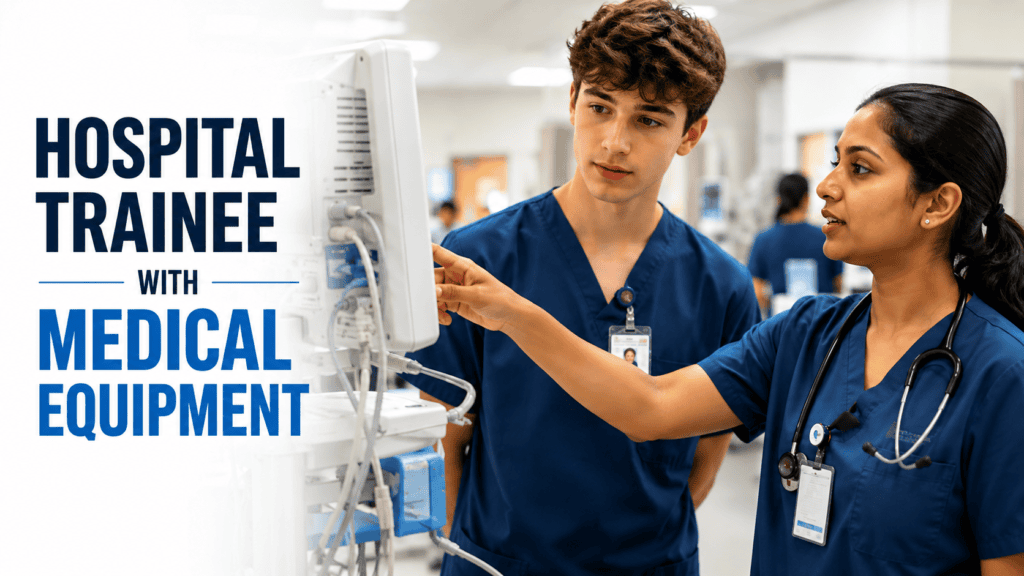
- High School Students (Ages 15–18): Students exploring pre-med pathways, healthcare careers, or biomedical research who want verified, hands-on clinical or laboratory experience before applying to university.
- Parents, Guardians & Career Advisers: Mentors seeking legitimate, age-appropriate medical programs and actionable application advice for high-achieving students.
- US & International Applicants: Primarily tailored to US-based opportunities, with select virtual and international options highlighted where applicable.
If you are searching for competitive medical internships for high school students, this guide cuts through the noise to show you which programs exist, whether you qualify, and exactly how to build a winning application.
What Counts as a “Medical Internship” for High School Students?
Before applying, it is critical to understand that opportunities marketed under the label of medical internships for high school students vary significantly in structure, cost, and scope of work.
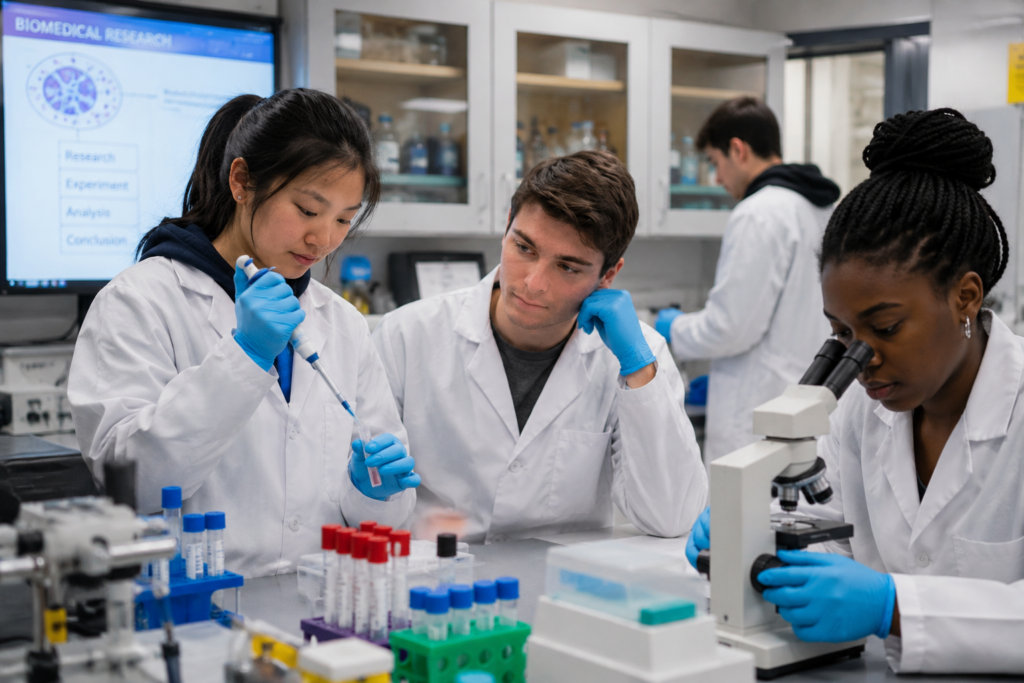
While college or medical school internships often involve direct clinical support, high school offerings strictly separate observational experience from active laboratory research.
Core Categories of High School Medical Opportunities
| Opportunity Type | Primary Focus | Practical Scope | Typical Pay / Cost |
| Hospital Internships | Clinical exposure & operations | Non-clinical support, administrative roles, department rotation, and healthcare workflow observation. | Paid or stipend-based |
| Biomedical Research Internships | Wet lab / dry lab science | Data collection, computational biology, literature reviews, and bench research at universities or institutes (e.g., NIH). | Paid, stipend, or free |
| Shadowing & Volunteer Programs | Direct observation | Passive shadowing of physicians, nurses, or researchers; patient navigation; general hospital volunteering. | Unpaid |
| Pre-Med Academies & Summer Enrichment | Education & simulation | Structured lectures, clinical skills simulations, lab workshops, and mentorship. | Tuition-based |
⚠️ Critical Regulatory Reality Check
Direct patient care is strictly prohibited for minors. Due to legal liability, HIPAA privacy regulations, and safety protocols, high school students are never permitted to perform clinical procedures or administer patient care. Legitimate medical internships for high school students focus entirely on observational learning, administrative workflow support, or supervised scientific research.
Top Medical Internships and Research Programmes for High School Students
The following opportunities are offered by established universities, hospitals, research institutions, and healthcare organisations. For each programme, we cover key details such as eligibility requirements, what participants can expect, how to apply, and application deadlines where available.
NIH Summer Internship Program (SIP) — National Institutes of Health
- Location: Bethesda, Maryland, and other NIH research campuses (Baltimore, MD; Research Triangle Park, NC; Hamilton, MT; Phoenix, AZ)
- Format: Paid, full-time (8-week) summer research internship
- Eligibility Requirements:
- Must be a graduating high school senior (or enrolled undergraduate/graduate student) at time of application.
- Must be at least 17 years old by June 15 and turn 18 years old by September 30 of the internship year.
- Residency restriction: Applicants who are 17 years old at the start of the program must reside within 40 miles of the assigned NIH campus.
- U.S. citizenship or permanent residency required.
- Program Overview: Interns work alongside principal investigators in world-class laboratories, conducting hands-on research across disciplines including molecular biology, computational neuroscience, genetics, and epidemiology.
- Application Components:
- Online profile & coursework/grades list
- CV/Resume
- Personal statement outlining research interests and career goals
- Two professional references
- Proof of health insurance
- Application Timeline: Opens annually in early December; applications close in mid-February (e.g., February 18 at 12:00 PM ET).
Author’s Tip for Applicants
The NIH SIP high school track is highly selective (~7% acceptance rate). Because selections are made on a rolling basis by individual Principal Investigators (PIs) rather than a centralized committee, submitting your application in December and reaching out directly to NIH mentors whose research matches your interests significantly increases your placement chances. (Note: Younger high school students in the D.C. area can explore the NIH HiSTEP program as an alternative).
Cleveland Clinic CYCE High School Summer Internship Program
- Location: Cleveland, Ohio, USA (Main Campus, regional hospitals, family health centers, and administrative campuses across Northeast Ohio)
- Format: Paid, full-time (7-week) summer internship ($15/hour; 30 hours per week)
- Eligibility Requirements:
- Must be enrolled in grades 9–12 and at least 15 years old by June 1 of the program year.
- Must reside AND attend high school in one of eight Northeast Ohio counties (Cuyahoga, Geauga, Lake, Lorain, Medina, Portage, Stark, or Summit).
- U.S. citizenship, noncitizen national, or legal permanent residency required.
- Minimum 2.5 GPA preferred.
- Program Overview: Interns gain hands-on experience and mentorship across clinical, administrative, and technical tracks. Options range from observing healthcare operations and sterile processing to business-focused placements like healthcare administration, human resources, and marketing.
- Application Components:
- Online application portal
- Official high school transcript
- Resume/extracurricular activity record
- Essay responses covering career goals and interest in healthcare
- Teacher or counselor recommendation
- Application Timeline: Opens annually in mid-November; applications close in early February (e.g., February 2).
Author’s Tip for Applicants
Because this internship operates in a major hospital system, accepted students must complete background checks and submit standard healthcare immunization records before orientation. Be sure to highlight soft skills like communication and project management in your essay—the program emphasizes workforce readiness alongside medical exposure.
Stanford Medical Youth Science Program (SMYSP)
- Location: Stanford University, Stanford, California (Residential on-campus experience)
- Format: Fully funded, tuition-free, 5-week summer program
- Eligibility Requirements:
- Must be a current high school junior (11th grade).
- Must attend high school in targeted Northern and Central California counties (e.g., Alameda, Contra Costa, Fresno, San Francisco, San Mateo, Santa Clara).
- Must come from a low-income family, be first-generation college-bound, or belong to a group historically underrepresented in medicine.
- Minimum B average in science coursework and demonstrated interest in healthcare careers.
- Program Overview: Recognized as one of the premier medical internships for high school students in the Western United States. Participants spend 1.5 days per week shadowing in hospital departments at Stanford Health Care, alongside attending faculty lectures, completing anatomy workshops, and presenting a group research project on community health disparities.
- Application Components:
- Online application portal
- Unofficial high school transcript and recent grade report
- Short essay responses, work sample, and video submission
- Two recommendations (one from a STEM teacher, one from a counselor or mentor)
- Application Timeline: Application opens in winter; deadline is typically late March (e.g., March 23).
Author’s Tip for Applicants
SMYSP is intentionally designed to support high-potential students facing socioeconomic or educational barriers. When writing your essays, emphasize your personal story, your interest in addressing health inequities, and how access to medical internships for high school students at a major research hospital like Stanford will impact your long-term career aspirations.
Mayo Clinic High School Summer Volunteer Program
- Location: Mayo Clinic Campuses (Phoenix/Scottsdale, Arizona; Rochester, Minnesota; Jacksonville, Florida)
- Format: Unpaid, 8-to-9-week structured summer volunteer program (typically one 4-hour shift per week)
- Eligibility Requirements:
- Must be 15–18 years old as of May 1 of the program year and not yet enrolled in university.
- Must commit to the full program duration without extended absences (e.g., June 1–July 31).
- Must attend a mandatory in-person interview, health screening (immunizations/TB test), and orientation if selected.
- Program Overview: While not a paid scientific lab placement, this remains one of the most recognized clinical volunteer medical internships for high school students. Participants support patient transport, guest navigation, surgical waiting areas, and hospital administrative units—providing direct, immersive exposure to the daily operations of a world-renowned health system.
- Application Components:
- Online application form
- High school transcript or recent report card
- Essay outlining healthcare career motivations
- One to two letters of recommendation (teacher, counselor, or community leader)
- Application Timeline: Applications open in early winter and close in mid-February (e.g., mid-February deadline at 4:00 PM MT for the Arizona campus).
Author’s Note for Applicants
High school programs across hospital networks are subject to operational changes—for instance, Mayo Clinic’s Arizona high school summer volunteer program was suspended for the 2026 cycle. Check Mayo Clinic’s official volunteer portal each December to verify campus availability before building your application.
Boston Children’s Hospital COACH Internship Program
- Location: Boston, Massachusetts, USA (Main Hospital Campus and administrative sites)
- Format: Paid, full-time summer internship (typically 8–10 weeks)
- Eligibility Requirements:
- Open to high school students (as well as undergraduate college students) interested in exploring healthcare careers.
- High school candidates are primarily placed through direct referrals from partnered Boston-area community-based organizations and local school districts.
- Demonstrated commitment to medicine, scientific research, or hospital administrative leadership.
- Program Overview: As one of the flagship workforce development medical internships for high school students, the COACH (Community, Opportunities, and Advancement at Children’s Hospital) program offers immersive placements in operations, clinical research, and administration across top-ranked pediatric departments.
- Application Components:
- Referral submission from a partner community organization or school counselor
- Updated resume/CV
- Personal statement detailing career goals in healthcare
- Professional or academic recommendation letters
- Application Timeline: Application portals and partner referral windows open in late fall/early winter; final selections are generally completed by March.
Author’s Tip for Applicants
Because the high school track of the COACH program relies heavily on community-based referral networks, local Boston applicants should check with their high school guidance counselors or partner youth programs (such as PIC or local health equity initiatives) to secure a direct pipeline application.
UCLA High School Summer Research & Clinical Programs
- Location: Los Angeles, California, USA (UCLA Campus and UCLA Health Medical Centers in Westwood/Santa Monica)
- Format: Unpaid, non-residential research internships and clinical volunteer placements
- Eligibility Requirements:
- Minimum age of 16 years old by June 1 of the program year.
- High school students in good academic standing (minimum GPA requirements vary by department).
- Must provide valid photo ID, health clearances (MMR, Varicella, TB screening), and required immunizations.
- Must commit to a minimum number of service/lab hours over the summer (e.g., 50 hours minimum for clinical volunteer tracks).
- Program Overview: UCLA offers structured pathways for secondary students seeking medical internships for high school students in major academic health systems. Opportunities fall under two primary pathways:
- UCLA Health Volunteering Program: Places students directly in hospital environments (patient transport, clinical wayfinding, and departmental support) to observe healthcare delivery and hospital operations firsthand.
- Departmental & Faculty Lab Placements: Highly motivated students work alongside UCLA faculty on biomedical, neuroscience, or life sciences research projects via direct mentor sponsorship.
- Application Components:
- Mandatory virtual information session attendance
- Formal online application submission
- High school transcript and proof of age/enrollment
- Immunization records and background documentation
- Mandatory in-person orientation
- Application Timeline: Information sessions and registration typically open in early spring (March–April); applications close once capacity is reached for the summer cohort.
Author’s Tip for Applicants
Formal university lab spots for high schoolers at UCLA are unadvertised and extremely competitive. If you are targeting lab research rather than clinical volunteering, review UCLA department faculty profiles (such as Molecular, Cell, and Developmental Biology) 3–4 months in advance and send targeted cold emails to faculty whose published papers align with your research interests.
Johns Hopkins Pre-College Summer Programs & CTY
- Location: Johns Hopkins University (Baltimore, Maryland, USA) & Online
- Format: Tuition-based, 2-to-3-week immersive courses (Residential, Commuter, or Asynchronous/Synchronous Online)
- Eligibility Requirements:
- Open to students in grades 7–12 (typically ages 13–18; grade ranges vary by specific course).
- Academic standing: Minimum cumulative GPA of 3.0+ on a 4.0 scale.
- For Center for Talented Youth (CTY) tracks: Requires qualifying above-grade-level standardized test scores (SAT, ACT, PSAT, or CTY’s SCAT/STB assessments).
- Program Overview: While distinct from hospital-based clinical placements, these academic academies are among the most popular medical internships for high school students. Courses like Medical School Intensive, Introduction to Surgery, and Neurobiology combine college-level lectures with hands-on laboratory simulations, anatomical dissections, and case-study analysis under Johns Hopkins faculty.
- Application Components:
- Online application form ($85 fee)
- Official high school transcript
- Counselor/Teacher recommendation letter
- Personal statement detailing interest in medical sciences
- Standardized test scores (mandatory for CTY; optional for general Pre-College tracks)
- Application Timeline: Applications open in December; rolling admissions run through April/May, though high-demand medical tracks fill by February.
Author’s Tip for Applicants
Because these options are tuition-based (ranging from ~$1,950 for online courses to $6,000+ for residential sessions), always verify whether your target track includes hands-on lab simulations. If cost is a barrier, submit your application in December to apply for Johns Hopkins’ need-based financial assistance funds before allocations run out.
Children’s Hospital Los Angeles (CHLA) Samuels Family LA-HIP Program
- Location: The Saban Research Institute of Children’s Hospital Los Angeles (Los Angeles, California)
- Format: Paid, yearlong comprehensive internship (includes a 7-week intensive summer research block, Metro pass/transit allowance, and daily meals)
- Eligibility Requirements:
- Must be a current high school junior (applying during the fall of 11th grade).
- Must attend a public high school in the Los Angeles area and possess a Social Security Number or DACA number.
- Targets underrepresented minority students in medicine and science.
- Program Overview: Among the most holistic medical internships for high school students in Southern California, LA-HIP (Latino and African American High School Internship Program) pairs interns with faculty mentors at The Saban Research Institute to conduct original biomedical research. Beyond the lab, the yearlong model incorporates biology instruction, SAT/ACT test prep, and dedicated college application workshops through senior year.
- Application Components:
- Online application portal
- Official high school transcript
- Short essays covering research interests and long-term career goals
- STEM teacher recommendation letter
- Application Timeline: Applications open annually in early November; the deadline typically falls in early February (e.g., February 7).
Author’s Tip for Applicants
LA-HIP looks for strong potential rather than extensive prior lab experience. Highlight your curiosity about biomedical science and your dedication to higher education in your essays. Attendance at one of CHLA’s virtual informational sessions in November or January can also give you valuable insights before finalizing your application.
NIA Summer Internship Program in Biomedical Research (National Institute on Aging)
- Location: NIH Intramural Research Program (IRP) laboratories in Baltimore and Bethesda, Maryland, or the NIH Center for Alzheimer’s and Related Dementias.
- Format: Paid, full-time 8-to-10-week summer research internship.
- Eligibility Requirements:
- Must be a graduating high school senior (or enrolled undergraduate/graduate student).
- Must be at least 17 years old by June 15 and turn 18 years old by September 30 of the internship year.
- Local Residency Rule: Applicants who are 17 years old at the start of the internship must reside within 40 miles of the assigned NIH laboratory campus.
- U.S. citizenship or permanent residency required.
- Program Overview: A specialized branch of the broader NIH SIP, the Summer Training in Aging Research (STAR) program places students in high-level research labs focused on gerontology, neurogenetics, Alzheimer’s disease, and molecular biogerontology. It stands out among medical internships for high school students by offering structured poster presentation workshops, scientific seminars, and opportunities to co-author peer-reviewed journal papers.
- Application Components:
- Centralized online application submitted through the NIH OITE (Office of Intramural Training and Education) portal
- CV/Resume and detailed high school coursework/grades list
- Personal statement outlining research interests in aging or biomedical science
- Two professional references
- Application Timeline: Applications open annually in early December and close in mid-February (e.g., February 18 at 12:00 PM ET).
Author’s Tip for Applicants
After submitting your centralized NIH SIP application, directly contact NIA intramural investigators whose aging research aligns with your interests to express your interest. Reaching out directly to NIA lab heads significantly increases your placement visibility during rolling selections.
Local Hospital and University Programs (Region-Specific)
- Location: City, county, or state health systems near your residence
- Format: Varies widely by institution (typically 4–8 week summer placements; paid, unpaid, or stipend-supported)
- Eligibility Requirements:
- Age limits vary (usually 15–18 years old; some clinical units mandate 16+ for HIPPA compliance).
- Local residency or school enrollment within the specified city/county is frequently enforced.
- Standard health clearances (TB tests, drug screenings, flu/COVID-19 vaccination).
- Program Overview: A vast majority of medical internships for high school students are organized locally and are not advertised on national aggregate sites. These regional pipelines give high schoolers direct exposure to biomedical labs and clinical workflows within their home communities.
- RWJBarnabas Health (New Jersey): Offers structured regional opportunities ranging from high school volunteer programs (ages 14–17) to specialized options like the Children’s Specialized Hospital Activity Connection Internship (open to high school juniors/seniors).
- UIC Rockford Summer Science Internship (Illinois): An intensive, paid summer experience where selected high school students work alongside leading university researchers on biomedical projects. Requires a formal essay, transcript, resume, and letters of recommendation.
- Application Components:
- Online application or physical intake form
- Current high school transcript
- Personal statement or career interest essay
- 1–2 letters of recommendation from science teachers or guidance counselors
- Application Timeline: Most local health system pipelines open applications in January or February and close by late March.
Author’s Search Formula for Hidden Local Opportunities:
If you cannot find a national program near you, search for regional medical internships for high school students using these targeted Google query strings:
"[Your City or County] hospital high school internship""[Your State] medical center high school summer volunteer""[Nearby University Name] biomedical research high school summer program"
Eligibility Checklist: Can You Apply?
Before spending hours drafting personal statements or requesting reference letters, run through this pre-application checklist. Meeting the baseline criteria for medical internships for high school students ensures you allocate your effort toward programs where you are actually eligible to compete.
Core Requirements Matrix
| Requirement | Typical Threshold | Key Caveats & Edge Cases |
| Age Limit | 15–18 years old by program start | Federal and state labs (e.g., NIH) often mandate being at least 17 or 18 by specific cut-off dates due to lab safety laws. |
| Grade Level | Rising Sophomores, Juniors, or Seniors (Grades 10–12) | Rising juniors (11th grade) are eligible for the widest variety of funded research programs. |
| Geographic Residency | County- or State-restricted | Programs like SMYSP (Northern California) or Cleveland Clinic (Northeast Ohio) strictly enforce local high school enrollment. |
| Citizenship Status | U.S. Citizen or Permanent Resident | Government-funded programs (NIH, DOD) typically exclude international visa holders due to federal funding mandates. |
| Academic Standing | 2.5 – 3.5+ Cumulative GPA | Most competitive lab research internships require strong foundational grades in Biology, Chemistry, and Math. |
| Time Commitment | Full-time (30–40 hrs/wk for 5–9 weeks) | Hospital programs strictly require zero extended absences or planned vacations during the session. |
| Health Clearances | Mandatory Medical Screening | Expect to provide official immunization records (MMR, Varicella, Hepatitis B), a negative TB test, and flu vaccination records. |
What to Do If You Don’t Meet the Criteria
If you fail to meet age, residency, or citizenship restrictions for top-tier hospital programs, do not let it stall your pre-med journey. You can pivot to high-impact alternative experiences that build your scientific track record:
- Virtual Medical & AI Research Programs: Remote mentorship initiatives (e.g., Stanford AIMI Student Program, Lumiere Research Scholar) allow students to complete computational biology, public health, or literature-based research from anywhere in the world.
- Pre-College Online Medical Academies: Asynchronous, self-paced university courses (e.g., Harvard Medical School Pre-College, Northwestern’s Career 911 on Coursera) let younger students (ages 13+) earn certificates without age or location barriers.
- Local Outpatient Shadowing: Reach out directly to local private clinics, urgent care centers, or family practices to arrange observational physician shadowing, which carries far fewer institutional liability constraints than large health systems.
How to Apply: Step-by-Step Strategy Guide
Applying for medical internships for high school students requires a structured approach. Because acceptance rates for fully funded research programs can drop below 10%, treating your application like a professional process is essential.
Identify 3–5 Target Programs: Filter by age, geography, and research focus.
Build a simple tracking spreadsheet to compare your top choices. Group your options into three categories: Reach (nationally competitive like NIH or RSI), Target (regional university labs), and Safety (local hospital volunteer hours).
- Match Key Factors: Verify age/grade limits, geographic eligibility, and whether the program focuses on clinical shadowing, wet-lab research, or lectures.
- Track Deadlines: Record application open dates, essay word counts, and recommendation requirements.
Prepare Your Application Portfolio: Build high-impact supporting materials.
Assemble your core documents early so you can adapt them quickly across multiple applications:
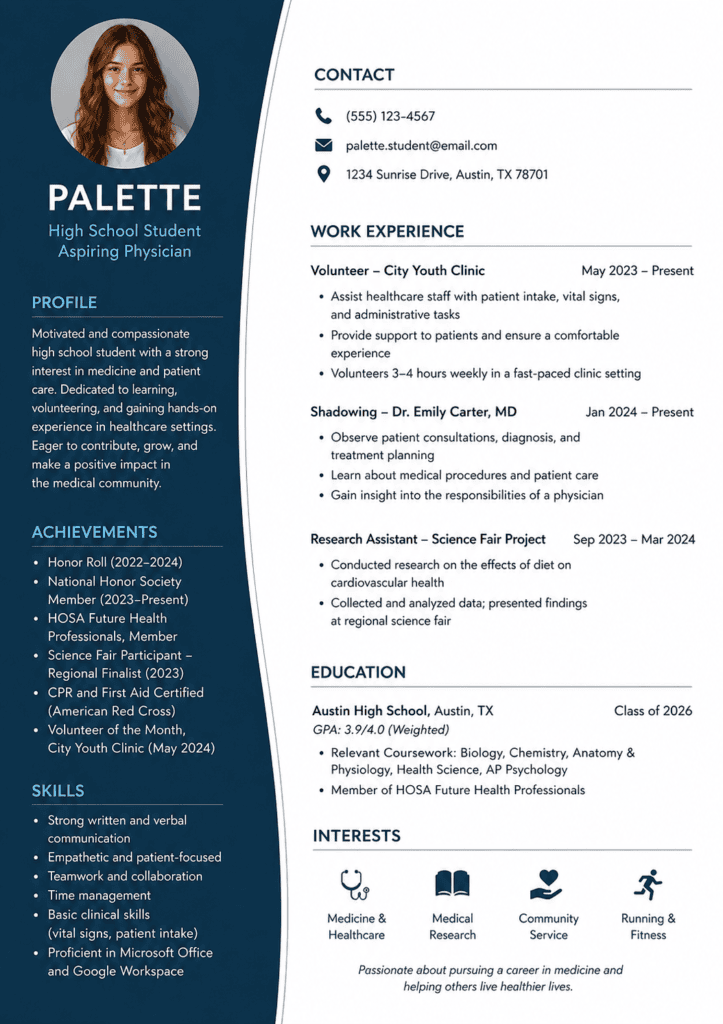
- One-Page High School Resume:
- Header: Contact details, professional email, and city/state.
- Education: High school name, expected graduation year, and GPA (if 3.0+).
- Relevant Coursework: Honors/AP/IB Biology, Chemistry, Physics, or Computer Science.
- Experience & Activities: Science clubs, tutoring, youth leadership, or community volunteering.
- Skills & Certifications: Lab techniques (pipetting, gel electrophoresis), software (Python, R), or CPR/First Aid certification.
- Personal Statement (500–1,000 words): Focus on why healthcare or research matters to you. Use a specific story (a science project, a shadow shift, or a personal catalyst) rather than generic claims like “I want to help people.”
- Transcripts & Recommendations: Request unofficial or official transcripts from your registrar. Give 1–2 STEM teachers at least 3–4 weeks’ notice for letters of recommendation, providing them with your resume and personal statement draft.
- Health & Compliance Docs: Gather immunization records (MMR, Varicella, Hepatitis B), recent TB test results, and health insurance proof for hospital compliance.
Submit via Official Portals: Avoid last-minute technical delays.
- Complete all required fields on the host institution’s portal.
- Double-check uploaded PDF formatting for resumes and essays.
- Submit at least 48 hours before the deadline to prevent portal crashes during peak usage window closes (often January/February). Save your confirmation emails.
Prepare for Selection Interviews: For clinical and lab-based tracks.
If selected for a virtual or in-person panel interview:
- Review Your Submissions: Be ready to expand on any project, class, or goal mentioned in your personal statement.
- Research the Host Institution: Learn about recent medical breakthroughs, department initiatives, or faculty research at the center.
- Prepare 2–3 Questions: Ask about mentor matching, daily lab expectations, or final research presentation formats.
Direct Cold-Outreach Strategy (Hidden Opportunities)
If you miss formal deadlines or lack local funded programs, cold emailing university professors and lab heads is an effective way to secure non-advertised medical internships for high school students.
Cold Email Template for Faculty Mentors
Plaintext
SUBJECT: High School Research Assistant Inquiry – [Your Name]

Dear Dr. [Professor's Last Name],

My name is [Your Name], a [Your Grade, e.g., Junior] at [High School Name] with a strong interest in [Specific Field, e.g., neurodegenerative diseases / oncology]. I recently read your paper on [Specific Title or Research Topic] and was particularly intrigued by [Mention 1 specific detail from their recent publication].

I am writing to inquire if you have any opening for a volunteer high school research assistant in your laboratory this summer. I have completed coursework in [AP Biology / Chemistry] and have basic experience in [Mention any skills, e.g., data analysis, Python, basic lab safety].

I am eager to contribute to your lab's ongoing work on [Topic] while learning professional research methodologies. I have attached my resume and transcript for your review.

Thank you for your time and consideration.

Sincerely,

[Your Name]
[Your Phone Number] | [Your Email]
[Link to LinkedIn or Online Portfolio, if available]Code language: PHP (php)
How to Improve Your Acceptance Odds
Acceptance rates for fully funded medical internships for high school students can be under 5%—often rivaling Ivy League college admissions. To stand out in a pool of high-achieving applicants, you must strategically prove academic readiness, genuine commitment, and institutional fit.
Key Acceptance Drivers
                             ┌──────────────────────────────────────┐
                             │    ACADEMIC FOUNDATION & rigor       │
                             │  (AP/IB STEM, top grades, techniques)│
                             └──────────────────┬───────────────────┘
                                                │
                                                ▼
                             ┌──────────────────────────────────────┐
                             │       NARRATIVE FIT & PASSION        │
                             │  (Authentic personal statement story)│
                             └──────────────────┬───────────────────┘
                                                │
                                                ▼
                             ┌──────────────────────────────────────┐
                             │      ADVOCACY & TIMELY EXECUTION     │
                             │  (Strong STEM recs + early filing)   │
                             └──────────────────────────────────────┘
Strategic Action Items
- Build a Specialized Academic Track Record: Beyond maintaining a strong overall GPA, excel in advanced STEM coursework (AP/IB Biology, Chemistry, Physics, or Statistics). Highlighting familiarity with laboratory tools or coding languages (e.g., Python, R for bioinformatics) demonstrates immediate utility to research labs.
- Demonstrate Sustained Interest Over Time: Admissions committees look for consistency. Prioritize long-term involvement in local health volunteering, HOSA (Future Health Professionals), science fair projects, or peer tutoring over one-off, short-term resume boosters.
- Frame a Cohesive Personal Narrative: Avoid generic essays that start with “I want to be a doctor to help people.” Instead, detail a specific catalyst event—such as a science fair experiment, a clinical shadowing moment, or an academic research question—to explain why you need this specific internship to advance your trajectory.
- Secure High-Signal Recommendation Letters: Select STEM teachers or research mentors who can speak directly to your problem-solving skills, lab ethics, and maturity. Provide your recommenders with a “brag sheet” highlighting your key projects, resume, and specific essay themes 3 to 4 weeks before the deadline.
- Leverage Early Submission Windows: Programs with rolling review models (such as NIH SIP or departmental university labs) review and fill slots long before the official deadline passes. Submitting your portfolio within the first few weeks of the portal opening significantly boosts your visibility to faculty mentors.
Common Application Mistakes to Avoid
Securing medical internships for high school students requires attention to detail. Admissions committees review thousands of high-achieving applicants, meaning minor errors can result in swift disqualification. Avoid these five common pitfalls when preparing your applications.
Key Pitfalls & Strategic Solutions
- Applying Without Verifying Hard Eligibility: Submitting applications to programs where you fall outside strict age cut-offs, state/county residency zones, or citizenship requirements leads to automatic screening filters dropping your file.
- Solution: Cross-check your birthdate, local high school county, and citizenship against official program guidelines before creating an application account.
- Submitting Incomplete Application Portfolios: Missing a required unofficial transcript, single essay prompt, or health insurance proof often leads to instant disqualification with no option to resubmit.
- Solution: Treat your tracking spreadsheet as an active checklist. Download final submitted application PDFs to confirm every attachment uploaded successfully.
- Waiting Until the Final Week to Request Documents: Guidance counselors and STEM teachers receive dozens of recommendation requests each spring. Asking for transcripts or reference letters days before a deadline strains relationships and risks missing application cut-offs.
- Solution: Request recommendation letters and official transcripts at least 3 to 4 weeks in advance.
- Recycling Generic Essays Across Programs: Admissions officers at top institutions immediately spot copy-pasted personal statements. A generic essay signals a lack of genuine interest in that specific lab or hospital.
- Solution: Customize every submission. Mention unique faculty members, specific department rotations, or core mission statements distinct to that program.
- Ignoring Post-Submission Requirements & Communication: Failing to check your email inbox (or spam folder) for interview invites, background check forms, or immunization verifications can forfeit an acceptance offer.
- Solution: Monitor your primary contact email daily post-submission, white-list the program’s domain, and respond to compliance requests within 24–48 hours.
Can high school students get paid medical internships?
Yes, select programs offer compensation. Opportunities like the Cleveland Clinic CYCE High School Summer Internship Program provide hourly wages (~$15/hour), while government research tracks like the NIH Summer Internship Program (SIP) provide a structured monthly stipend.
However, many hospital placements are organized as unpaid volunteer hours or tuition-based summer enrichment academies.
Do I need prior medical experience to apply?
No, prior clinical or laboratory experience is rarely required. Admissions committees evaluate your academic performance in STEM (Biology, Chemistry, Mathematics), demonstrated interest in healthcare, and soft skills like maturity, leadership, and curiosity. Programs treat high school placements as introductory workforce pipelines.
Can international students apply?
It depends heavily on the funding source.
Government & Public Health Programs: Institutional initiatives funded by federal agencies (such as NIH or DOD programs) strictly require U.S. citizenship or permanent residency.
Private University Academies: University-hosted pre-college tracks (such as Johns Hopkins CTY or Stanford pre-med camps) frequently admit international students.
What if there are no medical programs in my local area?
If major hospital systems or research universities are unavailable near you, explore these alternative paths:
Remote Research & Computational Biology: Participate in virtual research mentorships or online courses in bioinformatics, medical AI, and public health data analysis.
Direct Physician Shadowing: Contact local private practices, urgent care centers, or outpatient clinics directly to request shadowing hours.
Residential Summer Camps: Apply for out-of-state university programs that offer on-campus housing and financial aid/scholarships for low-income applicants.
How competitive are high school medical internships?
Prestigious programs are exceptionally competitive, with acceptance rates often falling under 10%. Programs like NIH SIP and Stanford SMYSP review thousands of applications for limited slots.
To stand out, submit early, articulate a specific personal narrative in your essays, and secure high-signal recommendation letters from STEM teachers.
In Conclusion
Securing a high-impact medical internship for high school students comes down to timing, eligibility verification, and strategic positioning.
┌────────────────────────────────────────────────────────────────────────┐
│                        NEXT STEPS FOR APPLICANTS                       │
├────────────────────────────────────────────────────────────────────────┤
│ 1. Filter by Hard Eligibility (Age, Residency, Citizenship)            │
│ 2. Audit Application Portfolios 4 Weeks Before Deadlines               │
│ 3. Execute Direct Cold Outreach to Regional Faculty Mentors            │
└────────────────────────────────────────────────────────────────────────┘
Key Takeaways
- Target the Right Track: Distinguish between paid biomedical research, clinical shadowing, and tuition-based academies to avoid misaligned applications.
- Master the Timeline: Funded programs like NIH SIP and Stanford SIMR close early in the year (January–February). Prepare transcripts and recommendation requests 3 to 4 weeks in advance.
- Leverage Hidden Networks: When national programs are out of reach, use hyper-local search operators or cold-email university lab heads to secure non-advertised research placements.
Recommended Next Steps & Internal Links
- Pre-Med Career Pathways: Read our complete roadmap on Building a Pre-Med Portfolio in High School to learn how to track clinical hours and showcase lab experience on college applications.
- Scholarships & Financial Aid: Exploring tuition-based summer enrichment academies? Check out our guide to Need-Based STEM Scholarships for High School Students to offset program costs.