11 Best Free AI Interview Question Generator Tools & Prompts
An AI interview question generator is a tool that uses artificial intelligence to create interview questions tailored to a specific job, industry, or skill set. Many modern platforms can also generate follow-up questions, evaluate responses, and simulate mock interviews. Features and free usage limits vary by platform, so comparing available options before choosing the right AI interview question generator is important.
Preparing for job interviews has changed dramatically over the past few years. Instead of searching through dozens of websites for generic interview questions, candidates and recruiters can now rely on an AI interview question generator to produce targeted, personalized interview questions in seconds.
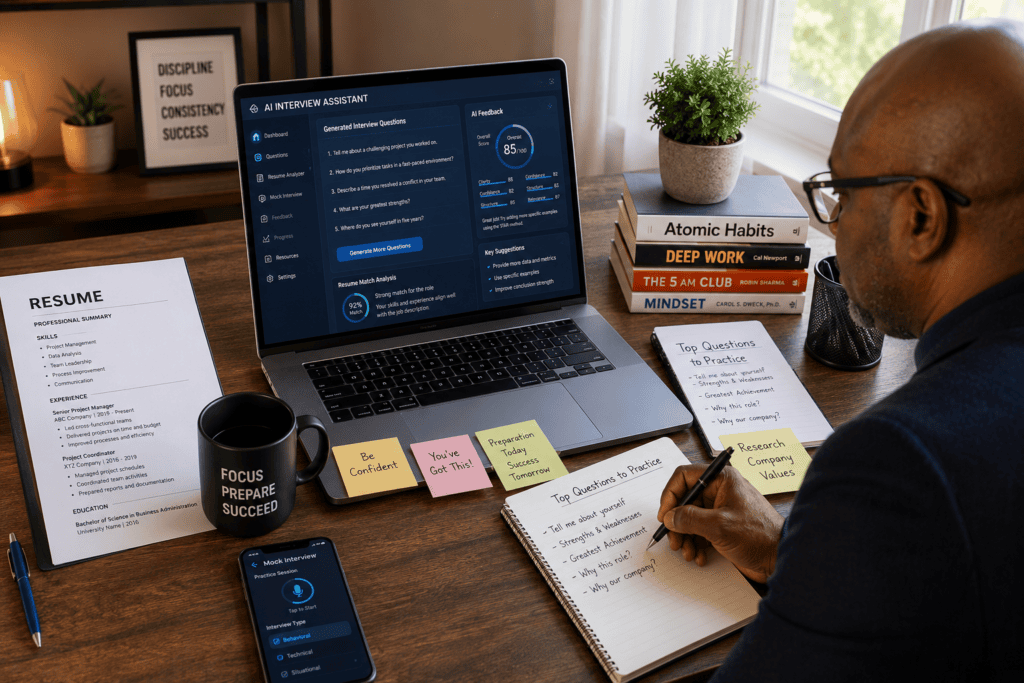
Whether you’re applying for your first internship, preparing for a software engineering interview, changing careers, or hiring new employees, leveraging a dedicated AI interview question generator can save time while helping you practice or evaluate candidates far more effectively.
The best tools go beyond producing random questions. A high-quality AI interview question generator can:
- Generate role-specific interview questions
- Simulate realistic interview conversations
- Analyze your responses
- Suggest better answers
- Identify communication weaknesses
- Help build interview confidence
However, not every AI interview question generator offers the same experience. Some platforms focus on behavioral interviews, while others specialize in technical assessments, coding rounds, or real-time communication coaching. Free plans also vary significantly—some allow unlimited practice, while others restrict daily sessions or lock advanced features behind paywalls.
This guide compares the best free AI interview question generator tools available today, explains how they work, discusses their strengths and limitations, and provides practical ChatGPT prompts you can use immediately.
By the end of this guide, you’ll know:
- Which AI interview question generators are actually worth using
- Which free options provide the most practical value
- Which tool best fits your specific career or hiring goals
- How to create better interview questions with AI
- How to prepare more efficiently using AI without relying on generic practice
What Is an AI Interview Question Generator?
An AI interview question generator is specialized software that uses large language models (LLMs), natural language processing (NLP), or machine learning to generate interview questions based on a target job title, candidate resume, job description, experience level, or specific skill set.
Unlike static question banks or generic online lists, a modern AI interview question generator analyzes context inputs to create custom, highly targeted questions in real time.
For example, entering a specific target role like:
Target Role: Senior Data Analyst at Microsoft
Will prompt an AI interview question generator to produce role-specific technical and strategic prompts, such as:
- SQL Optimization: “How would you rewrite a slow-running subquery handling millions of rows in Azure Synapse?”
- Power BI & Data Visualization: “Walk me through how you design an executive dashboard to balance deep detail with executive-level clarity.”
- Stakeholder Communication: “How do you present conflicting data insights to business leaders who disagree with your findings?”
- Business Case Studies: “How would you measure the success of a new feature rollout on Office 365 using product analytics?”
- Behavioral Leadership Scenarios: “Describe a time you had to mentor a junior analyst on data quality best practices.”
Instead of defaulting to generic fluff like “What is your biggest weakness?”, an AI interview question generator grounds its outputs in actual industry requirements.
Core Capabilities of Modern AI Interview Generators
Beyond generating raw question lists, advanced platforms leverage an AI interview question generator engine to deliver end-to-end evaluation features:
- AI Mock Interviews: Simulating real-time text or voice interview sessions tailored to a specific job description.
- Spoken Answer Evaluation: Analyzing recorded responses for clarity, technical accuracy, and structure (such as the STAR method).
- Tone & Pacing Analysis: Assessing speech speed, confidence, and filler word frequency to improve delivery.
- Response Benchmarking: Recommending stronger, high-scoring alternative answers based on industry standards.
- Adaptive Follow-Up Questions: Generating dynamic follow-up prompts based on the depth and content of your previous answer.
These capabilities make an AI interview question generator an invaluable tool for both job seekers looking to sharpen their preparation and talent acquisition teams streamlining their recruiter workflow automation.
How Does an AI Interview Question Generator Work?
At its core, an AI interview question generator combines user-provided inputs with Large Language Models (LLMs), Natural Language Processing (NLP), and vector search capabilities to convert static job requirements into dynamic, role-specific interview questions.
While exact implementations vary between tools, every modern AI interview question generator follows a structured processing workflow to translate inputs into targeted questions and actionable feedback.
The Standard Processing Workflow
| Step | Trigger / Input | What the AI Engine Does | Output Produced |
| 1. Input Ingestion | User enters job title, pastes description, or selects role. | The AI interview question generator extracts core competencies, required technical skills, and seniority level. | Structured context profile |
| 2. Context Personalization | Resume or CV upload (Optional) | Uses Retrieval-Augmented Generation (RAG) to cross-reference past candidate experience against job requirements. | Tailored prompt context |
| 3. Difficulty & Scope Mapping | Seniority level and industry selection | Adjusts depth—routing entry-level queries to foundational concepts and executive roles to strategy/leadership. | Calibrated difficulty parameters |
| 4. Question Generation | Core LLM inference engine | Generates balanced mixes of technical, behavioral, situational, and competency-based questions. | Dynamic interview question set |
| 5. Real-Time Feedback | User submits text or spoken response | Evaluates structure, technical accuracy, tone, and pacing against benchmark criteria. | Scoring, feedback, & improvements |
Advanced Features in Modern AI Interview Generators
Leading platforms go beyond standard text outputs to simulate real-world hiring environments. Today’s top tools utilize an AI interview question generator architecture that supports:
- Resume-Aware Question Generation: Rather than relying solely on a generic job title, the tool scans candidate resumes to flag specific skill gaps, short tenures, or notable project accomplishments to ask about.
- Company-Specific Interview Simulations: The engine tunes its prompts to reflect specific corporate interview cultures (e.g., Amazon’s 16 Leadership Principles or Google’s “Googleyness” & leadership metrics).
- STAR Method Evaluation: The AI interview question generator automatically reviews user responses to ensure they explicitly address the Situation, Task, Action, and Result.
- Real-Time Communication Feedback: Multimodal AI models analyze audio streams to detect vocal pacing, confidence metrics, and filler word frequency (e.g., “um,” “like,” “you know”).
- Interactive AI Voice Interviews: Voice-to-text models conduct realistic, conversational back-and-forth mock interviews without requiring manual typing.
- Adaptive Follow-Up Questioning: The AI interview question generator dynamically evaluates user responses and asks context-aware follow-up questions to test deep domain knowledge.
Key Takeaway: Personalization accuracy and response evaluation quality vary widely across platforms. Premium platforms typically rely on custom RAG pipelines and fine-tuned models, whereas free tiers often utilize basic API calls with stricter session limits and general feedback loops.
Why Should You Use an AI Interview Question Generator?
Preparing for modern technical and behavioral interviews can be overwhelming. Manually hunting down relevant interview questions across forums, outdated blog posts, and generic job boards often yields repetitive results that fail to reflect the nuances of a specific role.
Using a dedicated AI interview question generator solves this problem by delivering tailored practice scenarios, structured rubrics, and automated mock feedback in seconds.
Core Advantages for Job Seekers and Recruiters
  TRADITIONAL PREPARATION                 AI-DRIVEN PREPARATION
  ┌───────────────────────┐              ┌───────────────────────┐
  │ Static Question Sets  │              │ Dynamic Personalization│
  │ Generic Internet Reps │  ──────────► │ Real-Time AI Feedback │
  │ Unstructured Prep     │              │ Targeted Skill Rubrics│
  └───────────────────────┘              └───────────────────────┘
Code language: PHP (php)
Accelerated, Low-Friction Preparation
Instead of spending hours manually compiling and organizing practice questions, an AI interview question generator instantly builds structured interview decks from a job description or URL. What used to take 3–4 hours of research takes under 30 seconds.
High-Precision Personalization
Generic lists ask standard questions like “Tell me about a challenge.” An AI interview question generator analyzes the intersection of your target job description, target company culture, and uploaded resume to generate role-aware scenarios:
Plaintext
Input: Target Role (Senior Backend Engineer) + Resume (Experience in Rust & AWS)
Output: "I see you scaled a microservice using Rust on AWS. How did you handle
        concurrency limits during high-traffic spikes without raising latency?"Code language: PHP (php)
Unlimited Dynamic Practice
Memorizing canned responses often leads to stiff, unnatural delivery. An AI interview question generator can generate endless variations of situational and behavioral questions. This trains you to improvise and articulate your core skills rather than reciting memorized scripts.
Immediate, Objective Feedback Loops
Top-tier tools do not just output questions—they act as virtual coaches. When you submit written or spoken answers, the AI interview question generator evaluates your response against proven frameworks like the STAR method (Situation, Task, Action, Result).
Key Benefit: Candidates using AI-driven practice platforms report a measurable increase in confidence and articulation quality during actual hiring rounds, primarily due to receiving instant actionable feedback.
Summary Comparison: Manual Prep vs. AI Question Generator
| Preparation Metric | Manual Online Research | AI Interview Question Generator |
| Setup Time | 2–4 hours per target role | Under 30 seconds |
| Relevance | Static, generic, and broad | Hyper-personalized to job description + CV |
| Feedback Mechanism | Self-guessing or expensive peers | Automated scoring, STAR alignment, & pacing check |
| Adaptability | Fixed question lists | Dynamic follow-ups based on past answers |
What Features Should You Look For?
Not all tools are created equal. The best tools do far more than spit out basic question lists—they create dynamic, highly realistic interview simulations that accelerate candidate preparation and streamline recruitment workflows.
When evaluating an AI interview question generator, prioritize platforms that include these six critical capabilities:
  ┌────────────────────────────────────────────────────────┐
  │         TOP FEATURES TO EVALUATE IN AN AI TOOL         │
  ├─────────────────────────┬──────────────────────────────┤
  │ 1. Role-Specific Depth  │ 4. Technical Domain Support  │
  │ 2. Resume Personalization│ 5. Multi-Metric Feedback    │
  │ 3. Behavioral Scenarios │ 6. Data Privacy & Compliance │
  └─────────────────────────┴──────────────────────────────┘
Role-Specific Question Generation
Generic questions produce generic preparation. A quality AI interview question generator must adapt its output according to industry-specific nuances and specific job functions.
Look for tools that offer tailored tracks for key verticals:
- Software Engineering: Algorithm design, code optimization, system design tradeoffs.
- Product Management: Feature prioritization frameworks, product metrics, roadmap tradeoffs.
- Data Science: Machine learning model selection, A/B testing design, SQL optimizations.
- Finance & HR: Financial modeling, risk assessment, talent retention strategies.
- Marketing & Sales: Funnel optimization, campaign ROI, objection handling.
Resume-Based Personalization
Instead of practicing broad questions like “Tell me about yourself,” look for an AI interview question generator that accepts resume uploads (PDF or text). By cross-referencing your resume against a target job description, the AI generates hyper-specific prompts targeting your actual work history.
| Standard AI Question | Resume-Aware AI Question Generator Output |
| “Describe a challenge you faced at work.” | “At Company X, you led a cloud migration to AWS. What was the most critical bottleneck you encountered, and how did you resolve it?” |
| “How do you prioritize projects?” | “You managed a portfolio of 5 cross-functional projects in 2024. Walk me through how you handled competing deadlines.” |
Behavioral Interview Support (STAR Framework)
Behavioral assessments remain a cornerstone of modern hiring. An effective AI interview question generator should create situational scenarios designed to evaluate soft skills, leadership, conflict resolution, and problem-solving under pressure.
Make sure the platform supports core behavioral categories:
- Overcoming Obstacles: “Describe a scenario where a project was falling behind schedule.”
- Conflict Resolution: “How did you handle a disagreement with a senior stakeholder?”
- Leadership & Mentorship: “Tell me about a time you had to align a team around a strategic pivot.”
- Failure & Recovery: “Walk me through a project that failed to hit its target metrics.”
Technical Domain & Tool Coverage
If you are preparing for technical rounds, verify whether the AI interview question generator supports deep domain knowledge testing. Basic tools struggle with specialized topics, whereas advanced options can handle:
- Coding & Data Structures: Live algorithmic problems and debugging scenarios.
- System Design: Scalability, caching layers, database sharding, and API architecture.
- DevOps & Cloud: Kubernetes orchestration, CI/CD pipelines, IAM policy frameworks.
- Cybersecurity & AI: Threat modeling, zero-trust architecture, model fine-tuning ethics.
Multi-Metric AI Feedback & Rubrics
Generating questions is only half the battle. The best platforms act as automated coaches, scoring written or spoken responses across concrete performance metrics:
- STAR Method Alignment: Verifies if your answer contains a clear Situation, Task, Action, and Result.
- Clarity & Brevity: Identifies rambling, unnecessary jargon, or missing context.
- Speech & Pacing Analysis: Audio-enabled tools highlight filler word counts (“um,” “like”), speaking rate (WPM), and vocal confidence.
- Model Answers: Provides exemplary, high-scoring answer templates to help you calibrate your response.
Privacy, Security, and Data Handling
When you upload a resume, paste internal job descriptions, or record voice responses, you share sensitive personal data. Before using any AI interview question generator, review the vendor’s data retention policies:
- Data Training Opt-Outs: Does the provider use your uploaded resume or audio recordings to train public LLM models?
- Retention Period: How long are transcripts, audio files, and uploaded documents stored on server logs?
- Deletion Rights: Can you purge your data and conversation history on demand?
- Compliance Standards: Ensure enterprise tools comply with SOC2, GDPR, or relevant regional privacy regulations.
How We Evaluated the Recommended Tools
To eliminate marketing hype and keep our comparisons objective, every AI interview question generator featured in this guide has been evaluated using a standardized evaluation framework.
Whether you are a job seeker aiming to practice high-stakes scenarios or a hiring manager structuring candidate rubrics, this breakdown ensures you can easily compare tools based on your specific preparation goals.
┌─────────────────────────────────────────────────────────────────────────┐
│                    EVALUATION FRAMEWORK CORE AXES                       │
├───────────────────────┬─────────────────────────┬───────────────────────┤
│  1. Technical Depth   │  2. Free Plan Value     │  3. Feedback Loops    │
│  Quality & AI Precision│  Limits & Paywalls      │  Scoring & Rubrics    │
└───────────────────────┴─────────────────────────┴───────────────────────┘
Evaluation Criteria Matrix
| Criteria | What We Look For | Why It Matters |
| AI Capabilities | Context handling, prompt intelligence, and role-specific accuracy. | Ensures questions target real industry expectations rather than outputting generic fluff. |
| Ease of Use | Interface intuition, setup speed, and step count. | Eliminates friction so you can generate tailored questions in seconds. |
| Free Plan Value | Daily limits, feature paywalls, and credit restrictions. | Identifies tools that offer genuine utility without forcing immediate paid upgrades. |
| Interview Coverage | Support for technical, behavioral, situational, and coding tracks. | Confirms the platform covers all stages of modern, multi-round interview loops. |
| Feedback Quality | Instant scoring, STAR method validation, and audio/pacing analysis. | Transforms static lists into an interactive coaching tool for real skill building. |
| Compatibility | Cross-platform usability across Web, Desktop, and Mobile. | Allows seamless practice across devices without installing complex software. |
| Privacy & Security | Document handling, resume storage, and audio recording policies. | Ensures your personal work history and voice data remain private and secure. |
| Best For | Target persona mapping (e.g., Candidates vs. Recruiters). | Helps you select the exact tool engineered for your specific use case. |
Our Promise: We test every AI interview question generator against these exact parameters so you can skip the trial-and-error process and pick the right platform immediately.
The 11 Best Free AI Interview Question Generator Tools & Prompts (Tools 1–6)
This section evaluates the first six AI interview question generator tools using a consistent framework, making it easier to compare their features, strengths, limitations, and free plans. Because AI products evolve rapidly, always check each provider’s official website for the latest features, pricing, and usage limits before making a decision.
ChatGPT
ChatGPT is one of the most flexible AI interview question generator tools available. While it is not a dedicated, standalone interview platform, its raw language reasoning, contextual adaptability, and conversational capabilities allow candidates and hiring managers to build hyper-customized practice environments.
For most job seekers, it offers the ultimate balance between flexibility and cost, providing unlimited question generation and interactive coaching capabilities within its standard tier limits.
Platform Specifications
| Metric | Specification |
| Device Type | Web application, iOS / Android mobile apps, Native Desktop (macOS / Windows) |
| Compatibility | Windows, macOS, Linux, Android, iOS, Modern Web Browsers |
| Best For | Job seekers, students, career changers, software engineers, and talent teams preparing across diverse role types |
| Estimated Price Range | Free Plan available (Standard access); Plus/Pro subscriptions for flagship models, higher message caps, and Advanced Voice mode |
| SkillDential Rating | 9.8 / 10 |
Key AI Features & Capabilities
- Role & Industry Question Generation: Adapts questions across software engineering, product management, healthcare, marketing, finance, and executive roles.
- Behavioral & Situational Practice: Constructs targeted scenarios around the STAR method (Situation, Task, Action, Result) to test soft skills and conflict resolution.
- Resume & Job Description Analysis: Accepts CV uploads and job posting text to output hyper-specific interview questions tailored directly to your experience.
- Technical & System Design Mocking: Generates coding challenges, SQL queries, system design tradeoffs, and technical deep-dives.
- Interactive Voice Interviews: Real-time conversational mock interviews via mobile and desktop apps for hands-free audio practice.
- Custom Prompting & Iterative Refinement: Unlimited flexibility to adjust interview difficulty, ask for model answers, or request step-by-step performance critiques.
Plaintext
               CHATGPT INTERVIEW PREPARATION FLOW
  ┌─────────────────┐     ┌──────────────────┐     ┌─────────────────┐
  │ Paste Target JD │ ──► │  Generate Custom │ ──► │ Conduct Mock    │
  │  + Your Resume  │     │ Question Rubric  │     │ Voice Session   │
  └─────────────────┘     └──────────────────┘     └─────────────────┘
                                                            │
                                                            ▼
                                                   ┌─────────────────┐
                                                   │ Receive Instant │
                                                   │ STAR Feedback   │
                                                   └─────────────────┘
Feature Availability Matrix
| Feature | Availability | Notes |
| Question Generation | Yes | Fully dynamic based on user-provided prompts |
| Mock Interview Mode | Yes | Simulates conversational, multi-turn interview rounds |
| Voice Conversation | Yes | Available via mobile and desktop applications |
| Resume & CV Analysis | Yes | Accepts PDF uploads, plain text, or document attachments |
| Coding & Technical Help | Yes | Generates code snippets, debugs logic, and tests data structures |
| Custom Prompt Refinement | Yes | Allows unlimited adjustments to tone, difficulty, and interview role |
Pros & Cons
Pros
- Extremely Flexible: Can switch from a technical software architecture interviewer to a behavioral executive coach instantly.
- Universal Coverage: Supports virtually every known career domain, niche industry, or job level.
- Deep Reasoning Capabilities: Explains why specific answers work and highlights exact missing details in your responses.
- Massive Knowledge Base: Recognizes company-specific cultures, leadership principles (e.g., Amazon, Google), and industry standards.
Cons
- Requires Strong Prompting: Output quality relies directly on how well you structure your initial context and prompts.
- No Automatic Scoring Dashboards: Lacks built-in visual progress metrics, speech analytics, or automated scoring rubrics found on single-purpose interview tools.
Privacy & Data Handling Considerations
Data Notice: When using ChatGPT as an AI interview question generator, avoid sharing confidential employer materials, proprietary code, or personal identification details (like SSNs/financial records) in your resume uploads unless you have adjusted your account data-sharing and training preferences.
Top Alternatives
- Claude (Anthropic): Excellent for long-form context handling, highly nuanced writing tone, and deep resume parsing.
- Google Gemini: Strongly integrated with real-time web search for current company research and Google Workspace files.
- Microsoft Copilot: Deeply embedded into Enterprise environments and Microsoft 365 workflows.
Verdict
SkillDential Take: If you choose only one free tool for your preparation, ChatGPT remains the strongest overall option. It seamlessly combines role-specific question generation, real-time voice coaching, answer refinement, and technical explanations within a single interface.
Final Round AI
Final Round AI is a dedicated, specialized platform built specifically for end-to-end interview preparation and live candidate support. Unlike general-purpose AI models, it combines an AI interview question generator engine with interactive mock simulations, automated performance analytics, and a real-time “Interview Copilot”.
It is designed primarily for high-stakes hiring rounds (such as FAANG, technical engineering, and executive positions) where generic practice lists are insufficient. However, while its basic practice tools are accessible for free, its live execution features require a paid tier.
Platform Specifications
| Metric | Specification |
| Device Type | Web application, Native Desktop app (Windows / macOS) |
| Compatibility | Modern Web Browsers, Windows, macOS (integrates with Zoom, Teams, Google Meet) |
| Best For | FAANG/Big Tech candidates, technical professionals, software engineers, and applicants in high-stakes hiring pipelines |
| Estimated Price Range | Free Tier (Unlimited basic mock interviews & question practice); Paid Subscriptions range from ~$25/month (billed annually) to $150/month (billed monthly) for full live Copilot access |
| SkillDential Rating | 9.4 / 10 |
Key AI Features & Capabilities
- Company-Aware Question Generation: Custom-tunes practice modules to target specific company hiring rubrics, question styles, and core leadership principles.
- Real-Time AI Interview Copilot: Runs quietly during live video calls (Zoom, Microsoft Teams, Google Meet) to provide instant transcription and contextual talking points.
- Specialized Technical & Coding Copilot: Offers built-in syntax explanations, algorithmic guidance, and screen-code parsing for live coding assessments.
- Resume-Trained Personalization: Ingests uploaded candidate resumes and job descriptions to ground generated questions and answer suggestions directly in your real work history.
- Post-Interview Analytics & Reports: Delivers structured performance reports highlighting delivery confidence, answer completeness, and key missing details after every mock session.
Feature Availability Matrix
| Feature | Availability | Notes |
| Question Generation | Yes | Generates company-specific and role-tailored questions |
| Mock Interview Mode | Yes | Fully interactive practice sessions with AI interviewers |
| Real-Time Live Guidance | Yes | “Interview Copilot” overlay for live calls (Paid feature) |
| Resume & CV Analysis | Yes | Personalizes answer suggestions based on your background |
| Technical & Coding Help | Yes | Specialized coding assessment and system design assistance |
| Automated Performance Reports | Yes | Post-interview analytics covering structure, clarity, and metrics |
Pros & Cons
Pros
- Exceptional Realism: Simulates modern multi-round hiring loops far better than standard text chatbots.
- End-to-End Workflow: Combines resume-aware question generation, live audio transcription, and structured performance feedback.
- Deep Technical Coverage: Includes dedicated support for coding rounds, system design, and specialized technical interviews.
- Actionable Metrics: Highlights concrete areas for improvement using structured scoring rubrics.
Cons
- Restrictive Free Tier: Live assistance features and premium AI models are heavily locked behind monthly or annual subscription plans.
- Steeper Price Point: On-demand monthly pricing ($150/mo) is expensive if you only need the tool for a short 1–2 week preparation window.
Privacy & Data Handling Considerations
Data Notice: Because Final Round AI processes live desktop audio, screen captures, and uploaded resumes, review their data retention settings prior to live sessions. Ensure you disable session storage if you are working with proprietary employer code or confidential candidate data.
Top Alternatives
- Yoodli: Outstanding for voice-only communication coaching, filler word tracking, and public speaking analytics.
- Interview Warmup (Google): A completely free, lightweight tool designed by Google for quick behavioral and role-specific practice.
- ChatGPT: Superior for free, highly customizable, prompt-driven text practice without recurring monthly subscription fees.
Verdict
SkillDential Take: Final Round AI is one of the most comprehensive platforms for candidates targeting elite tech or competitive corporate roles. While its premium tiers carry a higher price tag, its ability to combine a specialized AI interview question generator engine with real-time feedback loops makes it a powerful asset for high-stakes interview loops.
Google Interview Warmup
Status Notice: Google officially retired Interview Warmup. While the platform established the baseline for free, audio-driven interview practice, job seekers are now redirected toward general preparation resources or conversational tools like Gemini and ChatGPT.
Launched as part of the Grow with Google initiative, Google Interview Warmup was a free, web-based tool designed to help entry-level job seekers practice answering interview questions out loud. The platform presented users with field-specific prompts, transcribed spoken responses in real time, and highlighted key technical terms, vocabulary patterns, and repeated talking points.
While it lacked scoring metrics and dynamic follow-up capabilities, its zero-friction approach made it a popular entry point for beginners, career-certificate learners, and students.
Platform Specifications
| Metric | Specification |
| Device Type | Web application (Browser-based) |
| Compatibility | Any modern web browser (Desktop & Mobile) |
| Best For | Beginners, career certificate graduates, students, and job seekers looking for lightweight, audio-transcription practice |
| Estimated Price Range | 100% Free (Legacy tool, retired by Google) |
| SkillDential Rating | 9.1 / 10 (Legacy Rating) |
Key AI Features & Capabilities
- Career Track Question Sets: Provided structured practice loops across 6 core fields (UX Design, Data Analytics, IT Support, Project Management, E-Commerce, and General Behavioral).
- Speech-to-Text Transcription: Transcribed spoken answers in real time to help users evaluate how clearly they articulated thoughts.
- Keyword & Terminology Detection: Automatically flagged industry-relevant terminology mentioned in candidate responses.
- Repetition & Vocabulary Insights: Identified frequently repeated filler words and terms to encourage concise delivery.
- Zero-Sign-Up Accessibility: Required no user account, software installation, or subscription.
Feature Availability Matrix
| Feature | Availability | Notes |
| Question Generation | Partial | Offered fixed question sets across 6 select career tracks |
| Mock Interview Mode | Yes | Standard 5-question audio practice loops |
| Real-Time AI Feedback | Limited | Transcribed audio and highlighted vocabulary; no grading or scoring |
| Resume & CV Analysis | No | Did not support custom document uploads or personalized context |
| Technical & Coding Help | Partial | Covered foundational concepts for Google Career Certificate fields |
| Dynamic Follow-Ups | No | Asked fixed prompts without probing previous candidate answers |
Pros & Cons
Pros
- 100% Free: No paywalls, hidden tier limits, or subscription prompts.
- Zero Setup Friction: Allowed immediate practice without creating accounts or downloading software.
- Speech-First Design: Encouraged candidates to practice speaking aloud rather than typing written answers.
Cons
- Discontinued: Officially retired by Google.
- No Diagnostic Scoring: Never evaluated whether an answer was technically correct or well-structured.
- Limited Role Scope: Restricted to 6 general tracks without custom job-description parsing.
Privacy & Data Handling Considerations
Data Notice: As a Grow with Google tool, data handling followed standard Google Privacy Policies. Audio inputs were processed in-browser for transcription without storing persistent personal resume profiles.
Top Alternatives
- ChatGPT / Gemini Voice Mode: The modern, interactive alternative for dynamic, conversational practice with full follow-up questions and custom STAR evaluation.
- Yoodli: Excellent for analyzing speaking pace, eye contact, and filler words during spoken responses.
- Skillora.ai: Built specifically as an expanded, audio-first successor featuring resume-aware questions and dynamic scoring.
Verdict
SkillDential Take: Google Interview Warmup proved that free, voice-driven practice could lower barriers for job seekers. Following its retirement, job seekers should migrate to conversational AI models (like ChatGPT or Gemini) that combine voice interaction with custom job-description parsing and active answer scoring.
Yoodli
Yoodli approaches interview preparation from a different angle than traditional AI interview question generator tools. Rather than focusing solely on outputting technical questions, Yoodli functions as a “Grammarly for speech”. It combines dynamic roleplay prompts with real-time speech and video analytics to refine how you answer—evaluating filler words, vocal pacing, eye contact, and delivery style.
It is uniquely valuable for behavioral interviews, leadership rounds, and candidate management roles where vocal confidence and communication clarity are just as critical as the core subject matter.
Platform Specifications
| Metric | Specification |
| Device Type | Web application (Browser-based) |
| Compatibility | Any modern web browser across Windows, macOS, Linux, and Mobile |
| Best For | Behavioral interviews, executive leadership roles, public speaking, sales engineers, and candidates prone to rambling or nervous delivery |
| Estimated Price Range | Starter Tier: Free (5 total lifetime roleplay sessions); Pro Plan: $8/month (billed annually) for 10 roleplays/week; Advanced: $20/month for unlimited sessions & privacy opt-outs |
| SkillDential Rating | 9.5 / 10 |
Key AI Features & Capabilities
- Speech & Filler Word Analytics: Tracks and flags verbal tics in real time (e.g., “um,” “like,” “you know”), measuring exact filler word percentages per session.
- Vocal Pacing & Tone Insights: Monitors speaking speed (words per minute), highlighting when candidates rush through technical explanations or sound hesitant.
- Visual Presence & Eye Contact Coaching: Analyzes camera feeds during mock interviews to evaluate eye contact, posture, and nonverbal delivery.
- Dynamic AI Roleplay & Follow-Ups: Conducts interactive back-and-forth mock interviews, dynamically generating follow-up questions based on your previous answer.
- Monitored Word Choice & Concise Summaries: Highlights repeated phrases and suggests alternative vocabulary to make answers tighter and more concise.
Plaintext
                  YOODLI COMMUNICATION ANALYSIS FLOW
  ┌──────────────────┐     ┌───────────────────┐     ┌──────────────────┐
  │  Speak Answer into│ ──► │  AI Voice & Video │ ──► │  Generates       │
  │  Mic/Webcam       │     │  Analysis Engine  │     │ Dynamic Follow-Up│
  └──────────────────┘     └───────────────────┘     └──────────────────┘
                                                              │
                                                              ▼
                                                    ┌──────────────────┐
                                                    │ Instant Report:  │
                                                    │ Pacing, Fillers, │
                                                    │ & Eye Contact    │
                                                    └──────────────────┘
Feature Availability Matrix
| Feature | Availability | Notes |
| Question Generation | Yes | Generates role-tailored situational and behavioral prompts |
| Mock Interview Mode | Yes | Interactive AI roleplays with adaptive follow-ups |
| Speech Analytics | Yes | In-depth tracking for filler words, pacing, and tone |
| Visual / Body Language Coaching | Yes | Analyzes video input for eye contact and engagement |
| Resume & CV Personalization | Partial | Customizes practice based on target role/company inputs |
| Technical Coding Checks | Limited | Focused primarily on communication delivery rather than syntax/coding |
Pros & Cons
Pros
- Unrivaled Delivery Analytics: Offers the most granular speech and visual presence metrics available in any interview tool.
- Judgement-Free Confidence Building: Helps anxious speakers build fluency through repeated, private trial runs.
- Interactive Conversation Loops: Pushes back with context-aware follow-up questions instead of static prompts.
- Enterprise-Grade Privacy: SOC 2 Type 2 certified, with options on higher tiers to exclude user audio data from AI model training.
Cons
- Tight Free Tier: The free tier only offers 5 lifetime roleplays, functioning effectively as a trial rather than an ongoing free tier.
- Not Built for Hard Coding Rounds: Lacks code IDEs or direct algorithmic evaluation for pure software engineering rounds.
Privacy & Data Handling Considerations
Data Notice: Yoodli requires microphone access and optional camera feeds. Speech recordings and analytics reports are stored privately under standard user profiles. Users preparing with confidential information should consider the Advanced tier, which explicitly excludes user sessions from AI training datasets.
Top Alternatives
- Final Round AI: Superior for technical candidates who need live screen copilot features alongside interview simulations.
- ChatGPT (Voice Mode): Stronger for unlimited free conversational Q&A, though lacking Yoodli’s dedicated visual and filler-word analytics dashboards.
- Google Interview Warmup: A simpler, legacy text-transcription tool without Yoodli’s advanced speech metrics or dynamic roleplay engine.
Verdict
SkillDential Take: Yoodli stands out as the single best platform for candidates who struggle with delivery, nerves, or filler words under pressure. While it is less suited for technical coding tests, pairing Yoodli’s speech coaching with an AI interview question generator creates a complete preparation workflow.
Interviews by AI
Interviews by AI is a streamlined, purpose-built AI interview question generator designed to take the friction out of mock interview preparation. Built around a lightweight web interface, it allows candidates to paste a target job description and instantly generate tailored behavioral and technical questions.
Rather than bombarding users with overly complex setup menus or deep visual tracking analytics, it focuses heavily on core preparation mechanics: role-specific question generation, text/audio response inputs, and immediate STAR-framework coaching.
Platform Specifications
| Metric | Specification |
| Device Type | Web application (Browser-based) |
| Compatibility | Any modern web browser across Windows, macOS, Linux, and Mobile |
| Best For | Students, entry-level candidates, career switchers, and job seekers who want structured mock practice without navigating a complex UI |
| Estimated Price Range | Free Tier: 3 questions per month; Pro Plan: $9/month (USD) for unlimited question generation, resume uploads, and longer response windows |
| SkillDential Rating | 8.9 / 10 |
Key AI Features & Capabilities
- Job Description Parsing: Ingests pasted job descriptions to output role-aligned technical and situational questions.
- Audio & Text Response Modes: Allows users to either type written answers or record spoken responses directly through their microphone.
- STAR-Aligned AI Coaching: Evaluates user responses against the STAR method (Situation, Task, Action, Result) to suggest clearer, higher-impact framing.
- Model Sample Answers: Generates high-scoring sample response templates showing candidates how to improve missing details.
- Resume-Aware Personalization (Pro): Allows resume uploads on paid tiers to cross-reference past candidate experience with target job requirements.
Feature Availability Matrix
| Feature | Availability | Notes |
| Question Generation | Yes | Generates questions dynamically from job descriptions |
| Mock Interview Mode | Yes | Sequential practice sessions with recorded audio or text responses |
| Real-Time AI Feedback | Yes | Provides instant coaching summaries and improved sample answers |
| Resume & CV Analysis | Partial | Available on the Pro ($9/mo) tier |
| Technical Coding Checks | Limited | Handles general technical concepts, but lacks live IDEs/code execution |
| Speech & Pacing Analytics | No | Does not offer video eye-contact tracking or detailed filler word analytics |
Pros & Cons
Pros
- Simple, Low-Friction Interface: Extremely quick to start—paste a job description and begin practicing immediately.
- Clear Sample Answers: Provides concrete alternative answers that demonstrate how to effectively structure responses.
- Affordable Upgrade Path: The $9/month Pro tier is budget-friendly compared to heavy enterprise-focused tools.
Cons
- Strict Free Tier Limits: The free plan caps practice at 3 questions per month, making it more of a test run than a long-term free solution.
- Fewer Advanced Ecosystem Features: Lacks real-time live video overlays, deep technical coding execution, or granular vocal speech analytics.
Privacy & Data Handling Considerations
Data Notice: Interviews by AI processes text responses, uploaded resumes (Pro tier), and audio recordings. While audio recordings are processed for transcription rather than stored persistently, always review vendor data retention terms when submitting sensitive employer details.
Top Alternatives
- ChatGPT: Stronger for completely free, unlimited question generation and interactive voice dialogue.
- Final Round AI: Better suited for high-stakes tech candidates requiring live copilot support during hiring calls.
- Google Interview Warmup: A free legacy alternative for simple, audio-driven practice across foundational tracks.
Verdict
SkillDential Take: Interviews by AI is a straightforward, budget-friendly option for job seekers who want focused, job-description-driven question generation and instant STAR feedback without the complexity of higher-end interview suites.
Huru
Huru is an AI interview question generator and coaching suite built to turn live job listings into custom practice sessions. Using a native Chrome Extension, Huru allows candidates to scan job postings directly on boards like LinkedIn, Indeed, and Glassdoor to generate personalized mock interview decks in seconds.
Beyond generating targeted role questions, Huru functions as an end-to-end voice and video practice coach. It analyzes vocal delivery, speech pacing, facial expressions, and confidence metrics—making it an excellent choice for job seekers who want to improve both what they say and how they say it.
Platform Specifications
| Metric | Specification |
| Device Type | Web application, Mobile app (iOS & Android), Google Chrome Extension |
| Compatibility | Windows, macOS, Linux, iOS, Android, and Web Browsers |
| Best For | Frequent interview candidates, active applicants applying across multiple job boards, career changers, and job seekers aiming to eliminate speech hesitation |
| Estimated Price Range | Free Trial: 5-question mock interview session with 1 full feedback report; Starter: $24.99/month (USD); Growth Plan: $99/year (~$8.25/mo) |
| SkillDential Rating | 9.2 / 10 |
Key AI Features & Capabilities
- Chrome Extension Job-Posting Scanner: Generates tailored interview questions by pulling job requirements straight from live job board postings on LinkedIn, Indeed, Glassdoor, and ZipRecruiter.
- Vocal Tone & Pacing Analysis: Evaluates vocal delivery in detail—flagging filler words, sentence structure mistakes, energy drops, and speech speed.
- Non-Verbal & Facial Cue Feedback: Analyzes video input to help candidates maintain steady eye contact and project relaxed confidence.
- Massive Pre-Built Question Library: Access to over 50,000+ vetted interview questions spanning 300+ career categories and industries.
- “Chance of Being Hired” Diagnostic: Evaluates the alignment between your spoken responses and the job description requirements to estimate overall response quality.
Plaintext
                  HURU JOB BOARD INTEGRATION FLOW
  ┌──────────────────┐     ┌───────────────────┐     ┌──────────────────┐
  │ Scan LinkedIn /  │ ──► │  Generate Custom  │ ──► │ Conduct Mobile/  │
  │ Indeed Job Post  │     │  Question Set     │     │ Desktop Video Mock│
  └──────────────────┘     └───────────────────┘     └──────────────────┘
                                                              │
                                                              ▼
                                                    ┌──────────────────┐
                                                    │ Detailed Report: │
                                                    │ Tone, Expression,│
                                                    │ & Content Score  │
                                                    └──────────────────┘Code language: JavaScript (javascript)
Feature Availability Matrix
| Feature | Availability | Notes |
| Question Generation | Yes | Generates questions via job post scanner, CV, or library |
| Mock Interview Mode | Yes | Interactive video/audio practice sessions on web or mobile |
| Real-Time AI Feedback | Yes | In-depth post-session diagnostic reports |
| Job Board Integration | Yes | Native Chrome extension support for major job platforms |
| Speech & Facial Analytics | Yes | Evaluates filler words, vocal confidence, and eye contact |
| Technical Coding Checks | Limited | Basic technical concepts; lacks live IDE code execution |
Pros & Cons
Pros
- Seamless Job-Board Workflow: The Chrome extension removes manual copying and pasting—turn any job application into a practice interview in one click.
- First-Class Mobile Experience: Native iOS and Android apps allow on-the-go video mock practice anywhere.
- Deep Delivery Analytics: Combines both vocal tone tracking and non-verbal expression coaching.
- Local Device Privacy: Video practice recordings are stored locally on your device rather than uploaded to public servers.
Cons
- Very Short Free Trial: The free trial is limited to a single 5-question mock session, requiring an upgrade for ongoing practice.
- No Live Copilot Feature: Does not provide real-time assistance during actual live interview calls.
Privacy & Data Handling Considerations
Data Notice: Huru processes camera feeds and microphone inputs during mock sessions. Practice video recordings are stored locally on your device, protecting your privacy when practicing sensitive career scenarios.
Top Alternatives
- Final Round AI: Better suited for candidates seeking live copilot support during active hiring calls or deep technical coding help.
- Yoodli: Outstanding for speech delivery and filler word tracking, though it lacks Huru’s direct job board browser extension.
- ChatGPT: Superior for completely free, prompt-driven text Q&A without requiring a monthly subscription.
Verdict
SkillDential Take: Huru is a well-rounded, feature-rich choice for candidates applying to multiple positions across job boards. Its Chrome extension scanner and speech delivery coaching make it an efficient bridge between job hunting and interview execution.
The 11 Best Free AI Interview Question Generator Tools & Prompts (Tools 7–11)
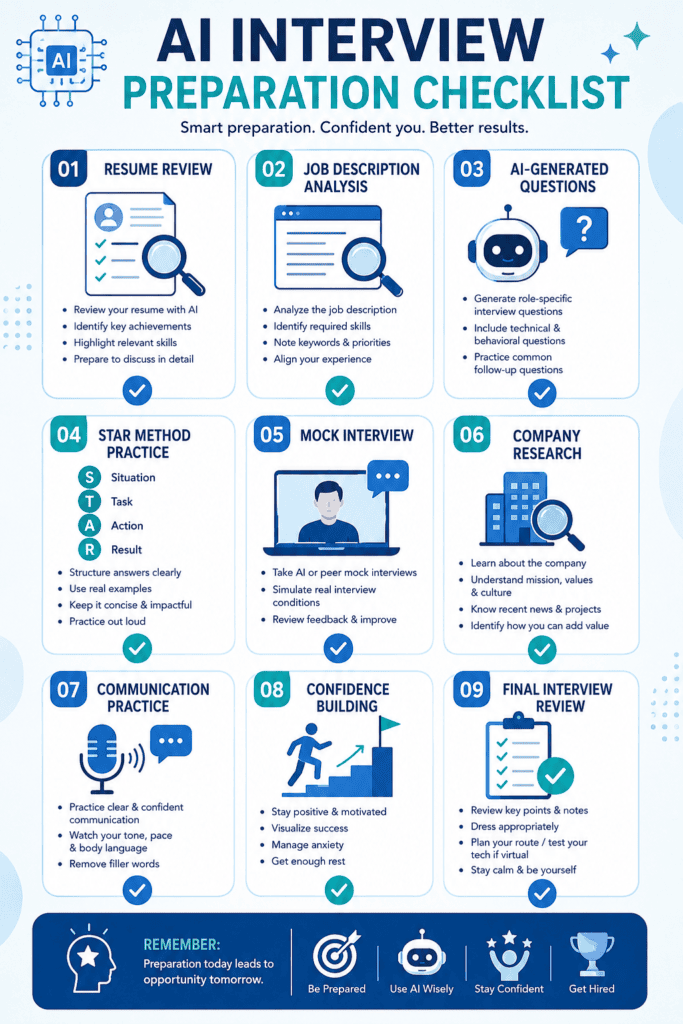
This section evaluates the remaining five AI interview question generator tools using the same consistent framework for easy side-by-side comparisons. Because AI tools evolve quickly, always verify the latest features, supported interview types, pricing, and free plan limits on each provider’s official website before choosing a tool.
Interviewing.io
Interviewing.io is a specialized technical preparation platform engineered specifically for software engineers, backend developers, and systems architects. Unlike general-purpose AI interview question generator tools that focus on broad behavioral prompts, Interviewing.io centers entirely on hard technical hiring—focusing on Data Structures & Algorithms (DSA), System Design, and algorithmic problem-solving.
While its flagship offering consists of paid, anonymous mock interviews with senior engineers from top tech firms (Google, Meta, Amazon), it also incorporates AI-driven mock interviewing tools and code analysis features tailored to high-stakes FAANG-level engineering rounds.
Platform Specifications
| Metric | Specification |
| Device Type | Web application (Browser-based) |
| Compatibility | Any modern web browser across Windows, macOS, Linux, and Mobile |
| Best For | Software Engineers, Full-Stack Developers, Systems Architects, Data Engineers, and candidates targeting Big Tech/FAANG coding rounds |
| Estimated Price Range | Free Resources: Public interview replays & peer mock sessions; AI Practice: Included with platform membership; Live Expert Mocks: $179 – $339+ per session with senior FAANG engineers |
| SkillDential Rating | 9.0 / 10 |
Key AI Features & Capabilities
- FAANG-Calibrated AI Interviewer: Simulates live algorithmic coding rounds using dynamic technical questions sourced from top tech interview loops.
- Integrated Collaborative Code Editor: Features a real-time coding environment where users can write, execute, and debug code while answering prompts.
- System Design & Architecture Simulations: Generates high-level system design scenarios (e.g., “Design a scalable rate limiter or distributed key-value store”).
- AI Transcript & Code Performance Reviews: Breaks down efficiency, time complexity ($O(n)$), space complexity, and architectural trade-offs following practice rounds.
- Peer & Expert Mock Transition: Seamlessly bridges AI-guided practice with peer-to-peer and senior engineer mock sessions for final calibration.
Feature Availability Matrix
| Feature | Availability | Notes |
| Question Generation | Yes | Specialized coding, system design, and technical prompts |
| Mock Interview Mode | Yes | Technical practice sessions using built-in code editors |
| AI Technical Feedback | Yes | Evaluates code complexity, logic correctness, and system design |
| Live Coding Execution | Yes | Environment supports running and testing code snippets directly |
| Behavioral Coverage | Limited | Primary focus is engineering technical rounds; minimal general HR prep |
| Resume & CV Analysis | Limited | Tailors questions toward technical stack rather than general resume parsing |
Pros & Cons
Pros
- Unrivaled Technical Depth: Designed specifically for real engineering interviews rather than generic Q&A.
- Integrated Execution Environment: Allows candidates to write code and solve problems directly inside the platform.
- Realistic High-Pressure Practice: Mirrors the exact browser interface and environment used in technical phone screens.
- Anonymity & Realism: Anonymized setup removes hiring bias and allows true trial-by-fire rehearsal.
Cons
- Niche Audience: Strictly engineered for software engineering; not suitable for non-technical roles (marketing, HR, product sales).
- High Cost for Human Mocks: Live human expert sessions ($179–$339+ each) are expensive for early-career developers.
Privacy & Data Handling Considerations
Data Notice: Interviewing.io uses anonymous identifiers during mock sessions to protect user identity. Code solutions, audio transcripts, and session telemetry are stored securely under your user account for progress tracking and feedback review.
Top Alternatives
- ChatGPT / Claude: Excellent for free code generation, explaining time complexity, and generating custom LeetCode-style questions.
- Final Round AI: Stronger for candidates who need multi-role support (PM, behavioral, engineering) and real-time live call overlays.
- Huru: Better for mobile-first video practice and job-description scanning across non-technical domains.
Verdict
SkillDential Take: For software engineers and technical candidates aiming for FAANG-level technical rounds, Interviewing.io offers a far more realistic coding environment than generic AI interview tools. While expensive for human coaching, its AI and technical resources provide exceptional value for engineering-focused preparation.
InterviewBuddy
InterviewBuddy is a hybrid interview preparation platform that bridges automated practice with human expertise. While originally built around live, 1:1 mock interview sessions with industry professionals, the platform has expanded its ecosystem to include an AI interview question generator engine, automated sentiment analysis, and scorecards.
This dual approach allows job seekers to run quick, low-cost AI practice rounds to polish their answers, then optionally seamlessly escalate to a live, human-led mock interview for personalized coaching and executive-level feedback.
Platform Specifications
| Metric | Specification |
| Device Type | Web application (Browser-based) |
| Compatibility | Any modern web browser across Windows, macOS, Linux, and Mobile |
| Best For | Early- to mid-career professionals, MBA graduates, corporate applicants, and candidates who want structured AI practice backed by optional human mentor reviews |
| Estimated Price Range | AI Practice Tier: ~$5.99 for automated AI mock sessions with unlimited retries; Live Expert Add-On: $25 – $50+ per human-led mock session |
| SkillDential Rating | 8.8 / 10 |
Key AI Features & Capabilities
- Role-Specific AI Question Engine: Generates practice questions across 350+ job roles, from tech and software engineering to marketing, finance, and human resources.
- Automated Sentiment & Tone Analysis: Evaluates voice responses to pinpoint confidence levels, delivery clarity, and overall emotional tone during mock rounds.
- Structured Scorecards & Reports: Produces post-session performance diagnostics highlighting candidate strengths, key missing details, and concrete areas for improvement.
- On-Demand Practice Loops: Allows candidates to attempt questions multiple times to fine-tune answers without waiting for scheduled appointments.
- Seamless Human Expert Escalation: Option to book live 1:1 video mock interviews with senior recruiters or domain experts directly from your AI practice dashboard.
Feature Availability Matrix
| Feature | Availability | Notes |
| Question Generation | Yes | Generates domain-specific situational and behavioral prompts |
| Mock Interview Mode | Yes | Async AI practice rounds or scheduled live video sessions |
| AI Sentiment & Scoring | Yes | Evaluates vocal tone, clarity, and response structure |
| Live Human Expert Add-On | Yes | 1:1 sessions with industry hiring managers and recruiters |
| Resume & CV Personalization | Partial | Tailors questions based on target domain and experience inputs |
| Live Coding Execution | Limited | General technical concepts; lacks a dedicated live IDE/compiler |
Pros & Cons
Pros
- Best of Both Worlds: Blends inexpensive, instant AI practice with real human interviewer feedback on a single platform.
- Low-Cost Entry Point: The $5.99 AI tier makes structured mock practice and scorecards accessible without heavy subscription commitments.
- Comprehensive Scorecards: Provides actionable feedback on communication style, confidence, and answer completeness.
Cons
- Less Advanced AI Feature Set: Lacks live call overlays (Copilot), eye-contact tracking, or automated coding environments found on specialized AI platforms.
- Human Mocks Require Scheduling: Unlike 24/7 AI tools, human-led mock sessions require advanced booking.
Privacy & Data Handling Considerations
Data Notice: InterviewBuddy records audio/video during mock practice and human-led sessions to generate feedback scorecards. Practice transcripts and session recordings are stored under user accounts. Review their data retention settings before sharing proprietary employer or candidate information.
Top Alternatives
- Huru: Stronger for automated speech/facial analytics and job board browser scanning.
- Yoodli: Superior for in-depth communication coaching, filler word tracking, and vocal pacing.
- ChatGPT: Ideal for completely free, prompt-driven text practice and answer refinement without paid add-ons.
Verdict
SkillDential Take: InterviewBuddy is an excellent choice for candidates who prefer a structured, traditional mock-interview workflow backed by real-world hiring rubrics. While its standalone AI capabilities are simpler than those of dedicated AI copilot tools, its ability to bridge budget-friendly AI practice with expert human feedback makes it a valuable hybrid tool.
Claude
Claude (developed by Anthropic) is a frontier conversational AI assistant that doubles as a powerful AI interview question generator. While it is not a purpose-built, single-use interview platform, its massive context handling capabilities, exceptional reasoning depth, and natural writing style make it one of the premier tools for deep candidate preparation.
For job seekers preparing for high-level management, consulting, technical, or knowledge-work roles, Claude excels at breaking down complex job descriptions, reviewing resumes with a critical eye, and evaluating STAR method behavioral responses.
Platform Specifications
| Metric | Specification |
| Device Type | Web application, Mobile apps (iOS & Android), Desktop apps (macOS & Windows) |
| Compatibility | Windows, macOS, Linux, Android, iOS, and all modern Web Browsers |
| Best For | Knowledge workers, software engineers, product managers, management consultants, executives, and students needing deep, nuanced feedback |
| Estimated Price Range | Free Plan available; Pro Subscription ($20/month) for priority access, higher message limits, and flagship model access; Max Plans ($100–$200/month) for extreme power-user capacity |
| SkillDential Rating | 9.4 / 10 |
Key AI Features & Capabilities
- Long-Context Resume & JD Analysis: Accepts full PDF uploads of lengthier resumes, portfolios, and dense enterprise job descriptions without losing context.
- Deep Reasoning & Answer Critiques: Analyzes written answers against real-world leadership frameworks, highlighting vague statements and suggesting specific data-driven improvements.
- Dynamic Interactive Mock Interviews: Simulates strict, multi-turn interview sessions where Claude acts as a hiring manager and asks follow-up questions based on your specific responses.
- STAR Framework Optimization: Re-architects loose behavioral anecdotes into sharp Situation, Task, Action, and Result narratives.
- Artifacts Feature for Practice Rubrics: Generates clean, side-by-side reference sheets, interview cheat sheets, and custom response frameworks right next to your chat session.
Plaintext
                  CLAUDE DEEP INTERVIEW PREPARATION FLOW
  ┌──────────────────┐     ┌───────────────────┐     ┌──────────────────┐
  │ Upload CV + Long │ ──► │ Claude Extracts   │ ──► │ Simulates        │
  │ Job Description  │     │ Core Skill Gaps   │     │ Adaptive Multi-  │
  └──────────────────┘     └───────────────────┘     │ Turn Mock Round  │
                                                     └──────────────────┘
                                                              │
                                                              ▼
                                                    ┌──────────────────┐
                                                    │ Generates Side-  │
                                                    │ by-Side Artifact │
                                                    │ Scorecard & STAR │
                                                    │ Improvements     │
                                                    └──────────────────┘
Feature Availability Matrix
| Feature | Availability | Notes |
| Question Generation | Yes | Fully custom questions driven by prompt engineering |
| Mock Interview Mode | Yes | Multi-turn conversational practice through chat or mobile apps |
| Resume & CV Analysis | Yes | Analyzes uploaded documents, PDFs, and past work history |
| Technical & System Design | Yes | Strong architectural logic, code reviews, and technical reasoning |
| Speech & Facial Analytics | No | Lacks built-in vocal filler word tracking or webcam video analytics |
| Automated Visual Dashboards | No | Does not output automated visual charts; feedback is given in written form |
Pros & Cons
Pros
- Exceptional Nuance & Tone: Produces answer feedback that sounds human, natural, and highly professional—avoiding generic AI filler.
- Massive Context Window: Can read and cross-reference entire company annual reports, project portfolios, and multi-page resumes simultaneously.
- Superior STAR Structuring: Outperformed most standalone tools in refining behavioral stories for senior leadership positions.
- Projects & Artifacts Workspaces: Keeps custom preparation decks, role-play system prompts, and master answer keys neatly organized.
Cons
- Requires Good Prompting: Does not feature a single-click “Start Interview” button; output quality depends on user prompts.
- No Native Speech Analytics Dashboard: Lacks built-in metrics for tracking speaking speed (WPM), eye contact, or vocal filler words.
Privacy & Data Handling Considerations
Data Notice: When uploading resumes or internal employer job documents to Claude, review Anthropic’s data privacy controls. Users can opt out of model training in account settings, and Pro/Team accounts offer enhanced privacy standards.
Top Alternatives
- ChatGPT: Stronger for interactive hands-free audio conversation via Advanced Voice Mode.
- Google Gemini: Superior for direct integration with live Google Workspace files (Docs, Drive, Gmail).
- Yoodli: Better suited for candidate preparation requiring dedicated audio/video delivery analytics.
Verdict
SkillDential Take: Claude is a top-tier general AI assistant for candidates who value depth, nuance, and thoughtful feedback over flashy visual dashboards. When paired with strong prompts, it acts as an elite executive interview coach that helps refine complex behavioral and technical stories.
Gemini
Gemini (developed by Google) serves as a versatile, general-purpose AI interview question generator deeply connected to the Google ecosystem. Powered by Google’s multimodal Gemini models, it excels at real-time company research, parsing job descriptions stored in Google Docs, and analyzing candidate materials directly within Google Drive and Workspace workflows.
While it lacks a single-purpose, dedicated interview interface with built-in speech rubrics, its ability to connect web search with document analysis makes it a useful assistant for researching company culture, generating role-specific questions, and running practice chat loops.
Platform Specifications
| Metric | Specification |
| Device Type | Web application, Mobile apps (iOS & Android) |
| Compatibility | Windows, macOS, Linux, Android, iOS, and all modern Web Browsers |
| Best For | Students, knowledge workers, professionals invested in Google Workspace (Docs, Drive, Gmail), and candidates conducting real-time company research |
| Estimated Price Range | Free Plan available (Access to standard Gemini models); Gemini Advanced / Google One AI Premium (~$19.99/month) for higher usage limits, flagship models, and deep Workspace integration |
| SkillDential Rating | 9.2 / 10 |
Key AI Features & Capabilities
- Real-Time Search & Company Intel: Pulls up-to-date company news, recent product releases, and strategic initiatives to help formulate highly relevant interview questions.
- Google Workspace Integration: Direct access to job descriptions, resumes, and preparation notes stored in Google Drive, Docs, and Gmail without manual copying.
- Multimodal File & Image Processing: Accepts document uploads, charts, and technical diagrams to ask contextual questions about visual project portfolios.
- Gemini Live Voice Conversations: Allows hands-free audio mock interviews on mobile devices, enabling spoken response practice.
- STAR Method Feedback: Reviews candidate answers to verify if they adequately cover the Situation, Task, Action, and Result.
Plaintext
                  GEMINI ECOSYSTEM PREPARATION FLOW
  ┌──────────────────┐     ┌───────────────────┐     ┌──────────────────┐
  │ Access JD & CV   │ ──► │ Run Live Google   │ ──► │ Generate Role    │
  │ via Google Drive │     │ Web Search for    │     │ Questions + STAR │
  └──────────────────┘     │ Company News      │     │ Practice Session │
                           └───────────────────┘     └──────────────────┘
                                                              │
                                                              ▼
                                                    ┌──────────────────┐
                                                    │ Practice via     │
                                                    │ Gemini Live      │
                                                    │ Audio Mode       │
                                                    └──────────────────┘
Feature Availability Matrix
| Feature | Availability | Notes |
| Question Generation | Yes | Driven by user prompts and job description inputs |
| Mock Interview Mode | Yes | Conversational back-and-forth chat or dynamic voice sessions via Gemini Live |
| Real-Time Web Research | Yes | Native integration with Google Search for up-to-date company intel |
| Workspace Integration | Yes | Connects directly with Google Docs, Drive, and Gmail |
| Technical & Coding Help | Yes | Code reviews, technical Q&A, and algorithmic explanations |
| Dedicated Speech Analytics | No | Lacks automated filler word, vocal pacing (WPM), or webcam tracking dashboards |
Pros & Cons
Pros
- Native Google Integration: Pulls data seamlessly from Google Drive, Docs, and Gmail.
- Up-to-the-Minute Research: Google Search integration ensures generated questions reflect recent company developments and public news.
- Smooth Mobile Audio Practice: Gemini Live provides a fluid, conversational audio experience for speaking practice.
- Generous Free Tier: Provides access to capable models without strict initial message paywalls.
Cons
- Requires Custom Prompting: No dedicated “Start Mock Interview” button; setup relies on structured user prompts.
- Lacks Granular Performance Scoring: Does not generate visual dashboard reports tracking filler words, eye contact, or vocal speed.
Privacy & Data Handling Considerations
Data Notice: When uploading resumes or sensitive employment documents to Gemini, review your Google Account data control settings. Enterprise Workspace accounts benefit from organizational privacy controls, while consumer accounts can adjust Activity preferences to limit data retention.
Top Alternatives
- ChatGPT: Stronger for custom prompt flexibility and Advanced Voice conversation loops.
- Claude: Superior for long-form context handling, nuanced writing, and deep STAR behavioral critiques.
- Yoodli: Better suited for candidates needing visual eye-contact metrics and filler word tracking.
Verdict
SkillDential Take: Gemini is an efficient general-purpose assistant for candidates who rely on Google Workspace and need real-time company research integrated into their practice. While it doesn’t offer the visual speech analytics of dedicated interview suites, pairing its research capabilities with Gemini Live voice mode creates a reliable preparation workflow.
Microsoft Copilot
Microsoft Copilot is an AI assistant deeply integrated into the Microsoft 365 ecosystem. While it is a general-purpose productivity assistant rather than a dedicated interview platform, its native connections across Word, PowerPoint, Teams, Outlook, and OneNote allow users to draft personalized interview prep documents, research target companies, and practice answering questions within their everyday tools.
For candidates preparing for corporate, office, or enterprise roles—or managers building interview rubrics—Copilot simplifies synthesizing long job descriptions, structuring STAR method responses, and running interactive practice chats directly on Windows or within Web/Mobile apps.
Platform Specifications
| Metric | Specification |
| Device Type | Web application, Native Windows app, iOS & Android mobile apps, Microsoft 365 desktop apps |
| Compatibility | Windows, macOS, Linux, iOS, Android, and all modern Web Browsers |
| Best For | Microsoft 365 users, corporate professionals, enterprise candidates, recruiters, and students seeking seamless document-based preparation |
| Estimated Price Range | Free Version: Standard AI chat on Web & Windows; Copilot Pro: $20/user/month (Individual M365 integration); Microsoft 365 Copilot (Business/Enterprise): $18–$30/user/month add-on |
| SkillDential Rating | 9.1 / 10 |
Key AI Features & Capabilities
- Document-Based Question Generation: Ingests long job descriptions and resume drafts saved in Word or OneDrive to output tailored role-specific interview questions.
- Dual Reasoning Model Selector: Features standard quick responses alongside deeper reasoning options (e.g., GPT-5.2) to break down complex technical scenarios or industry-specific questions.
- Microsoft 365 Ecosystem Integration: Drafts practice answer sheets in Word, converts prep notes into PowerPoint slide decks, or summarizes meeting/interview prep notes automatically.
- STAR Narrative Refinement: Evaluates candidate responses directly in Word or chat to refine the Situation, Task, Action, and Result framing.
- Real-Time Search & Web Grounding: Uses Bing Search grounding to pull current company news, recent product releases, and strategic priorities for pre-interview research.
Plaintext
                  COPILOT WORKFLOW PREPARATION FLOW
  ┌──────────────────┐     ┌───────────────────┐     ┌──────────────────┐
  │ Open Target JD   │ ──► │ Copilot Extracts  │ ──► │ Conduct Practice │
  │ in Microsoft Word│     │ Key Competencies  │     │ Chat / Voice     │
  └──────────────────┘     └───────────────────┘     │ Mock Session     │
                                                     └──────────────────┘
                                                              │
                                                              ▼
                                                    ┌──────────────────┐
                                                    │ Export Prep Deck │
                                                    │ to PowerPoint or │
                                                    │ Word Cheat Sheet │
                                                    └──────────────────┘
Feature Availability Matrix
| Feature | Availability | Notes |
| Question Generation | Yes | Driven by user prompts, document inputs, or job descriptions |
| Mock Interview Mode | Yes | Conversational chat practice or voice interaction via mobile/desktop apps |
| Microsoft 365 Integration | Yes | Direct integration across Word, Excel, PowerPoint, Teams, and Outlook |
| Resume & CV Analysis | Yes | Summarizes, reviews, and cross-references CVs against target roles |
| Technical & Coding Help | Yes | Explains technical concepts, generates code snippets, and reviews logic |
| Dedicated Speech Analytics | No | Does not offer built-in video eye-contact tracking or automatic filler word dashboards |
Pros & Cons
Pros
- Deep Office & Productivity Integration: Seamlessly generates interview cheat sheets in Word and presentation decks in PowerPoint.
- Enterprise-Grade Security: Enterprise versions respect organization-level permissions and data governance controls via Microsoft Purview.
- Familiar Interface: Easy to adopt for professionals who already spend their working day inside Windows and Microsoft 365.
- Smarter Web & File Search: Combines web data with internal OneDrive/SharePoint context for comprehensive company research.
Cons
- No Dedicated Coaching Dashboard: Lacks built-in speech dashboards for tracking vocal pacing (WPM), filler words, or body language.
- Requires Setup via Prompts: Does not feature a one-click “Start Interview” wizard—quality depends on how well you structure your prompts.
Privacy & Data Handling Considerations
Data Notice: When using Microsoft Copilot within an enterprise Microsoft 365 environment, your queries adhere to organizational data governance policies. Personal users should verify account privacy settings when pasting confidential employer materials or sensitive resumes.
Top Alternatives
- ChatGPT: Offers greater flexibility for standalone voice interactions and prompt-based mock interviews.
- Claude: Superior for long-form context handling, nuanced writing, and deep STAR behavioral story coaching.
- Yoodli: Better suited for candidates needing visual eye-contact metrics and automated filler word tracking.
Verdict
SkillDential Take: Microsoft Copilot is a practical choice for corporate professionals and job seekers who want interview preparation integrated into their existing Microsoft workflow. While it lacks the specialized speech analytics of dedicated interview platforms, its ability to draft prep notes, refine STAR answers, and build interview decks inside Word and PowerPoint makes it a powerful asset.
Comparison Summary: Top AI Interview Question Generators
To help you choose the right tool for your specific preparation goals, here is how the top AI interview question generator platforms compare across free plan limits, mock interview formats, feedback depth, and primary target use cases:
| Tool | Free Plan | Mock Interviews | AI Feedback | Resume-Based Questions | Best For |
| ChatGPT | Full | Yes | Prompt-based | Yes | Overall flexibility & multi-role preparation |
| Final Round AI | Limited | Yes | Yes | Yes | High-stakes & competitive hiring rounds |
| Google Interview Warmup | Full | Yes | Basic | No | Beginners & career certificate learners |
| Yoodli | Limited | Yes | Yes | Partial | Vocal pacing, filler words, & speech delivery |
| Interviews by AI | Limited | Yes | Yes | Partial | Quick, job-description-driven STAR prep |
| Huru | Limited | Yes | Yes | Yes | Active applicants applying across job boards |
| Interviewing.io | Partial | Yes | Technical | No | Software engineers & technical coding rounds |
| InterviewBuddy | Partial | Yes | Human + AI | No | Hybrid AI practice with expert human review |
| Claude | Full | Yes | Prompt-based | Yes | Deep reasoning & STAR story refinement |
| Gemini | Full | Yes | Prompt-based | Yes | Google Workspace users & real-time research |
| Microsoft Copilot | Full | Yes | Prompt-based | Yes | Corporate workflows (Word, M365, Windows) |
Quick Decision Guide
- Best Overall Free Choice: ChatGPT or Claude (for prompt-driven flexibility, custom STAR coaching, and unlimited question generation).
- Best for Speech & Delivery: Yoodli (for automated filler word, vocal pacing, and confidence analytics).
- Best for Job Board Applicants: Huru (for scanning live job listings with a Chrome extension).
- Best for Software Engineers: Interviewing.io or Final Round AI (for coding interviews, system design, and technical depth).
- Best for Google/Microsoft Ecosystems: Gemini (Google Workspace) or Microsoft Copilot (Word & M365).
For a deeper dive into the systems-driven approach behind evaluating high-leverage digital skills, check the video above; it provides valuable context on how to analyze skill demand and structure your professional learning for maximum ROI.
Decision Matrix: Which AI Tool Should You Choose?
Selecting the right AI interview question generator depends on your job role, technical requirements, and target outcome. Use this decision matrix to match your current situation with the highest-leverage tool:
| If You Are… | Recommended Tool(s) | Primary Advantage |
| A student preparing for internships | Google Interview Warmup, ChatGPT | Free, low-friction practice across entry-level foundational tracks |
| A recent graduate | ChatGPT, Gemini | Excellent for general behavioral prep and real-time company research |
| A software engineer | Interviewing.io, Final Round AI | High technical depth, live coding environments, and system design |
| A data scientist | ChatGPT, Claude | Superior math, SQL, machine learning, and analytical reasoning |
| A marketing professional | ChatGPT, Yoodli | Combines campaign strategy practice with vocal pacing & speech delivery |
| A customer service applicant | Yoodli, Huru | Focuses on communication clarity, tone, and non-verbal confidence |
| A manager or executive | Claude, ChatGPT | Deep STAR framework story alignment and complex leadership scenarios |
| A recruiter creating interview questions | ChatGPT, Microsoft Copilot | Fast question rubric generation and seamless export to Word/M365 |
| A career coach | ChatGPT, Claude | Highly customizable prompt workflows and granular answer feedback |
| Looking for the best overall free option | ChatGPT | Unlimited prompt-driven practice, answer critiques, and voice mode |
25 Ready-to-Use ChatGPT Prompts for Interview Preparation
One of ChatGPT’s biggest strengths is its ability to generate interview questions tailored to your role, industry, experience level, and target employer. Rather than asking for generic interview questions, provide specific context to receive more realistic, relevant, and personalized practice that closely matches your actual interview.
Part 1: General Interview Prompts
Entry-Level Marketing Assistant (20 Questions + Model Answers)
Prompt:
“Act as a Senior Hiring Manager in Digital Marketing. Generate a structured list of 20 interview questions for an entry-level Marketing Assistant position. Categorize them into 5 Behavioral, 5 Situational, 5 Technical (SEO, Social Media, Content Analytics), and 5 Culture/Motivation questions. For every question, provide a high-scoring sample answer written from the perspective of an ambitious candidate, accompanied by a brief commentary explaining what key signals the interviewer is looking for.”
Experienced Senior Project Manager (Interactive Multi-Turn)
Prompt:
“Act as a Principal Director at a Fortune 500 company interviewing me for a Senior Project Manager position (8+ years of experience required). We will conduct a dynamic, realistic interview. Follow these rules:
- Ask me one question at a time focusing on risk management, stakeholder conflict, budget overruns, or scope creep.
- Wait for my response before proceeding.
- After I answer, evaluate my response using a 1–10 scale based on executive presence, risk mitigation, and quantifiable metrics. Point out what was strong and what was missing.
- Then, ask a follow-up probe or move to the next question. Start by introducing yourself and asking your first question.”
Resume-Aware Contextual Interview
Prompt:
“I am going to paste my resume below. Act as an expert executive recruiter. Analyze my resume and generate 10 highly specific interview questions based strictly on my work experience, career progression, gaps, toolsets, and project bullet points. For each question, add a ‘Recruiter Insight’ note explaining exactly why an interviewer would flag that item or ask that question based on my background.
[PASTE YOUR RESUME HERE]”
Company-Specific: Google Product Manager
Prompt:
“Act as a Google Principal Product Manager conducting an onsite PM loop interview. Generate a set of 8 realistic interview questions tailored specifically to Google’s product philosophy and interview rubrics. Divide them into:
- 2 Product Design/Execution questions
- 2 Product Strategy & Fermi Estimation questions
- 2 Technical System Architecture for PMs questions
- 2 ‘Googleyness’ & Leadership questions (evaluating ambiguity, collaboration, and user-first mindset)For each question, detail the exact framework (e.g., CIRCLES) and criteria a Google candidate must use to achieve a ‘Strong Hire’ rating.”
Interactive STAR Method Coach
Prompt:
“Act as an executive interview coach specializing in behavioral interviewing. Ask me one behavioral question at a time. After I answer, break down my response using the STAR framework:
- Situation: Did I set clear context without rambling?
- Task: Was my responsibility explicit?
- Action: Did I highlight my specific contribution (using ‘I’ instead of ‘we’)?
- Result: Did I include quantifiable outcomes, numbers, or lessons learned?Provide a revised, high-impact version of my answer, then ask the next question. Start by asking me your first behavioral question.”
Part 2: Technical Interview Prompts
Backend Engineering (Python & PostgreSQL)
Prompt:
“Act as a Staff Backend Engineer conducting a technical interview for a Mid-Senior Python/PostgreSQL role. Structure the session into three phases:
- System & Language Fundamentals: Ask 3 deep-dive questions on Python concurrency (asyncio vs. multiprocessing), ORM overhead vs. raw SQL, and PostgreSQL transaction isolation levels.
- Live Coding Challenge: Provide a python/SQL problem statement involving database locking, race conditions, or query optimization.
- Architecture Tradeoffs: Ask a situational question regarding database connection pooling (e.g., PgBouncer) and caching layers (Redis).Provide the ideal solution and explanation for each phase.”
Advanced Machine Learning & AI
Prompt:
“Act as a Lead AI Research Scientist interviewing a Senior Data Scientist. Ask me an advanced Machine Learning question regarding model architecture, bias-variance tradeoff, or LLM fine-tuning/RAG pipelines.
Do not give me the full answer right away. Ask the primary question, wait for my response, and then present 2 aggressive follow-up probes designed to test my deep conceptual understanding and mathematical intuition. Start with Question 1.”
Cybersecurity Incident Response & Network Security
Prompt:
“Act as a Chief Information Security Officer (CISO). Simulate a high-pressure interview scenario for a Senior Cybersecurity Analyst. Present an active Incident Response scenario (e.g., detected unauthorized lateral movement, potential ransomware execution, or suspicious DNS exfiltration).
Walk me through the incident step-by-step. Ask me what immediate containment, eradication, and post-incident investigation actions I would take. Rate my answers against the NIST SP 800-61 incident handling guide.”
AWS Solutions Architect (With Model Answers)
Prompt:
“Act as an Enterprise Cloud Architect. Generate 5 scenario-based AWS Solutions Architect interview questions targeting multi-region high availability, cost optimization, disaster recovery (RPO/RTO), and security.
For every scenario, provide a comprehensive Model Answer mapped directly to the AWS Well-Architected Framework pillars (Operational Excellence, Security, Reliability, Performance Efficiency, Cost Optimization, Sustainability).”
Progressive SQL Masterclass
Prompt:
“Act as a Lead Data Engineer. Create a 5-stage SQL coding interview designed to test progressive skill levels using a hypothetical
E-Commerce (Orders, Users, Products, Payments)database schema:
- Easy: Multi-table
JOINwith aggregations andHAVINGfilters.- Medium: Window Functions (
ROW_NUMBER(),DENSE_RANK(), orLEAD/LAG) to compute running totals or period-over-period growth.- Hard: Complex CTEs (Common Table Expressions) to analyze user churn or cohort retention.
- Expert: Query optimization—analyze a slow query, explain index usage (B-Tree vs Hash), and rewrite for performance.
- Scenario: Handling duplicate data or missing timestamps gracefully.Show the schema, state each problem clearly, and provide the fully optimized SQL code along with an explanation of why it works.”
Part 3: Behavioral Interview Prompts
Here is a targeted collection of interactive Behavioral Interview Prompts covering all five core categories.
Each prompt is engineered with strict roleplay boundaries, custom scoring rubrics (evaluating the STAR framework: Situation, Task, Action, Result), mandatory follow-up probes, and constructive feedback loops.
Leadership Prompts
Option A: Interactive Roleplay (One Question at a Time)
Prompt:
“Act as a Senior Executive conducting a behavioral interview for a leadership role. Ask me one question at a time focused on Leadership (e.g., driving team alignment through uncertainty, delegating under pressure, or mentoring low performers).
Wait for my response. After I answer:
- Evaluate my answer using the STAR framework. Identify whether I clearly articulated Situation, Task, Action, and Result.
- Point out specific strengths and missing details (e.g., quantifying the outcome or using ‘I’ instead of ‘we’).
- Ask 2 targeted follow-up questions designed to probe deeper into my decision-making or team impact.
- Wait for my response to those follow-ups before giving final feedback and moving to the next scenario. Start by introducing yourself and asking the first question.”
Option B: Batch Generation (Questions + Answer Evaluation Template)
Prompt:
“Generate 5 challenging behavioral interview questions centered on Leadership & Ownership. For each question, include:
- What the Interviewer Is Really Testing: (e.g., delegation, emotional intelligence, strategic direction).
- 2 Probing Follow-Up Questions: Questions an interviewer will ask to dig into my actual contributions.
- Constructive Evaluation Rubric: A checklist of what constitutes a ‘Weak Answer’ vs. a ‘Strong STAR Answer’.”
Conflict Resolution Prompts
Option A: Interactive Roleplay (One Question at a Time)
Prompt:
“Act as a Hiring Manager interviewing me for a role that requires strong cross-functional collaboration. Ask me a behavioral question about Conflict Resolution (e.g., navigating a disagreement with a peer, handling pushback from a senior stakeholder, or resolving conflicting project priorities).
Wait for my response. Once I answer:
- Evaluate my response on a 1–10 scale based on emotional intelligence, professionalism, and problem-solving focus.
- Highlight any red flags (e.g., placing blame, being passive-aggressive, or focusing on emotions over resolution).
- Ask 2 realistic follow-up questions to test whether the resolution was lasting and how I maintained the relationship post-conflict.
- Provide a rewritten, optimized version of my answer using the STAR method. Start with the first question.”
Option B: Batch Generation (Questions + Answer Evaluation Template)
Prompt:
“Generate 5 behavioral interview questions focusing on Conflict Resolution & Stakeholder Management. For each question, provide:
- The core competency being evaluated.
- 2 Probing Follow-Up Questions (e.g., ‘What would you do differently if you faced that same disagreement today?’).
- Feedback Checklist: Key indicators that separate a defensive answer from a constructive, high-signal response.”
Difficult Customer Prompts
Option A: Interactive Roleplay (One Question at a Time)
Prompt:
“Act as a Customer Success Director interviewing me for a client-facing position. Ask me one behavioral question at a time about handling Difficult Customers or Stakeholders (e.g., de-escalating an angry client, managing unrealistic expectations, or turning around a failing client relationship).
Wait for my response. After I reply:
- Critique my answer against the STAR framework (focusing on empathy, active listening, and measurable resolution).
- Ask 2 probing follow-up questions (e.g., ‘How did you prevent this customer issue from happening again across the broader system?’).
- Give actionable recommendations on how to better highlight customer retention metrics or quantifiable business impact. Begin by asking the first question.”
Option B: Batch Generation (Questions + Answer Evaluation Template)
Prompt:
“Generate 5 high-stakes behavioral interview questions targeting Customer Service, Client Management, & Escalation De-escalation. For each question, list:
- The hidden criteria interviewers look for (e.g., composure under fire, boundary-setting, root-cause analysis).
- 2 Follow-Up Probes to test whether the resolution was sustainable.
- Feedback Rubric: How to structure the ‘Action’ and ‘Result’ steps of the STAR method for client scenarios.”
Teamwork Prompts
Option A: Interactive Roleplay (One Question at a Time)
Prompt:
“Act as a Lead Recruiter evaluating my ability to work in team environments. Ask me one behavioral question about Teamwork & Collaboration (e.g., working with a missing team member, supporting a struggling colleague, or collaborating across remote/cross-functional teams).
Wait for my response. After I answer:
- Evaluate my balance of ‘I’ vs. ‘We’—ensure I highlight my specific personal contribution while remaining a collaborative team player.
- Point out missing details regarding communication channels, alignment strategies, or team outcomes.
- Ask 2 follow-up questions to explore how I managed team dynamics under pressure.
- Provide constructive feedback to make my story more impactful. Start with the first question.”
Option B: Batch Generation (Questions + Answer Evaluation Template)
Prompt:
“Generate 5 behavioral questions focused on Cross-Functional Teamwork & Inclusion. For each question, include:
- Target Competency: What the interviewer wants to uncover.
- 2 Follow-Up Probes: Questions designed to verify my individual role vs. the broader team’s work.
- Evaluation Criteria: A guide on how to articulate personal accountability within a group project.”
Failure and Lessons Learned Prompts
Option A: Interactive Roleplay (One Question at a Time)
Prompt:
“Act as a Vice President conducting a final-round interview. Ask me one behavioral question about Failure, Mistakes, or Lessons Learned (e.g., missing a major deadline, launching a feature that failed, or making a critical strategic misstep).
Wait for my response. After I respond:
- Score my self-awareness, accountability, and psychological resilience. Flag any instances where I blamed external factors or minimized the mistake.
- Evaluate my ‘Result/Learning’ phase—did I demonstrate a permanent, durable change in how I work?
- Ask 2 rigorous follow-up questions (e.g., ‘How did you communicate this failure to senior leadership at the moment it happened?’).
- Give step-by-step constructive feedback to turn the failure story into a powerful demonstration of growth. Start with the first question.”
Option B: Batch Generation (Questions + Answer Evaluation Template)
Prompt:
“Create 5 behavioral questions centered on Failure, Accountability, & Resilience. For each question, include:
- The Interviewer’s Goal: (e.g., checking for ego, adaptability, and continuous learning).
- 2 Deep-Dive Follow-Up Questions: Probes designed to test post-failure recovery and process improvement.
- Constructive Feedback Framework: How to pivot from the mistake (Task/Action) to the lasting professional insight (Result/Growth).”
Career-Specific Prompts Master Library
Below is a collection of structured, production-ready prompts for 10 distinct career verticals. Each prompt uses the standard template framework—combining Technical, Behavioral, and Situational questions alongside Sample Answers and Common Mistakes to Avoid.
Sales
Plaintext
Act as a VP of Sales conducting a final-round interview. Generate a comprehensive interview question set for an Account Executive with 4 Years of Experience specializing in B2B SaaS.

Structure the response as follows:
1. Technical/Core Skills: 2 questions focusing on pipeline management, MEDDPICC framework, and contract negotiation.
2. Behavioral: 2 STAR-method questions on handling deal slippage and recovering from lost enterprise accounts.
3. Situational: 1 scenario dealing with a prospect pushing for an unviable 40% discount late in the sales cycle.
4. For every question: Provide a high-scoring sample answer written from a top-performer perspective.
5. Common Mistakes to Avoid: List 3 critical red flags candidates make during this specific interview.
Code language: PHP (php)
Human Resources (HR)
Plaintext
Act as a Head of People Operations interviewing an HR Business Partner (HRBP) with 6 Years of Experience in a high-growth tech company.

Structure the response as follows:
1. Technical/Core Skills: 2 questions on handling complex employee relations investigations and managing talent retention during company restructuring.
2. Behavioral: 2 STAR-method questions on resolving a conflict between executive leadership and aligning HR strategy with business goals.
3. Situational: 1 scenario where a high-performing manager is accused of creating a hostile work environment.
4. For every question: Provide a high-scoring sample answer demonstrating legal compliance, empathy, and business acumen.
5. Common Mistakes to Avoid: List 3 major pitfalls candidates make when answering HRBP questions.
Code language: JavaScript (javascript)
Customer Service
Plaintext
Act as a Customer Experience Manager interviewing a Customer Support Lead with 3 Years of Experience in e-commerce or SaaS.

Structure the response as follows:
1. Technical/Core Skills: 2 questions on tracking CX metrics (CSAT, NPS, CES, FCR) and managing help desk workflows (Zendesk/Freshdesk).
2. Behavioral: 2 STAR-method questions on de-escalating an enraged enterprise client and advocating for customer needs with product teams.
3. Situational: 1 scenario involving a widespread service outage that impacts hundreds of active customers simultaneously.
4. For every question: Provide a high-scoring sample answer emphasizing de-escalation, clear communication, and process improvement.
5. Common Mistakes to Avoid: List 3 common errors candidates make during customer service lead interviews.
Code language: JavaScript (javascript)
Finance
Plaintext
Act as a Chief Financial Officer (CFO) interviewing a Senior Financial Analyst with 5 Years of Experience in corporate FP&A.

Structure the response as follows:
1. Technical/Core Skills: 2 questions on 3-statement financial modeling, variance analysis, and evaluating capital expenditure (CapEx) ROI.
2. Behavioral: 2 STAR-method questions on presenting bad financial news to non-finance executives and managing tight quarter-end budget deadlines.
3. Situational: 1 scenario where revenue targets fall 15% short of forecast midway through the fiscal year.
4. For every question: Provide a high-scoring sample answer highlighting financial rigor, strategic forecasting, and data integrity.
5. Common Mistakes to Avoid: List 3 key mistakes candidates make in FP&A technical rounds.
Code language: JavaScript (javascript)
Nursing
Plaintext
Act as a Nurse Manager interviewing a Registered Nurse (RN) with 4 Years of Experience in an Acute Care / Emergency Department setting.

Structure the response as follows:
1. Technical/Core Skills: 2 questions on patient triage, medication administration safety protocols, and detecting rapid clinical deterioration.
2. Behavioral: 2 STAR-method questions on managing a high-stress shift under severe short-staffing and advocating for a patient during a physician disagreement.
3. Situational: 1 scenario where two critical patients experience sudden complications at the exact same time.
4. For every question: Provide a high-scoring sample answer demonstrating clinical competence, triage prioritization, and compassionate care.
5. Common Mistakes to Avoid: List 3 critical errors candidates make in clinical nursing interviews.
Code language: JavaScript (javascript)
Teaching
Plaintext
Act as a School Principal interviewing a High School STEM Teacher with 5 Years of Experience.

Structure the response as follows:
1. Technical/Core Skills: 2 questions on differentiated instruction, integrating educational technology (EdTech), and designing rubric-based assessments.
2. Behavioral: 2 STAR-method questions on managing disruptive classroom behavior and navigating a challenging parent-teacher conference.
3. Situational: 1 scenario where a significant portion of the class fails a standardized mid-term exam.
4. For every question: Provide a high-scoring sample answer showcasing classroom management, student engagement, and pedagogical expertise.
5. Common Mistakes to Avoid: List 3 frequent missteps candidates make during teaching interviews.
UX Design
Plaintext
Act as a Design Director interviewing a Senior UX/UI Designer with 6 Years of Experience in digital product design.

Structure the response as follows:
1. Technical/Core Skills: 2 questions on design system architecture, conducting usability testing, and translating user research into wireframes/prototypes.
2. Behavioral: 2 STAR-method questions on handling severe pushback from engineering on design feasibility and defending UX decisions against subjective executive opinions.
3. Situational: 1 scenario where usability testing reveals a core feature hypothesis was completely wrong two weeks before product launch.
4. For every question: Provide a high-scoring sample answer reflecting user-centric design principles, cross-functional collaboration, and business impact.
5. Common Mistakes to Avoid: List 3 critical mistakes candidates make when presenting portfolio stories.
Code language: JavaScript (javascript)
Business Analysis
Plaintext
Act as a Director of Business Architecture interviewing a Senior Business Analyst with 5 Years of Experience in agile software development.

Structure the response as follows:
1. Technical/Core Skills: 2 questions on eliciting requirements, gap analysis, mapping AS-IS vs. TO-BE processes, and drafting User Stories/Acceptance Criteria.
2. Behavioral: 2 STAR-method questions on managing scope creep during sprint execution and bridging misaligned communication between business stakeholders and developers.
3. Situational: 1 scenario where key business stakeholders provide conflicting requirements for a high-priority enterprise feature.
4. For every question: Provide a high-scoring sample answer demonstrating analytical structure, domain mapping, and clear documentation practices.
5. Common Mistakes to Avoid: List 3 major flaws candidates demonstrate in business analyst interviews.
Code language: PHP (php)
Digital Marketing
Plaintext
Act as a Chief Marketing Officer (CMO) interviewing a Growth Marketing Manager with 4 Years of Experience in performance marketing and paid acquisition.

Structure the response as follows:
1. Technical/Core Skills: 2 questions on multi-touch attribution modeling, A/B testing methodology, and optimizing Customer Acquisition Cost (CAC) to Lifetime Value (LTV) ratios.
2. Behavioral: 2 STAR-method questions on scaling a failing ad campaign and reallocating budget rapidly after an underperforming product launch.
3. Situational: 1 scenario where customer acquisition costs spike by 35% overnight across primary paid social channels.
4. For every question: Provide a high-scoring sample answer emphasizing data-driven decision-making, conversion rate optimization (CRO), and campaign ROI.
5. Common Mistakes to Avoid: List 3 critical errors candidates make in performance marketing rounds.
Code language: JavaScript (javascript)
AI Engineering
Plaintext
Act as a Lead AI Research Engineer interviewing a Senior AI/ML Engineer with 5 Years of Experience specializing in Large Language Models (LLMs) and MLOps.

Structure the response as follows:
1. Technical/Core Skills: 2 questions on Retrieval-Augmented Generation (RAG) architecture, fine-tuning vs. prompt engineering, and managing model latency/inference cost trade-offs.
2. Behavioral: 2 STAR-method questions on debugging silent model drift in production and convincing engineering leadership to adopt a new AI infrastructure stack.
3. Situational: 1 scenario where a production LLM feature exhibits severe hallucination rates during an enterprise pilot deployment.
4. For every question: Provide a high-scoring sample answer demonstrating deep technical rigor, system architecture awareness, and production AI reliability.
5. Common Mistakes to Avoid: List 3 critical pitfalls candidates fall into during technical AI engineering interviews.Code language: JavaScript (javascript)
Decision Checklist: How to Choose an AI Interview Question Generator
Before committing to a specific AI interview question generator, use this checklist to evaluate whether a platform aligns with your job role, budget, and privacy requirements.
┌────────────────────────────────────────────────────────────────────────┐
│                   CRITICAL SELECTION CHECKLIST                         │
├───────────────────────┬────────────────────────┬───────────────────────┤
│  1. Role Alignment    │  2. True Free Value    │  3. Actionable Feedback│
│  4. Personalization   │  5. Data Privacy       │  6. Long-Term Scale   │
└───────────────────────┴────────────────────────┴───────────────────────┘Code language: PHP (php)
Evaluation Checklist
| Key Question | Why It Matters | What to Look For |
| 1. Does it support your specific profession? | Specialized fields (e.g., software engineering, data science) require deep domain testing, whereas general managerial roles need strong STAR behavioral evaluations. | Verify whether the AI interview question generator includes live coding environments, system design prompts, or specialized industry tracks rather than generic question banks. |
| 2. Is there a genuine free plan? | “Free plans” vary widely—some offer unlimited practice, while others lock essential features behind paywalls after 3 questions. | Look for tools offering unlimited prompt-driven generation (e.g., ChatGPT, Claude) or clear recurring daily credits rather than restrictive trial tiers. |
| 3. Does it provide actionable feedback? | Generating questions is only half the battle; real growth comes from structured critiques of your answers. | Choose tools that evaluate your responses against concrete metrics like STAR alignment, vocal filler word tracking (“um,” “like”), tone, and pacing. |
| 4. Can it personalize questions to your background? | Generic lists lead to stiff, memorized answers that fail to impress real hiring managers. | Ensure the platform accepts resume uploads (PDF/text) or direct job description links to output hyper-relevant, contextual questions. |
| 5. Does it protect your personal data? | Uploading resumes, work history, or recorded voice sessions introduces privacy risks if data retention policies are weak. | Check vendor privacy terms to verify if your uploaded resume or audio recordings are excluded from public AI model training datasets. |
| 6. Can it scale as your interview rounds advance? | Your preparation needs evolve from initial HR screening calls to technical deep-dives and executive panel presentations. | Select an AI interview question generator ecosystem that offers higher-tier features—such as live call overlays, multi-turn mock interviews, or expert human reviews—as your hiring loop progresses. |
Quick Decision Framework
The 10-Second Test: If you need unlimited free text practice and STAR feedback, start with ChatGPT or Claude. If you struggle with vocal delivery, filler words, or nervous speech, pair your preparation with Yoodli. For technical coding rounds, prioritize Interviewing.io or Final Round AI.
Common Mistakes to Avoid When Using AI Interview Question Generators
While an AI interview question generator can accelerate your preparation, relying on AI blindly can backfire during actual hiring rounds. Avoid these five critical mistakes to ensure your practice translates into offer letters:
  ┌────────────────────────────────────────────────────────┐
  │                 5 PITFALLS TO ELIMINATE                │
  ├─────────────────────────┬──────────────────────────────┤
  │ 1. Memorizing AI Scripts │ 4. Skimping on Tech Prep     │
  │ 2. Skipping Direct Intel │ 5. Practicing in Silence     │
  │ 3. Using Vague Prompts  │                              │
  └─────────────────────────┴──────────────────────────────┘
Memorizing AI-Generated Responses
Interviewers do not look for rehearsed scripts; they evaluate your authentic problem-solving process. Candidates who memorize AI responses sound robotic and struggle when asked probing follow-up questions.
- The Trap: Memorizing canned answers word-for-word.
- The Fix: Use an AI interview question generator to extract core talking points, then practice explaining your experiences naturally using your own vocabulary and the STAR method.
Skipping Direct Company Research
An AI interview question generator can output great role-specific questions, but it cannot replace deep research into a company’s recent product launches, financial health, organizational culture, or strategic shifts.
| Relying Only on AI Prompts | Combining AI + Real Company Intel |
| “I know your company values innovation and scale.” | “I noticed your Q2 expansion into automated supply chain logistics. At my previous firm, I managed a similar system migration…” |
Using Generic, Low-Signal Prompts
Pasting a generic query like “Give me interview questions” forces the model to default to generic, low-value outputs like “What is your biggest weakness?”
- Weak Prompt: “Give me software engineer interview questions.”
- High-Signal Prompt: “Act as a Staff Engineer at a Series B Fintech firm. Generate 5 behavioral and technical questions for a Senior Backend Developer role focusing on microservice concurrency, AWS scaling bottlenecks, and PostgreSQL transaction locks.”
Over-Indexing on Behavioral Prep (or Ignoring It Entirely)
Candidates frequently make the mistake of over-preparing for technical coding tests while ignoring behavioral scenarios—or vice versa.
- Balanced Strategy: Use your AI interview question generator to build a 50/50 preparation split. Practice hard technical domains alongside leadership, conflict resolution, and failure recovery stories.
Practicing Answers Only in Your Head
Reading AI-generated answers silently creates a false sense of confidence. Silent reading does not train your vocal cords, vocal pacing, or verbal articulation under pressure.
- The Solution: Always speak your answers aloud. Use voice-enabled tools like Gemini Live, ChatGPT Voice Mode, or dedicated speech platforms like Yoodli to track filler words (“um,” “like”), speaking speed (WPM), and delivery confidence.
Final Recommendation: Choosing Your Ideal AI Tool
Different tools serve distinct interview preparation needs. Use this quick decision key to select the right AI interview question generator for your specific career stage:
Choose ChatGPT if you:
- Want maximum flexibility across text and hands-free voice modes
- Need unlimited prompt customization and dynamic STAR framework feedback
- Are preparing for multiple industries or switching career paths
- Want an interactive coach to refine and elevate your interview answers
Choose Final Round AI if you:
- Want structured, platform-led interview coaching
- Need realistic interview simulations and live candidate assistance
- Are preparing for competitive hiring processes (e.g., FAANG, enterprise tech, or executive loops)
Choose Yoodli if you:
- Want to improve overall communication skills, vocal tone, and speaking confidence
- Need actionable feedback on vocal pacing, filler words (“um,” “like”), and visual eye contact
- Are practicing for customer-facing, sales, or executive leadership interviews
Choose Interviewing.io if you:
- Are preparing for software engineering, full-stack, or backend technical interviews
- Want deep technical interview practice with live collaborative code execution and system design tests
Note on Free Practice Tools: If you are a beginner looking for a simple, zero-friction start to verbal practice, web-based conversational models like Gemini Live or ChatGPT Voice Mode serve as modern, interactive alternatives for free speech-to-text practice.
What is the best free AI interview question generator?
There is no single “best” tool for every candidate or scenario. ChatGPT and Claude offer the most flexible all-around free practice for custom prompts, STAR framework feedback, and unlimited question generation. Dedicated platforms like Final Round AI and Yoodli provide specialized coaching features, structured rubrics, and vocal pacing analytics.
(Note: While Google’s legacy Interview Warmup tool was a popular entry point, Google permanently retired the platform in April 2026—directing job seekers toward general-purpose conversational models like Gemini instead).
Can an AI interview question generator create company-specific questions?
Yes. Most modern tools can output company-specific questions when provided with target employer details, core leadership principles (e.g., Amazon’s 16 Leadership Principles), or direct job post links. Using web-grounded tools like Gemini or Microsoft Copilot allows you to pull recent company news, earnings reports, and strategic priorities directly into your practice prompts.
Are AI interview generators suitable for technical interviews?
Yes. Platforms like Interviewing.io and Final Round AI are engineered specifically for software engineering, system design, data science, and cloud architecture rounds. They feature built-in collaborative code editors, algorithm evaluations, and system trade-off analyses that go far beyond standard behavioral Q&A.
Can recruiters and hiring managers use AI interview question generators?
Yes. Talent acquisition teams and hiring managers frequently use an AI interview question generator to build structured interview rubrics, design role-specific candidate assessments, and eliminate bias across interview loops. However, recruiter inputs should always be reviewed by domain experts to ensure alignment with company policies and legal guidelines.
Is it safe to upload my resume or work history to an AI interview tool?
It depends on the vendor’s data handling and privacy policies. Before uploading personal resumes, confidential project bullet points, or recorded voice sessions, review the platform’s data retention terms to verify if your input data is excluded from public AI model training datasets. Enterprise-grade tools (such as Microsoft Copilot Enterprise or Yoodli Advanced) provide strict data privacy compliance for confidential information.
In Conclusion
An AI interview question generator transforms traditional interview preparation from passive reading into an active, high-feedback simulation loop. Instead of relying on static, generic question lists, candidates can now generate tailored practice scenarios, conduct interactive mock rounds, and refine their delivery using data-driven feedback in seconds.
Key Takeaways
┌────────────────────────────────────────────────────────────────────────┐
│                   CORE INSIGHTS & NEXT STEPS                           │
├───────────────────────┬────────────────────────┬───────────────────────┤
│ 1. Time Efficiency    │ 2. Tool Specialization │ 3. Free vs. Paid      │
│ Cut prep from hours   │ Match platforms to     │ Leverage free models  │
│ to under 30 seconds.  │ specific role domains. │ for 80% of prep.      │
└───────────────────────┴────────────────────────┴───────────────────────┘Code language: JavaScript (javascript)- Significant Time Savings: An AI interview question generator can reduce preparation setup time by up to 90%, generating role-specific scenarios, technical rubrics, and STAR frameworks instantly.
- Specialization Matters: No single platform covers every preparation style. Utilize dedicated speech analytics tools (e.g., Yoodli) for vocal confidence, technical environments (e.g., Interviewing.io) for engineering rounds, and general AI assistants (e.g., ChatGPT, Claude) for deep behavioral story refinement.
- Maximizing Free Plan ROI: Standard free plans or general LLMs are typically sufficient for core question generation and answer critiques; reserve paid subscriptions for live copilot overlays or 1:1 human coaching.
- First-Principles Execution: Effective preparation requires a balanced stack: combine AI-generated practice with direct company research, self-reflection, and out-loud verbal practice.
Final Action Plan for Job Seekers
- Select Your Primary Tool Stack: Choose 2–3 complementary platforms (e.g., ChatGPT for question generation + Yoodli for vocal delivery) rather than relying on a single tool.
- Use High-Signal Prompts: Input your specific target role, experience level, job description, and resume to get hyper-personalized questions.
- Always Practice Aloud: Avoid reviewing questions in silence. Speak your answers out loud to build muscle memory, reduce filler words, and refine vocal pacing under pressure.
Bookmark this guide and revisit it periodically as new AI interview features, voice capabilities, and evaluation models continue to evolve.