Hidden Career Management Tips from the 72 Hours Movie
Career advice does not always stem from formal leadership seminars, executive coaching, or traditional business literature. Often, popular media highlights non-obvious workplace dynamics that closely mirror real-world career trajectories.
Netflix’s 72 Hours presents one such scenario. On the surface, the film is a fast-paced comedy following a 40-year-old advertising executive who unexpectedly joins a younger group’s bachelor-party chat to reignite his career. Beneath the comedic layer, however, lie critical hidden career management tips from the 72 Hours movie that offer valuable lessons on professional survival and relevance.
The story highlights challenges every modern professional faces at some point:
- Navigating Skill Stagnation: Protecting your career relevance in rapidly evolving industries.
- Cross-Generational Intelligence: Bridging communication and cultural gaps across age groups.
- Reputation & Positioning: Managing professional authority without alienating peers or teams.
- Agile Adaptability: Transforming unexpected or awkward situations into career leverage.
- Authentic Ambition: Balancing aggressive professional growth with genuine personal alignment.

Rather than offering a film review or plot breakdown, this guide extracts actionable hidden career management tips from the 72 Hours movie premise and workplace themes. Whether you are a mid-career leader, an ambitious manager, or an individual contributor, these insights provide a practical framework to audit, safeguard, and scale your long-term career strategy.
Key Takeaways You Will Learn
- Core Principles: What career management actually means in a modern, disrupted workforce.
- The 72-Hour Themes: Specific workplace dynamics buried inside the movie’s narrative.
- Actionable Career Moves: Practical tactical steps you can apply immediately to your own path.
- Pitfalls to Avoid: Subtle career-stagnation traps indirectly highlighted by the film.
- The Strategic Audit: A simple framework to evaluate your current trajectory and market value.
What Is Career Management?
Career management is the deliberate, ongoing process of planning, building, and adapting your professional trajectory to achieve long-term growth and market relevance.
It extends far beyond chasing the next promotion or updating a resume when searching for a new job. True career management is a proactive, lifelong strategy focused on building portable skills, expanding influence, protecting personal brand equity, and maintaining agility as industries evolve.
                  ┌───────────────────────────────┐
                  │      Strategic Positioning    │
                  └──────────────┬────────────────┘
                                 │
         ┌───────────────────────┴───────────────────────┐
         ▼                                               ▼
┌─────────────────┐                             ┌─────────────────┐
│ Skills & Market │ ◄───── ACTIVE MANAGEMENT ───►│   Network &     │
│   Adaptability  │                             │   Reputation    │
└─────────────────┘                             └─────────────────┘
Rather than operating reactively—scrambling only during restructurings or career plateaus—professionals who actively manage their careers focus on seven core pillars:
- Skill Stagnation Control: Continuously updating high-leverage technical and strategic capabilities.
- Network Equity: Cultivating mutually beneficial, cross-functional relationships across industries.
- Personal Positioning: Building a clear, credible reputation that precedes formal introductions.
- Communication Intelligence: Adapting messaging styles to lead across different generations and seniority levels.
- Leadership Readiness: Demonstrating strategic initiative long before holding an official title.
- Contextual Adaptability: Pivoting quickly when market shifts, new technology, or unforeseen opportunities arise.
- Data-Driven Decision Making: Evaluating career moves based on trajectory, autonomy, and long-term ROI rather than short-term prestige.
According to research from the Society for Human Resource Management (SHRM), adaptability and continuous skill acquisition are no longer optional—they are primary drivers of executive longevity.
The Hidden Connection
This core need for adaptability is precisely where non-traditional sources yield unexpected insights. While most professionals search standard corporate playbooks for guidance, analyzing workplace shifts through popular media often reveals raw, unfiltered organizational truths.
As we examine the underlying themes of Netflix’s recent release, extracting the hidden career management tips from the 72 Hours movie provides a fresh, practical lens on how these exact pillars—specifically generational adaptability and reputation management—play out when tested in high-stakes, unfamiliar environments.
Why Can Movies Offer Useful Career Insights?
While films are written for entertainment, their narratives serve as compressed case studies—mirroring real-world pressures around leadership, cross-generational dynamics, and career survival.
Storytelling simplifies complex workplace friction into recognizable human behaviors. Observing fictional decisions, missteps, and recovery strategies allows professionals to evaluate real-world career dynamics from an objective, third-person perspective—much like how top business schools leverage case studies or historical scenarios to teach executive decision-making.
       ┌──────────────────────────────────────────────────┐
       │   POP CULTURE & FICTIONAL MEDIA Premise / Plot   │
       └────────────────────────┬─────────────────────────┘
                                │
                        Analytical Filter
                                │
       ┌────────────────────────┴─────────────────────────┐
       ▼                                                  ▼
┌───────────────┐                                ┌─────────────────┐
│ Behavioral    │                                │ Organizational  │
│ Missteps      │                                │ Realities       │
└───────┬───────┘                                └────────┬────────┘
        │                                                 │
        └───────────────────────┬─────────────────────────┘
                                │
                                ▼
       ┌──────────────────────────────────────────────────┐
       │   PRACTICAL CAREER LESSONS Strategic Insights    │
       └──────────────────────────────────────────────────┘
Although 72 Hours is structured as a fast-paced comedy, its core premise sets up a surprisingly sharp critique of modern corporate environments. Unpacking the narrative reveals critical themes that every professional encounters:
- Mid-Career Stagnation: The silent anxiety of reaching an executive plateau while industry standards rapidly shift.
- Generational Disconnects: Friction between traditional corporate playbooks and modern, digitally native workplace cultures.
- Reputation Under Pressure: How fast professional authority can erode when stepping into unfamiliar social or operational environments.
- The Agility Test: Balancing long-term ambition with the immediate need to adapt to unexpected, chaotic scenarios.
Analyzing these themes allows us to uncover the hidden career management tips from the 72 Hours movie, turning a comedic premise into actionable insights for navigating cross-generational communication, personal brand positioning, and modern career longevity.
What Is 72 Hours About? (Spoiler-Free)
72 Hours centers on Joe (Kevin Hart), a 40-year-old advertising executive who accidentally joins a Gen Z group chat and attends a Miami bachelor party to crash-test his market relevance and save a critical campaign.
              ┌─────────────────────────────────────────┐
              │          CAREER TRIGGER                 │
              │  Facing executive plateau & perceived  │
              │  disconnect from Gen Z market           │
              └────────────────────┬────────────────────┘
                                   │
                           Accidental Group Chat
                                   │
              ┌────────────────────┴────────────────────┘
              ▼                                         ▼
┌─────────────────────────┐               ┌─────────────────────────┐
│     THE RISK            │               │     THE STRATEGY        │
│ Step into an unfamiliar │               │ Treat a wild 72-hour    │
│ dynamic & risk reputation│               │ trip as field research  │
└─────────────┬───────────┘               └─────────────┬───────────┘
              │                                         │
              └────────────────────┬────────────────────┘
                                   │
                                   ▼
              ┌─────────────────────────────────────────┐
              │         ORGANIZATIONAL INSIGHT          │
              │ Realizing career longevity requires GQ   │
              │ (Generational Intelligence) & agility   │
              └─────────────────────────────────────────┘
Code language: JavaScript (javascript)
When Joe learns he is at risk of missing out on a promotion to Chief Creative Officer because leadership views his ideas as dated, he is given 72 hours to pitch a winning vodka campaign aimed at a younger demographic. After being mistakenly added to a bachelor party chat thread with 20-somethings, he sees a risky opportunity: fund their luxury Miami weekend in exchange for real-time field research into youth culture.
While the resulting story plays out as an over-the-top comedy, its core premise unpacks several high-stakes workplace realities:
- Career Reinvention under Pressure: Executing rapid strategic pivots when traditional methods fail.
- Perceived vs. Actual Market Value: Reconciling past tenure with current industry demands.
- Cross-Generational Intelligence (GQ): Learning to communicate, collaborate, and lead across age cohorts without posturing.
- Reputation Capital: Protecting executive authority while immersing oneself in unfamiliar, chaotic environments.
- The Vulnerability Trap: Overcoming the fear of admitting skill or cultural blind spots to younger peers.
These underlying themes set up a practical framework for real-world professionals. Extracting the hidden career management tips from the 72 Hours movie allows us to evaluate how leaders can maintain relevance, bridge generational gaps, and safeguard their long-term growth trajectory in a shifting market.
Why Does This Movie Matter to Career Professionals?
Career-defining pivots rarely happen in scheduled performance reviews. They occur during unexpected interactions, informal conversations, and high-pressure moments where you must adapt outside your comfort zone.
Modern professional development often over-indexes on formal corporate channels—annual reviews, structured training programs, and official slide decks. In reality, market authority and career trajectories are shaped by how effectively you navigate fluid, ambiguous environments.
                   CAREER DEFINING MOMENTS
                              │
         ┌────────────────────┴────────────────────┐
         ▼                                         ▼
┌─────────────────────────────────┐   ┌─────────────────────────────────┐
│     Formal / Scheduled          │   │    Informal / Dynamic           │
│ • Annual Performance Reviews    │   │ • Cross-departmental chats      │
│ • Corporate Training Modules    │   │ • Unscripted networking         │
│ • Formal Executive Pitches      │   │ • High-ambiguity project pivots │
└─────────────────────────────────┘   └─────────────────────────────────┘
                                                       │
                                                       ▼
                                      Where true market relevance
                                      and authority are tested.
Code language: JavaScript (javascript)
The underlying conflict in 72 Hours mirrors a scenario that every mid-to-senior leader eventually faces: the gap between past accomplishments and future relevance.
When your standard playbook stops producing results, success depends on:
- Navigating Ambiguity: Reading informal room dynamics as effectively as formal spreadsheets.
- Rapid Network Calibration: Building trust quickly with stakeholders outside your immediate peer group.
- Agile Influence: Leading through value and active listening rather than relying purely on title or tenure.
- Calculated Risk-Taking: Stepping into uncomfortable, unfamiliar environments to close critical knowledge gaps.
This dynamic is why analyzing the narrative yields actionable value. By examining how these high-stakes interactions play out on screen, we can extract key hidden career management tips from the 72 Hours movie to help professionals audit their adaptability, strengthen cross-generational influence, and build a more resilient career strategy.
Career Management Lessons from 72 Hours: What Can Professionals Learn?
72 Hours may be an action-comedy, but its fast-paced workplace scenarios and interpersonal challenges provide valuable opportunities to reflect on career management, teamwork, leadership, and decision-making. The lessons discussed below are editorial interpretations based on the film’s events and are not official messages from Netflix or the filmmakers.
Stay Adaptable When Your Career Changes Unexpectedly
Uncertainty is the trigger event in 72 Hours. When the protagonist realizes his traditional executive playbook is no longer delivering results, he is forced to step outside his comfort zone to rebuild his professional edge.
This scenario mirrors an unavoidable corporate reality: tenure does not guarantee immunity from market shifts.
Industries evolve, business models pivot, and technological advances—such as AI automation—can quickly compress the market value of legacy skill sets. Relying strictly on past achievements creates a false sense of security.
                 TRADITIONAL CAREER VS. AGILE CAREER

   Traditional Linear Model (High Stagnation Risk)
   [ Entry Level ] ──► [ Specialist ] ──► [ Manager ] ──► [ Executive ]
                                                              │
                                                        Plateau Risk

   Agile Adaptability Model (High Market Value)
   [ Core Domain ] ──► [ Continuous Re-Skilling ] ──► [ Unconventional Pivot ]
                                 ▲                             │
                                 └─────────────────────────────┘
Code language: CSS (css)
Strategic Action Plan
To operationalize this lesson and integrate these hidden career management tips from the 72 Hours movie into your long-term strategy, focus on three proactive habits:
- Audit Your Skill Currency: Quarterly, identify 2–3 emerging tools or frameworks in your industry. If your core workflow hasn’t changed in three years, your market value is actively degrading.
- Treat Ambiguity as Field Research: When forced into unfamiliar projects, teams, or market segments, approach them with a researcher’s mindset rather than resistance.
- Decouple Identity from Title: Focus on buildable, portable capabilities (problem-solving, synthesis, cross-functional leadership) rather than fixed corporate designations.
Real-World Case Study
The Marketing Leader’s Pivot: A Senior Brand Manager relying exclusively on traditional agency workflows risks being sidelined. Conversely, a manager who proactively masters prompt engineering, AI-assisted content workflows, and real-time data attribution instantly doubles their operational leverage and executive value.
Key Takeaway: Career resilience is rarely about how long you’ve been in the industry—it’s about how fast you can unlearn obsolete methods when market conditions change.
Never Stop Learning from Younger Professionals
Experience grants strategic perspective, but cross-generational curiosity maintains market relevance.
A primary driver of friction in 72 Hours is the stark generational gap between an established executive and a group of digitally native 20-somethings. Beyond the comedic banter lies a critical organizational insight: seniority without cultural and technological literacy leads to irrelevance.
Traditional corporate hierarchies assume knowledge flows strictly downward—from senior leaders to junior employees. In modern, fast-moving industries, high-performing professionals reverse this dynamic through reverse mentoring.
                        GENERATIONAL SYNERGY

   Senior / Experienced Talent               Younger / Native Digital Talent
 ┌──────────────────────────────┐          ┌──────────────────────────────┐
 │ • Strategic Frameworks       │          │ • Emerging Platform Dynamics │
 │ • Risk Mitigation            │    ◄►    │ • Modern Cultural Nuances    │
 │ • Executive Communication    │          │ • AI & Tech-Native Tools     │
 └──────────────────────────────┘          └──────────────────────────────┘
                                │
                                ▼
                ┌────────────────────────────────┐
                │ High-Leverage Cross-Mentorship │
                └────────────────────────────────┘
By actively exchanging perspective across experience levels, you bridge skill gaps before they turn into career liabilities.
Strategic Action Plan
Applying these hidden career management tips from the 72 Hours movie requires replacing defensiveness with structured curiosity:
- Establish Informal Feedback Loops: Regularly consult junior team members on emerging workflows, platform trends, and fresh consumer behaviors.
- Practice Intellectual Humility: Evaluate ideas on signal quality, data, and market alignment—never solely on the author’s title or years of tenure.
- Combine Wisdom with Speed: Pair your high-level strategic reasoning with modern, high-velocity execution tools championed by younger peers.
| Generation Paradigm | Traditional Assumption | Modern Reality |
| Knowledge Flow | Mentorship moves top-down. | Insights flow bi-directionally across all levels. |
| Value Indicator | Years of tenure equal capability. | Execution speed and adaptability drive ROI. |
| Tool Adoption | Wait for corporate training rollouts. | Self-learn emerging tools through peer observation. |
Key Takeaway: Long-term career authority isn’t maintained by defending what you already know—it is built by staying curious enough to learn from everyone around you.
Build Relationships Before You Need Them
High-leverage networks are built on consistent value exchange over time—not transactional outreach when you urgently need a job.

A central catalyst in 72 Hours is an accidental group chat that evolves into an unexpected source of cultural insights and strategic leverage. While the movie’s setup is absurdly comedic, the underlying networking principle is deadly accurate: the most valuable career opportunities originate outside traditional, formal channels.
Most professionals treat networking like an emergency room visit—they only reach out when facing a layoff, looking for a job, or trying to close an immediate deal. True career equity, however, comes from cultivating relationships long before you ever require a favor.
                      TRANSACTIONAL VS. RELATIONAL NETWORKING

   Transactional Networking (Low Trust)
   [ Need Job ] ──► [ Cold Reach-Out ] ──► [ Ask for Referral ] ──► [ High Friction / Low Response ]

   Relational Equity (High Trust)
   [ Share Insights ] ──► [ Provide Help First ] ──► [ Build Organic Trust ] ──► [ Inbound Opportunities ]Code language: CSS (css)
Strategic Action Plan
To put these hidden career management tips from the 72 Hours movie into practice, pivot from passive connection-collecting to active relationship capital:
- Deposit Value First: Share relevant industry research, introduce mutual contacts, or offer feedback on a peer’s project without expecting an immediate return.
- Maintain “Weak Ties”: According to organizational sociology, high-value leads and novel insights rarely come from your inner circle—they stem from secondary contacts (“weak ties”) in adjacent industries or functions.
- Nurture Former Ecosystems: Schedule low-friction check-ins with former colleagues, mentors, and cross-functional partners at least twice a year to keep communication lines warm.
- Optimize Digital Real Estate: Keep your LinkedIn and professional profiles structured around tangible outcomes and core competencies, making it frictionless for recruiters and partners to verify your market authority.
The Hidden Career Market Reality
Upwards of 70–80% of executive and senior-level roles are filled through internal referrals and trusted networks before they are ever posted publicly on job boards. If you only reach out when searching for a role, you are competing exclusively in the most crowded 20% of the market.
Key Takeaway: You cannot build a safety net when you are already falling. Build network capital continuously so opportunities find you before you have to look for them.
Protect Your Professional Reputation
Your professional reputation is the narrative that precedes you in rooms you haven’t entered yet—it shapes executive opportunities long before a recruiter opens your résumé.
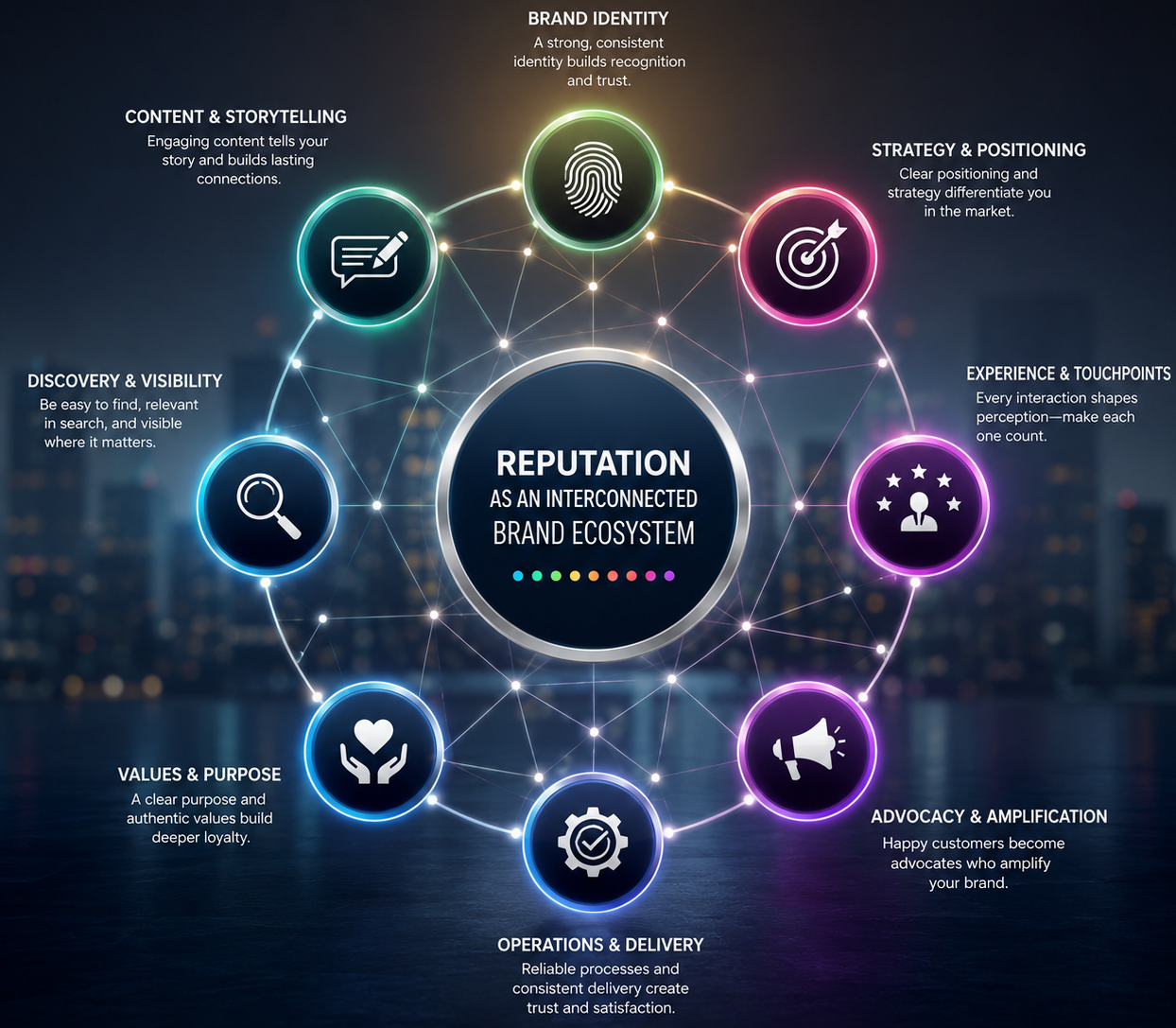
A recurring tension in 72 Hours centers on the fragility of professional authority. As the protagonist steps out of traditional corporate boundary lines, every decision directly impacts how peers, superiors, and potential clients evaluate his competence and judgment.
In modern organizations, your personal brand equity is not defined by a self-authored LinkedIn bio or polished pitch deck. It is the sum of your consistent daily behaviors, emotional intelligence, and accountability under pressure.
                  REPUTATION AS BRAND EQUITY

   [ Daily Execution & Integrity ] ──► [ Stakeholder Perception ]
                                                  │
                                                  ▼
   [ Executive Referrals & Growth ] ◄── [ Unspoken Endorsement ]
Code language: CSS (css)
Strategic Action Plan
Protecting your brand requires treating reputation management as a long-term risk mitigation strategy. Integrating these hidden career management tips from the 72 Hours movie into your professional habits involves calibrating five core pillars:
- Executive Reliability: Consistently hit targets and manage expectations early when project timelines shift.
- Radical Ownership: Take immediate, visible accountability when a strategy underperforms rather than deflecting blame to junior team members or market conditions.
- Cross-Contextual Integrity: Maintain professional boundaries and discretion across both formal boardrooms and informal networking environments.
- Solution-Oriented Communication: Frame obstacles alongside actionable recommendations rather than highlighting problems without a proposed path forward.
Reputation Audit Framework
| Core Pillar | High-Value Professional Behavior | Risk Factor (Reputation Liability) |
| Execution | Meets deadlines and manages scope proactively. | Consistently misses commitments or over-promises. |
| Communication | Direct, constructive, and context-aware. | Opaque, reactive, or overly aggressive. |
| Accountability | Admits analytical missteps and offers fixes. | Deflects failure onto external factors or peers. |
| Team Synergy | Elevates group output and credits contributors. | Hoards visibility or creates artificial friction. |
| Agility | Adapts to changing market demands with poise. | Rigidly resists technological or procedural shifts. |
Key Takeaway: Reputation takes years of consistent, high-integrity execution to build, but only a single lapse in judgment to compromise. Protect your professional equity like an appreciating core asset.
Communicate Clearly Across Different Generations
High-impact leadership requires adapting your communication style to fit the audience without losing strategic clarity or executive authority.
One of the funniest—and most insightful—dynamics in 72 Hours is the constant communication friction between an established executive used to formal pitches and a group of young adults who communicate through rapid-fire group chats, memes, and casual slang.
In the modern workplace, teams span four distinct generations (Baby Boomers, Gen X, Millennials, and Gen Z). Each group often carries distinct preferences regarding tool selection, response expectations, and feedback loops. Failing to adapt your delivery creates unnecessary operational friction and signals an inability to lead modern, cross-functional teams.
                      COMMUNICATION ADAPTABILITY

   Rigid Communicator (High Friction)
   "This is how we've always done it." ──► Siloed Teams & Misaligned Expectations

   Adaptive Communicator (High Alignment)
   "What is the highest-signal channel for this outcome?" ──► Seamless Execution
Code language: JavaScript (javascript)
Strategic Action Plan
Operationalizing these hidden career management tips from the 72 Hours movie means moving past rigid “my way or the highway” preferences and actively building Generational Intelligence (GQ):
- Match Channel to Context: Reserve long-form email for strategic documentation and policy; use real-time messaging (Slack, Teams) for quick operational checks; and schedule video calls for complex decision-making or sensitive feedback.
- Establish Clear Team Protocols: At the start of a project, explicitly define response SLAs (Service Level Agreements) and primary communication tools so everyone operates under the same rules.
- Focus on Signal, Not Jargon: Avoid overusing corporate buzzwords with younger team members or forcing hyper-casual slang into executive conversations. Clear, direct language works across every age group.
- Replace Presumption with Inquiry: Shift from directive statements to collaborative questions that invite team input.
Cross-Generational Communication Matrix
| Communication Axis | Rigid Approach (Low Signal) | Adaptive Approach (High Signal) |
| Tool Adoption | “Everyone needs to check their email every hour.” | “For urgent blockers, use Slack. For deep updates, drop it in our weekly doc.” |
| Feedback Loops | “We do formal performance reviews twice a year.” | “Let’s do rapid 5-minute async check-ins at the end of each sprint.” |
| Collaboration | “I need a 20-slide deck before we discuss this.” | “Give me a bulleted 1-page summary so we can make a fast decision.” |
Key Takeaway: Master communicators don’t force their preferred style onto others—they flex their delivery to maximize clarity, build trust, and accelerate team execution.
Be Open to Opportunities That Arrive Unexpectedly
Career acceleration rarely stems from a linear 5-year plan—it happens by recognizing and acting on asymmetric, unscripted opportunities.
The entire premise of 72 Hours hinges on a single, chaotic catalyst: an accidental group chat invite. Rather than ignoring the mistake or dismissing it as a nuisance, the protagonist recognizes an unconventional opening to gather real-time market data, test his adaptability, and reignite a stalled career trajectory.
In business and career strategy, this principle is known as convex optionality—positioning yourself in scenarios where the downside is limited and controlled, but the potential upside is disproportionately high. Rigidly sticking to a narrow path often causes professionals to miss non-traditional project assignments, cross-functional initiatives, or informal networking channels that could fundamentally re-route their trajectory.
                      LINEAR VS. OPTIONALITY MODEL

   Linear Progression (High Predictability / Cap on Growth)
   [ Role A ] ──► [ Fixed 3-Year Plan ] ──► [ Incremental Promotion ]

   Convex Optionality Model (Calculated Upside)
   [ Core Role ] ──► [ Unscripted Opportunity ] ──► [ New High-Leverage Trajectory ]
                            │
                   Calculated Decision Filter
Code language: PHP (php)
Strategic Action Plan
Applying these hidden career management tips from the 72 Hours movie doesn’t mean saying “yes” to every distraction. It requires evaluating unscripted moments through a structured decision matrix:
- Seek Asymmetric Upside: Say yes to low-risk, high-exposure opportunities—such as speaking at an industry panel, advising an internal task force, or leading an experimental AI pilot.
- Filter for Skill Acquisition over Title: Prioritize projects that let you build portable, high-leverage capabilities over those that promise marginal prestige.
- Measure Network Expansion: Ask whether the opportunity puts you in proximity to high-value mentors, decision-makers, or cross-functional peers you wouldn’t otherwise interact with.
Opportunity Evaluation Framework
Before accepting an unscripted commitment, run it through this 4-step strategic audit:
| Filter Zone | Diagnostic Question | Strategic Signal |
| Capability Growth | Will this force me to learn a new high-demand tool, framework, or workflow? | HIGH: Expands market value. |
| Network Density | Does this connect me with decision-makers outside my current reporting line? | HIGH: Multiplies network equity. |
| Portfolio Impact | Can I turn the result of this effort into a concrete, measurable case study? | HIGH: Strengthens positioning. |
| Alignment | Does this support my 3-to-5 year trajectory, or is it merely low-value busywork? | LOW: Reject or delegate. |
Key Takeaway: The most transformative career pivots rarely show up with a formal job description attached. Stay agile enough to spot non-obvious openings when they appear.
Keep Reinventing Yourself Throughout Your Career
Career management is an active loop of unlearning, acquiring high-leverage skills, and repositioning your value proposition—not a static destination reached after securing a job.
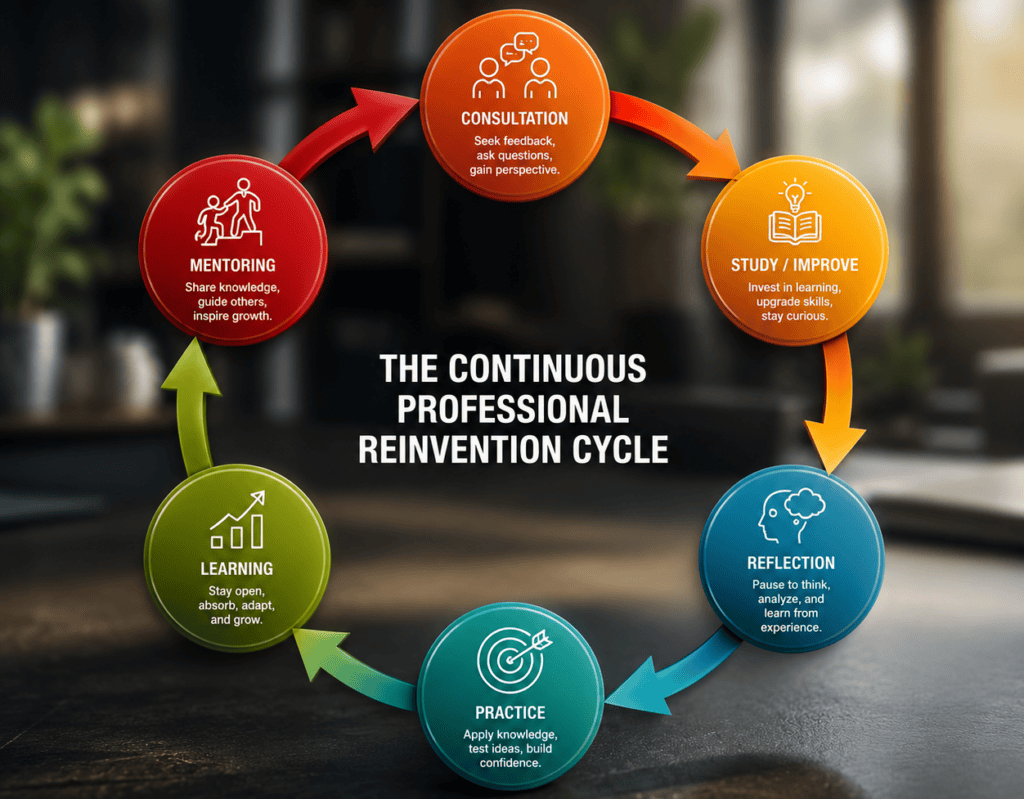
The underlying tension driving 72 Hours stems from a single vulnerability: relying on a legacy skill set in an evolved marketplace. The protagonist’s 20-year track record in advertising meant very little the moment consumer channels, cultural touchpoints, and campaign execution formats shifted beneath his feet.
In high-growth industries, the shelf life of technical skills is shrinking rapidly. Staying competitive requires moving past the concept of a “fixed career identity” and adopting a model of continuous professional reinvention.
                    THE SKILL-STACKING REINVENTION MODEL

  Legacy Model (High Obsolescence Risk)
  [ Core Skill A ] ──► [ Decades of Execution ] ──► [ Value Compression ]

  Continuous Reinvention Model (High Market Value)
  [ Core Domain ] ───┬──► [ + AI Workflow Mastery ] ──────┐
                     ├──► [ + Cross-Functional Leadership ] ┼──► [ High-Leverage Moat ]
                     └──► [ + Modern Distribution ] ──────┘
Code language: CSS (css)
Strategic Action Plan
Operationalizing these hidden career management tips from the 72 Hours movie requires building a systematic approach to skill acquisition and personal brand evolution:
- Practice Skill-Stacking: Instead of trying to be in the top 1% of a single discipline, combine two or three complementary skills (e.g., Data Analytics + Strategic Storytelling + Prompt Engineering) to create a unique, highly defensible market niche.
- Build an Innovation Sandbox: Dedicate 2–4 hours weekly to experimenting with emerging tools, platforms, or frameworks relevant to your domain—long before your employer mandates them.
- Audit Your Positioning Yearly: Update your digital footprint, portfolio, and value narrative annually. Ensure your public-facing brand reflects where your industry is heading, not where it was five years ago.
Real-World Case Study
The Evolution of the Creative Director: A traditional Graphic Designer relying solely on standard vector software risks price compression from automated tools. A designer who reinvents themselves by mastering AI image generation workflows, UI/UX prototyping, and conversion-rate optimization transforms from a visual executor into an indispensable, high-ROI growth partner.
Key Takeaway: The ultimate form of job security isn’t holding onto a specific role—it’s maintaining the demonstrated ability to learn, adapt, and reinvent your market value faster than the industry changes around you.
Career Management Tips at a Glance
A high-level summary of the core challenges, strategic insights, and actionable steps extracted from the film to help you audit and optimize your long-term career strategy.
| Career Challenge | Strategic Insight from 72 Hours | Practical Action Plan |
| Career Uncertainty & Stagnation | Adaptability beats legacy tenure every time. | Audit your skill set quarterly and learn at least one high-leverage emerging tool. |
| Generational Disconnects | Reverse mentorship bridges knowledge gaps. | Active listening; exchange strategic perspective for modern execution insights. |
| Limited Opportunities | Relational networks yield hidden openings. | Deposit value into your network continuously long before you need a favor. |
| Reputation Risks | Personal brand equity is fragile under pressure. | Maintain radical ownership, meet commitments, and protect your professional integrity. |
| Communication Gaps | One-size-fits-all messaging creates friction. | Match channel and tone to your audience to maximize operational signal. |
| Unscripted Situations | Convex optionality drives non-linear leaps. | Filter unexpected openings for skill building, network density, and asymmetric upside. |
| Long-Term Obsolescence | Career development is an ongoing loop. | Practice skill-stacking and create an annual personal reinvention roadmap. |
Strategic Takeaway
Unpacking these hidden career management tips from the 72 Hours movie reveals a single core truth: professional longevity isn’t about avoiding disruption—it’s about building the adaptability, networks, and skill-stacks necessary to capitalize on it.
Decision Framework: Is Your Career Strategy Future-Ready?
To operationalize the hidden career management tips from the 72 Hours movie, use this interactive diagnostic tool to evaluate your current trajectory.
Answering these eight core questions will help you pinpoint specific blind spots across your skill stack, network equity, and market adaptability—giving you a clear signal on where to focus your next career upgrade.
Career Strategy Future-Readiness Assessment
Audit your career resilience across skill currency, network equity, and market adaptability.
Check the boxes above to evaluate your career future-readiness score.
How to Interpret Your Assessment Results
- 7–8 Score (High Readiness): Your career strategy is resilient and proactive. Continue refining your high-leverage skill stacks and building cross-generational network equity.
- 4–6 Score (Moderate Readiness): You have a solid baseline, but unaddressed weak spots—such as outdated digital tools or passive networking—could leave you vulnerable during sudden industry shifts.
- 0–3 Score (High Risk): Your trajectory is currently operating in reactive mode. Prioritize establishing clear 1-year goals, updating your digital footprint, and learning at least one emerging tool this quarter.
Common Misconceptions About Career Management
Misunderstanding how modern careers evolve causes professionals to rely on outdated playbooks. Dismantling these myths is essential for maintaining long-term market authority.
                      LEGACY MYTHS VS. MODERN REALITY

   Legacy Assumptions (High Obsolescence Risk)
   [ Tenure Equals Security ] ──► [ Reactive Networking ] ──► [ Rigid Career Plans ]

   Modern Reality (High Agility & Growth)
   [ Continuous Re-Skilling ] ──► [ Relational Capital ]  ──► [ Convex Optionality ]
Code language: CSS (css)
Examining the underlying lessons in popular culture—including the hidden career management tips from the 72 Hours movie—reveals how easily experienced professionals fall into common psychological traps. Correcting these four widespread myths will keep your career trajectory proactive and resilient.
Myth 1: Experience Alone Guarantees Success
- The Reality: Tenure without continuous learning leads to skill obsolescence. While foundational experience grants strategic context, industries evolve too rapidly for legacy knowledge to remain a solo competitive advantage.
- Strategic Adjustment: Combine your accumulated domain expertise with modern, high-leverage execution tools (such as AI workflows and automation) to build an indefensible market position.
Myth 2: Networking Only Matters When Searching for a Job
- The Reality: Reaching out only when you need a favor creates high-friction, transactional interactions. The highest-value opportunities flow through pre-existing networks built on trust and mutual support.
- Strategic Adjustment: Deposit value into your professional ecosystem continuously—share research, introduce contacts, and support peers—long before you ever require a referral.
Myth 3: Career Planning Is Only for Entry-Level Professionals
- The Reality: Career management becomes more critical as you advance into senior and executive roles, where competition tightens, and plateaus are harder to break.
- Strategic Adjustment: Conduct an annual audit of your strategic trajectory, personal brand equity, and skill relevance regardless of how senior your title is.
Myth 4: Unexpected Opportunities Are Mere Distractions
- The Reality: Rigidly adhering to a linear five-year plan can cause you to overlook non-traditional openings that offer asymmetric career acceleration.
- Strategic Adjustment: Evaluate unscripted assignments, cross-functional projects, or unexpected invitations using a clear decision framework to capture potential upside while managing risk.
Key Takeaway: Dispelling these myths allows you to transition from a reactive approach to an active, strategic model of career management that thrives on market changes.
Action Plan: How to Apply These Career Management Tips
Career acceleration isn’t built through sporadic, dramatic efforts—it is the result of small, high-leverage habits executed consistently over time.
To successfully operationalize the hidden career management tips from the 72 Hours movie, avoid trying to overhaul your entire professional strategy overnight. Focus on executing a structured, progressive sequence that builds sustainable career momentum.
                    30-DAY CAREER MOMENTUM FLYWHEEL

  [ Week 1: Strategic Audit ] ──► [ Week 2: Skill Acquisition ]
                 ▲                                 │
                 │                                 ▼
  [ Week 4: Brand Positioning ] ◄── [ Week 3: Network Equity ]
Code language: CSS (css)
The 30-Day Career Momentum Framework
Week 1: Conduct a Strategic Career Audit:Focus: Diagnostic clarity.
- Identify your core domain strengths, emerging skill gaps, and 1-to-3 year goals.
- Run your trajectory through the Career Strategy Assessment to establish your future-readiness baseline.
- Identify 1–2 legacy workflows that are ripe for automation or modernization.
Week 2: Acquire High-Leverage Skills:Focus: Skill currency.
- Complete a targeted tutorial or workshop on an emerging tool (e.g., prompt engineering, AI analytics, or modern project software).
- Read two high-signal industry whitepapers or case studies outside your immediate department.
- Experiment with integrating new digital tools into your daily workflow.
Week 3: Expand Network Equity:Focus: Relational capital.
- Reach out to two former colleagues or cross-functional partners without asking for a favor—share an insightful article or project win.
- Engage meaningfully on 3–5 high-value LinkedIn posts within your industry ecosystem.
- Schedule an informal coffee chat or virtual check-in with a peer in an adjacent discipline.
Week 4: Optimize Personal Positioning:Focus: Market visibility.
- Update your LinkedIn profile headline, summary, and experience sections to reflect quantifiable outcomes rather than basic job duties.
- Refresh your professional portfolio or executive bio with recent case studies.
- Document key project metrics and achievements from the past quarter for future reviews or opportunities.
Long-Term High-Performance Habits
To maintain market authority and keep your trajectory resilient against industry shifts, adopt these six ongoing practices:
- Bi-Annual Trajectory Reviews: Audit your career goals, market compensation benchmarks, and skill relevance every six months.
- Weekly Learning Sprints: Dedicate 2–3 hours each week to experimenting with new tools, frameworks, and methodologies.
- Continuous Network Equity: Build and nurture professional relationships long before you ever require a referral or career assistance.
- Cross-Generational Intelligence (GQ): Consistently exchange perspectives across seniority levels to stay aligned with modern execution tools and strategic realities.
- Active Feedback Loops: Seek direct, constructive input from peers, managers, and cross-functional partners to identify blind spots early.
- Continuous Personal Reinvention: Treat your career as an ongoing product—regularly testing, upgrading, and expanding your skill stack.
What is career management?
Career management is the deliberate, lifelong process of planning, building, and adapting your professional trajectory. It goes beyond updating a résumé or chasing promotions; it involves acquiring high-leverage skills, building relational network equity, managing personal brand positioning, and adapting to industry shifts.
Is 72 Hours a career or business movie?
No. 72 Hours is a fast-paced comedy film. The insights and hidden career management tips from the 72 Hours movie featured in this guide are editorial interpretations based on the narrative’s underlying workplace dynamics. They are not official messages from Netflix or the filmmakers.
Can movies really provide legitimate career management insights?
While films are produced for entertainment, their storylines often function as compressed case studies on human behavior, cross-generational friction, leadership under pressure, and decision-making. Analyzing these scenarios provides a useful lens to evaluate real-world workplace dynamics—though they should complement, not replace, formal professional coaching or strategic guidance.
Which career management skill is most critical in today’s market?
Career longevity rarely relies on a single capability. However, adaptability (flexibility under market disruption), continuous re-skilling, cross-generational communication, and relational networking consistently rank as the highest-ROI capabilities for staying future-ready.
Who can benefit from these career management tips?
These principles apply across every stage of the professional lifecycle—including ambitious entry-level talent, mid-career managers navigating plateaus, executive leaders bridging generational gaps, and independent creators looking to build resilient, portable skill stacks.
In Conclusion
Netflix’s 72 Hours is first and foremost a comedy, but its core narrative premise offers a sharp lens through which to evaluate modern corporate survival, generational shifts, and professional longevity.
Extracting the hidden career management tips from the 72 Hours movie reinforces a fundamental truth: career resilience isn’t built on legacy tenure or passive compliance—it relies on proactive adaptability, continuous skill-stacking, and high-trust relational networks.
                      THE MODERN CAREER EQUATION

  [ Strategic Adaptability ] + [ Network Equity ] + [ High-Leverage Skills ]
                                     │
                                     ▼
                   [ Sustainable Market Authority ]
Code language: CSS (css)
Strategic Takeaways
- Adaptability Is Your Ultimate Moat: Professionals who actively unlearn obsolete methods and master emerging tools will always outperform those relying purely on experience.
- Network Equity Precedes Opportunity: High-value roles and strategic partnerships flow through pre-existing, trusted relationships—not emergency job applications.
- Communication Intelligence Scales Leadership: Flexing your communication style across generational cohorts builds operational alignment and cross-functional authority.
- Intentionality Drives Trajectory: Long-term market relevance requires regular self-audits, deliberate skill acquisition, and the courage to act on non-linear openings.
Rather than mirroring fictional scenarios, focus on operationalizing these underlying frameworks within your own career ecosystem. Whether you are scaling through mid-career plateaus, managing cross-generational teams, or positioning yourself for executive leadership, continuous investment in your adaptability, reputation, and core skill stack ensures you remain prepared for whatever market shifts lie ahead.