Complete Databricks Certification Guide for AI Careers
Databricks certifications validate your expertise in data engineering, machine learning, analytics, and generative AI on the Databricks Data Intelligence Platform. The Databricks Certification Guide covers all available credentials, exam costs, preparation strategies, and career pathways to help you choose the right credential for your goals.
Whether you’re a data engineer building lakehouse architectures, a machine learning engineer deploying production models, or an AI practitioner working with large language models, Databricks offers role-specific certifications that align with your career trajectory.
This Databricks Certification Guide serves three primary audiences:
- Aspiring and working professionals in data engineering, machine learning, data science, analytics, and AI who want to understand the full Databricks certification ecosystem and determine which credentials match their career goals.
- Technical practitioners including data analysts, ML engineers, developers, cloud professionals, and generative AI engineers who currently use—or plan to use—the Databricks platform and want to validate their skills with industry-recognized credentials.
- Career-transition professionals including students, early-career individuals, and experienced technology workers considering a move into data engineering, machine learning, analytics, or AI roles who need to evaluate whether Databricks certification strengthens their professional profile.
What You’ll Learn
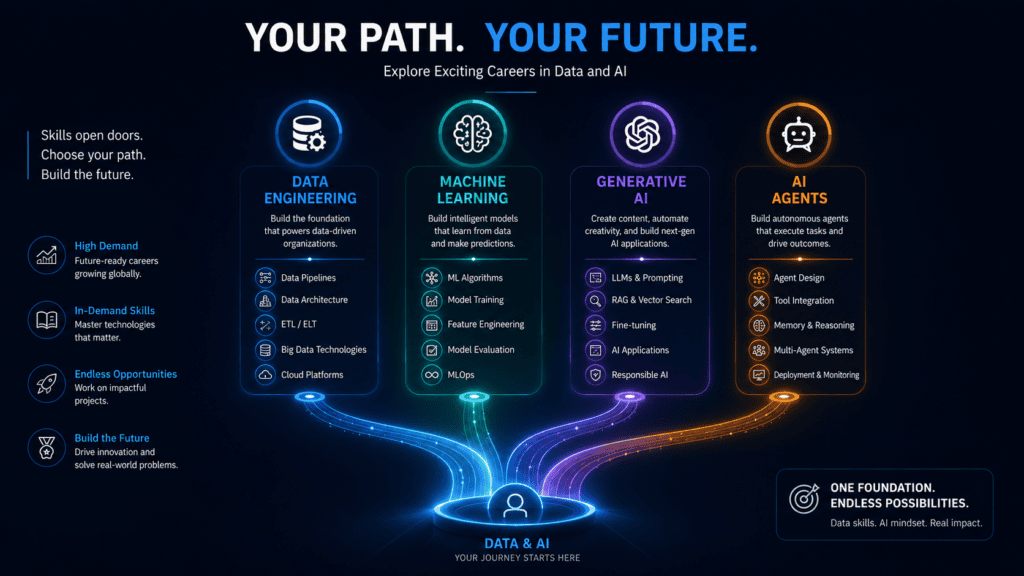
By the end of this Databricks Certification Guide, you will understand the complete certification landscape, compare all available credentials by role and difficulty, know exact exam costs and logistics, have a clear preparation strategy using official resources, understand legitimate discount opportunities, and be able to evaluate whether certification aligns with your career objectives.
Understanding the Databricks Certification Ecosystem
The Databricks credential ecosystem is structured around role-based competencies across data, machine learning, and AI agent architectures. Understanding the layout of these exams helps practitioners map their technical focus to the correct tier of validation.
Available Databricks Certifications
| Certification | Level | Target Role | Exam Cost | Validity | Questions | Duration |
| Databricks Certified Data Engineer Associate | Associate | Data Engineers | $200 USD | 2 years | 45 scored | 90 minutes |
| Databricks Certified Data Engineer Professional | Professional | Senior Data Engineers | $200 USD | 2 years | 59 scored | 120 minutes |
| Databricks Certified Machine Learning Associate | Associate | ML Engineers | $200 USD | 2 years | 45 scored | 90 minutes |
| Databricks Certified Machine Learning Professional | Professional | Senior ML Engineers | $200 USD | 2 years | 59 scored | 120 minutes |
| Databricks Certified Data Analyst Associate | Associate | Data Analysts | $200 USD | 2 years | 45 scored | 90 minutes |
| Databricks Certified Generative AI Engineer Associate | Associate | GenAI Engineers | $200 USD | 2 years | 45 scored | 90 minutes |
| Databricks Certified Context Engineer Associate | Associate | AI Agent Engineers | $200 USD | 2 years | 45 scored | 90 minutes |
| Databricks Certified Associate Developer for Apache Spark | Associate | Spark Developers | $200 USD | 2 years | 45 scored | 90 minutes |
Legacy Note: The Databricks Certified Hadoop Migration Architect exam is retired and no longer available for registration.
Certification Levels Explained
Databricks certifications are designed to validate different skills across data engineering, analytics, machine learning, and generative AI, but choosing the right credential requires understanding how each certification fits your experience and career direction.
This section explains the different Databricks certification levels and credentials, the knowledge and practical skills associated with each, and how to determine which certification best matches your current expertise and long-term data or AI career goals.
- Associate-Level: Validates foundational to intermediate competency in using Databricks for role-specific workflows. These exams assess core platform capabilities and everyday task execution.
- Professional-Level: Assesses advanced, production-ready skills tailored for senior practitioners. Currently available for Data Engineer and Machine Learning tracks, these credentials validate your ability to design, implement, and manage complex, enterprise-grade architectures.
Badges vs. Certifications
Databricks also offers free digital badges for completing introductory training courses—such as Databricks Fundamentals, Generative AI Fundamentals, and AI Agent Fundamentals. These badges confirm course completion and learning engagement, but they are distinct credentials and do not replace proctored certification exams.
Choosing the Right Databricks Certification for Your Career
Choosing a Databricks certification should depend on your current skills, professional experience, target role, and the Databricks technologies you want to master. This section compares the available certification paths and helps you identify which credential best aligns with careers in data engineering, data analytics, machine learning, generative AI, and related fields—whether you are entering the Databricks ecosystem or advancing an existing data and AI career.
Data Engineering Career Path
- Start with: Databricks Certified Data Engineer Associate. This certification validates your ability to design, develop, test, and maintain batch and streaming data pipelines using the Databricks platform. The exam covers Delta Lake operations, data pipeline orchestration, ETL/ELT workflows, data quality implementation, and performance optimisation.
- Progress to: Databricks Certified Data Engineer Professional. The Professional-level exam assesses advanced data engineering capabilities, including complex pipeline architecture, production deployment strategies, performance tuning at scale, and enterprise governance patterns.
- Career relevance: Data engineers with Databricks certification typically command salaries between $110,000 and $190,000 in the US market, with senior engineers (Professional-certified, 5+ years of experience) reaching $150,000 to $190,000 in base compensation.
Machine Learning and AI Career Path
- Start with: Databricks Certified Machine Learning Associate. This credential validates foundational ML engineering skills, including model development, training pipelines, basic MLOps practices, and model deployment using Databricks Machine Learning capabilities.
- Progress to: Databricks Certified Machine Learning Professional. The Professional exam assesses advanced MLOps capabilities, enterprise ML pipeline design, model monitoring, testing strategies, and production deployment patterns at scale.
- Alternative path: Databricks Certified Generative AI Engineer Associate. If your focus is on large language models and generative AI applications, this certification validates your ability to design, build, deploy, govern, evaluate, and monitor LLM-powered applications using Databricks. The exam requires approximately 6+ months of hands-on experience with generative AI solution tasks.
- Emerging role: Databricks Certified Context Engineering Associate. This newer certification assesses your ability to design, assemble, and govern context for AI agent systems on Databricks—relevant for professionals building agentic AI workflows and multi-agent systems.
- Career relevance: ML engineers and AI practitioners with Databricks certifications are positioned for roles in MLOps, AI engineering, and production ML systems, with compensation often exceeding $130,000 for mid-to-senior levels.
Data Analytics Career Path
- Recommended certification: Databricks Certified Data Analyst Associate. This credential validates your ability to transform data into insights using Databricks SQL, including query creation, data visualisation, dashboard development, and analytical workflow implementation.
- Career relevance: Data analysts with relevant certifications can see compensation increases of 10% to 15%, with average salaries ranging from $75,000 to $115,000 depending on experience and location.
Apache Spark Development Path
Career relevance: Spark developers with Databricks certification are well-positioned for big data engineering roles, particularly in organisations using lakehouse architectures.
Recommended certification: Databricks Certified Associate Developer for Apache Spark 3.5. This exam assesses your understanding of the Spark DataFrame API, including transformations, actions, optimisation techniques, and performance tuning.
Exam Requirements and Logistics
Before scheduling a Databricks certification exam, candidates should understand the eligibility expectations, exam format, registration process, fees, testing procedures, scoring, retake policies, and credential validity requirements.
This section explains the key logistics involved in taking a Databricks certification exam, helping you understand what to expect before, during, and after the assessment. Because exam policies, pricing, and requirements can change, candidates should verify current details through official Databricks certification resources before registering.
Exam Format and Structure
All Databricks certification exams follow a consistent format:
- Question type: Multiple-choice, scored questions only (no unscored experimental questions).
- Delivery method: Online proctored or test centre proctored.
- Passing score: 70% across all exams.
- Languages: English (additional languages may be available—check official documentation).
Exam Pricing
- Standard exam fee: $200 USD per certification exam across all levels and specialisations.
- Regional pricing: Some regions may have localized pricing. Check the Databricks certification portal for your specific location.
- Taxes: Applicable taxes may be added to the base price depending on your jurisdiction.
Validity and Recertification
- Certification validity: All Databricks certifications are valid for 2 years from the date of issuance.
- Recertification requirement: To maintain your credential, you must retake the current version of the exam before your certification expires. There is no automatic renewal or continuing education alternative.
Retake Policy
- Waiting periods: If you fail an exam, you must wait 24 hours before your first retake attempt. After a second failed attempt, the waiting period extends to 14 days, and this same interval applies to all subsequent attempts.
- Attempt limits: A maximum of 5 attempts is permitted within any rolling 12-month period. After reaching this limit, you must wait for the window to reset before trying again.
- Retake cost: Each retake requires purchasing a new exam voucher at full price ($200 USD) unless you have a discount voucher or promotional offer.
Registration Process
- Create or log in to your Databricks account.
- Navigate to the certification portal at credentials.databricks.com.
- Select your desired certification exam.
- Choose between online proctored or test centre delivery.
- Schedule your exam date and time.
- Complete payment and receive confirmation.
Digital credential: After passing the exam, you should receive your Databricks digital certification through the Databricks credentials platform within 48 hours.
Skills and Technologies Tested by Certification
Each Databricks certification evaluates a specific combination of technical knowledge, platform capabilities, and practical skills relevant to its target role. This section breaks down the key skills and technologies covered by each certification, including areas such as data engineering, Apache Spark, SQL and analytics, machine learning, generative AI, and the Databricks Data Intelligence Platform.
Understanding these competencies can help you identify knowledge gaps, focus your exam preparation, and choose a certification that aligns with the technologies and skills required for your target data or AI career.
Data Engineer Associate Exam Topics
- Delta Lake: Table operations, schema evolution, time travel, optimisation (Z-Order, compaction).
- Data pipelines: Batch and streaming ETL/ELT workflows, orchestration patterns.
- Databricks SQL: Query development, warehouse configuration, performance tuning.
- Data quality: Constraint implementation, validation frameworks, monitoring.
- Security and governance: Unity Catalog fundamentals, access control, data lineage.
- Performance optimisation: Cluster configuration, caching strategies, partition management.
Data Engineer Professional Exam Topics
- Advanced pipeline architecture: Multi-stage workflows, dependency management, fault tolerance.
- Production deployment: CI/CD integration, environment management, release strategies.
- Performance at scale: Large dataset optimisation, cost management, resource allocation.
- Enterprise governance: Advanced Unity Catalog patterns, compliance implementation, audit logging.
- Monitoring and observability: Pipeline health tracking, alerting, incident response.
Machine Learning Associate Exam Topics
- MLflow: Experiment tracking, model registry, model versioning.
- Model development: Feature engineering, training pipelines, hyperparameter tuning.
- Model deployment: Serving infrastructure, endpoint configuration, A/B testing basics.
- Databricks ML capabilities: AutoML, managed ML workflows, compute optimisation.
Machine Learning Professional Exam Topics
- Advanced MLOps: Production pipeline design, model monitoring, drift detection.
- Enterprise ML patterns: Multi-model management, governance frameworks, compliance.
- Testing strategies: Model validation, performance testing, rollback procedures.
- Scalable deployment: High-availability serving, load balancing, cost optimisation.
Generative AI Engineer Associate Exam Topics
- LLM application design: Prompt engineering patterns, RAG architecture, agent workflows.
- Model integration: Foundation model APIs, fine-tuning strategies, model selection.
- Deployment and governance: LLM serving, safety filters, usage monitoring, cost management.
- Evaluation: Quality metrics, testing frameworks, performance benchmarking.
Context Engineering Associate Exam Topics
- Context design: Data assembly patterns, retrieval strategies, context window optimisation.
- Agent systems: Multi-agent orchestration, tool integration, workflow automation.
- Governance: Access control, audit trails, compliance for AI agent systems.
Data Analyst Associate Exam Topics
- Databricks SQL: Query development, visualisation creation, dashboard building.
- Data transformation: SQL-based ETL, data preparation, aggregation patterns.
- Analytics workflows: Exploratory analysis, reporting automation, insight generation.
Apache Spark Developer Exam Topics
- DataFrame API: Transformations, actions, aggregations, joins.
- Performance tuning: Partitioning, caching, broadcast variables, shuffle optimisation.
- Spark architecture: Execution model, memory management, fault tolerance.
Building an Effective Preparation Strategy
Preparing for a Databricks certification exam requires a structured approach that combines conceptual knowledge with practical, hands-on experience using the platform. This section outlines how to build an effective study plan using official exam guides, Databricks Academy learning paths, documentation, hands-on labs, practice questions, and real-world projects.
It also explains how to prioritize exam objectives, identify knowledge gaps, and focus your preparation on the skills and technologies most relevant to your chosen Databricks certification.
Official Databricks Training Resources
- Databricks Academy: The official learning platform offers role-specific learning paths aligned with each certification.
- Free foundational courses: Databricks provides complimentary training including:
- Databricks Fundamentals (Lakehouse architecture overview).
- Generative AI Fundamentals (LLM basics and use cases).
- AI Agent Fundamentals (AI agent concepts and applications).
- Exam guides: Each certification has a dedicated exam guide documenting topics covered, recommended training courses, and sample questions.
Hands-On Practice
- Databricks Free Edition: Create a free Databricks workspace to practice building pipelines, developing models, and exploring platform capabilities.
- Databricks Academy Labs: For guided, hands-on exercises, consider the Academy Labs subscription (20% discount available during Learning Festival promotions).
- Project-based learning: Build real projects that mirror exam scenarios—data pipelines, ML workflows, LLM applications—to reinforce practical skills.
AI-Assisted Preparation
- AI Prep Guide: Databricks provides a free, exam-agnostic resource showing how to effectively use AI chatbots to prepare for certification exams.
- Study approach: Use AI tools to explain concepts, generate practice questions, review documentation, and clarify complex topics—but always verify against official sources.
Recommended Study Timeline
8-week preparation plan (adjust based on your experience level):
- Weeks 1-2: Complete official training courses for your certification.
- Weeks 3-4: Hands-on practice with Free Edition workspace.
- Weeks 5-6: Review exam guide, focus on weak areas, practice with sample questions.
- Weeks 7-8: Mock exams, final review, exam scheduling.
Common Preparation Mistakes to Avoid
- Relying solely on practice tests: Databricks exams test practical understanding, not memorisation. Focus on hands-on experience.
- Skipping official documentation: Exam questions are based on current platform capabilities documented in official resources.
- Underestimating exam depth: Professional-level exams require production experience, not just course completion.
- Ignoring time management: Practice completing questions within the time limit to build pacing skills.
Legitimate Ways to Reduce Certification Costs
Earning a Databricks certification does not always require paying the full exam fee. Databricks periodically offers legitimate opportunities to reduce certification costs through learning festivals, promotional discounts, exam vouchers, training programs, and other official initiatives.
This section explores practical ways to save on Databricks certification exams while helping you distinguish genuine offers from unofficial or misleading promotions. Because discounts and eligibility requirements can change, always verify current opportunities through official Databricks channels before registering.
Current Databricks Discounts and Promotions
- Learning Festival vouchers: Databricks periodically runs Learning Festival events offering 50% off certification vouchers (worth $100 USD) to participants who complete at least one learning pathway during the event window.
- Upcoming opportunity: The Advanced Learning Festival runs from September 16 to October 14, 2026. Completing an eligible learning pathway during this period earns you a 50% discount voucher valid for approximately 90 days.
- Voucher validity: Discount vouchers must be used before their expiration date. Schedule your exam early to avoid missing the redemption deadline.
Free Training Resources
- Databricks Academy free courses: All foundational courses (Databricks Fundamentals, Generative AI Fundamentals, AI Agent Fundamentals) are completely free with no credit card required.
- Microsoft Learn integration: Azure Databricks customers have access to additional free training resources through Microsoft Learn, including technical documentation, tutorials, and recorded webinars.
- Community resources: Databricks Community forums provide exam tips, study strategies, and peer support at no cost.
Cost-Saving Strategies
- Wait for the Learning Festival: If your timeline allows, participate in the upcoming September event to secure a 50% discount voucher.
- Bundle preparation: Complete free training before purchasing exam vouchers to maximize your investment.
- Employer sponsorship: Many organizations sponsor certification costs for employees—check with your manager or HR department.
- Avoid retakes: Invest adequate preparation time to pass on the first attempt, avoiding the $200 retake fee.
The video above provides an overview of the Advanced Learning Festival timeline and how to secure a 50% discount voucher.
Career Value: Are Databricks Certifications Worth It?
The value of a Databricks certification depends on your career goals, existing experience, target role, and how extensively Databricks technologies are used in your field or organization. This section evaluates the potential career benefits of becoming Databricks certified, including skills validation, professional credibility, career advancement, and relevance to roles in data engineering, analytics, machine learning, and generative AI.
It also examines the limitations of certification and helps you determine whether the time, preparation, and exam costs are justified for your specific data or AI career path.
Where Certification Adds Value
- Skill validation: Certifications provide third-party verification of your Databricks expertise, which is particularly valuable for professionals transitioning into data engineering, ML engineering, or AI roles.
- Career advancement: 73% of Databricks-certified professionals report receiving career promotions, according to Databricks data.
- Salary premium: Data engineers with Databricks certification typically earn between $110,000 and $190,000, with senior certified engineers reaching $150,000 to $190,000 base compensation.
- Hiring differentiation: In competitive job markets, certification distinguishes you from candidates with similar experience who lack a formal credential.
- Client credibility: For consultants and freelancers, certification signals verified technical expertise to potential clients evaluating Databricks implementation partners.
Where Practical Experience Matters More
- Production expertise: Certifications validate conceptual and platform knowledge, but they cannot replace hands-on experience building production systems. Employers prioritize demonstrated capability over credentials alone.
- Portfolio projects: A robust portfolio of Databricks projects—such as live data pipelines, deployed ML models, and LLM applications—often carries more weight than certification during technical interviews.
- Continuous learning: The Databricks platform evolves rapidly. Because certifications expire after 2 years, maintaining relevance requires ongoing skill development and active platform usage.
Certification vs. Experience: A Balanced View
- Entry-level professionals: Certification provides a structured learning path and demonstrates commitment to potential employers. Combine credentials with portfolio projects for maximum impact.
- Mid-career professionals: Certification validates existing skills and can accelerate promotion discussions. Focus on Professional-level credentials if you have 3+ years of hands-on platform experience.
- Senior professionals: Certification reinforces technical expertise but is less critical than demonstrated leadership and architectural design experience. Consider certification primarily for team credibility or client-facing consulting roles.
Industry Demand and Trends
- Growing adoption: Databricks reported over 80% year-over-year growth, surpassing a $7 billion annual revenue run-rate, indicating strong enterprise adoption and sustained market demand for skilled practitioners.
- Skill demand: Data engineering roles continue to outpace traditional data science positions in direct enterprise demand, supported by the rapid expansion of lakehouse architectures.
- Evolving certification coverage: Databricks portfolio coverage now spans analytics, data engineering, Apache Spark, machine learning, generative AI, and context engineering—reflecting the platform’s expanding role at the center of modern data and AI infrastructures.
Certification Roadmap: Which Credential to Pursue First
Choosing your first Databricks certification should depend on your existing skills, experience level, and the career path you want to pursue. This section provides a practical certification roadmap to help you determine where to start and which credentials to consider next based on your goals in data engineering, data analytics, machine learning, or generative AI.
It also explains how to progress strategically through the Databricks certification ecosystem without pursuing credentials that may not be relevant to your target role.
For Data Engineers
- Path 1: Traditional progression
- Databricks Certified Data Engineer Associate (foundational validation).
- Gain 1 to 2 years of practical production experience.
- Databricks Certified Data Engineer Professional (advanced enterprise architecture).
- Path 2: Spark-focused
- Databricks Certified Associate Developer for Apache Spark 3.5 (deep DataFrame API proficiency).
- Databricks Certified Data Engineer Associate.
- Databricks Certified Data Engineer Professional.
For Machine Learning Engineers
- Path 1: ML-first approach
- Databricks Certified Machine Learning Associate.
- Build and manage production ML pipelines.
- Databricks Certified Machine Learning Professional.
- Path 2: GenAI-specialized
- Databricks Certified Generative AI Engineer Associate.
- Databricks Certified Machine Learning Associate (to build a broader ML foundation).
- Databricks Certified Context Engineering Associate (specializing in AI agent systems).
For Data Analysts
- Recommended path:
- Databricks Certified Data Analyst Associate.
- Databricks Fundamentals (free badge to reinforce platform basics).
- Consider pursuing the Data Engineer Associate credential if you plan to transition into a full engineering role.
For Career Changers
- Recommended path:
- Complete the free Databricks Fundamentals course to earn your initial digital badge.
- Choose a single role-specific Associate certification that maps to your target career track.
- Build open-source portfolio projects demonstrating practical skills in your chosen domain.
- Pursue Professional-level credentials after accumulating 1 to 2 years of hands-on platform experience.
How long does it take to prepare for a Databricks certification exam?
Preparation time varies by experience level and certification tier. Most candidates require 6 to 12 weeks of consistent study (10 to 15 hours per week) for Associate-level exams. Professional-level exams typically require 3 to 6 months of preparation, especially if you lack hands-on production experience.
Can I take Databricks certification exams online?
Yes. All Databricks certification exams are available as online proctored tests, allowing you to take the exam remotely from your home or office. Test centre proctored options are also available in select locations.
What happens if I fail a Databricks certification exam?
You can retake the exam after a 24-hour waiting period for your first retake attempt. After a second failed attempt, the waiting period extends to 14 days, and you are permitted a maximum of 5 attempts within any rolling 12-month period. Each retake requires purchasing a new voucher at full price unless you hold a promotional discount voucher.
Do Databricks certifications expire?
Yes. All Databricks credentials are valid for 2 years from the date of issuance. To maintain active certification status, you must retake and pass the current version of the exam before your credential expires. There is currently no automatic renewal or continuing education alternative.
Are there prerequisites for Databricks certification exams?
No formal prerequisites or mandatory courses exist for Databricks certifications. However, Databricks recommends completing official training courses and accumulating hands-on platform experience (typically 6+ months for Associate exams, 1+ years for Professional exams) before registering.
How much do Databricks certification exams cost?
All standard Databricks certification exams cost $200 USD per attempt, regardless of level or technical specialisation. Applicable local taxes may be added depending on your jurisdiction. Discount vouchers (such as 50% off offers during Learning Festival windows) are periodically available.
Which Databricks certification is best for generative AI careers?
The Databricks Certified Generative AI Engineer Associate credential is built specifically for professionals designing, evaluating, and deploying LLM-powered applications. For individuals specializing in multi-agent workflows, the Databricks Certified Context Engineering Associate is also highly relevant.
Can I use Databricks Free Edition to prepare for certification exams?
Yes. Databricks Free Edition provides a sandbox workspace where you can practice building data pipelines, developing ML models, and exploring platform tools. Because Free Edition may lack advanced enterprise configurations, you should supplement your study with Academy Labs or production experience.
Do employers value Databricks certifications?
Yes. Internal Databricks data indicates that 90% of certified professionals report solving complex technical challenges more effectively, 88% drive greater platform cost savings, and 73% receive career promotions. Certified data engineers command competitive salaries ranging from $110,000 to $190,000 in the US market.
What is the passing score for Databricks certification exams?
All Databricks certification exams require a passing score of 70%. Exams consist entirely of scored multiple-choice questions with no unscored experimental questions included.
In Conclusion
Databricks offers eight active certifications covering data engineering, machine learning, analytics, generative AI, context engineering, and Apache Spark development. Every exam costs $200 USD, remains valid for two years, and requires a 70% passing score.
Associate-level credentials validate foundational skills, while Professional-level certifications assess advanced, production-ready expertise. You can minimize out-of-pocket expenses by leveraging free foundational courses and utilizing 50% discount vouchers available during Databricks Learning Festival events.
While certification provides third-party validation, career advancement, and hiring differentiation, it is most effective when paired with hands-on production experience and a robust portfolio of real-world projects. Choose the pathway that aligns with your current technical role, commit to structured preparation, and use official resources to position yourself for success in the modern data and AI landscape.