Patient Care Technician Jobs: Requirements and How to Apply
Patient care technician jobs serve as a high-leverage entry point into healthcare, combining foundational bedside care with essential clinical support duties. Most healthcare employers require a high school diploma or equivalent, formal clinical training or prior Certified Nursing Assistant (CNA) experience, CPR/BLS certification, and sharp interpersonal communication skills.
Because specific hiring standards for patient care technician jobs vary across hospitals, outpatient clinics, and state regulatory boards, candidates must review local rules and individual job postings carefully.
This comprehensive guide covers the core responsibilities of patient care technician jobs, essential qualifications, target job boards, application strategies, and what to expect throughout the hiring process.
What Does a Patient Care Technician Do?
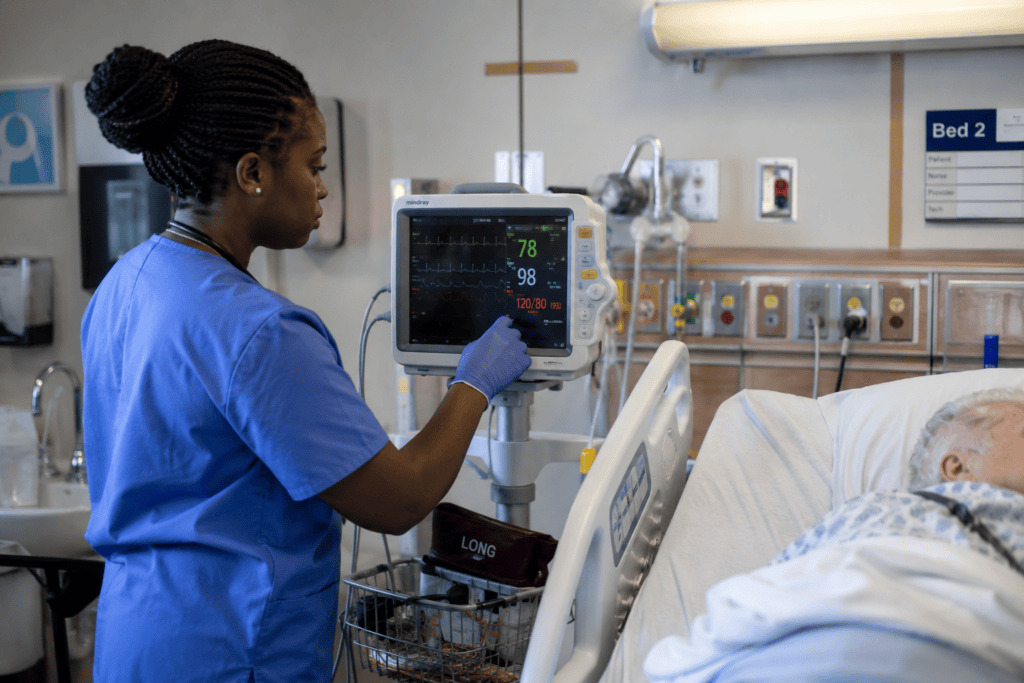
A patient care technician (PCT) provides direct, hands-on care under the supervision of registered nurses (RNs), licensed practical nurses (LPNs), and medical staff. Patient care technician jobs bridge basic bedside care and technical clinical support, delivering essential monitoring and daily assistance in hospitals, clinics, and long-term care facilities.
Core Responsibilities
- Activities of Daily Living (ADL): Assisting patients with personal hygiene, bathing, dressing, feeding, toileting, and safe mobility.
- Vital Signs & Diagnostics: Measuring and recording blood pressure, heart rate, respiration, temperature, weight, and blood glucose levels.
- Patient Safety & Comfort: Repositioning patients to prevent pressure ulcers, maintaining clean room environments, answering call lights, and assisting with fall-prevention protocols.
- Advanced Technical Skills: Performing 12-lead electrocardiograms (EKGs), executing phlebotomy procedures (blood collection), and gathering lab specimens where permitted.
- Clinical Logistics & Documentation: Transporting patients to diagnostic tests, updating electronic health records (EHR), and reporting status changes directly to the primary nurse.
Scope of Practice Safeguards
Candidates pursuing patient care technician jobs must understand that clinical scope varies by state regulation, facility policy, and explicit delegation. A PCT should only perform advanced clinical tasks—such as venipuncture or EKG tracking—if authorized by their state board, facility guidelines, and individual training level.
According to O*NET OnLine, professionals in patient care technician jobs serve as critical support personnel who carry out routine patient care, diagnostic checks, and operational support under direct clinical supervision.
Where Do Patient Care Technicians Work?
Candidates searching for patient care technician jobs will find opportunities across a wide spectrum of acute, sub-acute, and long-term medical environments. Because clinical needs vary by department, work settings significantly influence daily duties and required technical skills.
Primary Work Settings for Patient Care Technician Jobs
- Acute Care Hospitals: Emergency departments, intensive care units (ICU), surgical wards, and general inpatient units.
- Outpatient & Specialty Clinics: Dialysis centers, ambulatory care sites, and physical rehabilitation facilities.
- Long-Term & Residential Care: Skilled nursing facilities, assisted living communities, and nursing homes.
- Specialized Health Services: Hospice organizations, home health agencies, and behavioral/psychiatric health units.
Alternative Titles to Use During Your Job Search
Patient care technician titles aren’t standardized across all health systems. To maximize job search results across platforms like Indeed, LinkedIn, and hospital career portals, search using these common industry titles:
| Primary Setting | Alternate Job Titles |
| Hospitals & Urgent Care | Clinical Care Partner, Patient Care Associate, Nursing Technician, Healthcare Technician |
| Long-Term & Inpatient Care | Patient Care Assistant (PCA), Certified Nursing Assistant (CNA), Nurse Aide |
| Specialized Outpatient | Dialysis Patient Care Technician, Emergency Room (ER) Technician, Telemetry Tech |
Patient Care Technician Job Requirements
No single nationwide license governs patient care technician jobs in the United States. Requirements are defined by state practice acts and individual employer standards. Candidates must carefully audit education, state registry, and program accreditation prerequisites before applying for patient care technician jobs.
Educational Prerequisites
A high school diploma or GED is the standard baseline for entry into patient care technician jobs. Employers and training providers prioritize candidates with foundational knowledge in life sciences, mathematics, and health information technology.
While a four-year degree is unnecessary, holding an Associate Degree or completing prerequisite nursing coursework accelerates advancement into specialized healthcare roles.
Training Pathways & Federal Standards
Training expectations vary depending on the target healthcare setting:
- Long-Term Care & Nursing Facilities: Federal regulations set by the Centers for Medicare & Medicaid Services (CMS) require individuals working in Medicare- or Medicaid-certified facilities to complete state-approved nurse aide training programs and pass a competency evaluation to join the state’s Nurse Aide Registry.
- Acute Care Hospitals & Specialized Clinics: Employers hiring for acute care patient care technician jobs frequently expect comprehensive PCT training, which incorporates advanced instruction in phlebotomy (venipuncture) and 12-lead electrocardiography (EKG) performance.
Program Selection Checklist
Before enrolling in a PCT training course to qualify for patient care technician jobs, evaluate programs against these standards:
| Evaluation Factor | Key Criteria |
| State Approval | Verified by the state Board of Nursing or Department of Health. |
| Clinical Hours | Includes hands-on supervised clinical externship experience. |
| Certifications Included | Covers Basic Life Support (BLS/CPR), Phlebotomy, and EKG training. |
| Credential Alignment | Prepares candidates for recognized exams like NHA CPCT/A or AMCA. |
| Value & Support | Outlines clear costs, refund policies, and career placement services. |
Certification & Licenses
While certification standards vary by state and health system, earning a recognized credential significantly enhances hiring prospects and hourly pay rates for patient care technician jobs. Candidates must distinguish between baseline state registrations and specialized national technical certifications.
Primary Certifications for Patient Care Technician Jobs
- CNA (Certified Nursing Assistant): A state-issued registration mandatory for roles in long-term care, nursing homes, and sub-acute facilities.
- CPCT/A (Certified Patient Care Technician/Assistant): A comprehensive national credential awarded by organizations like the National Healthcareer Association (NHA). It validates skills in basic bedside care, advanced clinical safety, phlebotomy, and 12-lead EKG operations.
- BLS/CPR (Basic Life Support): A non-negotiable prerequisite across virtually all patient care technician jobs, typically requiring American Heart Association (AHA) or American Red Cross certification.
- Specialty Tech Credentials: Standalone certifications such as CPT (Certified Phlebotomy Technician) or CET (Certified EKG Technician) for roles in emergency departments, blood donor centers, or cardiology units.
National Certification Framework
| Credential | Certifying Body | Core Focus | Common Employment Target |
| CPCT/A | NHA (National Healthcareer Association) | Patient Care, Safety, EKG, Phlebotomy | Acute Care Hospitals & Multi-Specialty Clinics |
| NCCT (PCT) | National Center for Competency Testing | Clinical Assisting, Infection Control, Phlebotomy | Inpatient Wards & Outpatient Care Centers |
| State CNA | State Board of Nursing / Dept. of Health | Daily Living Support, Hygiene, Basic Mobility | Nursing Homes & Assisted Living Facilities |
Critical Distinction
A national CPCT/A credential does not automatically fulfill state regulations requiring a licensed CNA listing for long-term care settings. Always review the “Minimum Qualifications” section of the target posting for patient care technician jobs to ensure compliance with both state law and facility policy.
Clinical and Workplace Skills
Success in patient care technician jobs depends heavily on technical proficiency, physical stamina, and strong interpersonal awareness. Employers look for candidates who demonstrate reliable clinical judgement and safe patient-handling practices.
Essential Skills for Patient Care Technician Jobs
- Clinical & Technical Competency: Precise measurement and recording of vital signs, blood glucose tracking, basic wound care, emergency response (CPR/BLS), and proper sample collection.
- Patient Safety & Mobility: Executing safe transfer techniques, repositioning patients to prevent pressure injuries, and applying infection control protocols like standard precautions and proper hand hygiene.
- Communication & Documentation: Using Electronic Health Record (EHR) systems accurately, taking clear patient histories, maintaining strict HIPAA privacy standards, and promptly reporting status changes to primary nurses.
- Interpersonal & Professional Traits: Active listening, emotional resilience, cultural competence, maintaining professional boundaries, and managing tasks effectively during high-volume hospital shifts.
Physical Demands Baseline
Patient Care Technician jobs are physically rigorous. Most facility job descriptions mandate that applicants comfortably handle the following physical requirements:
| Physical Requirement | Frequency & Target Capacity |
| Standing & Walking | Continuous; 8 to 12 hours per shift with minimal sitting. |
| Lifting & Carrying | Pushing, pulling, or lifting 25–50 lbs regularly; maneuvering transfer devices or equipment. |
| Mobility & Posture | Frequent bending, stooping, reaching overhead, and twisting at the waist. |
| Patient Transfers | Assisting with heavy, multi-person patient transfers using mechanical lifts or sit-to-stand devices. |
Candidates should review job descriptions carefully for listed physical demands and discuss any required reasonable accommodations during the interview stage.
Additional Employer Prerequisites
Beyond clinical competencies and certifications, candidate screening for patient care technician jobs includes administrative, legal, and operational clearances.
Standard Onboarding & Screening Requirements
- Legal & Verification Checks: Applicants must meet minimum age thresholds (typically 18 years old), provide proof of U.S. work authorization, and pass a criminal background check and 10-panel drug screening.
- Health Clearances: Proof of immunity or vaccination (including Hepatitis B, MMR, Varicella, TDap, and annual Influenza), a negative TB (Tuberculosis) test or chest X-ray, and an occupational physical exam.
- Active CPR/BLS Credential: An unexpired American Heart Association (AHA) or American Red Cross Basic Life Support card (typically valid for two years).
- Operational Readiness: Availability for 12-hour shifts, weekend coverage, night rotations, or holiday schedules, paired with reliable transportation to meet shift expectations.
- Orientation & Competency: Successful completion of facility-specific onboarding and clinical skill check-offs during early employment.
Preferred vs. Required Experience
Understanding job posting phrasing helps target the right patient care technician jobs:
                              Job Posting Wording
                                       │
            ┌──────────────────────────┴──────────────────────────┐
            ▼                                                     ▼
   "Experience Required"                                 "Experience Preferred"
   (Strict Baseline)                                     (Flexible Threshold)
            │                                                     │
 ├─ Requires 1-2 years in                              ├─ Open to entry-level applicants
 │  acute or sub-acute care.                           │  and new program graduates.
 │                                                     │
 └─ Unqualified applications                           └─ Highly competitive if paired
    are automatically filtered out.                       with strong clinical externships.
Job Application Tip
If a posting lists clinical experience as “preferred,” entry-level candidates who have completed hands-on externships or volunteer hours in healthcare settings should apply confidently.
Can You Become a Patient Care Technician Without Experience?
Yes. You can secure entry-level patient care technician jobs without prior paid clinical experience. Many healthcare employers hire motivated candidates who have completed an accredited training program or hold baseline state certifications, providing on-the-job orientation to bridge any practical gaps.
Step-by-Step Pathway for Beginners
 ┌──────────────────────┐
 │ High School Diploma  │  Earn your diploma or GED equivalent.
 └──────────┬───────────┘
            │
            ▼
 ┌──────────────────────┐
 │ Check State Rules    │  Audit state Nurse Aide Registry and scope requirements.
 └──────────┬───────────┘
            │
            ▼
 ┌──────────────────────┐
 │ Complete PCT/CNA     │  Finish a state-approved program with hands-on lab
 │ Training             │  and clinical hours.
 └──────────┬───────────┘
            │
            ▼
 ┌──────────────────────┐
 │ Earn Certifications  │  Pass state CNA exams and secure AHA CPR/BLS credentials.
 └──────────┬───────────┘
            │
            ▼
 ┌──────────────────────┐  Target entry-level PCT, Patient Care Assistant (PCA),
 │ Targeted Job Search  │  or Trainee roles in hospital systems.
 └──────────────────────┘
How to Leverage Non-Paid Experience on Your Application
When applying for patient care technician jobs without prior paid experience, maximize your resume by highlighting these relevant qualifications:
- Clinical Externship Hours: Detail your hands-on practice in hospital wards or long-term care facilities, including direct patient hours, vital sign tracking, and nursing support.
- Lab Practice & Simulation: Emphasize hands-on training in phlebotomy, 12-lead EKG setup, sterile field management, and patient transfers.
- Academic Coursework: Highlight completed studies in anatomy, physiology, medical terminology, and basic nursing fundamentals.
- Caregiving & Service Experience: Describe informal family caregiving or volunteer work accurately. Detail specific tasks (e.g., mobility assistance, hygiene support, scheduling) without labeling it as formal clinical employment.
- Transferable Skills: Include past customer service experience, EHR/data entry familiarity, and team leadership roles to demonstrate reliability under pressure.
Patient Care Technician (PCT) vs. Certified Nursing Assistant (CNA)
While PCT and CNA roles share foundational caregiving duties, key distinctions exist regarding clinical scope, primary work environments, and certification standards. Understanding these differences helps target patient care technician jobs that match your clinical skills and long-term career goals.
Side-by-Side Role Comparison
| Feature | Certified Nursing Assistant (CNA) | Patient Care Technician (PCT) |
| Primary Focus | Assistance with Activities of Daily Living (ADLs) and basic hygiene. | Basic nursing care paired with specialized clinical support skills. |
| Common Work Settings | Nursing homes, long-term care facilities, and home health care. | Acute care hospitals, emergency departments, specialty clinics, and dialysis units. |
| Technical Clinical Tasks | Measuring vital signs, height/weight tracking, basic skin care. | CNA care plus 12-lead EKGs, phlebotomy, blood glucose monitoring, and specimen collection. |
| Credential & Oversight | State-mandated registration on the local Nurse Aide Registry. | National technical credentials (e.g., NHA CPCT/A) or facility-defined competencies. |
| Career Progression | Solid entry point for long-term direct-care roles and practical nursing. | High-leverage pathway into hospital care, telemetry, and pre-nursing degree programs. |
Job Title Overlap
Job titles are not standardized across health systems. A hospital may list patient care technician jobs that accept state CNA registration, while another employer uses the title “PCT” to require advanced phlebotomy and EKG certifications. Candidates should always evaluate the specific job description’s duties and mandatory qualifications rather than filtering by job title alone.
How to Find Patient Care Technician Jobs
Securing patient care technician jobs requires a dual search strategy: applying directly on employer portals and leveraging targeted keywords on major healthcare job platforms.
Direct Search on Employer Career Portals
Applying directly through employer career sites often grants access to internal trainee programs, tuition assistance options, and unlisted openings. Prioritize the career portals of:
- Major Hospital Networks & Health Systems: HCA Healthcare, Ascension, Kaiser Permanente, and local university medical centers.
- Specialized Outpatient Centers: Large dialysis chains (such as DaVita or Fresenius Medical Care) and regional surgery centers.
- Long-Term & Sub-Acute Care: Skilled nursing networks, inpatient rehabilitation facilities, and hospice organizations.
- Government Facilities: VA (Veterans Affairs) hospitals and county public health clinics.
High-Intent Job Search Keywords
Because healthcare facilities use varied job titles, expand your query parameters beyond “patient care technician.” Combine your city, county, or ZIP code with these exact phrases:
                            Job Search Query Parameters
                                         │
        ┌────────────────────────────────┼────────────────────────────────┐
        ▼                                ▼                                ▼
[Role Variations]               [Entry-Level Target]             [Specialty Specific]
• "patient care technician"     • "entry-level PCT jobs"        • "dialysis patient care tech"
• "patient care assistant"      • "PCT trainee no experience"   • "ER technician"
• "clinical care partner"       • "CNA patient care tech"       • "telemetry technician"
• "nursing technician"          • "PCT night shift"             • "phlebotomy PCT"
Job Platform Verification & Safety Guidelines
While platforms like Indeed, LinkedIn, and ZipRecruiter aggregate high volumes of patient care technician jobs, always cross-check third-party listings against the hiring organization’s official website:
| Verification Check | Standard Practice | Red Flag / Scam Warning |
| Application Method | Redirects to an official Applicant Tracking System (ATS). | Demands application processing fees or equipment buy-in. |
| Communication | Sent from official facility email domains.@hospital.org). | Conducted entirely via unstructured text or messaging apps. |
| Job Details | Clearly outlines department, shift breakdown, and pay scale. | Guarantees hiring without an interview or credential check. |
How to Apply for Patient Care Technician Jobs
Applying for patient care technician jobs requires a systematic approach to present your clinical skills, state registrations, and technical capabilities effectively to hospital hiring managers.
Audit Your Qualifications: Complete a baseline readiness check before applying.
Assess your readiness against standard entry requirements for patient care technician jobs:
- Education: High school diploma or GED completion verified.
- State Registrations: Active status on the state Nurse Aide Registry (if applicable).
- Certifications: Active AHA/Red Cross BLS/CPR card, along with CPCT/A, phlebotomy, or EKG credentials.
- Clinical Background: Documented clinical placement hours, lab simulations, or prior caregiving experience.
- Schedule Readiness: Availability for 12-hour shifts, night rotations, weekends, or per-diem coverage.
Analyze the Job Posting: Distinguish required specs from preferred qualifications.
Deconstruct the employer’s job description into three operational categories:
- Mandatory Prerequisites: Must be met before applying (e.g., active CNA, BLS card).
- Preferred Qualifications: Boost your rank but will not cause immediate ATS rejection (e.g., 1+ years acute care experience).
- Department-Specific Skills: Specialized tasks tailored to specific wards (e.g., dialysis water testing, telemetry monitoring).
Build a Targeted PCT Resume: Format for ATS scanning and clear clinical signal.
Structure a concise, one-page resume that highlights your credentials early:
- Header & Summary: Professional contact details paired with a 2–3 sentence clinical summary targeting patient care technician jobs.
- Certifications Section: Prominently list credentials, issuing bodies, license numbers, and expiration dates.
- Clinical Training & Hours: Detail total supervised externship hours, setting types (e.g., Med-Surg, ICU), and key competencies.
- Action-Oriented Bullets: Replace generic claims with concrete skill descriptions.
Weak: “Helped nurses on the floor with basic care.”
Strong: “Executed daily hygiene, vital sign tracking, and mechanical transfers for 8–10 medical-surgical patients per shift under RN supervision.”
Craft a Custom Application Package: Align terminology with the employer’s job post.
Tailor your application and cover letter to match exact employer phrasing (e.g., Clinical Care Partner, EHR documentation, blood glucose checks). Highlight your preferred patient populations and confirm your shift availability upfront.
Submit and Track Applications: Verify data accuracy and log follow-ups.
- Proofread all certification numbers, dates, and contact information.
- Submit documents in approved ATS formats (
.pdfor.docx). - Maintain an application tracking spreadsheet to record submission dates, facility names, requisition IDs, and scheduled follow-ups.
Preparing for the Interview
Interviews for patient care technician jobs assess your clinical judgment, patient safety standards, communication skills, and operational reliability. Hiring managers want to verify that you recognize your clinical scope and know when to escalate patient status changes to the supervising RN.
Common Interview Questions & Safe Response Frameworks
| Scenario / Focus Area | Common Interview Question | Safe Response Framework |
| Scope & Safety | “What would you do if asked to perform a clinical task outside your training?” | Politely decline, cite facility policy and training scope, offer to assist within your approved duties, and inform the supervising nurse. |
| Clinical Escalation | “How would you handle a sudden change in a patient’s vital signs or condition?” | Ensure immediate patient safety, re-verify the reading, report the exact change to the primary RN immediately, and document observations. |
| Prioritization | “How do you prioritize multiple patient call lights ringing at the same time?” | Triage based on urgency (e.g., fall risk, pain, or distress takes priority), acknowledge each patient promptly, and request team support if overwhelmed. |
| De-escalation | “How do you manage an upset or uncooperative patient or family member?” | Remain calm, practice active listening, validate their concerns without making false promises, and involve the primary nurse if safety or policy concerns arise. |
The Golden Rule for Scenario Answers
Whenever responding to clinical scenarios in interviews for patient care technician jobs, structure your answer around five core steps: (1) Protect patient safety, (2) Stay within scope, (3) Follow facility policy, (4) Escalate to the supervising nurse promptly, and (5) Document accurately.
Essential Questions to Ask the Hiring Manager
Demonstrate career engagement and clarity by asking targeted questions at the end of your interview:
- Unit Scope: “What specific clinical procedures (e.g., phlebotomy, 12-lead EKGs, catheter removal) are regularly performed by PCTs on this unit?”
- Onboarding & Training: “What does the clinical orientation process look like, and how are unit competencies assessed for new hires?”
- Team Structure: “What is the typical patient-to-PCT ratio on this shift, and how do PCTs collaborate with the primary nursing staff?”
- Career Pathways: “Does the health system offer tuition assistance or structured pathways for PCTs pursuing practical or registered nursing degrees?”
Interview Preparation Checklist
Before walking into your interview for patient care technician jobs, ensure you have:
- [ ] Physical copies of your active certifications (State CNA, CPCT/A, AHA BLS card).
- [ ] Official clinical training logs or externship hour documentation.
- [ ] A list of 3 professional references (clinical instructors, supervisors, or past employers).
- [ ] Government-issued photo identification.
Salary and Career Prospects
Compensation and career growth for patient care technician jobs vary by region, employer type, work setting, shift differential, and technical certifications. Because titles overlap across health systems, labor data for PCTs is typically tracked alongside nursing assistants and orderlies.
National Wage Benchmarks & Outlook
The U.S. Bureau of Labor Statistics (BLS) reports national wage benchmarks for nursing assistants—a closely aligned proxy for entry-level healthcare technicians:
| Percentile | Estimated Annual Salary | Key Factors Influencing Earnings |
| 10th Percentile | ~$30,000 | Entry-level, long-term care, uncertified roles |
| 50th Percentile (Median) | ~$38,200 | Standard hospital roles, state CNA/PCT certification |
| 90th Percentile | ~$48,700+ | Specialized units (ER, ICU, Dialysis), night shift differential, heavy overtime |
- Job Growth Projection: The BLS projects steady growth for nursing assistants and orderlies, with over 200,000 open roles annually driven primarily by retirement and transition into advanced healthcare fields.
Long-Term Advancement Pathways
Entering patient care technician jobs provides direct exposure to clinical environments, creating high-leverage pathways for career progression:
- Specialized Clinical Tech: Advancement into specialized hospital roles such as ER Technician, Dialysis Patient Care Technician, Phlebotomy Specialist, or Telemetry/Monitor Tech.
- Nursing Programs: Natural transition into Licensed Practical Nursing (LPN/LVN) or Registered Nursing (RN) degrees, often eligible for employer tuition assistance.
- Allied Health Fields: Progression into Respiratory Therapy, Surgical Technology, Diagnostic Medical Sonography, or Radiologic Technology.
Total Compensation Consideration
When evaluating patient care technician jobs, look beyond hourly base pay. Factors like night-shift differentials, health coverage, tuition reimbursement, patient load ratios, and internal promotion rates heavily impact total job value.
Patient care technician jobs offer one of the fastest, most reliable ways to build a career in direct patient care. By obtaining the right baseline credentials, tailoring your application to match specific facility needs, and demonstrating safety-focused clinical judgment during interviews, you can secure an entry-level position and establish a strong foundation for long-term growth in healthcare.
Do you need certification to become a PCT?
Not always. While many hospital systems require national CPCT/A credentials or state CNA registration, some facilities hire candidates with foundational healthcare training and allow them to complete required certifications or BLS training during onboarding. Always check state scope regulations and specific employer posting details.
Is a CNA required for patient care technician jobs?
A CNA credential is not universally required, but it is frequently preferred or requested. CNA training provides essential baseline education in personal care, hygiene, and mobility, making it mandatory for roles in long-term care facilities, skilled nursing homes, and health systems that integrate nurse-aide registries into their hiring baseline.
Can I apply for entry-level patient care technician jobs with no experience?
Yes. Candidates with no paid clinical experience should target positions labeled as PCT Trainee, Patient Care Assistant (PCA), Clinical Care Partner, or Nursing Assistant.
Highlight your clinical externship hours, lab simulations, CPR/BLS certification, volunteer caregiving, customer service background, and scheduling availability to build a strong application.
How long does it take to become a patient care technician?
The timeline varies from 4 weeks to 6 months depending on the pathway:
Accelerated CNA/PCT Programs: 4 to 8 weeks of intensive classroom, lab, and clinical training.
Community College Certificates: 1 to 2 semesters, often including built-in phlebotomy and 12-lead EKG modules.
Hospital-Based Trainee Paths: Direct hire with 2 to 6 weeks of paid internal clinical orientation.
Are patient care technician jobs only available in hospitals?
No. While acute care hospitals employ a large volume of PCTs in emergency rooms, ICUs, and surgical wards, patient care technician jobs are widely available in outpatient dialysis centers, inpatient rehabilitation facilities, specialty clinics, skilled nursing facilities, hospice care organizations, and behavioral health units.
What should I put on a PCT resume?
Format your resume to feature key credentials near the top. Include your high school diploma/GED, active state registrations (CNA), national credentials (CPCT/A, CPT, CET), AHA BLS status, total clinical externship hours, core clinical competencies (vital signs, EKG, phlebotomy, EHR documentation), and specific shift availability.
Is a patient care technician job a good first healthcare role?
Yes. Working as a PCT is one of the most effective ways to gain hands-on clinical exposure, observe hospital workflow, and work alongside RNs and physicians. It serves as ideal preparation and clinical hour acquisition for candidates planning to apply to nursing (LPN/RN), physician assistant (PA), or allied health programs.
In Conclusion
To kickstart your search for patient care technician jobs, analyze at least five active vacancies in your target geographic region and build a requirements matrix. Apply first to positions where you meet 100% of the mandatory criteria, then prioritize obtaining any missing high-yield credentials—such as active CNA registration, AHA BLS certification, or acute care clinical hours—to expand your eligibility.
Core Takeaways
- Variable Titles & Regulations: Job titles and scopes of practice vary widely by state and facility; always cross-reference job descriptions rather than filtering strictly by title.
- Essential Baseline: A high school diploma or GED, active BLS certification, and formal clinical training form the standard entry foundation for patient care technician jobs.
- Beginner Pathways: Candidates with no paid clinical experience can enter the field through accredited CNA/PCT programs, hospital externships, or trainee roles.
- Expanded Search Queries: Maximize search engine coverage by querying alternative titles like Patient Care Assistant (PCA), Clinical Care Partner, and Nursing Technician.
- Custom Applications: Tailor your resume terminology to match employer job descriptions directly and verify facility scope before accepting an offer.
Scope Note
This guide assumes a United States healthcare regulatory framework. State boards of nursing and individual healthcare networks set specific certification, registry, and delegation rules. Salary figures are derived from BLS nursing assistant benchmarks as an industry proxy.