15 Best Travel Nursing Career Options in the AI Era
Travel nursing is a healthcare career where registered nurses take short-term assignments in different locations, typically lasting 8–26 weeks. The field offers significantly higher earning potential than traditional staff nursing, with national averages reaching approximately $148,000 per year in 2026 for those working full-time.
Demand remains robust for specialized roles, including ICU, ER, OR, and Telemetry nursing. While AI is rapidly transforming administrative workflows, clinical judgment and hands-on patient care remain irreplaceable core responsibilities of a travel nursing career.
A travel nursing career has evolved from a pandemic-era surge into a stable, high-demand path for nurses seeking location flexibility, premium compensation, and diverse clinical exposure. This guide is designed for registered nurses evaluating a travel nursing career, current travelers seeking to transition into high-paying specialties, and nursing students proactively mapping out future-proof trajectories in the AI era.
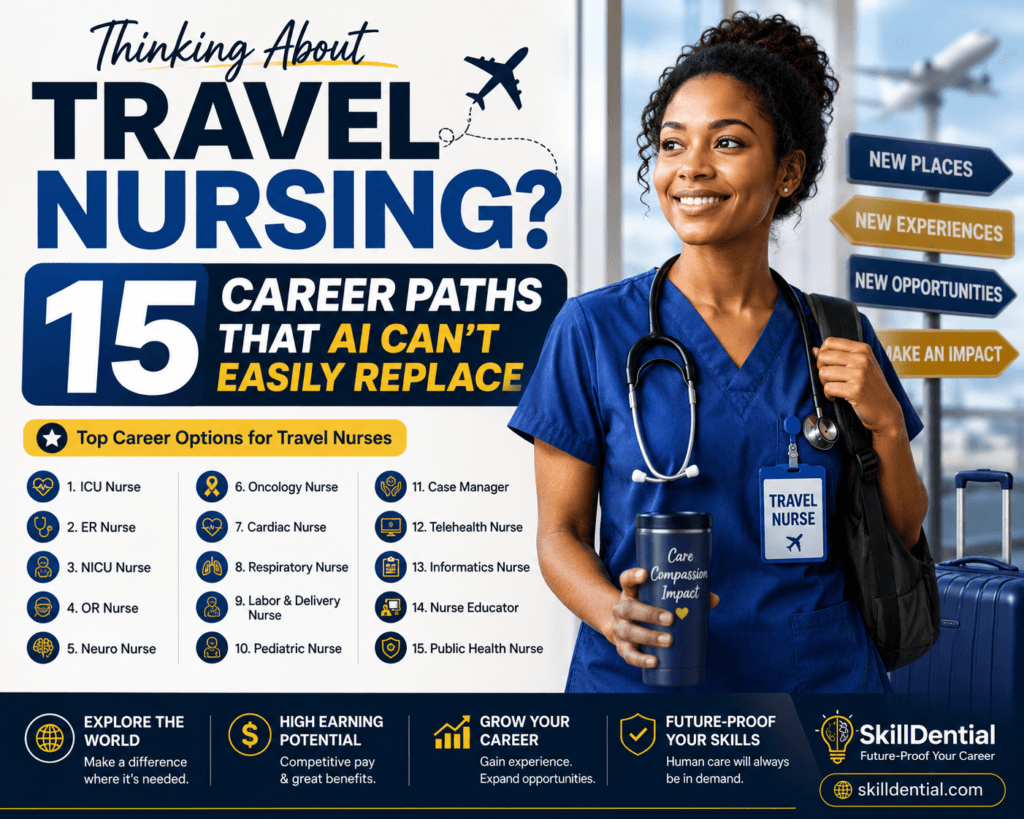
In this resource, you will learn about 15 of the most promising specialties within a travel nursing career, how artificial intelligence is reshaping nursing workflows, up-to-date salary comparisons, essential certifications, and the practical systems needed to enter or advance in this field.
The following sections provide an analytical breakdown of what constitutes a modern travel nursing career, the 15 best options for 2026, the specific impacts of AI on clinical practice, the digital skills required to stay competitive, and actionable frameworks to guide your career decisions.
What Is Travel Nursing and How Is It Evolving?
Travel nursing is a specialized healthcare staffing model where registered nurses (RNs) accept temporary assignments at hospitals, clinics, and medical facilities across diverse geographic locations. While a traditional travel nursing career involves contracts typically lasting 8–26 weeks, the fundamental value proposition—providing high-quality clinical support where it is needed most—remains constant. In return for their flexibility, travel nurses command premium compensation packages, which often include competitive hourly wages, tax-advantaged housing stipends, and comprehensive benefits.
However, the landscape of a travel nursing career is shifting from the volatile, crisis-driven environment of the early 2020s to a more stable, data-informed ecosystem. As of 2026, several key drivers are redefining this path:
- Normalization of Demand: The industry has moved past the “pandemic-era” peak of unpredictable, massive-budget contracts. Today’s market is characterized by sustainable, predictable demand as health systems utilize travel nursing to manage chronic staffing shortages and seasonal census surges with surgical precision.
- The AI-Augmented Workflow: Artificial intelligence is not replacing the bedside clinician; it is acting as a “clinical co-pilot.” From ambient AI scribes that automate EHR documentation to predictive analytics that forecast patient deterioration (such as early sepsis detection), AI tools are stripping away the administrative “busy work” that contributes to nurse burnout. A modern travel nursing career now increasingly rewards nurses who are proficient in navigating these digital environments.
- Expansion of Connected Care: Telehealth and remote patient monitoring (RPM) have evolved into a sophisticated, integrated “connected care” sector. This growth is creating new, hybrid travel nursing career opportunities that allow for remote triage, virtual ICU monitoring, and follow-up care coordination—roles that provide professional longevity and geographic independence.
- Strategic Specialization: Facilities are no longer seeking “generalist” travelers to fill every gap. There is an increasing premium on niche certifications and advanced clinical expertise. Nurses who proactively stack their skill sets—combining clinical excellence with AI literacy and multi-state licensure—are emerging as the highest-earning, most sought-after professionals in the field.
In short, while the core of the work remains hands-on, human-centered patient care, a successful travel nursing career in 2026 requires a shift in mindset: moving from being a “plug-and-play” staffing solution to becoming a highly efficient, tech-enabled clinical expert.
Why Travel Nursing Matters Now
The travel nursing career market in 2026 has transitioned from pandemic-era volatility into a sophisticated “new normal.” While the explosive, short-lived crisis contracts of the early 2020s have stabilized, the structural demand for mobile clinical expertise is more robust than ever.
For the modern RN, a travel nursing career now represents a strategic choice rather than just a stop-gap measure. Key factors driving this evolution include:
- Persistent Structural Shortages: Healthcare systems are facing a permanent demographic shift. With a projected 189,100 annual openings for registered nurses through 2034, facilities are no longer just filling “gaps”—they are relying on travel nurses as a core component of their workforce infrastructure to manage seasonal census surges and maintain safe patient-to-nurse ratios in underserved rural and critical care areas.
- The Compensation Premium: A travel nursing career remains one of the most effective ways to maximize income. While total earnings depend on specialty and location, travelers continue to command significantly higher “take-home” value than permanent staff. This is driven by a combination of competitive hourly rates and tax-advantaged stipends for housing and incidentals—a financial framework that often outpaces standard staff benefits when viewed through a “total compensation” lens.
- Strategic Flexibility and Mobility: Modern nurses are prioritizing career agency. Travel nursing offers the unique ability to “test-drive” different clinical environments, hospital systems, and geographic regions. This diversity of experience is a high-leverage asset, allowing nurses to build a versatile resume that blends clinical adaptability with the soft skills required to thrive in varied, high-pressure environments.
- AI as a Force Multiplier: Far from replacing the clinician, AI integration is becoming the differentiator in a successful travel nursing career. Facilities are increasingly deploying AI-assisted documentation, predictive sepsis detection, and smart patient monitoring systems. Nurses who view AI as a “clinical co-pilot” to automate administrative burdens—which historically consume up to 40% of a shift—can focus their energy on what remains truly irreplaceable: high-acuity clinical judgment and human-centered patient care.
In essence, the “new normal” of a travel nursing career rewards the tech-enabled specialist. By combining clinical excellence with data literacy and a willingness to operate where demand is highest, travel nurses are positioning themselves at the center of a more efficient, AI-augmented healthcare ecosystem.
How the Role Is Changing
AI is not replacing the registered nurse; it is fundamentally augmenting the scope and efficiency of a travel nursing career. In 2026, the integration of intelligent systems is shifting the focus of the bedside clinician from administrative data entry toward high-level clinical judgment and patient advocacy.
Modern travel nurses are increasingly leveraging AI as a “clinical co-pilot” in several key areas:
- Intelligent Documentation: Technologies like ambient AI scribes and advanced voice-to-text tools are revolutionizing charting. By automating the capture of patient assessments, shift reports, and medication administration notes, these tools help travelers reclaim the 25–35% of their shift traditionally lost to paperwork, allowing for more direct patient-centered care.
- Predictive Clinical Decision Support: Hospitals are deploying sophisticated algorithms that analyze real-time vital signs and electronic health record (EHR) data to predict patient deterioration—such as sepsis or cardiac events—often hours before they occur. A travel nursing career now rewards those who can interpret these AI-generated “early warnings” to initiate life-saving interventions faster.
- Workflow Optimization: AI-driven tools are becoming standard for managing unit-level workflows, from predictive patient staffing and acuity leveling to automated handoff summaries. For a travel nurse, mastering these systems means faster integration into new facilities, reduced “learning curve” fatigue, and the ability to hit the ground running on Day 1 of a new assignment.
- Expansion into Telehealth: The rise of remote patient monitoring and virtual ICU support has created a new category of “hybrid” roles. These positions allow for greater geographic flexibility and long-term career stability, blending traditional bedside expertise with digital proficiency.
The Competitive Advantage:
Facilities are actively seeking travel nurses who view technology as an extension of their skill set. Nurses who demonstrate proficiency in AI-assisted EHR environments, understand the logic behind predictive analytics, and prioritize human-in-the-loop oversight will secure the most lucrative, premium assignments.
Developing “AI literacy” is no longer optional; it is the primary differentiator for professionals aiming to future-proof their travel nursing career against the evolving demands of the healthcare landscape.
For a deeper dive into the specific tools that are reshaping the modern clinical environment, watch 5 AI Tools for Nurses in 2026. The video above highlights practical software solutions that help nurses improve workflow efficiency and stay competitive in today’s tech-enabled healthcare facilities.
15 Best Travel Nursing Career Options in the AI Era
The following 15 specialties represent the most resilient, high-earning, and future-proof paths for a travel nursing career in 2026. Each profile evaluates the role through a modern lens, focusing on current demand, salary potential, the specific integration of AI-assisted workflows, and the certifications required to remain competitive.
Intensive Care Unit (ICU) Travel Nurse
ICU nurses provide high-acuity care to patients with life-threatening conditions requiring constant physiological monitoring and advanced clinical interventions. As a cornerstone of the hospital’s critical care infrastructure, this role demands rapid response times and the ability to manage complex, multi-system organ support.
Key Responsibilities:
- Manage hemodynamic monitoring and advanced life-support equipment (e.g., ventilators, CRRT, infusion pumps).
- Synthesize real-time patient data to execute rapid clinical interventions.
- Collaborate within multidisciplinary teams to manage complex treatment plans.
- Serve as the primary advocate and emotional support system for patients and families in high-stress situations.
Demand: ICU specialists remain one of the most consistently sought-after roles in a travel nursing career. Hospitals rely on these travel nurses as essential reinforcements to maintain safe patient-to-nurse ratios during peak acuity periods.
Salary Potential: $105,000–$145,000+ annually. In 2026, competitive high-demand contracts in major metro areas or specialized trauma centers can push weekly take-home pay well above standard staff rates when including housing stipends and tax-advantaged reimbursements.
AI Impact: AI acts as a high-level “clinical co-pilot” in the ICU. Predictive analytics now flags patient deterioration (e.g., early sepsis or cardiac events) hours before traditional markers, while AI-driven documentation automates routine charting. Your competitive edge is the ability to validate these AI-generated insights against your bedside assessment—knowing when to trust the algorithm and when to lean on your clinical intuition.
Required Certifications: BLS, ACLS, and the CCRN (Critical Care Registered Nurse) to signal elite expertise to recruiters.
Best For: Nurses who thrive in high-pressure, fast-paced environments and possess the intellectual agility to blend expert bedside care with data-informed decision-making.
Emergency Room (ER) Travel Nurse
ER nurses are the front-line clinical responders who provide rapid assessment, stabilization, and treatment to patients with acute injuries, illnesses, and life-threatening emergencies. In a travel nursing career, this specialty is the heartbeat of the hospital, requiring mastery over chaotic environments where time-to-intervention directly dictates patient outcomes.
Key Responsibilities:
- Perform rapid triage to prioritize patient care based on clinical severity and “red flag” symptoms.
- Administer emergency medications and execute life-saving protocols (e.g., resuscitation, trauma management) under high-stress conditions.
- Coordinate seamlessly with emergency physicians, trauma surgeons, and multidisciplinary specialists.
- Manage throughput in high-volume, high-acuity environments, often balancing multiple complex patients simultaneously.
Demand: Emergency nursing remains a top-tier travel nursing career specialty. Because EDs are often the point of highest volatility for health systems, facilities consistently prioritize the recruitment of experienced travelers who can hit the floor running during surge periods or chronic staffing shortages.
Salary Potential: $100,000–$145,000+ annually. Competitive packages for ER travelers are driven by the need for high-level trauma expertise. In 2026, those with Level I or II trauma center experience and advanced certifications consistently command the highest weekly rates.
AI Impact: Artificial Intelligence is transforming the “triage and disposition” workflow in the ED. New AI-driven clinical decision support systems (CDSS) are being utilized to improve the accuracy of triage acuity scoring—outperforming traditional manual methods—and provide early warning alerts for patient deterioration. For the ER traveler, AI acts as a sophisticated safety net; the most competitive nurses are those who can integrate these AI insights into their real-time clinical judgment, effectively “humanizing” the data to expedite patient flow and prevent undertriage.
Required Certifications: BLS, ACLS, PALS, TNCC (Trauma Nursing Core Course), and the CEN (Certified Emergency Nurse) credential, which serves as a significant professional differentiator for higher-tier contracts.
Best For: Resilient, highly adaptable nurses who thrive in fast-paced environments, possess an analytical mind, and enjoy the variety of seeing a diverse range of clinical presentations every shift.
Operating Room (OR) Travel Nurse
OR nurses are the linchpins of the surgical environment, managing sterile technique, patient safety, and complex workflows. In a travel nursing career, this role is defined by high-stakes precision; you are responsible for maintaining the integrity of the operating room while facilitating seamless communication between the surgical team and the patient.
Key Responsibilities:
- Prepare the surgical suite, ensuring all instrumentation and high-tech equipment are functional and sterile.
- Act as the patient’s advocate during surgery, managing safety protocols under anesthesia.
- Coordinate the flow of the surgical procedure, anticipating the surgeon’s needs and managing the sterile field.
- Document critical intraoperative events and manage postoperative transition of care.
Demand: The OR remains a premier destination for a travel nursing career. Facilities are currently prioritizing travelers with sub-specialty experience—particularly those comfortable with high-volume orthopedics, neurosurgery, and cardiovascular cases—to maintain surgical throughput.
Salary Potential: $100,000–$145,000+ annually. In 2026, proficiency in robotic-assisted surgery is the primary “salary multiplier.” Nurses who can demonstrate expert-level handling of platforms like the da Vinci Xi or da Vinci 5 are consistently positioned for the highest-paying contracts in the market.
AI Impact: The OR is the most tech-dense environment in the hospital. Beyond robotic surgical systems, AI is increasingly utilized for AI-guided surgical planning and real-time visualization enhancements. While the technology performs the precision work, your role as the “human-in-the-loop” is more critical than ever. The modern OR traveler must be a “systems manager”—able to troubleshoot robotic hardware, interpret AI-assisted diagnostic data mid-procedure, and maintain patient safety when technology faces technical interruptions.
Required Certifications: BLS, ACLS, and the CNOR (Certified Perioperative Nurse) credential. Holding the CNOR is a major professional differentiator that often places you at the top of the candidate list for elite, tier-one surgical centers.
Best For: Detail-oriented, high-focus nurses who thrive in structured, procedural environments and possess a “tech-forward” mindset to master the next generation of robotic surgical systems.
Labor and Delivery (L&D) Travel Nurse
L&D nurses provide specialized care during one of the most critical life events. In a travel nursing career, this role combines high-acuity clinical monitoring with the profound responsibility of supporting both mother and infant. It is a field that demands both technical proficiency in complex delivery protocols and the high-level emotional intelligence required to manage intense, often unpredictable, situations.
Key Responsibilities:
- Perform continuous monitoring of fetal heart rate patterns and maternal vital signs.
- Manage the administration of labor-inducing medications and assist with epidural or anesthesia recovery.
- Provide expert support during both uncomplicated vaginal births and emergency cesarean sections.
- Educate and support families through the birthing process, ensuring a focus on both clinical safety and patient-centered care.
Demand: L&D nursing maintains steady, reliable demand. Facilities, particularly in rural and underserved regions, prioritize travel nurses who bring “full-scope” experience—those capable of handling both low-risk births and high-risk obstetric emergencies without needing extensive onboarding.
Salary Potential: $95,000–$130,000+ annually. Compensation for L&D travelers is tied to volume and the level of the unit (e.g., Level III or IV perinatal centers). Nurses with experience in high-risk obstetric complications and neonatal resuscitation consistently command the upper end of the salary scale in 2026.
AI Impact: The L&D suite is seeing a significant influx of AI-powered fetal monitoring software. These systems analyze real-time waveforms to identify subtle signs of fetal distress earlier than human observation alone, providing an essential “second pair of eyes.” The most competitive L&D travel nurses are those who integrate these AI insights into their clinical decision-making, using the technology to validate their assessments and improve outcomes during high-risk deliveries.
Required Certifications: BLS, NRP (Neonatal Resuscitation Program), and the C-EFM (Certification in Electronic Fetal Monitoring). Obtaining the C-EFM is a vital signal of expert-level diagnostic competence for high-paying contracts.
Best For: Nurses who are passionate about maternal-infant health, possess strong critical thinking skills, and have the emotional resilience to provide calm, expert care in high-stakes, life-changing environments.
Psychiatric Mental Health Travel Nurse
Psychiatric nurses are the primary clinical advocates for patients navigating mental health disorders, substance use, and behavioral crises. In a travel nursing career, this specialty offers a distinct professional path that prioritizes relational, person-centered care. Unlike the high-tech, device-heavy environments of the ICU or OR, psychiatric nursing relies on the “human-in-the-loop” capability to de-escalate complex situations and manage therapeutic interventions.
Key Responsibilities:
- Perform biopsychosocial assessments to develop and adapt individualized mental health care plans.
- Manage psychiatric medication administration and monitor for therapeutic effects or adverse reactions.
- Lead therapeutic groups and facilitate one-on-one interventions to stabilize acute symptoms.
- Execute crisis de-escalation protocols to ensure safety for both patients and clinical staff.
Demand: Behavioral health has become one of the most critical sectors in the American healthcare system. Demand for psych travelers is surging in 2026, driven by an expanding national focus on mental health, the growth of crisis stabilization units (CSUs), and the need for specialized staffing in correctional and community health settings.
Salary Potential: $95,000–$145,000+ annually. In 2026, the highest-paying segments of a travel nursing career in psychiatry are found in correctional behavioral health (e.g., California CDCR facilities), where specialized travelers often command $2,800–$3,500 per week. Hospital-based inpatient psych and crisis units follow closely, offering strong pay premiums for those with acute stabilization experience.
AI Impact: Mental health care is shifting from reactive, intermittent appointments to proactive, continuous monitoring. AI-powered clinical decision support systems and digital screening tools now help surface patterns (such as subtle behavioral shifts or medication non-adherence) that human clinicians might miss. For the modern psychiatric traveler, AI is an “augmented intuition” tool—it helps you manage documentation and triage more efficiently, freeing up your time to focus on the truly irreplaceable elements of the role: building therapeutic alliances and providing high-level clinical judgment in crises.
Required Certifications: BLS and the PMH-BC (Psychiatric-Mental Health Board Certification). Obtaining the PMH-BC is a high-leverage move; it is widely recognized as the gold standard for demonstrating elite competency, often securing travelers preferential contract terms and higher pay tiers.
Best For: Compassionate, emotionally resilient nurses who possess strong communication skills and an analytical approach to human behavior. It is ideal for those seeking a travel nursing career that balances high-acuity clinical expertise with long-term professional growth in a rapidly expanding sector.
Home Health Travel Nurse
Home health nurses deliver specialized clinical care directly in patients’ homes, managing the bridge between acute hospital discharge and long-term recovery. In a travel nursing career, this role is defined by extreme clinical autonomy. You are the sole medical professional on-site, responsible for everything from complex wound care and IV infusions to chronic disease management and post-surgical rehabilitation.
Key Responsibilities:
- Conduct comprehensive home assessments and execute individualized care plans.
- Perform high-level clinical tasks including medication management, wound care, and disease education.
- Monitor patient progress, identifying early warning signs of complications to prevent hospital readmissions.
- Act as a clinical liaison between patients, their families, and the multidisciplinary healthcare team.
Demand: Home health is one of the fastest-growing sectors in 2026. As health systems aggressively shift to “hospital-at-home” models to reduce overhead and improve patient satisfaction, the demand for mobile, high-skill travel nurses who can function independently has never been higher.
Salary Potential: $75,000–$115,000+ annually. While baseline salaries may appear lower than ICU/ER roles, the “total compensation” for a travel nursing career in home health is bolstered by travel reimbursements, mileage, and the ability to accept high-acuity contracts in rural or underserved areas that offer significant pay premiums for hard-to-fill positions.
AI Impact: The home health environment is being revolutionized by “embedded intelligence.” AI-driven remote patient monitoring (RPM) platforms now provide real-time visibility into patient vital signs, while predictive analytics help you prioritize your daily route based on which patients are at the highest risk for acute deterioration. For the modern traveler, AI-assisted documentation (such as OASIS coding tools) significantly reduces administrative time, allowing you to focus on the high-touch, human-centric care that AI can never replicate.
Required Certifications: BLS and the HHCAH (Home Health Care Certification). Achieving specialized certifications in wound care (WCC) or chronic disease management is a strategic move that positions you for the highest-paying niche assignments.
Best For: Independent, self-motivated nurses who value professional autonomy and want to build a travel nursing career centered on long-term patient relationships rather than the fast-paced, episodic nature of hospital-based units.
For a closer look at the technological landscape of today’s nursing environment, check out How AI Is Transforming Nursing in 2026. The video above provides excellent context on how predictive analytics and workflow automation are changing the day-to-day life of bedside clinicians in specialized units.
Medical-Surgical (Med-Surg) Travel Nurse
Often considered the “backbone” of the inpatient healthcare environment, Med-Surg nurses provide comprehensive care to adult patients with a diverse array of medical conditions and post-surgical recovery needs. In a travel nursing career, this role is the ultimate test of clinical adaptability, requiring you to manage complex patient loads across different hospital systems and specialty areas.
Key Responsibilities:
- Perform holistic patient assessments and execute multi-faceted care plans.
- Manage medication administration, wound care, and routine post-operative monitoring.
- Coordinate care between multidisciplinary teams, including physicians, physical therapists, and case managers.
- Identify and escalate patient status changes to prevent complications in high-census environments.
Demand: Med-Surg remains one of the most consistently requested specialties in 2026. Because Med-Surg units represent the largest portion of hospital inpatient care, facilities rely on travel nurses to absorb staffing pressure across the entire system. It is a highly stable path, particularly in nonmetropolitan markets and smaller community hospitals where local staffing pipelines are thinner.
Salary Potential: $90,000–$135,000+ annually. While baseline rates are often compared to specialty roles, the volume of available contracts provides superior income stability. Savvy travelers maximize their ROI by choosing high-need areas or “crisis-adjacent” contracts, where facilities pay significant premiums to fill gaps quickly.
AI Impact: The Med-Surg floor is undergoing a “documentation revolution.” AI-powered ambient scribes and smart documentation assistants are drastically reducing the time spent in EHR systems, allowing nurses to spend more time at the bedside. For the modern traveler, mastering these AI tools is a massive efficiency multiplier—you can effectively handle higher acuity or larger patient loads with less administrative fatigue. This tech-enabled efficiency is exactly what modern nurse managers look for in a “plug-and-play” travel candidate.
Required Certifications: BLS, ACLS, and the CMSRN (Certified Medical-Surgical Registered Nurse). Holding the CMSRN is a high-leverage move; it signals to recruiters that you possess specialized mastery beyond a generalist level, often securing you priority placement for premium assignments.
Best For: Versatile, resilient nurses who enjoy variety and foundational clinical experiences. It is an excellent choice for those looking to build a high-volume travel nursing career with consistent demand and broad professional mobility.
Neonatal Intensive Care Unit (NICU) Travel Nurse
NICU nurses provide highly specialized care to premature and critically ill newborns. In a travel nursing career, this role is defined by extreme technical precision and the necessity for calm, expert intervention in a high-stakes, fragile environment. You are responsible for managing complex physiological support for patients who are often the most vulnerable in the hospital.
Key Responsibilities:
- Manage advanced neonatal life-support equipment, including ventilators, incubators, and specialized infusion pumps.
- Perform continuous monitoring of vital signs to detect subtle physiological changes in real-time.
- Coordinate complex care plans with neonatologists and multidisciplinary specialists.
- Provide sensitive, high-touch support to families during what is often the most stressful period of their lives.
Demand: NICU nursing remains a top-tier, highly stable specialty for travelers. As neonatal survival rates continue to improve through advanced medicine, the need for nurses with specific Level III and IV NICU experience remains robust across major pediatric centers and regional medical hubs.
Salary Potential: $100,000–$145,000+ annually. Pay for NICU travelers in 2026 is driven by the scarcity of specialized talent. Nurses who hold dual expertise—such as those comfortable with both surgical NICU patients and traditional high-acuity care—consistently secure the most lucrative, multi-week assignments.
AI Impact: The NICU is a primary environment for “continuous intelligence.” AI-powered wearable sensors and predictive algorithms are now standard, providing nurses with real-time analytics to detect life-threatening conditions like neonatal sepsis or apnea up to 24 hours before they manifest clinically. For the modern NICU traveler, AI acts as a sophisticated safety net; the most effective nurses are those who can synthesize these data streams with their clinical assessment to guide early, life-saving interventions.
Required Certifications: BLS, NRP (Neonatal Resuscitation Program), and the RNC-NIC (Neonatal Intensive Care Nursing) or CCRN-Neonatal. These certifications are the industry-standard signals for “expert” status; having them often differentiates an elite candidate from a generalist during the competitive hiring process for top-tier pediatric hospitals.
Best For: Detail-oriented, high-empathy nurses who thrive in structured, tech-dense environments and possess the emotional resilience required for intensive neonatal care.
Oncology Travel Nurse
Oncology nurses provide expert clinical care to patients navigating the complex journey of cancer treatment. In a travel nursing career, this role requires a unique synthesis of high-level technical skill—managing chemotherapy and immunotherapy infusions—and deep, sustained emotional intelligence. You are the clinical anchor for patients facing serious, life-altering diagnoses.
Key Responsibilities:
- Administer complex chemotherapy, immunotherapy, and targeted biotherapy regimens while monitoring for acute and long-term adverse reactions.
- Manage oncologic emergencies (e.g., tumor lysis syndrome, febrile neutropenia) with rapid, evidence-based interventions.
- Provide longitudinal support and patient education, helping individuals navigate treatment protocols and side-effect management.
- Coordinate care across multidisciplinary teams, including oncologists, palliative care specialists, and nutritionists, to ensure a holistic approach to patient health.
Demand: Oncology nursing is a high-growth, high-stability field. As the population ages and cancer treatment protocols become more sophisticated, the demand for specialized travelers—particularly in NCI-designated or Magnet-status cancer centers—remains robust. Facilities prioritize nurses who can demonstrate proficiency in the latest treatment modalities.
Salary Potential: $95,000–$135,000+ annually. In 2026, oncology travelers with specialized certifications or experience in Hematology/Oncology (Hem/Onc) or Bone Marrow Transplant (BMT) units consistently land at the higher end of the pay scale, often commanding significant premiums for their specialized “niche” expertise.
AI Impact: The oncology environment is increasingly data-dense. AI tools are being deployed to support clinical trial matching, predictive analytics for side-effect management, and personalized treatment planning based on patient genomics. For the modern oncology traveler, AI acts as an “efficiency multiplier”—it helps automate time-consuming administrative workflows and symptom monitoring, allowing you to focus on the irreplaceable human element: delivering compassionate, expert care during the most vulnerable moments of a patient’s life.
Required Certifications: BLS, ACLS, and the OCN® (Oncology Certified Nurse). The OCN® is a high-leverage credential; many top-tier cancer centers now require or strongly prefer it for travel candidates. Additionally, completing the ONS/ONCC Chemotherapy Immunotherapy Certificate is often mandatory for safe practice and serves as an essential “green light” on your resume for premium assignments.
Best For: Empathetic, detail-oriented nurses who possess a “lifelong learner” mindset. This specialty is perfect for those who want to build a long-term travel nursing career in a field where advanced knowledge, technical competence, and genuine human connection provide the highest possible impact.
Cardiac Catheterization Lab (Cath Lab) Travel Nurse
Cath Lab nurses are the technical experts in interventional cardiology. In a travel nursing career, this specialty involves high-precision assistance during minimally invasive procedures like angioplasty, stent placement, and electrophysiology studies. You are the critical link between the patient and the surgical team in one of the most high-tech environments in the hospital.
Key Responsibilities:
- Manage sterile procedural setups and ensure all specialized imaging and catheterization equipment is calibrated for precision.
- Monitor real-time hemodynamic and EKG data during complex interventions, providing immediate clinical adjustments.
- Assist interventional cardiologists with procedural tasks and manage patient safety under moderate or deep sedation.
- Provide immediate post-procedure stabilization and patient/family education on cardiac health and lifestyle modifications.
Demand: Cath Lab nursing remains one of the most consistently high-demand and well-compensated specialties in 2026. Because interventional cardiology is a core revenue driver for hospitals, facilities prioritize travelers who can integrate immediately into a fast-paced, high-volume lab environment.
Salary Potential: $105,000–$145,000+ annually. As of 2026, average weekly packages for Cath Lab travelers range from $2,500 to $3,400, depending on the facility’s trauma level and procedure volume. Experience with complex structural heart or electrophysiology cases acts as a significant salary multiplier.
AI Impact: The Cath Lab is a hotbed for AI-driven transformation. Innovative tools like the “CLAIRE” risk evaluator provide real-time procedural risk stratification, while AI-enhanced imaging systems now automate complex measurements (such as Fractional Flow Reserve) in under 30 seconds—a task that previously took minutes of manual wire manipulation. Furthermore, AI virtual agents are now handling pre-procedural logistics (like patient intake and fasting instructions), allowing nurses to work at the “top of their license.” The modern Cath Lab traveler must be comfortable working in a “smart lab” where AI-driven decision support complements clinical expertise.
Required Certifications: BLS, ACLS, and the RCIS (Registered Cardiovascular Invasive Specialist). Additionally, holding the CMC (Cardiac Medicine Certification) or CV-BC (Cardiovascular Nursing Board Certification) is a high-leverage move that demonstrates specialized clinical competence and significantly increases your attractiveness for premium, high-paying contracts.
Best For: Technically proficient, highly focused nurses who enjoy the intersection of advanced cardiology, cutting-edge technology, and procedural medicine.
We have 4 roles remaining. Would you like to continue the list, or should we pivot to the “Strategic Skill-Stacking Matrix” to help your readers better categorize these roles by their 2026 ROI and AI-readiness?
For a deeper look into the evolving clinical landscape, watch The Role of AI in the Cath Lab of Tomorrow. The video above provides expert insight from industry leaders on how AI is transitioning from mere decision support into a critical “co-pilot” for interventional procedures in 2026.
Pediatric Travel Nurse
Pediatric nurses are specialized clinicians who provide care to infants, children, and adolescents through diverse developmental stages. In a travel nursing career, this specialty requires not just clinical acumen but the ability to communicate effectively with both the young patient and their caregivers. You are the advocate for the child’s unique physiological and emotional needs within the hospital environment.
Key Responsibilities:
- Perform age-appropriate clinical assessments and manage pediatric-specific treatment protocols.
- Administer precise, weight-based medication dosages and monitor for pediatric-specific side effects.
- Educate parents and guardians on disease management, discharge instructions, and home-based care.
- Advocate for child-friendly care environments, ensuring both clinical safety and the emotional comfort of the child.
Demand: Pediatric nursing demand remains steady, particularly in specialized children’s hospitals and regional medical centers that serve as hubs for pediatric care. As specialized pediatric services (like oncology, cardiology, and endocrinology) grow, the need for travel nurses who can seamlessly bridge the gap between acute pediatric intervention and family-centered care is consistently high.
Salary Potential: $90,000–$125,000+ annually. In 2026, pediatric travel nurses with specialized experience—such as Pediatric ICU (PICU) or Pediatric Emergency—command significant premiums. Nurses who can prove their versatility in both inpatient and ambulatory pediatric settings are highly sought after, often securing the most flexible and lucrative assignments.
AI Impact: Artificial intelligence is significantly enhancing the precision of pediatric care. From AI-driven dosing algorithms that minimize medication errors to predictive analytics for pediatric growth monitoring and early warning systems for rapid clinical deterioration, technology is providing a crucial layer of safety. For the modern pediatric traveler, AI serves as an essential “decision support” tool; the most competitive nurses are those who use these technologies to increase their accuracy and efficiency, leaving more time for the truly irreplaceable aspect of the role: direct, family-centered human care.
Required Certifications: BLS, PALS (Pediatric Advanced Life Support), and the CPN® (Certified Pediatric Nurse). Holding the CPN® is a high-leverage move; it signals to recruiters that you possess advanced, verified competency in pediatric clinical practice, often putting your application at the front of the line for premium, top-tier facility contracts.
Best For: Empathetic, detail-oriented nurses who possess strong communication skills and a passion for working with children and families in a wide variety of clinical situations.
Dialysis Travel Nurse
Dialysis nurses are highly specialized clinicians who manage the complex care of patients with acute and chronic kidney failure. In a travel nursing career, this role offers a blend of technical mastery—operating hemodialysis machinery—and longitudinal patient management. You are the expert responsible for the patient’s safety during the entire dialysis process, often building long-term relationships with patients who require recurring life-sustaining treatments.
Key Responsibilities:
- Operate and troubleshoot sophisticated dialysis machines, ensuring optimal solute clearance and patient safety.
- Conduct continuous assessments for intradialytic complications (e.g., hypotension, fluid imbalances) and execute rapid interventions.
- Provide vital patient/family education regarding dietary restrictions, vascular access care, and self-management strategies.
- Collaborate with nephrologists to refine personalized dialysis prescriptions based on real-time data trends.
Demand: Dialysis nursing remains a cornerstone of the healthcare system due to the rising prevalence of chronic kidney disease. Facilities—ranging from dedicated dialysis centers to high-acuity hospital units—consistently require travel nurses who can hit the ground running with minimal orientation, making this a reliable and high-demand specialty in 2026.
Salary Potential: $85,000–$120,000+ annually. In 2026, competitive travel dialysis assignments offer significant weekly premiums, often exceeding $2,500–$2,800 depending on the setting (e.g., acute/hospital-based dialysis vs. outpatient centers). Your ROI increases if you have experience with diverse modalities like CRRT or Peritoneal Dialysis.
AI Impact: Nephrology is currently undergoing an “AI-driven paradigm shift.” New “workflow-native” AI agents now aggregate multidimensional data—such as blood pressure trends, ultrafiltration rates, and laboratory trajectories—to identify patterns that human observation might miss. This isn’t just “predictive modeling”; it’s active clinical support that helps you optimize dry weight and prevent complications between treatments. The most competitive dialysis travelers are those who embrace these “closed-loop” systems, using them to move from reactive, protocol-based care to data-informed precision medicine.
Required Certifications: BLS, ACLS, and the CDN (Certified Dialysis Nurse) or CNN (Certified Nephrology Nurse). Choosing between them depends on your scope: the CDN is focused specifically on hemodialysis and unit-based technical care, while the CNN reflects a broader mastery of the entire nephrology continuum. Earning either credential is a high-leverage move that signals “elite” status to recruiters and consistently secures higher compensation tiers.
Best For: Nurses who appreciate a blend of routine, high-tech procedural work and the rewarding, long-term patient relationships found in nephrology.
Telehealth Travel Nurse
Telehealth nurses deliver essential clinical care remotely through video, voice, and integrated digital health platforms. In a travel nursing career, this specialty represents the “digital frontier”—providing clinical assessment, triage, and chronic disease management from anywhere with a high-speed connection. It is a high-leverage role for nurses who wish to decouple their professional expertise from a physical location.
Key Responsibilities:
- Conduct virtual clinical assessments, using “web-side manner” to bridge the screen gap and build patient trust.
- Perform remote triage to direct patients to the appropriate level of care, effectively reducing avoidable ED visits.
- Monitor chronic conditions (e.g., heart failure, diabetes) via connected devices, utilizing data streams to identify early warning signs.
- Coordinate care between patients, primary physicians, and in-person specialists to ensure longitudinal support.
Demand: Telehealth has matured from a pandemic-era emergency response into a permanent, strategic pillar of the U.S. healthcare system. With “Virtual Hospital” and “Hospital-at-Home” models scaling rapidly in 2026, the demand for nurses who can manage care remotely is rising across insurance providers, health tech vendors, and major hospital systems.
Salary Potential: $85,000–$120,000+ annually. Compensation for telehealth roles is increasingly competitive with bedside nursing, especially for specialized remote monitoring or tele-ICU positions. Nurses who possess dual expertise (e.g., bedside ICU experience + virtual monitoring proficiency) often command premium pay for their ability to interpret complex patient data in high-acuity virtual settings.
AI Impact: By 2026, telehealth is no longer just “video calling.” AI-driven predictive analytics now analyze continuous streams of data from wearables and RPM (Remote Patient Monitoring) devices to detect clinical deterioration—such as subtle shifts in trends for COPD or congestive heart failure—before a patient reports symptoms. For the modern telehealth traveler, AI is an “anticipation engine.” It helps you prioritize your outreach, ensuring you spend your time where it’s needed most. Your competitive advantage is the ability to leverage these AI insights to provide high-scale, personalized care that standard, manual telehealth workflows cannot touch.
Required Certifications: BLS and the CPAHA (Certified Professional by the American Heart Association – Telehealth) or the AMB-BC (Ambulatory Care Nursing Board Certification). For those focusing on informatics-heavy virtual roles, NI-BC (Nursing Informatics) is a high-leverage credential that significantly boosts your career ROI.
Best For: Tech-savvy, independent nurses who value location flexibility and are passionate about innovating within the digital health space. It is an ideal path for those seeking a sustainable, long-term travel nursing career that reduces physical burnout while maintaining high clinical impact.
Hospice and Palliative Care Travel Nurse
Hospice and palliative care nurses provide specialized, compassionate end-of-life care, focusing on maximizing quality of life, managing complex symptom clusters, and providing profound emotional support. In a travel nursing career, this role is a deeply human-centric specialty that requires exceptional clinical judgment in pain management and the emotional fortitude to guide patients and families through life’s final stages.
Key Responsibilities:
- Perform comprehensive assessments to optimize pain control, symptom management, and comfort levels.
- Administer palliative medications and execute protocols to alleviate distress (e.g., dyspnea, anxiety).
- Facilitate complex family dynamics, providing education, resources, and emotional anchoring during periods of transition.
- Collaborate with an interdisciplinary team (physicians, social workers, chaplains) to uphold the patient’s final wishes and dignity.
Demand: The demand for hospice and palliative care nursing is scaling rapidly in 2026, driven by an aging demographic and a growing cultural shift toward prioritizing comfort and patient autonomy at the end of life. Health systems and dedicated hospice agencies are actively recruiting experienced travel nurses to fill gaps in this highly specialized, sensitive sector.
Salary Potential: $85,000–$120,000+ annually. Compensation for hospice travelers is often enhanced by “on-call” stipends and differential pay for high-acuity palliative cases. Nurses who possess specialized skills—such as pediatric hospice or complex wound management—are particularly valuable and consistently command the upper end of the pay spectrum.
AI Impact: While palliative care is inherently the “least technological” of nursing fields, AI is emerging as a quiet efficiency multiplier. Sophisticated symptom-prediction models now help nurses proactively manage potential crises (like sudden pain spikes) before they become unmanageable. Furthermore, AI-driven documentation platforms allow you to reclaim time from the EHR, ensuring your focus remains entirely on the patient. The most competitive hospice travelers use these tools to automate the administrative burden, freeing up mental and physical capacity to provide the irreplaceable, high-touch presence that patients and families require.
Required Certifications: BLS and the CHPN® (Certified Hospice and Palliative Nurse). The CHPN® is the gold-standard credential in this specialty; holding it is a significant professional differentiator that signals to recruiters that you possess the advanced clinical and interpersonal mastery required for elite-level assignments.
Best For: Exceptionally compassionate, emotionally resilient nurses who find profound meaning in advocating for dignity, comfort, and peace during the most vulnerable periods of a patient’s life.
Strategic Summary: The 15 Best Options for 2026
You have now built a comprehensive, high-signal list of the most promising roles for a travel nursing career in the AI era. These specialties are not merely jobs; they are assets in a professional portfolio that reward technical proficiency, technological literacy, and clinical adaptability.
Strategic Skill-Stacking Matrix (Quick Reference)
| Category | Specialties | Strategic Goal |
| High-Acuity/Tech | ICU, CVICU, Cath Lab, NICU | Maximize salary & technical mastery. |
| High-Volume/Stable | Med-Surg, ER, Telemetry, OR | Maximize job security & geographic mobility. |
| Relational/Autonomous | Psych, Home Health, Hospice | Maximize job satisfaction & career longevity. |
| Emerging/Digital | Telehealth, L&D (AI-integrated) | Maximize long-term relevance & adaptability. |
Expert Advice for Your Audience:
To truly “future-proof” a travel nursing career, encourage your readers to apply the 80/20 rule: focus 80% of their energy on honing their primary clinical specialty (the “human” element) and 20% on mastering the specific AI/technical tools (the “force multiplier”) associated with that specialty. This blend is what will distinguish the “average” travel nurse from the “elite” travel nurse in 2026 and beyond.
15 Best Travel Nursing Career Options: 2026 Comparison Matrix
The following table synthesizes the market landscape for 2026. Data reflects current industry trends, where “AI Impact” specifically measures the degree to which AI-augmented workflows (documentation, predictive analytics, or smart monitoring) are currently integrated into the daily routine of that specialty.
| Specialty | Avg. Annual Salary (2026) | Demand Level | AI Impact | Key Certifications | Best For |
| ICU | $105K–$145K | Very High | Medium | BLS, ACLS, CCRN | High-pressure clinical decision-makers |
| ER | $100K–$140K | Very High | Medium | BLS, ACLS, PALS, CEN | Adaptable, fast-paced nurses |
| OR | $100K–$145K | High | High | BLS, ACLS, CNOR | Detail-oriented procedural nurses |
| L&D | $95K–$130K | High | Medium | BLS, NRP, C-EFM | Maternal-infant care advocates |
| Psychiatric | $95K–$145K | High | Low | BLS, PMH-BC | Empathetic communicators |
| Home Health | $75K–$115K | High | Medium | BLS, HHCAH | Independent, relationship-focused |
| Telemetry | $95K–$145K | High | Medium | BLS, ACLS, CMC/PCCN | Cardiac care enthusiasts |
| Med-Surg | $90K–$135K | Very High | Low | BLS, ACLS, CMSRN | Versatile, foundational nurses |
| NICU | $100K–$145K | High | High | BLS, NRP, RNC-NIC | Detail-oriented infant specialists |
| Oncology | $95K–$135K | High | Low | BLS, OCN | Compassionate long-term caregivers |
| Cath Lab | $105K–$145K | High | High | BLS, ACLS, RCIS | Technical cardiology-focused |
| Pediatric | $90K–$125K | High | Low | BLS, PALS, CPN | Child/family-centered nurses |
| Dialysis | $85K–$120K | Medium-High | Medium | BLS, CDN | Routine-based, relationship builders |
| Telehealth | $85K–$120K | Rapidly Growing | High | BLS, AMB-BC/NI-BC | Tech-savvy remote workers |
| Hospice | $85K–$120K | High | Low | BLS, CHPN | Compassionate end-of-life care |
Strategic Notes for 2026 Compensation
- Total Compensation vs. Hourly: The “Annual Salary” figures above represent estimated full-time earnings (48–52 weeks). Actual take-home pay is significantly influenced by your ability to stack tax-advantaged stipends (housing/meals) with your base hourly rate.
- The “AI-Multiplier”: Specialties marked with “High” AI Impact (OR, Cath Lab, Telehealth, NICU) are currently the most volatile but offer the highest ROI for nurses who master the integration of these tools into their daily workflow.
- Negotiation Leverage: Credentials like the CCRN, CNOR, RCIS, and OCN serve as major salary multipliers. In 2026, recruiters view these as “plug-and-play” indicators of high competence, which frequently lead to faster contract approvals and premium pay tiers.
How Does AI Affect Travel Nursing Careers?
In 2026, the integration of Artificial Intelligence (AI) into the healthcare ecosystem is not replacing the registered nurse; it is fundamentally redefining the scope of practice. For the modern travel nurse, AI has transitioned from a theoretical concept to an essential “clinical co-pilot.” The data is clear: AI-enabled nurses are outperforming their peers in efficiency, safety, and assignment retention.
The Four Pillars of AI Integration
AI is transforming nursing workflows by automating the low-value, high-friction tasks that historically drove burnout, allowing you to operate at the “top of your license.”
- Administrative Automation (The Time-Saver): By 2026, ambient AI scribes and voice-to-text documentation tools will have become standard in top-tier facilities. These tools automate charting, shift-handoff summaries, and routine compliance updates, reclaiming the 30–40% of your shift previously lost to EHR “busy work.”
- Clinical Decision Support (The Safety Net): AI-informed Clinical Decision Support Systems (CDSS) now analyze massive datasets in real-time to suggest evidence-based interventions. Rather than replacing your judgment, these systems surface critical insights—such as potential drug-drug interactions or optimized dosing schedules—faster than manual lookup.
- Predictive Analytics (The Early Warning System): Machine learning models now monitor continuous data streams (vital signs, labs, and EHR notes) to identify patients at high risk for deterioration (e.g., sepsis or cardiac events) hours before clinical symptoms become overt. As a travel nurse, your ability to “validate” these alerts against your bedside assessment is a critical, high-value skill.
- Remote Monitoring (The Expanded Reach): AI-powered wearables and remote patient monitoring (RPM) platforms allow for continuous oversight, moving care from reactive “check-ins” to proactive, data-informed management—a core requirement for the growing field of telehealth nursing.
What AI Cannot Replace
Despite the rapid advancement of technology, the core of a travel nursing career remains fundamentally human. AI lacks the capacity for:
- Clinical Judgment: In ambiguous, complex, or high-acuity situations, human experience, contextual awareness, and “gut feeling” remain the gold standard.
- Emotional Support: The therapeutic alliance—empathy, presence, and non-verbal communication—is irreplaceable and is the primary driver of patient satisfaction and healing outcomes.
- Hands-On Care: Complex physical assessments, nuanced procedural intervention, and skilled physical advocacy require the presence and motor intelligence of a human clinician.
- Patient Advocacy: Navigating the healthcare system on behalf of a patient, ensuring their rights and preferences are honored, is a role that requires human ethics and complex negotiation.
AI as a Career Enhancer
To remain competitive in the 2026 job market, you must evolve from a “generalist” into an “AI-enabled specialist.” Nurses who develop AI literacy—understanding how to effectively use, validate, and troubleshoot these tools—are consistently securing the most lucrative assignments and high-level leadership roles.
The “Elite Traveler” Advantage:
Employers are actively seeking travel nurses who view technology as an extension of their clinical toolkit rather than a threat. If you can walk into a new facility and demonstrate proficiency with their AI-assisted documentation, predictive monitoring dashboards, and EHR-integrated decision support tools, you shorten your learning curve, reduce your stress, and prove your value to facility managers instantly.
Strategic Takeaway: The “future-proof” nurse of 2026 balances high-tech data literacy with the high-touch human presence that defined the profession from the beginning.
Which Travel Nursing Specialties Are Most AI-Resistant?
In 2026, the concept of “AI-resistance” is shifting. Rather than avoiding specialties where AI is present, the most successful travel nurses are leaning into roles where human judgment, physical intervention, and emotional intelligence remain the primary drivers of patient outcomes. Data consistently shows that nursing roles requiring high-touch, complex decision-making are among the most resilient careers in the modern economy.
The Most AI-Resilient Specialties
These roles are characterized by high-stakes environments where clinical autonomy and physical presence are non-negotiable.
- ICU and Critical Care: These environments demand rapid, multi-system clinical decision-making. While AI provides predictive analytics for deterioration, the ability to synthesize that data with a patient’s subtle physical cues—and execute life-saving interventions—remains an irreplaceable human capability.
- ER and Trauma: Chaos is the constant in the Emergency Department. Human adaptability, the ability to pivot between different triage levels, and the tactile nature of trauma stabilization make this specialty highly resistant to automation.
- L&D and NICU: Birth and neonatal care involve profound human emotions and delicate, hands-on physiological support. AI provides crucial monitoring safety nets, but the advocacy, touch, and calm guidance required by families during these moments cannot be digitized.
- Psychiatric and Mental Health: The “therapeutic alliance” is the primary intervention in psychiatry. Since AI cannot replicate empathy, social intuition, or the nuanced navigation of behavioral crises, this field remains deeply human-centric.
- Hospice and Palliative Care: The focus here is on dignity, comfort, and the human experience of end-of-life care. Compassionate presence and the ability to facilitate difficult conversations are the antithesis of algorithmic tasks.
Specialties with Moderate AI Integration (The “Hybrid” Roles)
These roles are not “at risk” but are the primary beneficiaries of AI-assisted workflows. In these areas, nurses who master AI tools gain a massive competitive edge.
- Telemetry and Cath Lab: These units are “smart environments.” AI-guided imaging and real-time rhythm analysis are now standard. Nurses here are not being replaced; they are being empowered to handle higher patient acuity by offloading data-crunching and routine monitoring to the software.
- Telehealth: While this specialty is inherently tech-driven, the nurse’s role is shifting toward clinical navigation. AI chatbots handle basic symptom intake, allowing the nurse to focus on the high-level triage and management of complex cases that require genuine clinical insight.
- Home Health: AI-powered remote patient monitoring acts as an “always-on” sentinel. It allows home health nurses to be more strategic with their in-person visits—using data to identify who needs immediate attention, thereby making their clinical practice more efficient and targeted.
Strategic Takeaway for Your Career
The most “AI-proof” strategy is not to seek out “low-tech” nursing, but to become a “high-tech” nurse in a high-touch specialty.
The goal of AI in 2026 is to automate administrative burdens—which account for nearly 40% of a shift—so you can operate at the top of your license. The nurses who will thrive in the 2026 job market are those who:
- Maintain Physical Presence: Prioritize roles that require human-to-human interaction.
- Use AI as a Force Multiplier: View tools like predictive monitoring not as a competitor, but as a sophisticated “co-pilot” that grants you more time for direct patient care.
- Hone Clinical Judgment: Focus on skills AI cannot emulate: ethical reasoning, complex patient advocacy, and nuanced leadership.
What Skills Do Travel Nurses Need in the AI Era?
To thrive in the 2026 healthcare landscape, the successful travel nurse must evolve from a traditional clinical practitioner into a hybrid professional who balances high-touch human care with high-tech data literacy.
The following framework categorizes the essential skills required to remain competitive, secure premium assignments, and future-proof your career.
The “Tech-Enabled” Clinical Skill Set
In an AI-augmented facility, your clinical expertise is the foundation, but your ability to interface with technology is the force multiplier.
- Data Literacy & Interpretation: It is no longer enough to perform an assessment; you must be able to interpret AI-generated insights. This means understanding the “why” behind predictive alerts—such as sepsis risk scores or cardiac rhythm variations—and validating them against your bedside findings.
- AI Tool Proficiency: You must demonstrate immediate competency with:
- Ambient AI Scribes: Using voice-to-text to automate documentation.
- Clinical Decision Support Systems (CDSS): Interacting with software that flags drug interactions or suggests care plan modifications.
- EHR Optimization: Knowing system shortcuts and workflow automation to reduce documentation time by 30–40%.
- Telehealth & Digital Integration: Proficiency in virtual triage, remote patient monitoring (RPM) hardware, and managing patient care across digital/physical divides.
High-Level Professional Adaptability
Travel nursing is inherently about the “first week” challenge. In 2026, adaptability is measured by how quickly you integrate into tech-forward workflows.
- Systems Integration: The ability to “walk in and plug in.” You are expected to learn new AI-powered charting systems, local facility protocols, and multidisciplinary communication tools within your first 48 hours.
- Clinical Autonomy: As hospitals lean on travelers to fill gaps, you must function as an independent, high-level expert capable of making complex decisions without needing constant guidance.
- Change Management: Embracing new technology rather than resisting it. Facilities prioritize travelers who view AI not as an annoyance, but as a resource that streamlines their shift.
The Irreplaceable “Human” Soft Skills
As AI handles the data, the premium on human interaction increases. These are your “recession-proof” and “AI-proof” assets.
- Advanced Emotional Intelligence (EQ): The ability to read a room, de-escalate tension, and build therapeutic alliances with patients, families, and multidisciplinary teams.
- Complex Patient Advocacy: AI cannot navigate the ethical nuances of patient rights, cultural preferences, or the delicate decisions involved in end-of-life or palliative care. This remains a deeply human-driven responsibility.
- Cross-Cultural Communication: As healthcare becomes increasingly global and diverse, the ability to deliver care that is culturally and linguistically competent is a foundational requirement, not a “nice-to-have” differentiator.
Continuous Growth Strategy
In a field changing this fast, the “static” nurse becomes obsolete.
- Strategic Certification Stacking: Maintain your BLS/ACLS/PALS, but prioritize high-leverage credentials (e.g., CCRN, CNOR, RCIS, OCN, CHPN). These signal to recruiters that you possess the advanced, verified competence required for elite-tier pay.
- Lifelong Digital Learning: Dedicate time to staying informed about emerging healthcare technologies. If you work in a specialized unit, stay ahead of the specific AI trends in that field (e.g., robotic surgery assistants for OR nurses or AI-guided imaging for the Cath Lab).
- Professional Branding: Treat your career like a business. Keep an assignment log of the systems you’ve mastered, the ratios you’ve handled, and the technologies you’ve leveraged. This data is your leverage for future negotiations.
Summary Checklist for the 2026 Traveler
| Focus Area | Skill/Action Item |
| Clinical | Maintain specialty-specific expertise; focus on high-acuity/specialized niches. |
| Technical | Develop “EHR-agnostic” skills; learn AI documentation and predictive monitoring. |
| Professional | Master the “First Week” system—protocol, communication, and expectation setting. |
| Personal | Strengthen EQ, cultural competence, and conflict resolution skills. |
Expert Tip: Facilities are not looking for nurses who “know everything.” They are looking for nurses who are fast learners—those who can combine their solid clinical foundation with the humility and curiosity to master the specific technologies used in that facility’s unique ecosystem.
Requirements to Become a Travel Nurse in 2026
To transition into a travel nursing career, you must meet professional standards that ensure you can integrate into new clinical environments with minimal orientation. Hospitals expect travel nurses to be “plug-and-play” experts.
Educational Foundation
- Degree: You must hold an Associate Degree in Nursing (ADN) or a Bachelor of Science in Nursing (BSN) from an accredited program.
- Strategic Note: While both degrees qualify you for licensure, a BSN is increasingly preferred—and sometimes required—by top-tier Magnet-status and academic teaching hospitals.
Licensure & Credentialing
- RN License: You must hold an active, unencumbered Registered Nurse (RN) license. After graduating from your program, you must pass the NCLEX-RN exam.
- Nurse Licensure Compact (NLC): If your primary state of residence is part of the NLC, you are eligible for a multistate license, which allows you to practice in any other compact state without additional applications.
- Important: If you move your primary residence, you must apply for a new multistate license in your new state within 60 days to maintain your privileges.
- Non-Compact States: For states like California or New York, you must apply for and maintain a state-specific license.
Clinical Experience
- Specialty Experience: Most reputable agencies require a minimum of 1–2 years of recent, full-time bedside experience in your chosen specialty (e.g., ICU, ER, OR).
- High-Acuity Units: For highly specialized roles (such as CVOR, Level I Trauma, or NICU), facilities frequently prefer or mandate 2–3 years of experience to ensure you can operate autonomously in high-stress environments.
Essential Certifications
- Universal: BLS (Basic Life Support) is mandatory for all travel nurses.
- Specialty-Specific: ACLS (Advanced Cardiovascular Life Support) is standard for ICU, ER, and Telemetry. Depending on your specialty, you may also need PALS (Pediatric Advanced Life Support) or NRP (Neonatal Resuscitation Program).
- Competitive Edge: Obtaining specialty-specific credentials—such as CCRN, CNOR, RCIS, or OCN—is a high-leverage move. These certifications act as “elite-tier” signals to recruiters, often securing you priority placement and higher compensation.
Step-by-Step Implementation Plan
- Consolidate Your Portfolio: Prepare a digital folder containing your nursing degree, active licenses, immunization records, proof of certifications, and professional references. Agencies will need these immediately during the credentialing phase.
- Optimize Your Resume: Tailor your resume to document your patient ratios, acuity levels, and the specific equipment/software you are proficient with.
- Choose a High-Signal Agency: Don’t just pick the first agency you find. Evaluate them based on:
- Transparency: Can the recruiter break down every dollar in your pay package?
- Support: Do you have a dedicated recruiter, or are you part of a general call center queue?
- Ethics: Look for agencies accredited by the Joint Commission or that adhere to the standards of the National Association of Healthcare Organizations.
- Interview Strategy: When interviewing with facilities, use the STAR method (Situation, Task, Action, Result) to discuss your clinical decision-making and your ability to adapt to new team dynamics and AI-driven workflows.
You now have the full strategic framework for a successful travel nursing career in 2026. By combining your clinical foundation with the “AI-enabled” mindset we’ve discussed, you are positioned to outpace the competition and secure the most high-leverage contracts in the market.
Who Should Choose Travel Nursing?
In the current 2026 landscape, a travel nursing career is no longer just a temporary gap-fill; it is a sophisticated, strategic move for clinical professionals. Deciding if this path aligns with your goals requires a clear assessment of your current career stage, financial objectives, and tolerance for ambiguity.
The Ideal Candidate Profile
You are likely well-positioned for a travel nursing career if you fit these criteria:
- The Experienced Clinician: You have 2+ years of recent, full-time bedside experience in a core specialty (ICU, ER, OR, etc.). You possess the “institutional knowledge” required to walk into a new facility and hit the ground running with minimal supervision.
- The Strategic Income Maximizer: You view your career through a “total compensation” lens. You are adept at managing tax-advantaged stipends and understand how to leverage your skills to secure premium pay tiers.
- The High-Leverage Learner: You view every contract as a “clinical masterclass.” You are interested in seeing how different health systems operate, gaining exposure to diverse AI-driven workflows, and building a professional portfolio that makes you indispensable to future employers.
- The Agility Expert: You thrive in dynamic environments. You are comfortable with the “first-week” learning curve and enjoy the challenge of integrating into new teams, cultures, and tech stacks consistently.
When to Reconsider or Wait
Travel nursing is a high-performance role that requires existing clinical mastery. You should likely delay this path if:
- You are a New Graduate: Facilities expect travelers to be autonomous. Lacking 1–2 years of foundational, in-hospital experience often leads to high-stress assignments, limited support, and a significantly higher risk of burnout or safety errors.
- You Prioritize Predictable Stability: If your primary focus is deep-rooted, long-term team dynamics, consistent scheduling, and staying in one facility for years, the constant turnover and transient nature of travel nursing will likely prove dissatisfying.
- You Have High-Impact External Constraints: While travelers do travel with families, the constant relocation—every 8–26 weeks—can introduce significant friction for those with school-aged children, dependent caregiving responsibilities, or rigid community commitments.
Strategic Decision Matrix
| If your primary goal is… | Travel Nursing is… | Strategic Alternative |
| Maximizing Income | Highly Effective | Negotiating a “PRN” or “Float” role at your current facility. |
| Rapid Skill Acquisition | Excellent | Seeking a residency or cross-training program in a Level 1 center. |
| Deep Cultural Stability | Poor | Pursuing a permanent Staff RN role in your preferred location. |
| Geographic Freedom | The Best Option | Consider “Remote Triage” or “Telehealth” nursing roles. |
Expert Insight: The most successful travel nurses treat their career as a portable business. They don’t just “go where the jobs are”—they research the facility’s culture, the specific AI tools they use (to ensure they are learning the right stack), and the local market demand to ensure their next contract is a step forward, not just a paycheck.
Travel Nursing Career FAQs
Below are answers to the most common questions regarding the travel nursing profession in 2026, synthesized for your readers.
What is the average salary for travel nurses in 2026?
The national average for a travel nurse in 2026 is approximately $2,165 to $2,400 per week, which equates to roughly $101,132–$125,000 annually for those working 48–52 weeks per year. However, high-demand specialties such as ICU, ER, Cath Lab, and NICU frequently command weekly packages between $2,800 and $4,000+, with top-tier crisis contracts or advanced practice roles (like travel CRNAs) potentially exceeding $180,000–$250,000 annually.
How long does it take to become a travel nurse?
The path typically takes 3 to 6 years. This includes 2–4 years to complete an ADN or BSN degree, passing the NCLEX-RN for licensure, and gaining the mandatory 1–2 years of recent, full-time clinical experience in a specific specialty. Employers prioritize this experience to ensure you can function autonomously upon arrival at new facilities.
Do travel nurses need to live in assignment locations?
Yes, you must be in the vicinity to perform your duties, but you have flexibility in how you live. You can choose agency-provided housing (typically a studio or one-bedroom apartment) or opt for a housing stipend to secure your own accommodations (e.g., private rentals, extended-stay hotels, or RV parks). Some “travel” roles in telehealth or remote patient monitoring may offer geographic flexibility, but traditional bedside assignments require physical presence.
Can LPNs or LVNs become travel nurses?
Yes, LPNs and LVNs can become travel nurses, though their opportunities are more specialized than those for RNs. They are often in high demand for settings such as home health, behavioral health, correctional nursing, and long-term acute care. However, many LPNs choose to bridge to an RN through ADN or BSN programs to access the broader, higher-paying contract market.
Will AI replace travel nurses in the future?
No. Current evidence and workforce projections confirm that AI is an augmentation tool, not a replacement. AI excels at automating administrative tasks (like documentation and data aggregation), which reduces burnout, but it cannot replicate the complex clinical judgment, tactile physical assessment, patient advocacy, or deep human empathy that are the foundations of the nursing profession. In the AI era, the most successful nurses are those who use these tools to become more efficient, not those who are replaced by them.
In Conclusion
In 2026, the travel nursing career landscape has matured into a strategic path for clinicians who prioritize high-leverage growth. With a national average of approximately $148,000 annually for full-time professionals, this field remains a premier mechanism for maximizing compensation, gaining diverse clinical exposure, and building a versatile, future-proof resume.
Key Takeaways for the AI Era:
- Elite Specialties: Roles like the ICU, ER, OR, L&D, and Cath Lab continue to command the highest premiums due to the scarcity of high-acuity expertise. These specialties are not just high-paying; they are the most resilient against professional obsolescence.
- The AI Advantage: Artificial intelligence is fundamentally rewriting the “busy work” of the profession. By offloading administrative burdens—such as documentation and predictive monitoring—to AI-driven tools, you are empowered to operate at the top of your license, focusing on the human-centered clinical judgment that defines elite nursing.
- Strategic Differentiation: The divide between “average” and “elite” travelers in 2026 is defined by AI literacy. Nurses who proactively master the digital tools of their unit gain a competitive advantage in securing premium contracts, as facility managers increasingly prioritize those who can integrate instantly into tech-enabled environments.
- Actionable Next Steps: If you have 2+ years of recent clinical experience, you are ready to pivot. Start by conducting a gap analysis of your current stack:
- Select your specialty focus based on high-leverage demand.
- Stack your certifications (e.g., CCRN, CNOR, RCIS, OCN, or CHPN) to signal expert status.
- Vet your travel nursing agency with a focus on transparency, support, and ethical standards.
The future of nursing isn’t “human vs. machine”—it is the human clinician augmented by technology. By positioning yourself at this intersection, you ensure your career remains as dynamic and high-earning as the industry itself.