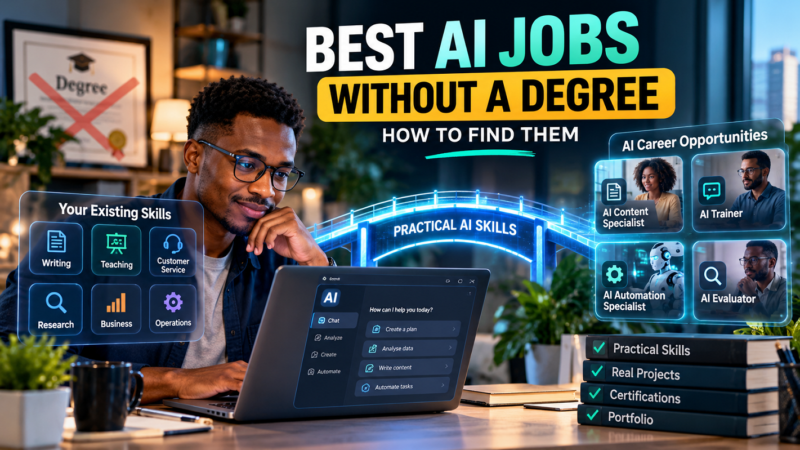
15 Best Entry-Level Training Programs to Start Your Career
Breaking into a new career without experience is hard. Entry-level training programs solve this by teaching practical skills, awarding recognized certificates, and often connecting you to employers. Entry-level training programs are structured learning pathways that prepare individuals with little or no experience for in-demand jobs.
These programs typically offer industry-recognized certificates, hands-on projects, and direct links to entry-level roles. Many take 3–12 months to complete and cost far less than a four-year degree. While the “best” program depends on your interests, location, and budget, the options listed here are widely recognized by employers in 2026.
Who This Guide Is For

- Recent graduates and final-year students looking to bridge the gap between theory and practice.
- Career changers and those returning to the workforce who need to upskill quickly.
- High school graduates seeking cost-effective, high-leverage alternatives to a four-year university degree.
- Professionals in Nigeria and globally who want structured, credible pathways to enter competitive industries.
What You Will Learn
- How entry-level training programs function as a bridge to immediate employment.
- Which industries currently offer the strongest ROI for your time and money?
- A curated list of 15 high-quality programs across technology, healthcare, trades, and business.
- A strategic framework to choose the right program based on your unique goals, budget, and background.
- Actionable steps to launch your career immediately upon completion.
What Is an Entry-Level Training Program?
An entry-level training program is a short-to-medium-term educational pathway designed to transition beginners from zero experience to job-ready proficiency. Unlike traditional academic degrees that prioritize theoretical breadth, these programs utilize a “skills-first” approach, focusing on the specific practical competencies required for immediate workplace success.
Whether you are aiming for a role as an IT support technician, a cloud junior administrator, a digital marketing assistant, or an HVAC apprentice, these programs provide the tactical leverage needed to bypass the traditional “experience trap.”
Key Characteristics
To ensure you are selecting a program that offers genuine career mobility, look for these four core indicators:
- Structured Curriculum: Rather than random tutorials, these programs offer linear, logical learning paths with clear modules, hands-on projects, and defined milestones that build your professional portfolio.
- Industry Recognition: Credibility is non-negotiable. The best entry-level training programs award certifications or badges from reputable bodies such as Google, Microsoft, CompTIA, AWS, or Cisco—entities whose standards are used by hiring managers to filter candidates.
- Employer Alignment: High-leverage programs are often developed in collaboration with industry leaders or are explicitly referenced in job descriptions. This “co-design” process ensures that what you learn on day one is relevant to the tools and workflows used by employers today.
- Accessible Entry: These pathways are engineered for efficiency, typically requiring only a high school diploma or basic technical literacy. They are built for those who need to pivot or enter the workforce without the overhead of a four-year time and financial investment.
How Do Entry-Level Training Programs Work?
Most entry-level training programs follow a standardized lifecycle designed to move you from theoretical novice to practitioner. Understanding this progression helps you evaluate whether a specific path fits your current schedule and career goals.
The Learning Lifecycle
- Enrollment: You register via an online learning platform, a specialized trade provider, or a formal apprenticeship board.
- Learning Phase: You engage with a mix of video lessons, reading materials, and, most importantly, hands-on labs. While some programs are strictly self-paced, others follow a cohort-based model with fixed start dates and peer interaction.
- Assessment: Mastery is verified through quizzes, practical exams, or a capstone project. In technical fields like IT or cloud computing, this often culminates in a high-stakes, proctored examination (e.g., CompTIA or AWS certifications) that serves as your industry “proof of work.”
- Certification: Upon completion, you earn a digital credential or badge. These are optimized for your CV and LinkedIn profile, signaling to recruiters that you possess verifiable, job-ready skills.
- Career Support: The best entry-level training programs provide a “last-mile” advantage, including access to exclusive job boards, employer introductions, resume reviews, and targeted interview preparation.
Program Duration by Type
The “right” timeline depends entirely on your target industry and the depth of skill required to be hireable.
| Program Type | Typical Duration | Focus Areas |
| Short-Term Courses | 4–12 weeks | Digital marketing, AI fundamentals, basic coding. |
| Professional Certificates | 3–9 months | Data analytics, cloud administration, UX design. |
| Trades/Apprenticeships | 6–24 months | HVAC, electrical, plumbing, nursing support. |
Strategic Note: If you are balancing a full-time job or university studies, prioritize programs that offer asynchronous, self-paced learning. If you lack professional accountability and struggle with motivation, a cohort-based model or a structured apprenticeship will provide the external pressure needed to ensure you reach the finish line.
Why Should You Consider an Entry-Level Training Program?
In 2026, the traditional path of “degree-first, experience-later” is increasingly inefficient. Employers are shifting toward skills-based hiring, prioritizing what you can actually do over where you earned your credentials. Entry-level training programs represent the fastest way to align your capabilities with market demand.
The Strategic Advantages
- Drastic Reduction in Time-to-Market: You can transition from a complete novice to a job-ready candidate in months rather than years. These programs strip away the academic “fluff,” focusing purely on the tactical skills required to perform.
- High ROI vs. University Tuition: Traditional degrees often carry significant opportunity costs and debt. These programs provide targeted, high-leverage learning at a fraction of the cost, allowing you to begin earning income sooner.
- Curriculum Aligned with Current Demand: Unlike static university syllabi, the best entry-level training programs are built in collaboration with industry leaders—often including tech giants and hiring partners—to ensure the tools and methodologies you learn are the same ones used on the job today.
- Tangible Proof of Competence: A certificate is more than paper; it serves as a verified signal to employers. When combined with a portfolio of projects, it provides undeniable evidence that you possess the practical, job-ready skills they are seeking.
- Diverse Career Pathways: Whether your interest lies in high-growth tech (AI, cloud, data), healthcare support, skilled trades, or business administration, there are structured pathways designed to get you “foot-in-the-door” ready.
Critical Trade-offs & Realities
To succeed, you must approach these programs with a clear-eyed understanding of their limitations:
Certificates Are Not Guarantees: A certificate is a door-opener, not a job placement. Your ultimate success depends on your ability to network, build a portfolio, and demonstrate initiative during the interview process.
Regional & Industry Nuance: Some credentials carry more weight in specific sectors or geographies. Always research whether a specific certificate is the “gold standard” in your target industry before investing time.
The Licensing Gap: Be aware that for regulated professions (e.g., HVAC, electrical work, or nursing assistance), a training program is only the first step. You will often need to complete additional local licensing, certifications, or supervised hours to become fully credentialed in your region.
Which Industries Offer the Best Entry-Level Opportunities?
In 2026, the job market rewards those who can pair technical proficiency with human-centric skills. While the landscape is shifting due to automation, the following industries remain the most reliable “entry points” for those using entry-level training programs to build their careers.
Technology & Cloud Computing
This is the most direct path to high-earning potential without a traditional CS degree. Employers are aggressively hiring for “skills-first” roles where the ability to manage cloud infrastructure, troubleshoot network issues, or protect data is more important than academic pedigree.
- Target Roles: IT support technician, cloud support associate, cybersecurity analyst, and data analyst.
Digital Marketing & E-commerce
Every business—from local startups in Nigeria to global SaaS companies—requires visibility. Marketing has evolved from “creative” to “data-driven.” If you can master analytics, SEO, and AI-assisted content tools, you become immediately valuable.
- Target Roles: Marketing assistant, SEO specialist, social media manager, and PPC (Pay-Per-Click) analyst.
Healthcare Support
Healthcare remains the most recession-proof sector. As populations age and medical technology advances, the demand for support staff who can bridge the gap between clinical needs and administrative workflows is skyrocketing.
- Target Roles: Certified nursing assistant (CNA), medical assistant, medical billing and coding specialist, and health informatics support.
Skilled Trades
Often overlooked by tech-focused job seekers, the trades offer the most stable, high-pay, “earn-while-you-learn” models. With the global push for infrastructure modernization and clean energy, there is a massive deficit of skilled workers.
- Target Roles: HVAC technician, electrician apprentice, plumbing assistant, and renewable energy (solar) installer.
Business & Operations
As companies lean into AI and automation, they need “operations athletes”—people who can coordinate complex projects and manage workflows. These roles often require more soft-skill aptitude than deep technical expertise.
- Target Roles: Project coordinator, junior project manager, and digital operations assistant.
Emerging Growth Areas (The “2026 Edge”)
If you are looking to future-proof your career, look for entry-level training programs that sit at the intersection of traditional fields and new technologies:
- AI Operations & Prompt Engineering: Rather than just learning to “code,” focus on programs that teach you how to integrate AI tools into existing business processes (e.g., AI-supported content operations or automated data entry).
- Green Tech & Energy Transition: With global climate goals, roles in solar maintenance, energy auditing, and sustainable infrastructure management are growing rapidly and rarely require traditional 4-year engineering degrees.
Pro Tip for Nigerian Professionals: Look for roles in the growing fintech, agri-tech, and digital operations sectors. Platforms like Bincom, local graduate trainee programs at top-tier firms, and remote-first global startups are increasingly valuing entry-level training programs that include a practical portfolio over generic university qualifications.
How to Choose the Best Entry-Level Training Program for You
Selecting the right path requires more than just picking a popular course. Use this strategic framework to filter your options and ensure your investment of time and capital leads to measurable career growth.
Define Your Strategic North Star
Before browsing programs, clarify the “why” and “where” of your career transition:
- Target Sector: Are you leaning toward high-growth Tech, recession-proof Healthcare, stable Skilled Trades, or agile Business Operations?
- Geography & Logistics: Do you require a local, on-site program (common for trades and some healthcare roles in Nigeria), or are you targeting global, remote-first opportunities?
- Income Velocity: Is your priority to start earning any income as quickly as possible, or are you willing to endure a longer training period (9–12 months) for a higher-paying, specialized role?
Audit Your Current Skills (The “Entry Gap”)
Be honest about your starting point to avoid burnout or frustration:
- The “Zero Experience” Tier: If you have no technical or specialized background, focus on programs that prioritize foundational literacy, such as IT support, AI basics, or core administrative trades.
- The “Logic & Math” Tier: If you have moderate experience with numbers, logic, or basic software, you are well-positioned for data analytics, cybersecurity, or cloud administration.
- The “Physical & Tactile” Tier: If you prefer hands-on, tangible work, prioritize vocational trades like HVAC, electrical, or technical repair.
Evaluate Recognition & Market Signal
Not all certificates carry equal weight. Use these criteria to “vet” any program:
- Employer Stamp of Approval: Is the certificate issued by an industry giant (Google, AWS, CompTIA, Cisco) or a respected local institution? These “gold standard” credentials act as a filter for applicant tracking systems (ATS).
- Proof of Work: Does the program provide a portfolio of projects? In 2026, a certificate alone is often not enough; you need to demonstrate the application of your skills through capstone projects.
- Job Market Evidence: Does the training provider share job placement rates, testimonials from successful graduates, or lists of hiring partners?
Cost-Benefit & Opportunity Analysis
Calculate the “real” cost beyond the tuition fee:
- Total Cost of Ownership: Is there a free/low-cost version available through platforms like Coursera or government-backed initiatives?
- Time Commitment: How many hours per week can you realistically commit without sacrificing your current responsibilities?
- Licensing Realities: For regulated industries—especially in healthcare and electrical/HVAC work—verify if the program provides the necessary hours for local licensing. A global certificate is useless if it doesn’t satisfy Nigerian regulatory requirements for practice.
The Decision Matrix (At-a-Glance)
| Criteria | Prioritize This If… |
| Speed | You need to enter the job market in under 4 months. |
| Credibility | You are moving into a highly competitive field like cybersecurity or cloud. |
| Flexibility | You have a job and need an asynchronous, self-paced learning model. |
| ROI | You want to minimize debt while maximizing your potential salary. |
15 Best Entry-Level Training Programs to Start Your Career
If you are looking to bridge the gap between where you are and where you want to be, entry-level training programs provide the most efficient route. They strip away the academic overhead of traditional degrees, focusing instead on the high-leverage, practical skills that employers are hiring for right now.
The following list features 15 of the most effective entry-level training programs across technology, healthcare, skilled trades, and business. Each entry is designed to help you determine if the path fits your budget, time, and long-term career goals.
For every program, you will find:
- Overview: The core focus and industry relevance.
- Best-Fit Roles: The specific jobs you can target upon completion.
- Pros & Cons: A balanced look at the strengths and potential challenges.
- Estimated Cost & Time: A realistic view of the investment required.
- Verdict: A concise assessment of why this program is a smart career move.
Google Career Certificates (IT Support, Data, UX, PM, Cybersecurity)
Google Career Certificates are industry-standard, online training programs designed to transition learners from zero experience to job-ready proficiency. Hosted on Coursera, these programs offer targeted pathways in high-demand fields, including IT Support, Data Analytics, UX Design, Project Management, Digital Marketing, and Cybersecurity.
Key Specifications
- Duration: 3–9 months (based on a 10-hour/week commitment; fully self-paced).
- Format: A blend of video-led instruction, interactive readings, hands-on labs, and final capstone projects.
- Certification: A shareable Google Professional Certificate.
- Prerequisites: None; designed for absolute beginners.
Best For
- Career Changers: Professionals looking to pivot into tech or digital operations.
- Students & Graduates: Those needing a “skills-first” bridge between theory and professional reality.
- Self-Starters: Individuals who thrive in flexible, asynchronous learning environments.
Pros & Cons
- Pros: Strong global brand recognition, clear alignment with entry-level job descriptions, and consistent updates to curriculum to include modern AI tools.
- Cons: A certificate is an entry-level signal, not a guarantee; you must pair it with a personal portfolio of projects to stand out. Some specialized fields (e.g., Cybersecurity) may require supplemental industry-specific certifications (like CompTIA) for advanced roles.
Estimated Cost (2026)
- Subscription: Typically ~$49–$59/month for individual certificate access via Coursera.
- Strategic Value: Coursera Plus (roughly $59/month or ~$239–$399/year depending on current promotions) often provides better value if you plan to complete multiple certifications or courses. Financial aid remains available for eligible learners.
Verdict
For 2026, these remain the baseline “gold standard” for beginners. They are the most reliable entry-level training programs for building a credible professional foundation without the cost or time commitment of a university degree.
The video above provides a deep dive into the five specific Google certificates that currently offer the best return on investment for job seekers in the 2026 market.
AWS re/Start (Cloud Foundations)
AWS re/Start is a tuition-free, intensive workforce development program designed to launch careers in cloud computing. Unlike self-paced certificates, this is a cohort-based, instructor-led program that combines technical cloud training with professional career coaching, making it one of the most effective entry-level training programs for those serious about transitioning into tech roles like Cloud Support Associate or Junior Systems Administrator.
Key Specifications
- Duration: ~12–15 weeks, typically full-time (Monday–Friday, 9 AM – 5 PM).
- Format: Live, instructor-led virtual training featuring scenario-based learning, hands-on AWS Cloud labs, and peer-to-peer collaboration.
- Certification: Prepares learners for the AWS Certified Cloud Practitioner exam (often with exam costs covered).
- Prerequisites: Basic digital literacy; no prior cloud or coding experience is required, though motivation and full-time availability are strictly enforced.
Best For
- Career Switchers: Individuals who are currently unemployed or underemployed and can commit to a full-time, intensive schedule.
- Cloud Aspirants: Learners targeting DevOps, infrastructure, or site reliability roles who need the “last mile” of support—resume reviews, interview prep, and direct employer connections.
- Goal-Oriented Learners: Those who need the accountability of a structured, cohort-based environment to stay on track.
Pros & Cons
- Pros: Entirely tuition-free; provides direct access to hiring partners and professional career coaches; delivers hands-on experience with real-world cloud architecture (Linux, Python, Security, Networking).
- Cons: Highly competitive admission; requires a significant, non-negotiable full-time commitment; availability is localized and dependent on regional training partners (e.g., in Nigeria, partners like Lonadek and others periodically host cohorts).
Estimated Cost
- Price: Free. The program is funded by AWS and its collaborating organizations to build the global cloud talent pipeline.
Verdict
For 2026, AWS re/Start remains a premier “high-leverage” opportunity. If you can clear the admissions process and commit to the schedule, it is arguably the best path to bypass the “experience gap” in cloud computing.
Strategic Note for Nigerian Learners:
AWS re/Start operates through local partners. Check the official AWS re/Start directory periodically to find current collaborating organizations in Lagos, Abuja, or other regions. Because cohorts are intermittent, follow local tech training providers (like Lonadek or similar vocational partners) on social media to be alerted the moment new applications open.
Microsoft Learn + Fundamentals (Cloud, AI, Security)
Microsoft Learn is a premier, free educational platform that provides comprehensive, role-based learning paths. Its “Fundamentals” series—covering Azure (cloud), AI, data, and security—is designed specifically for beginners. These pathways serve as the official preparation for industry-recognized certifications that align with high-demand entry-level roles such as Cloud Support Associate, AI Assistant, and Security Operations Analyst.
Key Specifications
- Duration: Self-paced; typically 2–6 weeks depending on study intensity.
- Format: Interactive modules, hands-on sandboxes/labs, knowledge checks, and exam practice assessments.
- Certification: Microsoft Certified: Fundamentals (e.g., AZ-900, AI-900, DP-900, SC-900).
- Prerequisites: None; designed for absolute beginners.
Best For
- Cloud Aspirants: Those wanting to understand the infrastructure behind modern enterprise software.
- AI Enthusiasts: Beginners looking to grasp the foundations of Machine Learning and Generative AI within a business context.
- Enterprise-Focused Learners: Professionals aiming for roles in organizations that rely heavily on the Microsoft/Azure ecosystem.
Pros & Cons
- Pros: High-quality, free learning content; globally recognized certifications that act as a gateway to more advanced “Associate” and “Expert” credentials; strong alignment with real-world enterprise workflows.
- Cons: The exam itself is a cost (unless a voucher is secured); content can be dry for those who prefer purely “hands-on” coding over conceptual knowledge; successful job placement still requires building a portfolio of practical projects outside the exam.
Estimated Cost (2026)
- Learning Materials: Free.
- Certification Exams: Standard rate is $99 USD for Fundamentals exams (AZ-900, AI-900, etc.).
- Strategic Tip: Never pay the full fee if you don’t have to. Microsoft frequently offers 100% discount vouchers through events like Microsoft Virtual Training Days, Cloud Skills Challenges, and annual events like the AI Skills Fest.
Verdict
For learners entering the enterprise tech space, these are among the most essential entry-level training programs. They provide the foundational vocabulary and conceptual framework required to operate in professional IT environments, and they offer a structured, credible ladder for long-term career growth.
Strategic Note for Nigerian Professionals:
While the standard cost is $99, you can frequently bypass this fee. Keep a close eye on the Microsoft Events page and local Nigerian tech community hubs (like Digital Skills Nigeria or tech-focused NGOs) that often distribute exam vouchers for completing specific learning playlists.
CompTIA A+ (IT Support & Help Desk)
CompTIA A+ is the industry-standard, vendor-neutral certification for entry-level IT support. It validates the foundational skills required to troubleshoot hardware, software, networking, and security issues across diverse environments. For those aiming to break into IT support, help desk roles, or field service technician positions, A+ is often the primary filter used by hiring managers and applicant tracking systems (ATS).
Key Specifications
- Duration: 2–6 months (depending on your prior technical exposure and study intensity).
- Format: Requires passing two distinct exams (Core 1: 220-1201 and Core 2: 220-1202). Questions include a mix of multiple-choice and hands-on Performance-Based Questions (PBQs) that simulate real-world troubleshooting.
- Certification: Valid for three years from the date of certification; renewable through CompTIA’s Continuing Education (CE) program.
- Prerequisites: None formal, though CompTIA recommends 9–12 months of hands-on experience or equivalent training.
Best For
- Career Starters: Individuals with no formal IT background who need a verified credential to bypass HR screening.
- Help Desk Aspirants: Those targeting roles in Managed Service Providers (MSPs) or internal corporate IT support teams.
- Defense & Enterprise: Professionals aiming for government or defense contractor roles where DoD 8570 compliance is mandatory.
Pros & Cons
- Pros: Universally recognized global standard; vendor-neutral (skills apply to both Apple/Windows/Linux); acts as a required baseline for higher-level certifications like Network+ and Security+.
- Cons: The “true” cost is double what many expect because it requires two exams; content is broad rather than deep, requiring you to supplement with a home lab or real-world practice to be truly “job-ready.”
Estimated Cost (2026)
- Exam Fees: Expect to pay approximately $253 per exam ($506 total) for both cores.
- Strategic Advice: Avoid paying full price if possible. Look for “Basic Bundles” that include a retake voucher—this protects your investment if you have an off day during your first attempt. Always check for student discounts if you are currently enrolled in any academic institution.
Verdict: For 2026, CompTIA A+ remains the most reliable “foot-in-the-door” certification for IT support. It is not a path to instant six-figure salaries, but it is the proven launchpad for a high-growth career in technical infrastructure.
Strategic Note for Nigerian Professionals: While global exam vouchers are priced in USD, check local authorized testing centers in Lagos or Abuja, as they sometimes offer packaged training bundles that include exam support, lab access, and physical study resources. Be cautious of “too good to be true” local pricing; only purchase vouchers through official CompTIA channels or certified academic partners to ensure your exam registration is valid.
CompTIA Security+ (Cybersecurity Analyst)
CompTIA Security+ is the premier, vendor-neutral credential for those entering the cybersecurity field. It establishes the foundational knowledge required for core security functions—such as threat management, cryptography, identity management, and network security—and is widely considered the “gatekeeper” certification for junior-level roles like SOC Analyst and Security Administrator.
Key Specifications
- Duration: 2–4 months of focused study.
- Format: A single, rigorous exam (SY0-701) consisting of up to 90 multiple-choice and performance-based questions (PBQs) that test your ability to solve real-world security incidents.
- Certification: Valid for three years; requires continuing education to maintain.
- Prerequisites: None formal, though CompTIA recommends having Network+ and two years of IT administration experience.
Best For
- Security Aspirants: Individuals targeting entry-level cybersecurity roles who need a globally recognized signal to pass ATS filters.
- IT Generalists: Systems administrators or support staff looking to specialize in security.
- Government/Enterprise: Professionals in roles requiring compliance with DoD 8570 mandates, where Security+ is often an absolute hiring requirement.
Pros & Cons
- Pros: High employer demand; provides a broad, comprehensive view of the security landscape; recognized by almost every major organization worldwide.
- Cons: Challenging to pass without practical knowledge (don’t rely on theory alone); requires significant financial investment for the exam voucher; broad scope can be overwhelming for those without prior IT networking knowledge.
Estimated Cost (2026)
- Exam Voucher: Approximately $425 USD at list price.
- Strategic Tip: Avoid paying the full sticker price. As of 2026, authorized resellers and academic partners in Nigeria (such as Cybervast) often offer localized pricing or discount codes (e.g., CV-2026) that significantly reduce the cost compared to the direct CompTIA store.
- Budgeting: Expect to spend $500–$700 total for a “disciplined self-study” path (voucher + practice tests + retake bundle insurance).
Verdict
Security+ is not an “easy” entry-level credential, but it is one of the highest-ROI certifications for anyone serious about a long-term career in cybersecurity. It provides the vocabulary and mindset needed to defend modern digital infrastructure.
The video above breaks down the true cost and preparation strategy to help you avoid expensive retakes and optimize your study budget.
Meta Front-End Developer Professional Certificate
Designed by software engineering experts at Meta, this professional certificate is a comprehensive, beginner-friendly program that covers the full stack of front-end web development. It is engineered to take you from zero coding experience to building responsive, interactive web applications using industry-standard tools like React, HTML5, CSS3, and JavaScript.
Key Specifications
- Duration: 4–9 months (based on a 10-hour/week commitment; fully self-paced).
- Format: Nine-course series featuring video instruction, interactive coding exercises, labs, and a final capstone project.
- Certification: Meta Professional Certificate (ACE®-recommended for college credit in the U.S.).
- Prerequisites: None. No prior coding experience or degree required.
Best For
- Aspiring Web Developers: Those specifically targeting front-end roles who want a structured path with a reputable brand name on their CV.
- Career Changers: Individuals looking to pivot into software engineering via a modular, project-based curriculum.
- Self-Driven Learners: Those who need the “Meta” brand signal to get past initial HR screening for junior roles.
Pros & Cons
- Pros: Strong brand recognition; covers both technical skills (React, JavaScript) and design fundamentals (Figma); culminates in a portfolio-ready capstone project.
- Cons: Extremely fast-paced for absolute beginners (expect to hit a “learning wall” during JavaScript modules); lacks live instructor support; certificate alone is rarely sufficient—you must build additional custom projects to stand out in a competitive job market.
Estimated Cost (2026)
- Subscription: ~$49–$59/month via Coursera.
- Strategic Tip: If you are a student or a learner in Nigeria facing budget constraints, always apply for Coursera Financial Aid for each of the 9 courses. It is a highly effective way to access the materials at little to no cost.
Verdict: The Meta Front-End Developer certificate is an excellent entry-level training program for building a high-leverage skill set. However, do not treat it as a “job guarantee.” Use the projects in the course as your starting point—not your final destination. To secure a role in 2026, you will need to take the concepts learned here and build 2–3 unique, original applications to differentiate your portfolio from thousands of other certificate holders.
Strategic Note for Nigerian Professionals: In the Nigerian tech ecosystem, “proof of work” often trumps certification. Use this program to master the theory and syntax, but spend your “lab time” on GitHub creating local projects that solve real problems (e.g., a dashboard for a local business, or a utility tool for a specific community). Employers will value the application of these skills far more than the certificate itself.
IBM Data Science & AI Professional Certificate
The IBM Data Science and AI Professional Certificate is a robust, project-heavy program designed for absolute beginners. It provides a structured path to mastering the core data science toolkit—including Python, SQL, data visualization, and machine learning—culminating in an IBM-issued digital badge. It is one of the most comprehensive entry-level training programs for those looking to build a data-driven career.
Key Specifications
- Duration: 6–12 months at a part-time pace (fully self-paced).
- Format: 11–12 courses featuring video instruction, cloud-based hands-on labs (IBM Watson Studio), and a rigorous, portfolio-ready capstone project.
- Certification: IBM Professional Certificate and digital badge.
- Prerequisites: None; basic computer literacy and high-school-level math are sufficient.
Best For
- Aspiring Data Practitioners: Individuals targeting roles such as Junior Data Scientist, Data Analyst, or AI Assistant.
- Career Changers: Professionals looking to leverage data-driven decision-making in their current or future fields.
- Portfolio Builders: Learners who prioritize “doing” over “watching”—the program’s emphasis on cloud-based labs provides tangible project artifacts.
Pros & Cons
- Pros: Strong IBM brand signal; deep coverage of the data pipeline (from cleaning and wrangling to modeling and visualization); includes recent modules on Generative AI.
- Cons: Can feel lengthy if you aren’t disciplined; requires a persistent effort to master the coding aspects (Python/SQL) if you have zero STEM background.
Estimated Cost (2026)
- Subscription: ~$49–$59/month via Coursera (included in Coursera Plus).
- Strategic Tip: Always check the IBM Skills Network or Coursera for scholarship opportunities. Because this is a high-enrollment program, financial aid is frequently approved for motivated learners.
Verdict: For 2026, this is a top-tier entry-level training program for data science. While it is beginner-friendly, it provides enough technical depth to serve as a genuine career bridge. To maximize ROI, use the capstone project as a centerpiece for your professional portfolio and actively participate in the IBM Talent Network once you receive your badge.
The review above provides a transparent breakdown of the curriculum and the practical value of the certification for job seekers entering the 2026 market.
Salesforce Trailhead + Admin Certification
Salesforce Trailhead is the official, gamified learning engine of the Salesforce ecosystem. It is a completely free platform that guides you through the complexities of CRM administration, automation, and business logic. The Salesforce Certified Administrator credential is the industry-recognized “entry ticket” for roles in business operations, CRM management, and project coordination. In 2026, the role has evolved from simple data entry to managing sophisticated AI-driven workflows (Agentforce) and complex automation, making it a high-leverage skill set.
Key Specifications
- Duration: 2–6 months depending on pace and prior business experience.
- Format: Interactive “Trails,” hands-on practice in personal “Developer Edition” orgs, and project-based badges.
- Certification: Salesforce Certified Administrator (requires passing a proctored exam).
- Prerequisites: No degree required; foundational understanding of business processes and basic computer literacy are key.
Best For
- Business-Tech Hybrids: Individuals who enjoy the intersection of business strategy and technical configuration.
- CRM Aspirants: Those targeting roles like Salesforce Administrator, CRM Specialist, or Operations Analyst.
- Gamified Learners: People who thrive in a structured, progress-based environment where you earn badges and points as you master skills.
Pros & Cons
- Pros: The learning platform is 100% free; the skills are directly applicable to high-paying, remote-friendly careers; it allows for “proof of work” via your public Trailhead profile.
- Cons: The entry-level job market is currently saturated with “paper admins” (those with certificates but no experience), making a portfolio of custom projects essential. The platform is massive, and it is easy to get “lost” in unnecessary trails.
Estimated Cost (2026)
- Learning Materials: Free.
- Exam Fee: $200 USD (plus applicable taxes). Retakes are $100 USD.
- Strategic Budgeting: You can realistically pass this with ~$250–$300 total by combining free Trailhead content with one low-cost ($20–$25) practice exam set (e.g., Focus on Force) to master the 68% passing threshold.
Verdict
In 2026, the Salesforce Admin certification is worth it, but only if you move beyond “clicks.” The modern admin must understand how to orchestrate AI agents and maintain complex Flows. Use this program to gain the certification, but spend your real effort building unique automation projects in a free Developer Org to prove your worth to hiring managers.
Strategic Note for Nigerian Professionals:
The Salesforce ecosystem is global and remote-friendly. While local demand is growing among larger financial and telecom firms, your primary target should be global remote roles or consulting partners. Because the entry-level market is competitive, do not just list the certification on your CV; provide a link to your Trailblazer Profile and a document detailing 3–5 “Flows” you have built to solve specific business problems.
HubSpot Academy & Google Skillshop (Digital Marketing)
For digital marketing, the strategy is not to pick one, but to “stack” credentials. HubSpot Academy is the gold standard for Inbound Marketing theory (content, storytelling, and strategy), while Google Skillshop provides the technical, execution-based certification for paid advertising and analytics. Together, they create a comprehensive entry-level profile for roles like Digital Marketing Assistant, Social Media Coordinator, or PPC Analyst.
Key Specifications
- Duration: 1–8 weeks (self-paced). HubSpot courses are typically 4–8 hours; Google Ads certifications can be completed in 3–5 hours each.
- Format: Video-based lessons, interactive quizzes, and practical assessments.
- Certification: Digital badges (HubSpot) and official platform certifications (Google Ads, GA4).
- Prerequisites: None.
Best For
- Aspiring Marketers: Individuals looking for the fastest path to “job-ready” knowledge in advertising, SEO, and content strategy.
- Freelancers: People who need to prove competency to small business clients quickly.
- “Stackers”: Learners who want to pair the Google “technical” signal with the HubSpot “strategic” signal to build a more rounded resume.
Pros & Cons
- Pros: 100% free; highly recognized by agencies and startups; directly maps to the tools used in daily marketing workflows.
- Cons: The “free” nature means everyone has them; a certificate alone will not differentiate you. You must pair these with a live portfolio (e.g., a blog, a test ad campaign, or a social media audit).
Estimated Cost
- Price: Free.
Verdict
In 2026, the Google + HubSpot combo is the “Starter Pack” for digital marketing. If you are entering the market, do not stop at one. Earn the Google Ads Search Certification (technical proficiency) and the HubSpot Content Marketing Certification (strategic proficiency). This signals to employers that you can not only “run the ads” but also “write the copy that converts.”
Strategic Note for Nigerian Professionals:
The digital marketing agency landscape in Nigeria (Lagos/Abuja) is highly competitive. Local agencies value the Google Ads certification because it directly relates to managing client ad spend. If you are targeting remote global work, emphasize the HubSpot “Inbound” framework in your portfolio, as it is the standard language for global SaaS marketing teams.
Free Coding Bootcamps: The Odin Project & freeCodeCamp
For those who prefer a “build-it-yourself” approach, The Odin Project and freeCodeCamp remain the gold standards in 2026. Rather than providing passive video lectures, these platforms function as open-source, project-based bootcamps. They are designed for self-starters who want to learn by doing, skipping the high cost of traditional bootcamps in favor of a rigorous, self-paced curriculum.
Key Specifications
- Duration: 6–12+ months (part-time). Expect 15–20 hours/week to see consistent progress.
- Format:
- The Odin Project: A curated, “opinionated” path that forces you to use professional tools (VS Code, Git/GitHub, Terminal) from Day 1.
- freeCodeCamp: A browser-based, interactive curriculum offering 3,000+ hours of content across multiple certification paths.
- Prerequisites: High self-discipline and basic computer literacy.
Best For
- The Disciplined Learner: People who do not require external accountability (like a live instructor) to finish what they start.
- Portfolio-First Aspirants: Learners who understand that in 2026, a certificate from a website carries less weight than a functional, deployed application on GitHub.
- Full-Stack Aspirants: Those who want deep technical knowledge in modern web stacks (JavaScript/React/Node.js or Ruby on Rails).
Pros & Cons
- Pros: 100% free; no “hidden” paywalls or subscription tiers; builds genuine, real-world development skills that survive the “AI-coding” era by emphasizing deep understanding.
- Cons: Extremely high dropout rates; zero personalized mentorship; no direct career placement services. These platforms show you how to build, but they do not hand you a job.
Estimated Cost
- Price: Free.
Verdict
In 2026, these platforms are your “Career Foundation Layer.” If you are serious about becoming a software engineer, you should use freeCodeCamp for its broad certifications and The Odin Project to learn how to manage a professional local development environment.
Strategic Note for Nigerian Professionals:
The “junior dev” market is competitive globally. Do not treat these platforms as the end of your education. Use them to build your first three projects—then move to GitHub and Netlify/Vercel. Your goal is to have a live URL you can send to a recruiter or potential client. In Nigeria, where developer communities (like ForLoop or DevCareer) are vibrant, use these as your “study hall” to stay motivated and network with others going through the same curriculum.
Decision Matrix: Which Path is Your Best ROI?
To help you finalize your strategy, use this matrix to select your entry-level training program based on your specific goal for 2026.
| Focus Area | Top Recommendation | Why? |
| Tech Entry | Google Career Certs | Best “HR-friendly” signal to get past ATS filters. |
| Cloud/DevOps | AWS re/Start | Free, intense, and provides direct employer access. |
| Cybersecurity | CompTIA Security+ | Mandatory baseline for enterprise/government roles. |
| Web Development | The Odin Project | Best for building a real, professional-grade portfolio. |
| CRM/Ops | Salesforce Admin | High demand in business/enterprise roles. |
Final Recommendation:
Don’t “over-certify.” Pick one primary certification to establish your credibility (e.g., CompTIA A+ or Google IT), then spend the rest of your time building one complex project that demonstrates your ability to solve real-world problems.
Certified Nursing Assistant (CNA) Training
CNA training programs are the most accessible entry point into the healthcare sector, focusing on essential patient care, infection control, and vital sign monitoring. While “CNA” is a specific title in North America, in Nigeria, you will find these roles under titles such as Healthcare Assistant, Auxiliary Nurse, or Caregiver. These programs provide the hands-on training required to support professional nurses in hospitals, private clinics, and home-care settings.
Key Specifications
- Duration: 4–12 weeks for classroom theory, followed by a period of supervised clinical practicum (which can bring total training to 3–6 months).
- Format: Blended learning, combining theoretical classroom instruction (often available online) with intensive, in-person clinical labs.
- Certification: Varies by provider. Look for certificates recognized by local hospitals or those that align with international standards (e.g., CPD-accredited for global migration) if your goal is international mobility.
- Prerequisites: S.S.C.E (high school diploma) or equivalent is typically required; a strong emphasis on empathy, physical stamina, and a clean background check.
Best For
- Hands-on Learners: Individuals who prefer direct patient interaction over desk-based tasks.
- Career Starters: Those needing to enter the workforce quickly with a stable, high-demand skill set.
- Healthcare Aspirants: An excellent “proof of interest” pathway for those who eventually want to pursue a nursing degree or community health specialty.
Pros & Cons
- Pros: High immediate demand; essential skills that are universally needed; provides a foundational “foot in the door” for higher healthcare qualifications.
- Cons: Physically and emotionally demanding; the Nigerian market has varying levels of regulation, so choosing a reputable training institution is vital to ensure your certificate holds weight.
Estimated Cost (Nigeria Focus)
- Training Fees: Prices vary significantly, ranging from ₦130,000 to ₦700,000, depending on whether the program includes extended clinical placements, laboratory equipment usage, and direct job-placement support.
Verdict
For 2026, this is a high-stability career path. If you are in Nigeria, focus on programs offered by recognized health academies (e.g., Ambulance Academy or regional health colleges) rather than generic online certifications. Your ROI is found in the clinical experience and the network of hospital partners the institution provides.
Strategic Note for Nigerian Professionals:
In Nigeria, “Auxiliary Nurse” and “Healthcare Assistant” roles are widely advertised on platforms like Indeed Nigeria. When selecting a program, verify if the training institution has a Memorandum of Understanding (MoU) with local hospitals for clinical attachments. This “practicum” stage is where you will make the connections that lead to your first job.
Your Final Decision Matrix: 15 Programs at a Glance
You now have a curated list of high-leverage programs. Use this table to decide your next move based on your desired Speed-to-Hire and Career Signal.
| Program Category | Best For | Time to Hire | Primary Signal |
| Tech/Cloud | AWS re/Start | 3 Months | Industry-Backed Skill |
| Data/AI | IBM Data Science | 6–9 Months | Project Portfolio |
| Cybersecurity | CompTIA Security+ | 3–4 Months | HR Screening Pass |
| Marketing | HubSpot/Google | 1–2 Months | Practical Competency |
| Healthcare | CNA/Care Aide | 3–4 Months | Clinical Experience |
Final Advice for the Founder:
As the founder of Skilldential, you are positioning your audience to choose high-leverage paths. When promoting these, emphasize that the certificate is the hook, but the portfolio is the fish. Encourage your readers to spend 70% of their time on the “capstone” or “clinical” projects and only 30% on the theoretical curriculum.
HVAC Technician Training
HVAC (Heating, Ventilation, Air Conditioning, and Refrigeration) training is a high-leverage “blue-collar” path that provides stable, recession-proof income. As the world transitions toward energy-efficient cooling and complex industrial infrastructure (like data centers), the demand for technicians who understand the underlying thermodynamics and electrical logic of these systems is at an all-time high.
Key Specifications
- Duration: 6 months to 2 years, depending on whether you choose a certificate, diploma, or formal apprenticeship.
- Format: A mix of classroom theory (refrigeration cycles, electrical safety, thermodynamics) and intensive, hands-on lab work.
- Certification: Program-specific diploma; industry certifications often include local Trade Tests or manufacturer-specific badges (e.g., LG Academy).
- Prerequisites: High school diploma/SSCE; physical capability to handle manual tools and equipment.
Best For
- Hands-on Learners: Those who prefer solving mechanical/electrical problems over screen-based work.
- Future-Proofers: Individuals looking for a “robot-proof” career—AI and automation can diagnose an error, but they cannot physically install or repair a compressor.
- The Entrepreneurial: A clear path to self-employment, as independent HVAC service remains a highly lucrative business model.
Pros & Cons
- Pros: Exceptional job security (due to the global “Silver Tsunami” of retiring master techs); high overtime potential; skill sets that are transferable to any geographic location.
- Cons: Physically demanding, often involving heat and confined spaces; entry-level earnings may start modestly before jumping significantly with mastery and specialization.
Estimated Cost
- Training Fees: In Nigeria, vocational training costs range from ₦150,000 to over ₦800,000 for comprehensive programs that include certification and internship placement.
Verdict
For 2026, this is a top-tier trade choice. Do not settle for being a “parts changer” (someone who just swaps components). To ensure your career is lucrative, seek training that covers Building Automation Systems (BAS) and energy efficiency.
Strategic Note for Nigerian Professionals:
The Nigerian HVAC market is shifting from basic repair to specialized installation for industrial projects.
- Where to train: Look for industry-backed hubs like Etiwa Tech (Lagos) or the LG West Africa Hub Academy, which offer structured, equipment-focused training.
- Career Edge: Your goal is to move from residential AC repair to Commercial/Industrial HVAC, where the daily rates and project values are significantly higher. Always prioritize programs that include on-the-job internship placements; in the trades, a letter of recommendation from an established site foreman is worth more than the certificate itself.
Your Final Decision Matrix: 15 Programs at a Glance
You now have a curated list of high-leverage programs. Use this table to decide your next move based on your desired Speed-to-Hire and Career Signal.
| Program Category | Best For | Time to Hire | Primary Signal |
| Tech/Cloud | AWS re/Start | 3 Months | Industry-Backed Skill |
| Data/AI | IBM Data Science | 6–9 Months | Project Portfolio |
| Cybersecurity | CompTIA Security+ | 3–4 Months | HR Screening Pass |
| Marketing | HubSpot/Google | 1–2 Months | Practical Competency |
| Healthcare | CNA/Care Aide | 3–4 Months | Clinical Experience |
| Skilled Trades | HVAC Technician | 6–12 Months | Manual/Technical Mastery |
Final Advice for the Founder:
You have built a powerful “Starter Pack” for your audience. As you wrap up this guide, emphasize that certification is the hook, but the portfolio is the fish. Encourage your readers to spend 70% of their time on the “capstone” or “clinical” projects and only 30% on the theoretical curriculum.
Electrical Apprenticeship Programs
An electrical apprenticeship is the ultimate “earn-while-you-learn” career path. It blends formal classroom instruction with structured, paid on-the-job training. In 2026, the focus has shifted from basic wiring to complex industrial automation, renewable energy integration (solar/inverters), and smart-grid maintenance, making this a highly future-proof trade.
Key Specifications
- Duration: Typically 2–3 years (varies by program), progressing from apprentice to technician/journeyman level.
- Format: Dual-training system—work on-site with experienced mentors (70% of the time) and attend technical school/workshops for theoretical foundations (30% of the time).
- Certification: Program-specific apprenticeship completion, often culminating in the Federal Trade Test (Nigeria) or industry-recognized technical certificates.
- Prerequisites: S.S.C.E. (High School Diploma); successful completion of an aptitude/entry test; physical ability to perform manual and technical tasks.
Best For
- The Pragmatic Learner: Individuals who want to avoid student debt and prefer to earn an income from day one of training.
- Problem Solvers: People who enjoy working with their hands, reading schematics, and managing high-stakes electrical infrastructure.
- Career Stability: Those seeking a recession-proof skill set that is in constant demand across construction, oil & gas, and renewable energy sectors.
Pros & Cons
- Pros: Immediate income; progressive wage increases as you gain skills; no tuition debt (often subsidized by employers); highly transferable skills.
- Cons: Physically demanding (heavy lifting, climbing); safety-critical (requires absolute discipline); formal licensing in Nigeria (via NEMSA) is a separate, regulated process you must pursue once you have the experience.
Estimated Cost
- Price: Generally free or paid. Most high-quality programs (like those at Simba Training or the Institute for Industrial Technology) are free or offer stipends, as companies are actively investing in their future workforce.
Verdict
For 2026, this is arguably the most stable “blue-collar” career path. While tech is high-growth, electrical infrastructure is the backbone of the economy. If you can land a slot in a reputable apprenticeship, your long-term earnings will likely outpace many office-based entry-level roles.
Strategic Note for Nigerian Professionals:
In the Nigerian context, look for Dual-Training Systems (DTS). The Institute for Industrial Technology (IIT) in Lagos is a prime example, where you spend a significant portion of your time in-plant with partner companies.
- How to win: Don’t just apply for any job; prioritize Schneider Electric, Simba Group, or indigenous firms like Alpatech. These organizations provide the “gold standard” of electrical training in Nigeria.
- The Regulation Gap: Once you have your skills, always aim for NEMSA (Nigerian Electricity Management Services Agency) competency certification. This is the official “stamp” that allows you to legally operate as a certified electrician in Nigeria.
Final Decision Matrix: 15 Programs at a Glance
| Program Category | Best For | Time to Hire | Primary Signal |
| Tech/Cloud | AWS re/Start | 3 Months | Industry-Backed Skill |
| Data/AI | IBM Data Science | 6–9 Months | Project Portfolio |
| Cybersecurity | CompTIA Security+ | 3–4 Months | HR Screening Pass |
| Marketing | HubSpot/Google | 1–2 Months | Practical Competency |
| Healthcare | CNA/Care Aide | 3–4 Months | Clinical Experience |
| Skilled Trades | HVAC/Electrical | 6–12 Months | Manual/Technical Mastery |
Final Founder’s Note:
You have built a rigorous, high-signal blueprint. When you publish this, frame it as a “Career ROI Framework”—the certificate gets you the interview, the project gets you the job, and the trade skill keeps you employed for life.
CAPM (Certified Associate in Project Management) Training
The Certified Associate in Project Management (CAPM) is the premier entry-level certification from the Project Management Institute (PMI). These training programs are designed to help you master the fundamental terminology, processes, and frameworks of project management, effectively serving as your “passport” into the profession. CAPM is widely considered the best entry-level training program for those who want to establish formal credibility without the years of experience required for the senior PMP (Project Management Professional) credential.
Key Specifications
- Duration: 1–3 months of study (plus exam).
- Format: Comprehensive coursework covering the PMBOK (Project Management Body of Knowledge) Guide, including predictive (waterfall) methodologies, agile principles, and business analysis frameworks.
- Certification: CAPM (requires passing a proctored exam).
- Prerequisites: High school diploma/secondary degree and 23 contact hours of formal project management education.
Best For
- Aspiring Coordinators: Those targeting roles like Project Coordinator, Junior Project Manager, or Operations Assistant.
- Career Switchers: Professionals from any industry (tech, construction, healthcare) who need to formalize their management skills with an internationally recognized credential.
- “Step-by-Step” Learners: Individuals who want a clear, structured framework that eventually leads to the PMP.
Pros & Cons
- Pros: Globally recognized; acts as an ATS “keyword magnet” for project roles; waives the 35-hour education requirement for the PMP later in your career.
- Cons: Exam fees can be high; it is a theory-heavy certification, meaning you must pair it with practical examples or internships to prove you can apply the knowledge.
Estimated Cost (2026)
- Training: Free to several hundred dollars (depending on the provider).
- Exam Fee: ~$225 (PMI Member) to ~$300 (Non-member).
- Strategic Tip: If you are a student or early in your career, leverage the PMI Student Membership discount to drastically reduce your exam and material costs.
Verdict
The CAPM is one of the most effective entry-level training programs for those who want a long-term, structured career in project leadership. It proves to employers that you speak the “professional language” of projects. To get the best ROI, treat the CAPM as a strategic investment toward your future PMP, rather than a final destination.
Strategic Note for Nigerian Professionals:
In Nigeria, where global standards (like Agile and Scrum) are becoming the norm in banking and tech startups, the CAPM differentiates you from candidates who only have “on-the-job” experience. When applying for roles in companies like Access Bank, Interswitch, or Paystack, mention that your CAPM training includes both Predictive (Waterfall) and Agile frameworks; this versatility makes you highly valuable for teams managing both legacy systems and new product rollouts.
Final Decision Matrix: 15 Programs at a Glance
You now have a curated list of high-leverage programs. Use this table to decide your next move based on your desired Speed-to-Hire and Career Signal.
| Program Category | Best For | Time to Hire | Primary Signal |
| Tech/Cloud | AWS re/Start | 3 Months | Industry-Backed Skill |
| Data/AI | IBM Data Science | 6–9 Months | Project Portfolio |
| Cybersecurity | CompTIA Security+ | 3–4 Months | HR Screening Pass |
| Marketing | HubSpot/Google | 1–2 Months | Practical Competency |
| Healthcare | CNA/Care Aide | 3–4 Months | Clinical Experience |
| Skilled Trades | HVAC/Electrical | 6–12 Months | Manual/Technical Mastery |
| Business/PM | CAPM (PMI) | 1–3 Months | Professional Standard |
Final Founder’s Note:
You have built a rigorous, high-signal blueprint. When you publish this, frame it as a “Career ROI Framework”—the certificate gets you the interview, the project gets you the job, and the trade-skill keeps you employed for life.
AI Foundations: Google AI Essentials & Elements of AI
For professionals and early-career learners, AI literacy is no longer optional—it is a core workplace competency. While technical roles require deep engineering expertise, the modern workforce demands the ability to collaborate with AI to drive productivity. Google AI Essentials and Elements of AI provide the best entry-level training programs for demystifying this technology and learning how to apply it across non-technical workflows.
Key Specifications
- Duration:
- Google AI Essentials: ~8–10 hours (self-paced).
- Elements of AI: Self-paced (typically 20–30 hours to complete all modules).
- Format: Video-based tutorials, interactive exercises, and conceptual modules focusing on AI ethics, capability, and real-world application.
- Certification: Digital completion certificates from Google (via Coursera) and the University of Helsinki.
- Prerequisites: None. Designed specifically for non-technical audiences.
Best For
- General Professionals: Anyone looking to “supercharge” their current role (marketing, operations, HR) with AI-assisted workflows.
- Decision Makers: Business owners and project managers who need to understand AI’s limitations and risks before investing in tools.
- Foundational Learners: Individuals who want a rigorous, science-based introduction before committing to high-stakes technical training.
Pros & Cons
- Pros: Extremely accessible; bridges the gap between “AI hype” and “AI utility”; highly respected credentials for establishing baseline competency.
- Cons: These are not coding bootcamps; they will not make you an “AI Engineer.” They provide the literacy required to navigate the AI-driven economy, not the engineering skills to build complex models.
Estimated Cost (2026)
- Google AI Essentials: ~$49/month (Coursera subscription); often finishable within a 7-day free trial.
- Elements of AI: Completely free.
Verdict
For 2026, these are the essential “vaccinations” against AI-induced career obsolescence. If you want to use AI to draft emails, summarize data, or optimize your daily project management, start here. They are the most efficient entry-level training programs for building immediate, practical confidence in a professional setting.
Decision Matrix: Which Program Fits Your Profile?
Use this matrix to narrow down the best entry-level training programs based on your current background and career goals for 2026.
| Your Profile | Top 2–3 Programs to Consider |
| No tech background, want a remote-friendly tech job | Google IT Support, CompTIA A+, Microsoft AZ-900 |
| Interested in cloud/DevOps long-term | AWS re/Start, Microsoft AZ-900, Google Cloud Certs |
| Want to code but on a tight budget | freeCodeCamp, The Odin Project, Meta Front-End Cert |
| Interested in data or AI (not deeply technical) | Google Data Analytics, IBM Data Science & AI, Google AI Essentials |
| Want a cybersecurity entry point | CompTIA A+ → Security+, (ISC)² CC, Microsoft SC-900 |
| Prefer business/CRM over pure tech | Salesforce Trailhead + Admin, CAPM, Google Project Management |
| Want quick digital marketing skills | HubSpot Academy + Google Skillshop |
| Want hands-on healthcare work locally | CNA Training, Medical Assistant programs |
| Prefer skilled trades with strong earnings | HVAC Technician Training, Electrical Apprenticeship |
| Want AI literacy fast for any role | Google AI Essentials, Elements of AI, Microsoft AI-900 |
The video above is highly relevant because it demonstrates exactly how to turn the theoretical knowledge from your chosen entry-level training programs into the “proof of work” that actually gets you hired in today’s competitive job market.
Buying Guide: Investing in Entry-Level Training Programs
Choosing between the many entry-level training programs available today can feel overwhelming. Use this guide to assess your readiness, budget, and the specific features that will maximize your career ROI.
Who Should Invest in Entry-Level Training Programs?
- A “Good Fit” If You: Need to pivot careers or enter the workforce quickly; value structured learning with clear milestones; are comfortable with digital or blended learning; and can consistently commit 5–20 hours per week.
- “Think Twice” If You: Believe a certificate alone is a “golden ticket” that guarantees a job without the necessary portfolio and networking; struggle with consistency; or require a traditional classroom environment to stay motivated.
Budget Considerations (2026 Benchmarks)
- Free or Near-Free: HubSpot Academy, Google Skillshop, Salesforce Trailhead, freeCodeCamp, The Odin Project, Elements of AI, and Microsoft Learn.
- Low to Moderate ($50–$600): Google Career Certificates, Meta Professional Certificates, IBM Data Science, and professional exam vouchers (CompTIA A+/Security+, CAPM).
- Career-Transforming ($1,000+): Trade schools (HVAC, electrical) and specialized industrial apprenticeships. Pro tip: Always look for employer-sponsored programs, as these effectively make your training “free” in exchange for a service commitment.
Essential Features to Prioritize
- Industry Recognition: Do the certificates carry weight with recruiters? Focus on entry-level training programs backed by Google, Microsoft, CompTIA, AWS, or PMI.
- Hands-on Practice: Theory is not enough. Ensure the program includes dedicated labs, capstone projects, or clinical hours.
- Career Support: Prioritize programs that offer more than just a PDF certificate—look for ones that include job board access, employer introductions, or resume review services.
- Defined Outcomes: The best programs clearly state the job titles you are qualified for upon completion.
Strategic “Ecosystem” Alignment
Your choice of training should match your target industry’s “tech stack” or regulatory environment:
- Enterprise Tech: Focus on the Microsoft + AWS + CompTIA stack. This is the bedrock of corporate IT, cloud infrastructure, and security.
- Startups & Agencies: Lean into Google Certificates, HubSpot, and Meta. These are the tools used by agile marketing teams and software product companies.
- Local & Trade Roles: Prioritize accredited local providers and national licensing boards (e.g., NEMSA for electrical in Nigeria). A global cert means little if it does not satisfy your local labor regulations.
Long-Term Maintenance
Remember that entry into a career is not a one-time event.
- Continuous Renewal: Many tech credentials (like CompTIA) expire every 3 years. Factor the cost of renewal and “Continuing Education” credits into your long-term career budget.
- The Regulatory Edge: If you choose healthcare or trades (CNA, HVAC, Electrical), your primary “maintenance” is keeping your state or regional license current. This is non-negotiable for employability.
Final Founder’s Note: You now have the complete blueprint for your readers. You’ve moved from defining what entry-level training programs are to providing a tactical decision matrix and a procurement strategy.
Entry-Level Training Program FAQs
Navigating your path to a new career can be complex. Here are the answers to the most common questions regarding these pathways.
What is an entry-level training program?
An entry-level training program is a structured educational pathway—such as a professional certificate, short course, or apprenticeship—designed to teach the practical competencies needed for a specific role. Unlike university degrees, these programs are “skills-first,” focusing on job-ready proficiency in weeks or months rather than years.
Which industries offer the best entry-level training programs?
In 2026, the strongest entry-level pipelines exist in Technology (IT support, cloud, cybersecurity, data analysis), Digital Marketing, Healthcare Support (CNA, medical assisting), and Skilled Trades (HVAC, electrical, renewable energy). These sectors consistently prioritize verified, hands-on skills over traditional academic pedigree.
Do entry-level training programs guarantee a job?
No program can guarantee employment. While high-quality entry-level training programs drastically improve your chances by providing recognized certificates and sometimes direct employer links, your ultimate success depends on your ability to “stack” that credential with a strong portfolio, active networking, and dedicated interview preparation.
Can I start an entry-level training program with no experience?
Yes. Almost every program featured in this guide is designed for absolute beginners. You generally only need basic computer literacy and an S.S.C.E./high school diploma. Note that for certain Skilled Trades or Healthcare roles, you may need to pass basic aptitude tests, background checks, or meet health screening requirements.
How do I choose the right entry-level training program for me?
Success is defined by the intersection of your interest, the local market demand, and your personal logistics. Use the Strategic Selection Framework provided earlier:
Audit your goals: Remote-first (Tech) vs. On-site (Trades/Healthcare).
Assess your budget/time: Self-paced (Google/Meta) vs. Intensive cohort (AWS re/Start).
Verify the signal: Ensure the program offers credentials recognized by employers in your target region.
In Conclusion
In 2026, the traditional “degree-first” barrier is effectively crumbling. Entry-level training programs have become the most efficient mechanism for closing the experience gap, taking you from a novice to a job-ready professional in a matter of weeks or months. Whether you are aiming for a high-growth tech role, a recession-proof healthcare position, or a stable career in the skilled trades, the pathway to success is now transparent, accessible, and modular.
Remember: the certificate is the hook, but the portfolio is the fish.
- Choose Strategically: The “best” program is defined by your specific objectives, budget, and local market reality. If you are targeting global remote roles, prioritize recognized vendor credentials like Google, Microsoft, and CompTIA. If you are focused on the Nigerian market, prioritize trade-specific training—like CNA, HVAC, or electrical apprenticeships—that includes verified clinical or site-based attachments.
- The Power of Stacking: Do not fall into the trap of “certification collecting.” Pick one clear primary path—such as IT support, cloud infrastructure, digital marketing, or electrical engineering—and commit to mastering it. Once you have that foundation, “stack” your skills by adding complementary certifications (e.g., A+ followed by Security+, or Google Data Analytics followed by SQL/Python).
- Actionable Next Steps:
- Select your path using the Decision Matrix in this guide.
- Enroll and commit to a consistent, weekly learning cadence.
- Build to learn: Spend at least 30% of your time creating tangible projects or gaining field experience.
- Refine your CV and LinkedIn to highlight these specific, verified competencies.
For the tech-curious in Nigeria or global markets: begin with Google IT Support or CompTIA A+ to establish your technical baseline, then “layer” in cloud (AWS/Azure) or cybersecurity (Security+) as your confidence and professional network grow. For those seeking stable, local impact, your path lies in accredited trade institutions and professional healthcare apprenticeships.
The infrastructure for your career growth is already built; you simply need to choose your direction and put in the work. Your career transition doesn’t start when you get the job—it starts the moment you begin your first module.
Ready to start? Pick your primary program from the list above, register for your first module today, and join the thousands of professionals using entry-level training programs to build high-leverage careers in 2026.